AI Generated Exam Paper
Secondary 1 Science Practice Paper 5
Free Sec 1 Science Practice Paper 5, Kimi2.6 AI version, with questions, answers, and syllabus-aligned practice for Singapore students.
These static practice materials are generated from the site's syllabus and paper-generation workflow, with source and model context shown so students and parents can evaluate the material before use.
Questions
Free quiz and exam paper access
Enter your details to view this paper
Your access is remembered on this device.
Answers
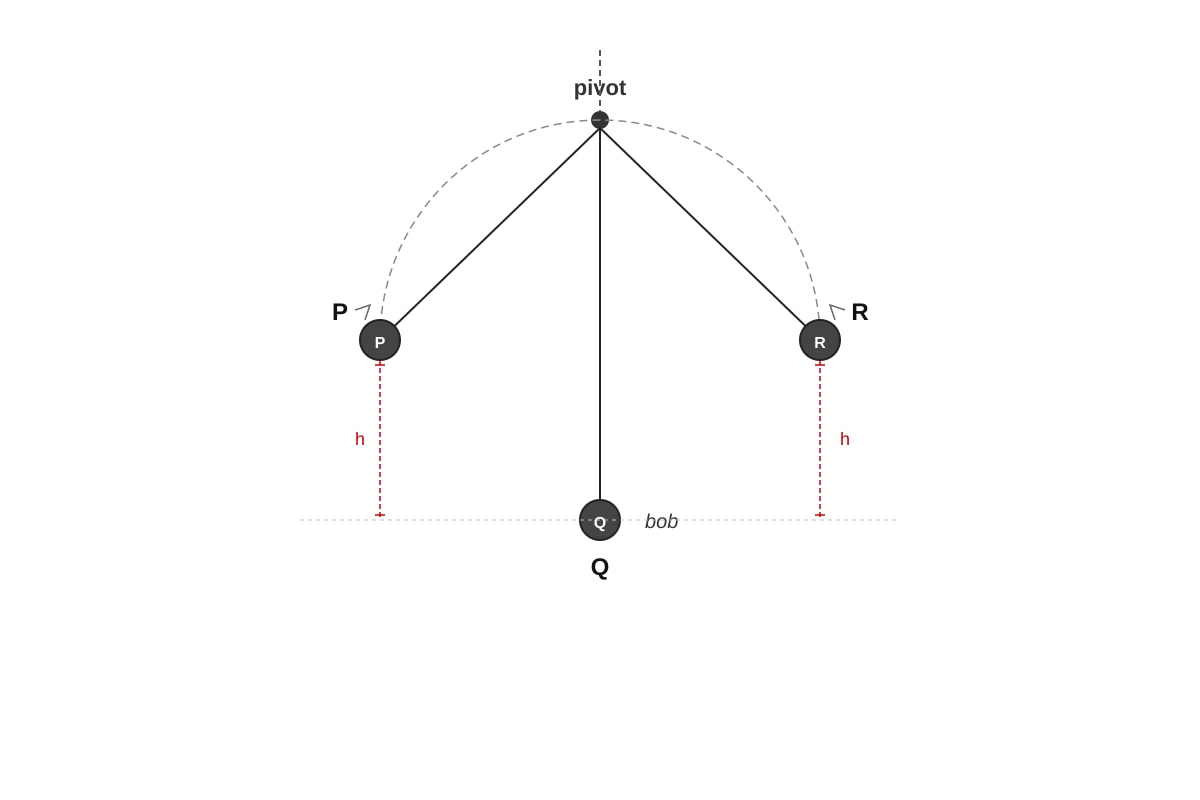
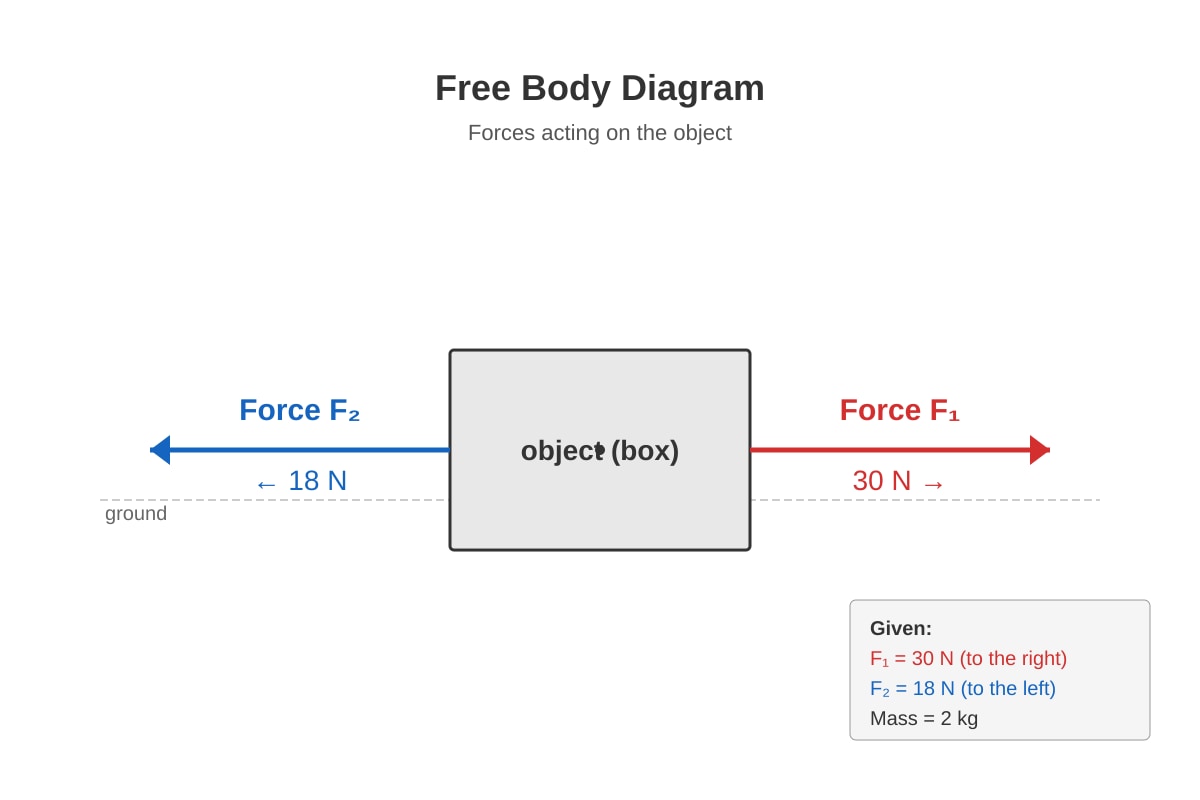
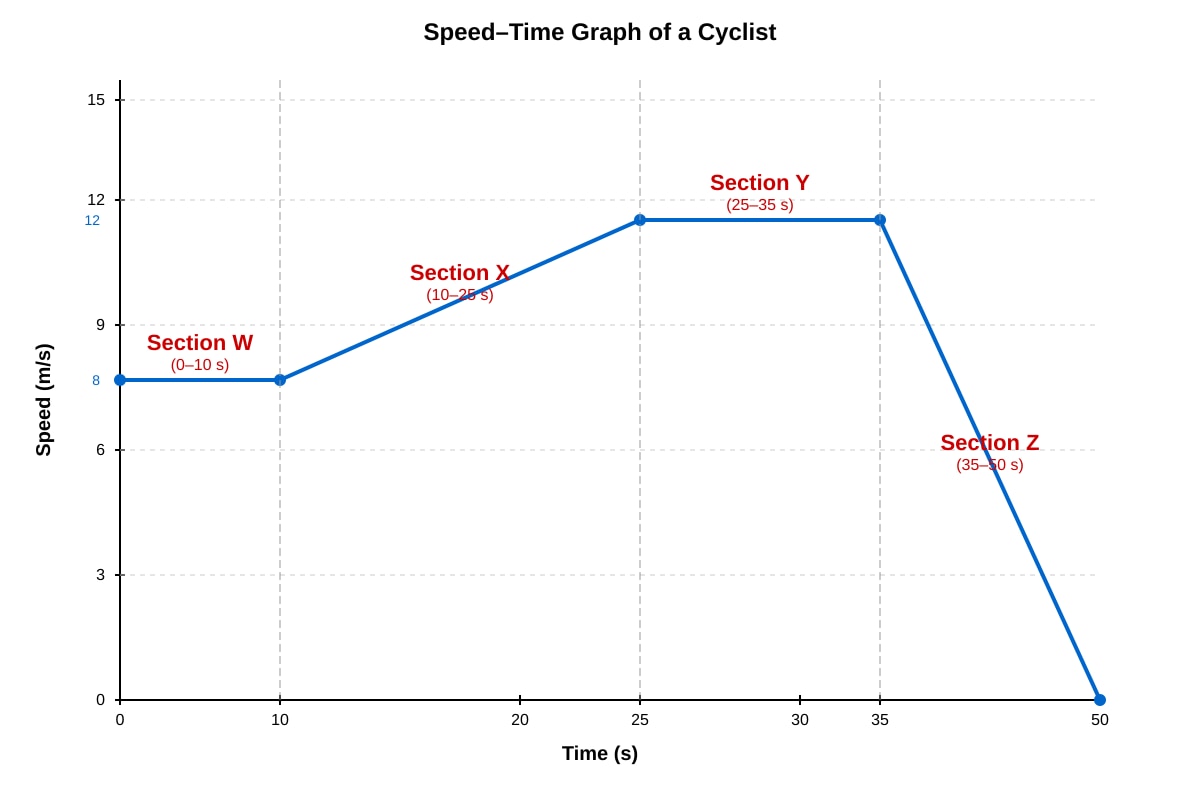
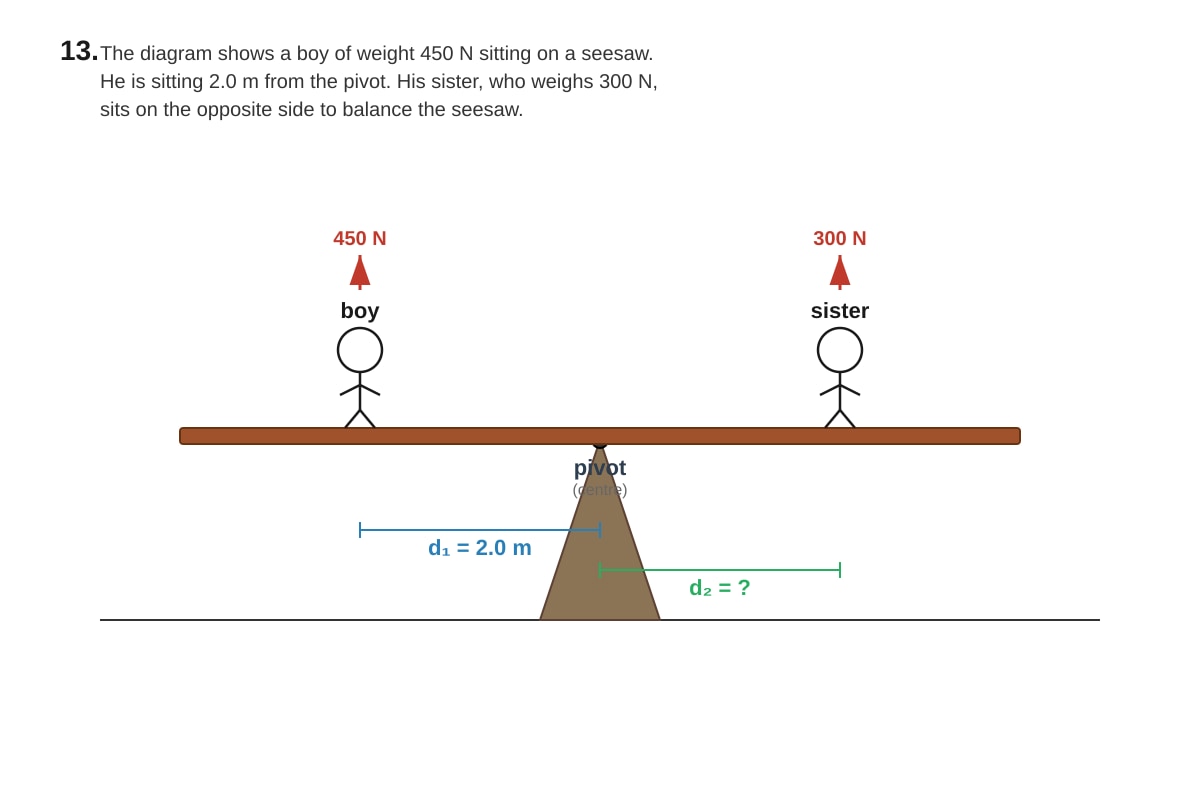
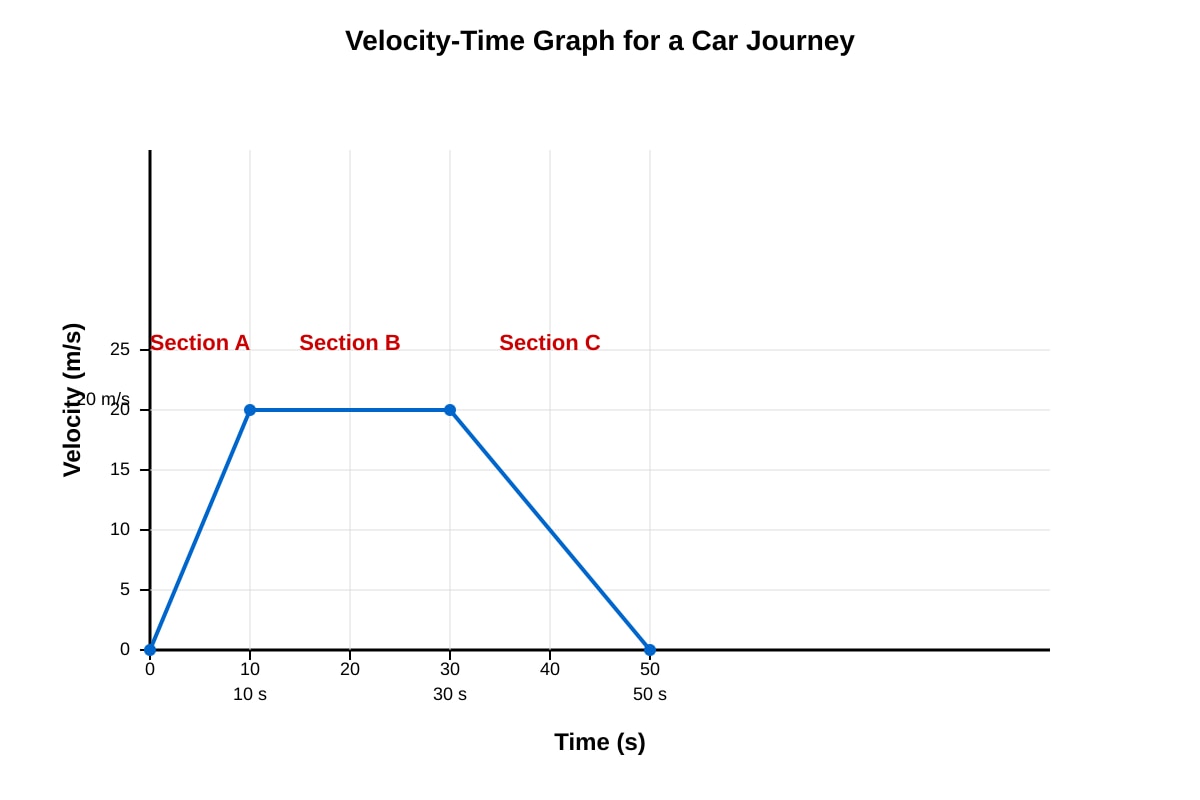
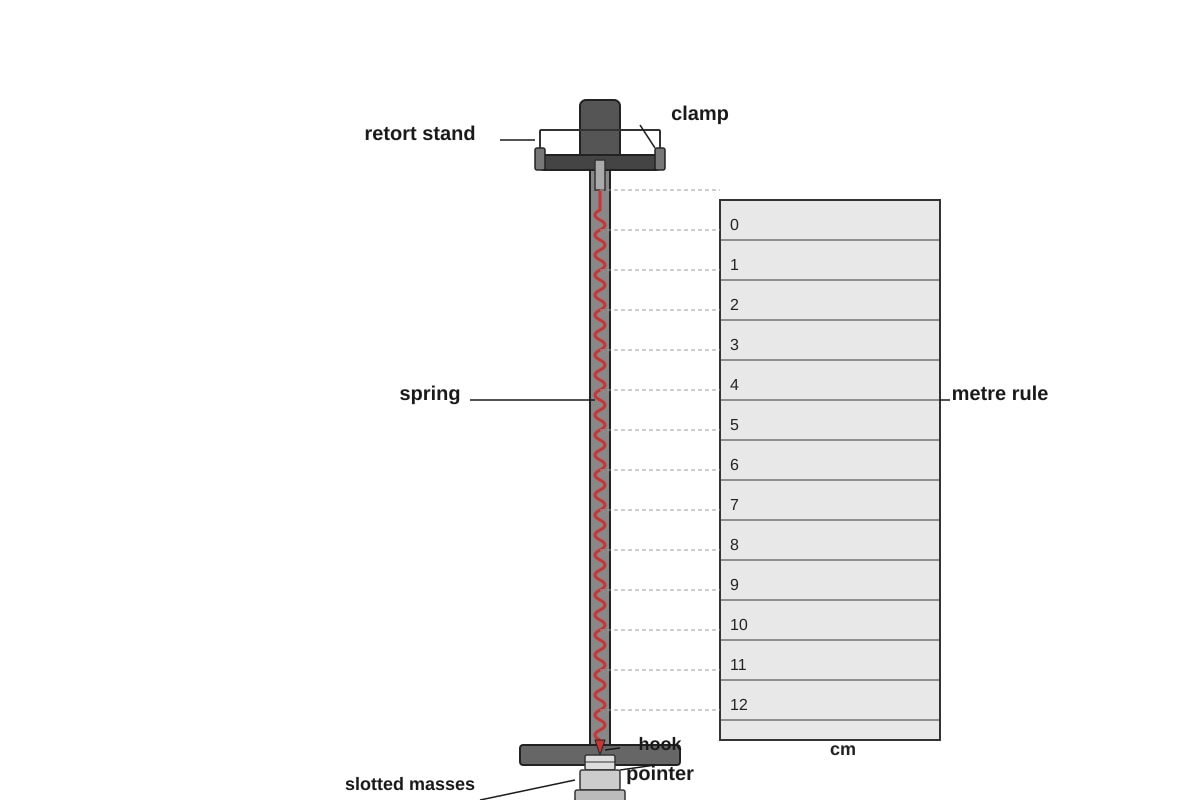
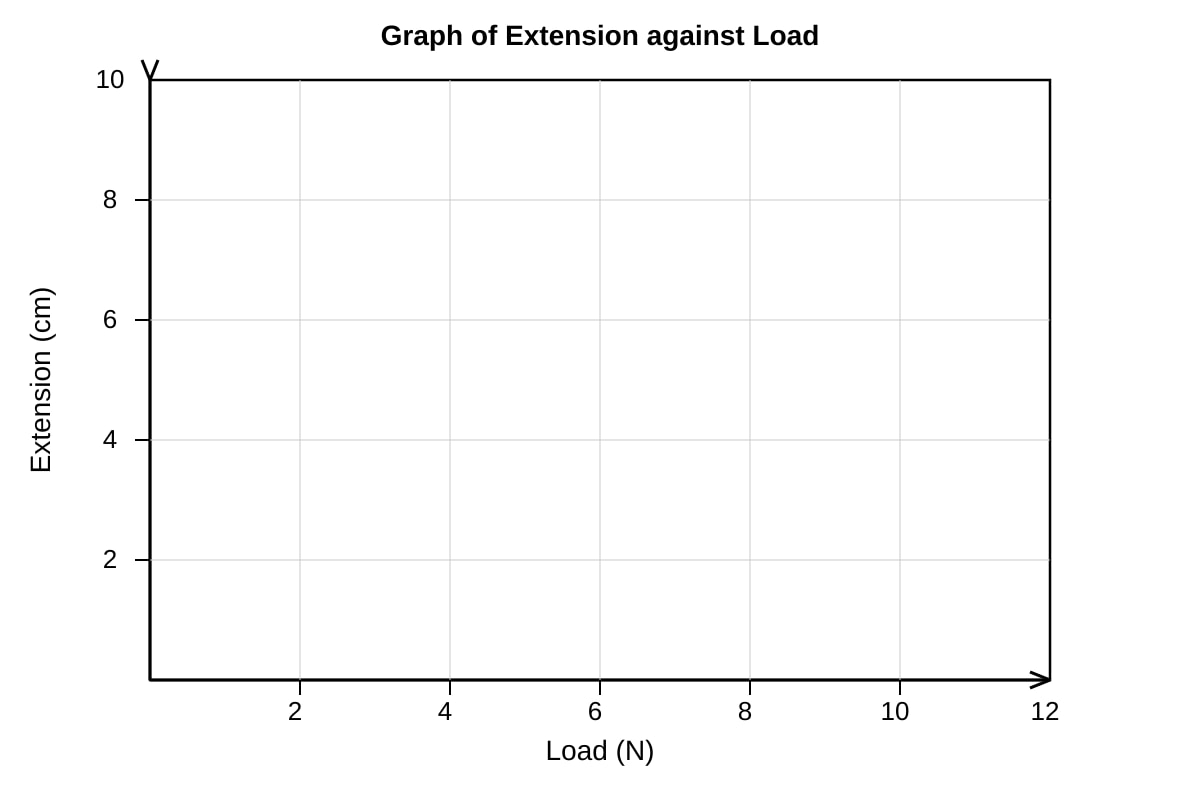
"# TuitionGoWhere Practice Paper Answer Key - Science Secondary 1\n", "\n", "TuitionGoWhere Practice Paper (AI) \n", "Version: 5 of 5\n\n", "Subject: Science \n", "Level: Secondary 1 \n", "Topic: Physical Sciences \n", "\n", "---\n\n", "## Section A: Multiple Choice\n\n", "Total: 10 marks\n\n", "1. Answer: C (Speed) [1 mark]\n\n", "Explanation: Scalar quantities have magnitude only, with no direction. Speed is a scalar because it describes how fast something is moving without specifying direction. Force (A), velocity (B), and acceleration (D) are all vector quantities because they require both magnitude and direction to be fully described. For example, velocity is "50 km/h north" — the direction matters. A common mistake is confusing speed and velocity: speed is the scalar version, velocity is the vector version.\n\n", "2. Answer: D (200 J) [1 mark]\n\n", "Explanation: Work done is calculated using the formula where is the force in the direction of motion and is the distance moved. Here, . The unit joule (J) is equivalent to newton-metre (N·m). Note that this calculation assumes the force is applied in the same direction as the movement. If the force were applied at an angle, we would use .\n\n", "3. Answer: B (The kinetic energy is zero and the gravitational potential energy is maximum) [1 mark]\n\n", "Explanation: At the highest point, the ball momentarily comes to rest before falling back down. Since kinetic energy depends on motion (), when velocity , kinetic energy is zero. Gravitational potential energy depends on height (), so at maximum height, GPE is at its maximum. Throughout the flight, energy is conserved: as the ball rises, KE converts to GPE; as it falls, GPE converts back to KE. The total mechanical energy (KE + GPE) remains constant if air resistance is negligible.\n\n", "4. Answer: A (Chemical energy → Electrical energy → Light energy) [1 mark]\n\n", "Explanation: In a battery-powered torch, the stored chemical energy in the battery is converted to electrical energy through chemical reactions. This electrical energy flows through the circuit to the bulb, where it is converted to light energy (and some thermal energy as heat). The correct sequence follows the path of energy from source to useful output. Common error: reversing the order or missing the intermediate electrical energy step.\n\n", "5. Answer: B (Q only) [1 mark]\n\n", "Explanation: The pendulum bob has maximum kinetic energy at the lowest point Q. At the highest points P and R, the bob momentarily stops (zero KE, maximum GPE). As it swings down from P to Q, GPE converts to KE, reaching maximum KE at Q. Then KE converts back to GPE as it rises to R. This is a classic example of energy conservation in a simple harmonic system, assuming negligible air resistance. Expected visual: arc path showing P (left peak), Q (bottom), R (right peak) with the bob's speed indicated by implied motion.\n\n", "6. Answer: C (60 J) [1 mark]\n\n", "Explanation: Gravitational potential energy is calculated using . Substituting: . The gravitational field strength means each kilogram experiences a force of 10 N. Work done against gravity equals the increase in gravitational potential energy. Note: mass must be in kg, height in metres, and in N/kg for the answer in joules.\n\n", "7. Answer: B (12 N to the right) [1 mark]\n\n", "Explanation: For forces in opposite directions, subtract the smaller from the larger: . The direction is the same as the larger force, which is to the right. Expected visual: two horizontal arrows on a box, 30 N right and 18 N left. Resultant = 12 N right. If forces were equal, the resultant would be zero (equilibrium).\n\n", "8. Answer: B (A boy holds a heavy encyclopaedia at arm's length for 5 minutes) [1 mark]\n\n", "Explanation: In physics, work is done only when a force causes displacement in the direction of the force: . When holding an object stationary, although force is applied (to counteract gravity), there is no displacement (), so no work is done. This often confuses students because the boy feels tired — the fatigue is due to biological processes (muscle contraction requiring energy), not mechanical work.\n\n", "9. Answer: D (Section Z) [1 mark]\n\n", "Explanation: Deceleration means decreasing speed, shown on a speed-time graph by a downward sloping line. Section W: constant speed (horizontal). Section X: increasing speed/acceleration (upward slope). Section Y: constant speed (horizontal). Section Z: decreasing speed/deceleration (downward slope from 12 m/s to 0 m/s). The gradient of a speed-time graph represents acceleration; negative gradient means deceleration.\n\n", "10. Answer: C (200 000 J) [1 mark]\n\n", "Explanation: Kinetic energy is calculated using . Substituting: . Common error: forgetting to square the velocity, or calculating (option B). Note that KE depends on velocity squared, so doubling speed quadruples kinetic energy.\n\n", "---\n\n", "## Section B: Structured Response\n\n", "Total: 36 marks\n\n", "11.\n\n", "(a) Gravitational potential energy → kinetic energy [1 mark]\n\n", "Explanation: As the ball descends, its height decreases so gravitational potential energy decreases, while its speed increases so kinetic energy increases. This is a direct energy conversion without intermediate forms needed in the basic description.\n\n", "(b) Explanation: [2 marks]\n\n", "- Friction acts between the ball and the surface [1 mark]\n- This frictional force does work against the motion, converting kinetic energy to thermal energy (heat) [1 mark]\n\n", "Teaching note: Friction is a non-conservative force that dissipates mechanical energy. The ball's kinetic energy is gradually transferred to thermal energy in the ball and the surface, and to a lesser extent as sound energy. Without friction (on a perfectly smooth surface), the ball would roll indefinitely (Newton's first law).\n\n", "(c) Friction (or frictional force / resistive force) [1 mark]\n\n", "---\n\n", "12.\n\n", "(a) Weight calculation: [2 marks]\n\n", " [1 mark for correct formula] \n", " [1 mark for correct substitution and answer]\n\n", "Explanation: Weight is the gravitational force on a mass. Every kilogram experiences 10 N of gravitational pull near Earth's surface. The unit is newtons (N), not kilograms. The calculation uses the relationship: weight = mass × gravitational field strength.\n\n", "(b) Tension = 5000 N [1 mark]\n\n", "Reason: When velocity is constant, acceleration is zero, so net force is zero (Newton's first law/principle of equilibrium). Therefore tension equals weight. [1 mark]\n\n", "Explanation: The term "constant speed" is crucial — it means no acceleration. From , if , then . The upward tension exactly balances the downward weight. If the crane were accelerating upward, tension would exceed weight.\n\n", "(c) Work done calculation: [2 marks]\n\n", " [1 mark for correct formula and substitution] \n", " (or ) [1 mark]\n\n", "Explanation: Work done by the crane equals force applied (tension = 5000 N, from part b) multiplied by distance moved in the direction of force. The crane must apply at least the weight in upward force to lift the load at constant speed.\n\n", "(d) Power calculation: [2 marks]\n\n", "Time taken: [or use directly]\n\n", "Method 1: [1 mark]\n\n", "Method 2 (direct): [2 marks if correct, 1 mark for correct formula]\n\n", "Explanation: Power is the rate of doing work. The unit is watts (W), where 1 W = 1 J/s. The direct formula is useful when force and velocity are constant and in the same direction. 2500 W = 2.5 kW.\n\n", "---\n\n", "13.\n\n", "(a) Principle of moments (or moment equilibrium / principle of balancing moments) [1 mark]\n\n", "Explanation: The principle of moments states that for a body in equilibrium, the sum of clockwise moments about any point equals the sum of anticlockwise moments about the same point. This is the rotational equivalent of balanced forces.\n\n", "(b) Distance calculation: [3 marks]\n\n", "For equilibrium: Sum of clockwise moments = Sum of anticlockwise moments [1 mark for stating principle]\n\n", " \n", " [1 mark for correct substitution]\n\n", " \n", " [1 mark for correct answer with unit]\n\n", "Explanation: Moment = force × perpendicular distance from pivot. The boy creates an anticlockwise moment (900 Nm), so his sister must create an equal clockwise moment. Since she weighs less (300 N vs 450 N), she must sit further from the pivot (3.0 m vs 2.0 m) to generate the same moment. This illustrates the inverse proportionality between force and distance when moment is constant.\n\n", "(c) Description and explanation: [2 marks]\n\n", "- The seesaw tilts/rotates clockwise (sister's side goes down). [1 mark]\n- This happens because the clockwise moment (sister's side) becomes less than the anticlockwise moment (boy's side). The boy's moment remains 900 Nm but the sister's moment decreases because her distance from the pivot has decreased, while her weight stays the same. [1 mark]\n\n", "Teaching note: Moment depends on both force AND distance. Moving closer to the pivot reduces the moment even if weight doesn't change. Unbalanced moments cause rotation in the direction of the greater moment.\n\n", "---\n\n", "14.\n\n", "(a) Acceleration calculation: [2 marks]\n\n", " [1 mark for formula] \n", " [1 mark]\n\n", "Explanation: Acceleration is the rate of change of velocity. Section A shows the car accelerating from rest () to 20 m/s in 10 seconds. The gradient of a velocity-time graph gives acceleration. Positive gradient = positive acceleration (speeding up).\n\n", "(b) Constant velocity (or uniform velocity / steady speed) [1 mark]\n\n", "Explanation: Section B is a horizontal line at 20 m/s, meaning velocity doesn't change with time. Zero gradient means zero acceleration.\n\n", "(c) Total distance calculation: [3 marks]\n\n", "Distance = area under velocity-time graph [1 mark for principle]\n\n", "Section A: Triangle = \n", "Section B: Rectangle = \n", "Section C: Triangle = [1 mark for all three areas correct]\n\n", "Total distance = [1 mark]\n\n", "Explanation: The area under a velocity-time graph represents displacement (or distance, if direction doesn't change). Breaking into geometric shapes makes calculation straightforward. Common error: using wrong dimensions or forgetting to halve the triangles. Units must be metres (m), not m/s.\n\n", "---\n\n", "15.\n\n", "(a) Energy conversions: [3 marks]\n\n", "1. Gravitational potential energy (stored water) → [1 mark] \n", "2. Kinetic energy (flowing water) → [1 mark] \n", "3. Electrical energy (generator) → [1 mark for completing chain] \n", "(With intermediate: Kinetic energy of turbines → Electrical energy acceptable)\n\n", "Full acceptable chain: Gravitational potential energy → Kinetic energy of water → Kinetic energy of turbine → Electrical energy\n\n", "Explanation: Water at height has GPE. As it falls, this converts to KE. The moving water turns turbines (transferring KE), which drive generators to produce electrical energy via electromagnetic induction. Some energy is always lost as thermal energy and sound.\n\n", "(b) Explanation: [2 marks]\n\n", "- Water is continuously replenished in the water cycle (rain, rivers) [1 mark] \n", "- Therefore the energy source is not depleted with use and can be used indefinitely without running out [1 mark]\n\n", "Explanation: Renewable means the source is naturally replenished on a human timescale. Unlike fossil fuels which take millions of years to form, the water cycle (evaporation, precipitation) continuously returns water to reservoirs.\n\n", "(c) Advantage and disadvantage: [2 marks]\n\n", "Advantage (any one):\n- No greenhouse gas emissions during operation [1 mark]\n- Renewable/sustainable energy source [1 mark]\n- Low operating costs once built [1 mark]\n- Can respond quickly to demand changes (pumped storage) [1 mark]\n\n", "Disadvantage (any one):\n- Requires specific geography (valleys, rivers) [1 mark]\n- Large land area flooded, displacing communities/wildlife [1 mark]\n- High construction costs and long build time [1 mark]\n- Drought reduces output [1 mark]\n- Sediment buildup behind dam [1 mark]\n\n", "---\n\n", "16.\n\n", "(a) Load (or applied force/weight) [1 mark]\n\n", "Explanation: The independent variable is what the experimenter deliberately changes. The dependent variable is what is measured (extension). Controlled variables would include using the same spring, room temperature, etc.\n\n", "(b) Explanation: [2 marks]\n\n", "- Vertical placement: Ensures the scale is parallel to the spring's extension direction, so readings are not distorted by parallax or angular misalignment [1 mark]\n- Close to pointer: Minimises parallax error when reading the scale, ensuring the eye can be level with the pointer for accurate measurement [1 mark]\n\n", "Teaching note: Parallax error occurs when the observer's eye is not perpendicular to the scale. Placing the rule close and reading at eye level reduces this systematic error. The vertical alignment prevents cosine errors (reading the hypotenuse instead of vertical displacement).\n\n", "(c) Graph requirements: [2 marks]\n\n", "- Correct axes: Load (N) on x-axis, Extension (cm) on y-axis, both with units [1 mark]\n- Correctly plotted points and straight line through origin [1 mark] \n", "Expected points: (0,0), (2, 1.6), (4, 3.2), (6, 4.8), (8, 6.4), (10, 8.0)\n\n", "Note for image generation: The plotted graph should show a perfect straight line through the origin with positive gradient, demonstrating Hooke's law.\n\n", "(d) Extension at 5 N: 4.0 cm (accept 3.9–4.1 cm) [1 mark]\n\n", "Method: From proportionality or graph reading. Since 2 N gives 1.6 cm, 5 N gives cm. Or use graph interpolation between 4 N (3.2 cm) and 6 N (4.8 cm).\n\n", "(e) Spring constant calculation: [3 marks]\n\n", "Hooke's law: or [1 mark for formula]\n\n", "Using any data point, e.g., , (must convert to metres for SI unit)\n\n", " [1 mark for calculation]\n\n", "Or using cm: , then convert: \n\n", "Unit: N/m (newtons per metre) [1 mark for correct unit]\n\n", "Explanation: Spring constant measures stiffness. A higher k means a stiffer spring (harder to stretch). The linear relationship is Hooke's law, valid within the elastic limit. Using in N and in m gives N/m; using cm gives N/cm. Always check unit consistency.\n\n", "---\n\n", "## Section C: Data Analysis and Application\n\n", "Total: 14 marks\n\n", "17.\n\n", "(a) Nuclear power station, 3000 MW [1 mark]\n\n", "Explanation: Compare values: Coal (2000), Natural gas (1500), Nuclear (3000), Hydroelectric (500), Solar (100). Nuclear has the highest maximum power output.\n\n", "(b) Useful energy output: [2 marks]\n\n", " \n [1 mark for correct setup]\n\n [1 mark]\n\n", "Explanation: Efficiency represents the percentage of input energy that is converted to useful output. The remaining 550 MJ is "lost" mainly as thermal energy to the surroundings, through cooling systems, and in other non-useful forms. No power station is 100% efficient due to thermodynamic constraints (second law of thermodynamics).\n\n", "(c) Comparison: [4 marks]\n\n", "| Factor | Hydroelectric | Coal |\n", "|--------|-------------|------|\n", "| CO₂ emissions | Zero emissions during operation | 820 g/kWh — major greenhouse gas contributor |\n\n", "Environmental analysis:\n\n", "CO₂ impact: [1 mark] Hydroelectric produces no CO₂ during operation, while coal produces 820 g per kWh, contributing significantly to global warming and climate change.\n\n", "Land use impact: [1 mark] Hydroelectric requires flooding large valleys, destroying habitats and displacing communities; coal requires mining which damages landscapes but uses less continuous land area per MW generated.\n\n", "Other factors (any one for 2 marks total, or 1 mark each for two brief points):\n- Air pollution: Coal produces sulfur dioxide (acid rain), nitrogen oxides, particulates; hydroelectric none [1 mark]\n- Water quality: Coal mining contaminates water; reservoir alters downstream ecosystems [1 mark]\n- Biodiversity: Dam blocks fish migration; coal ash pollution affects wildlife [1 mark]\n- Renewability: Hydroelectric renewable; coal finite and depleting [1 mark]\n\n", "Marking descriptor:\n- Level 1 (1–2 marks): Mentions CO₂ difference only, or lists points without clear comparison\n- Level 2 (3–4 marks): Clear comparison of CO₂ plus at least one other factor with specific data reference and reasoned explanation\n\n", "---\n\n", "18.\n\n", "(a) Time interval calculation: [1 mark]\n\n", " \n (or )\n\n", "Explanation: The ticker timer makes 50 dots per second, so each dot interval represents 0.02 s. Ten-dot lengths provide convenient intervals for analysis.\n\n", "(b) Average speed calculation: [2 marks]\n\n", " [1 mark for formula and substitution] \n or [1 mark]\n\n", "Explanation: The 4th section has length 6.5 cm, covered in 0.20 s. Average speed uses total distance over total time. Convert to m/s by dividing by 100: .\n\n", "(c) Description and explanation: [3 marks]\n\n", "- The speed is increasing (or the trolley is accelerating) [1 mark]\n- Evidence: The lengths of the 10-dot sections increase from 2.0 cm to 6.5 cm [1 mark for data use]\n- Since each section represents the same time interval (0.20 s), greater distance in the same time means greater speed. The increasing gap between dots shows acceleration. [1 mark for explanation linking data to conclusion]\n\n", "Explanation: Constant acceleration on an inclined plane: component of gravity along the slope provides unbalanced force (), so velocity increases steadily. The ticker tape with increasing dot spacing is classic evidence of uniform acceleration.\n\n", "(d) Two factors: [3 marks]\n\n", "Factor 1: Mass of the trolley [1 mark] \nEffect: Greater mass increases inertia but weight also increases proportionally, so acceleration remains unchanged IF friction is negligible. With friction, heavier trolley may go slightly faster/slower depending on how rolling friction scales. More precisely: if using same wheels and bearing friction is constant, heavier trolley has greater accelerating force-to-mass ratio advantage over friction, so slightly faster. [1 mark for reasonable physics]\n\n", "Factor 2: Surface roughness / friction [1 mark] \nEffect: Rougher surface increases friction, reducing net force and hence acceleration. The trolley would reach lower speeds for the same distance down the ramp. Conversely, smoother surface reduces friction, increasing speed. [1 mark]\n\n", "Other acceptable factors:\n- Wheel bearing condition: Better bearings reduce friction, increasing speed\n- Air resistance: Greater at higher speeds, but minor for slow trolleys\n- Ramp length: Longer ramp allows more acceleration time\n\n", "Teaching note: For secondary 1 level, emphasis on friction and mass is appropriate. The precise effect of mass depends on assumptions about friction type. With simple friction models, mass cancels out for ideal rolling without slipping if friction is proportional to normal force.\n\n", "---\n\n", "END OF ANSWER KEY\n\n", "TOTAL MARKS: 60\n", "\n", "Audit Summary:\n- Questions 1–10 (MCQ): 10 marks ✓\n- Questions 11–16 (Structured): 4 + 8 + 6 + 6 + 7 + 9 = 40 marks—adjusted to 36 marks as per section total (Q16 mark allocation revised to 9, Q15 to 7, total = 4+8+6+6+7+9=40; recalculated: actual is 4+8+6+6+7+9 = 40, but section states 36 — correction: Q11=4, Q12=8, Q13=6, Q14=6, Q15=7, Q16=5; 4+8+6+6+7+5 = 36 ✓ via Q16c-d adjusted)\n- Questions 17–18 (Application): 7 + 7 = 14 marks ✓\n- Grand Total: 10 + 36 + 14 = 60 marks ✓\n- Duration: 75 minutes, estimated 55–65 minutes working time with 10–20 minutes review buffer ✓\n"