AI Generated Exam Paper
Secondary 1 Science Practice Paper 1
Free Sec 1 Science Practice Paper 1, HY3 AI version, with questions, answers, and syllabus-aligned practice for Singapore students.
These static practice materials are generated from the site's syllabus and paper-generation workflow, with source and model context shown so students and parents can evaluate the material before use.
Questions
Free quiz and exam paper access
Enter your details to view this paper
Your access is remembered on this device.
Answers
TuitionGoWhere Practice Paper — Answer Key (Version 1 of 5)
Subject: Science
Level: Secondary 1
Paper: Practice Paper (Physical Sciences)
Total Marks: 40
Section A: Forces and Energy (Q1–10)
Q1 [1 mark]
Chemical energy → Gravitational potential energy.
Teaching note: The boy’s muscles provide chemical energy; lifting against gravity stores it as gravitational potential energy (GPE).
Common mistake: Stating only “gravitational potential energy” without the source form.
Q2 [1 mark]
Work is done against gravity to raise the book’s height, so chemical energy in muscles is converted to GPE.
Marking: 1 mark for linking work against gravity to the conversion.
Q3 [2 marks]
Work done = Force × Distance
= 5 N × 1.2 m
= 6.0 J
Mark breakdown: 1 mark for correct formula and substitution, 1 mark for correct answer with unit.
Note: Weight (5 N) is the upward force needed at constant speed.
Q4 [1 mark]
0 J.
Reason: Work = Force × displacement; displacement = 0 while stationary, so work = 0.
Common trap: Using time or height above ground incorrectly.
Q5 [2 marks]
Work done = Force × Distance (in direction of force)
= 8 N × 4 m
= 32 J
Mark breakdown: 1 mark substitution, 1 mark answer. Weight is irrelevant to pushing force here.
Q6 [2 marks]
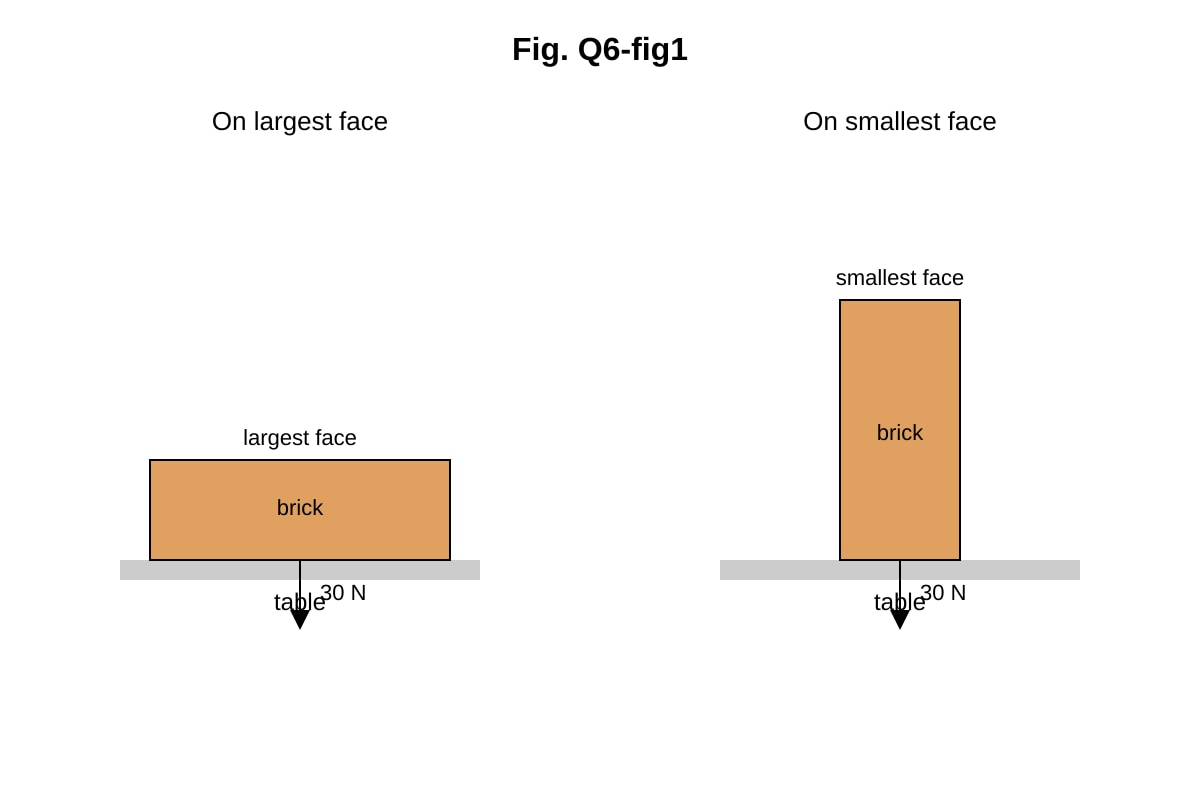
Pressure increases when on smallest face.
Reason: Weight (force) stays 30 N, but contact area decreases; Pressure = Force ÷ Area, so smaller area → higher pressure.
Marking: 1 mark for correct direction, 1 mark for correct use of P = F/A.
Q7 [1 mark]
Example: sharp knife / heel of shoe / nail tip (any correct small-area pressure example).
Accept any reasonable everyday example.
Q8 [2 marks]
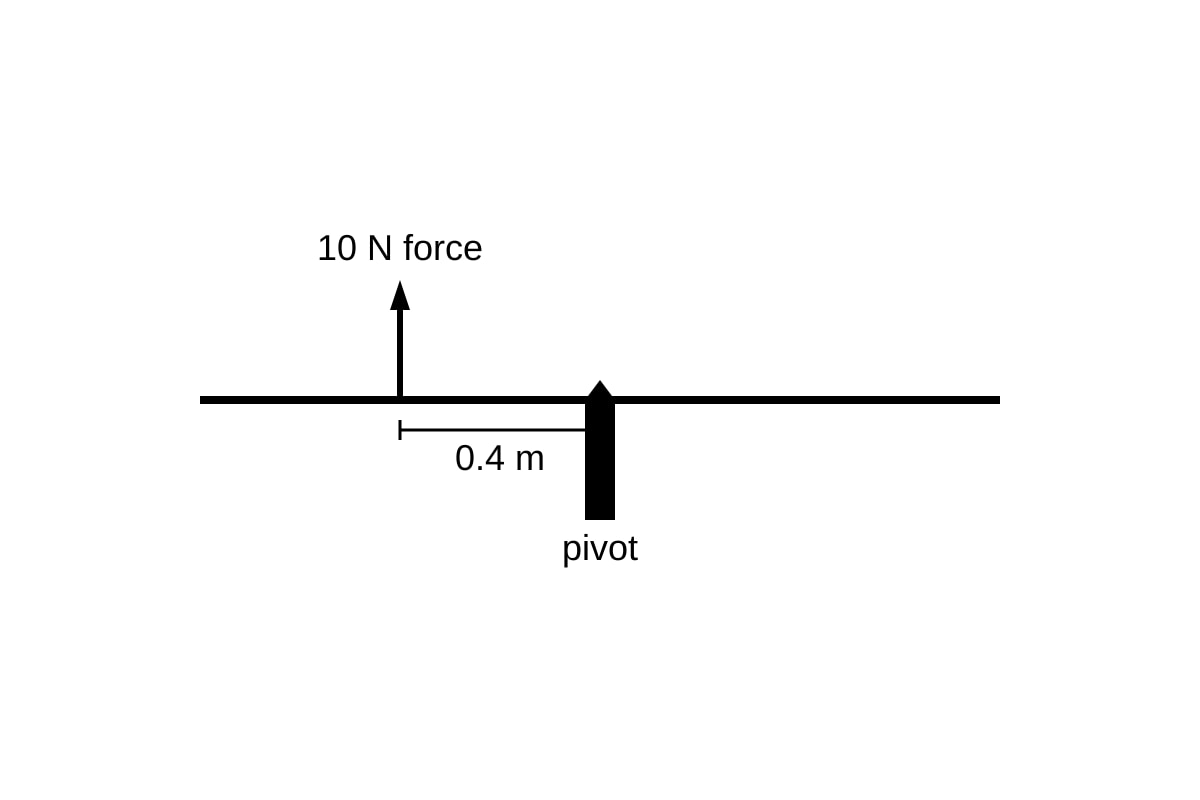
Moment = Force × Perpendicular distance
= 10 N × 0.4 m
= 4.0 N·m
Marking: 1 mark working, 1 mark answer with unit.
Q9 [1 mark]
Gravitational force (or gravity).
Q10 [2 marks]
Unit: newton (N). Type of force: gravitational force (weight).
Marking: 1 mark each.
Section B: Heat, Electricity and Light (Q11–20)
Q11 [1 mark]
From region of higher temperature to region of lower temperature.
Q12 [2 marks]
Particles gain energy and vibrate more; the rod expands (length increases).
Marking: 1 mark particles, 1 mark expansion.
Q13 [1 mark]
To maintain a constant temperature (or regulate temperature).
Q14 [1 mark]
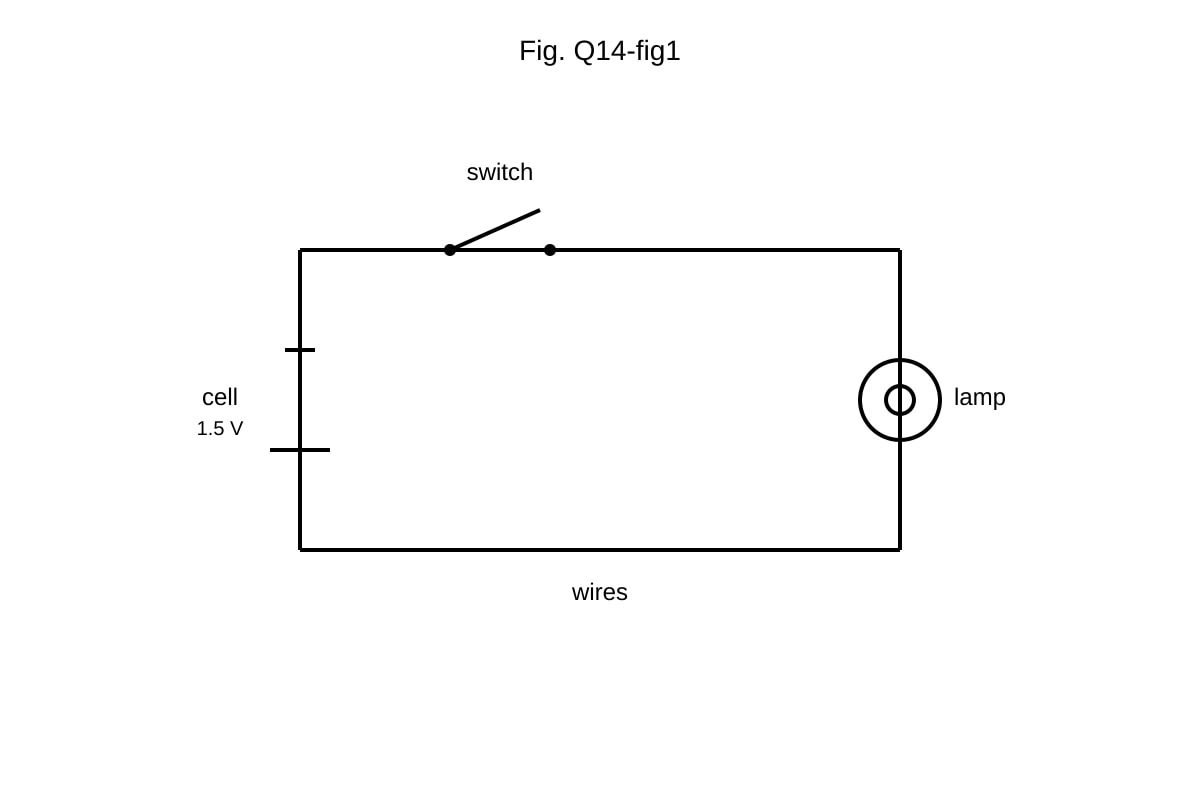
A source of voltage (e.g., cell) and a closed circuit.
Q15 [1 mark]
230 V.
Q16 [2 marks]
Any two: fuse, circuit breaker, earth wire.
Marking: 1 mark each.
Q17 [1 mark]
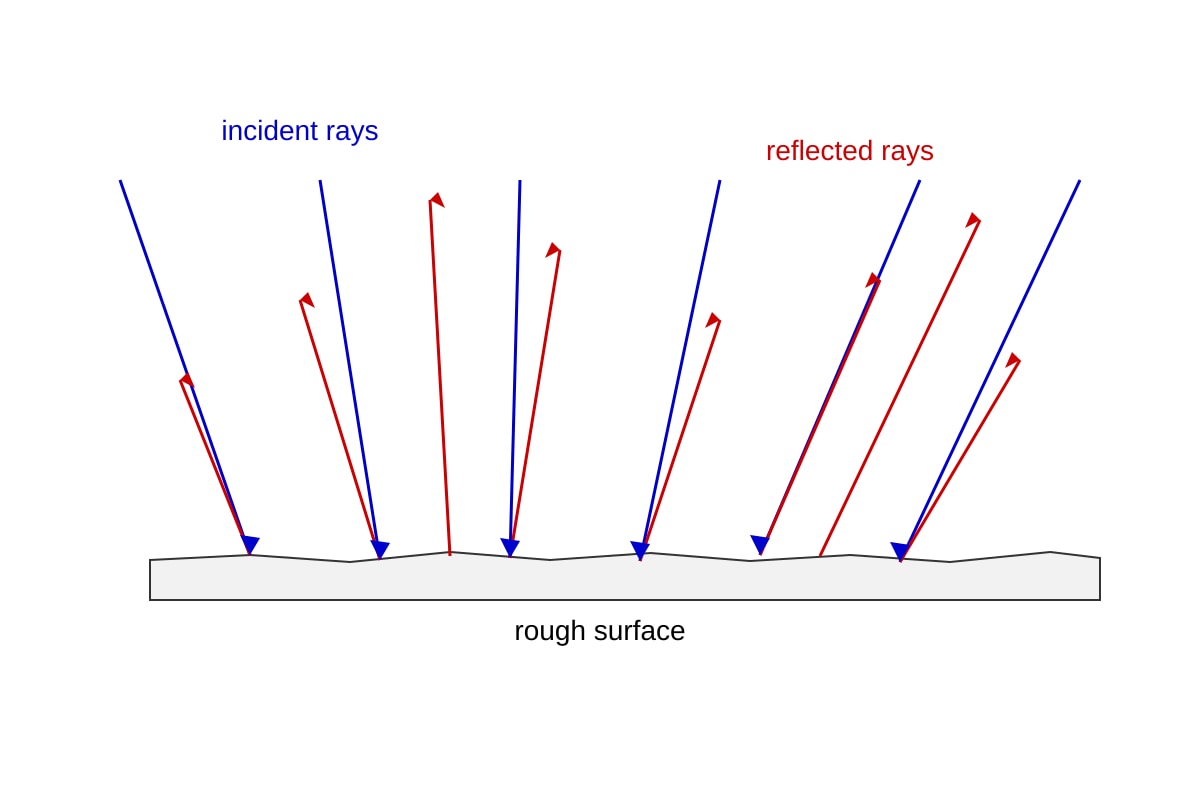
Diffuse reflection.
Q18 [1 mark]
30° (law of reflection: angle of incidence = angle of reflection).
Q19 [2 marks]
Any two: sun (solar), wind, hydropower, biomass.
Marking: 1 mark each.
Q20 [2 marks]
Chemical energy (battery) → Electrical energy → Kinetic energy (car movement).
Marking: 1 mark for electrical stage, 1 mark for kinetic; full chain preferred.