From Real Exams Exam Paper
Secondary 1 Science Semestral Assessment 2 (End of Year) Paper 5
Free Sec 1 Science SA2 Paper 5, HY3 Exam version, with questions, answers, and syllabus-aligned practice for Singapore students.
These static practice materials are generated from the site's syllabus and paper-generation workflow, with source and model context shown so students and parents can evaluate the material before use.
Questions
TuitionGoWhere Practice Paper - Science Secondary 1 (SA2)
School: TuitionGoWhere Secondary School (AI)
Subject: Science
Level: Secondary 1
Paper: SA2 Practice Paper (Version 5 of 5)
Duration: 60 minutes
Total Marks: 60
Name: ___________________________
Class: _________
Date: _____________
Instructions:
- Answer all questions in the spaces provided.
- Use a blue or black pen.
- Show your working clearly for calculation questions.
- Units must be given where required.
- The paper consists of three sections: Section A (14 marks), Section B (26 marks), Section C (20 marks).
Section A: Multiple Choice and Short Structured (14 marks)
1. A boy lifts a book from the floor to a table at constant speed. Which energy conversion takes place? [1]
A. Kinetic energy → Heat energy
B. Chemical energy → Gravitational potential energy
C. Gravitational potential energy → Kinetic energy
D. Electrical energy → Light energy
2. Which of the following is a renewable source of energy? [1]
A. Coal
B. Natural gas
C. Crude oil
D. Wind
3. A spring balance measures a force of 5 N acting on a object. What is the unit of this measurement? [1]
A. Joule
B. Newton
C. Pascal
D. Watt
4. State one example of a frictional force in daily life. [1]
5. A brick of weight 20 N is placed on a table. It is then turned to rest on its smallest face. What happens to the pressure on the table? [1]
A. Increases
B. Decreases
C. Stays the same
D. Becomes zero
6. The voltage supplied to homes in Singapore is ______ V. [1]
7. Light travels from a region of higher temperature to lower temperature as a form of energy. True or False? (This refers to heat, not light.) [1]
A. True
B. False
8. Name one simple machine: ______________. [1]
9. A battery provides the __________ needed for current to flow in a circuit. [1]
10. Which instrument is used to measure electric current? [1]
A. Voltmeter
B. Ammeter
C. Thermometer
D. Spring balance
11. State the function of a thermostat. [1]
12. A metal rod expands when heated. This is an example of __________. [1]
A. Contraction
B. Expansion
C. Melting
D. Freezing
13. In a parallel circuit, if one lamp breaks, the other lamps __________. [1]
A. Stop working
B. Continue working
C. Become brighter
D. Become dimmer
14. Calculate the work done when a 10 N force moves an object 3 m in the direction of the force. [2]
Work done = __________ J
Section B: Data and Diagram Interpretation (26 marks)
15. A girl uses a lever to lift a load. The pivot is at the centre. A force of 8 N is applied 0.5 m from the pivot on the left. A load of 4 N is placed 1.0 m from the pivot on the right.
(a) Calculate the moment of the applied force about the pivot. [2]
Moment = __________ N·m
(b) State whether the lever is balanced. [1]
16. The diagram below shows a rough white surface with three incident light rays striking it.
Image pending generation: diagram for Q16.
Complete the diagram to show what happens to the rays after they hit the rough surface. [2]
17. A 15 N object is held stationary 1.2 m above the ground for 10 s.
(a) What is the work done by the holding force? [2]
Work done = __________ J
(b) Explain your answer. [1]
18. The table below shows the energy sources used in a town.
| Source | Type | CO₂ emitted? |
|---|---|---|
| Coal | Non-renewable | Yes |
| Solar | Renewable | No |
| Natural gas | Non-renewable | Yes |
(a) State one advantage of renewable sources. [1]
(b) State one disadvantage of non-renewable sources. [1]
(c) Name one renewable source not in the table. [1]
19. A circuit has two cells in series and two lamps in parallel. Draw the circuit diagram using standard symbols. [3]
Image pending generation: diagram for Q19.
20. A brick of weight 30 N has three faces: A (large, 0.1 m²), B (medium, 0.05 m²), C (small, 0.02 m²).
(a) Which face gives the highest pressure? [1]
(b) Calculate the pressure when resting on face C. [2]
Pressure = __________ Pa
(c) Explain why pressure is lower on face A. [1]
21. A student connects a circuit with a 230 V supply, a fuse, and a lamp. State two electrical hazards in homes. [2]
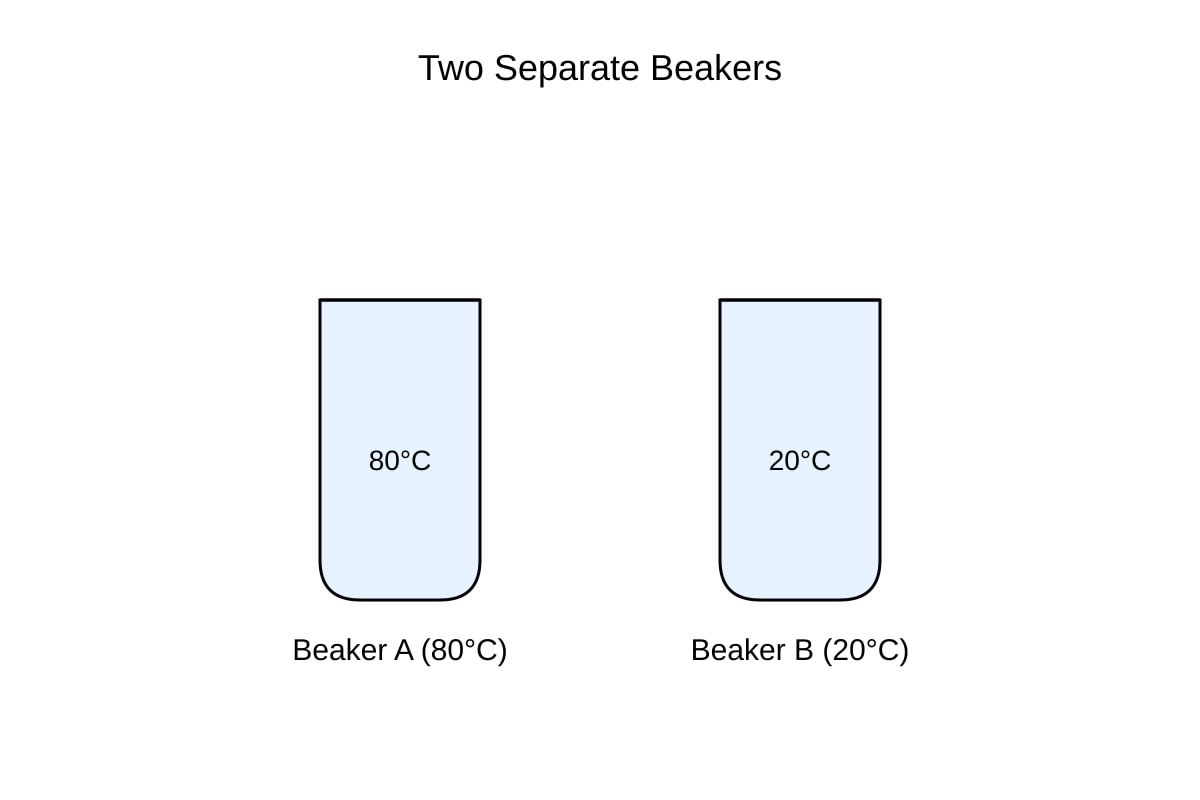
22. The figure shows a thermometer reading in a beaker of water at 80°C placed next to a beaker at 20°C without contact.
Image pending generation: diagram for Q22.
Explain why heat does not flow in this setup until they touch or a conductor links them. [2]
23. A magnet attracts a steel paper clip. Name the force and state its type. [2]
Force: __________
Type: __________
24. State the energy conversion in a torchlight when switched on. [2]
Section C: Extended Structured Response (20 marks)
25. A student investigates how surface area affects pressure. She places a 50 N block on a table first on its largest face (area 0.25 m²) then on its smallest face (area 0.05 m²).
(a) Calculate pressure on largest face. [2]
Pressure = __________ Pa
(b) Calculate pressure on smallest face. [2]
Pressure = __________ Pa
(c) Explain the relationship between contact area and pressure for the same force. [2]
26. A crane lifts a 2000 N load by 10 m.
(a) Calculate the work done by the crane. [2]
Work done = __________ J
(b) State the energy conversion. [1]
(c) If the crane uses electrical energy, name the energy source at the power station that could be non-renewable. [1]
27. Read the passage:
"A thermostat uses a bimetallic strip that bends when heated. This breaks the circuit and stops heating. When cool, it reconnects."
(a) State the function of a thermostat. [1]
(b) Explain how expansion and contraction are used. [2]
(c) Give one everyday application of a thermostat. [1]
28. A 12 V battery connects to a resistor of 4 Ω.
(a) Calculate the current using Ohm's law. [2]
Current = __________ A
(b) State the unit of resistance. [1]
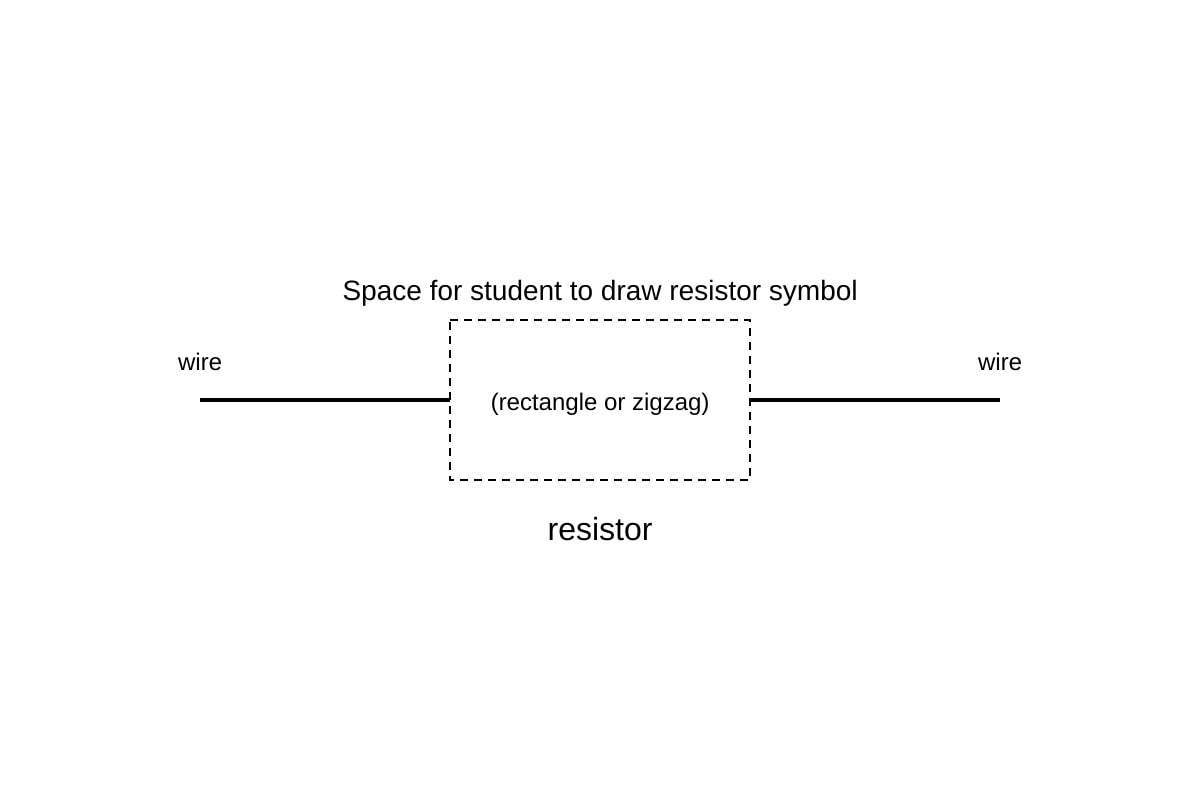
(c) Draw the circuit symbol for a resistor. [1]
Image pending generation: diagram for Q28.
29. A student rolls a ball down a slope. At the top it has GPE, at bottom it has KE.
(a) State the energy conversion. [1]
(b) If mass = 2 kg, height = 5 m, g = 10 N/kg, calculate GPE at top. [2]
GPE = __________ J
(c) Explain why the ball does not reach same height on opposite slope if friction acts. [1]
Answers
TuitionGoWhere Practice Paper - Science Secondary 1 (SA2) Answer Key (Version 5)
Total Marks: 60
Section A (14 marks)
1. B [1]
Teaching note: Lifting at constant speed means chemical energy from muscles → gravitational potential energy of book. Kinetic energy does not change (constant speed).
2. D [1]
Wind is renewable; coal, natural gas, crude oil are fossil fuels (non-renewable).
3. B [1]
Force is measured in newtons (N). Joule is energy, Pascal is pressure, Watt is power.
4. [1] Rubbing hands together / brakes on bicycle / object sliding on floor.
Any one correct example of friction.
5. A [1]
Pressure = Force ÷ Area. Weight (force) same, smallest face → smallest area → highest pressure.
6. 230 [1]
Singapore home voltage is 230 V.
7. B [1]
False. Heat (not light) flows from higher to lower temperature. Light is not described this way in syllabus.
8. [1] Inclined plane / lever / pulley (any one).
9. voltage [1]
Voltage (V) provides push for current.
10. B [1]
Ammeter measures current (A); voltmeter measures voltage.
11. [1] To maintain (keep constant) temperature.
12. B [1]
Heating causes expansion.
13. B [1]
Parallel: branches independent, others continue.
14. [2] Work done = Force × distance = 10 N × 3 m = 30 J.
Marking: 1 mark formula, 1 mark answer with unit.
Section B (26 marks)
15. (a) [2] Moment = Force × perpendicular distance = 8 N × 0.5 m = 4 N·m.
(b) [1] Not balanced. Left moment = 4 N·m, right moment = 4 N × 1.0 m = 4 N·m → actually balanced.
Correction: Both moments 4 N·m, so balanced. Accept "balanced".
(If student says not balanced, 0; correct is balanced.)
16. [2] Draw reflected rays scattering in many directions (diffuse reflection).
Marking: 2 marks for showing 3 rays reflected randomly; 1 mark if only partial.
17. (a) [2] Work = 0 J (no displacement).
(b) [1] Held stationary → displacement = 0 → work done = 0.
18. (a) [1] No CO₂ / sustainable / does not run out.
(b) [1] Emits CO₂ / will deplete.
(c) [1] Hydropower / biomass / sun (not in table).
19. [3] Correct series cells, parallel lamps, closed switch.
Marking: 1 cell series, 1 parallel lamps, 1 switch/loop.
20. (a) [1] C (smallest area).
(b) [2] Pressure = 30 N ÷ 0.02 m² = 1500 Pa.
(c) [1] Larger area → lower pressure for same force.
21. [2] Damaged insulation, damp conditions, overloaded circuit, wrong voltage rating (any two).
22. [2] Heat needs contact or conductor; no medium → no transfer until touch.
23. [2] Magnetic force; non-contact force.
24. [2] Chemical energy (battery) → electrical energy → light (and heat) energy.
Section C (20 marks)
25. (a) [2] 50 ÷ 0.25 = 200 Pa.
(b) [2] 50 ÷ 0.05 = 1000 Pa.
(c) [2] Pressure inversely proportional to area; smaller area → higher pressure.
26. (a) [2] Work = 2000 N × 10 m = 20 000 J.
(b) [1] Electrical → gravitational potential.
(c) [1] Coal / natural gas / crude oil.
27. (a) [1] Maintain temperature.
(b) [2] Bimetallic strip expands when hot, bends, breaks circuit; contracts when cool, reconnects.
(c) [1] Iron / oven / fridge.
28. (a) [2] I = V/R = 12 ÷ 4 = 3 A.
(b) [1] Ohm (Ω).
(c) [1] Rectangle or zigzag resistor symbol.
29. (a) [1] Gravitational potential → kinetic.
(b) [2] GPE = mgh = 2 × 10 × 5 = 100 J.
(c) [1] Friction converts some energy to heat, so less KE to climb.
Free quiz and exam paper access
Enter your details to view this paper
Your access is remembered on this device.