From Real Exams Exam Paper
Secondary 1 Science Semestral Assessment 2 (End of Year) Paper 3
Free Sec 1 Science SA2 Paper 3, HY3 Exam version, with questions, answers, and syllabus-aligned practice for Singapore students.
These static practice materials are generated from the site's syllabus and paper-generation workflow, with source and model context shown so students and parents can evaluate the material before use.
Questions
Free quiz and exam paper access
Enter your details to view this paper
Your access is remembered on this device.
Answers
TuitionGoWhere Exam Practice (AI) - Secondary 1 Science SA2 Practice Paper (Version 3) Answer Key
Total Marks: 60
Section A: Forces and Motion (Q1–5) [12 marks]
Q1 [1 mark]
Answer: Chemical energy → Kinetic energy (of the box) → Heat (due to friction, optional).
Teaching note: The boy’s muscles provide chemical energy which converts to kinetic energy to move the box. Accept “Chemical energy to kinetic energy”.
Common mistake: Stating only “kinetic energy” without source.
Q2 [2 marks]
Answer: Work done = 0 J.
Working: Work = Force × displacement. Held stationary → displacement = 0 m.
Work = 30 N × 0 m = 0 J.
Marking: 1 mark for stating displacement = 0, 1 mark for correct answer with unit.
Teaching note: Work requires movement in force direction. Holding still does no work on object.
Q3 [2 marks]
Answer: Pressure increases when on smallest face.
Reasoning: Weight (force) = 20 N constant. Largest area = 10×5 = 50 cm²; smallest = 5×2 = 10 cm². Pressure = F ÷ A, so smaller A → larger P.
Marking: 1 mark force constant, 1 mark correct pressure change with area reasoning.
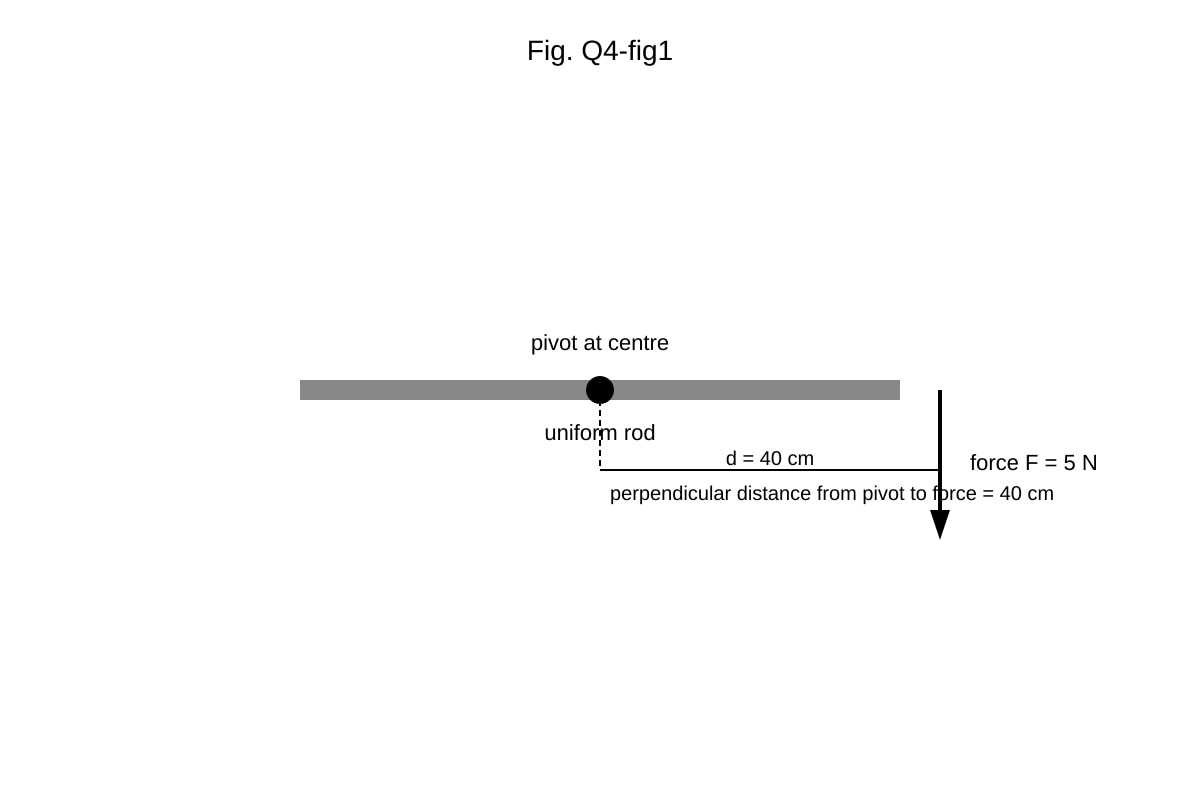
Q4 [2 marks]
Answer: Moment = 5 N × 0.40 m = 2.0 N·m.
Working: Perpendicular distance = 40 cm = 0.40 m. Moment = F × d = 5 × 0.40 = 2.0 N·m.
Marking: 1 mark conversion/distance, 1 mark answer with unit.
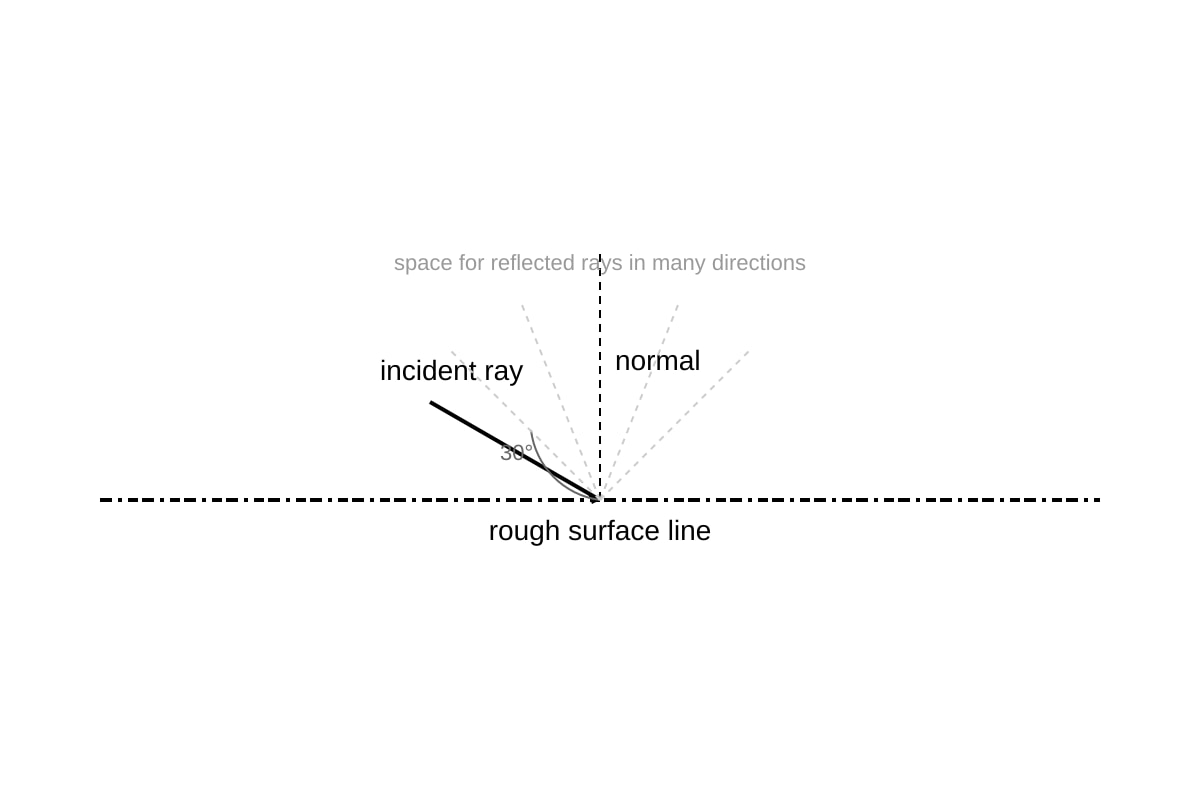
Q5 [1 mark]
Answer: Reflected rays drawn in many directions (diffuse reflection).
Teaching note: White paper is rough; light scatters. Not parallel rays.
Section B: Energy and Electricity (Q6–10) [16 marks]
Q6 [2 marks]
Answer: Advantage: renewable / no pollution. Disadvantage: depends on sunlight / expensive panels.
Marking: 1 mark each.
Q7 [1 mark]
Answer: 70 J (100 – 30 = 70 J heat).
Teaching note: Energy conserved; rest becomes heat.
Q8 [1 mark]
Answer: Earth wire (green/yellow).
Teaching note: Earth wire connects casing to ground for safety.
Q9 [2 marks]
Answer: Brighter. Two cells in series double voltage → more current → brighter lamp.
Marking: 1 mark brighter, 1 mark reason.
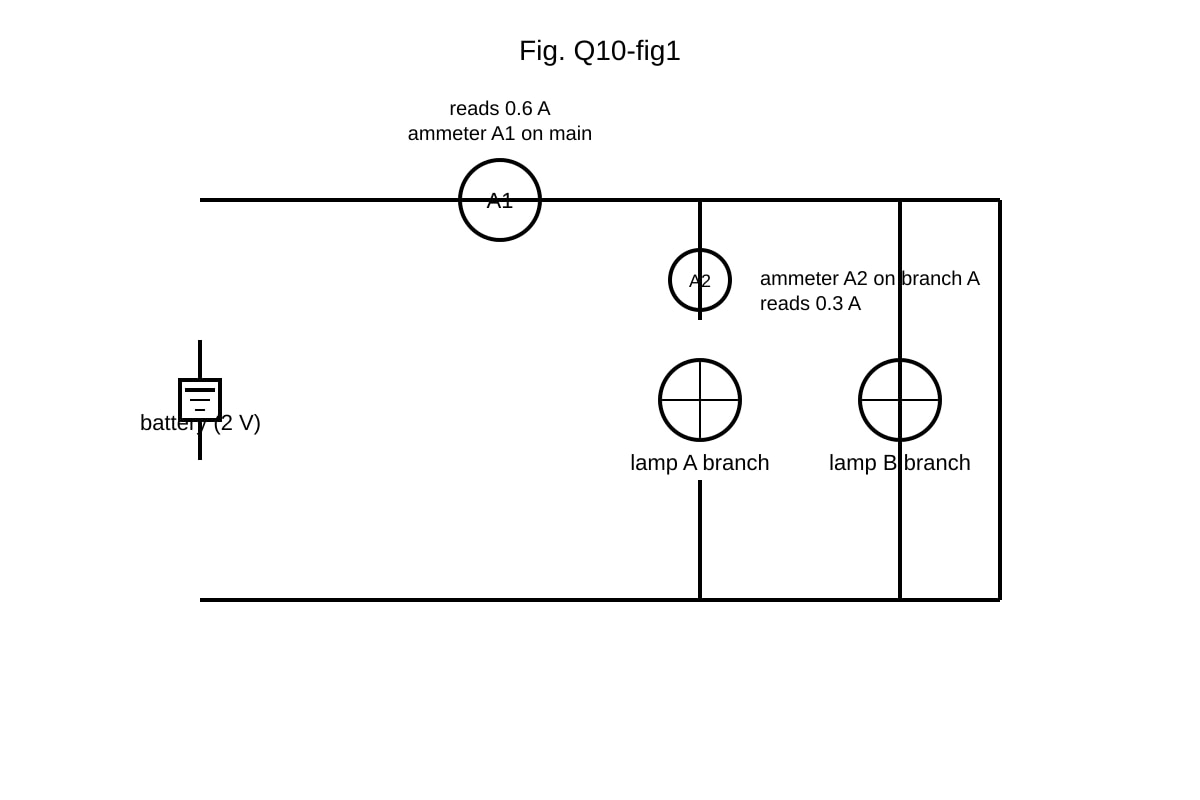
Q10 [2 marks]
Answer: 0.3 A. In parallel, total current splits equally for identical branches; A1 = A2 + A_B → 0.6 = 0.3 + 0.3.
Marking: 1 mark reading, 1 mark explanation.
Section C: Heat and Matter (Q11–15) [16 marks]
Q11 [1 mark]
Answer: Temperature is the degree of hotness of an object.
Q12 [1 mark]
Answer: Thermostat (bimetallic strip).
Q13 [2 marks]
Answer: Float. Object density = 200/250 = 0.8 g/cm³ < liquid density → floats.
Marking: 1 mark float, 1 mark density comparison.
Q14 [2 marks]
Answer: pH 7, neutral. Green on universal indicator = neutral.
Marking: 1 mark pH, 1 mark neutral.
Q15 [2 marks]
Answer: Condensation is gas to liquid; heat flows from gas/liquid to cooler surroundings.
Marking: 1 mark process, 1 mark heat direction.
Section D: Data and Structured (Q16–20) [16 marks]
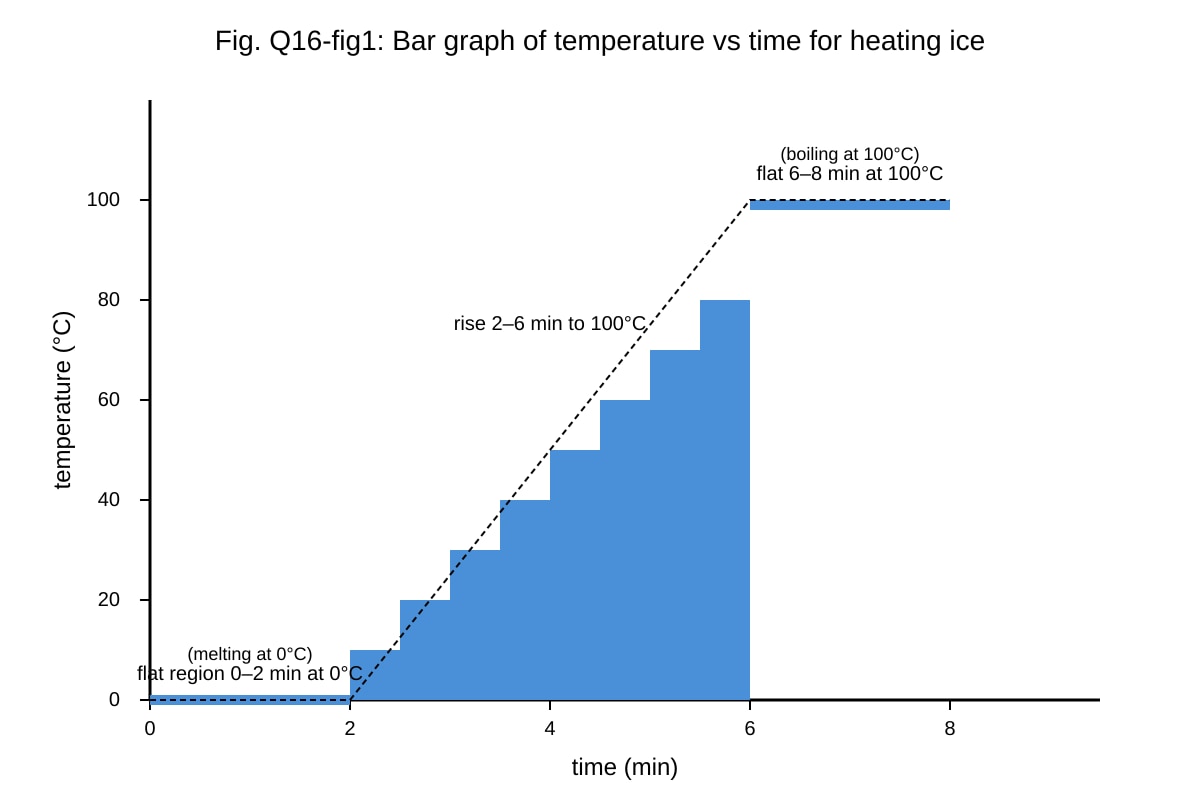
Q16 [3 marks]
Answer: 100°C. At 6–8 min, boiling occurs; temperature constant as heat breaks bonds, liquid→gas.
Marking: 1 mark 100°C, 2 marks explanation.
Q17 [2 marks]
Answer: 4 N (weight/gravitational force), spring balance.
Marking: 1 mark force, 1 mark instrument.
Q18 [3 marks]
Answer: GPE = mgh = 800 × 10 × 5 = 40 000 J.
Working: m=800 kg, g=10 N/kg, h=5 m.
Marking: 1 mark formula, 1 mark sub, 1 mark answer.
Q19 [2 marks]
Answer: e.g., tie hair back, check rubber tubing, close air hole when lighting. (Any two)
Marking: 1 mark each.
Q20 [3 marks]
Answer: Load moment = 20×10 = 200 N·cm. Effort moment = 5×d = 200 → d = 40 cm.
Marking: 1 mark load moment, 1 mark equation, 1 mark answer.