AI Generated Quiz
Secondary 1 Mathematics Calculus Quiz
Free Sec 1 Maths Calculus quiz, Nemo3 AI version, with questions, answers, and syllabus-aligned practice for Singapore students.
These static practice materials are generated from the site's syllabus and paper-generation workflow, with source and model context shown so students and parents can evaluate the material before use.
Questions
Free quiz and exam paper access
Enter your details to view this paper
Your access is remembered on this device.
Answers
Secondary 1 Mathematics Quiz - Calculus (Answer Key)
Total Marks: 40
Section A: Gradient and Rate of Change (Questions 1–5, 10 marks)
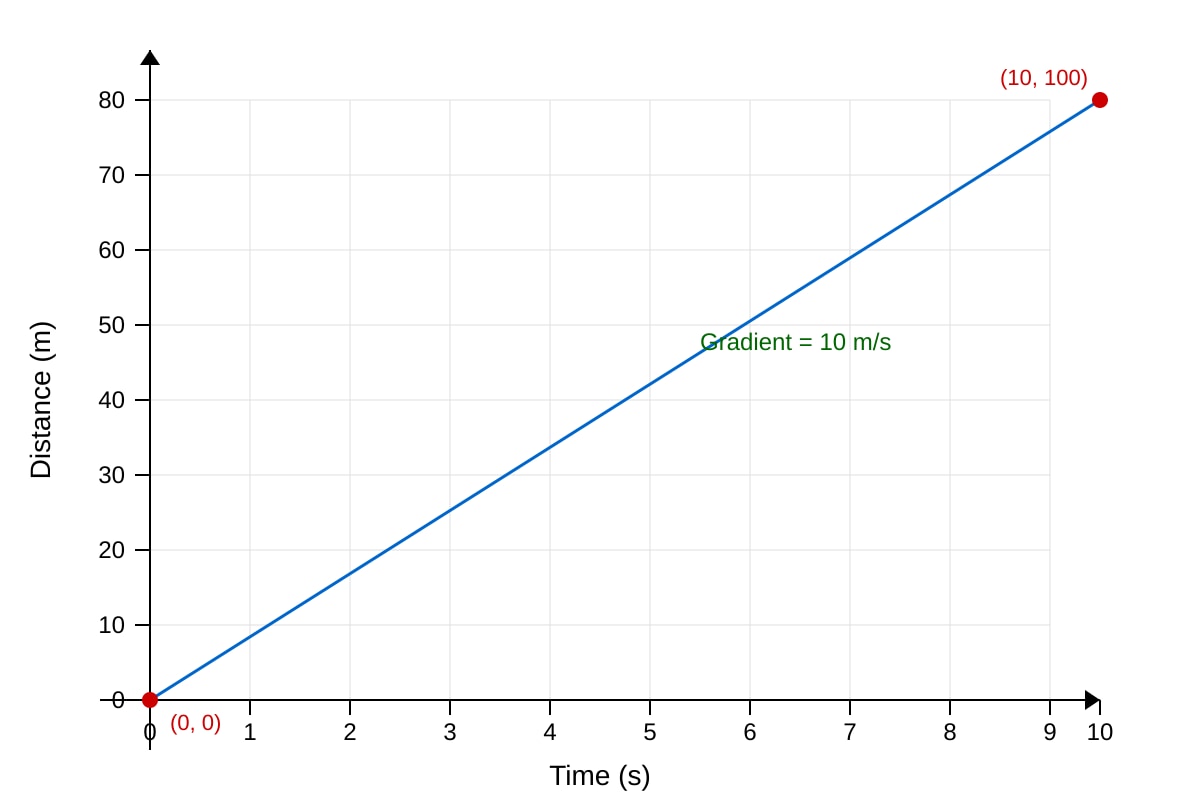
1. Distance-time graph of a car
(a) Speed = gradient = m/s
Answer: 10 m/s [1]
(b) The gradient of a distance-time graph represents the speed (or velocity) of the object.
Answer: The gradient represents the speed of the car. [1]
Teaching Note: For a distance-time graph, gradient = = speed. A straight line means constant speed.
2. Particle with
(a) Average speed =
Average speed = m/s
Answer: 14 m/s [2]
Marks: 1 for correct and , 1 for correct average speed
(b) Instantaneous speed =
At : m/s
Answer: 14 m/s [2]
Marks: 1 for correct derivative, 1 for correct substitution and answer
Teaching Note: Average speed uses total distance over total time. Instantaneous speed is the derivative . Here both give 14 m/s by coincidence (the function is quadratic, so average rate over symmetric interval equals instantaneous rate at midpoint).
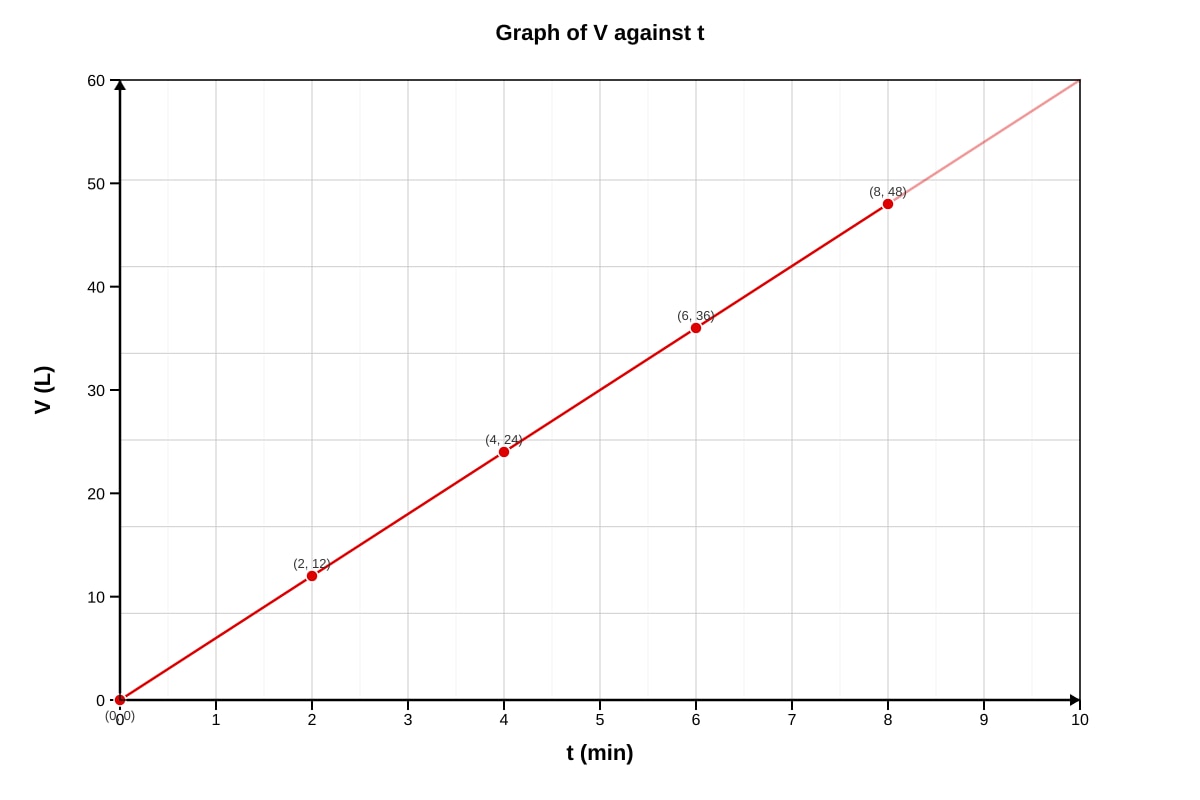
3. Volume of water in a tank
(a) Points plotted: (0,0), (2,12), (4,24), (6,36), (8,48). Straight line through origin.
Answer: Graph drawn correctly [1] (implied in part b/c)
(b) Rate of flow = gradient = L/min
Answer: 6 L/min [1]
(c)
Answer: [1]
Teaching Note: Constant rate of change means linear relationship. Gradient = rate of flow. Equation is .
4. Gradient of tangent to at
At :
Answer: [2]
Marks: 1 for correct derivative, 1 for correct evaluation
Teaching Note: The gradient of the tangent to a curve at a point is the value of the derivative at that point. For , .
5. Balloon volume
(a)
At : cm³/s
Answer: 24 cm³/s [2]
Marks: 1 for correct derivative, 1 for correct evaluation
(b) The volume is increasing at a rate of 24 cm³ per second when seconds.
Answer: The volume is increasing at 24 cm³/s at that instant. [1]
Teaching Note: is the rate of change of volume with respect to time. Units are cm³/s. "Increasing" because derivative is positive.
Section B: Area Under Graphs and Accumulation (Questions 6–12, 16 marks)
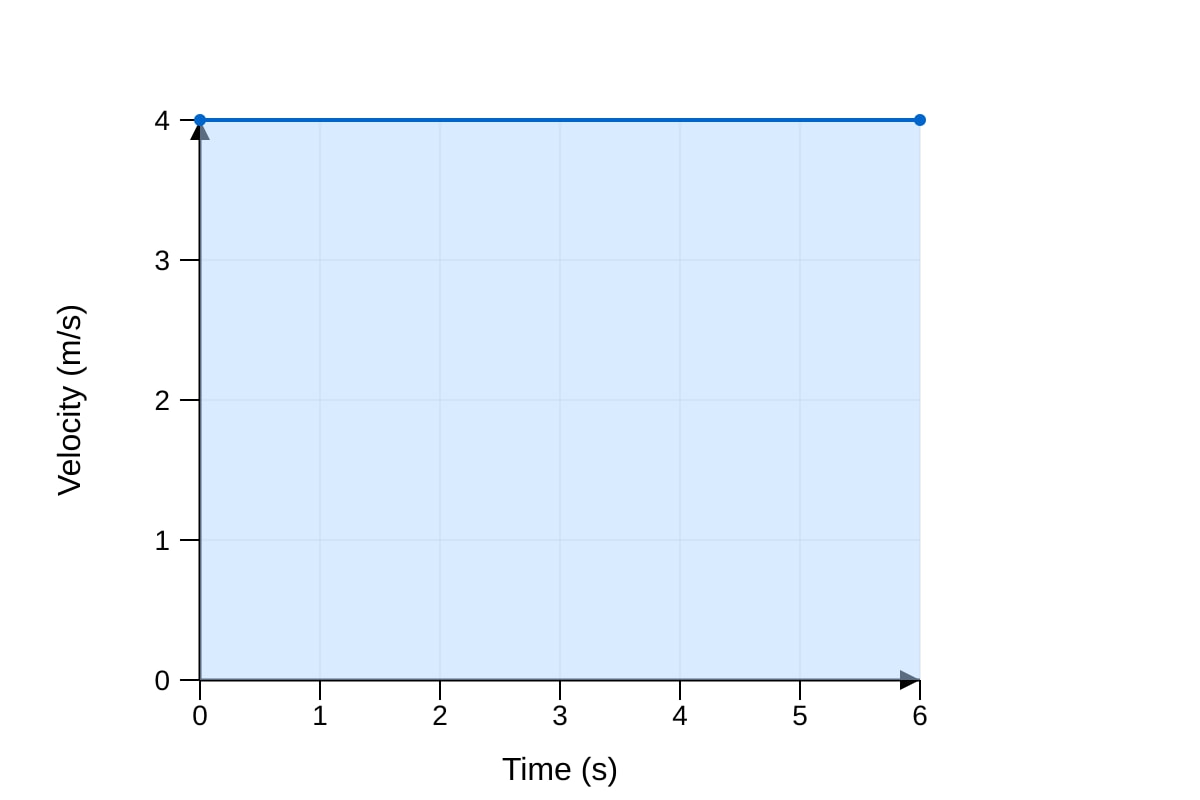
6. Velocity-time graph (constant velocity)
(a) Distance = area under graph = rectangle area = m
Answer: 24 m [2]
Marks: 1 for identifying area = distance, 1 for correct calculation
(b) Average velocity = m/s
Answer: 4 m/s [1]
Teaching Note: For velocity-time graphs, area under graph = displacement (distance if velocity doesn't change sign). Constant velocity means average = constant value.
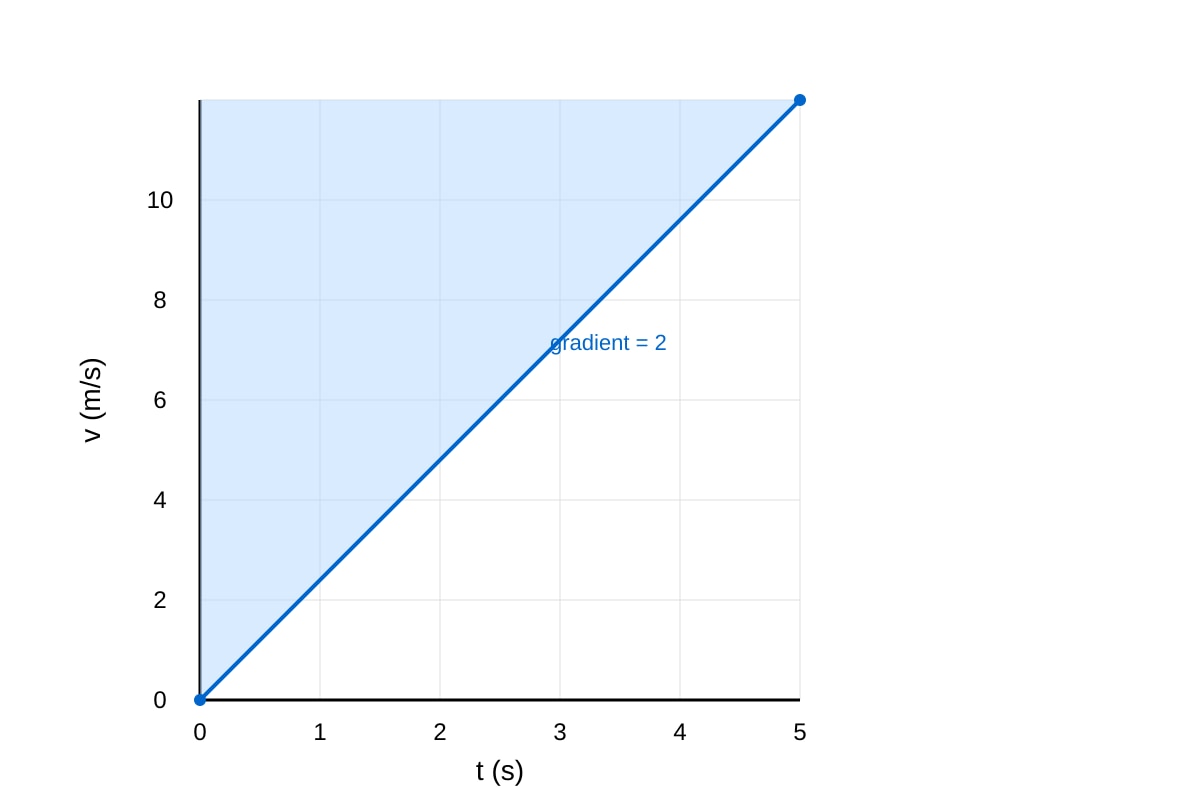
7. Car accelerating uniformly:
(a) Graph: straight line through (0,0) and (5,10). Area under graph shaded.
Answer: Graph sketched correctly [1] (implied in part b)
(b) Distance = area of triangle = m
Answer: 25 m [2]
Marks: 1 for correct triangle area formula, 1 for correct answer
(c) Area = m. Verified.
Answer: Verified: m [1]
Teaching Note: For (uniform acceleration from rest), v-t graph is a triangle. Distance = area = .
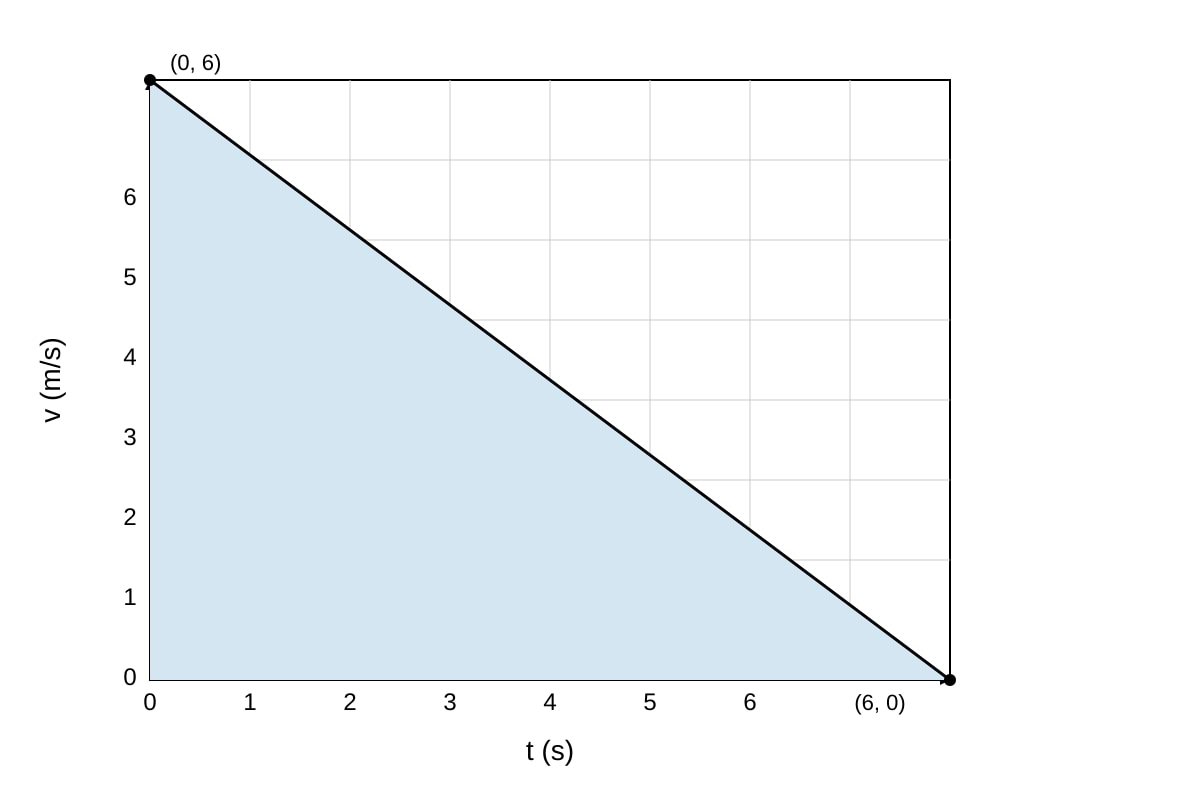
8. Velocity
(a) Graph: straight line from (0,6) to (6,0). Area under graph shaded.
Answer: Graph sketched correctly [1] (implied in part b)
(b) Distance = area of triangle = m
Answer: 18 m [2]
Marks: 1 for correct area method, 1 for correct answer
(c) Particle at rest when : s
Answer: s [1]
Teaching Note: Velocity decreases linearly to zero. Area under v-t graph gives distance. Particle stops when velocity reaches zero.
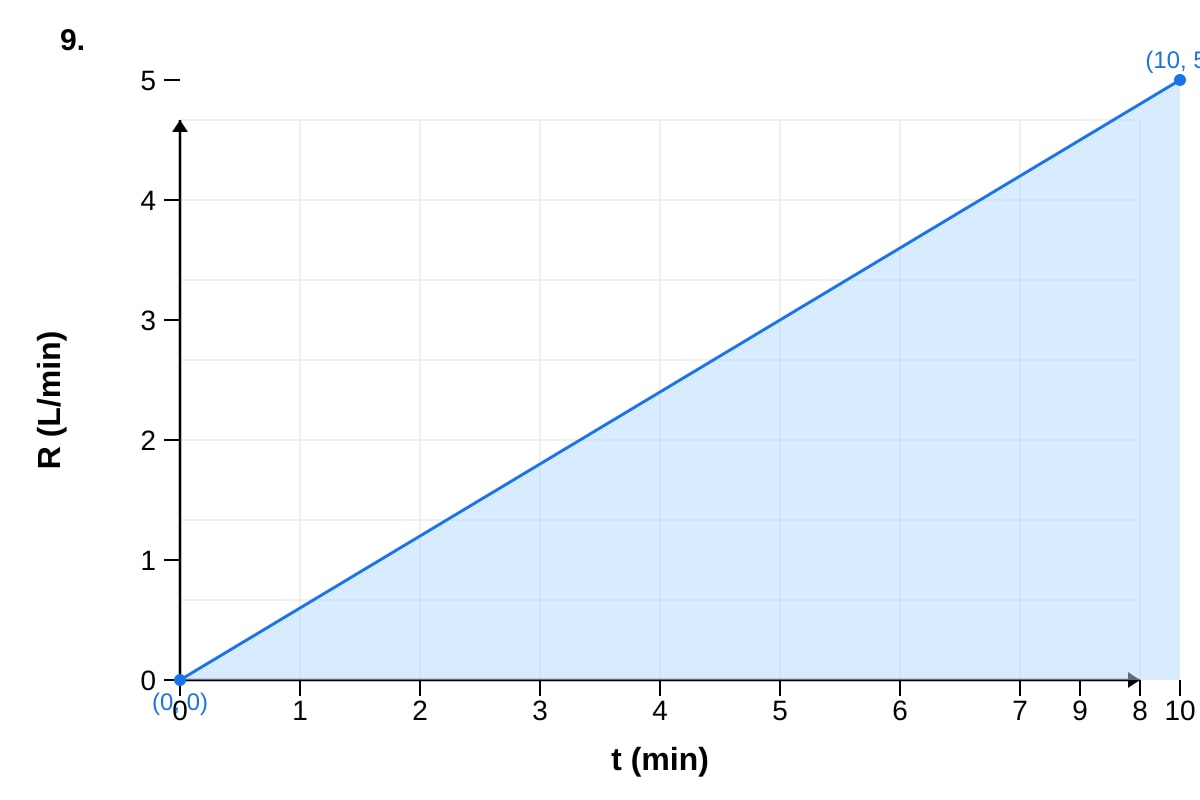
9. Rate of water flow vs
(a) Total volume = area under graph = triangle area = L
Answer: 25 L [2]
Marks: 1 for area method, 1 for correct answer
(b) Average rate = L/min
Answer: 2.5 L/min [1]
Teaching Note: For rate-time graphs, area = total quantity. Average rate = total quantity / total time.
10. Velocity
(a) Distance = area under curve = m
Answer: 8 m [3]
Marks: 1 for setting up integral/area concept, 1 for correct integration, 1 for correct evaluation
Teaching Note: For non-linear velocity, area under curve requires integration. . At Sec 1 level, this may be done by "area under curve" approximation or given as integration.
(b) Acceleration
At : m/s²
Answer: 6 m/s² [1]
Teaching Note: Acceleration is the rate of change of velocity: . For , .
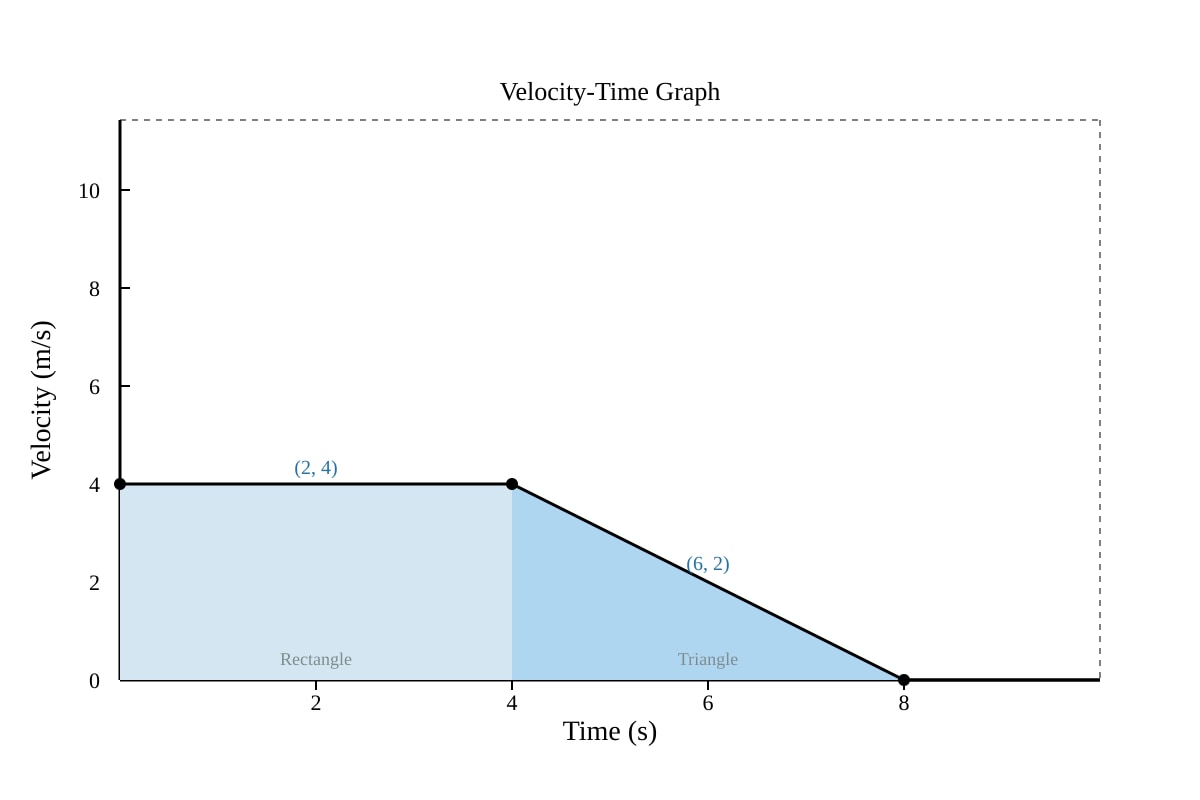
11. Velocity-time graph (two sections)
(a) Distance (0 to 4) = rectangle area = m
Answer: 16 m [1]
(b) Distance (4 to 8) = triangle area = m
Answer: 8 m [2]
Marks: 1 for identifying triangle, 1 for correct calculation
(c) Total distance = m
Answer: 24 m [1]
Teaching Note: Split the area into simple shapes. Rectangle for constant velocity, triangle for uniformly changing velocity.
12. Oil spill radius increasing at constant rate
(a) cm/min, so
At : cm
Answer: 13 cm [2]
Marks: 1 for correct linear model, 1 for correct evaluation
(b) Initial area =
Final area =
Increase = cm²
Answer: 216.66 cm² (or cm²) [2]
Marks: 1 for correct area difference method, 1 for correct calculation
Teaching Note: Constant rate of change of radius means linear increase. Area increase is difference of two circles. Use as instructed.
Section C: Applications and Problem Solving (Questions 13–20, 14 marks)
13. Stone thrown upwards:
(a) Initial velocity = at
At : m/s
Answer: 20 m/s [1]
(b) Maximum height when : s
Answer: s [2]
Marks: 1 for setting , 1 for correct solution
(c) Maximum height = m
Answer: 20 m [1]
Teaching Note: Projectile motion under gravity (simplified m/s²). Velocity is derivative of height. At maximum height, velocity = 0.
14. Curve , gradient at (2,6) is 7
Point on curve: ... (1)
Gradient:
At : ... (2)
Subtract (1) from (2):
Substitute into (1):
Answer: , [3]
Marks: 1 for point equation, 1 for gradient equation, 1 for solving system
Teaching Note: Two conditions give two equations. Point gives -value equation. Gradient gives derivative equation. Solve simultaneously.
15. Rectangular tank, base area 2000 cm², flow rate L/min
(a) Rate of volume increase = L/min = cm³/min
At : rate = cm³/min
Rate of level increase = cm/min
Answer: 10 cm/min [3]
Marks: 1 for unit conversion (L to cm³), 1 for correct rate at t=5, 1 for dividing by base area
(b) Total volume = L
Answer: 200 L [2]
Marks: 1 for correct integral setup, 1 for correct evaluation
Teaching Note: 1 L = 1000 cm³. Rate of level change = (rate of volume change) / (base area). Total volume = integral of rate.
16. Velocity
(a) At rest when : s
Answer: s and s [2]
Marks: 1 for setting , 1 for correct factorization and solutions
(b) Acceleration
At : m/s²
Answer: 0 m/s² [1]
(c) At , . This is the minimum velocity point (vertex of parabola).
For , (slowing down if ). For , (speeding up).
At exactly , acceleration is zero, so the particle is neither speeding up nor slowing down (instantaneous transition).
Answer: Neither speeding up nor slowing down; acceleration is zero at t=3, which is the minimum velocity point. [2]
Marks: 1 for correct acceleration value, 1 for correct interpretation
Teaching Note: Speeding up when and have same sign; slowing down when opposite signs. At , it's a turning point in velocity.
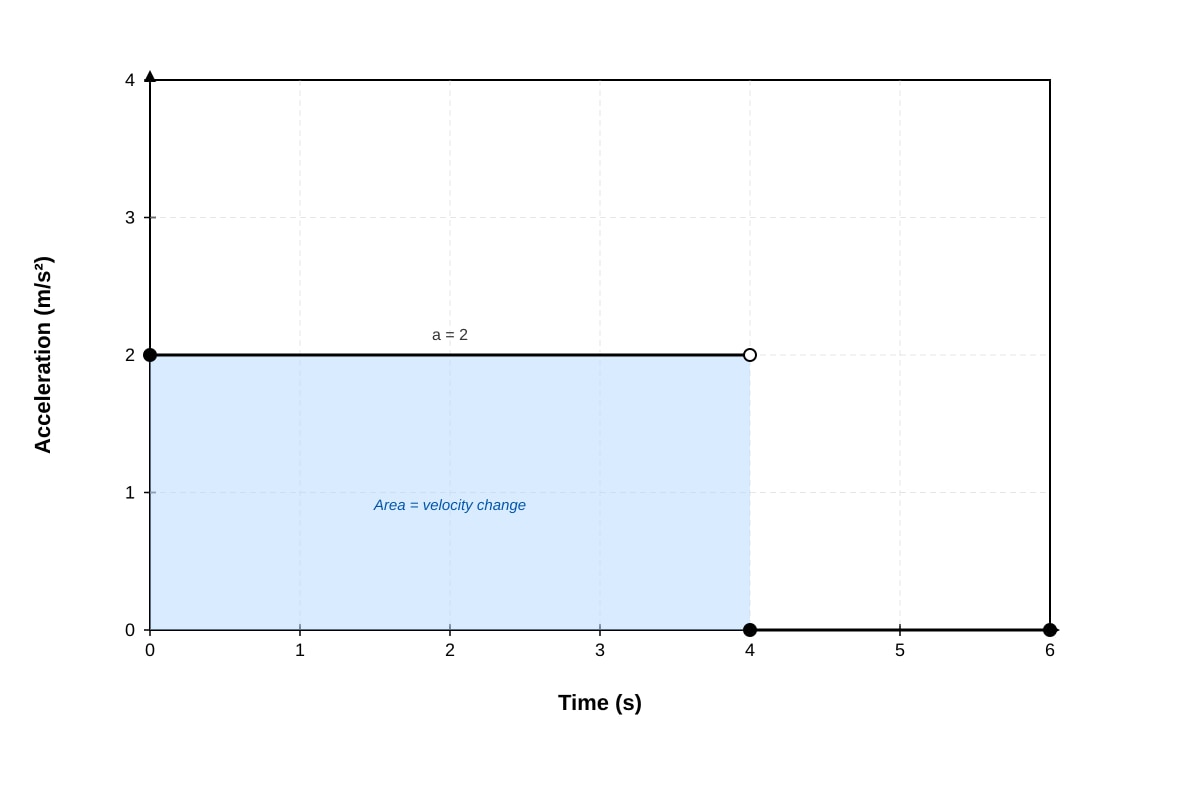
17. Acceleration-time graph
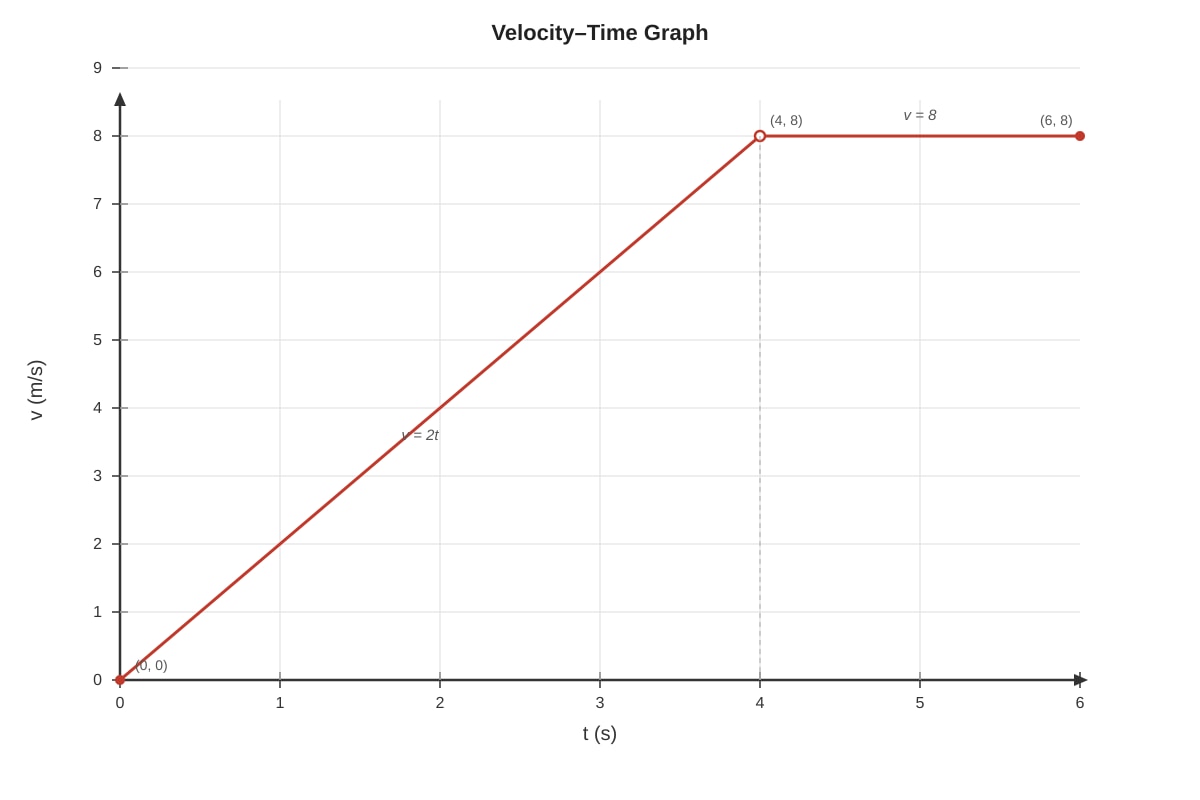
(a) Velocity at = area under a-t graph from 0 to 4 = m/s
Answer: 8 m/s [2]
Marks: 1 for area = velocity change, 1 for correct calculation
(b) From to , , so velocity constant = 8 m/s
Answer: 8 m/s [1]
(c) v-t graph: straight line from (0,0) to (4,8) with gradient 2, then horizontal line from (4,8) to (6,8).
Answer: Graph sketched correctly [1] (implied)
Teaching Note: Area under a-t graph = change in velocity. Constant acceleration gives linear velocity increase. Zero acceleration gives constant velocity.
18. Gradient function , passes through (1, -2)
(a)
At (1, -2):
Equation:
Answer: [3]
Marks: 1 for correct integration, 1 for using point to find C, 1 for final equation
(b) Stationary points when :
At : → (0, 0)
At : → (2, -4)
Answer: (0, 0) and (2, -4) [2]
Marks: 1 for setting derivative to zero and solving, 1 for correct coordinates
Teaching Note: Integrate gradient function to get curve equation. Use given point to find constant. Stationary points where gradient = 0.
19. Spherical balloon, cm³/s, find when
cm/s
Using : cm/s
Answer: cm/s (≈ 0.159 cm/s) [3]
Marks: 1 for chain rule setup, 1 for correct derivative , 1 for correct final answer
Teaching Note: Related rates problem. Use chain rule: . (surface area of sphere).
20. Displacement
(a) Velocity
Acceleration
Answer: , [2]
Marks: 1 for correct velocity, 1 for correct acceleration
(b) At rest when :
s and s
Answer: s and s [2]
Marks: 1 for setting , 1 for correct solutions
(c) Total distance = sum of distances in each direction
Need to check sign of velocity in intervals:
: (e.g., )
: (e.g., )
: (e.g., )
Distance = m
Answer: 12 m [2]
Marks: 1 for correct method (splitting at turning points), 1 for correct total
Teaching Note: Total distance ≠ displacement when velocity changes sign. Must split integral at points where and sum absolute distances. Displacement = m, but distance = 12 m.
End of Answer Key