From Real Exams Quiz
Secondary 1 Mathematics Calculus Quiz
Free Sec 1 Maths Calculus quiz, Exam version, with questions, answers, and syllabus-aligned practice for Singapore students.
These static practice materials are generated from the site's syllabus and paper-generation workflow, with source and model context shown so students and parents can evaluate the material before use.
Questions
Free quiz and exam paper access
Enter your details to view this paper
Your access is remembered on this device.
Answers
Secondary 1 Mathematics Quiz - Calculus (Answer Key)
Total Marks: 50
Section A: Gradient of a Straight Line (Questions 1 – 5)
Question 1
(a) Gradient [2 marks]
(b) The gradient represents the vertical change (rise) divided by the horizontal change (run). For every 1 unit moved horizontally, the line rises 2 units vertically. [1 mark]
Teaching Note: The gradient measures how steep a line is. It is calculated as the ratio of the change in to the change in between any two points on the line.
Question 2
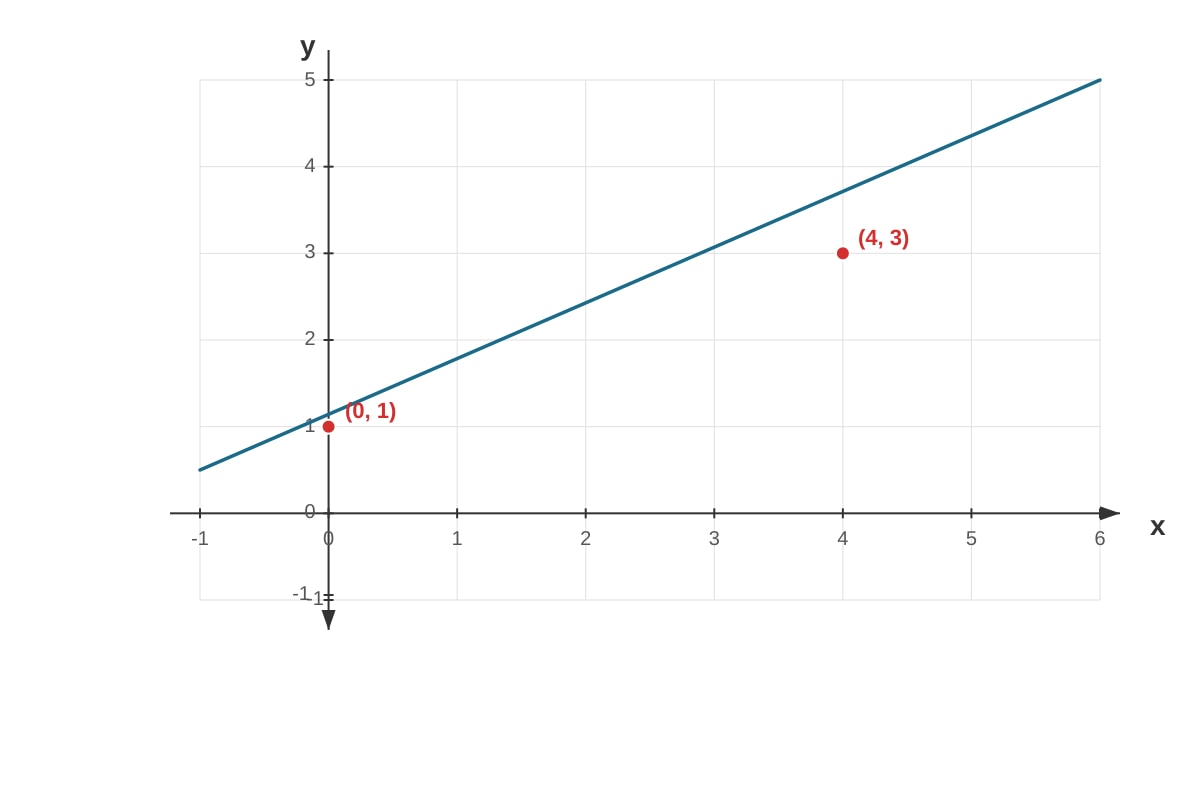
(a) Using with and point : Equation: [2 marks]
(b) The -intercept is 11. [1 mark]
Teaching Note: The -intercept is the value of in the equation . It is the point where the line crosses the -axis (when ).
Question 3
(a) Using the points and : Gradient [2 marks]
(b) The -intercept is 1 (from point ). Equation: [1 mark]
Teaching Note: When a point has , the -value is the -intercept directly. This makes finding the equation straightforward.
Question 4
(a) Vertical change units. [1 mark]
(b) Since the line passes through the origin, . Equation: [1 mark]
Teaching Note: The gradient means for every 5 units moved horizontally, the line rises 2 units vertically. A line through the origin has no -intercept term.
Question 5
(a) Using with and point : Equation: [2 marks]
(b) Substitute into the equation: Since , the point does lie on the line. [2 marks]
Teaching Note: To check if a point lies on a line, substitute the -coordinate into the equation and verify the resulting -value matches the point's -coordinate.
Section B: Linear Functions and Graphs (Questions 6 – 10)
Question 6
| 0 | 1 | 2 | 3 | |
|---|---|---|---|---|
| -3 | -1 | 1 | 3 |
[2 marks: 1 mark for 2-3 correct values, 2 marks for all correct]
Working:
- :
- :
- :
- :
Teaching Note: Substitute each -value into the formula to find the corresponding -value. This creates ordered pairs that can be plotted on a graph.
Question 7
(a) Gradient [1 mark]
(b) -intercept [1 mark]
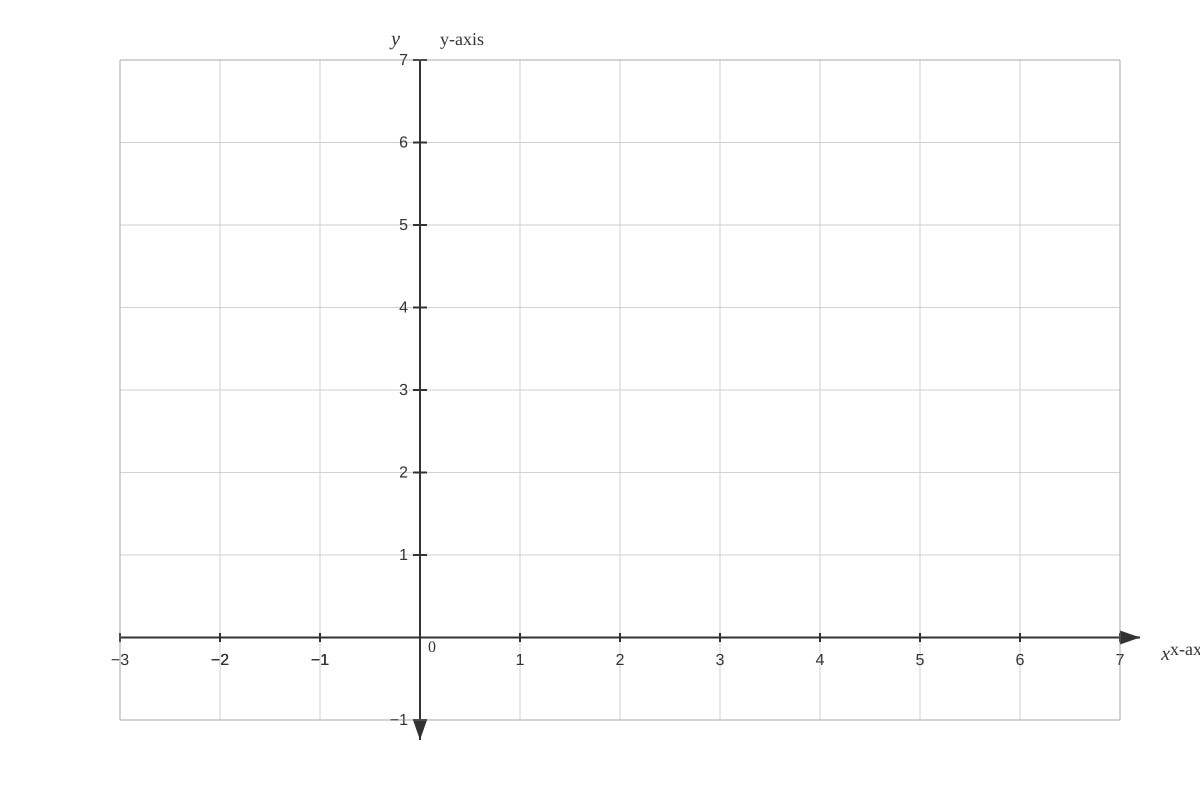
(c) The graph should be a straight line passing through and , sloping downwards from left to right. [2 marks: 1 mark for correct points plotted, 1 mark for correct straight line drawn]
Teaching Note: To draw the graph, plot the -intercept first. Then use the gradient to find another point: move 2 units right and 1 unit down to reach , or move 4 units right and 2 units down to reach .
Question 8
(a) Gradient
Using point : , so
, [3 marks: 1 mark for gradient, 1 mark for substitution, 1 mark for ]
(b) Equation: [1 mark]
Teaching Note: First find the gradient using the two points, then substitute one point into to find the -intercept.
Question 9
(a) [1 mark]
(b) C = 3 + 2(12) = 3 + 24 = \27$ [1 mark]
(c) km [2 marks: 1 mark for forming equation, 1 mark for solving]
Teaching Note: This is a real-world application of a linear function. The fixed fee is the -intercept and the rate per km is the gradient.
Question 10
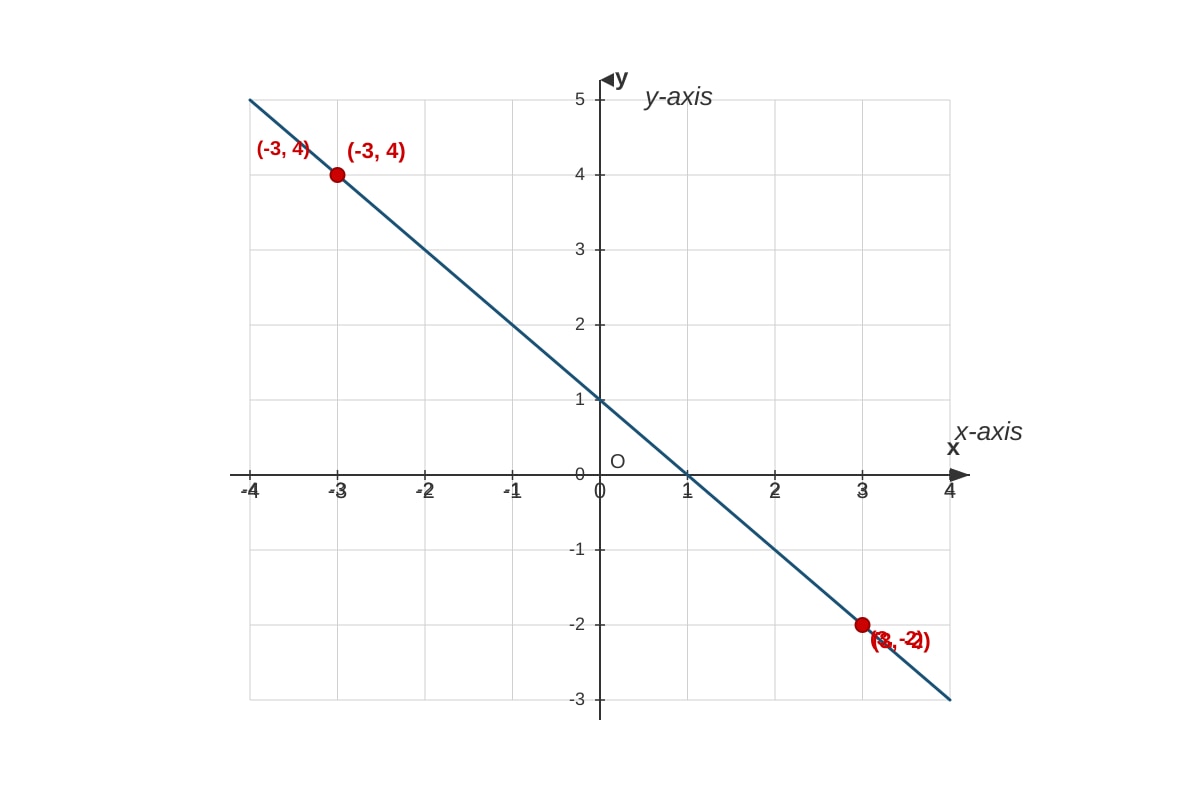
(a) Using the points and : Gradient [2 marks]
(b) Using with and point : Equation: [2 marks]
Teaching Note: A negative gradient means the line slopes downwards from left to right. The -intercept can also be read from the graph where the line crosses the -axis.
Section C: Rate of Change and Applications (Questions 11 – 15)
Question 11
(a) Rate litres per minute [2 marks]
(b) Using the point and rate : litres [2 marks]
Teaching Note: The rate of change is the gradient of the linear relationship. To find the initial amount, work backwards using the equation of the line.
Question 12
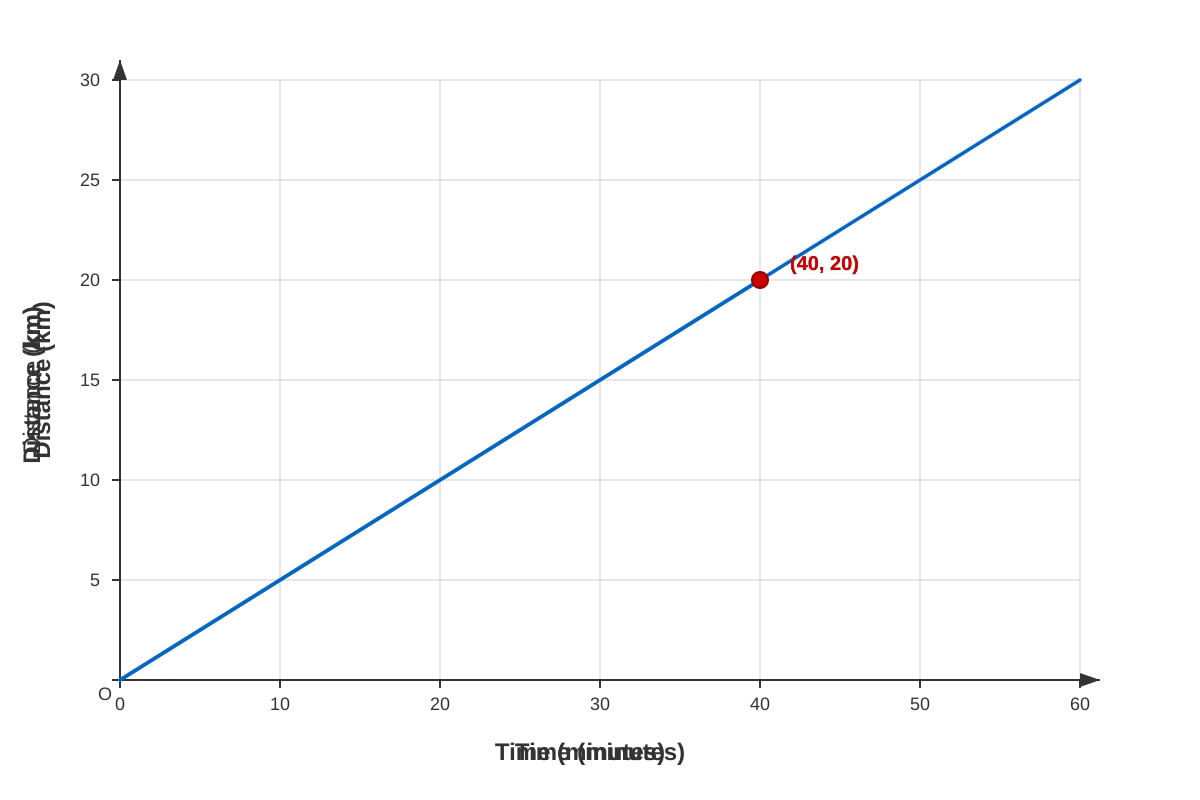
(a) Speed km/min [2 marks]
(b) km/h [2 marks]
Teaching Note: To convert from km/min to km/h, multiply by 60 since there are 60 minutes in an hour. The gradient of a distance-time graph gives the speed.
Question 13
(a) Rate per hour [2 marks]
(b) From 3:00 pm to 5:00 pm is 2 hours. Temperature increase Temperature at 5:00 pm [2 marks]
Teaching Note: The rate of change is constant, so we can extend the linear pattern. The time difference between 1:00 pm and 3:00 pm is 2 hours, and between 3:00 pm and 5:00 pm is also 2 hours.
Question 14
(a) Initial height cm [1 mark]
(b) cm [1 mark]
(c) When the candle burns completely, : minutes [2 marks]
Teaching Note: The initial height is the value of when . The gradient represents the rate at which the candle burns (0.4 cm per minute). To find when it burns completely, set .
Question 15
(a) Speed km/h [1 mark]
(b) km [1 mark]
(c) hours [2 marks]
Teaching Note: In the formula , the coefficient of (65) represents the speed. This is a direct proportion relationship where distance is proportional to time.
Section D: Gradient and Equation of a Line (Questions 16 – 20)
Question 16
(a) Gradient , which is undefined. [1 mark]
(b) The line is vertical. [1 mark]
Teaching Note: When the -coordinates are the same, the line is vertical and has an undefined gradient. Division by zero is not possible in mathematics.
Question 17
(a) Gradient [1 mark]
(b) The line is horizontal at . Equation: [1 mark]
Teaching Note: When the -coordinates are the same, the line is horizontal with a gradient of 0. The equation is simply (the common -value).
Question 18
(a) Substitute into : [2 marks]
(b) Equation: [1 mark]
Teaching Note: When the gradient is given and a point is known, substitute the coordinates into the equation to find the unknown -intercept.
Question 19
(a) Using with and point : Equation: [2 marks]
(b) At the -intercept, : The -intercept is 20. [2 marks]
Teaching Note: The -intercept is where the line crosses the -axis, which occurs when . Substitute into the equation and solve for .
Question 20
(a) Using points and : Gradient [2 marks]
(b) Using with and point : Equation: [2 marks]
(c) When : [1 mark]
Teaching Note: Since all three points lie on the same straight line, the gradient between any two points will be the same. The equation can be verified by checking that point satisfies : ✓
END OF ANSWER KEY