From Real Exams Exam Paper

Secondary 1 Mathematics Semestral Assessment 2 (End of Year) Paper 1

Free Nemo AI-generated Sec 1 Maths SA2 Paper 1 with questions, answers, and syllabus-aligned practice for Singapore students preparing for exams.

These static practice materials are generated from the site's syllabus and paper-generation workflow, with source and model context shown so students and parents can evaluate the material before use.

Secondary 1 Mathematics From Real Exams Generated by NVIDIA Nemotron 3 Ultra 550B A55B Free Updated 2026-06-14

Questions

<!-- TuitionGoWhere generation metadata: stage=3-1; model=nvidia/nemotron-3-ultra-550b-a55b:free; model_label=NVIDIA Nemotron 3 Ultra 550B A55B Free; generated=2026-06-14; Sources: Stage 2-1 real exam-derived templates and Stage 2-2 exam-enriched syllabus. -->

TuitionGoWhere Practice Paper - Mathematics Secondary 1

TuitionGoWhere Secondary School (AI)

Subject: Mathematics
Level: Secondary 1 (G3)
Paper: SA2 Version 1
Duration: 1 hour 30 minutes
Total Marks: 60

Name: _______________________
Class: _______________________
Date: _______________________


Instructions to Candidates

  1. Write your name, class, and date in the spaces provided above.
  2. Answer all questions.
  3. Write your answers and working in the spaces provided.
  4. Omission of essential working will result in loss of marks.
  5. Calculators may be used unless otherwise stated.
  6. If the degree of accuracy is not specified, give answers to 3 significant figures.
  7. The number of marks is given in brackets [ ] at the end of each question or part question.
  8. The total number of marks for this paper is 60.

Section A: Numbers and Operations [15 marks]

Answer all questions in this section.

1

Express 360 as a product of its prime factors in index notation.
[2]

Answer: ________________________________________________

2

Find the highest common factor (HCF) and lowest common multiple (LCM) of 84 and 126 using prime factorisation.
[3]

Answer: HCF = _______________ LCM = _______________

3

Evaluate the following without using a calculator. Show your working clearly.

(a) 15+8×(3)(12)÷4-15 + 8 \times (-3) - (-12) \div 4
[2]

Answer: ________________________________________________

(b) (2)3×(5)210\frac{(-2)^3 \times (-5)^2}{-10}
[2]

Answer: ________________________________________________

4

Arrange the following numbers in ascending order:
73, 2.3, 5, 214-\frac{7}{3},\ -2.3,\ -\sqrt{5},\ -2\frac{1}{4}
[2]

Answer: ________________________________________________

5

(a) Round off 0.004567 to 2 significant figures.
[1]

Answer: ________________________________________________

(b) Estimate the value of 41.3×19.70.206\frac{41.3 \times 19.7}{0.206} by rounding each number to 1 significant figure.
[2]

Answer: ________________________________________________

6

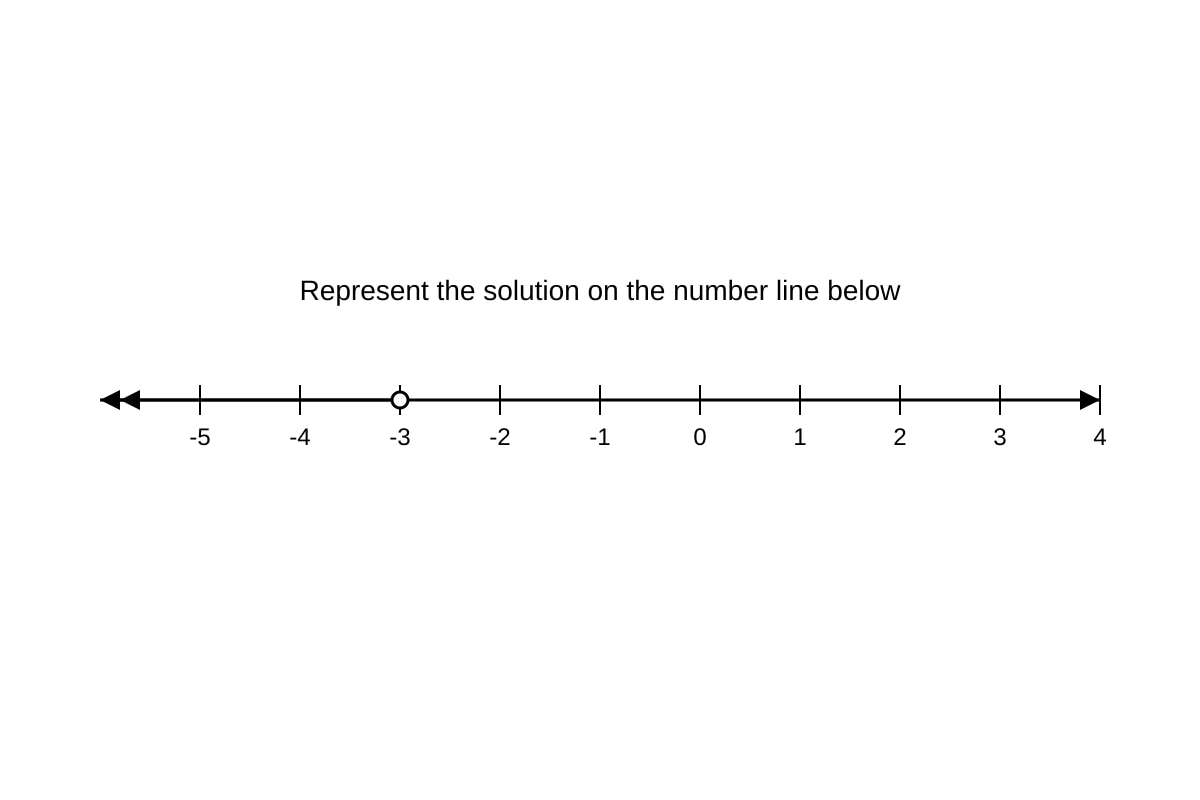
Solve the inequality 3x+7>16-3x + 7 > 16 and represent the solution on the number line below.
[3]

<image_placeholder> id: Q6-fig1 type: diagram linked_question: Q6 description: Number line from -5 to 5 with integer markings, for illustrating inequality solution labels: Integers -5 to 5 marked, arrow ends values: None must_show: Open/closed circle at correct position, arrow pointing in correct direction </image_placeholder>


Section B: Ratio, Rate, and Proportion [20 marks]

Answer all questions in this section.

7

Express the ratio 2.4:1.6:0.82.4 : 1.6 : 0.8 in its simplest form.
[2]

Answer: ________________________________________________

8

A sum of money is divided among three children, Alan, Ben, and Carol, in the ratio 5:3:25 : 3 : 2. If Carol receives $120 less than Alan, find the total sum of money.
[3]

Answer: ________________________________________________

9

The scale of a map is 1:250001 : 25\,000.

(a) The distance between two towns on the map is 8.4 cm. Find the actual distance between the towns in kilometres.
[2]

Answer: ________________________________________________

(b) A forest reserve has an actual area of 12.5 km². Find its area on the map in cm².
[2]

Answer: ________________________________________________

10

A car travels 240 km using 18 litres of petrol.

(a) Find the petrol consumption rate in km per litre.
[1]

Answer: ________________________________________________

(b) How many litres of petrol are needed to travel 560 km at the same rate?
[2]

Answer: ________________________________________________

11

It takes 6 workers 8 hours to paint a house. Assuming all workers work at the same rate, how many hours will it take 4 workers to paint the same house?
[3]

Answer: ________________________________________________

12

yy is directly proportional to the square of xx. When x=3x = 3, y=54y = 54.

(a) Find the equation connecting yy and xx.
[2]

Answer: ________________________________________________

(b) Find the value of yy when x=5x = 5.
[1]

Answer: ________________________________________________

(c) Find the value of xx when y=216y = 216.
[2]

Answer: ________________________________________________

13

The pressure PP of a gas is inversely proportional to its volume VV. When V=4V = 4 m³, P=150P = 150 kPa.

(a) Find the equation connecting PP and VV.
[2]

Answer: ________________________________________________

(b) Find the pressure when the volume is 6 m³.
[1]

Answer: ________________________________________________


Section C: Percentage and Applications [15 marks]

Answer all questions in this section.

14

In a school, 60% of the students are girls. There are 240 more girls than boys. Find the total number of students in the school.
[3]

Answer: ________________________________________________

15

The price of a laptop was increased by 20% to $1440. What was the original price of the laptop?
[2]

Answer: ________________________________________________

16

A shopkeeper bought a watch for $80 and sold it at a profit of 25%. During a sale, he gave a discount of 10% on the selling price. Find the sale price of the watch.
[3]

Answer: ________________________________________________

17

The population of a town increased from 45,000 to 51,750 over a period of 5 years. Find the percentage increase per year, assuming the increase was constant each year.
[3]

Answer: ________________________________________________

18

Mr Tan deposited $12,000 in a bank that pays simple interest at 2.5% per annum. How much interest will he earn after 3 years? What will be the total amount in his account?
[2]

Answer: Interest = _______________ Total Amount = _______________

19

A car depreciates in value by 15% each year. If the car was bought for $80,000, find its value after 2 years. Give your answer to the nearest dollar.
[2]

Answer: ________________________________________________


Section D: Real-World Problems [10 marks]

Answer all questions in this section.

20

A rectangular tank measuring 60 cm by 40 cm by 30 cm is filled with water to a height of 20 cm. Water flows into the tank at a rate of 2 litres per minute. At the same time, water leaks out of the tank at a rate of 0.5 litres per minute.

(a) Find the volume of water in the tank initially in litres.
[1]

Answer: ________________________________________________

(b) Find the net rate of increase of water in the tank in litres per minute.
[1]

Answer: ________________________________________________

(c) How long will it take to fill the tank completely? Give your answer in minutes.
[3]

Answer: ________________________________________________

(d) If the leak is fixed after 15 minutes, how much longer will it take to fill the tank from that point?
[3]

Answer: ________________________________________________


End of Paper

Answers

<!-- TuitionGoWhere generation metadata: stage=3-1; model=nvidia/nemotron-3-ultra-550b-a55b:free; model_label=NVIDIA Nemotron 3 Ultra 550B A55B Free; generated=2026-06-14; Sources: Stage 2-1 real exam-derived templates and Stage 2-2 exam-enriched syllabus. -->

TuitionGoWhere Practice Paper - Mathematics Secondary 1

SA2 Version 1 - Answer Key and Marking Scheme

Total Marks: 60


Section A: Numbers and Operations [15 marks]

1

Answer: 23×32×52^3 \times 3^2 \times 5

Working:

  • 360=2×180360 = 2 \times 180
  • =2×2×90= 2 \times 2 \times 90
  • =2×2×2×45= 2 \times 2 \times 2 \times 45
  • =23×3×15= 2^3 \times 3 \times 15
  • =23×3×3×5= 2^3 \times 3 \times 3 \times 5
  • =23×32×5= 2^3 \times 3^2 \times 5

Marking: 1 mark for correct prime factors, 1 mark for index notation.

Common mistake: Writing 2×2×2×3×3×52 \times 2 \times 2 \times 3 \times 3 \times 5 without index notation loses 1 mark.


2

Answer: HCF = 42, LCM = 252

Working:

  • 84=22×3×784 = 2^2 \times 3 \times 7
  • 126=2×32×7126 = 2 \times 3^2 \times 7
  • HCF = product of lowest powers of common primes = 21×31×71=422^1 \times 3^1 \times 7^1 = 42
  • LCM = product of highest powers of all primes = 22×32×71=4×9×7=2522^2 \times 3^2 \times 7^1 = 4 \times 9 \times 7 = 252

Marking: 1 mark for correct prime factorisation of both numbers, 1 mark for HCF, 1 mark for LCM.

Common mistake: Using highest powers for HCF or lowest powers for LCM.


3

(a) Answer: 27-27

Working:

  • 15+8×(3)(12)÷4-15 + 8 \times (-3) - (-12) \div 4
  • =15+(24)(3)= -15 + (-24) - (-3) [Multiplication and division first]
  • =1524+3= -15 - 24 + 3
  • =39+3= -39 + 3
  • =36= -36 Wait, let me recalculate:
  • 15+8×(3)=1524=39-15 + 8 \times (-3) = -15 - 24 = -39
  • (12)÷4=12÷4=3-(-12) \div 4 = 12 \div 4 = 3
  • 39+3=36-39 + 3 = -36

Correction: Answer is 36-36.

Marking: 1 mark for correct order of operations (multiplication/division before addition/subtraction), 1 mark for correct final answer.

Common mistake: Working left to right without order of operations, or mishandling negative signs.

(b) Answer: 2020

Working:

  • (2)3=8(-2)^3 = -8
  • (5)2=25(-5)^2 = 25
  • Numerator: 8×25=200-8 \times 25 = -200
  • 20010=20\frac{-200}{-10} = 20

Marking: 1 mark for correct evaluation of powers, 1 mark for correct final answer.

Common mistake: (2)3=6(-2)^3 = 6 or (5)2=25(-5)^2 = -25.


4

Answer: 73, 5, 214, 2.3-\frac{7}{3},\ -\sqrt{5},\ -2\frac{1}{4},\ -2.3

Working (convert to decimals for comparison):

  • 73=2.333...-\frac{7}{3} = -2.333...
  • 2.3=2.3-2.3 = -2.3
  • 52.236-\sqrt{5} \approx -2.236
  • 214=2.25-2\frac{1}{4} = -2.25

Ascending order (most negative to least negative): 2.333...<2.25<2.236...<2.3-2.333... < -2.25 < -2.236... < -2.3 Wait, let me reorder carefully:

2.333...-2.333... (most negative) 2.25-2.25 2.236...-2.236... 2.3-2.3 No, -2.3 is -2.300, which is more negative than -2.25 and -2.236

Let me redo:

  • 73=2.333...-\frac{7}{3} = -2.333...
  • 2.3=2.300-2.3 = -2.300
  • 52.236-\sqrt{5} \approx -2.236
  • 214=2.250-2\frac{1}{4} = -2.250

Order from smallest (most negative) to largest: 2.333...<2.300<2.250<2.236...-2.333... < -2.300 < -2.250 < -2.236...

So: 73, 2.3, 214, 5-\frac{7}{3},\ -2.3,\ -2\frac{1}{4},\ -\sqrt{5}

Marking: 1 mark for correct conversion/comparison method, 1 mark for correct order.

Common mistake: Forgetting that for negative numbers, larger absolute value means smaller number.


5

(a) Answer: 0.00460.0046

Working: The first two significant figures are 4 and 5. The next digit is 6 ≥ 5, so round up the 5 to 6.

Marking: 1 mark for correct answer.

(b) Answer: 4000040\,000

Working:

  • 41.34041.3 \approx 40 (1 s.f.)
  • 19.72019.7 \approx 20 (1 s.f.)
  • 0.2060.20.206 \approx 0.2 (1 s.f.)
  • 40×200.2=8000.2=4000=4×10³\frac{40 \times 20}{0.2} = \frac{800}{0.2} = 4000 = 4 \times 10^3 Wait: 800/0.2 = 4000, not 40000

Let me recalculate: 800÷0.2=800×5=4000800 \div 0.2 = 800 \times 5 = 4000.

Correction: Answer is 40004000 (or 4×1034 \times 10^3).

Marking: 1 mark for correct rounding to 1 s.f., 1 mark for correct estimation.


6

Answer: x<3x < -3

Working:

  • 3x+7>16-3x + 7 > 16
  • 3x>9-3x > 9 (subtract 7 from both sides)
  • x<3x < -3 (divide by -3, reverse inequality sign)

Number line representation:

  • Open circle at 3-3
  • Arrow pointing left (towards negative infinity)

<image_placeholder> id: Q6-fig1-ans type: diagram linked_question: Q6 description: Number line from -5 to 5 showing solution x < -3 labels: Integers -5 to 5 marked, open circle at -3, arrow pointing left values: None must_show: Open circle at -3, arrow pointing left towards -5 </image_placeholder>

Marking: 1 mark for correct algebraic steps, 1 mark for correct final inequality, 1 mark for correct number line (open circle at -3, arrow left).

Common mistake: Forgetting to reverse inequality sign when dividing by negative number (giving x>3x > -3), or using closed circle instead of open circle.


Section B: Ratio, Rate, and Proportion [20 marks]

7

Answer: 3:2:13 : 2 : 1

Working:

  • 2.4:1.6:0.82.4 : 1.6 : 0.8
  • Multiply by 10: 24:16:824 : 16 : 8
  • Divide by 8: 3:2:13 : 2 : 1

Marking: 1 mark for clearing decimals, 1 mark for simplest form.


8

Answer: 12001200

Working:

  • Ratio: Alan : Ben : Carol = 5:3:25 : 3 : 2
  • Difference between Alan and Carol = 52=35 - 2 = 3 units
  • 33 units = 120120
  • 11 unit = 4040
  • Total units = 5+3+2=105 + 3 + 2 = 10
  • Total sum = 10×40=40010 \times 40 = 400 Wait, that gives 400, but let me check: Carol receives 120lessthanAlan.5units2units=3units=120 less than Alan. 5 units - 2 units = 3 units = 120, so 1 unit = 40.Total=10units=40. Total = 10 units = 400.

Correction: Answer is 400400.

Marking: 1 mark for finding value of 1 unit, 1 mark for total units, 1 mark for final answer.


9

(a) Answer: 2.12.1 km

Working:

  • Map distance = 8.4 cm
  • Scale 1 : 25,000 means 1 cm on map = 25,000 cm actual
  • Actual distance = 8.4×25000=2100008.4 \times 25\,000 = 210\,000 cm
  • =2100= 2100 m =2.1= 2.1 km

Marking: 1 mark for correct multiplication, 1 mark for correct unit conversion to km.

(b) Answer: 2020 cm²

Working:

  • Area scale = 12:250002=1:6250000001^2 : 25\,000^2 = 1 : 625\,000\,000
  • Actual area = 12.512.5 km² =12.5×(100000)2= 12.5 \times (100\,000)^2 cm² =12.5×1010= 12.5 \times 10^{10} cm²
  • Map area = 12.5×1010625×106=12.5×104625=125000625=200\frac{12.5 \times 10^{10}}{625 \times 10^6} = \frac{12.5 \times 10^4}{625} = \frac{125\,000}{625} = 200 Wait, let me recalculate carefully.

12.5 km2=12.5×(1000 m)2=12.5×10⁶ m2=12.5×106×(100 cm)2=12.5×1010 cm212.5 \text{ km}^2 = 12.5 \times (1000 \text{ m})^2 = 12.5 \times 10^6 \text{ m}^2 = 12.5 \times 10^6 \times (100 \text{ cm})^2 = 12.5 \times 10^{10} \text{ cm}^2

Map area = 12.5×10¹⁰(25000)2=12.5×1010625×106=12.5×104625=125000625=200 cm2\frac{12.5 \times 10^{10}}{(25\,000)^2} = \frac{12.5 \times 10^{10}}{625 \times 10^6} = \frac{12.5 \times 10^4}{625} = \frac{125\,000}{625} = 200 \text{ cm}^2

Correction: Answer is 200200 cm².

Marking: 1 mark for correct area scale factor, 1 mark for correct calculation and units.


10

(a) Answer: 131313\frac{1}{3} km/l or 13.313.3 km/l (3 s.f.)

Working:

  • Rate = 240 km18 l=403=1313\frac{240 \text{ km}}{18 \text{ l}} = \frac{40}{3} = 13\frac{1}{3} km/l

Marking: 1 mark for correct answer with units.

(b) Answer: 4242 litres

Working:

  • Petrol needed = 560 km40/3 km/l=560×340=14×3=42\frac{560 \text{ km}}{40/3 \text{ km/l}} = 560 \times \frac{3}{40} = 14 \times 3 = 42 litres

Marking: 1 mark for correct method, 1 mark for correct answer.


11

Answer: 1212 hours

Working:

  • This is inverse proportion: more workers → less time
  • 6 workers×8 hours=48 worker-hours6 \text{ workers} \times 8 \text{ hours} = 48 \text{ worker-hours} (constant)
  • 4 workers×t=484 \text{ workers} \times t = 48
  • t=484=12t = \frac{48}{4} = 12 hours

Marking: 1 mark for recognising inverse proportion / calculating worker-hours, 1 mark for correct equation, 1 mark for final answer.

Common mistake: Using direct proportion (6/8=4/t6/8 = 4/t giving t=5.33t = 5.33 hours).


12

(a) Answer: y=6x2y = 6x^2

Working:

  • yx2y=kx2y \propto x^2 \Rightarrow y = kx^2
  • When x=3x = 3, y=54y = 54: 54=k(32)=9k54 = k(3^2) = 9k
  • k=6k = 6
  • Equation: y=6x2y = 6x^2

Marking: 1 mark for y=kx2y = kx^2, 1 mark for finding k=6k = 6 and final equation.

(b) Answer: 150150

Working:

  • y=6(5)2=6×25=150y = 6(5)^2 = 6 \times 25 = 150

Marking: 1 mark for correct substitution and answer.

(c) Answer: 66

Working:

  • 216=6x2216 = 6x^2
  • x2=36x^2 = 36
  • x=6x = 6 (positive since x=3x = 3 gave positive yy, typically take positive root)

Marking: 1 mark for correct equation, 1 mark for x=6x = 6.


13

(a) Answer: P=600VP = \frac{600}{V} or PV=600PV = 600

Working:

  • P1VP=kVP \propto \frac{1}{V} \Rightarrow P = \frac{k}{V} or PV=kPV = k
  • When V=4V = 4, P=150P = 150: k=150×4=600k = 150 \times 4 = 600
  • Equation: P=600VP = \frac{600}{V}

Marking: 1 mark for P=k/VP = k/V or PV=kPV = k, 1 mark for finding k=600k = 600 and final equation.

(b) Answer: 100100 kPa

Working:

  • P=6006=100P = \frac{600}{6} = 100 kPa

Marking: 1 mark for correct substitution and answer with units.


Section C: Percentage and Applications [15 marks]

14

Answer: 12001200 students

Working:

  • Girls = 60%, Boys = 40%
  • Difference = 20% = 240 students
  • 1% = 12 students
  • Total = 100% = 1200 students

Alternative: Let total = xx. 0.6x0.4x=2400.2x=240x=12000.6x - 0.4x = 240 \Rightarrow 0.2x = 240 \Rightarrow x = 1200.

Marking: 1 mark for correct percentage difference, 1 mark for finding 1% or setting up equation, 1 mark for final answer.


15

Answer: 12001200

Working:

  • Original price ×1.20=1440\times 1.20 = 1440
  • Original price = 14401.20=1200\frac{1440}{1.20} = 1200

Marking: 1 mark for correct equation/method, 1 mark for final answer.

Common mistake: Calculating 20% of 1440 and subtracting (gives 1152).


16

Answer: 9090

Working:

  • Cost price = 8080
  • Selling price (before discount) = 80×1.25=10080 \times 1.25 = 100
  • Sale price = 100×0.90=90100 \times 0.90 = 90

Marking: 1 mark for marked price (100100), 1 mark for applying discount, 1 mark for final answer.


17

Answer: 3%3\% per year

Working:

  • Total increase = 5175045000=675051\,750 - 45\,000 = 6750
  • Percentage increase over 5 years = 675045000×100%=15%\frac{6750}{45000} \times 100\% = 15\%
  • Annual increase (constant) = 15%5=3%\frac{15\%}{5} = 3\% per year

Marking: 1 mark for total increase, 1 mark for total percentage increase, 1 mark for annual rate.

Note: This assumes simple interest type increase (constant absolute increase each year), not compound.


18

Answer: Interest = 900900, Total Amount = 1290012\,900

Working:

  • Simple interest = P×r×t=12000×0.025×3=900P \times r \times t = 12000 \times 0.025 \times 3 = 900
  • Total amount = 12000+900=1290012000 + 900 = 12900

Marking: 1 mark for interest, 1 mark for total amount.


19

Answer: 5780057\,800

Working:

  • After 1 year: 80000×0.85=6800080\,000 \times 0.85 = 68\,000
  • After 2 years: 68000×0.85=5780068\,000 \times 0.85 = 57\,800

Alternative: 80000×(0.85)2=80000×0.7225=5780080\,000 \times (0.85)^2 = 80\,000 \times 0.7225 = 57\,800

Marking: 1 mark for correct method (year-by-year or compound formula), 1 mark for final answer to nearest dollar.


Section D: Real-World Problems [10 marks]

20

(a) Answer: 4848 litres

Working:

  • Volume = 60×40×20=4800060 \times 40 \times 20 = 48\,000 cm³
  • 11 litre = 10001000 cm³
  • Volume = 4848 litres

Marking: 1 mark for correct answer with units.

(b) Answer: 1.51.5 litres/min

Working:

  • Net rate = Inflow - Outflow = 20.5=1.52 - 0.5 = 1.5 litres/min

Marking: 1 mark for correct answer with units.

(c) Answer: 3232 minutes

Working:

  • Tank capacity = 60×40×30=7200060 \times 40 \times 30 = 72\,000 cm³ = 7272 litres
  • Additional water needed = 7248=2472 - 48 = 24 litres
  • Time = 241.5=16\frac{24}{1.5} = 16 minutes Wait, the question asks "How long will it take to fill the tank completely?" from the start. So total time = 16 minutes.

Correction: Answer is 1616 minutes.

Marking: 1 mark for tank capacity, 1 mark for additional water needed, 1 mark for time calculation.

(d) Answer: 66 minutes

Working:

  • After 15 minutes at net rate 1.5 L/min: water added = 15×1.5=22.515 \times 1.5 = 22.5 litres
  • Water in tank = 48+22.5=70.548 + 22.5 = 70.5 litres
  • Remaining to fill = 7270.5=1.572 - 70.5 = 1.5 litres
  • Leak fixed, so rate = 22 L/min (inflow only)
  • Additional time = 1.52=0.75\frac{1.5}{2} = 0.75 minutes = 4545 seconds Wait, that's 0.75 minutes, not 6 minutes. Let me re-read the question.

"how much longer will it take to fill the tank from that point?"

After 15 minutes: 70.5 litres in tank. Capacity 72 litres. Need 1.5 litres more. At 2 L/min (no leak): time = 1.5/2 = 0.75 min = 45 seconds.

But the question is worth 3 marks, so maybe I miscalculated something. Let me check:

  • Initial: 48 L
  • Net rate: 1.5 L/min
  • After 15 min: 48 + 22.5 = 70.5 L
  • Remaining: 1.5 L
  • New rate: 2 L/min
  • Time: 0.75 min

That seems correct but very short. Perhaps the leak is fixed AFTER 15 minutes of the filling process, meaning the first 15 minutes had the leak, then it's fixed. That's what I did.

Alternatively, maybe the question means: after 15 minutes from the start, the leak is fixed. How much longer from that point? Answer: 0.75 minutes.

But 3 marks for 0.75 minutes seems odd. Let me recheck the numbers.

Tank: 60×40×30 = 72000 cm³ = 72 L. Initial height 20 cm: 60×40×20 = 48000 cm³ = 48 L. Correct. Inflow: 2 L/min, Outflow: 0.5 L/min, Net: 1.5 L/min. Correct. Capacity - Initial = 24 L. Time to fill at net rate = 24/1.5 = 16 min. Correct. After 15 min: 15 × 1.5 = 22.5 L added. Total = 70.5 L. Remaining = 1.5 L. Leak fixed → rate = 2 L/min. Time = 1.5/2 = 0.75 min.

The answer is indeed 0.75 minutes (or 45 seconds). The 3 marks would be for: 1 mark for water after 15 min, 1 mark for remaining volume, 1 mark for time with new rate.

Marking: 1 mark for volume after 15 minutes (70.5 L), 1 mark for remaining volume (1.5 L), 1 mark for correct time (0.75 min or 45 s).


End of Answer Key