AI Generated Exam Paper
Secondary 1 Higher Chinese Practice Paper 4
Free Sec 1 HCL Practice Paper 4, LongCat AI version, with questions, answers, and syllabus-aligned practice for Singapore students.
These static practice materials are generated from the site's syllabus and paper-generation workflow, with source and model context shown so students and parents can evaluate the material before use.
Questions
Free quiz and exam paper access
Enter your details to view this paper
Your access is remembered on this device.
Answers
TuitionGoWhere Practice Paper - Higher Chinese Secondary 1
Answer Key — Comprehension Practice (Version 4 of 5)
Section A: Short-Answer Comprehension (20 marks)
Q1. 小明为什么要去图书馆借书?(2 marks)
Answer: 因为小明下个月要参加学校举办的中国文化常识比赛,所以他去图书馆借关于中国历史的书。
Marking notes:
- 1 mark for mentioning "参加中国文化常识比赛" (participating in the Chinese culture quiz competition).
- 1 mark for mentioning "借关于中国历史的书" (borrowing books about Chinese history) or the purpose of preparation.
- Students who only say "借书" without stating the reason receive 1 mark only.
Q2. 小明星期六下午打算做什么?(2 marks)
Answer: 小明星期六下午打算和妈妈一起去超市买菜,准备为家人做一顿丰盛的晚餐。
Marking notes:
- 1 mark for "和妈妈去超市买菜" (go to the supermarket with mum to buy groceries).
- 1 mark for "为家人做晚餐" (prepare dinner for the family).
- Partial credit (1 mark) if only one activity is mentioned.
Q3. 小明会做哪两道菜?(2 marks)
Answer: 番茄炒蛋和清蒸鱼。
Marking notes:
- 1 mark for each correct dish.
- No half marks per dish; each dish is worth 1 mark.
Q4. 小明为什么喜欢番茄炒蛋?请在文中找出两个原因。(2 marks)
原因一: 做法简单。 原因二: 味道鲜美。
Marking notes:
- 1 mark for each reason, directly from the text.
- Paraphrasing is acceptable as long as the meaning matches (e.g., "容易做" for "做法简单").
Q5. 小明星期日要去哪里?他要去探望谁?(2 marks)
Answer: 小明星期日要去郊区探望爷爷奶奶。
Marking notes:
- 1 mark for "去郊区" (go to the suburbs).
- 1 mark for "探望爷爷奶奶" (visit grandparents).
Q6. 爷爷喜欢做什么活动?奶奶会为小明准备什么?(2 marks)
爷爷: 下象棋。 奶奶: 红豆汤。
Marking notes:
- 1 mark for each correct answer.
Q7. 小明为什么珍惜和家人相处的时间?(2 marks)
Answer: 因为他知道随着功课越来越忙,和家人相处的机会会越来越少。
Marking notes:
- 2 marks for a complete answer that captures the idea of increasing schoolwork reducing family time.
- 1 mark for a partial answer (e.g., only mentioning "功课忙" without the consequence).
Q8. 小明晚上回到家后会做什么?请按顺序写出。(2 marks)
Answer: 先花一个小时复习功课,然后早点睡觉。
Marking notes:
- 1 mark for each activity in the correct order.
- Order matters; if reversed, deduct 1 mark.
Q9. 从文中找出一个词语,意思是"数量不多"。(1 mark)
Answer: 几本("几"表示数量不多)
Marking notes:
- 1 mark for "几本" or "几".
- Accept "几道" (from "几道简单的菜") as it also implies a small number.
Q10. 文中提到"随着功课越来越忙,这样的机会会越来越少"。这句话表达了小明怎样的心情?(1 mark)
Answer: 表达了小明对和家人相处时间减少的担忧/珍惜/不舍。
Marking notes:
- 1 mark for any reasonable emotional interpretation: 担忧 (worry), 珍惜 (cherishing), 不舍 (reluctance to part), 无奈 (helplessness).
- The key idea is that the tone is reflective and slightly concerned.
Q11. 同学们要去哪里参观?集合的时间和地点是什么?(2 marks)
地点: 国家博物馆。 时间和地点: 下星期三早上八点在学校门口集合。
Marking notes:
- 1 mark for "国家博物馆".
- 1 mark for "下星期三早上八点在学校门口".
Q12. 小美需要带什么?请列出两样。(2 marks)
Answer: 笔记本和笔。
Marking notes:
- 1 mark for each correct item.
- "笔记本" and "笔" are the two required items from the dialogue.
Section B: Extended Comprehension (20 marks)
Q13. 心怡在什么科目中学到了塑料污染的知识?(1 mark)
Answer: 科学课。
Marking notes:
- 1 mark for "科学课". No other answer is acceptable.
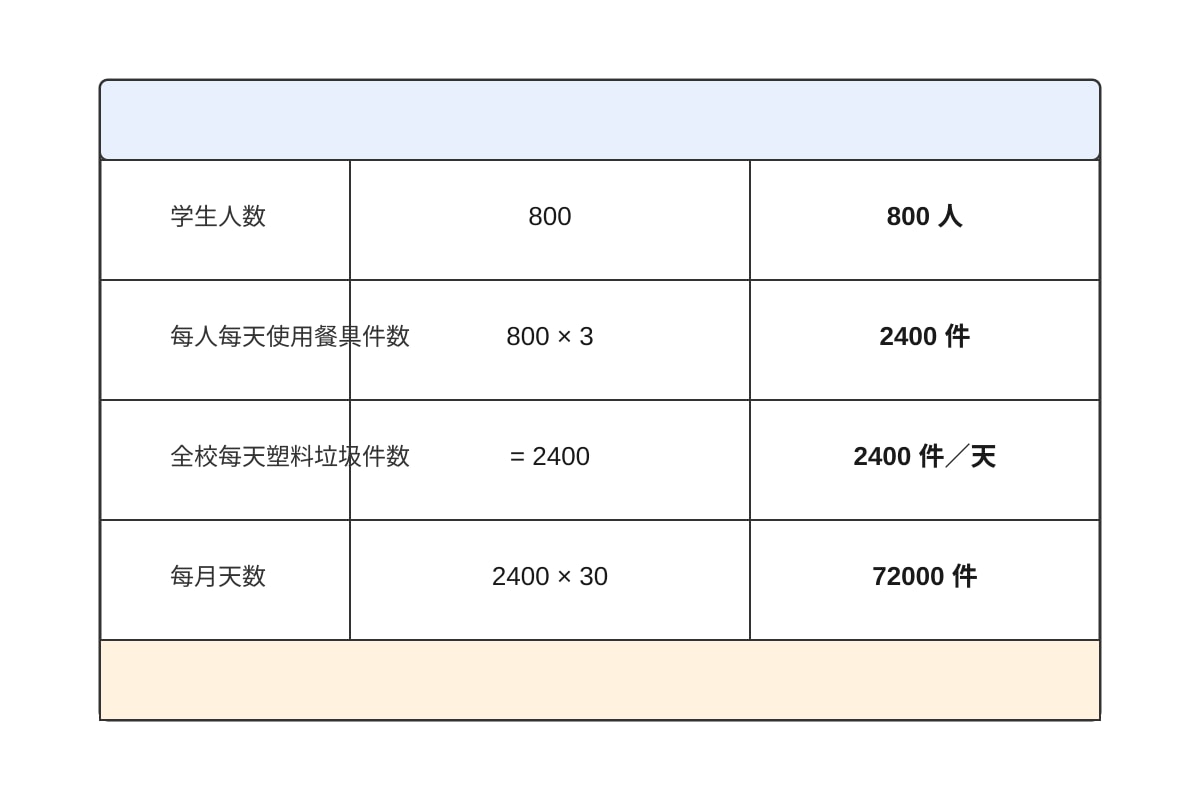
Q14. 心怡统计了学校每天产生多少件塑料垃圾?请写出计算过程。(3 marks)
计算过程:
- 学生人数:800名
- 每人每天使用餐具:3件
- 全校每天塑料垃圾:800 × 3 = 2400(件)
- 每月塑料垃圾:2400 × 30 = 72000(件)
答案: 全校每天产生2400件塑料垃圾,每月产生72000件塑料垃圾。
Marking notes:
- 1 mark for the correct daily calculation (800 × 3 = 2400).
- 1 mark for the correct monthly calculation (2400 × 30 = 72000).
- 1 mark for stating both answers with correct units (件).
- If only the final answer is given without working, award 1 mark only.
Q15. 心怡把报告交给了谁?校长做出了什么决定?(2 marks)
报告交给: 班主任王老师。 校长的决定: 在下个月开始推行"无塑食堂"计划。
Marking notes:
- 1 mark for "王老师" or "班主任".
- 1 mark for "推行'无塑食堂'计划" or equivalent.
Q16. 学校将为学生发放什么?请列出三样。(3 marks)
Answer: 不锈钢筷子、不锈钢勺子、不锈钢饭盒。
Marking notes:
- 1 mark for each correct item (3 marks total).
- "可重复使用的餐具" without specific items: 1 mark only.
Q17. "环保小卫士"的职责是什么?(2 marks)
Answer: 负责监督班级的环保行动。
Marking notes:
- 2 marks for mentioning "监督班级的环保行动" or equivalent.
- 1 mark for partial answers such as "监督环保" without specifying "班级".
Q18. 心怡为什么能在升旗仪式上演讲?这体现了她怎样的品质?(2 marks)
原因: 因为王老师鼓励她向校长提出建议,校长给了她机会在升旗仪式上演讲。 品质: 体现了心怡有勇气/有责任感/关心环境/积极主动。
Marking notes:
- 1 mark for the reason (王老师鼓励/支持她).
- 1 mark for a valid character trait (勇气, 责任感, 积极主动, 关心社会).
Q19. 心怡说:"保护环境不是一个人的事,而是每个人的责任。" 你对这句话有什么理解?请用2–3句话说明。(3 marks)
Answer (sample): 这句话的意思是,保护环境不能只靠一个人或少数人的努力,而是需要所有人共同参与。每个人都应该从自己做起,减少污染,节约资源。只有大家齐心协力,才能真正改善环境。
Marking notes:
- 1 mark for explaining that environmental protection requires collective effort (不是一个人的事).
- 1 mark for explaining individual responsibility (每个人的责任/从小事做起).
- 1 mark for elaboration or a practical example (减少污染/节约资源/齐心协力).
- Answers should be in complete sentences. Award partial marks for incomplete but relevant responses.
Q20. 如果你是心怡的同学,你会怎样支持"无塑食堂"计划?请提出两个具体做法。(2 marks)
做法一: 自带可重复使用的餐具,不使用一次性塑料餐具。 做法二: 提醒和鼓励身边的同学减少使用塑料制品,一起参与环保行动。
Marking notes:
- 1 mark for each specific and practical suggestion.
- Acceptable answers include: 自带餐具、不用塑料袋、垃圾分类、宣传环保知识、监督同学等.
- Vague answers like "支持计划" or "做环保" without specifics: 0 marks each.
Total: 40 marks
Mark breakdown summary:
| Section | Questions | Marks |
|---|---|---|
| A: Passage A (Q1–Q10) | 10 questions | 16 marks |
| A: Passage B (Q11–Q12) | 2 questions | 4 marks |
| B: Passage C (Q13–Q20) | 8 questions | 20 marks |
| Total | 20 questions | 40 marks |
Image placeholder reference for Q14: The table for Q14 should display a two-row calculation: Row 1 showing "800 × 3 = 2400 (件/天)" and Row 2 showing "2400 × 30 = 72000 (件/月)". Labels must include "学生人数", "每人每天餐具件数", "每天垃圾件数", "每月天数", "每月垃圾总件数". All values must be clearly visible so students can verify the calculation.