AI Generated Quiz
Secondary 1 Geography Resources Sustainability Quiz
Free Sec 1 Geography Resources Sustainability quiz, HY3 AI version, with questions, answers, and syllabus-aligned practice for Singapore students.
These static practice materials are generated from the site's syllabus and paper-generation workflow, with source and model context shown so students and parents can evaluate the material before use.
Questions
Free quiz and exam paper access
Enter your details to view this paper
Your access is remembered on this device.
Answers
Secondary 1 Geography Quiz - Resources Sustainability (Answer Key)
Total Marks: 40
Topic: Resources & Sustainability
Section A: Short Recall (1 mark each)
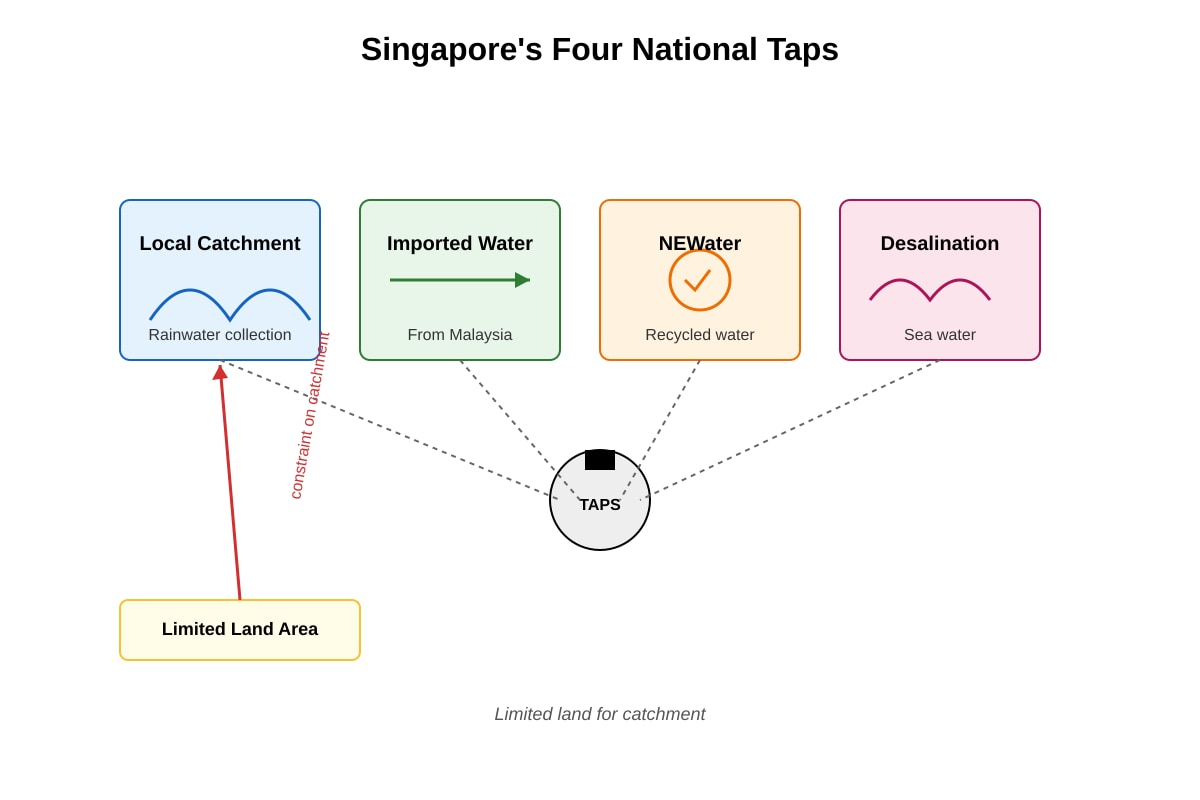
Q1. Accept any one: Local catchment water / Imported water / NEWater / Desalination.
Teaching note: Singapore’s Four National Taps diversify supply so we are not dependent on one source.
Q2. Solid (ice) or gas (water vapour).
Teaching note: Water exists as solid, liquid, gas in the natural environment.
Q3. The hydrological cycle (or water cycle).
Teaching note: This cycle moves water through evaporation, condensation, precipitation.
Q4. Accept: Coastal erosion protection / Habitat for wildlife / Carbon storage / Wave buffer.
Teaching note: Mangrove roots trap soil and reduce wave energy.
Q5. Accept: Factory waste discharge / Agriculture runoff / Littering / Sewage leak.
Teaching note: Human actions can introduce pollutants into water stores.
Q6. Desalination.
Teaching note: Desalination uses technology to turn seawater into drinking water.
Q7. Emergent layer / Canopy / Understorey (undergrowth).
Teaching note: Rainforests have vertical layers with different species.
Q8. Accept: High temperatures / High rainfall near Equator / Tropical climate.
Teaching note: Tropics receive consistent sunlight and rain, supporting rainforests.
Q9. Carbon dioxide (CO₂).
Teaching note: Burning forests releases stored carbon as CO₂, a greenhouse gas.
Q10. Accept: Turn off tap when brushing teeth / Report leaks / Use half-flush.
Teaching note: Small actions reduce total consumption.
Section B: Structured Response
Q11. (2 marks: 1 mark per use)
- Domestic use (drinking, washing)
- Industrial use (manufacturing)
- Agricultural use (irrigation)
- Recreational use (reservoir activities)
Marking: Any two correct uses = 2 marks.
Q12. (2 marks)
- Mangrove roots bind soil and slow water flow (1)
- This reduces wave energy and prevents coastal erosion (1).
Teaching note: The dense root network acts as a natural barrier.
Q13. (2 marks)
- Daily water use per person fell from 155 L (2010) to 143 L (2020) (1).
- The trend shows a steady decrease over the 10 years (1).
Teaching note: Describe the pattern using numbers, not just one value.
Q14. (2 marks)
- Stores carbon (1)
- Provides habitat / oxygen / regulates climate (1).
Teaching note: Rainforests are “lungs of Earth” and biodiversity hotspots.
Q15. (3 marks)
- Site Y is healthier (1).
- Low turbidity means clearer water with less suspended sediment (1).
- Clearer water allows light penetration and better oxygen for aquatic life (1).
Teaching note: Turbidity is a water quality indicator; high turbidity harms ecosystems.
Q16. (2 marks)
- Reforestation / protected areas / sustainable logging / education.
Marking: Any two = 2 marks.
Section C: Extended Response
Q17. (3 marks)
- Singapore has limited land for local catchments (1).
- Imported water depends on another country (1).
- NEWater and desalination add reliable, weather-independent sources (1).
Visual needed: Diagram shows four taps and land constraint; answer references these.
Q18. (4 marks)
- Evaporation: sun heats water, turning it to vapour (1).
- Condensation: vapour cools and forms clouds (1).
- Precipitation: water falls as rain into rivers/lakes (1).
- Cycle repeats, renewing freshwater stores (1).
Teaching note: This natural system makes water a renewable but finite resource.
Q19. (4 marks)
- Mangroves: protect coasts, store carbon, nursery for fish (2).
- Rainforests: store more carbon, habitat, climate regulation (2).
Marking: Two benefits each = 4 marks; compare by listing both.
Q20. (5 marks)
- Trees store carbon; clearing releases CO₂ (2).
- Less forest means less CO₂ absorbed (2).
- More CO₂ traps heat, enhancing greenhouse effect (1).
Teaching note: Link deforestation → emission → reduced sink → warming.