AI Generated Quiz
Primary 6 PSLE Tamil Writing Quiz
Free P6 PSLE Tamil Writing quiz, AI version, with questions, answers, and PSLE-focused practice for Singapore students.
These static practice materials are generated from the site's syllabus and paper-generation workflow, with source and model context shown so students and parents can evaluate the material before use.
Questions
Free quiz and exam paper access
Enter your details to view this paper
Your access is remembered on this device.
Answers
Primary 6 PSLE Tamil Quiz - Writing - Answer Key
Total Marks: 40
Section A: Sentence Construction (Questions 1-5)
(5 marks)
1. (1 mark) Correct Answer: நான் பூங்காவில் நண்பர்களுடன் பந்து விளையாடுகிறேன். Explanation: The subject is 'நான்' (I), the place is 'பூங்காவில்' (in the park), the companions are 'நண்பர்களுடன்' (with friends), the object is 'பந்து' (ball), and the verb is 'விளையாடுகிறேன்' (play). The sentence follows the Subject-Object-Verb (SOV) word order common in Tamil. Marking: 1 mark for correct word order and grammar. 0 marks if the sentence is incomplete or grammatically incorrect.
2. (1 mark) Correct Answer: குமார் புத்தகம் படிக்க நூலகத்திற்குச் சென்றான். Explanation: The subject is 'குமார்' (Kumar), the purpose is 'புத்தகம் படிக்க' (to read a book), the destination is 'நூலகத்திற்கு' (to the library), and the verb is 'சென்றான்' (went). Note the sandhi (joining) of 'நூலகத்திற்கு' + 'சென்றான்' becomes 'நூலகத்திற்குச் சென்றான்'. Marking: 1 mark for correct word order and sandhi. 0 marks if sandhi is incorrect.
3. (1 mark) Correct Answer: அம்மா சமையலறையில் சுவையான கறி சமைக்கிறார். Explanation: The subject is 'அம்மா' (mother), the place is 'சமையலறையில்' (in the kitchen), the adjective is 'சுவையான' (tasty), the object is 'கறி' (curry), and the verb is 'சமைக்கிறார்' (cooks). The adjective 'சுவையான' must come before the noun 'கறி'. Marking: 1 mark for correct word order. 0 marks if the adjective is placed incorrectly.
4. (1 mark) Correct Answer: நாங்கள் காலையில் பேருந்தில் பள்ளிக்குச் செல்கிறோம். Explanation: The subject is 'நாங்கள்' (we), the time is 'காலையில்' (in the morning), the mode of transport is 'பேருந்தில்' (by bus), the destination is 'பள்ளிக்கு' (to school), and the verb is 'செல்கிறோம்' (go). Note the sandhi: 'பள்ளிக்கு' + 'செல்கிறோம்' becomes 'பள்ளிக்குச் செல்கிறோம்'. Marking: 1 mark for correct word order and sandhi. 0 marks if the time or mode is misplaced.
5. (1 mark) Correct Answer: தோட்டத்தில் பல அழகான மலர்கள் பூத்துள்ளன. Explanation: The place is 'தோட்டத்தில்' (in the garden), the quantity is 'பல' (many), the adjective is 'அழகான' (beautiful), the subject is 'மலர்கள்' (flowers), and the verb is 'பூத்துள்ளன' (have bloomed). The quantity word 'பல' comes before the adjective. Marking: 1 mark for correct word order. 0 marks if the quantity or adjective is misplaced.
Section B: Guided Writing - Picture Description (Questions 6-10)
(10 marks)
Instructions: Accept any 5 grammatically correct and relevant sentences describing the picture. Each sentence is worth 2 marks.
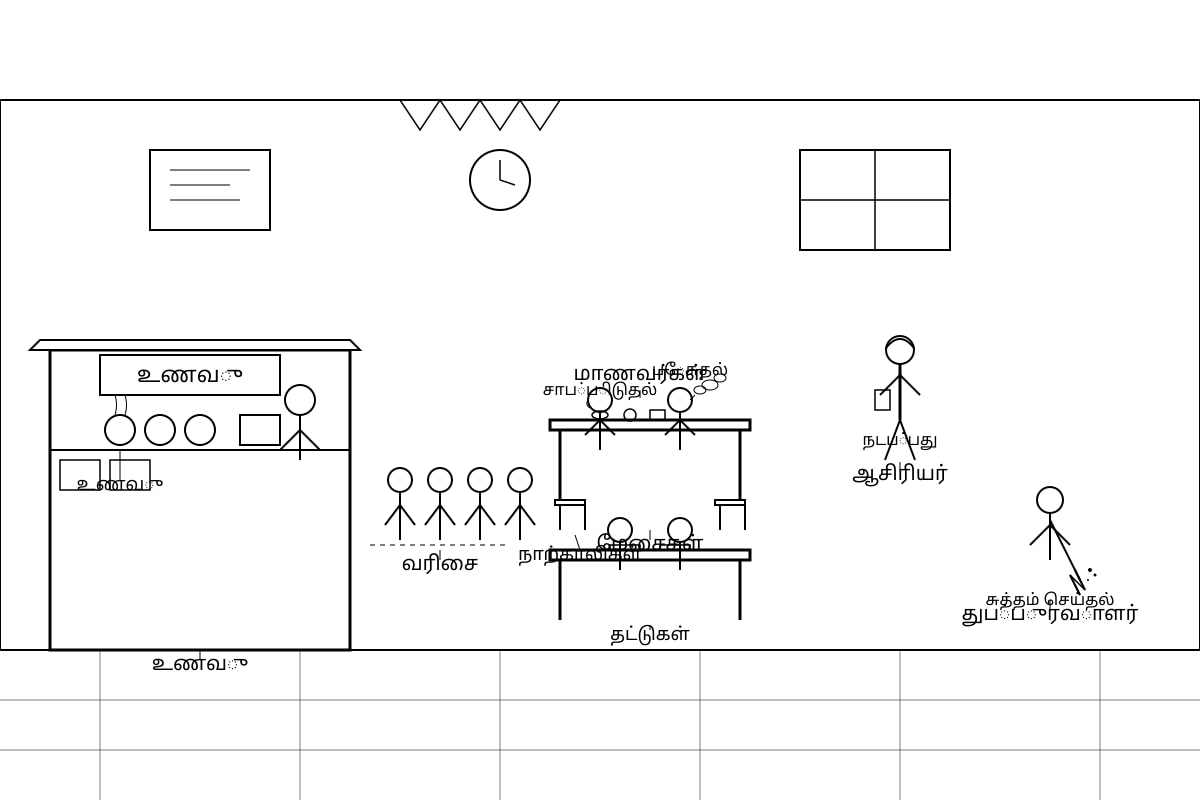
Expected Visual Features (from image placeholder):
- Students queuing at a food stall
- Students sitting at tables eating and talking
- A teacher walking by
- A cleaner sweeping the floor
- Trays and food on tables
Sample Answers:
6. (2 marks) Sample Answer: பள்ளி உணவகத்தில் மாணவர்கள் வரிசையில் நிற்கிறார்கள். Explanation: This sentence describes the queue at the food stall. It uses the correct location 'பள்ளி உணவகத்தில்' (in the school canteen) and the verb 'நிற்கிறார்கள்' (are standing). Marking: 1 mark for grammar and spelling. 1 mark for relevance to the picture.
7. (2 marks) Sample Answer: சில மாணவர்கள் மேசையில் அமர்ந்து சாப்பிடுகிறார்கள். Explanation: This sentence describes students sitting and eating. It uses 'சில' (some) and the verb 'சாப்பிடுகிறார்கள்' (are eating). Marking: 1 mark for grammar and spelling. 1 mark for relevance to the picture.
8. (2 marks) Sample Answer: ஒரு ஆசிரியர் மாணவர்களிடையே நடந்து செல்கிறார். Explanation: This sentence describes the teacher walking. It uses the honorific verb 'செல்கிறார்' (goes) for the teacher. Marking: 1 mark for grammar and spelling. 1 mark for relevance to the picture.
9. (2 marks) Sample Answer: துப்புரவு பணியாளர் தரையைப் பெருக்குகிறார். Explanation: This sentence describes the cleaner sweeping. Note the sandhi: 'தரையை' + 'பெருக்குகிறார்' becomes 'தரையைப் பெருக்குகிறார்'. Marking: 1 mark for grammar and spelling (including sandhi). 1 mark for relevance to the picture.
10. (2 marks) Sample Answer: உணவகம் மிகவும் களைகட்டியுள்ளது. Explanation: This sentence describes the overall atmosphere. 'களைகட்டியுள்ளது' means 'is bustling/lively'. Marking: 1 mark for grammar and spelling. 1 mark for relevance to the picture.
Section C: Guided Writing - Story Completion (Questions 11-15)
(10 marks)
Instructions: Accept any 5 grammatically correct and logically connected sentences that continue and finish the story. Each sentence is worth 2 marks.
Story Context: Ravi and his grandfather find a hungry puppy at the shop.
Sample Answers:
11. (2 marks) Sample Answer: ரவி அந்த நாய்க்குட்டிக்குப் பால் வாங்கிக் கொடுத்தான். Explanation: This sentence logically continues the story by describing Ravi's action to help the hungry puppy. It uses the correct dative case 'நாய்க்குட்டிக்கு' (to the puppy) and the verb 'வாங்கிக் கொடுத்தான்' (bought and gave). Marking: 1 mark for grammar and spelling. 1 mark for logical continuation of the story.
12. (2 marks) Sample Answer: நாய்க்குட்டி பாலைக் குடித்து விட்டு மகிழ்ச்சியாக வாலை ஆட்டியது. Explanation: This sentence describes the puppy's reaction. Note the sandhi: 'பாலை' + 'குடித்து' becomes 'பாலைக் குடித்து'. The verb 'ஆட்டியது' (wagged) is correctly used. Marking: 1 mark for grammar and spelling. 1 mark for logical continuation.
13. (2 marks) Sample Answer: தாத்தா, "இந்த நாய்க்குட்டியை நம் வீட்டிற்கு அழைத்துச் செல்லலாம்," என்றார். Explanation: This sentence introduces dialogue from the grandfather, moving the story forward. It uses the quotative marker 'என்றார்' (said). Marking: 1 mark for grammar and spelling. 1 mark for logical continuation.
14. (2 marks) Sample Answer: ரவி மிகவும் மகிழ்ச்சியடைந்து நாய்க்குட்டியைத் தூக்கிக் கொண்டான். Explanation: This sentence describes Ravi's happy reaction. Note the sandhi: 'நாய்க்குட்டியை' + 'தூக்கிக்' becomes 'நாய்க்குட்டியைத் தூக்கிக்'. Marking: 1 mark for grammar and spelling. 1 mark for logical continuation.
15. (2 marks) Sample Answer: அன்று முதல், அந்த நாய்க்குட்டி ரவியின் சிறந்த நண்பனாக மாறியது. Explanation: This sentence provides a satisfying conclusion to the story. It uses the time phrase 'அன்று முதல்' (from that day onwards) and the verb 'மாறியது' (became). Marking: 1 mark for grammar and spelling. 1 mark for providing a logical and satisfying ending.
Section D: Essay Writing (Questions 16-20)
(15 marks)
Instructions: Award marks based on the quality of each section. The essay should be at least 100 words in total. Use the following marking descriptors for each 3-mark section.
Marking Descriptors (per 3-mark section):
- 3 marks: Excellent - Clear, relevant, well-structured content. Excellent grammar, spelling, and vocabulary. Ideas are fully developed.
- 2 marks: Good - Mostly clear and relevant content. Good grammar and spelling with minor errors. Ideas are adequately developed.
- 1 mark: Fair - Some relevant content but may lack clarity or development. Several grammatical or spelling errors.
- 0 marks: Poor - Irrelevant content, very brief, or completely unintelligible.
Sample Essay (for reference):
Topic: எனக்குப் பிடித்த விழா (My Favourite Festival)
16. Introduction (3 marks) Sample Answer: எனக்குப் பிடித்த விழா தீபாவளி. இது ஒளியின் விழா என்று அழைக்கப்படுகிறது. ஒவ்வொரு ஆண்டும் நானும் என் குடும்பத்தினரும் இந்த விழாவை மிகவும் மகிழ்ச்சியுடன் கொண்டாடுகிறோம். Explanation: The introduction clearly states the festival (Deepavali), gives a brief description (festival of lights), and introduces the family's celebration. This sets up the essay well. Key Vocabulary: தீபாவளி (Deepavali), ஒளியின் விழா (festival of lights), கொண்டாடுகிறோம் (celebrate).
17. Body Paragraph 1 (3 marks) Sample Answer: தீபாவளிக்கு முன்னதாக, நாங்கள் எங்கள் வீட்டைச் சுத்தம் செய்து அழகுபடுத்துவோம். அம்மா சுவையான இனிப்புகளும் பலகாரங்களும் செய்வார்கள். நானும் என் அண்ணனும் பட்டாசு வாங்கச் செல்வோம். Explanation: This paragraph describes the preparations for the festival. It uses time phrases ('தீபாவளிக்கு முன்னதாக' - before Deepavali) and describes specific activities. Key Vocabulary: சுத்தம் செய்து (clean), அழகுபடுத்துவோம் (decorate), இனிப்புகள் (sweets), பலகாரங்கள் (snacks), பட்டாசு (firecrackers).
18. Body Paragraph 2 (3 marks) Sample Answer: தீபாவளி நாளில் நாங்கள் அதிகாலையில் எழுந்து எண்ணெய் குளிப்போம். புது உடைகள் அணிந்து கோயிலுக்குச் செல்வோம். பிறகு, உறவினர்கள் மற்றும் நண்பர்களின் வீடுகளுக்குச் சென்று இனிப்புகள் கொடுத்து மகிழ்வோம். Explanation: This paragraph describes the activities on the actual day of the festival. It follows a logical time sequence (morning to later in the day). Key Vocabulary: எண்ணெய் குளிப்போம் (take an oil bath), புது உடைகள் (new clothes), கோயில் (temple), உறவினர்கள் (relatives), இனிப்புகள் (sweets).
19. Body Paragraph 3 (3 marks) Sample Answer: தீபாவளி எனக்கு மிகவும் பிடிக்க காரணம், அது குடும்பத்தினர் அனைவரும் ஒன்று சேரும் நாள். அனைவரும் மகிழ்ச்சியுடன் இருப்பதைப் பார்ப்பது மிகவும் மகிழ்ச்சி அளிக்கிறது. பட்டாசு வெடிப்பதும் பலவித இனிப்புகளைச் சாப்பிடுவதும் மிகவும் சுவாரஸ்யமானது. Explanation: This paragraph explains the reason for liking the festival. It connects the festival to family bonding and personal happiness, which shows deeper thinking. Key Vocabulary: காரணம் (reason), ஒன்று சேரும் (gather together), மகிழ்ச்சி (happiness), சுவாரஸ்யமானது (interesting).
20. Conclusion (3 marks) Sample Answer: இவ்வாறு, தீபாவளி எங்கள் குடும்பத்திற்கு மிகவும் முக்கியமான விழாவாகும். இந்த விழா ஒற்றுமையையும் மகிழ்ச்சியையும் கொண்டு வருகிறது. ஒவ்வொரு ஆண்டும் இந்த விழாவை நான் ஆவலுடன் எதிர்பார்த்துக் காத்திருக்கிறேன். Explanation: The conclusion summarizes the essay and reinforces the main idea. It uses 'இவ்வாறு' (thus) to signal the conclusion and ends with a personal feeling ('ஆவலுடன் எதிர்பார்த்துக் காத்திருக்கிறேன்' - eagerly wait). Key Vocabulary: முக்கியமான (important), ஒற்றுமை (unity), ஆவலுடன் (eagerly), எதிர்பார்த்துக் காத்திருக்கிறேன் (look forward to).
Common Mistakes to Flag:
- Mixing up குறில் and நெடில் (short and long vowels) e.g., 'அம்மா' vs 'அம்ம'
- Incorrect use of postpositions (e.g., 'உடன்' vs 'கூட')
- Forgetting sandhi rules when two words join
- Using English words unnecessarily when Tamil equivalents exist