AI Generated Quiz
Primary 6 PSLE Tamil Writing Quiz
Free P6 PSLE Tamil Writing quiz, AI version, with questions, answers, and PSLE-focused practice for Singapore students.
These static practice materials are generated from the site's syllabus and paper-generation workflow, with source and model context shown so students and parents can evaluate the material before use.
Questions
Free quiz and exam paper access
Enter your details to view this paper
Your access is remembered on this device.
Answers
Answer Key: Primary 6 PSLE Tamil Quiz - Writing
Total Marks: 50
Section A: Grammar & Vocabulary (Questions 1–8)
[8 marks]
1. (A) காலையில்
- Marks: 1
- Explanation: The sentence says "நான் நேற்று ________ பள்ளிக்குச் சென்றேன்" (I went to school yesterday ________). "காலையில்" (in the morning) is the most logical time to go to school. The other options (evening, night, midnight) are not typical times for going to school.
- Common mistake: Students might choose "மாலையில்" (evening) if they think of after-school activities, but the sentence clearly says "பள்ளிக்குச் சென்றேன்" (went to school).
2. (C) நேர்மையான
- Marks: 1
- Explanation: The second sentence says "எப்போதும் உண்மையைச் சொல்வான்" (he always tells the truth). This describes an honest person. "நேர்மையான" means honest. "துணிச்சலான" (brave), "பொய்யான" (false/lying), and "சோம்பேறியான" (lazy) do not match the description.
- Common mistake: Students might confuse "நேர்மையான" with "துணிச்சலான" (brave). Remind them that telling the truth is about honesty, not bravery.
3. (B) முடியவில்லை
- Marks: 1
- Explanation: The sentence says "மழை பெய்ததால்" (because it rained). Rain prevented them from playing outside. "முடியவில்லை" means "could not" (past tense negative). The other options mean "could" (முடிந்தது), "can" (முடியும்), and "let it be possible" (முடியட்டும்), which do not fit the context.
- Grammar note: "முடியவில்லை" is the negative past form of "முடி" (to be possible/finish).
4. (A) ஒரு
- Marks: 1
- Explanation: "தாத்தா பூங்காவில் ________ நாற்காலியில் அமர்ந்திருந்தார்" (Grandfather was sitting on ________ chair in the park). "ஒரு" (a/an) is the indefinite article used with singular countable nouns. "நாற்காலி" (chair) is singular, so "ஒரு" is correct. "சில" (some), "பல" (many), and "எல்லா" (all) are used with plural nouns.
- Common mistake: Students might use "சில" (some) thinking it means "a", but "சில" is used for plural or uncountable nouns.
5. அழகான
- Marks: 1
- Explanation: The word in brackets is "அழகு" (beauty/noun). To describe the flower (மலர்), we need the adjective form "அழகான" (beautiful). The suffix "-ஆன" is commonly added to nouns to form adjectives.
- Grammar rule: Noun + ஆன = Adjective. Example: அழகு + ஆன = அழகான.
6. சிரித்து
- Marks: 1
- Explanation: The word in brackets is "சிரி" (laugh/verb root). The sentence structure "________ சிரித்து மகிழ்ந்தோம்" requires the verbal participle form. "சிரித்து" is the correct verbal participle of "சிரி" (to laugh). It connects the action of laughing to the main verb "மகிழ்ந்தோம்" (we enjoyed).
- Grammar rule: Verb root + த்து = verbal participle for certain verbs. சிரி → சிரித்து.
7. பயனுள்ள
- Marks: 1
- Explanation: The word in brackets is "பயன்" (use/benefit/noun). To describe the book (புத்தகம்), we need an adjective meaning "useful". "பயனுள்ள" is the correct adjective form. It is formed by adding "-உள்ள" to "பயன்".
- Grammar rule: Noun + உள்ள = Adjective meaning "having that quality". பயன் + உள்ள = பயனுள்ள (useful).
8. ஓடி
- Marks: 1
- Explanation: The word in brackets is "ஓடு" (run/verb root). The sentence structure "________ ஓடி விளையாடினார்கள்" requires the verbal participle form. "ஓடி" is the correct verbal participle of "ஓடு" (to run). It connects the action of running to the main verb "விளையாடினார்கள்" (they played).
- Grammar rule: Verb root + இ = verbal participle for certain verbs. ஓடு → ஓடி.
Section B: Sentence Construction & Transformation (Questions 9–15)
[14 marks]
9. நாங்கள் ஒவ்வொரு நாளும் பேருந்தில் பள்ளிக்குச் செல்கிறோம்.
- Marks: 2 (1 for correct word order, 1 for correct sentence structure)
- Explanation: The correct order is: Subject (நாங்கள்) + Time (ஒவ்வொரு நாளும்) + Means (பேருந்தில்) + Place (பள்ளிக்கு) + Verb (செல்கிறோம்). This follows the standard Tamil sentence structure (SOV - Subject Object Verb).
- Common mistake: Students might place "பேருந்தில்" after "பள்ளிக்கு". In Tamil, the means of transport usually comes before the destination.
10. தோட்டத்தில் பல அழகான பூக்கள் மலர்ந்தன.
- Marks: 2 (1 for correct word order, 1 for correct sentence structure)
- Explanation: The correct order is: Place (தோட்டத்தில்) + Quantity (பல) + Adjective (அழகான) + Subject (பூக்கள்) + Verb (மலர்ந்தன). In Tamil, adjectives come before the noun they describe.
- Common mistake: Students might place "அழகான" after "பூக்கள்". Adjectives must come before the noun in Tamil.
11. என் நண்பன் கணிதத்தில் மிகவும் திறமையானவன்.
- Marks: 2 (1 for correct word order, 1 for correct sentence structure)
- Explanation: The correct order is: Possessive (என்) + Subject (நண்பன்) + Field (கணிதத்தில்) + Adverb (மிகவும்) + Predicate (திறமையானவன்). "மிகவும்" (very) is an adverb that modifies the adjective "திறமையானவன்" (talented).
- Common mistake: Students might place "மிகவும்" after "திறமையானவன்". Adverbs usually come before the word they modify.
12. மழை பெய்தது, ஆகையால் நாங்கள் வெளியே செல்லவில்லை.
- Marks: 2 (1 for correct combination, 1 for correct use of "ஆகையால்")
- Explanation: "ஆகையால்" means "therefore" or "because of that". It connects the cause (மழை பெய்தது - it rained) to the effect (நாங்கள் வெளியே செல்லவில்லை - we did not go out). The comma before "ஆகையால்" is optional but helps with readability.
- Grammar note: "ஆகையால்" is a conjunction used to show cause and effect. It is placed after the cause clause.
13. கமலா மிகவும் நன்றாகப் பாடினாள்.
- Marks: 2 (1 for correct combination, 1 for correct use of "மிகவும்")
- Explanation: "மிகவும்" (very) is an adverb that modifies "நன்றாக" (well). The combined sentence is: கமலா (subject) + மிகவும் (adverb) + நன்றாக (adverb of manner) + பாடினாள் (verb). This is more natural than "கமலா பாடினாள், அவள் மிகவும் நன்றாகப் பாடினாள்."
- Common mistake: Students might write "கமலா பாடினாள் மிகவும் நன்றாக" which is incorrect word order.
14. இது ஒரு பெரிய வீடா?
- Marks: 2 (1 for correct transformation, 1 for correct question formation)
- Explanation: To change a statement into a question in Tamil, we add the question suffix "-ஆ" to the end of the sentence. "இது ஒரு பெரிய வீடு" (This is a big house) becomes "இது ஒரு பெரிய வீடா?" (Is this a big house?).
- Grammar rule: Statement + ஆ = Yes/No question. The question mark is also added.
15. நான் நாளை கடைக்குச் செல்வேன்.
- Marks: 2 (1 for correct tense change, 1 for correct future tense verb form)
- Explanation: To change from past tense to future tense, we need to change the time word and the verb form. "நேற்று" (yesterday) becomes "நாளை" (tomorrow). "சென்றேன்" (went - past tense) becomes "செல்வேன்" (will go - future tense).
- Grammar rule: Past tense verb + ஏன் → Future tense verb + வேன் (for first person singular). செல் + ஏன் = சென்றேன் (past). செல் + வேன் = செல்வேன் (future).
Section C: Guided Writing (Questions 16–20)
[28 marks]
16. Picture Description (5 marks)
- Marks: 5 (1 mark per meaningful, grammatically correct sentence)
- Sample answer:
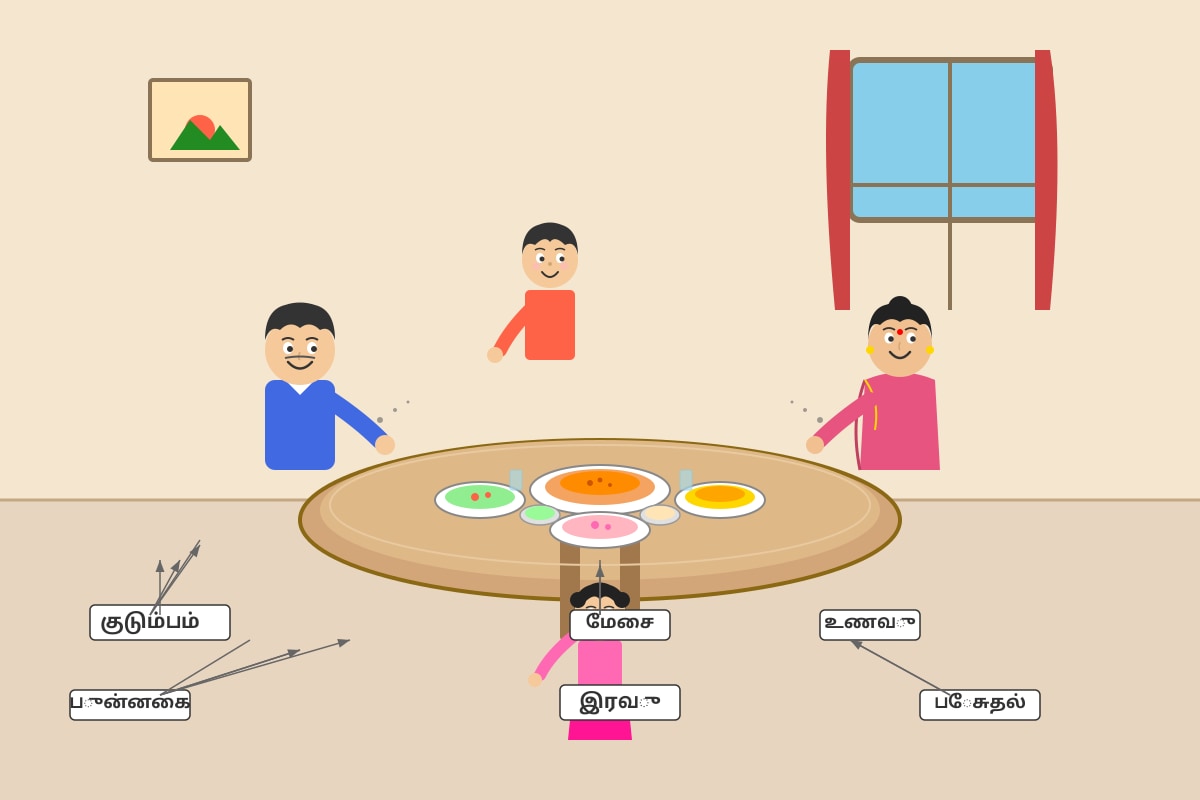
- இந்தப் படத்தில் ஒரு குடும்பம் இரவு உணவு சாப்பிடுவதைக் காணலாம்.
- அப்பா, அம்மா, ஒரு பையன், ஒரு பெண் ஆகிய நான்கு பேர் வட்ட மேசையைச் சுற்றி அமர்ந்திருக்கிறார்கள்.
- மேசையில் பலவிதமான உணவு வகைகள் உள்ளன.
- எல்லோரும் மகிழ்ச்சியாகப் பேசிக்கொண்டும் சிரித்துக்கொண்டும் இருக்கிறார்கள்.
- இது ஒரு அன்பான குடும்பச் சூழலைக் காட்டுகிறது.
- Marking descriptors:
- 5 marks: 5 clear, relevant, grammatically correct sentences with good vocabulary
- 4 marks: 4 clear sentences with minor errors
- 3 marks: 3 sentences with some errors
- 2 marks: 2 sentences with several errors
- 1 mark: 1 sentence or fragmented ideas
- 0 marks: No response or completely off-topic
17. School Sports Day (5 marks)
- Marks: 5 (1 mark per meaningful, grammatically correct sentence)
- Sample answer:
- எங்கள் பள்ளியில் கடந்த வாரம் விளையாட்டுத் தினம் நடைபெற்றது.
- அன்று பள்ளி மைதானம் மிகவும் அழகாக அலங்கரிக்கப்பட்டிருந்தது.
- மாணவர்கள் பல்வேறு விளையாட்டுப் போட்டிகளில் கலந்துகொண்டனர்.
- நானும் 100 மீட்டர் ஓட்டப் போட்டியில் கலந்துகொண்டேன்.
- வெற்றி பெற்றவர்களுக்கு பரிசுகள் வழங்கப்பட்டன.
- Marking descriptors: Same as Q16.
18. My Best Friend (5 marks)
- Marks: 5 (1 mark per meaningful, grammatically correct sentence)
- Sample answer:
- எனக்குப் பிடித்த நண்பன் பெயர் ராஜேஷ்.
- அவன் என் வகுப்புத் தோழன்.
- அவன் மிகவும் அன்பானவன் மற்றும் உதவி செய்ய விரும்புபவன்.
- நாங்கள் ஒன்றாகப் படிப்போம் மற்றும் விளையாடுவோம்.
- அவன் எப்போதும் எனக்கு ஆதரவாக இருப்பான்.
- Marking descriptors: Same as Q16.
19. A Good Habit (8 marks)
- Marks: 8 (1 mark per meaningful, grammatically correct sentence)
- Sample answer:
- நல்ல பழக்கங்கள் நம் வாழ்க்கையை மேம்படுத்துகின்றன.
- நான் கடைப்பிடிக்கும் ஒரு நல்ல பழக்கம் தினமும் காலையில் எழுந்தவுடன் படிப்பது.
- இந்தப் பழக்கம் எனக்கு நிறைய பயன்களைத் தந்துள்ளது.
- முதலில், காலையில் மனம் தெளிவாக இருப்பதால் நன்றாகப் படிக்க முடிகிறது.
- இரண்டாவதாக, பள்ளிக்குச் செல்வதற்கு முன் பாடங்களை மீள்பார்வை செய்ய முடிகிறது.
- மூன்றாவதாக, இந்தப் பழக்கம் எனக்கு நேரத்தைச் சரியாகப் பயன்படுத்தக் கற்றுக்கொடுத்துள்ளது.
- நல்ல பழக்கங்களை வளர்த்துக்கொள்வது மிகவும் முக்கியம்.
- நான் இந்தப் பழக்கத்தைத் தொடர்ந்து கடைப்பிடிப்பேன்.
- Marking descriptors:
- 8 marks: 8 clear, relevant, grammatically correct sentences with good vocabulary and logical flow
- 6-7 marks: 6-7 sentences with minor errors
- 4-5 marks: 4-5 sentences with some errors
- 2-3 marks: 2-3 sentences with several errors
- 1 mark: 1 sentence or fragmented ideas
- 0 marks: No response or completely off-topic
20. Essay: "நான் மறக்க முடியாத ஒரு நாள்" (5 marks)
-
Marks: 5 (based on content, language, and length)
-
Sample essay (100+ words):
நான் மறக்க முடியாத ஒரு நாள் என் பிறந்தநாள். அன்று காலையில் எழுந்தவுடன் என் அம்மா எனக்குப் பிடித்த உணவைச் செய்திருந்தார். பள்ளியில் என் நண்பர்கள் அனைவரும் எனக்கு வாழ்த்துக் கூறினார்கள். மாலையில் என் வீட்டில் ஒரு சிறிய விருந்து நடைபெற்றது. என் உறவினர்கள் பலர் வந்திருந்தார்கள். எல்லோரும் சேர்ந்து கேக் வெட்டி மகிழ்ந்தோம். என் அப்பா எனக்கு ஒரு புதிய சைக்கிள் பரிசாக வாங்கிக் கொடுத்தார். அது மிகவும் மகிழ்ச்சியான தருணம். அன்று இரவு நாங்கள் அனைவரும் ஒன்றாக அமர்ந்து சாப்பிட்டோம். இந்த நாளை நான் ஒருபோதும் மறக்க மாட்டேன்.
-
Marking descriptors:
- 5 marks: Excellent - Clear structure (beginning, middle, end), relevant content, good vocabulary, minimal errors, 100+ words
- 4 marks: Good - Clear structure, relevant content, some vocabulary range, few errors, near 100 words
- 3 marks: Satisfactory - Basic structure, relevant content, limited vocabulary, some errors, 70-90 words
- 2 marks: Weak - Poor structure, limited content, many errors, 50-70 words
- 1 mark: Very weak - No clear structure, very limited content, many errors, less than 50 words
- 0 marks: No response or completely off-topic
-
Key elements to assess:
- Content relevance to the topic "நான் மறக்க முடியாத ஒரு நாள்" (A Day I Cannot Forget)
- Logical flow and paragraph structure
- Vocabulary range and appropriateness
- Grammar, spelling, and punctuation accuracy
- Meeting the minimum word count (100 words for Tamil)
-
Common mistakes to watch for:
- Using English words unnecessarily
- Incorrect verb tenses
- Spelling errors (especially குறில்/நெடில் distinctions)
- Lack of paragraph breaks
- Not addressing the topic directly