AI Generated Quiz
Primary 6 PSLE Tamil Speaking Quiz
Free P6 PSLE Tamil Speaking quiz, AI version, with questions, answers, and PSLE-focused practice for Singapore students.
These static practice materials are generated from the site's syllabus and paper-generation workflow, with source and model context shown so students and parents can evaluate the material before use.
Questions


Free quiz and exam paper access
Enter your details to view this paper
Your access is remembered on this device.
Answers
Primary 6 PSLE Tamil Quiz - Speaking (Answer Key)
Total Marks: 40
Each question: 2 marks unless stated otherwise.
Section A: சரியான பதிலைத் தேர்ந்தெடுக்கவும் (Questions 1–5)
Question 1
Answer: (b) "நான் நன்றாக இருக்கிறேன், நன்றி!"
Explanation: When someone asks "உனக்கு எப்படி இருக்கிறது?" (How are you?), the polite and appropriate response is to say you are fine and thank the person. This shows good manners and conversational skills. Option (a) is dismissive, (c) is rude, and (d) is irrelevant to the question.
Marking: 2 marks for the correct option.
Question 2
Answer: (b) "நான் நாளை பள்ளிக்கு போறேன்."
Explanation: Spoken Tamil (பேச்சுத்தமிழ்) uses colloquial forms. "போறேன்" is the spoken form of "செல்வேன்" (I will go). Options (a), (c), and (d) use more formal or written forms of Tamil (எழுத்துத்தமிழ்). The syllabus explicitly requires students to understand the difference between spoken and written Tamil.
Marking: 2 marks for the correct option.
Question 3
Answer: (a) "விருந்தினர்களே, வணக்கம்! வந்தமைக்கு நன்றி."
Explanation: When welcoming guests, it is polite to greet them and thank them for coming. This shows respect and hospitality, which are important values in Tamil culture. The other options are rude and inappropriate for welcoming guests.
Marking: 2 marks for the correct option.
Question 4
Answer: (a) "அப்படியா?"
Explanation: "அப்படியா?" (Is that so?) is a discourse marker used to show interest and engagement while listening to someone's story. It encourages the speaker to continue. The other options are negative or dismissive responses that would stop the conversation.
Marking: 2 marks for the correct option.
Question 5
Answer: (b) "அவர் மிகவும் நல்லவர்."
Explanation: Formal Tamil uses the honorific "அவர்" (he/she - respectful) and the word "மிகவும்" (very) instead of the colloquial "ரொம்ப". Option (b) is the most formal and respectful. Options (a), (c), and (d) use colloquial or informal expressions.
Marking: 2 marks for the correct option.
Section B: கருத்துகளை வெளிப்படுத்துதல் (Questions 6–10)
Question 6
Sample Answer: "அன்புள்ள வகுப்பு நண்பர்களே, என்னை வகுப்புத் தலைவராகத் தேர்ந்தெடுத்ததற்கு மிக்க நன்றி. உங்கள் அனைவரின் நம்பிக்கையைக் காப்பாற்ற நான் முழு முயற்சி செய்வேன். எங்கள் வகுப்பைச் சிறந்த வகுப்பாக ஆக்குவோம்!"
Explanation: A thank-you speech should:
- Greet the audience (வணக்கம் / அன்புள்ள நண்பர்களே)
- Express gratitude (நன்றி)
- Make a promise or commitment (முயற்சி செய்வேன்)
- End with a positive note
Marking (2 marks):
- 1 mark: Appropriate greeting and expression of thanks
- 1 mark: Clear commitment or positive statement
Question 7
Sample Answer: "சுற்றுச்சூழல் தினத்தில் நான் பள்ளியைச் சுற்றி குப்பைகளை பொறுக்குவேன். மேலும், மரக்கன்றுகளை நடுவதற்கு உதவுவேன். சுற்றுச்சூழலைப் பாதுகாப்பது நம் ஒவ்வொருவரின் கடமை என்று நண்பர்களுக்கு எடுத்துரைப்பேன்."
Explanation: The answer should describe specific actions related to environmental protection. It should show awareness of environmental issues and personal responsibility.
Marking (2 marks):
- 1 mark: Describes at least one specific activity
- 1 mark: Shows understanding of environmental importance
Question 8
Sample Answer: "இந்தப் புத்தகம் மிகவும் சுவாரசியமான கதைகளைக் கொண்டது. இதைப் படித்தால் உனக்கு நிறைய புதிய வார்த்தைகள் கற்றுக்கொள்ள முடியும். இந்தப் புத்தகம் உனக்கு மிகவும் பிடிக்கும் என்று நம்புகிறேன்."
Explanation: When giving a book as a gift, you should:
- Describe the book positively
- Explain its benefits
- Express hope that the person will enjoy it
Marking (2 marks):
- 1 mark: Describes the book or its content
- 1 mark: Expresses a positive wish or benefit
Question 9
Sample Answer: "பயப்படாதே! நீ நன்றாகப் படித்திருக்கிறாய். நிதானமாக இருந்து, கேள்விகளைக் கவனமாகப் படித்து பதில் எழுதினால் நன்றாக வரும். நான் உனக்காக வேண்டிக்கொள்கிறேன்."
Explanation: A comforting response should:
- Reassure the person (பயப்படாதே)
- Give practical advice (நிதானமாக இரு)
- Show support (நான் உனக்காக)
Marking (2 marks):
- 1 mark: Offers reassurance
- 1 mark: Provides practical advice or support
Question 10
Sample Answer: "பாட்டி, இன்று பள்ளியில் எங்களுக்கு அறிவியல் பாடம் இருந்தது. நாங்கள் ஒரு பரிசோதனை செய்தோம். அது மிகவும் சுவாரசியமாக இருந்தது. பின்னர், விளையாட்டு நேரத்தில் நண்பர்களுடன் விளையாடினோம்."
Explanation: When answering a grandparent's question, you should:
- Address the person respectfully (பாட்டி)
- Describe what happened at school
- Give specific details to make the answer interesting
Marking (2 marks):
- 1 mark: Addresses the grandparent and describes an event
- 1 mark: Provides specific details
Section C: உரையாடல் மற்றும் சூழல் (Questions 11–15)
Question 11
Answer: அழகு நூலகத்திற்குச் செல்வதற்கான காரணம் ஒரு கதைப் புத்தகத்தை வாசிப்பதற்காக.
Explanation: The dialogue clearly states: "நான் ஒரு கதைப் புத்தகம் வாசிக்கப் போகிறேன்" (I am going to read a storybook). This is a direct comprehension question from the dialogue.
Marking (2 marks):
- 2 marks: Correct answer identifying the purpose (to read a storybook)
- 1 mark: Partial answer (e.g., "நூலகத்திற்கு" without the purpose)
Question 12
Sample Answer: "வணக்கம்! வாருங்கள், வாருங்கள். உள்ளே வந்து அமருங்கள். உங்களைப் பார்த்ததில் மிக்க மகிழ்ச்சி. தேநீர் அல்லது காபி சாப்பிடுகிறீர்களா?"
Explanation: A proper welcome should include:
- Greeting (வணக்கம்)
- Invitation to enter (வாருங்கள்)
- Expression of happiness (மகிழ்ச்சி)
- Offer of refreshment (தேநீர்/காபி)
Marking (2 marks):
- 1 mark: Includes a greeting and invitation
- 1 mark: Shows hospitality (offer of refreshment or expression of happiness)
Question 13
Sample Answer: "உன் பிறந்தநாளுக்கு அழைத்ததற்கு நன்றி! ஆனால், நாளை எனக்கு மருத்துவரிடம் சந்திப்பு இருக்கிறது. அதனால் என்னால் வர முடியாது. மன்னித்துவிடு. உனக்கு பிறந்தநாள் வாழ்த்துகள்!"
Explanation: When declining an invitation, you should:
- Thank the person for the invitation
- Give a valid reason
- Apologize
- Still wish the person well
Marking (2 marks):
- 1 mark: Politely declines with a reason
- 1 mark: Shows courtesy (thanks, apology, or birthday wishes)
Question 14
Sample Answer: "மன்னிக்கவும், நீ என் புத்தகத்தை எடுத்துச் சென்றுவிட்டாயா? அது எனக்கு இப்போது தேவை. தயவுசெய்து அதைத் திருப்பித் தர முடியுமா?"
Explanation: When addressing a misunderstanding, you should:
- Speak politely (மன்னிக்கவும்)
- State the issue clearly
- Make a polite request
Marking (2 marks):
- 1 mark: Politely asks about the book
- 1 mark: Makes a clear request for its return
Question 15
Sample Answer: "எனக்கு மிகவும் பிடித்த பாடம் அறிவியல். ஏனென்றால், அறிவியல் பாடத்தில் புதிய புதிய விஷயங்களைக் கற்றுக்கொள்ள முடிகிறது. பரிசோதனைகள் செய்வது மிகவும் சுவாரசியமாக இருக்கிறது. மேலும், அறிவியல் அறிஞர்களைப் பற்றியும் தெரிந்துகொள்ள முடிகிறது."
Explanation: A good answer should:
- State the favourite subject clearly
- Give at least one reason
- Provide specific details or examples
Marking (2 marks):
- 1 mark: States the subject and gives a reason
- 1 mark: Provides specific details or elaboration
Section D: படத்தைப் பார்த்து பேசுதல் (Questions 16–20)
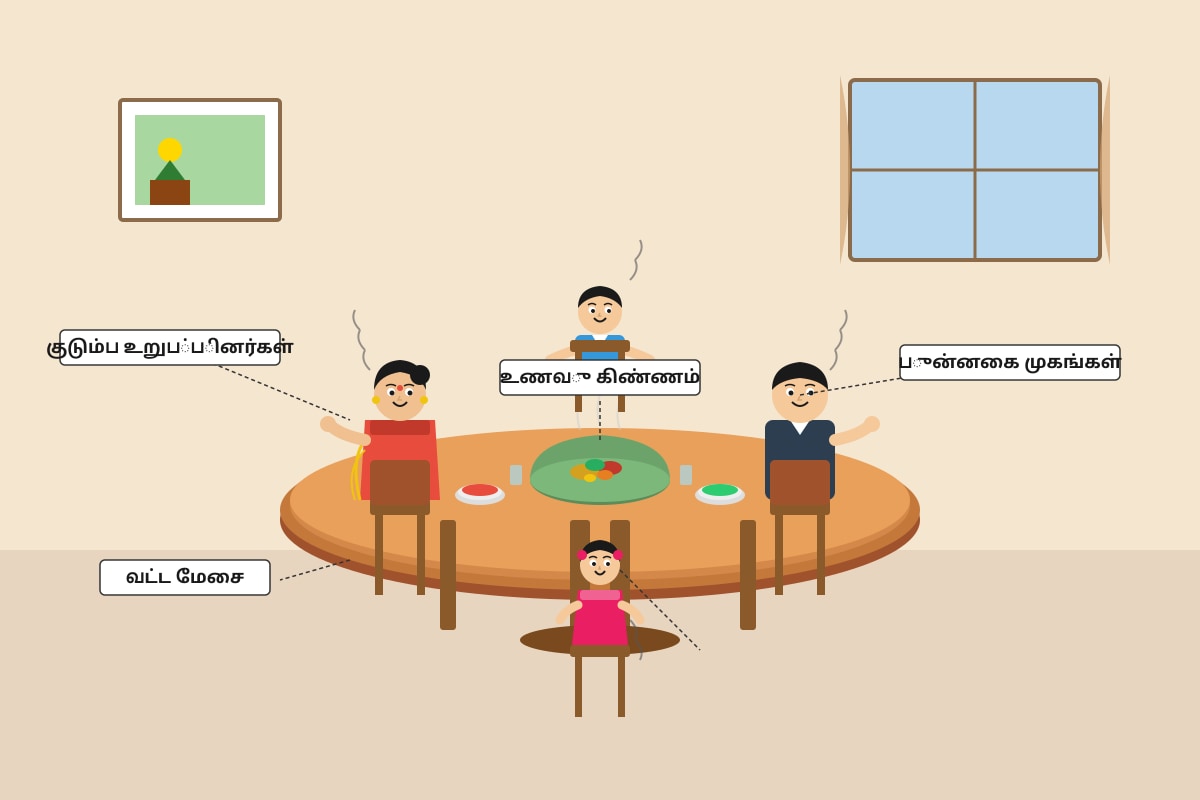
Question 16
Sample Answer: "இந்தப் படத்தில் ஒரு குடும்பம் இரவு உணவு சாப்பிடுவதைக் காணலாம். அப்பா, அம்மா, மகன், மகள் ஆகிய நான்கு பேர் ஒரு வட்ட மேசையைச் சுற்றி அமர்ந்துள்ளனர். அவர்கள் அனைவரும் மகிழ்ச்சியாகப் பேசிக்கொண்டு உணவு சாப்பிடுகிறார்கள். மேசையின் நடுவில் ஒரு பெரிய கிண்ணத்தில் உணவு இருக்கிறது."
Explanation: The answer should describe:
- Who is in the picture (family members)
- What they are doing (having dinner, talking)
- The setting (round table, food bowl)
Marking (2 marks):
- 1 mark: Identifies the people and activity
- 1 mark: Provides descriptive details about the setting
Question 17
Sample Answer: "இந்தப் படத்தில் பள்ளி மைதானத்தில் சிறுவர்கள் கால்பந்து விளையாடுவதைக் காணலாம். ஒரு சிறுவன் பந்தை உதைக்கிறான், மற்றவர்கள் ஓடிக்கொண்டிருக்கிறார்கள். பின்னணியில் மரங்களும் பள்ளி கட்டிடமும் உள்ளன."
Explanation: The answer should describe:
- The main activity (playing football)
- The location (school field)
- Background details (trees, school building)
Marking (2 marks):
- 1 mark: Identifies the main activity
- 1 mark: Provides details about the setting and participants
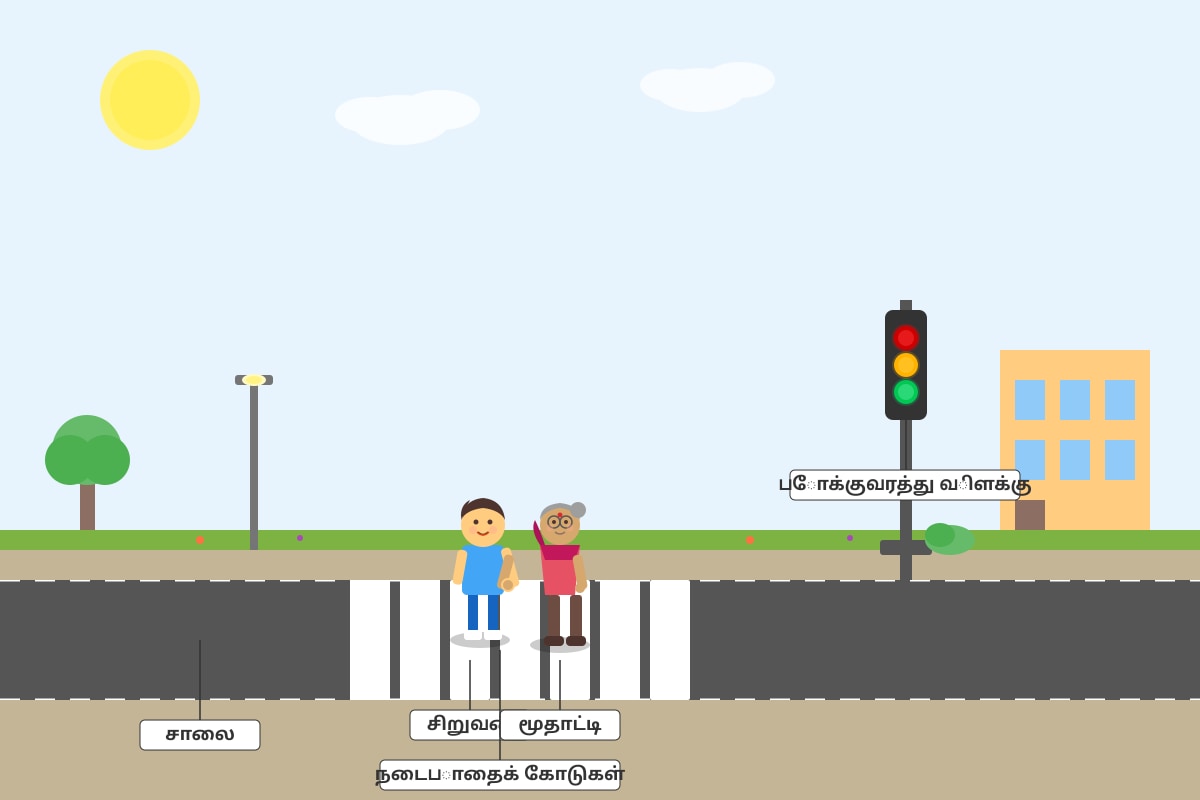
Question 18
Sample Answer: "இந்தப் படத்தில் ஒரு சிறுவன் ஒரு முதிய பெண்மணிக்கு உதவி செய்வதைக் காணலாம். அவன் அவரது கையைப் பிடித்து சாலையைக் கடக்க உதவுகிறான். அருகில் போக்குவரத்து விளக்கும், கடவைப் பாதையும் உள்ளன."
Explanation: The answer should describe:
- The main action (boy helping elderly woman cross the road)
- The specific details (holding hands, zebra crossing)
- The setting (traffic light, road)
Marking (2 marks):
- 1 mark: Identifies the act of helping
- 1 mark: Provides specific details about the scene
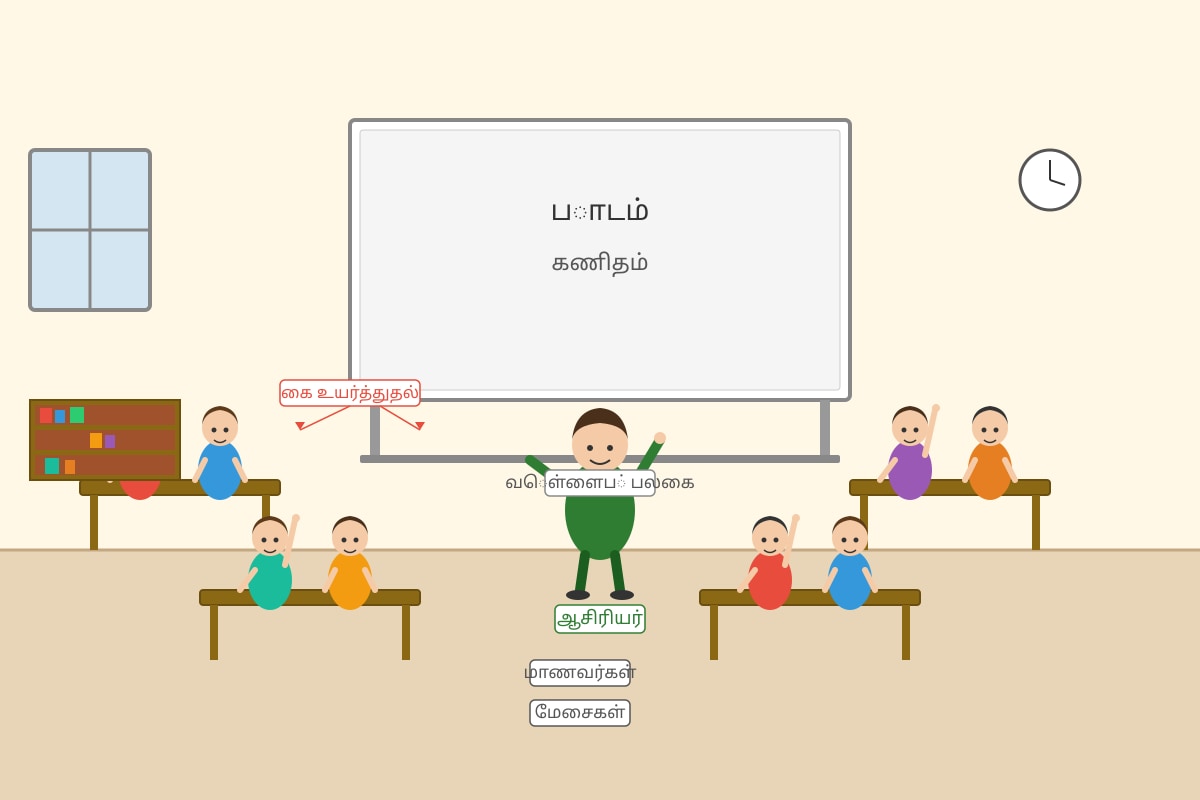
Question 19
Sample Answer: "இந்தப் படத்தில் ஒரு வகுப்பறையைக் காணலாம். ஆசிரியர் வெள்ளைப் பலகைக்கு அருகில் நின்று பாடம் நடத்துகிறார். மாணவர்கள் மேசைகளில் அமர்ந்து கேட்கிறார்கள். சில மாணவர்கள் கேள்விக்கு பதில் சொல்ல கையை உயர்த்துகிறார்கள்."
Explanation: The answer should describe:
- The setting (classroom)
- The teacher's action (teaching at the whiteboard)
- The students' actions (listening, raising hands)
Marking (2 marks):
- 1 mark: Identifies the classroom setting and teacher
- 1 mark: Describes student activities
Question 20
Sample Answer: "இந்தப் படத்தில் ஒரு குடும்பம் உணவகத்தில் (ஹாக்கர் சென்டர்) உணவு வாங்குவதைக் காணலாம். அவர்கள் ஒரு கடையில் நின்று உணவு ஆர்டர் செய்கிறார்கள். கடைக்காரர் அவர்களுக்கு உணவு பரிமாறுகிறார். சுற்றிலும் மேசைகளும் நாற்காலிகளும் உள்ளன."
Explanation: The answer should describe:
- The location (hawker centre)
- The activity (ordering food)
- The people involved (family, hawker)
Marking (2 marks):
- 1 mark: Identifies the location and activity
- 1 mark: Provides details about the people and setting
Common Mistakes to Note
-
Spoken vs. Written Tamil: Students often confuse formal and informal registers. Remind them that "போறேன்" is spoken, while "செல்வேன்" is written/formal.
-
Discourse Markers: Words like "அப்படியா?", "சரிதான்", "நல்லது" are important for natural conversation. Encourage students to use them appropriately.
-
Respectful Address: Using "அவர்" instead of "அவன்" for elders and respected persons is crucial in Tamil.
-
Picture Description: Students should describe who, what, where, and what is happening. Encourage them to look at all parts of the picture, including the background.
-
Politeness: Always include greetings (வணக்கம்), thanks (நன்றி), and apologies (மன்னிக்கவும்) where appropriate in conversations.