AI Generated Quiz
Primary 6 PSLE Tamil Speaking Quiz
Free P6 PSLE Tamil Speaking quiz, AI version, with questions, answers, and PSLE-focused practice for Singapore students.
These static practice materials are generated from the site's syllabus and paper-generation workflow, with source and model context shown so students and parents can evaluate the material before use.
Questions
Free quiz and exam paper access
Enter your details to view this paper
Your access is remembered on this device.
Answers
Primary 6 PSLE Tamil Quiz - Speaking: Answer Key
Total Marks: 40
Section A: Pronunciation and Word Stress (சொல்லழுத்தமும் உச்சரிப்பும்) [Questions 1–5, 10 marks]
1. Correct answer: அம்மா (stress on the second syllable 'ம்மா') Marks: 2 (1 mark for writing the word correctly, 1 mark for correctly underlining the stressed syllable) Explanation: In the word "அம்மா", the stress falls on the second syllable 'ம்மா' because it contains a long vowel (நெடில்) 'ஆ'. When speaking, you should hold the 'ம்மா' sound slightly longer and with more force. A common mistake is to stress the first syllable 'அ', which is a short vowel (குறில்).
2. Correct answer: பள் / ளிக் / கூ / டம் Marks: 2 (1 mark for correct number of syllables, 1 mark for correct separation) Explanation: The word "பள்ளிக்கூடம்" has four syllables. The correct syllable separation is: பள்-ளிக்-கூ-டம். Note that 'ள்' and 'ளி' are separate syllables. The 'க்' in the third syllable is a pulli (dot) consonant. Practising syllable separation helps with clear pronunciation and spelling.
3. Correct answers: (i) காடு (long vowel 'ஆ' in the first syllable) (ii) மாலை (long vowel 'ஆ' in the first syllable) Marks: 2 (1 mark for each correct pair) Explanation: Long vowels (நெடில்) are held for twice the duration of short vowels (குறில்).
- கடல்: 'க' + short 'அ' (குறில்) → கடல்
- காடு: 'க' + long 'ஆ' (நெடில்) → காடு
- மலை: 'ம' + short 'அ' (குறில்) → மலை
- மாலை: 'ம' + long 'ஆ' (நெடில்) → மாலை Common mistake: Students often confuse கடல் (sea) and காடு (forest) because they look similar. Pay attention to the vowel length.
4. Sample correct answer: Sentence: நான் தமிழ் எழுத்துக்களைப் படிக்கக் கற்றுக்கொண்டேன். Pronunciation tip: 'ழ' is a retroflex sound. To pronounce it correctly, curl your tongue back so that the tip touches the roof of your mouth (the hard palate), and then release the air. It is a unique Tamil sound that does not exist in English. Marks: 2 (1 mark for a meaningful sentence using the word, 1 mark for a clear and correct pronunciation tip) Explanation: The letter 'ழ' (ழகரம்) is one of the most distinctive sounds in Tamil. It is often challenging for learners. The key is tongue placement: the tip of the tongue should curl back and touch the roof of the mouth.
5. Correct answer: உண்மையிலேயே Marks: 2 (1 mark for identifying the correct word, 1 mark for the reasoning) Explanation: The word "உண்மையிலேயே" (really/truly) carries the surprise in the sentence. When expressing surprise, this word should be spoken with higher pitch and more emphasis (அழுத்தம்). The sentence translates to "Did you really win that prize?" The surprise is on the word "really".
Section B: Expressing Ideas Clearly (கருத்துகளைத் தெளிவாக வெளிப்படுத்துதல்) [Questions 6–10, 10 marks]
6. Sample correct answer: "நீ ஏன் சோகமாக இருக்கிறாய்? உனக்கு ஏதாவது உதவி தேவையா? நான் உன்னுடன் இருக்கிறேன்." Marks: 2 (1 mark for showing concern, 1 mark for asking a clear question) Explanation: A good response shows empathy (பச்சாதாபம்) and offers help. The student should use a gentle tone. Key phrases: "ஏன் சோகமாக இருக்கிறாய்?" (Why are you sad?) and "உதவி தேவையா?" (Do you need help?). Marking note: Accept any reasonable variation that shows care and asks a question.
7. Sample correct answer: "அன்புள்ள வகுப்புத் தோழர்களே, தயவுசெய்து நம் வகுப்பறையை சுத்தமாக வைத்துக்கொள்வோம். காகிதங்களை குப்பைத் தொட்டியில் போடுங்கள். நம் வகுப்பு நமக்குத்தான் பொறுப்பு." Marks: 2 (1 mark for polite tone, 1 mark for clear instruction) Explanation: As class monitor, the student should use respectful language ("தயவுசெய்து" - please) but also be firm. The message should include a specific action (keeping the classroom clean) and a reason (it is our responsibility). Marking note: Accept responses that use "தயவுசெய்து" or similar polite markers.
8. Sample correct answer: "எனக்குப் பிடித்த பொழுதுபோக்கு ஓவியம் வரைவது. நான் இயற்கைக் காட்சிகளை வரைய விரும்புகிறேன். ஓவியம் வரையும்போது எனக்கு மிகவும் மகிழ்ச்சியாக இருக்கும், ஏனென்றால் அது என் எண்ணங்களை வெளிப்படுத்த உதவுகிறது." Marks: 2 (1 mark for naming the hobby and describing it, 1 mark for explaining why they enjoy it) Explanation: The response should have 2-3 sentences. The first sentence names the hobby. The second describes it. The third gives a reason. Key vocabulary: பொழுதுபோக்கு (hobby), ஓவியம் (painting), மகிழ்ச்சி (happiness). Marking note: Accept any hobby (விளையாட்டு, படித்தல், இசை, etc.) as long as it is clearly described.
9. Sample correct answer: "வணக்கம் பாட்டி! நான் உங்கள் பேரன்/பேத்தி பேசுகிறேன். எங்கள் பள்ளியில் கலாச்சார தின விழா நடைபெறுகிறது. நீங்கள் வந்து பார்த்தால் மிகவும் மகிழ்ச்சி அடைவேன். வருகிறீர்களா?" Marks: 2 (1 mark for respectful tone and greeting, 1 mark for clear invitation with details) Explanation: When speaking to elders, use respectful terms like "வணக்கம்" (greeting) and "பாட்டி" (grandmother). The invitation should include: what the event is (கலாச்சார தின விழா), where (school), and a polite request. Marking note: Accept "தாத்தா" (grandfather) or other elder relatives.
10. Sample correct answer: "அனைவருக்கும் வணக்கம். இன்று நான் பிறருக்கு உதவுவதன் முக்கியத்துவம் பற்றி பேச விரும்புகிறேன். நாம் பிறருக்கு உதவும்போது, அவர்களுக்கு மட்டுமல்ல, நமக்கும் மகிழ்ச்சி கிடைக்கிறது. சிறிய உதவியும் பெரிய மாற்றத்தை ஏற்படுத்தும். நன்றி." Marks: 2 (1 mark for clear beginning and ending, 1 mark for meaningful content) Explanation: A good speech has:
- Beginning: "அனைவருக்கும் வணக்கம்" (Greeting)
- Body: Key point about helping others
- Ending: "நன்றி" (Thank you) The speech should be 3-4 sentences and stay on topic. Marking note: Award marks for structure and relevance, not perfection.
Section C: Using Discourse Markers (உரைக்குறிகள்) [Questions 11–15, 10 marks]
11. Correct answer: அப்படியா? Marks: 2 (1 mark for correct discourse marker, 1 mark for context) Explanation: "அப்படியா?" (Is that so?/Really?) is used to show surprise or to ask for more information. In this context, Person A says they need to go to the doctor, and Person B responds with surprise and concern. "சரிதான்" (Okay) would not fit because it shows agreement, not surprise. "நல்லது" (Good) would be inappropriate for a doctor's visit. Common mistake: Students might choose "சரிதான்" but that would mean "Okay, you need to go to the doctor" which does not show the expected concern.
12. Sample correct answer: "நல்லது! கடற்கரைக்குப் போவது மிகவும் மகிழ்ச்சியாக இருக்கும். நீங்கள் நன்றாக அனுபவியுங்கள்!" Marks: 2 (1 mark for correct use of "நல்லது", 1 mark for a complete response) Explanation: "நல்லது" (Good/That's good) is used to express approval or to acknowledge that something is a good idea. The response should show enthusiasm about the friend's plan. Marking note: Accept any response that uses "நல்லது" correctly and relates to the friend's statement.
13. Sample correct answer: "சிங்கப்பூரில் பல விழாக்கள் கொண்டாடப்படுகின்றன. குறிப்பாக, தீபாவளி விழா மிகவும் சிறப்பாகக் கொண்டாடப்படுகிறது." Marks: 2 (1 mark for correct placement of "குறிப்பாக", 1 mark for a complete sentence about a festival) Explanation: "குறிப்பாக" (especially/particularly) is used to highlight or emphasise one specific item from a group. The student should first mention festivals in general, then use "குறிப்பாக" to focus on one. Common mistake: Placing "குறிப்பாக" at the beginning of the sentence without context. It should follow a general statement.
14. Sample correct answer: "சரிதான், நீங்கள் மிகவும் கடினமாக உழைத்திருக்கிறீர்கள். உங்கள் முயற்சி பாராட்டத்தக்கது." Marks: 2 (1 mark for correct use of "சரிதான்", 1 mark for acknowledging the effort) Explanation: "சரிதான்" (Yes/That's right/Okay) can be used to show agreement. In this context, it acknowledges the classmate's hard work. The response should validate their effort. Marking note: Accept responses that show agreement and recognition of hard work.
15. Sample correct answer: Friend 1: "இந்த வார இறுதியில் நாம் நூலகத்திற்குப் போகலாமா?" Friend 2: "நல்லது! நூலகத்திற்குப் போவது நல்ல யோசனை. குறிப்பாக, புதிய புத்தகங்களைப் படிக்கலாம்." Friend 1: "அப்படியா? நீங்கள் எந்தப் புத்தகத்தைப் படிக்க விரும்புகிறீர்கள்?" Friend 2: "சரிதான், நான் சாகசக் கதைகளை விரும்புகிறேன்." Marks: 2 (1 mark for using at least two different discourse markers, 1 mark for a coherent dialogue) Explanation: The dialogue should be natural and show planning. Each discourse marker should be used in a context that makes sense. The conversation should have a clear topic (weekend activity). Marking note: Award marks for correct usage even if the dialogue is simple. The key is demonstrating understanding of the discourse markers.
Section D: Giving Reasons and Examples (காரணங்களும் எடுத்துக்காட்டுகளும்) [Questions 16–20, 10 marks]
16. Sample correct answer: Reason: புத்தகங்கள் படிப்பது நம் அறிவை வளர்க்கிறது மற்றும் புதிய விஷயங்களைக் கற்றுக்கொள்ள உதவுகிறது. Example: எனக்குப் பிடித்த புத்தகம் "பஞ்ச தந்திரக் கதைகள்". இது நிறைய நீதிக் கதைகளைக் கொண்டுள்ளது. Marks: 2 (1 mark for a clear reason, 1 mark for a specific example) Explanation: The reason should explain why reading is important (e.g., knowledge, vocabulary, imagination). The example should name a specific book. "பஞ்ச தந்திரக் கதைகள்" is a classic collection of moral stories suitable for P6 level. Marking note: Accept any reasonable reason and any book title (real or made-up) as long as it is specific.
17. Sample correct answer: Reason 1: தண்ணீர் நம் வாழ்வுக்கு இன்றியமையாதது. Example 1: நாம் குடிப்பதற்கும், சமைப்பதற்கும், குளிப்பதற்கும் தண்ணீர் தேவை. Reason 2: தண்ணீரை வீணாக்கினால் எதிர்காலத்தில் தண்ணீர் பற்றாக்குறை ஏற்படும். Example 2: பல் துலக்கும்போது குழாயைத் திறந்து வைத்தால் நிறைய தண்ணீர் வீணாகிறது. Marks: 2 (1 mark for two valid reasons, 1 mark for relevant examples) Explanation: Each reason should be a complete sentence explaining why saving water is important. Each example should be a specific situation that illustrates the reason. The examples make the argument concrete and relatable. Marking note: Accept any two logical reasons with matching examples. Common reasons include: water is life, water scarcity, environmental protection.
18. Sample correct answer: Reason: இருட்டில் பயப்படத் தேவையில்லை, ஏனென்றால் நம் வீடு பாதுகாப்பான இடம். Suggestion: ஒரு சிறிய இரவு விளக்கைப் போட்டு வைத்துத் தூங்கலாம். அது உங்களுக்குத் தைரியத்தைக் கொடுக்கும். Marks: 2 (1 mark for a comforting reason, 1 mark for a practical suggestion) Explanation: The reason should be reassuring and logical. The suggestion should be something the sibling can actually do. Common suggestions: night light, sleeping with a toy, keeping the door slightly open. Marking note: Accept any reasonable and kind response. The tone should be gentle and supportive.
19. Sample correct answer: Reason 1: மூத்தோர் நிறைய அனுபவம் கொண்டவர்கள். அவர்கள் நமக்கு நல்ல ஆலோசனைகள் வழங்க முடியும். Reason 2: மூத்தோரை மதிப்பது நம் கலாச்சாரத்தின் முக்கியமான பகுதி. Example: நான் வீட்டில் என் தாத்தா பாட்டிக்கு காலையில் காபி கொடுத்து உதவுகிறேன். Marks: 2 (1 mark for two valid reasons, 1 mark for a specific personal example) Explanation: Reasons should focus on the value of elders (experience, wisdom, culture). The example should be a concrete action the student does at home. Key vocabulary: மூத்தோர் (elders), மதிப்பது (respecting), அனுபவம் (experience). Marking note: Accept any respectful example such as helping with chores, listening to their stories, or speaking politely.
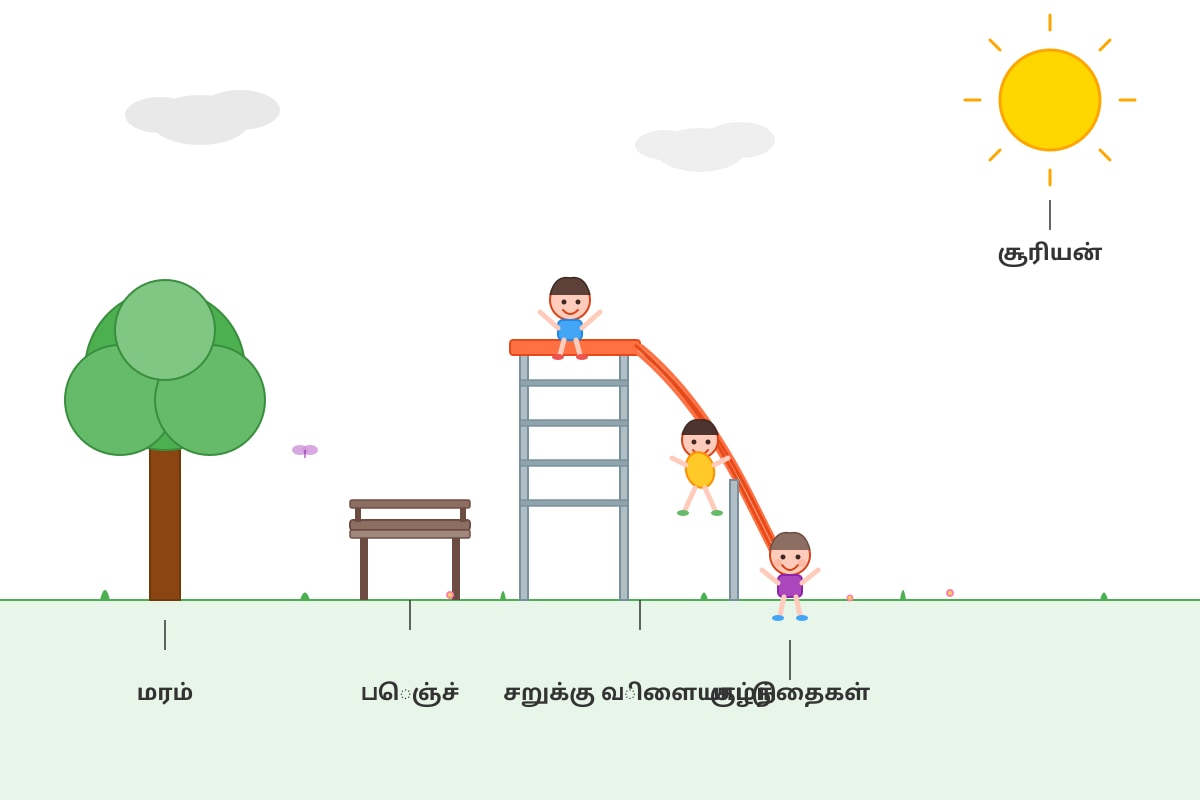
20. Sample correct answer: Description: இந்தப் படத்தில் மூன்று குழந்தைகள் பூங்காவில் ஊஞ்சலில் விளையாடிக் கொண்டிருக்கிறார்கள். ஒரு குழந்தை ஊஞ்சலின் மேல் ஏறுகிறது, ஒரு குழந்தை கீழே சரிந்து வருகிறது, மற்றொரு குழந்தை கீழே காத்திருக்கிறது. சூரியன் பிரகாசமாக இருக்கிறது. Reason: இந்தக் குழந்தைகள் மகிழ்ச்சியாக இருக்கிறார்கள், ஏனென்றால் அவர்கள் ஒன்றாக விளையாடுகிறார்கள் மற்றும் நேரத்தை மகிழ்ச்சியாகக் கழிக்கிறார்கள். Marks: 2 (1 mark for a clear description of the picture, 1 mark for a logical reason for their happiness) Explanation: The description should mention: the setting (park), the action (playing on the slide), and the number of children. The reason should connect to the visual clues (smiling faces, playing together). Key vocabulary: பூங்கா (park), ஊஞ்சல் (slide/swing), விளையாடுதல் (playing), மகிழ்ச்சி (happiness). Marking note: Accept any reasonable description that shows the student understood the picture. The reason should be based on what is seen in the image.
END OF ANSWER KEY