AI Generated Quiz
Primary 6 PSLE Science Magnets Quiz
Free P6 PSLE Science Magnets quiz, AI version, with questions, answers, and PSLE-focused practice for Singapore students.
These static practice materials are generated from the site's syllabus and paper-generation workflow, with source and model context shown so students and parents can evaluate the material before use.
Questions
Free quiz and exam paper access
Enter your details to view this paper
Your access is remembered on this device.
Answers
Answer Key & Marking Scheme: Primary 6 PSLE Science Quiz - Magnets
Total Marks: 40
Section A: Multiple-Choice Questions (10 marks)
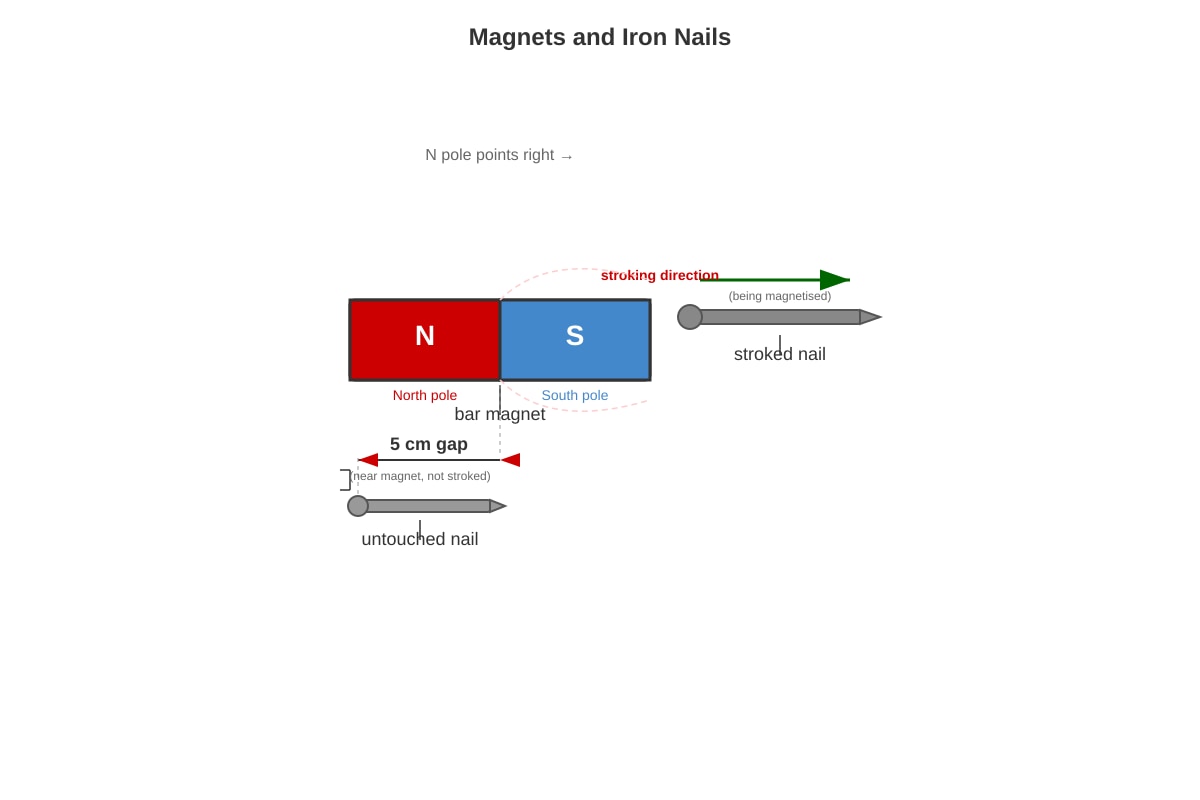
1. (C) The stroked nail becomes a stronger temporary magnet than the untouched nail.
- Explanation: Stroking a steel/iron object with a magnet in the same direction aligns the magnetic domains within the material, making it a temporary magnet. The stroked nail will have a stronger magnetic effect than the nail that was just placed near the magnet, which may only have a very weak induced magnetism.
- Marks: 1
2. (A) Iron filings only.
- Explanation: Iron is a magnetic material. Copper and aluminium are not magnetic materials. Magnets only attract materials like iron, steel, nickel, and cobalt.
- Marks: 1
3. (B) The magnets will move away from each other.
- Explanation: Like poles (North and North) repel each other. The magnetic force of repulsion will push the magnets apart.
- Marks: 1
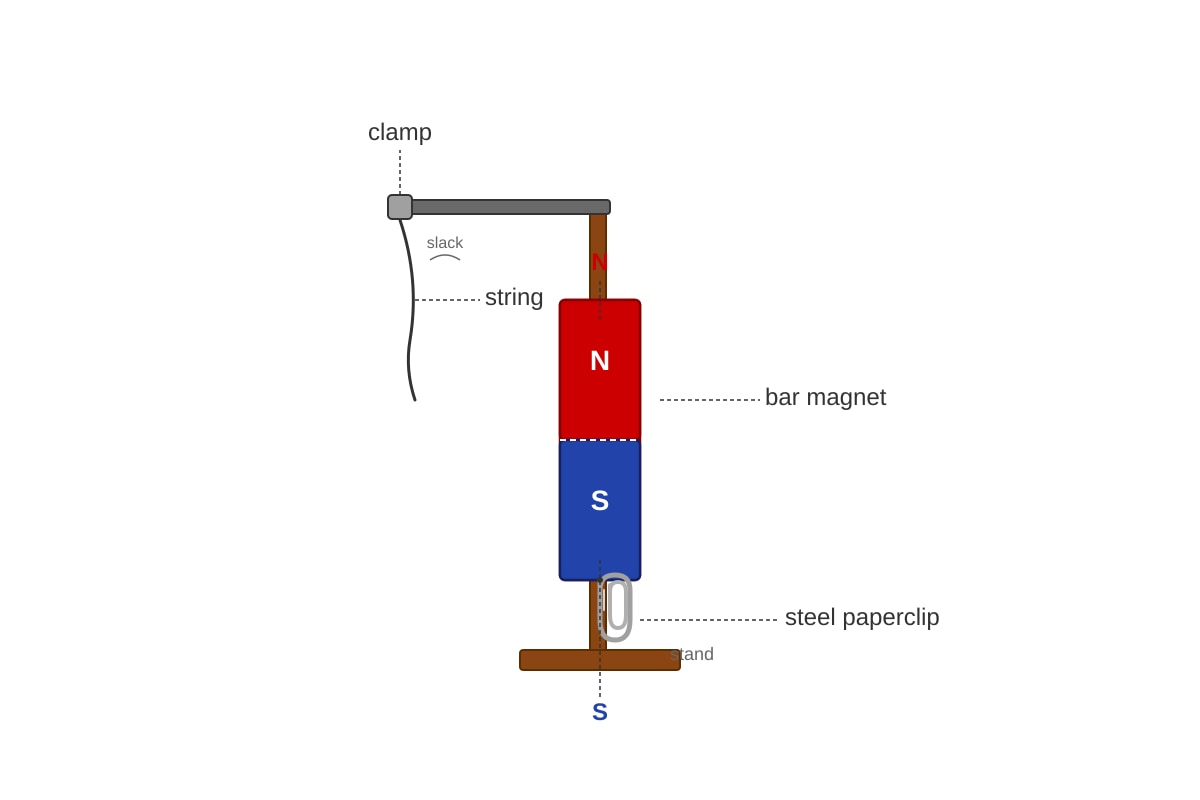
4. (B) That end of the magnet is its north pole.
- Explanation: A freely suspended magnet will align itself with the Earth's magnetic field. The end that points towards the Earth's geographic North is the magnet's north-seeking pole (north pole).
- Marks: 1
5. (B) (2) only.
- Explanation: A steel paperclip is made of steel, a magnetic material. Glass and plastic are non-metals and are not attracted. Copper is a metal but is not a magnetic material.
- Marks: 1
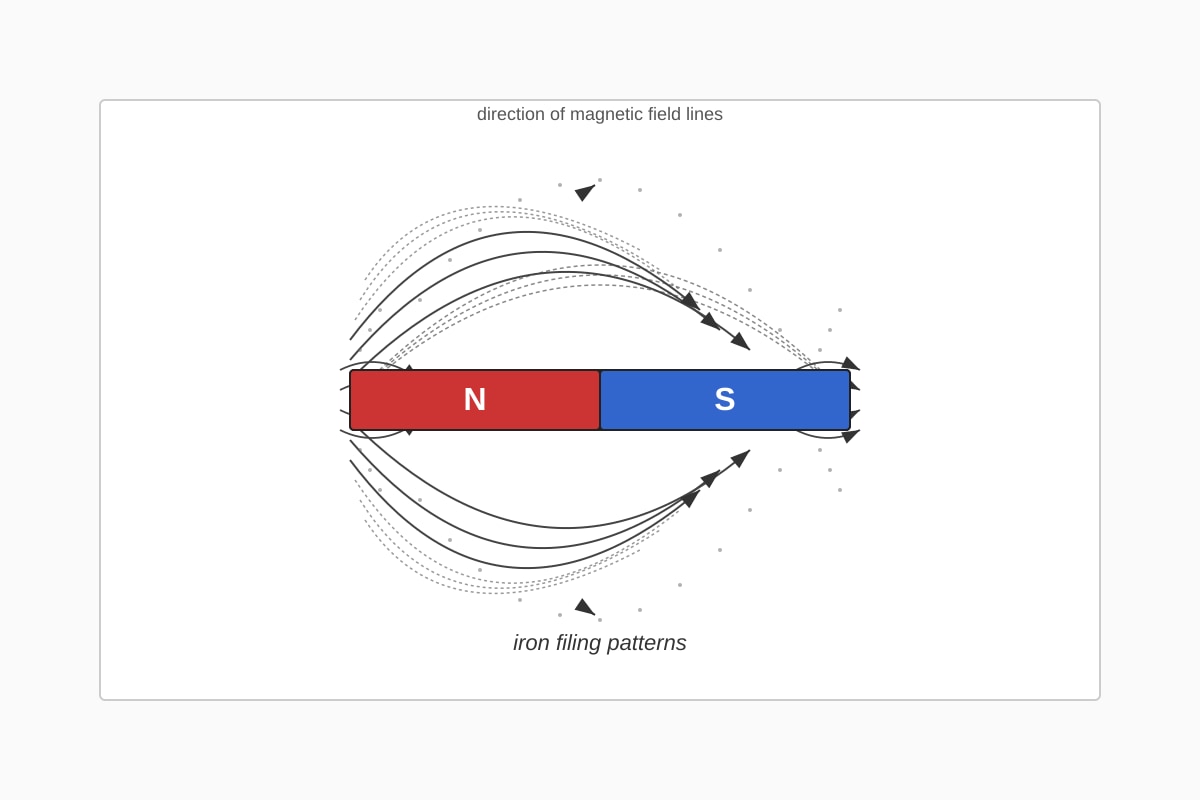
6. (C) Shape of the magnetic field.
- Explanation: Iron filings align themselves along the magnetic field lines, forming a visible pattern that maps the shape and direction of the magnetic field.
- Marks: 1
7. (B) A material that is attracted to a magnet.
- Explanation: A magnetic material is defined by its ability to be attracted by a magnet. Not all metals are magnetic (e.g., copper, aluminium).
- Marks: 1
8. (A) Each piece will have both a north and a south pole.
- Explanation: When a magnet is cut, each piece becomes a smaller magnet with its own north and south pole. Magnetic monopoles (single poles) do not exist.
- Marks: 1
9. (C) The polarity (north and south ends) of the electromagnet swaps.
- Explanation: Reversing the direction of current flow reverses the direction of the magnetic field generated by the coil, thus swapping the north and south poles of the electromagnet.
- Marks: 1
10. (B) A magnet can attract all metals.
- Explanation: This is false. Magnets only attract magnetic materials like iron, steel, nickel, and cobalt. They do not attract other metals like copper, aluminium, gold, or silver.
- Marks: 1
Section B: Short-Answer Questions (10 marks)
11. (a) The paperclip sticks because it is made of steel (a magnetic material) and is in the magnetic field of the magnet. The magnet induces magnetism in the paperclip, causing them to attract. [1 mark] (b) No, the plastic button will not stick. Plastic is not a magnetic material and cannot be attracted by a magnet. [1 mark]
12. (a) Rod X is made of a magnetic material. Example: iron, steel. (Award mark for any one correct example). [1 mark] (b) No, Rod Y is not a magnetic material because it is not attracted to the magnet. (Award mark for the correct conclusion and the correct reason.) [1 mark]
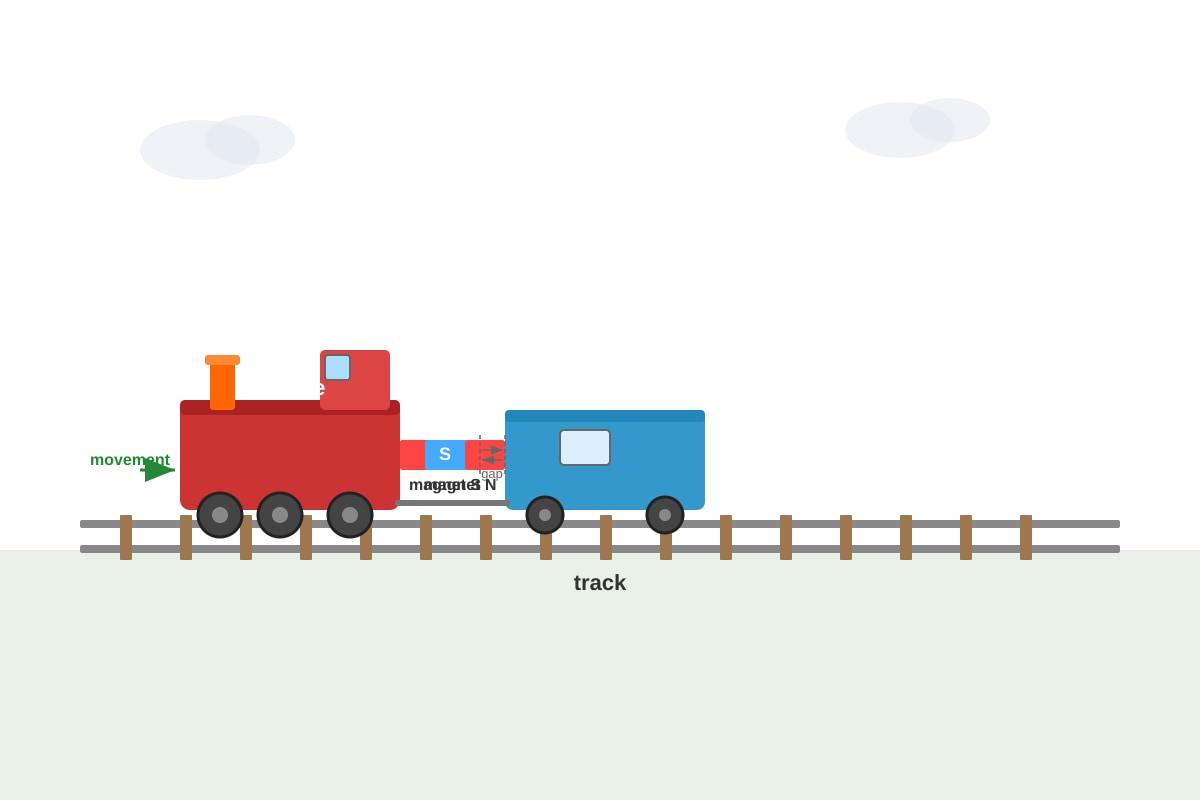
13. (a) The carriage will be pulled. The north pole of the engine's magnet is attracting the south pole of the carriage's magnet. Unlike poles attract. [1 mark] (b) If the magnets are reversed, the north pole of the engine's magnet will face the north pole of the carriage's magnet. Like poles repel, so the carriage will be pushed away from the engine. [1 mark]
14. (a) The operator must switch on the electricity supply to the electromagnet. [1 mark] (b) The operator must switch off the electricity supply to the electromagnet. The car will drop because the electromagnet loses its magnetic field. [1 mark]
15. (a) Magnet A. [1 mark] (b) Because Magnet A could hold more paperclips than Magnet B before the paperclips fell off. [1 mark]
Section C: Structured / Open-Ended Questions (20 marks)
16. (a) Her conclusion may not be correct. (Award 1 mark for identifying the conclusion may be wrong). The spoon might be made of a magnetic material (like steel) that is too heavy to be moved by the magnetic force of the magnet she used. The magnetic force may not be strong enough to overcome friction and the weight of the spoon. (Award 1 mark for a valid explanation). [2 marks]
(b) The student could try to lift the spoon with the magnet. (Award 1 mark for suggesting lifting or hanging the spoon). If the spoon is magnetic, the magnet will be able to hold its weight. Alternatively, she could try using the spoon to pick up a small magnetic object like a paperclip. (Award 1 mark for providing detail). [2 marks]
17. (a) X: South (S) / Y: North (N) (Award 1 mark for both correct). [1 mark]
(b) The iron filings act as small compasses and align themselves along the invisible magnetic field lines. The field lines show the path of the magnetic force from the north pole to the south pole. (Award 1 mark for the concept of alignment with field lines). [1 mark]
(c) The pattern would be more distinct/darker (Award 1 mark) because a stronger magnet has a stronger magnetic field, which will attract more iron filings and align them more strongly. The field lines would also spread further out. (Award 1 mark for the explanation). [2 marks]
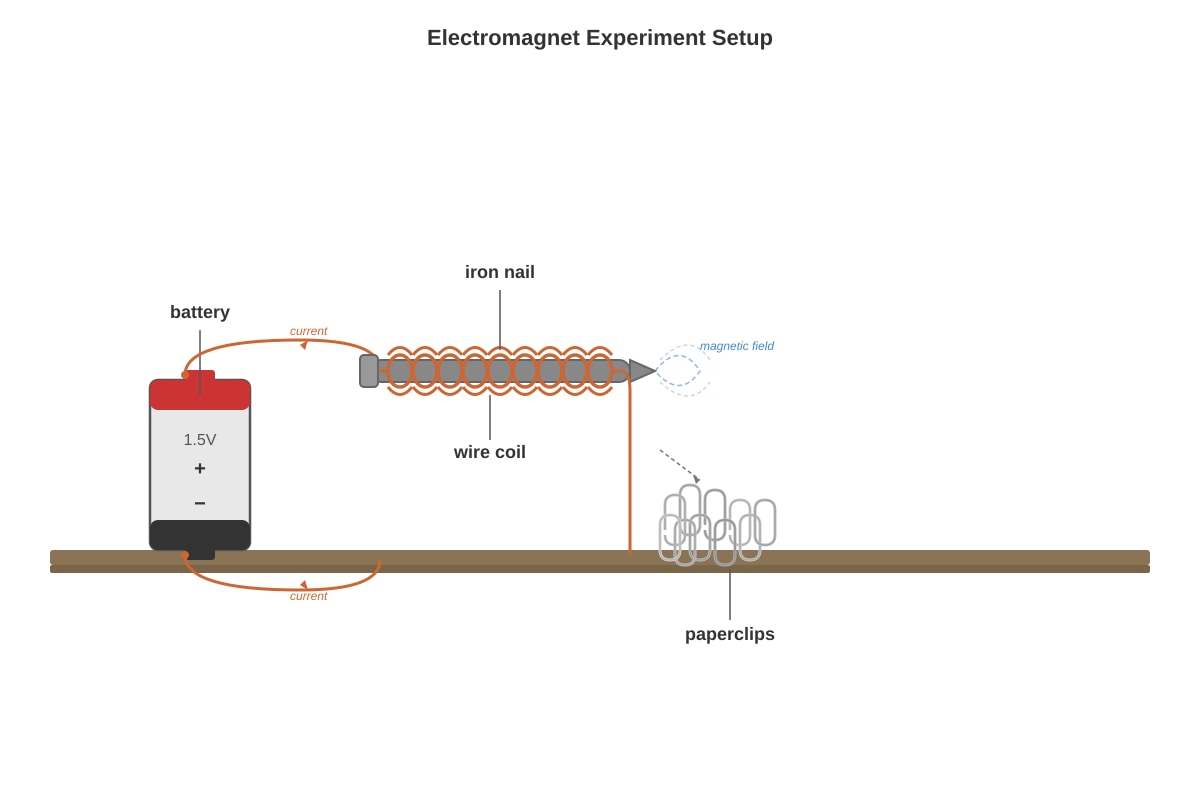
18. (a) As the number of coils increases, the number of paperclips attracted (the strength of the electromagnet) increases. (Award 1 mark for stating the direct relationship). [1 mark]
(b) Each coil of wire carries electric current, which generates a small magnetic field around it. Adding more coils combines the magnetic fields, creating a stronger overall magnetic field. (Award 1 mark for the concept of combining magnetic fields). [1 mark]
(c) The electromagnet with a wooden rod will attract fewer or no paperclips (Award 1 mark for the correct prediction). The iron nail is a magnetic material, and it becomes magnetised by the coil's field, greatly strengthening the electromagnet. Wood is not a magnetic material and cannot be magnetised, so it will not strengthen the magnetic field. (Award 1 mark for the correct explanation). [2 marks]
19. (a) The thickness/type of wire. (Award 1 mark). [1 mark] (b) The strength of the electromagnet (how many paperclips it can pick up). (Award 1 mark). [1 mark] (c) Any two of the following: the same iron nail, the same number of coils, the same battery (voltage), the same type of paperclips. (Award 1 mark for each valid controlled variable, up to 2 marks). [2 marks]
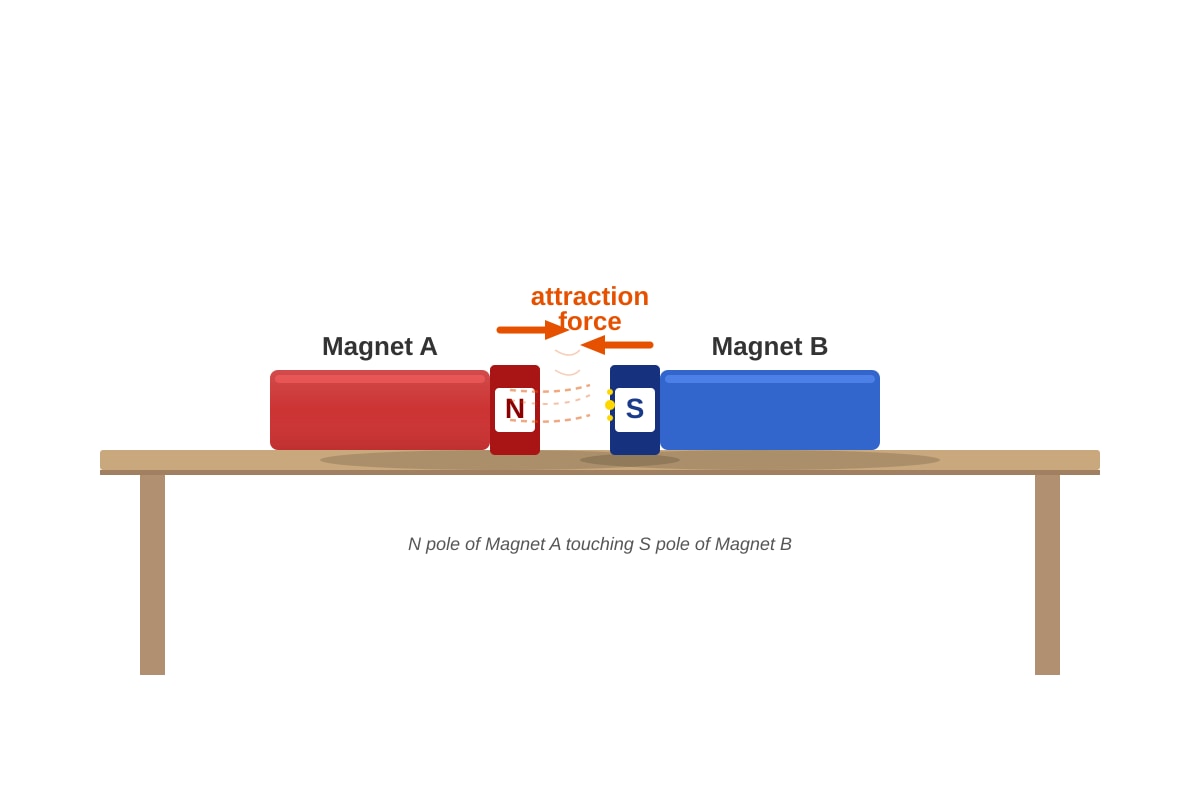
20. (a) Unlike poles (north and south) attract each other. The magnetic force pulls the magnets together until they touch. (Award 1 mark for stating attraction of opposite poles). [1 mark]
(b) They do not move because like poles (north and north) repel each other. However, the repulsive force is not strong enough to push the magnets apart if they are already stationary and the table has some friction. Alternatively, a more precise answer is that there is a repulsive force that prevents them from moving towards each other, but it's balanced by other factors keeping them still. (Award 1 mark for stating repulsion of like poles). [1 mark]
(c) Scenario: A magnet can attract an iron nail from a short distance, like picking up a paperclip from a table without touching it. (Award 1 mark for a valid scenario). Explanation/Usefulness: This is how a magnetic compass works or how scrap metal is lifted in a junkyard. (Award 1 mark for a real-world example and brief explanation). The student may also draw a diagram showing a magnet above a paperclip with a non-contact attractive force. [2 marks]
- End of Answer Key -