AI Generated Quiz
Primary 6 PSLE Science Light Quiz
Free P6 PSLE Science Light quiz, HY3 AI version, with questions, answers, and PSLE-focused practice for Singapore students.
These static practice materials are generated from the site's syllabus and paper-generation workflow, with source and model context shown so students and parents can evaluate the material before use.
Questions
Free quiz and exam paper access
Enter your details to view this paper
Your access is remembered on this device.
Answers
Primary 6 PSLE Science Quiz - Light (Answer Key)
Total Marks: 40
Topic: Light
Note: Syllabus-first content from LLM-inferred templates; not past-year derived.
Section A Answers (1 mark each)
1. straight
Teaching note: Light travels in a straight line. This is why shadows have sharp edges when the source is small.
2. B) A lit candle
Teaching note: A source of light makes its own light. The Moon, mirror, and wall only reflect light from other sources.
3. reflected
Teaching note: A smooth mirror reflects light in a regular way so we see an image.
4. opaque
Teaching note: Opaque objects block light completely; no light passes through.
5. travels in a straight line (and cannot bend around objects)
Teaching note: Light moves straight, so an object blocks it and leaves a dark shadow behind.
6. B) Clear glass
Teaching note: Transparent materials let most light pass through so we can see through them.
7. refraction
Teaching note: Refraction is the bending of light when it passes from one material (air) to another (water) at an angle.
8. reflects; absorbs
Teaching note: A red apple reflects red light to our eyes and absorbs the other colours, so it looks red.
9. violet
Teaching note: The spectrum order is Red, Orange, Yellow, Green, Blue, Indigo, Violet (ROYGBIV).
10. two
Teaching note: A simple periscope uses two plane mirrors at 45° to bounce light from one end to the viewer’s eye.
Section B Answers (2 marks each)
11. (2 marks)
- The room light sends out light in straight lines. (1 mark)
- Light reflects from the book into the person’s eyes, so the person sees the book. (1 mark)
Teaching note: We see non-luminous objects only when light from a source reflects off them into our eyes.
12. (2 marks)
- The shadow becomes larger. (1 mark)
- Moving the ball closer to the light makes the light blocked over a bigger area on the screen. (1 mark)
Teaching note: Closer to source → wider cone of blocked light → bigger shadow.
13. (2 marks)
(i) Transparent lets light pass through; opaque does not. (1 mark)
(ii) We can see through transparent material; we cannot see through opaque material. (1 mark)
Common mistake: Confusing translucent (some light, blurry) with transparent.
14. (2 marks)
- Light is reflected by the mirror. (1 mark)
- The angle of reflection equals the angle of incidence (light bounces off at the same angle). (1 mark)
Teaching note: Plane mirrors give regular reflection.
15. (2 marks)
- Light from the pool bottom bends (refracts) when leaving water into air. (1 mark)
- This makes the bottom seem higher, so the pool looks shallower. (1 mark)
16. (2 marks)
- The leaf absorbs the other colours of light. (1 mark)
- Only green light is reflected to our eyes. (1 mark)
Section C Answers (3 marks each)
17. (3 marks)
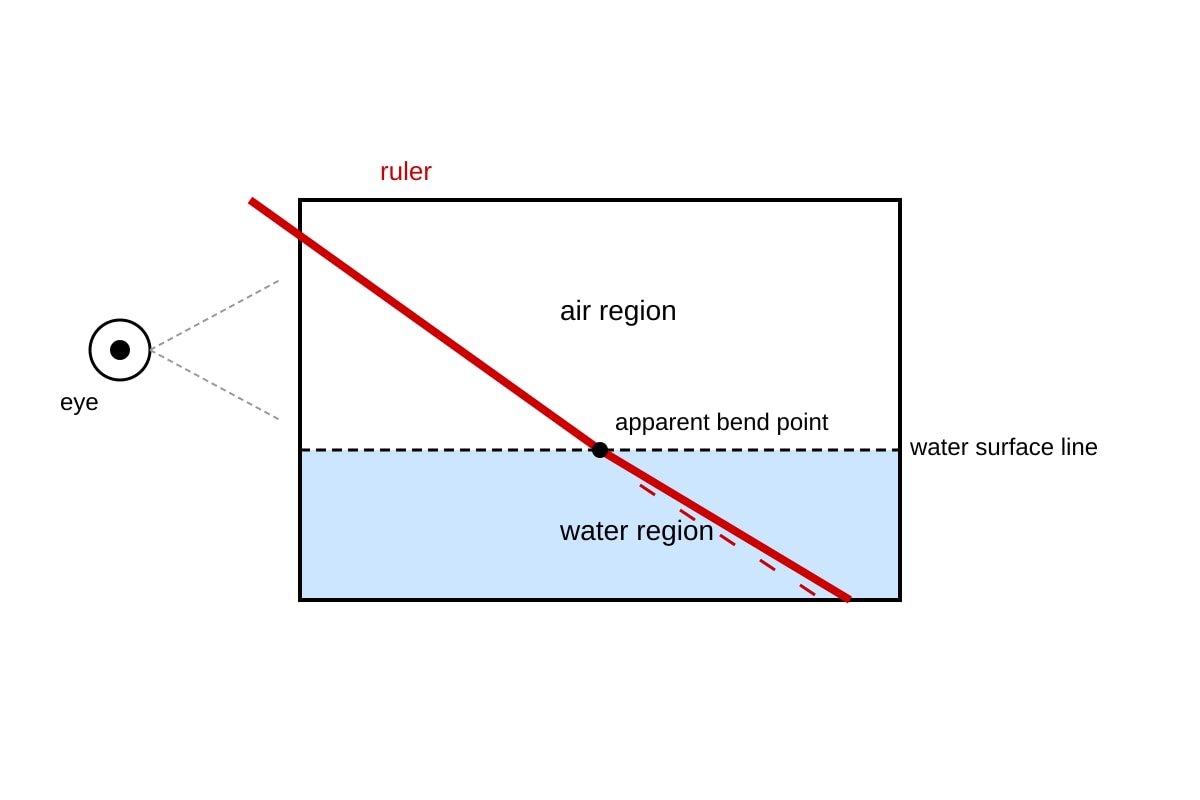
- Light from the part of the ruler in water travels from water to air. (1 mark)
- It refracts (bends) because water and air have different densities. (1 mark)
- The bent light makes the ruler look broken at the surface. (1 mark)
Image note: Diagram must show ruler bent at surface; eye on left sees apparent break.
18. (3 marks)
- The bright light sends straight light rays towards the sheet. (1 mark)
- Opaque puppets block the light, forming dark shadows on the sheet. (1 mark)
- If puppets were not opaque, light would pass through and no clear shadow would form. (1 mark)
19. (3 marks)
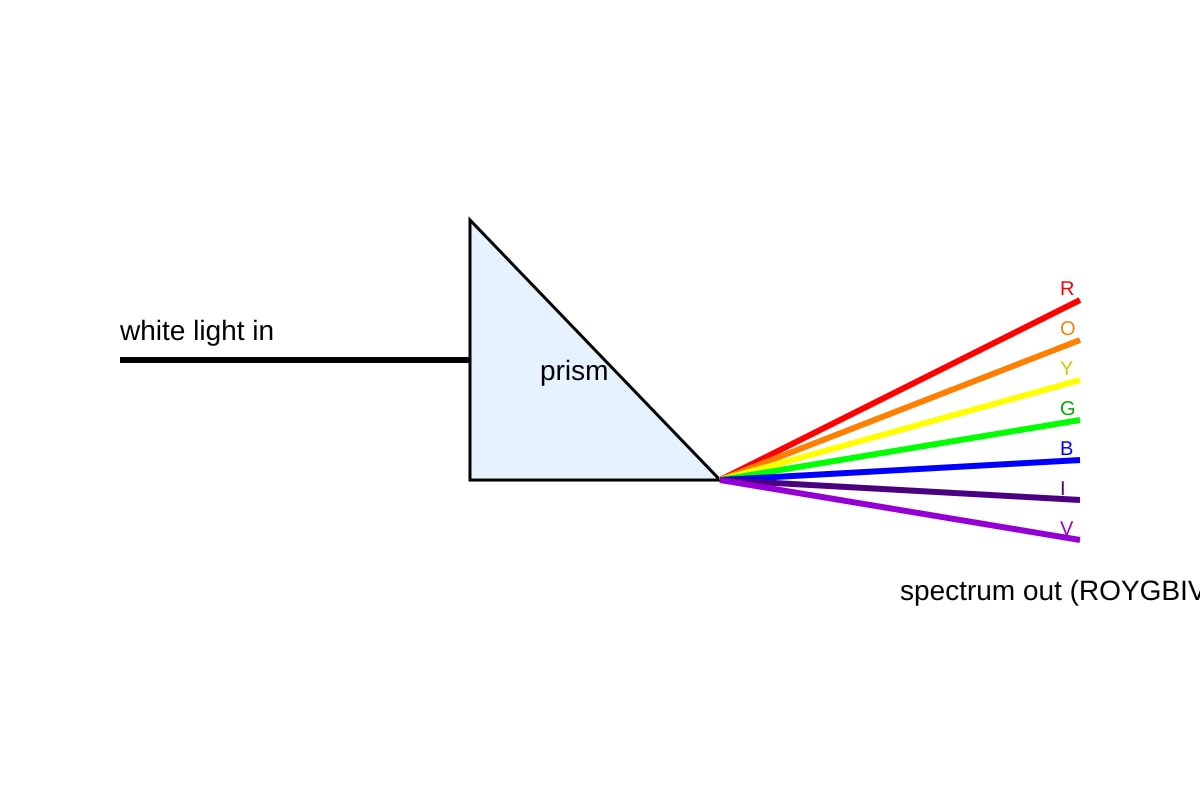
- White light is made of many colours mixed together. (1 mark)
- The prism refracts each colour by a different amount because they travel at different speeds in glass. (1 mark)
- This separates them into a spectrum from red to violet. (1 mark)
Image note: Bands must show red to violet order.
20. (3 marks)
- The mirror reflects the sunlight in a new direction. (1 mark)
- The boy aims the reflected beam into the dark corner. (1 mark)
- Light enters the corner and reflects off surfaces to our eyes, making it brighter. (1 mark)