AI Generated Quiz

Primary 6 PSLE Science Life Cycles Quiz

Free AI-Generated NVIDIA Nemotron 3 Ultra 550B A55B Free Primary 6 PSLE Science Life Cycles quiz with questions and answers for Singapore students. This page is rendered as a direct URL so the questions and answers can be discovered without pressing in-page buttons.

These static practice materials are generated from the site's syllabus and paper-generation workflow, with source and model context shown so students and parents can evaluate the material before use.

Primary 6 PSLE Science AI Generated Generated by NVIDIA Nemotron 3 Ultra 550B A55B Free Updated 2026-06-07

Questions

<!-- TuitionGoWhere generation metadata: stage=5-1; model=nvidia/nemotron-3-ultra-550b-a55b:free; model_label=NVIDIA Nemotron 3 Ultra 550B A55B Free; generated=2026-06-06; Sources: Stage 4-0 LLM templates, syllabus context, and Stage 2 evidence where available. -->

Primary 6 PSLE Science Quiz - Life Cycles

Name: ________________________
Class: Primary 6 _______
Date: ________________________
Score: _______ / 44

Duration: 45 minutes
Total Marks: 44

Instructions:

  1. Answer all questions.
  2. Write your answers in the spaces provided.
  3. For multiple-choice questions, write the letter (A, B, C, or D) in the brackets provided.
  4. For open-ended questions, write your answers clearly in the spaces provided.
  5. The number of marks for each question is shown in brackets [ ] at the end of each question.

Section A: Multiple-Choice Questions (10 × 1 mark = 10 marks)

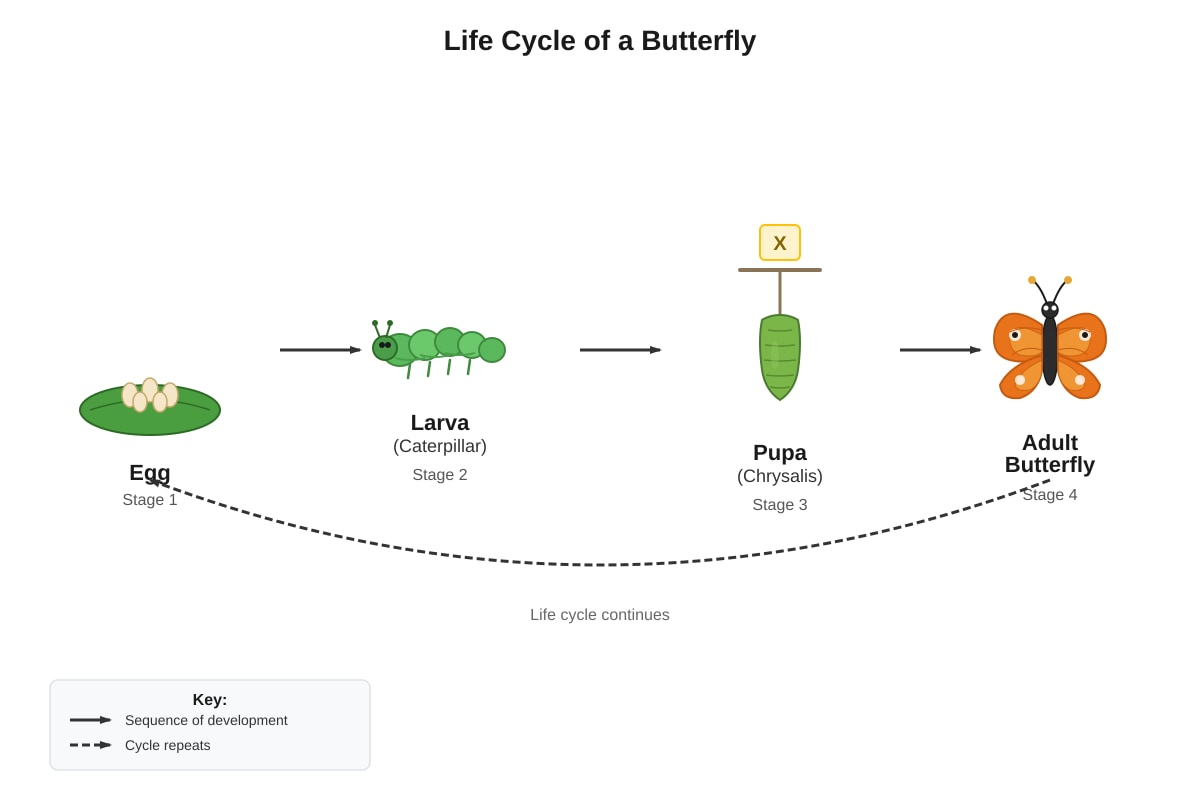
1. Which of the following animals undergoes a four-stage life cycle? [1]

A. Grasshopper
B. Chicken
C. Butterfly
D. Frog

Answer: (____)

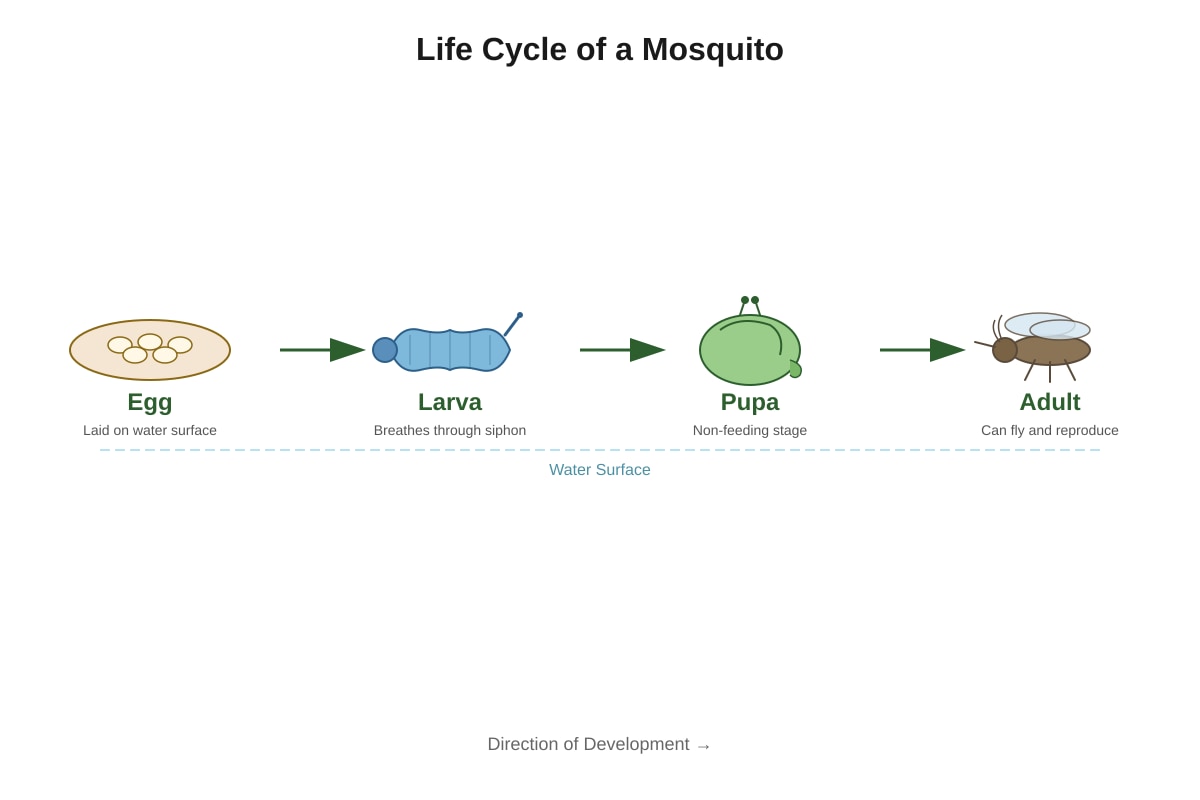
2. The diagram below shows the life cycle of a mosquito.

<image_placeholder> id: Q1-fig1 type: diagram linked_question: Q1 description: Life cycle of a mosquito showing four stages: egg, larva, pupa, and adult mosquito. Arrows indicate the sequence from egg to adult and back to egg. labels: Egg, Larva, Pupa, Adult Mosquito values: None must_show: Four distinct stages in correct cyclic order with directional arrows </image_placeholder>

At which stage does the mosquito live in water and breathe through a siphon tube? [1]

A. Egg
B. Larva
C. Pupa
D. Adult

Answer: (____)

3. Study the table below.

AnimalNumber of Stages in Life CycleYoung Resembles Adult
P3Yes
Q4No
R3No
S4Yes

Which animal is most likely a beetle? [1]

A. P
B. Q
C. R
D. S

Answer: (____)

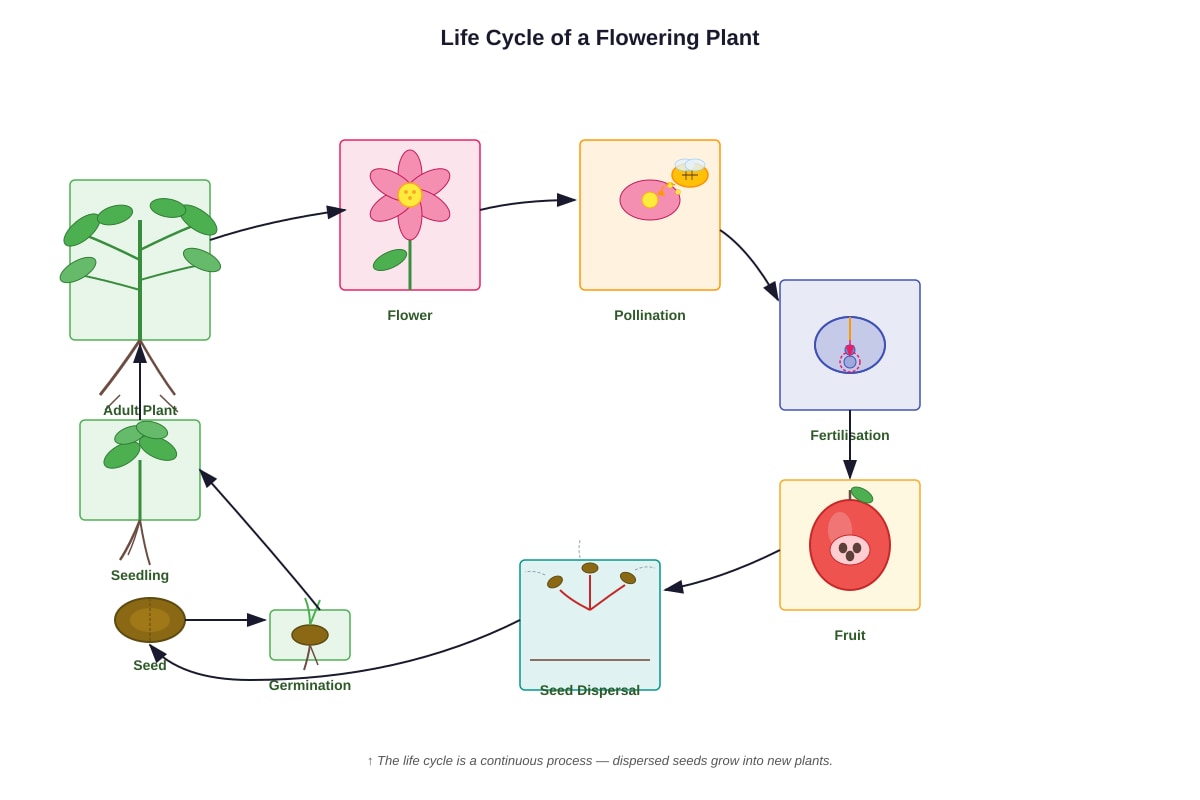
4. The diagram below shows the life cycle of a flowering plant.

<image_placeholder> id: Q4-fig1 type: diagram linked_question: Q4 description: Life cycle of a flowering plant showing: seed → germination → seedling → adult plant → flower → pollination → fertilisation → fruit/seed → back to seed labels: Seed, Germination, Seedling, Adult Plant, Flower, Pollination, Fertilisation, Fruit/Seed values: None must_show: Complete cycle with all stages labelled and arrows showing direction </image_placeholder>

Which process occurs between pollination and the formation of fruit? [1]

A. Germination
B. Fertilisation
C. Seed dispersal
D. Photosynthesis

Answer: (____)

5. Which of the following statements about the life cycle of a frog is correct? [1]

A. The tadpole stage resembles the adult frog.
B. Frogs lay eggs on land.
C. The tadpole breathes through gills.
D. Frogs undergo a three-stage life cycle.

Answer: (____)

6. The diagram below shows a seedling growing into an adult plant.

<image_placeholder> id: Q6-fig1 type: diagram linked_question: Q6 description: Two diagrams side by side. Left: A seed with root (radicle) and shoot (plumule) emerging. Right: An adult plant with roots, stem, leaves, and flowers. labels: Radicle, Plumule, Root, Stem, Leaves, Flowers values: None must_show: Clear comparison between seedling structure and adult plant structure </image_placeholder>

What is the function of the part labelled X (radicle) in the seedling? [1]

A. Absorbs water and mineral salts
B. Makes food for the plant
C. Supports the plant
D. Produces seeds

Answer: (____)

7. Mei Ling observed the life cycle of a mealworm beetle. She recorded the number of days for each stage:

StageNumber of Days
Egg10
Larva90
Pupa14
Adult60

What is the total number of days from egg to adult? [1]

A. 104 days
B. 114 days
C. 124 days
D. 174 days

Answer: (____)

8. Which of the following groups of animals all undergo a four-stage life cycle? [1]

A. Butterfly, mosquito, grasshopper, beetle
B. Butterfly, mosquito, beetle, housefly
C. Chicken, frog, butterfly, mosquito
D. Beetle, housefly, grasshopper, chicken

Answer: (____)

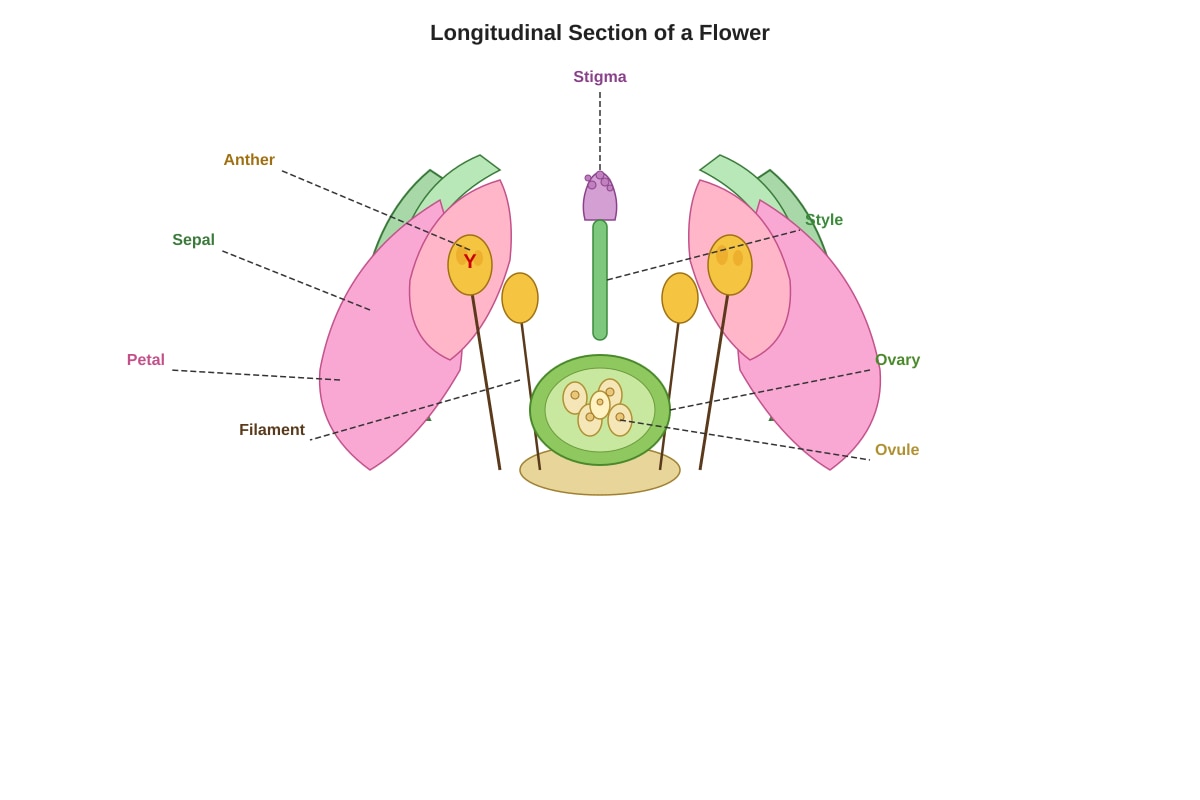
9. The diagram below shows the reproductive parts of a flower.

<image_placeholder> id: Q9-fig1 type: diagram linked_question: Q9 description: Cross-section of a flower showing: stigma, style, ovary, ovule, anther, filament, petal, sepal labels: Stigma, Style, Ovary, Ovule, Anther, Filament, Petal, Sepal values: None must_show: All parts clearly labelled in correct anatomical positions </image_placeholder>

Where are the male gametes produced in a flower? [1]

A. Stigma
B. Ovary
C. Anther
D. Ovule

Answer: (____)

10. Which of the following is a similarity between the life cycle of a mosquito and the life cycle of a butterfly? [1]

A. Both have a nymph stage.
B. Both have a pupa stage.
C. Both lay eggs in water.
D. Both have three stages in their life cycle.

Answer: (____)


Section B: Structured Questions (10 × 2 marks = 20 marks)

11. The diagram below shows the life cycle of a chicken.

<image_placeholder> id: Q11-fig1 type: diagram linked_question: Q11 description: Life cycle of a chicken: Egg → Hatching → Chick → Adult Hen/Rooster → Egg. Arrows show the cycle. labels: Egg, Hatching, Chick, Adult Hen, Adult Rooster values: None must_show: Three-stage cycle clearly shown </image_placeholder>

(a) State the number of stages in the life cycle of a chicken. [1]


(b) Explain why the young chick resembles the adult chicken. [1]


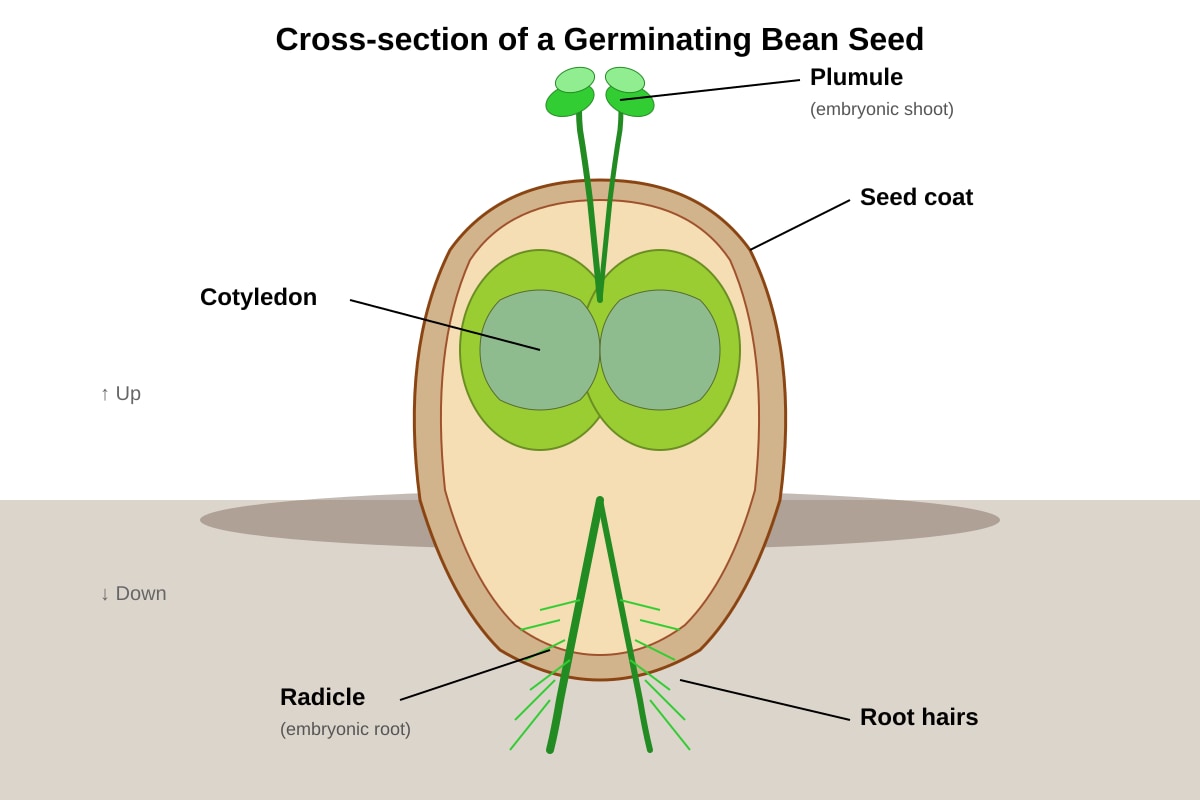
12. The diagram below shows a seed germinating.

<image_placeholder> id: Q12-fig1 type: diagram linked_question: Q12 description: A seed with the seed coat split open. The radicle (root) is growing downwards and the plumule (shoot) is growing upwards. Cotyledons are visible. labels: Seed Coat, Radicle, Plumule, Cotyledons values: None must_show: Clear germination process with all parts labelled </image_placeholder>

(a) Name the part labelled A (radicle). [1]


(b) State the function of the part labelled B (cotyledons) during germination. [1]


13. The table below shows the characteristics of two animals, X and Y.

CharacteristicAnimal XAnimal Y
Number of life stages43
Young resembles adultNoYes
Young lives in waterYesNo

(a) Based on the table, state the type of life cycle for Animal X. [1]


(b) Give an example of an animal that has the same type of life cycle as Animal Y. [1]


14. The diagram below shows the life cycle of a flowering plant.

<image_placeholder> id: Q14-fig1 type: diagram linked_question: Q14 description: Complete life cycle of a flowering plant: Seed → Germination → Seedling → Adult Plant → Flowering → Pollination → Fertilisation → Fruit Formation → Seed Dispersal → back to Seed labels: All stages labelled values: None must_show: Complete cycle with all 8-9 stages clearly shown and connected </image_placeholder>

(a) Name the process that occurs after pollination and before fruit formation. [1]


(b) Explain why seed dispersal is important for the survival of the plant species. [1]


15. Study the flowchart below.

<image_placeholder> id: Q15-fig1 type: diagram linked_question: Q15 description: Flowchart for classifying life cycles: Start → Does the animal lay eggs? → Yes → Does the young resemble the adult? → Yes → 3-stage life cycle (e.g., chicken, grasshopper) → No → Does the animal have a pupa stage? → Yes → 4-stage life cycle (e.g., butterfly, beetle) → No → 3-stage life cycle with nymph (e.g., frog, dragonfly) → No (does not lay eggs) → Mammal (live birth) labels: All decision points and outcomes labelled values: None must_show: Complete decision tree with clear yes/no branches </image_placeholder>

Animal Z lays eggs. The young does not resemble the adult and there is a pupa stage. Using the flowchart, state the type of life cycle Animal Z has. [1]


Give an example of Animal Z. [1]


16. The diagram below shows a mosquito larva and a mosquito pupa.

<image_placeholder> id: Q16-fig1 type: diagram linked_question: Q16 description: Two diagrams side by side. Left: Mosquito larva - elongated body, head with mouth brushes, siphon tube at rear for breathing. Right: Mosquito pupa - comma-shaped, two respiratory trumpets on thorax, no functional mouthparts. labels: Larva: Head, Mouth Brushes, Siphon Tube, Abdomen. Pupa: Respiratory Trumpets, Thorax, Abdomen, Paddle values: None must_show: Clear structural differences between larva and pupa </image_placeholder>

(a) State one difference in the feeding behaviour between the larva and pupa stages of a mosquito. [1]


(b) Both the larva and pupa live in water. State one similarity in how they obtain oxygen. [1]


17. The diagram below shows the cross-section of a flower.

<image_placeholder> id: Q17-fig1 type: diagram linked_question: Q17 description: Cross-section of a flower showing: Stigma (sticky), Style, Ovary containing ovules, Anther (pollen grains), Filament, Petals, Sepals, Nectary labels: All parts labelled values: None must_show: Clear reproductive structures with pollen grains visible on anther </image_placeholder>

(a) On the diagram, draw an arrow to show the direction of pollen tube growth after pollination. [1]


(b) Explain what happens to the ovule after fertilisation. [1]


18. The table below shows the duration of each stage in the life cycle of a butterfly at two different temperatures.

StageDuration at 25°C (days)Duration at 30°C (days)
Egg53
Larva2014
Pupa107
Adult3020

(a) What is the difference in the total duration from egg to adult between the two temperatures? [1]


(b) Based on the table, state the relationship between temperature and the rate of development. [1]


19. The diagram below shows a frog's life cycle.

<image_placeholder> id: Q19-fig1 type: diagram linked_question: Q19 description: Frog life cycle: Egg (jelly-like mass in water) → Tadpole (external gills) → Tadpole (internal gills, hind legs) → Tadpole (front legs, tail shrinking) → Froglet (tail almost gone) → Adult Frog (on land) labels: Egg, Tadpole with external gills, Tadpole with hind legs, Tadpole with front legs, Froglet, Adult Frog values: None must_show: Gradual metamorphosis stages clearly shown </image_placeholder>

(a) State one difference between the breathing method of a tadpole and an adult frog. [1]


(b) The tadpole has a tail but the adult frog does not. Explain what happens to the tail as the tadpole develops into a frog. [1]


20. The diagram below shows two types of seed dispersal.

<image_placeholder> id: Q20-fig1 type: diagram linked_question: Q20 description: Two diagrams. Left: Wind-dispersed seed (e.g., dandelion) - light seed with parachute-like pappus. Right: Animal-dispersed seed (e.g., love grass) - seed with hooks/spines on surface. labels: Wind-dispersed: Pappus, Light seed. Animal-dispersed: Hooks/Spines, Seed values: None must_show: Clear structural adaptations for each dispersal method </image_placeholder>

(a) Name the dispersal method for Seed A (wind-dispersed). [1]


(b) Explain how the structure of Seed B (animal-dispersed) helps in its dispersal. [1]


End of Quiz

Answers

<!-- TuitionGoWhere generation metadata: stage=5-1; model=nvidia/nemotron-3-ultra-550b-a55b:free; model_label=NVIDIA Nemotron 3 Ultra 550B A55B Free; generated=2026-06-06; Sources: Stage 4-0 LLM templates, syllabus context, and Stage 2 evidence where available. -->

Primary 6 PSLE Science Quiz - Life Cycles (Answer Key)

Total Marks: 44


Section A: Multiple-Choice Questions (10 marks)

1. Answer: C
Explanation: A butterfly undergoes a four-stage life cycle (egg, larva/caterpillar, pupa/chrysalis, adult). Grasshopper and chicken have three-stage life cycles. Frog has a three-stage life cycle (egg, tadpole, adult) though with metamorphosis.

2. Answer: B
Explanation: The mosquito larva lives in water and breathes through a siphon tube at the end of its abdomen. The egg is laid on water surface but doesn't actively breathe. The pupa also lives in water but breathes through respiratory trumpets. The adult is terrestrial and flies.

3. Answer: B
Explanation: A beetle undergoes complete metamorphosis with four stages (egg, larva, pupa, adult) and the young (larva) does not resemble the adult. This matches Animal Q: 4 stages, young does not resemble adult.

4. Answer: B
Explanation: After pollination (transfer of pollen to stigma), fertilisation occurs (fusion of male and female gametes in the ovule). Only after fertilisation does the ovary develop into fruit and ovules into seeds. Germination occurs much later when the seed grows.

5. Answer: C
Explanation: Tadpoles breathe through gills (external then internal) while living in water. Adult frogs breathe through lungs and skin on land. Frogs lay eggs in water (not land). Frogs have a three-stage life cycle (egg, tadpole, adult), not four.

6. Answer: A
Explanation: The radicle is the embryonic root that grows downwards to absorb water and mineral salts from the soil. The plumule (shoot) grows upwards and develops leaves that make food. The stem supports the plant. Flowers produce seeds.

7. Answer: B
Explanation: Total days = Egg (10) + Larva (90) + Pupa (14) = 114 days. The adult stage duration (60 days) is not included as the question asks "from egg to adult" meaning up to the point it becomes an adult.

8. Answer: B
Explanation: Butterfly, mosquito, beetle, and housefly all undergo complete metamorphosis (four-stage life cycle: egg, larva, pupa, adult). Grasshopper and chicken have three-stage life cycles. Frog has a three-stage life cycle with metamorphosis.

9. Answer: C
Explanation: The anther is the male reproductive part of the flower that produces pollen grains containing male gametes. The stigma receives pollen, the ovary contains ovules (female gametes), and the ovule contains the female gamete.

10. Answer: B
Explanation: Both mosquito and butterfly have a pupa stage in their four-stage life cycles. Mosquitoes have larvae and pupae in water; butterflies have caterpillars (larvae) and chrysalises (pupae) on land. Neither has a nymph stage (that's incomplete metamorphosis). Only mosquitoes lay eggs in water.


Section B: Structured Questions (20 marks)

11. (a) Answer: 3 stages [1]
Explanation: The chicken has a three-stage life cycle: Egg → Chick → Adult.

(b) Answer: The young chick resembles the adult chicken in body structure (has feathers, beak, wings, legs) but is smaller and not sexually mature. [1]
Explanation: Animals with three-stage life cycles (incomplete metamorphosis) have young that resemble adults (called nymphs or chicks). They grow through moulting without a pupa stage.

12. (a) Answer: Radicle (embryonic root) [1]
Explanation: The radicle is the first part to emerge from the seed during germination and develops into the root system.

(b) Answer: The cotyledons store food (starch, proteins, oils) for the developing seedling until it can photosynthesise on its own. [1]
Explanation: Cotyledons are seed leaves that contain stored nutrients. In some plants they emerge above ground and become photosynthetic (epigeal germination), but their primary function during early germination is providing energy and nutrients.

13. (a) Answer: Four-stage life cycle (complete metamorphosis) [1]
Explanation: Animal X has 4 stages, young does not resemble adult, and young lives in water — characteristic of mosquitoes and other insects with complete metamorphosis.

(b) Answer: Grasshopper / Chicken / Cockroach / Dragonfly (any animal with 3-stage life cycle where young resembles adult) [1]
Explanation: Animal Y has 3 stages and young resembles adult — this is incomplete metamorphosis (three-stage life cycle). Examples include grasshopper, chicken, cockroach.

14. (a) Answer: Fertilisation [1]
Explanation: After pollination, pollen tube grows down the style to the ovary. The male gamete fuses with the female gamete in the ovule — this is fertilisation. The fertilised ovule develops into a seed, and the ovary develops into fruit.

(b) Answer: Seed dispersal prevents overcrowding and competition between parent plant and offspring for light, water, nutrients, and space. It also allows colonisation of new areas. [1]
Explanation: If seeds fall directly under the parent plant, they compete for limited resources. Dispersal spreads offspring to new locations, reducing competition and increasing species survival.

15. Answer: Four-stage life cycle (complete metamorphosis) [1]
Explanation: Following the flowchart: lays eggs → young does not resemble adult → has pupa stage → four-stage life cycle.

Example: Butterfly / Mosquito / Beetle / Housefly / Moth [1]
Explanation: These insects all undergo complete metamorphosis with four distinct stages: egg, larva, pupa, adult.

16. (a) Answer: The larva feeds actively (filter feeds on microorganisms) using mouth brushes, while the pupa does not feed at all (no functional mouthparts). [1]
Explanation: Mosquito larvae are active feeders in water. Pupae are non-feeding, transitional stages focused on metamorphosis.

(b) Answer: Both obtain oxygen from air at the water surface — larva uses a siphon tube, pupa uses respiratory trumpets. [1]
Explanation: Both stages are aquatic but breathe atmospheric oxygen. The larva's siphon tube and pupa's respiratory trumpets are adaptations to access air while submerged.

17. (a) Answer: Arrow should be drawn from stigma → down style → into ovary → entering ovule through micropyle. [1]
Explanation: After pollination, pollen grain germinates on stigma, pollen tube grows down the style, enters ovary, and penetrates ovule through micropyle to deliver male gametes for fertilisation.

(b) Answer: The ovule develops into a seed after fertilisation. [1]
Explanation: The fertilised ovule (zygote) develops into an embryo within the seed. The integuments of the ovule become the seed coat. The ovary simultaneously develops into the fruit.

18. (a) Answer: 21 days [1]
Working:
At 25°C: 5 + 20 + 10 = 35 days (egg to adult)
At 30°C: 3 + 14 + 7 = 24 days (egg to adult)
Difference: 35 - 24 = 11 days
Wait, let me recalculate: The question asks "from egg to adult" which includes all stages up to becoming adult. At 25°C: 5+20+10+30 = 65 days. At 30°C: 3+14+7+20 = 44 days. Difference = 21 days.
Correct working:
At 25°C: 5 + 20 + 10 + 30 = 65 days
At 30°C: 3 + 14 + 7 + 20 = 44 days
Difference: 65 - 44 = 21 days [1]

(b) Answer: As temperature increases, the rate of development increases (duration of each stage decreases). [1]
Explanation: Higher temperatures (within optimal range) speed up metabolic processes and enzymatic reactions, leading to faster growth and development. All stages show shorter durations at 30°C compared to 25°C.

19. (a) Answer: Tadpoles breathe through gills (in water), while adult frogs breathe through lungs and moist skin (on land). [1]
Explanation: Tadpoles are aquatic and use gills for gas exchange. During metamorphosis, gills are replaced by lungs. Adult frogs also use cutaneous respiration (skin) especially when underwater or hibernating.

(b) Answer: The tail is gradually reabsorbed (broken down) and the nutrients/proteins are recycled to support the developing frog's growth. [1]
Explanation: During metamorphosis, the tadpole's tail undergoes programmed cell death (apoptosis). The materials are reused for building legs and other adult structures. This is an energy-efficient process.

20. (a) Answer: Wind dispersal [1]
Explanation: Seed A has a parachute-like structure (pappus) that catches air currents, characteristic of wind-dispersed seeds like dandelion.

(b) Answer: Seed B has hooks/spines on its surface that attach to the fur of animals or clothing of humans, allowing it to be carried away from the parent plant before falling off. [1]
Explanation: The hooks/spines are structural adaptations for epizoochory (external animal dispersal). They catch on passing animals, transporting the seed to new locations. Examples: love grass, burdock.


Marking Notes for Teachers

  • Section A: 1 mark each, no half marks. Accept phonetic spelling for open-ended if unambiguous.
  • Section B:
    • Q11(b), Q12(b), Q14(b), Q16(a), Q16(b), Q17(b), Q18(b), Q19(a), Q19(b), Q20(b): Award 1 mark for correct concept, 0 for vague answers like "breathes differently" without specifying how.
    • Q18(a): Must show working or correct final answer (21 days). Deduct 0.5 if working correct but calculation error.
    • Q17(a): Arrow direction must be correct (stigma → style → ovary → ovule). Accept drawn on diagram or described.
  • Common Mistakes:
    • Confusing 3-stage vs 4-stage life cycles
    • Thinking frog has 4 stages (it has 3: egg, tadpole, adult)
    • Confusing pollination and fertilisation
    • Not realising pupa doesn't feed
    • Forgetting that "egg to adult" includes adult stage duration in Q18
  • Total: 44 marks