From Real Exams Quiz

Primary 6 PSLE Science Systems Quiz

Free Exam-Derived NVIDIA Nemotron 3 Ultra 550B A55B Free Primary 6 PSLE Science Systems quiz with questions and answers for Singapore students. This page is rendered as a direct URL so the questions and answers can be discovered without pressing in-page buttons.

These static practice materials are generated from the site's syllabus and paper-generation workflow, with source and model context shown so students and parents can evaluate the material before use.

Primary 6 PSLE Science From Real Exams Generated by NVIDIA Nemotron 3 Ultra 550B A55B Free Updated 2026-06-07

Questions

<!-- TuitionGoWhere generation metadata: stage=3-0; model=nvidia/nemotron-3-ultra-550b-a55b:free; model_label=NVIDIA Nemotron 3 Ultra 550B A55B Free; generated=2026-06-05; Sources: Stage 2-1 real exam-derived templates and Stage 2-2 exam-enriched syllabus. -->

Primary 6 PSLE Science Quiz - Systems

Name: ___________________________
Class: Primary 6 _______
Date: ___________________________
Score: _______ / 44

Duration: 45 minutes
Total Marks: 44

Instructions:

  1. This quiz consists of 20 questions.
  2. Section A: Questions 1–10 (Multiple Choice, 2 marks each)
  3. Section B: Questions 11–15 (Short Answer, 2 marks each)
  4. Section C: Questions 16–20 (Structured / Open-Ended, 3–4 marks each)
  5. Answer all questions in the spaces provided.
  6. For multiple-choice questions, shade the correct oval (1, 2, 3, or 4) in the answer space.

Section A: Multiple-Choice Questions (20 marks)

1. Which of the following systems in the human body is correctly matched with its main function?
(1) Respiratory system – transports oxygen and nutrients to all parts of the body
(2) Circulatory system – breaks down food into simpler substances
(3) Digestive system – removes carbon dioxide from the body
(4) Respiratory system – takes in oxygen and removes carbon dioxide

Answer: _______

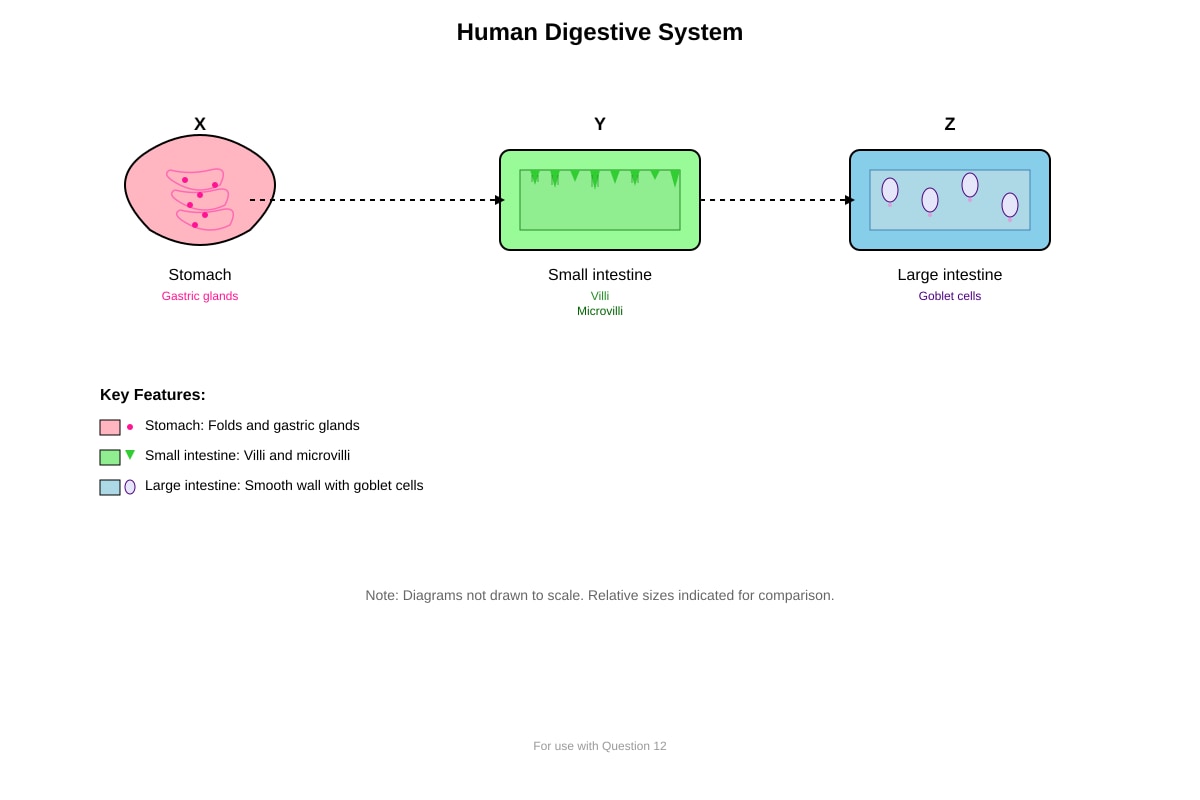
2. The diagram below shows the human digestive system.
<image_placeholder> id: Q1-fig1 type: diagram linked_question: Q1 description: Diagram of the human digestive system with parts labelled A (mouth), B (oesophagus), C (stomach), D (small intestine), E (large intestine), F (anus). No labels shown on image; letters A–F placed on the diagram. labels: A: mouth, B: oesophagus, C: stomach, D: small intestine, E: large intestine, F: anus values: none must_show: Clear outline of digestive tract with distinct regions; letters A–F positioned at each region. </image_placeholder>

In which part does most absorption of digested food into the blood take place?
(1) A
(2) C
(3) D
(4) E

Answer: _______

3. Which of the following statements about the circulatory system is correct?
(1) Arteries carry deoxygenated blood away from the heart.
(2) Veins have thicker walls than arteries.
(3) Capillaries have walls that are one cell thick to allow exchange of substances.
(4) The heart pumps blood only to the lungs.

Answer: _______

4. The table below shows the composition of inhaled and exhaled air.

GasInhaled Air (%)Exhaled Air (%)
Oxygen2116
Carbon Dioxide0.044
Nitrogen7878

Which of the following explains the change in the percentage of oxygen?
(1) Oxygen is used by the body for respiration.
(2) Oxygen is produced during respiration.
(3) Oxygen is converted to nitrogen in the lungs.
(4) Oxygen dissolves in the moisture lining the air sacs.

Answer: _______

5. In the human respiratory system, gaseous exchange takes place in the _______.
(1) trachea
(2) bronchi
(3) air sacs (alveoli)
(4) diaphragm

Answer: _______

6. Which of the following shows the correct path of air during inhalation?
(1) Nose → Trachea → Bronchi → Air sacs
(2) Nose → Bronchi → Trachea → Air sacs
(3) Nose → Air sacs → Bronchi → Trachea
(4) Nose → Trachea → Air sacs → Bronchi

Answer: _______

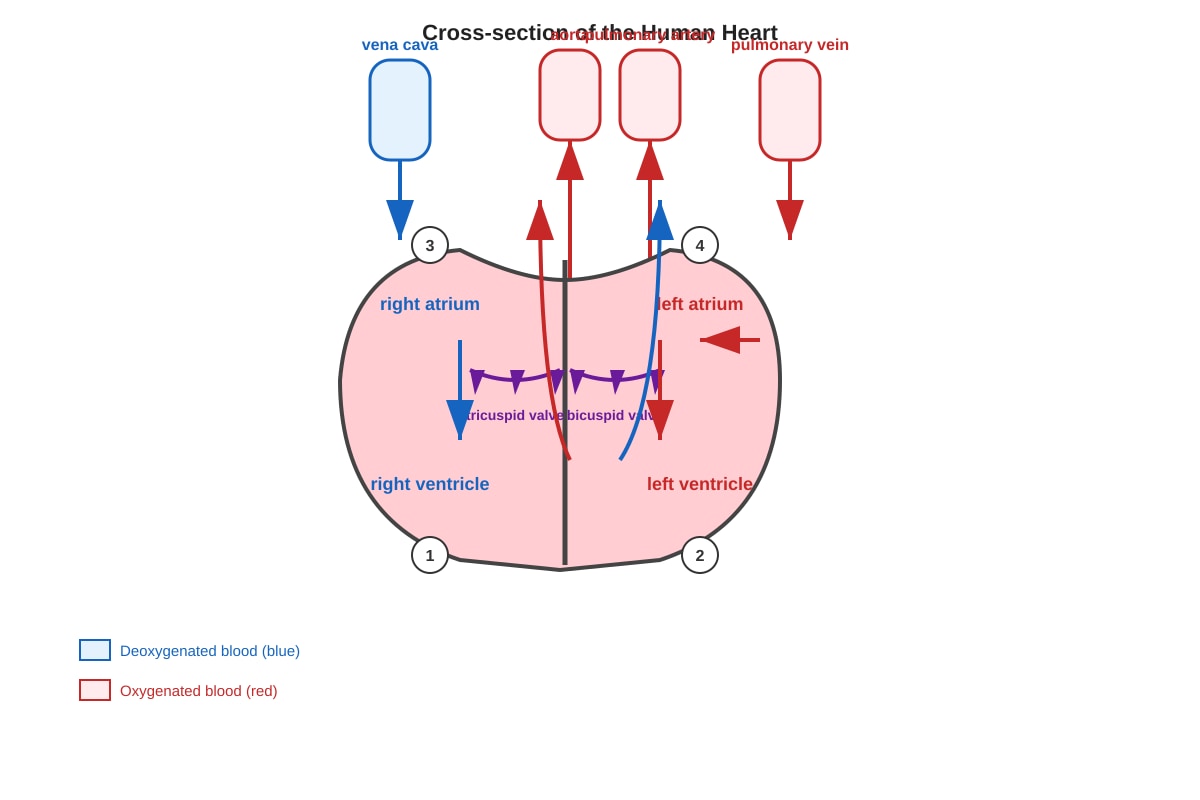
7. The diagram below shows a cross-section of the human heart.
<image_placeholder> id: Q7-fig1 type: diagram linked_question: Q7 description: Cross-section of the human heart showing four chambers labelled P, Q, R, S. Arrows indicate blood flow direction. P and Q are upper chambers; R and S are lower chambers. Blood enters P from vena cava, flows to Q, then to R, then to S, then out through aorta. labels: P: right atrium, Q: left atrium, R: right ventricle, S: left ventricle; arrows showing blood flow values: none must_show: Four chambers clearly separated; valves indicated; arrows showing unidirectional flow from vena cava → right atrium → right ventricle → pulmonary artery (not shown) and pulmonary vein → left atrium → left ventricle → aorta. </image_placeholder>

Which chamber pumps oxygen-rich blood to the rest of the body?
(1) P
(2) Q
(3) R
(4) S

Answer: _______

8. A student exercises vigorously for 10 minutes. Which of the following changes occur in his body?
A. Heart rate increases
B. Breathing rate increases
C. More oxygen is delivered to muscles
D. Less carbon dioxide is produced

(1) A and B only
(2) A, B and C only
(3) B, C and D only
(4) A, B, C and D

Answer: _______

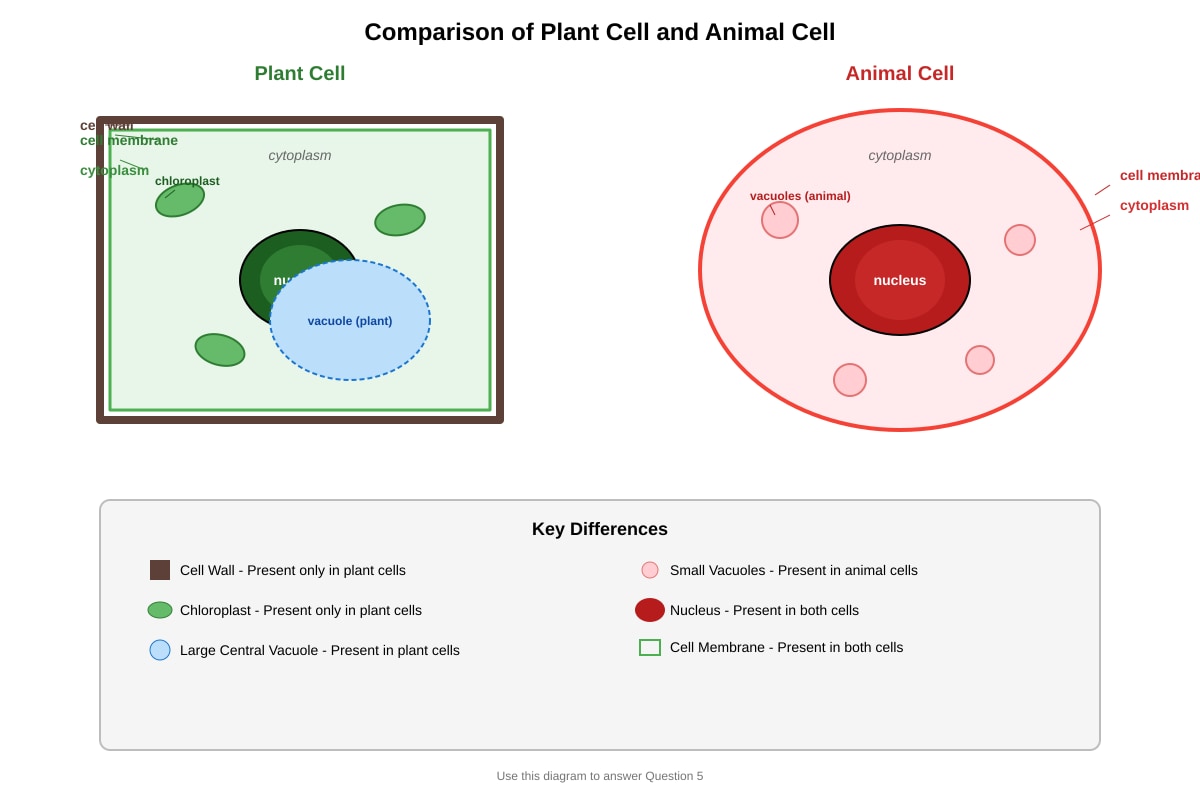
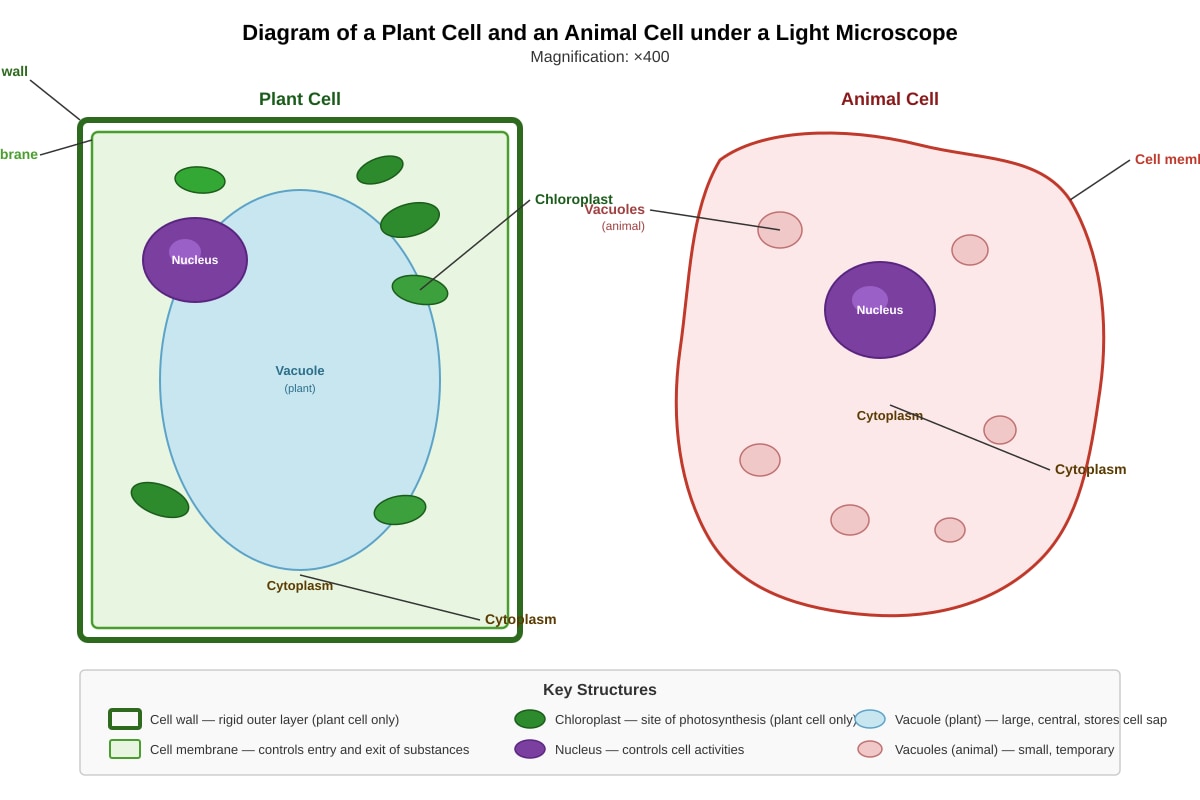
9. The diagram below shows a plant cell and an animal cell.
<image_placeholder> id: Q9-fig1 type: diagram linked_question: Q9 description: Two side-by-side diagrams: left – plant cell with cell wall, cell membrane, cytoplasm, nucleus, chloroplast, large vacuole; right – animal cell with cell membrane, cytoplasm, nucleus, small vacuoles. Labels X and Y point to cell wall (plant) and chloroplast (plant) respectively. labels: X: cell wall, Y: chloroplast values: none must_show: Clear differences: plant cell has cell wall and chloroplasts; animal cell lacks both. Labels X and Y on plant cell structures. </image_placeholder>

Which of the following systems in plants is responsible for transporting water and nutrients, similar to the circulatory system in humans?
(1) Root system
(2) Shoot system
(3) Vascular system (xylem and phloem)
(4) Reproductive system

Answer: _______

10. Which of the following is a function of the skeletal system?
(1) Produces hormones
(2) Protects internal organs
(3) Digests food
(4) Removes waste from the blood

Answer: _______


Section B: Short-Answer Questions (10 marks)

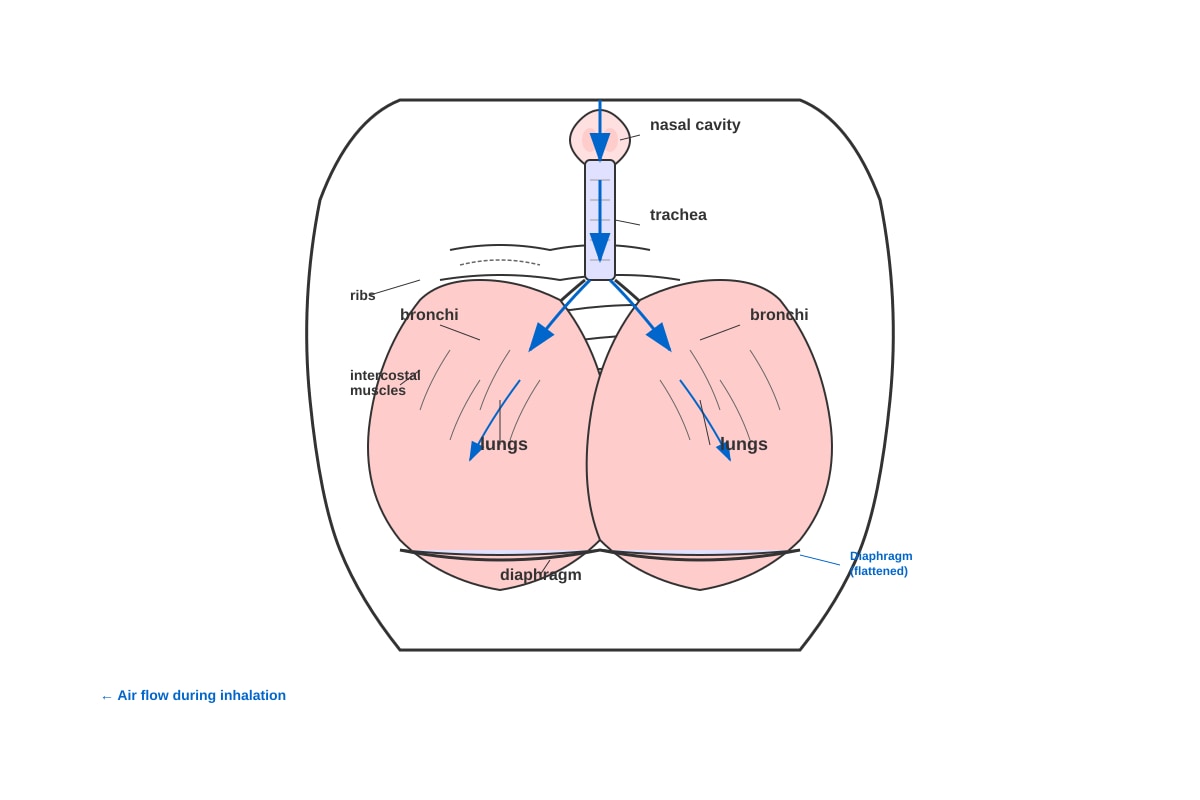
11. The diagram below shows the human respiratory system.
<image_placeholder> id: Q11-fig1 type: diagram linked_question: Q11 description: Diagram of human respiratory system with parts labelled: nasal cavity, trachea, bronchi, bronchioles, air sacs (alveoli), diaphragm, ribs. Arrows show air movement during inhalation. labels: nasal cavity, trachea, bronchi, bronchioles, air sacs, diaphragm, ribs values: none must_show: All listed parts clearly labelled; diaphragm shown as dome-shaped muscle below lungs; ribs shown; arrows indicating downward movement of diaphragm and outward movement of ribs during inhalation. </image_placeholder>

(a) Name the part labelled X (the dome-shaped muscle below the lungs).
Answer: _______________________________________ [1]

(b) State what happens to this part when we inhale.
Answer: _______________________________________ [1]

12. The table below shows the amount of undigested food passing through different parts of the digestive system in a day.

Part of Digestive SystemMass of Undigested Food (g)
Mouth500
Stomach480
Small Intestine150
Large Intestine100

(a) In which part is the greatest amount of digestion taking place? Explain your answer using the data.
Answer: _______________________________________ [1]

(b) What happens to the undigested food in the large intestine?
Answer: _______________________________________ [1]

13. The diagram below shows a cross-section of a blood vessel.
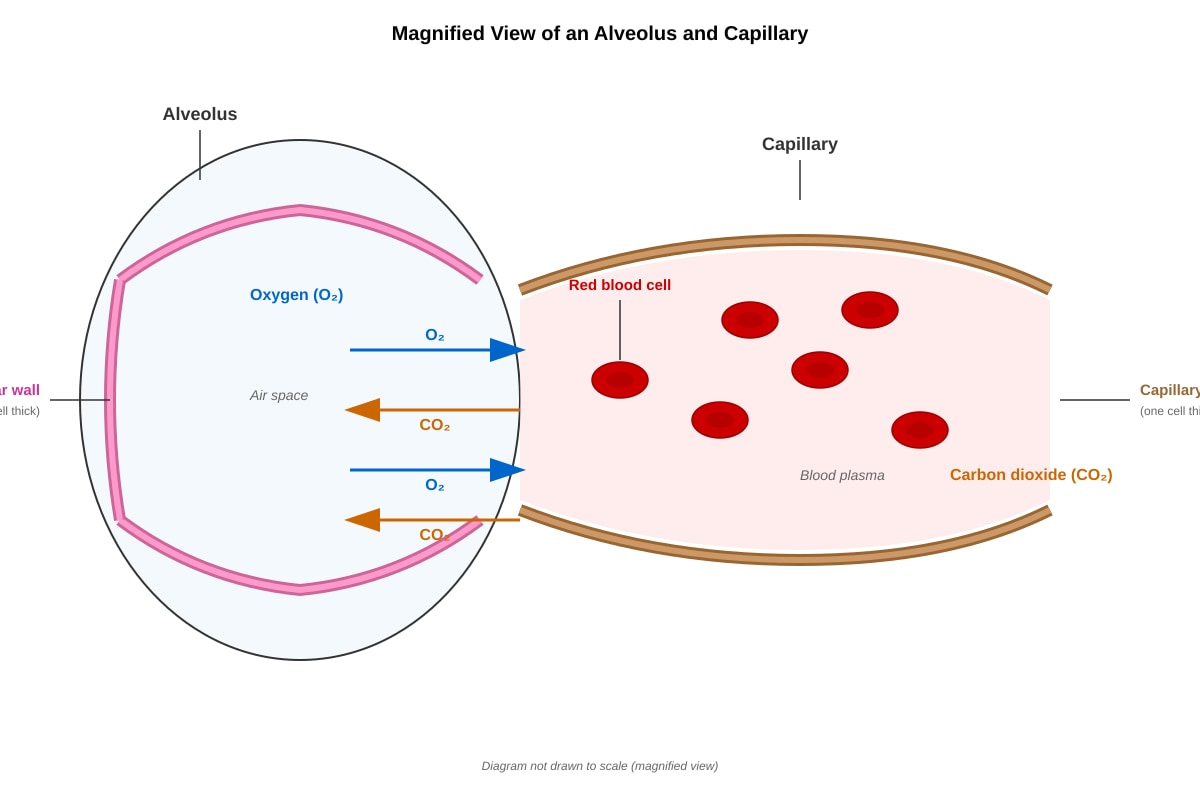
<image_placeholder> id: Q13-fig1 type: diagram linked_question: Q13 description: Cross-section of a blood vessel showing a very narrow lumen, thin wall (one cell thick), and no visible muscle layer. Labelled 'Capillary'. labels: lumen, wall (one cell thick) values: none must_show: Extremely narrow lumen; wall drawn as a single line of cells; no thick muscle or elastic layers. </image_placeholder>

(a) Identify the blood vessel shown.
Answer: _______________________________________ [1]

(b) Explain how its structure helps it carry out its function.
Answer: _______________________________________ [1]

14. Complete the table below by stating one function of each system in the human body.

SystemFunction
Muscular system_______________________________________
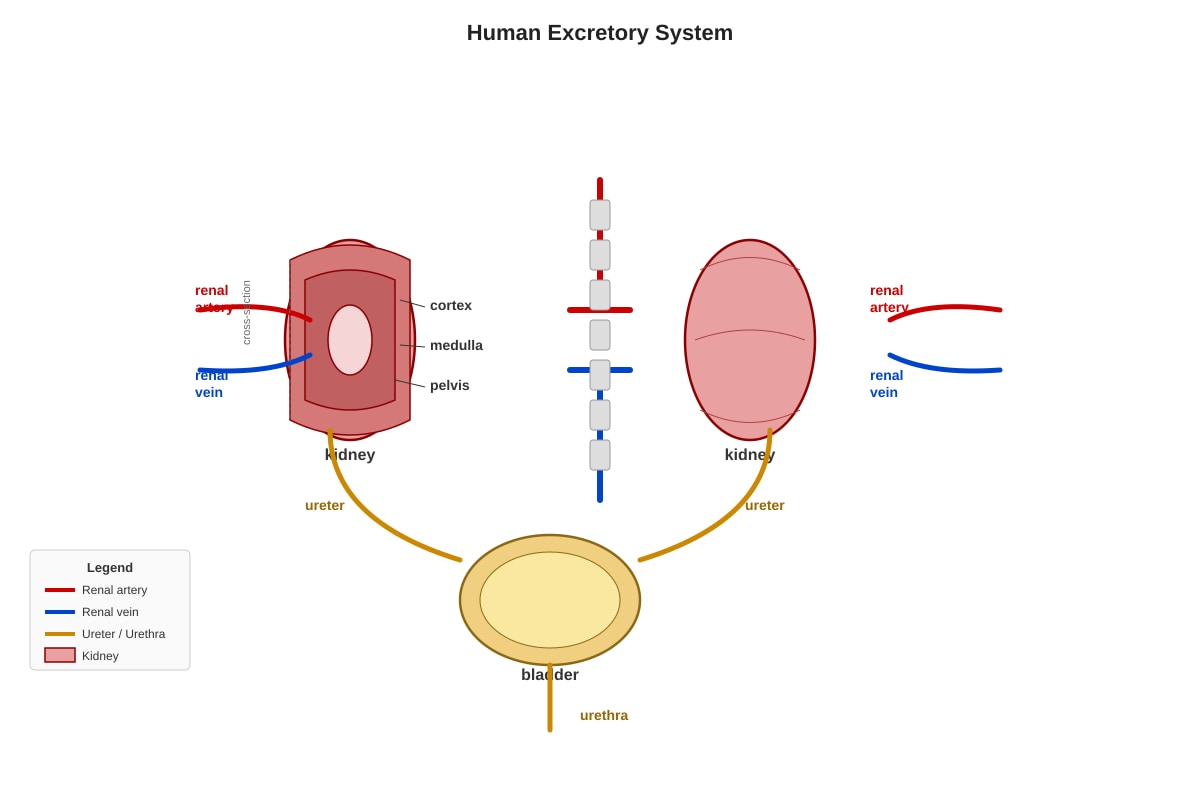
Excretory system_______________________________________

[2]

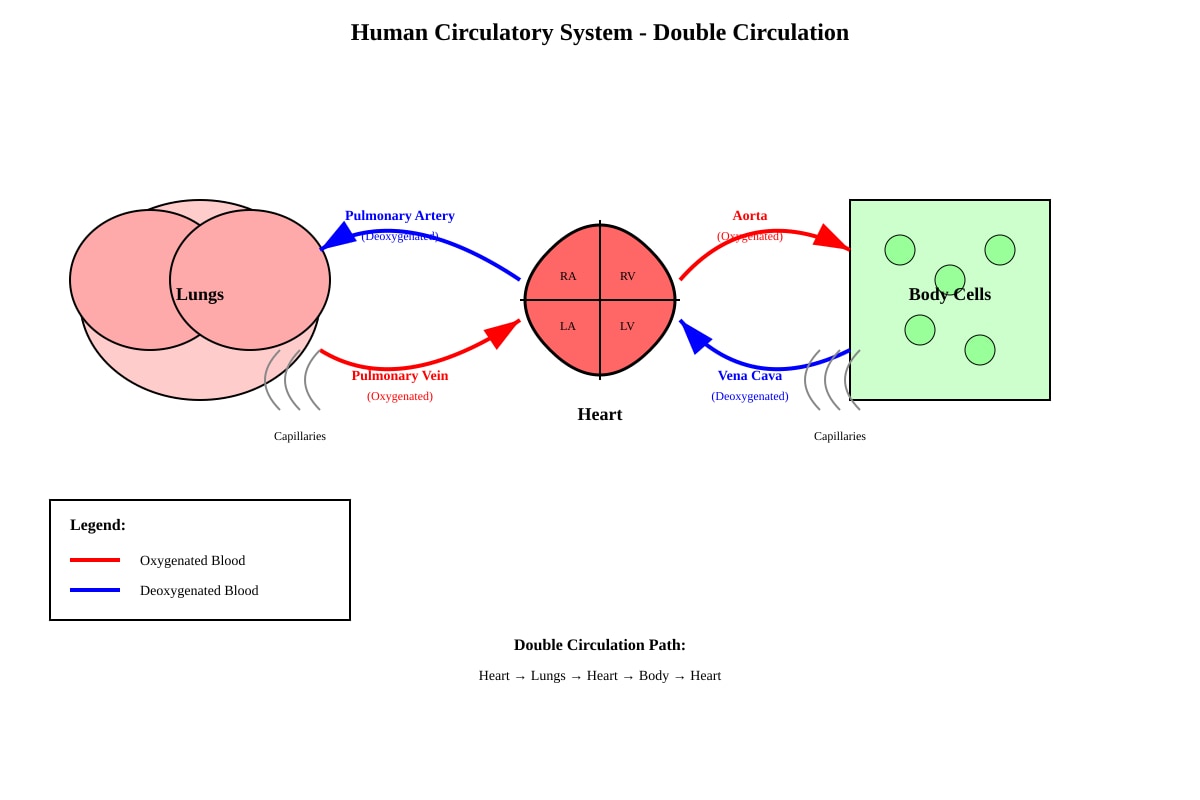
15. The diagram below shows the human circulatory system.
<image_placeholder> id: Q15-fig1 type: diagram linked_question: Q15 description: Simplified diagram of double circulation: heart (four chambers), lungs, body. Arrows show deoxygenated blood (blue) from body → right heart → lungs → left heart → body (red). Labels: A (pulmonary artery), B (pulmonary vein), C (aorta), D (vena cava). labels: A: pulmonary artery, B: pulmonary vein, C: aorta, D: vena cava values: none must_show: Clear double circulation loop; heart with four chambers; colour-coded or labelled oxygenated/deoxygenated paths; labels A–D on correct vessels. </image_placeholder>

(a) Which blood vessel, A, B, C, or D, carries oxygen-rich blood from the lungs to the heart?
Answer: _______ [1]

(b) Why is the circulatory system described as a "double circulation"?
Answer: _______________________________________ [1]


Section C: Structured / Open-Ended Questions (14 marks)

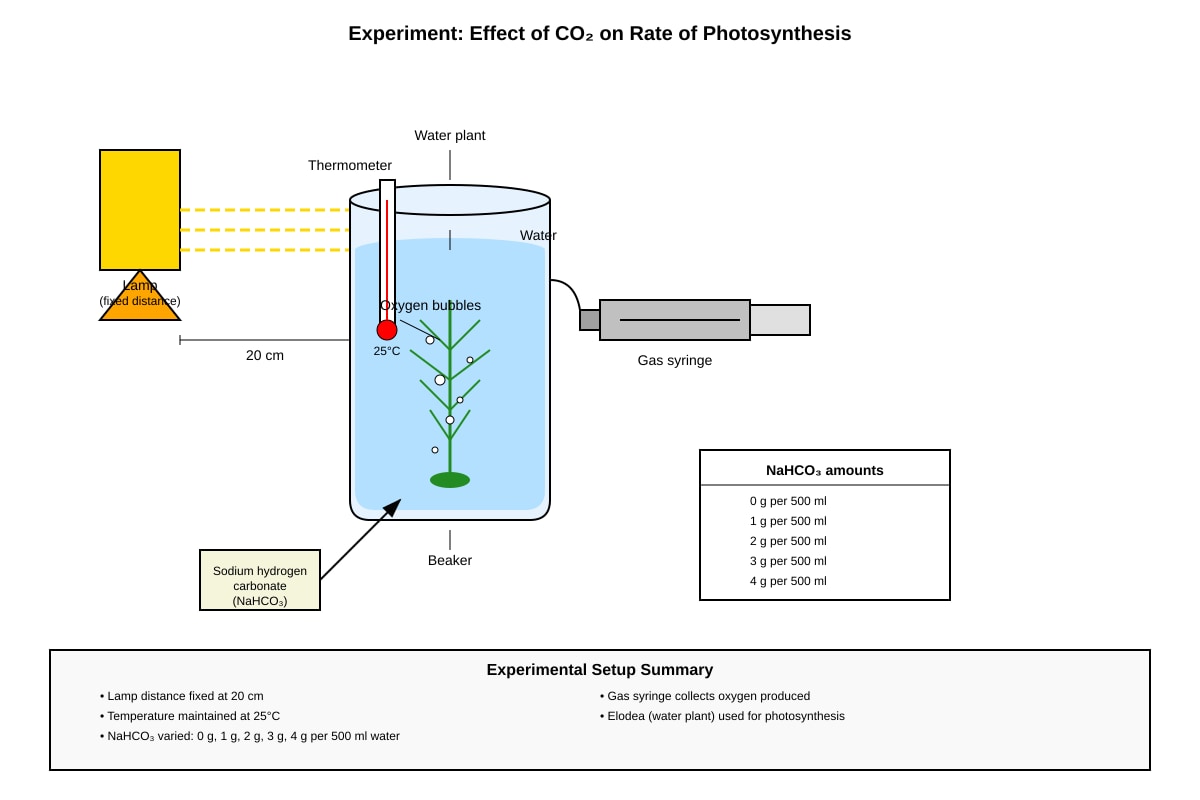
16. The diagram below shows an experiment set-up to investigate the effect of exercise on heart rate.
<image_placeholder> id: Q16-fig1 type: experimental_setup linked_question: Q16 description: A student sits at rest, then does step-ups for 2 minutes, then rests. Heart rate measured at rest (0 min), during exercise (2 min), and at 1, 2, 3, 4 minutes after exercise. Table shows: Rest: 72 bpm; During exercise: 130 bpm; 1 min after: 110 bpm; 2 min after: 95 bpm; 3 min after: 82 bpm; 4 min after: 75 bpm. labels: Time (min), Heart rate (bpm) values: Rest: 72; During: 130; 1 min post: 110; 2 min post: 95; 3 min post: 82; 4 min post: 75 must_show: Table with time points and heart rate values; step-up exercise implied. </image_placeholder>

(a) What is the aim of this experiment?
Answer: _______________________________________ [1]

(b) State one variable that must be kept constant to ensure a fair test.
Answer: _______________________________________ [1]

(c) Explain why the heart rate increases during exercise.
Answer: _______________________________________ [1]

(d) Based on the data, how long does it take for the heart rate to return to near resting rate?
Answer: _______________________________________ [1]

17. The diagram below shows the human digestive system.
<image_placeholder> id: Q17-fig1 type: diagram linked_question: Q17 description: Digestive system with labels: mouth, oesophagus, stomach, small intestine, large intestine, anus. Additional labels: salivary gland, liver, pancreas connected to small intestine via ducts. labels: mouth, oesophagus, stomach, small intestine, large intestine, anus, salivary gland, liver, pancreas values: none must_show: All organs shown with ducts from salivary gland, liver, pancreas entering small intestine. </image_placeholder>

(a) Name the digestive juice produced by the liver and state its function.
Answer: _______________________________________ [1]

(b) The stomach produces gastric juice which contains hydrochloric acid. State two functions of hydrochloric acid in the stomach.
Answer: _______________________________________ [2]

(c) Explain why digestion of food is necessary for the body.
Answer: _______________________________________ [1]

18. The diagram below shows a food web in a garden ecosystem.
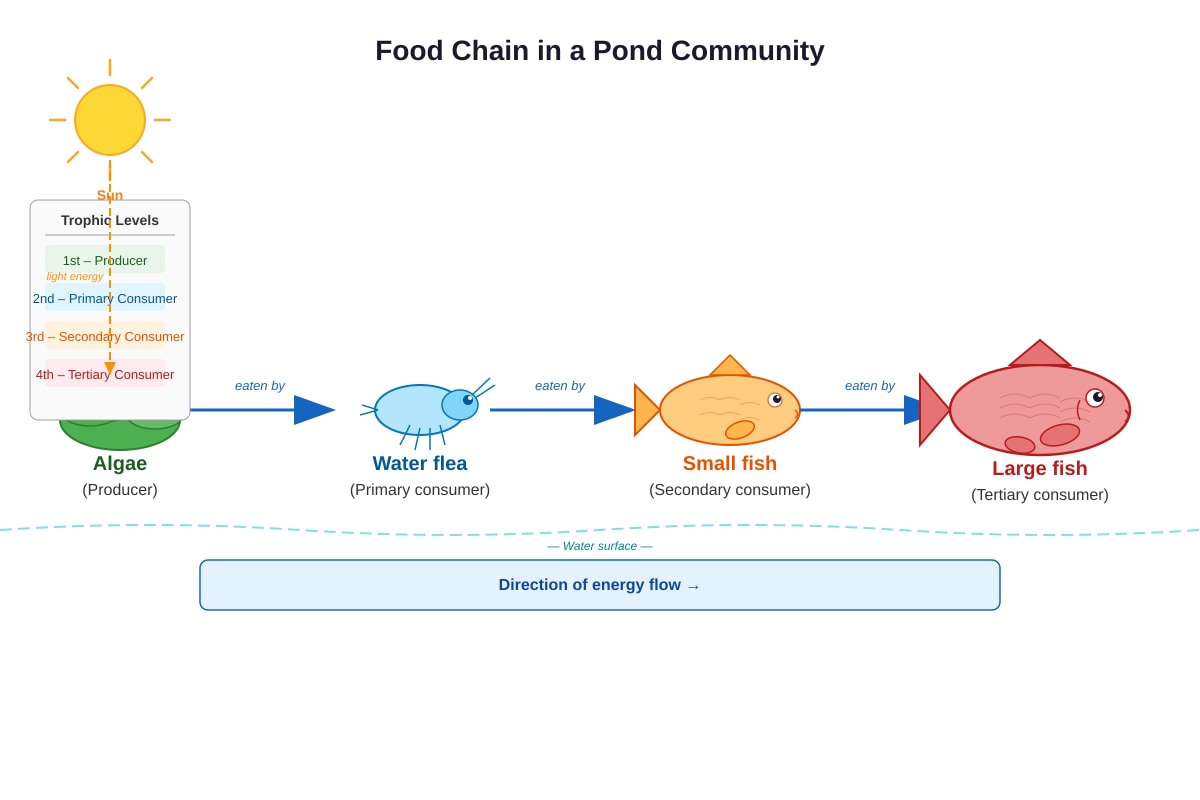
<image_placeholder> id: Q18-fig1 type: diagram linked_question: Q18 description: Food web: Grass → Grasshopper → Frog → Snake; Grass → Rabbit → Fox; Grasshopper → Bird; Frog → Bird; Decomposers (bacteria/fungi) break down all dead organisms. Arrows show energy flow. labels: Grass, Grasshopper, Frog, Snake, Rabbit, Fox, Bird, Decomposers values: none must_show: All organisms with correct trophic levels; arrows pointing from prey to predator; decomposers connected to all dead organisms. </image_placeholder>

(a) Identify all the primary consumers in this food web.
Answer: _______________________________________ [1]

(b) If a disease kills all the frogs, explain how the population of grasshoppers and snakes would be affected.
Answer: _______________________________________ [2]

(c) State the role of decomposers in this ecosystem.
Answer: _______________________________________ [1]

19. The diagram below shows the structure of a human eye.
<image_placeholder> id: Q19-fig1 type: diagram linked_question: Q19 description: Cross-section of human eye: cornea, pupil, iris, lens, retina, optic nerve, ciliary muscles, suspensory ligaments. Light rays entering from left, refracted by cornea and lens, focused on retina. labels: cornea, pupil, iris, lens, retina, optic nerve, ciliary muscles, suspensory ligaments values: none must_show: Light rays shown refracting at cornea and lens; focused on retina; optic nerve at back; ciliary muscles and suspensory ligaments attached to lens. </image_placeholder>

(a) Name the part that controls the amount of light entering the eye.
Answer: _______________________________________ [1]

(b) Explain how the lens changes shape to focus on a near object.
Answer: _______________________________________ [2]

(c) The image formed on the retina is inverted. How does the brain perceive the image correctly?
Answer: _______________________________________ [1]

20. The diagram below shows a model of the human breathing mechanism using a bell jar, rubber sheet, and balloon.
<image_placeholder> id: Q20-fig1 type: experimental_setup linked_question: Q20 description: Bell jar model: rigid bell jar (rib cage), balloon inside (lung), rubber sheet at bottom (diaphragm). When rubber sheet is pulled down, balloon inflates; when released, balloon deflates. labels: bell jar (rib cage), balloon (lung), rubber sheet (diaphragm) values: none must_show: Clear analogy: bell jar = rigid thorax; balloon = lung; rubber sheet = diaphragm. Arrows showing movement of rubber sheet and inflation/deflation of balloon. </image_placeholder>

(a) Which part of the human respiratory system does the rubber sheet represent?
Answer: _______________________________________ [1]

(b) When the rubber sheet is pulled down, the balloon inflates. Explain why this happens in terms of air pressure.
Answer: _______________________________________ [2]

(c) State one limitation of this model in representing the actual human breathing mechanism.
Answer: _______________________________________ [1]


End of Quiz

Answers

<!-- TuitionGoWhere generation metadata: stage=3-0; model=nvidia/nemotron-3-ultra-550b-a55b:free; model_label=NVIDIA Nemotron 3 Ultra 550B A55B Free; generated=2026-06-05; Sources: Stage 2-1 real exam-derived templates and Stage 2-2 exam-enriched syllabus. -->

Primary 6 PSLE Science Quiz - Systems (Answer Key)

Total Marks: 44


Section A: Multiple-Choice Questions (20 marks)

1. Answer: (4)
Explanation: The respiratory system takes in oxygen (for respiration) and removes carbon dioxide (waste product of respiration). Option (1) describes the circulatory system. Option (2) describes the digestive system. Option (3) is incorrect – the digestive system does not remove carbon dioxide.
Marks: 2

2. Answer: (3)
Explanation: The small intestine (D) is where most absorption of digested nutrients (glucose, amino acids, fatty acids, vitamins, minerals) into the bloodstream occurs. It has villi and microvilli that greatly increase surface area for absorption. The stomach (C) mainly digests proteins; the large intestine (E) absorbs water and minerals.
Marks: 2

3. Answer: (3)
Explanation: Capillaries have walls only one cell thick (endothelium), allowing efficient exchange of oxygen, nutrients, waste, and carbon dioxide between blood and tissues. Arteries have thick muscular walls to withstand high pressure. Veins have thinner walls and valves. The heart pumps blood to both lungs (pulmonary circulation) and body (systemic circulation).
Marks: 2

4. Answer: (1)
Explanation: Oxygen is used by cells during aerobic respiration to release energy from glucose. This reduces its percentage in exhaled air (21% → 16%). Carbon dioxide, a waste product of respiration, increases (0.04% → 4%). Nitrogen is inert and unchanged. Oxygen is not produced in respiration, nor converted to nitrogen.
Marks: 2

5. Answer: (3)
Explanation: Gaseous exchange (oxygen in, carbon dioxide out) occurs in the air sacs (alveoli), which have thin, moist walls and a rich blood supply. The trachea and bronchi are air passages; the diaphragm is a muscle for breathing movements.
Marks: 2

6. Answer: (1)
Explanation: Air enters through the nose → trachea (windpipe) → bronchi (two branches) → bronchioles → air sacs (alveoli). This is the correct anatomical pathway.
Marks: 2

7. Answer: (4)
Explanation: Chamber S is the left ventricle. It receives oxygen-rich blood from the left atrium (Q) and pumps it through the aorta to the rest of the body. P = right atrium (receives deoxygenated blood from body), Q = left atrium (receives oxygenated blood from lungs), R = right ventricle (pumps deoxygenated blood to lungs).
Marks: 2

8. Answer: (2)
Explanation: During vigorous exercise: A – heart rate increases to pump more blood; B – breathing rate increases to take in more oxygen and remove more carbon dioxide; C – more oxygen is delivered to muscles for aerobic respiration. D is incorrect – more carbon dioxide is produced due to increased respiration.
Marks: 2

9. Answer: (3)
Explanation: The vascular system (xylem and phloem) transports water, minerals, and food (sugar) throughout the plant, analogous to the circulatory system in humans. Xylem transports water and minerals from roots; phloem transports food from leaves. Root and shoot systems are structural, not transport systems.
Marks: 2

10. Answer: (2)
Explanation: The skeletal system provides support, protects internal organs (e.g., skull protects brain, ribs protect heart/lungs), enables movement with muscles, produces blood cells in bone marrow, and stores minerals. It does not produce hormones (endocrine system), digest food (digestive system), or remove waste from blood (excretory system).
Marks: 2


Section B: Short-Answer Questions (10 marks)

11.
(a) Answer: Diaphragm [1]
(b) Answer: It contracts and moves downwards (flattens), increasing the volume of the chest cavity. [1]
Explanation: During inhalation, the diaphragm contracts and flattens, while the external intercostal muscles lift the ribs up and out. This increases thoracic volume, decreasing air pressure inside the lungs, so air rushes in.
Total: 2 marks

12.
(a) Answer: Small intestine. The mass of undigested food decreases most sharply from 480 g (stomach) to 150 g (small intestine), showing most digestion occurs here. [1]
(b) Answer: Water is absorbed from the undigested food, and the remaining waste (faeces) is stored temporarily before being egested through the anus. [1]
Explanation: Digestion is largely completed in the small intestine with help from bile and pancreatic juice. The large intestine's main role is water absorption and faeces formation.
Total: 2 marks

13.
(a) Answer: Capillary [1]
(b) Answer: Its wall is only one cell thick, allowing rapid diffusion of oxygen, nutrients, and waste between blood and surrounding tissues. [1]
Explanation: Capillaries are the site of substance exchange. The thin wall minimises diffusion distance. The narrow lumen forces red blood cells to pass single file, close to the wall, enhancing exchange.
Total: 2 marks

14.

SystemFunction
Muscular systemEnables movement of the body / works with bones to produce movement / pumps blood (cardiac muscle) / moves food along digestive tract (smooth muscle) [1]
Excretory systemRemoves metabolic waste products (e.g., urea, excess water, salts) from the blood and body as urine / maintains water and salt balance [1]

Explanation: Muscular system includes skeletal, cardiac, and smooth muscles. Excretory system (kidneys, ureters, bladder, urethra) filters blood to form urine.
Total: 2 marks

15.
(a) Answer: B (pulmonary vein) [1]
(b) Answer: Blood passes through the heart twice in one complete circuit – once for pulmonary circulation (heart → lungs → heart) and once for systemic circulation (heart → body → heart). [1]
Explanation: Deoxygenated blood: right heart → lungs (pick up O₂) → left heart → body (deliver O₂) → right heart. Two circuits = double circulation.
Total: 2 marks


Section C: Structured / Open-Ended Questions (14 marks)

16.
(a) Answer: To investigate how exercise affects heart rate. / To find out the effect of exercise on heart rate. [1]
(b) Answer: Type of exercise / duration of exercise / intensity of exercise / same person / rest period before starting / environmental conditions (any one) [1]
(c) Answer: During exercise, muscles respire more to release energy, needing more oxygen and glucose. The heart beats faster to pump more blood (carrying oxygen and glucose) to the muscles. [1]
(d) Answer: About 3–4 minutes. (Heart rate at 3 min = 82 bpm, at 4 min = 75 bpm; resting = 72 bpm. Near resting by 4 minutes.) [1]
Explanation: Heart rate rises to meet increased demand. Recovery time indicates fitness. The data shows a gradual return to baseline.
Total: 4 marks

17.
(a) Answer: Bile. Function: Emulsifies fats (breaks large fat globules into smaller droplets) to increase surface area for lipase action. [1]
(b) Answer: (1) Kills bacteria in food. (2) Provides acidic pH (pH 1–2) for pepsin to work effectively in protein digestion. [2]
(c) Answer: Digestion breaks down large, complex food molecules (proteins, carbohydrates, fats) into small, soluble molecules (amino acids, glucose, fatty acids/glycerol) that can be absorbed through the small intestine wall into the bloodstream for use by cells. [1]
Explanation: Bile is stored in gall bladder, released into duodenum. HCl activates pepsinogen → pepsin. Digestion is essential for absorption and cellular use.
Total: 4 marks

18.
(a) Answer: Grasshopper and Rabbit [1]
(b) Answer: Grasshopper population would increase (no frogs to eat them). Snake population would decrease (frogs are their food source; less food available). [2]
(c) Answer: Decomposers break down dead organisms and waste, returning nutrients to the soil for plants to reuse. [1]
Explanation: Primary consumers eat producers (grass). Frogs are secondary consumers (eat grasshoppers). Snakes are tertiary consumers (eat frogs). Removing frogs releases grasshoppers from predation but removes snakes' food. Decomposers recycle nutrients.
Total: 4 marks

19.
(a) Answer: Iris [1]
(b) Answer: For a near object, the ciliary muscles contract, slackening the suspensory ligaments. The lens becomes more convex (fatter/thicker) due to its elasticity, increasing its converging power to focus light from the near object onto the retina. [2]
(c) Answer: The brain processes the inverted image and interprets it as upright. / The brain corrects the orientation. [1]
Explanation: Accommodation for near vision: ciliary muscles contract → ligaments slack → lens rounds up. The retina receives an inverted image; the brain's visual cortex reorients it.
Total: 4 marks

20.
(a) Answer: Diaphragm [1]
(b) Answer: Pulling the rubber sheet down increases the volume of the bell jar. This decreases the air pressure inside the jar (and balloon) below atmospheric pressure. Higher atmospheric pressure outside pushes air into the balloon, inflating it. [2]
(c) Answer: The bell jar is rigid, but the human rib cage can move up and out (with intercostal muscles). / The model only shows diaphragm movement, not rib movement. / The balloon is a single sac, but lungs have many alveoli. (Any one valid limitation) [1]
Explanation: Boyle's Law: volume ↑ → pressure ↓ → air flows in. Human breathing involves both diaphragm and intercostal muscles (rib movement). The model simplifies this.
Total: 4 marks


End of Answer Key