From Real Exams Quiz
Primary 6 PSLE Science Life Cycles Quiz
Free P6 PSLE Science Life Cycles quiz, HY3 Exam version, with questions, answers, and PSLE-focused practice for Singapore students.
These static practice materials are generated from the site's syllabus and paper-generation workflow, with source and model context shown so students and parents can evaluate the material before use.
Questions
Free quiz and exam paper access
Enter your details to view this paper
Your access is remembered on this device.
Answers
Primary 6 PSLE Science Quiz - Life Cycles (Answer Key)
Total Marks: 40
Topic: Life Cycles
Section A Answers (1 mark each)
-
B) Butterfly
Teaching note: Complete metamorphosis has four stages: egg, larva, pupa, adult. Butterfly fits; chicken, mouse, fish do not. -
A) pupa
Teaching note: Mosquito life cycle: egg, larva, pupa, adult. Pupa is a resting stage before becoming adult. -
A) Egg → tadpole → adult
Teaching note: Frog undergoes incomplete metamorphosis: egg, tadpole, froglet, adult. Option A is the closest given. -
B) Onion
Teaching note: Onion is a bulb plant. Bulbs store food and grow into new plants. -
C) incubation
Teaching note: Incubation is the warm keeping of eggs so the chick develops. Not metamorphosis (insect), germination (seed), pollination (plant). -
D) Calf
Teaching note: Calf is young cow. Butterfly stages: egg, caterpillar, pupa (cocoon), adult. -
B) seed
Teaching note: Bean is a seed plant. Spore (fern), bulb (onion), leaf (not usual). -
A) calf
Teaching note: Cow → calf. Cub (lion/tiger), kitten (cat), chick (bird). -
C) Dog
Teaching note: Dog is born live, no metamorphosis. Frog, butterfly, mosquito all metamorphose. -
B) strawberry
Teaching note: Strawberry sends out runners (stolons) that root and form new plants.
Section B Answers (2 marks each)
-
Pupa (or chrysalis) (1 mark for stage, 1 for correct spelling acceptable)
Teaching note: After caterpillar (larva) eats, it becomes pupa where body changes. -
Butterfly has metamorphosis (egg–caterpillar–pupa–adult) while chicken develops in egg then hatches as chick (no metamorphosis). (2 marks: 1 for each contrast)
Teaching note: Chicken is direct development; butterfly is indirect with distinct stages. -
Potato plant reproduces using tubers (eyes on potato). (2 marks: name tuber 1, explain no seed 1)
Teaching note: Tubers are swollen underground stems with buds; new plant grows from eye. -
Metamorphosis is the change in form during an animal's life cycle. Example: frog or butterfly. (2 marks: definition 1, example 1)
Teaching note: Shows abrupt body change from young to adult. -
Cow, dog (or any two mammals like cat, human). (2 marks: 1 each)
Teaching note: Mammals give birth to live young. -
Egg protects and provides food for the developing frog embryo. (2 marks: protection 1, food 1)
Teaching note: Egg stage lets development start in water safely.
Section C Answers (8 marks total)
- (a) Egg, caterpillar, pupa, adult butterfly (2 marks: 0.5 each stage)
Teaching note: Complete metamorphosis order.
(b) Caterpillar eats and grows to store energy for pupa stage. (1 mark)
Teaching note: Larva must grow before transformation.
- (a) Bulb: onion; Runner: strawberry (1 mark: 0.5 each)
Teaching note: Bulb underground storage; runner above-ground stem.
(b) Runner is a horizontal stem that grows away from parent and roots to form new plant. (1 mark)
Teaching note: Vegetative reproduction, no seed needed.
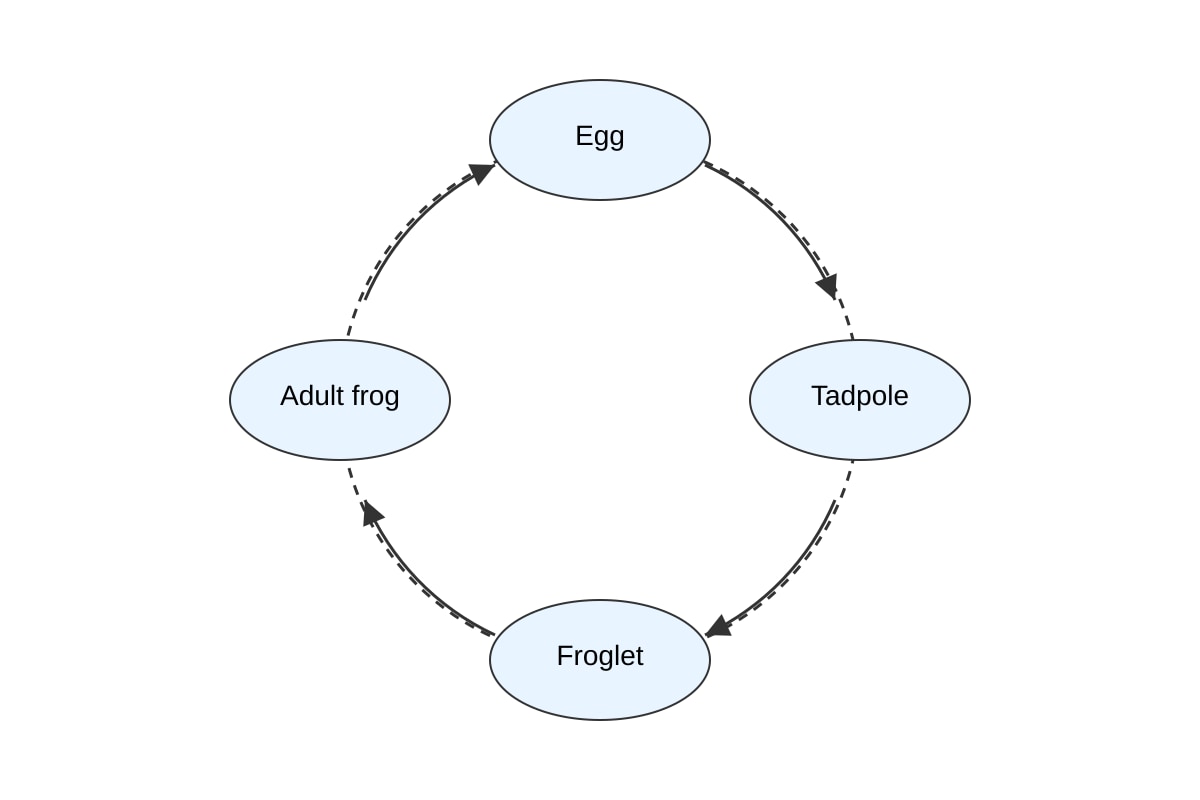
- (a) Froglet (1 mark)
Teaching note: From image placeholder, stage between Tadpole and Adult frog is Froglet (has legs, loses tail).
(b) Tail is absorbed / shrinks away. (1 mark)
Teaching note: Froglet loses tail as it becomes adult frog.
- (a) From egg (hatch) and live birth. (1 mark: 0.5 each)
Teaching note: Birds/reptiles from egg; mammals live birth.
(b) Human is born as small adult form (no metamorphosis) while butterfly changes completely from caterpillar. (1 mark)
Teaching note: Contrast direct vs metamorphosis life cycle.
Common mistakes to flag:
- Mixing up pupa and cocoon (cocoon is silk case, pupa is stage).
- Thinking all animals lay eggs (mammals mostly live birth).
- Forgetting froglet stage in frog cycle.