From Real Exams Quiz
Primary 6 PSLE Science Diversity Quiz
Free P6 PSLE Science Diversity quiz, HY3 Exam version, with questions, answers, and PSLE-focused practice for Singapore students.
These static practice materials are generated from the site's syllabus and paper-generation workflow, with source and model context shown so students and parents can evaluate the material before use.
Questions
Primary 6 PSLE Science Quiz - Diversity
Name: ___________________________
Class: ___________________________
Date: ___________________________
Score: ___________ / 40
Duration: 50 minutes
Total Marks: 40
Instructions:
- This quiz has 20 questions on the topic of Diversity.
- Section A: 10 multiple-choice questions (1 mark each).
- Section B: 6 short-answer questions (2 marks each).
- Section C: 4 structured questions with subparts (total 8 marks).
- Write your answers clearly in the spaces provided.
Section A (Questions 1–10, 1 mark each)
-
Which of the following is a way that we can group living things based on diversity?
A. By the colour of their school bags
B. By whether they have backbones or not
C. By the number of friends they have
D. By the type of food they like to eatAnswer: ______
-
Animals without backbones are called ________.
A. vertebrates
B. invertebrates
C. mammals
D. producersAnswer: ______
-
Which group of animals below are all vertebrates?
A. Earthworm, snail, jellyfish
B. Fish, frog, bird
C. Insect, spider, crab
D. Starfish, worm, leechAnswer: ______
-
Which of the following is a plant that reproduces using spores instead of seeds?
A. Rose
B. Fern
C. Mango tree
D. GrassAnswer: ______
-
Fungi such as mushrooms are different from plants because they ________.
A. can make their own food using sunlight
B. do not have roots, stems, or leaves and cannot make their own food
C. can move from place to place
D. have backbonesAnswer: ______
-
Which of the following is NOT a characteristic used to show diversity among living things?
A. Body covering (feathers, scales, skin)
B. How they reproduce
C. The brand of shoes they wear
D. Whether they have wingsAnswer: ______
-
Bacteria are best described as ________.
A. large animals with backbones
B. tiny living things that are neither plants nor animals
C. a type of green plant
D. fungi that grow on treesAnswer: ______
-
Which of these is an example of a mammal?
A. Shark
B. Penguin
C. Dolphin
D. LizardAnswer: ______
-
The diversity of living things means that ________.
A. all living things are exactly the same
B. there are many different kinds of living things with different features
C. only plants can be grouped
D. animals do not need to be classifiedAnswer: ______
-
Which habitat is most likely to support a different community of organisms compared to a pond?
A. Another pond nearby
B. A mangrove swamp
C. A similar garden
D. A fish tank with the same fishAnswer: ______
Section B (Questions 11–16, 2 marks each)
-
State one difference between vertebrates and invertebrates.
-
Name two groups of living things that are not animals or plants.
(a) _________________________
(b) _________________________ -
Give one example of a habitat and name one type of organism found there.
Habitat: _________________________
Organism: _________________________ -
Explain why fungi are placed in their own group and not with plants.
-
List two features that can be used to group animals by their diversity.
(a) _________________________
(b) _________________________ -
Why is it useful for scientists to study the diversity of living things?
Section C (Questions 17–20, with subparts)
-
(a) What is meant by “diversity” of living things? [1]
(b) Give one example of diversity among plants. [1]
-
(a) Name one group of invertebrates. [1]
(b) Name one vertebrate group and one example from it. [2]
Group: ___________________ Example: ___________________ -
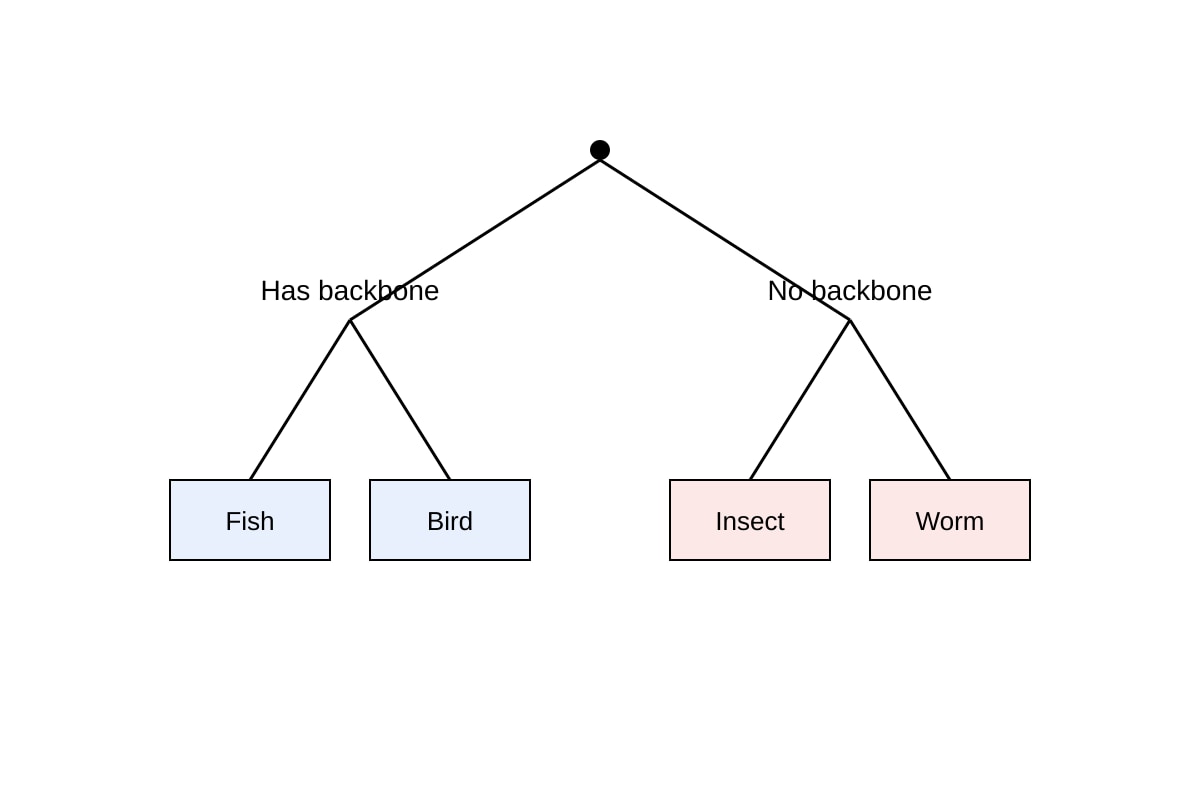
The picture shows a simple classification of some living things.

Generated diagram for Q19.
(a) Which branch would a frog be placed in? [1]
______
(b) Which two organisms shown are invertebrates? [1]
______ and ______
20. (a) State one way that bacteria are different from animals. [1]
_______________________________________________________
(b) State one way that bacteria are similar to other living things. [1]
_______________________________________________________
Answers
Primary 6 PSLE Science Quiz - Diversity (Answer Key)
Total Marks: 40
Topic: Diversity
Section A Answers (1 mark each)
-
B
Teaching note: Diversity means differences among living things. A real scientific way to group them is by body structure such as having a backbone (vertebrate) or not (invertebrate). Options A and C are not biological traits. -
B (invertebrates)
Teaching note: Animals without backbones are invertebrates. Vertebrates have backbones; mammals are a subgroup of vertebrates; producers are plants. -
B (Fish, frog, bird)
Teaching note: Fish, amphibians (frog), and birds are all vertebrates. The other options list only invertebrates. -
B (Fern)
Teaching note: Ferns are non-flowering plants that reproduce using spores. Rose, mango, grass use seeds. -
B
Teaching note: Fungi lack chlorophyll and cannot photosynthesise; they absorb food. They have no roots/stems/leaves like typical plants. -
C
Teaching note: Shoe brand is not a biological characteristic. Real traits: body covering, reproduction, wings. -
B
Teaching note: Bacteria are microscopic living things, not plants or animals, and lack backbones. -
C (Dolphin)
Teaching note: Dolphins are mammals (breathe air, have hair, give milk). Shark = fish, penguin = bird, lizard = reptile. -
B
Teaching note: Diversity = many different kinds with different features. -
B (A mangrove swamp)
Teaching note: Different habitat → different community. Pond and tank/pond/garden similar support overlapping groups.
Section B Answers (2 marks each)
-
Vertebrates have backbones; invertebrates do not. [2]
Marking: 1 mark for each correct contrast side. Common mistake: saying “vertebrates are bigger” (not always true). -
Any two of: fungi, bacteria. [1+1]
Teaching note: These are neither animals nor plants. -
Habitat: pond / garden / mangrove / seashore [1]; Organism: fish / bee / crab / seaweed [1]
Marking: Must match logically (e.g., pond → fish). -
Fungi cannot make their own food (no chlorophyll) and absorb nutrients; plants make food by photosynthesis. [2]
Teaching note: This is the key split from plants. -
Any two: presence of backbone, body covering, reproduction method, habitat, wings. [1+1]
-
To understand relationships, protect species, and learn how they survive in different habitats. [2]
Accept: helps classification, conservation, science study.
Section C Answers
-
(a) Diversity means there are many different types of living things with different characteristics. [1]
(b) Example: some plants reproduce by seeds, others by spores (or flowering vs non-flowering). [1] -
(a) Insect / worm / spider / crab / jellyfish (any one). [1]
(b) Group: fish / bird / mammal / reptile / amphibian [1]; Example: salmon / sparrow / cat / snake / frog [1].
Marking: Both must be correct pair. -
(a) Has backbone branch (vertebrate). [1]
From image: Frog is a vertebrate.
(b) Insect and worm. [1]
From image: Right branch “No backbone” shows these two. -
(a) Bacteria are tiny / not animals / no backbone / different cell structure. [1]
(b) They are living things that grow and reproduce. [1]
Free quiz and exam paper access
Enter your details to view this paper
Your access is remembered on this device.