AI Generated Exam Paper
Primary 6 PSLE Science Practice Paper 5
Free AI-Generated NVIDIA Nemotron 3 Ultra 550B A55B Free Primary 6 PSLE Science Practice Paper 5 practice paper with questions and answers for Singapore students. This page is rendered as a direct URL so the questions and answers can be discovered without pressing in-page buttons.
These static practice materials are generated from the site's syllabus and paper-generation workflow, with source and model context shown so students and parents can evaluate the material before use.
Questions
TuitionGoWhere Practice Paper - Science Primary 6 PSLE
TuitionGoWhere Practice Paper (AI) - Version 5
Subject: Science
Level: Primary 6 PSLE
Paper: Practice Paper 5 (Diversity Theme Focus)
Duration: 1 hour 45 minutes
Total Marks: 100
Name: ________________________
Class: Primary 6 ________
Date: _______________
Instructions to Candidates
- Do not open this booklet until you are told to do so.
- Follow all instructions carefully.
- Answer all questions.
- The number of marks is given in brackets [ ] at the end of each question or part question.
- The total marks for this paper is 100.
- For multiple-choice questions, shade your answer on the Optical Answer Sheet (OAS) provided.
- For open-ended questions, write your answers in the spaces provided in this booklet.
- The use of an approved scientific calculator is allowed.
Booklet A: Multiple-Choice Questions (56 marks)
Questions 1 to 28 carry 2 marks each. For each question, four options are given. Choose the correct answer and shade the correct oval (1, 2, 3, or 4) on the Optical Answer Sheet.
Section 1: Diversity of Living Things (Questions 1-8)
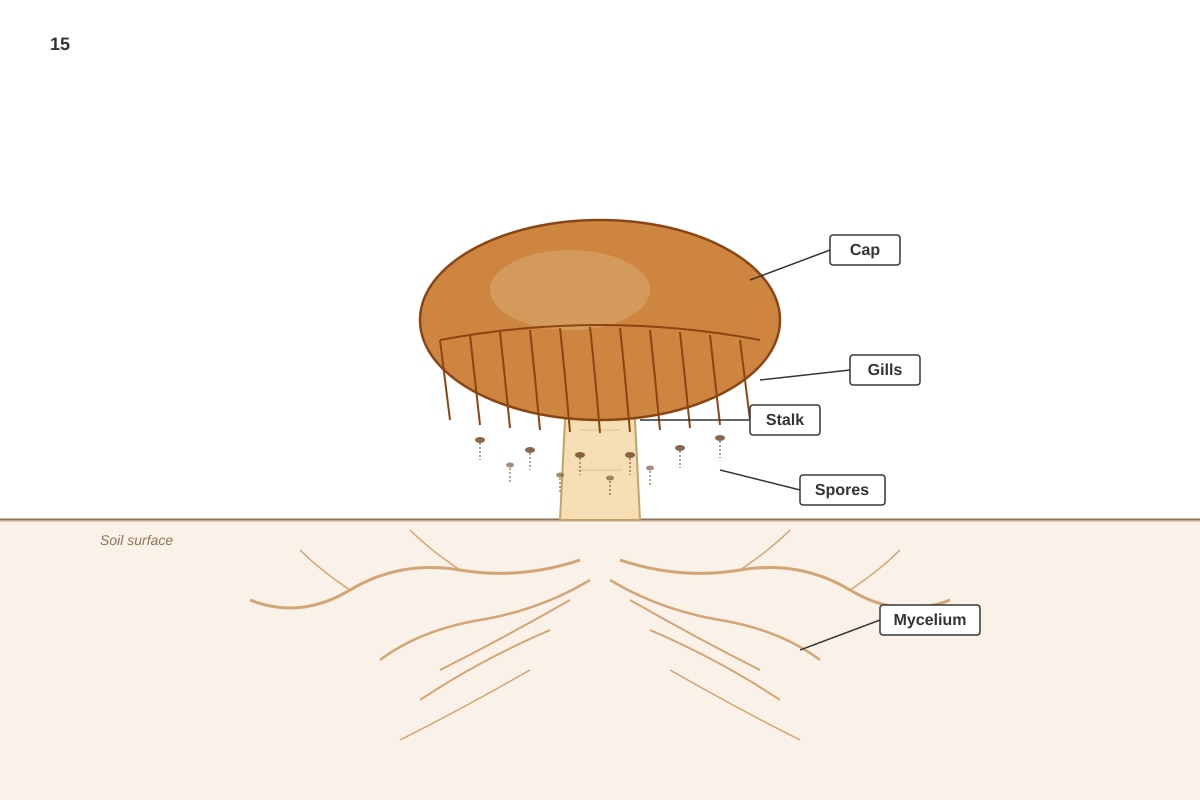
1. The diagram below shows four organisms.
<image_placeholder> id: Q1-fig1 type: diagram linked_question: Q1 description: Four organisms labelled A, B, C, D. A: Mushroom with visible cap and gills. B: Moss plant with small leaf-like structures. C: Fern with fronds and visible sori on underside. D: Balsam plant with flowers and seeds in pods. labels: A, B, C, D must_show: Distinct features of fungi, moss, fern, flowering plant </image_placeholder>
Which of the following correctly classifies these organisms?
| A | B | C | D | |
|---|---|---|---|---|
| (1) | Fungi | Non-flowering plant | Non-flowering plant | Flowering plant |
| (2) | Non-flowering plant | Fungi | Flowering plant | Non-flowering plant |
| (3) | Fungi | Flowering plant | Non-flowering plant | Non-flowering plant |
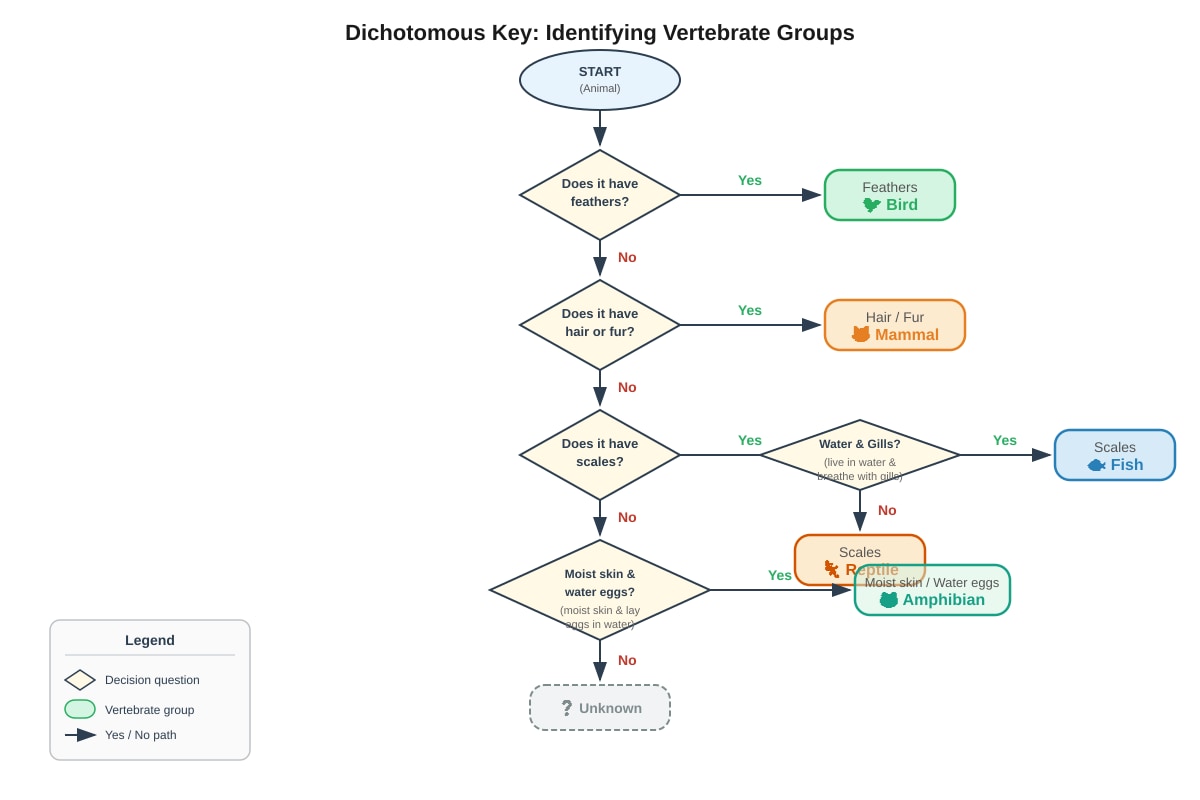
| (4) | Non-flowering plant | Non-flowering plant | Fungi | Flowering plant |
2. Study the classification chart below.
<image_placeholder> id: Q2-fig1 type: chart linked_question: Q2 description: Classification chart with two main branches: Vertebrates and Invertebrates. Vertebrates branch into Mammals, Birds, Reptiles, Amphibians, Fish. Invertebrates branch into Insects, Arachnids, Molluscs, Worms. labels: Vertebrates, Invertebrates, Mammals, Birds, Reptiles, Amphibians, Fish, Insects, Arachnids, Molluscs, Worms must_show: Clear branching hierarchy with all group names visible </image_placeholder>
Which of the following animals is classified incorrectly in the chart above?
(1) Bat → Mammals
(2) Penguin → Birds
(3) Whale → Fish
(4) Spider → Arachnids
3. Four students made the following statements about microorganisms.
- Ali: "All microorganisms are harmful to humans."
- Bala: "Yeast is a microorganism used in making bread."
- Cindy: "Bacteria can only be seen with a microscope."
- Devi: "All microorganisms reproduce by binary fission."
Which student(s) made correct statement(s)?
(1) Bala only
(2) Bala and Cindy only
(3) Ali, Bala and Cindy only
(4) All of them
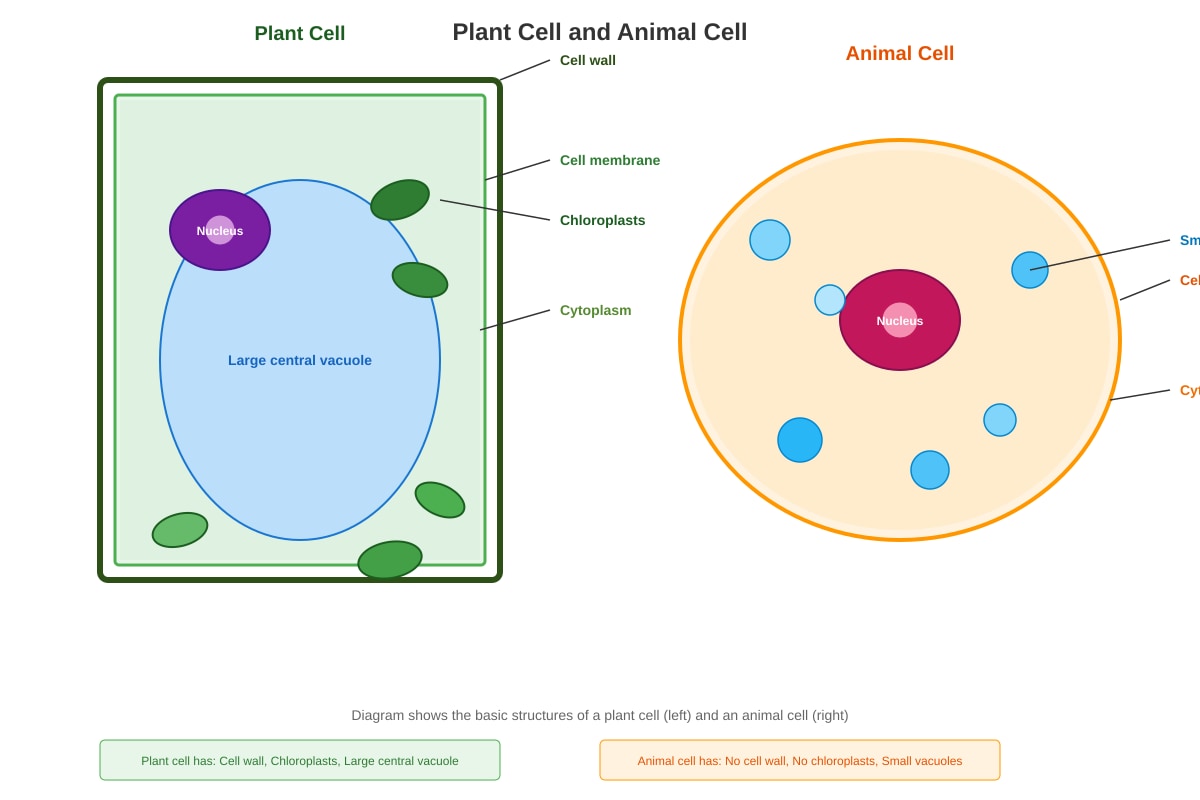
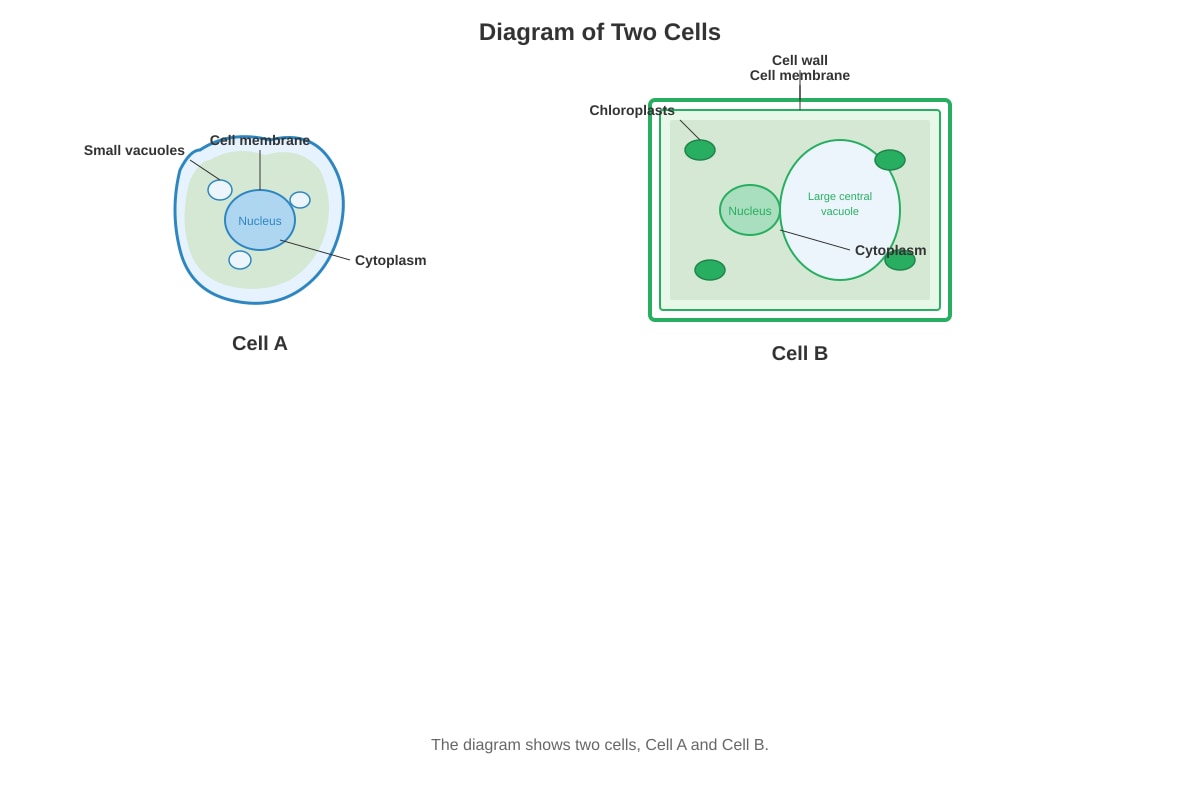
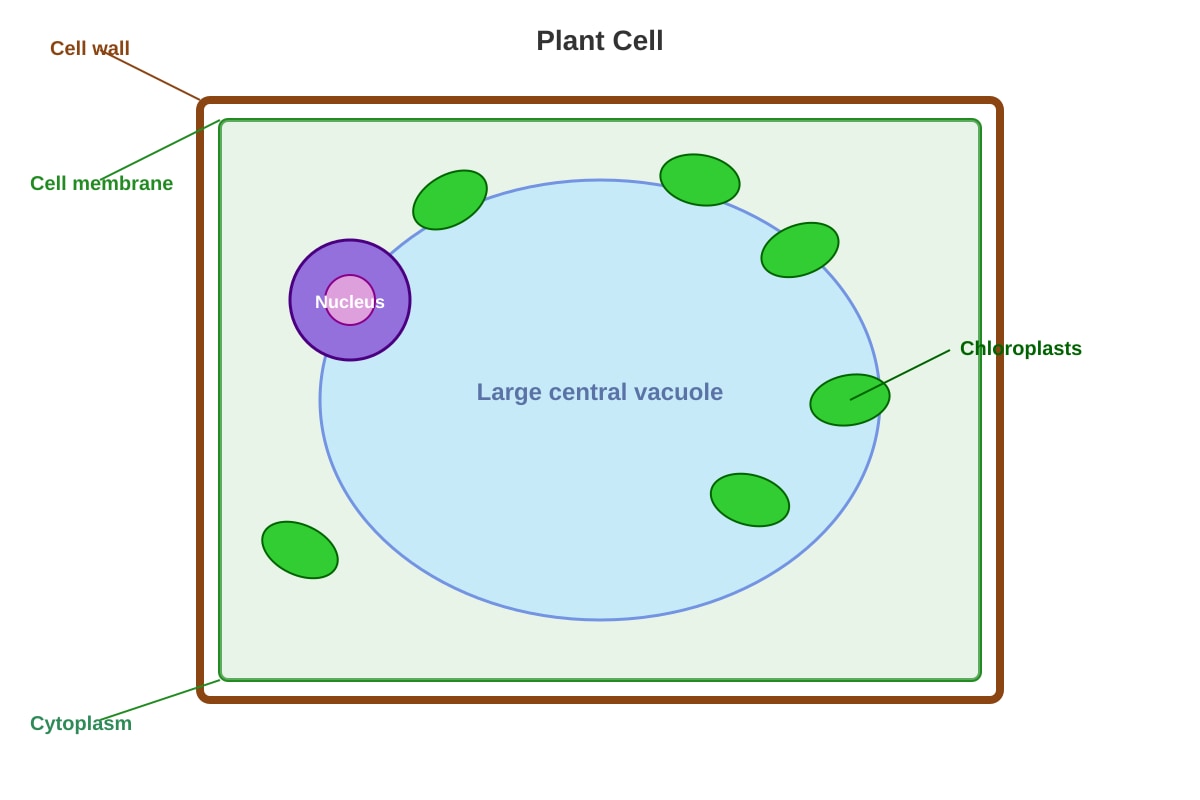
4. The diagram below shows a cell observed under a microscope.
<image_placeholder> id: Q4-fig1 type: diagram linked_question: Q4 description: Cell diagram showing cell wall, cell membrane, cytoplasm, nucleus, chloroplasts, and large central vacuole. labels: Cell wall, Cell membrane, Cytoplasm, Nucleus, Chloroplasts, Large central vacuole must_show: All listed organelles clearly labelled; rectangular shape indicating plant cell </image_placeholder>
Based on the diagram, which of the following statements is correct?
(1) This is an animal cell because it has a nucleus.
(2) This is a plant cell because it has chloroplasts and a large central vacuole.
(3) This is a bacterial cell because it has a cell wall.
(4) This is a fungal cell because it has a cell wall and nucleus.
5. Which of the following groups of organisms reproduce by spores?
(1) Mould, yeast, fern
(2) Mushroom, moss, fern
(3) Bacteria, mould, mushroom
(4) Yeast, bacteria, moss
6. The table below shows the characteristics of four organisms W, X, Y and Z.
| Organism | Has cell wall | Has chloroplasts | Mode of nutrition | Reproduction |
|---|---|---|---|---|
| W | Yes (cellulose) | Yes | Autotrophic | Seeds |
| X | Yes (chitin) | No | Saprotrophic | Spores |
| Y | No | No | Holozoic | Binary fission |
| Z | Yes (cellulose) | No | Autotrophic | Spores |
Which organism is most likely a flowering plant?
(1) W
(2) X
(3) Y
(4) Z
7. Study the flowchart below.
<image_placeholder> id: Q7-fig1 type: flowchart linked_question: Q7 description: Flowchart for classifying vertebrates. Start: Has backbone? Yes → Has hair/fur? Yes → Mammal. No → Has feathers? Yes → Bird. No → Has dry scales? Yes → Reptile. No → Has moist skin? Yes → Amphibian. No → Has wet scales/gills? Yes → Fish. labels: Has backbone?, Has hair/fur?, Has feathers?, Has dry scales?, Has moist skin?, Has wet scales/gills?, Mammal, Bird, Reptile, Amphibian, Fish must_show: Clear decision diamonds and rectangular outcome boxes with yes/no branches </image_placeholder>
Animal P has a backbone, lays eggs with leathery shells, and has dry scales. Using the flowchart, which group does Animal P belong to?
(1) Mammal
(2) Bird
(3) Reptile
(4) Amphibian
8. Which of the following statements about the classification of living things is correct?
(1) All plants make their own food.
(2) All animals move from place to place.
(3) Fungi are classified as plants because they have cell walls.
(4) Bacteria are neither plants nor animals.
Section 2: Diversity of Materials (Questions 9-16)
9. Four materials P, Q, R and S were tested for their properties. The results are shown below.
| Material | Flexible | Waterproof | Transparent | Magnetic | Conducts electricity |
|---|---|---|---|---|---|
| P | Yes | Yes | No | No | No |
| Q | No | Yes | Yes | No | No |
| R | No | Yes | No | Yes | Yes |
| S | Yes | No | No | No | No |
Which material is most suitable for making a raincoat?
(1) P
(2) Q
(3) R
(4) S
10. The diagram below shows the arrangement of particles in three states of matter.
<image_placeholder> id: Q10-fig1 type: diagram linked_question: Q10 description: Three boxes showing particle arrangement. Box A: Particles tightly packed in ordered rows, vibrating. Box B: Particles close but not ordered, sliding past each other. Box C: Particles far apart, moving randomly in all directions. labels: Box A, Box B, Box C must_show: Clear distinction in spacing, arrangement, and motion arrows for each state </image_placeholder>
Which of the following correctly identifies the states of matter?
| Box A | Box B | Box C | |
|---|---|---|---|
| (1) | Solid | Liquid | Gas |
| (2) | Liquid | Solid | Gas |
| (3) | Gas | Liquid | Solid |
| (4) | Solid | Gas | Liquid |
11. Substance X has a melting point of 5°C and a boiling point of 85°C. At which of the following temperatures will Substance X be a liquid?
(1) 0°C
(2) 25°C
(3) 90°C
(4) -10°C
12. Four beakers contain different substances at room temperature (30°C).
| Beaker | Substance | Melting point (°C) | Boiling point (°C) |
|---|---|---|---|
| A | Substance A | -10 | 50 |
| B | Substance B | 20 | 120 |
| C | Substance C | 40 | 200 |
| D | Substance D | -50 | -5 |
Which beaker(s) contain(s) a liquid at room temperature?
(1) A only
(2) B only
(3) A and B only
(4) B and D only
13. The diagram below shows an experiment to test the electrical conductivity of four rods made of different materials.
<image_placeholder> id: Q13-fig1 type: experimental_setup linked_question: Q13 description: Circuit with battery, switch, light bulb, and gap for testing rod. Four rods labelled W, X, Y, Z placed one at a time in the gap. Bulb lights for W and X only. labels: Battery, Switch, Light bulb, Rod W, Rod X, Rod Y, Rod Z must_show: Complete circuit with gap; four rods; bulb lit for W and X, unlit for Y and Z </image_placeholder>
Based on the results, which of the following could be the materials of the rods?
| Rod W | Rod X | Rod Y | Rod Z | |
|---|---|---|---|---|
| (1) | Copper | Aluminium | Plastic | Wood |
| (2) | Iron | Copper | Glass | Rubber |
| (3) | Steel | Graphite | Ceramic | Plastic |
| (4) | All of the above are possible |
14. Study the classification table below.
| Group 1 | Group 2 |
|---|---|
| Copper wire | Plastic ruler |
| Iron nail | Wooden chopstick |
| Steel key | Rubber band |
| Aluminium foil | Glass marble |
What is the most suitable heading for Group 1 and Group 2?
| Group 1 | Group 2 | |
|---|---|---|
| (1) | Magnetic | Non-magnetic |
| (2) | Conductors of electricity | Insulators of electricity |
| (3) | Metals | Non-metals |
| (4) | Solids | Liquids |
15. Substance P dissolves in water to form a solution. Which of the following statements about the solution is correct?
(1) The mass of the solution is less than the mass of water plus the mass of Substance P.
(2) The volume of the solution is exactly the sum of the volume of water and the volume of Substance P.
(3) The solution will pass through filter paper without leaving any residue.
(4) Substance P can be separated from the solution by filtration.
16. The diagram below shows the water cycle.
<image_placeholder> id: Q16-fig1 type: diagram linked_question: Q16 description: Water cycle diagram showing evaporation from sea, condensation forming clouds, precipitation as rain, collection in rivers/lakes, flow back to sea. Sun labelled as heat source. Arrows showing direction. labels: Sun, Evaporation, Condensation, Precipitation, Collection, Sea, Clouds, Rain, Rivers must_show: All processes labelled with arrows showing continuous cycle; sun as energy source </image_placeholder>
Which process in the water cycle involves a change of state from gas to liquid?
(1) Evaporation
(2) Condensation
(3) Precipitation
(4) Collection
Section 3: Interactions and Applications (Questions 17-28)
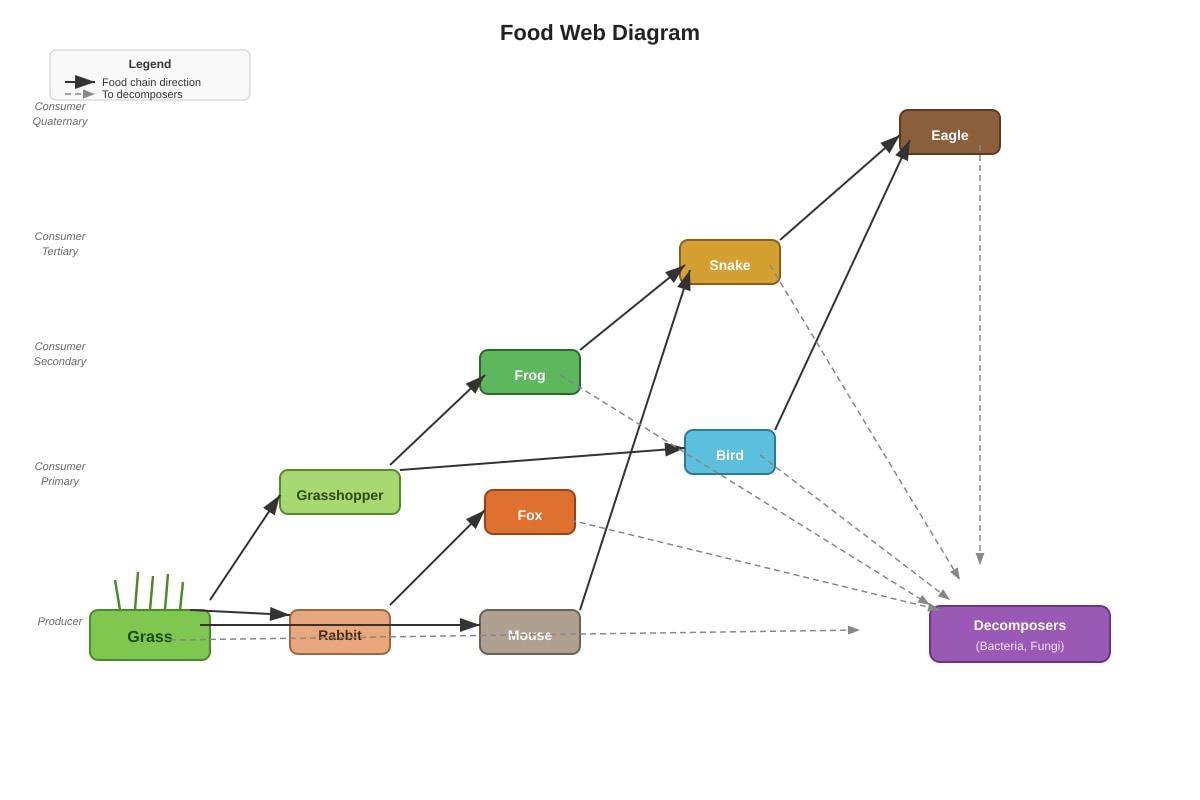
17. The diagram below shows a food web in a garden ecosystem.
<image_placeholder> id: Q17-fig1 type: diagram linked_question: Q17 description: Food web with Grass → Grasshopper → Frog → Snake → Eagle. Also Grass → Rabbit → Eagle. Grass → Grasshopper → Bird → Eagle. Decomposers (bacteria, fungi) breaking down all dead organisms. labels: Grass (producer), Grasshopper, Frog, Snake, Eagle, Rabbit, Bird, Decomposers (bacteria, fungi) must_show: Arrows showing energy flow from producer to consumers; decomposers connected to all dead organisms </image_placeholder>
If a disease kills all the grasshoppers, which of the following will most likely happen?
(1) The grass population will decrease.
(2) The frog population will increase.
(3) The snake population will decrease.
(4) The eagle population will increase.
18. The diagram below shows a pyramid of numbers for a food chain.
<image_placeholder> id: Q18-fig1 type: diagram linked_question: Q18 description: Pyramid of numbers with four levels. Bottom: 1000 grass plants. Level 2: 100 grasshoppers. Level 3: 10 frogs. Top: 1 snake. labels: Grass (1000), Grasshopper (100), Frog (10), Snake (1) must_show: Pyramid shape with numbers decreasing at each trophic level; labels for each level </image_placeholder>
Which of the following statements about this pyramid of numbers is correct?
(1) There are more frogs than grasshoppers.
(2) The snake is the producer.
(3) Energy is transferred from grass to snake with 100% efficiency.
(4) The number of organisms decreases at each higher trophic level.
19. Organism X has the following adaptations:
- Thick fur
- Layer of fat under the skin
- Small ears
- White colouration
In which environment is Organism X best adapted to survive?
(1) Desert
(2) Tropical rainforest
(3) Arctic tundra
(4) Temperate grassland
20. The diagram below shows the cross-section of a leaf.
<image_placeholder> id: Q20-fig1 type: diagram linked_question: Q20 description: Leaf cross-section showing upper epidermis, palisade mesophyll (tightly packed cells with many chloroplasts), spongy mesophyll (loosely packed cells with air spaces), lower epidermis with stomata and guard cells, vascular bundle (xylem and phloem). labels: Upper epidermis, Palisade mesophyll, Spongy mesophyll, Lower epidermis, Stomata, Guard cells, Xylem, Phloem, Chloroplasts, Air spaces must_show: All layers distinct; chloroplasts visible in palisade cells; stomata with guard cells; xylem and phloem labelled </image_placeholder>
Which part of the leaf is mainly responsible for trapping light energy for photosynthesis?
(1) Upper epidermis
(2) Palisade mesophyll
(3) Spongy mesophyll
(4) Lower epidermis
21. The diagram below shows a food chain.
<image_placeholder> id: Q21-fig1 type: diagram linked_question: Q21 description: Food chain: Phytoplankton → Zooplankton → Small fish → Large fish → Shark. Arrows pointing right showing energy transfer. 10% efficiency labels between each level. labels: Phytoplankton (Producer), Zooplankton (Primary consumer), Small fish (Secondary consumer), Large fish (Tertiary consumer), Shark (Quaternary consumer), 10% energy transfer labels must_show: Clear linear chain with trophic level labels and 10% energy transfer efficiency labels </image_placeholder>
If the phytoplankton population contains 10,000 units of energy, approximately how much energy will be available to the shark?
(1) 10 units
(2) 100 units
(3) 1000 units
(4) 10,000 units
22. Which of the following is an example of a structural adaptation?
(1) A bird migrating south for winter
(2) A chameleon changing its skin colour
(3) A cactus having spines instead of leaves
(4) A bear hibernating in winter
23. The diagram below shows two magnets interacting.
<image_placeholder> id: Q23-fig1 type: diagram linked_question: Q23 description: Two bar magnets. Magnet A: N on left, S on right. Magnet B: N on left, S on right. They are placed with Magnet A's right end (S) facing Magnet B's left end (N). Gap of 2 cm between them. Arrows showing attraction. labels: Magnet A (N, S), Magnet B (N, S), 2 cm gap, Attraction arrows must_show: Clear N/S poles on both magnets; gap with attraction arrows; correct pole orientation for attraction </image_placeholder>
What will happen if Magnet B is flipped so that its S pole faces Magnet A's S pole?
(1) They will attract each other.
(2) They will repel each other.
(3) There will be no interaction.
(4) They will become demagnetised.
24. The diagram below shows a simple electrical circuit.
<image_placeholder> id: Q24-fig1 type: diagram linked_question: Q24 description: Series circuit with battery (2 cells), switch (open), and two bulbs in series. Wires connecting all components. labels: Battery (2 cells), Switch (open), Bulb 1, Bulb 2, Connecting wires must_show: Series arrangement; open switch; two bulbs; battery with correct polarity </image_placeholder>
When the switch is closed, both bulbs light up. What happens to the brightness of Bulb 1 if Bulb 2 is removed and the circuit is completed with a wire?
(1) Bulb 1 becomes brighter.
(2) Bulb 1 becomes dimmer.
(3) Bulb 1 remains the same brightness.
(4) Bulb 1 does not light up.
25. The diagram below shows a lever system.
<image_placeholder> id: Q25-fig1 type: diagram linked_question: Q25 description: Lever with fulcrum in middle. Effort arm 40 cm, Load arm 10 cm. Load of 20 N at load arm. Arrow showing effort direction downward at effort arm. labels: Fulcrum, Effort arm (40 cm), Load arm (10 cm), Load (20 N), Effort direction must_show: Fulcrum position; labelled arm lengths; load and effort arrows; correct lever class </image_placeholder>
What is the minimum effort needed to lift the load?
(1) 5 N
(2) 10 N
(3) 20 N
(4) 80 N
26. The diagram below shows the shadow of a pole at different times of the day.
<image_placeholder> id: Q26-fig1 type: diagram linked_question: Q26 description: Three positions of sun and shadow. Morning: Sun in east, long shadow pointing west. Noon: Sun overhead, short shadow. Afternoon: Sun in west, long shadow pointing east. Pole vertical in centre. labels: Morning (Sun East, Shadow West), Noon (Sun Overhead, Short Shadow), Afternoon (Sun West, Shadow East), Pole must_show: Sun positions; shadow directions and lengths; vertical pole; cardinal directions labelled </image_placeholder>
Which of the following statements about shadows is correct?
(1) Shadows are longest at noon.
(2) Shadows point towards the sun.
(3) Shadows are formed when light is blocked by an opaque object.
(4) Transparent objects form the darkest shadows.
27. Four objects A, B, C and D are placed in water. Their densities are given below.
| Object | Density (g/cm³) |
|---|---|
| A | 0.8 |
| B | 1.0 |
| C | 1.2 |
| D | 2.5 |
Density of water = 1.0 g/cm³
Which object(s) will float on water?
(1) A only
(2) A and B only
(3) B and C only
(4) C and D only
28. The diagram below shows a plant growing towards light.
<image_placeholder> id: Q28-fig1 type: diagram linked_question: Q28 description: Plant in pot on left side of box. Light source on right side of box. Plant stem bent towards right (light source). Box has hole on right side for light entry. labels: Plant, Light source, Box with hole, Bent stem towards light must_show: Plant bending towards light source; light entering from one side; opaque box </image_placeholder>
This response of the plant towards light is known as:
(1) Phototropism
(2) Geotropism
(3) Hydrotropism
(4) Thigmotropism
Booklet B: Open-Ended Questions (44 marks)
Questions 29 to 40 carry the marks as shown. Write your answers in the spaces provided.
Question 29 (3 marks)
The diagram below shows three organisms.
<image_placeholder> id: Q29-fig1 type: diagram linked_question: Q29 description: Three organisms: Organism P (mould on bread), Organism Q (fern plant), Organism R (balsam plant with flowers). labels: Organism P, Organism Q, Organism R must_show: Clear distinguishing features: mould hyphae/sporangia, fern fronds with sori, flowering plant with flowers and seed pods </image_placeholder>
(a) Classify each organism into its correct group: Fungi, Non-flowering plant, or Flowering plant. [2]
Organism P: ________________________________________
Organism Q: ________________________________________
Organism R: ________________________________________
(b) State one difference in the mode of reproduction between Organism P and Organism R. [1]
Question 30 (3 marks)
The table below shows the properties of four materials A, B, C and D.
| Material | Strength | Flexibility | Waterproof | Transparency | Cost |
|---|---|---|---|---|---|
| A | High | Low | Yes | No | High |
| B | Medium | High | Yes | Yes | Medium |
| B | Low | High | No | Yes | Low |
| D | High | Medium | Yes | No | Low |
(a) Which material is most suitable for making a greenhouse roof? Give two reasons based on the table. [2]
Material: ________________
Reason 1: _________________________________________________________________
Reason 2: _________________________________________________________________
(b) Why is Material C not suitable for making a raincoat? [1]
Question 31 (4 marks)
The diagram below shows the changes in state of water.
<image_placeholder> id: Q31-fig1 type: diagram linked_question: Q31 description: State change diagram for water. Solid (ice) ↔ Liquid (water) ↔ Gas (water vapour). Arrows labelled: Melting, Freezing, Boiling/Evaporation, Condensation. Temperatures: 0°C and 100°C marked at transition points. labels: Solid (ice), Liquid (water), Gas (water vapour), Melting, Freezing, Boiling/Evaporation, Condensation, 0°C, 100°C must_show: Three states with arrows for all four processes; temperatures at phase transitions; heat gain/loss labels </image_placeholder>
(a) Name the process that occurs when water vapour changes to liquid water at 100°C. [1]
(b) During which process(es) does water gain heat? [1]
(c) Explain why the temperature of water remains constant at 100°C while it is boiling. [2]
Question 32 (4 marks)
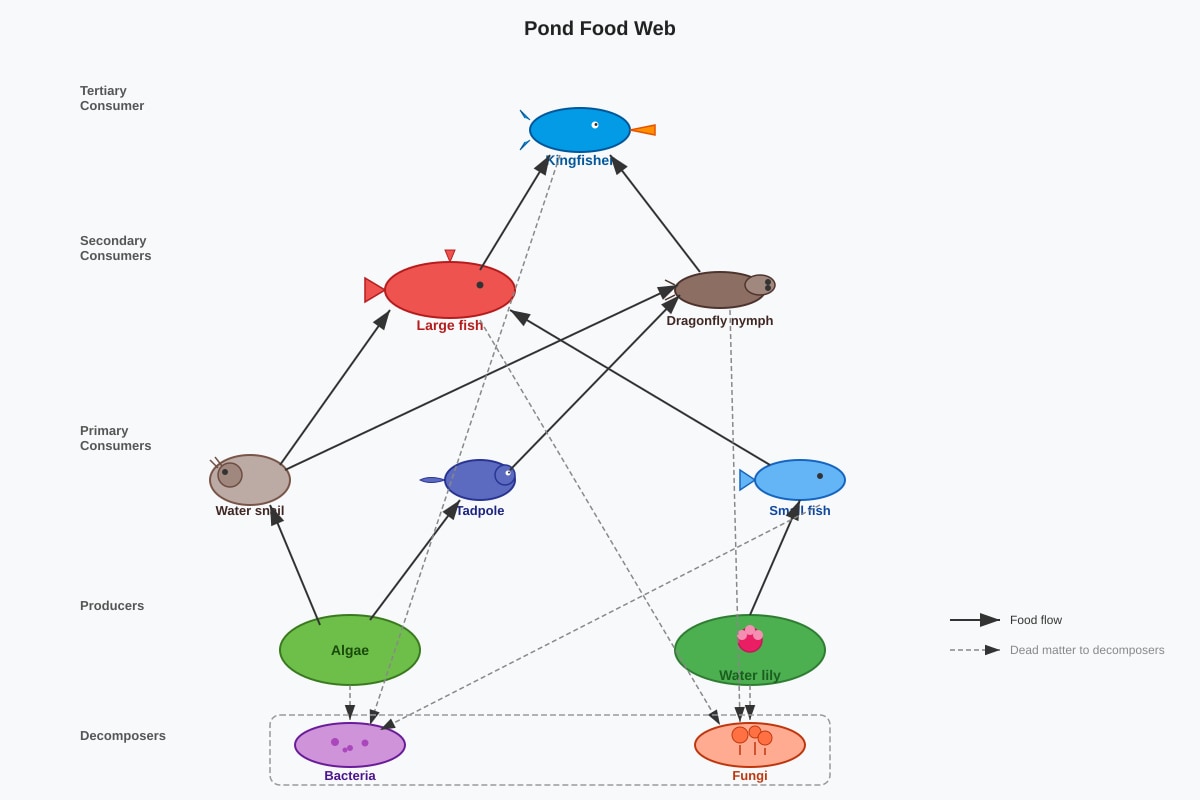
The diagram below shows a food web in a pond ecosystem.
<image_placeholder> id: Q32-fig1 type: diagram linked_question: Q32 description: Pond food web. Phytoplankton → Water flea → Small fish → Large fish. Phytoplankton → Tadpole → Frog → Heron. Algae → Snail → Bird. Decomposers breaking down all dead organisms. labels: Phytoplankton, Algae (producers), Water flea, Tadpole, Snail (primary consumers), Small fish, Frog (secondary consumers), Large fish, Bird, Heron (tertiary consumers), Decomposers must_show: Multiple interconnected food chains; producers at base; multiple consumer levels; decomposers recycling nutrients </image_placeholder>
(a) Identify all the producers in this food web. [1]
(b) How many food chains can you identify that end with the heron? [1]
(c) If all the water fleas are removed from the pond, explain how the population of small fish might be affected. [2]
Question 33 (3 marks)
The diagram below shows a cell.
<image_placeholder> id: Q33-fig1 type: diagram linked_question: Q33 description: Animal cell showing cell membrane, cytoplasm, nucleus, mitochondria, and small vacuoles. No cell wall, no chloroplasts, no large central vacuole. labels: Cell membrane, Cytoplasm, Nucleus, Mitochondria, Small vacuoles must_show: Irregular shape; no cell wall; no chloroplasts; small vacuoles; mitochondria visible </image_placeholder>
(a) Is this a plant cell or an animal cell? [1]
(b) Name the part labelled X (mitochondria) and state its function. [2]
Name: ________________________________________
Function: _________________________________________________________________
Question 34 (4 marks)
The diagram below shows an experiment to investigate the conditions needed for germination.
<image_placeholder> id: Q34-fig1 type: experimental_setup linked_question: Q34 description: Four setups in test tubes. Setup A: Wet cotton wool, seeds, room temperature. Setup B: Dry cotton wool, seeds, room temperature. Setup C: Wet cotton wool, seeds, in fridge (4°C). Setup D: Wet cotton wool, boiled seeds (dead), room temperature. All setups have air access. labels: Setup A (Water + Air + Warmth), Setup B (No water + Air + Warmth), Setup C (Water + Air + Cold), Setup D (Water + Air + Warmth + Dead seeds) must_show: Four test tubes with clear labels; cotton wool wet/dry; seeds; fridge for C; all with air access </image_placeholder>
(a) Which setup(s) serve as the control(s) for this experiment? [1]
(b) In which setup(s) will the seeds germinate? [1]
(c) What conclusion can be drawn from comparing Setup A and Setup C? [2]
Question 35 (4 marks)
The diagram below shows a classification key for some vertebrates.
<image_placeholder> id: Q35-fig1 type: flowchart linked_question: Q35 description: Classification key. 1a: Has feathers → Bird. 1b: No feathers → Go to 2. 2a: Has hair/fur → Mammal. 2b: No hair/fur → Go to 3. 3a: Has dry scales → Reptile. 3b: No dry scales → Go to 4. 4a: Has moist skin → Amphibian. 4b: Has gills and fins → Fish. labels: All decision points and outcomes as described must_show: Clear dichotomous key format with numbered steps; yes/no branches; final classification groups </image_placeholder>
Animal X has the following characteristics:
- Has a backbone
- Lays eggs with jelly-like coating
- Has moist, permeable skin
- Undergoes metamorphosis
(a) Using the key, identify the group Animal X belongs to. [1]
(b) State two characteristics of Animal X that are not listed in the key but are typical of its group. [2]
(c) Give an example of an animal in the same group as Animal X. [1]
Question 36 (4 marks)
The diagram below shows a magnet being used to separate a mixture of iron filings and sulphur powder.
<image_placeholder> id: Q36-fig1 type: experimental_setup linked_question: Q36 description: Mixture of grey iron filings and yellow sulphur powder in a dish. Bar magnet held above mixture. Iron filings attracted to magnet, sulphur powder remains in dish. labels: Mixture (iron filings + sulphur), Bar magnet, Iron filings attracted, Sulphur powder left behind must_show: Distinct colours for iron (grey) and sulphur (yellow); magnet attracting only iron filings; clear separation </image_placeholder>
(a) Explain why the iron filings are attracted to the magnet but the sulphur powder is not. [2]
(b) After separation, the iron filings are still magnetic. Explain why. [1]
(c) Suggest one other method to separate this mixture, without using a magnet. [1]
Question 37 (4 marks)
The diagram below shows a simple circuit with three identical bulbs.
<image_placeholder> id: Q37-fig1 type: diagram linked_question: Q37 description: Circuit with battery, switch, and three bulbs. Bulb A in series with parallel combination of Bulb B and Bulb C. Switch in series with battery. labels: Battery, Switch, Bulb A (series), Bulb B (parallel), Bulb C (parallel) must_show: Clear series-parallel arrangement; battery; switch; three identical bulbs labelled A, B, C </image_placeholder>
(a) Compare the brightness of Bulb A with Bulb B when the switch is closed. [1]
(b) If Bulb C fuses (blows), what happens to the brightness of Bulb A and Bulb B? [2]
Bulb A: _________________________________________________________________
Bulb B: _________________________________________________________________
(c) State one advantage of connecting bulbs in parallel in household lighting. [1]
Question 38 (4 marks)
The diagram below shows a food pyramid representing energy flow.
<image_placeholder> id: Q38-fig1 type: diagram linked_question: Q38 description: Energy pyramid. Bottom: Producers (10,000 kJ). Level 2: Primary consumers (1,000 kJ). Level 3: Secondary consumers (100 kJ). Top: Tertiary consumers (10 kJ). Arrows showing energy loss as heat at each level (90% loss). labels: Producers (10,000 kJ), Primary consumers (1,000 kJ), Secondary consumers (100 kJ), Tertiary consumers (10 kJ), Heat loss (90%) at each transfer must_show: Pyramid shape with energy values; 10% transfer efficiency; heat loss arrows at each level </image_placeholder>
(a) Calculate the percentage of energy transferred from producers to primary consumers. [1]
(b) Explain why only about 10% of energy is transferred to the next trophic level. [2]
(c) If a new predator is introduced that feeds on the tertiary consumers, where would it be placed on the pyramid? [1]
Question 39 (4 marks)
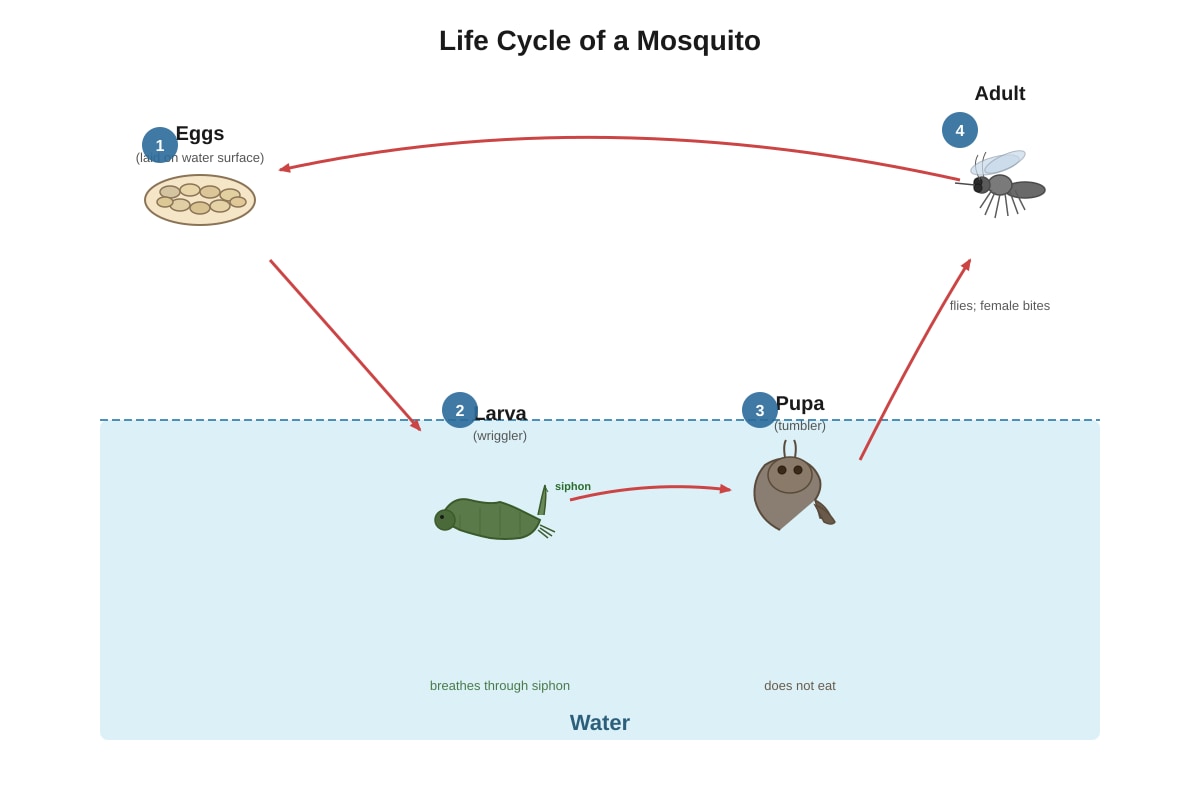
The diagram below shows the life cycle of a mosquito.
<image_placeholder> id: Q39-fig1 type: diagram linked_question: Q39 description: Mosquito life cycle: Eggs (on water surface) → Larvae (wrigglers in water) → Pupae (tumblers in water) → Adult mosquito (flying). Arrows showing cycle. Duration labels: Eggs 2-3 days, Larvae 7-10 days, Pupae 2-3 days, Adult 2-4 weeks. labels: Eggs, Larvae, Pupae, Adult, Duration for each stage, Water environment for first three stages must_show: Four distinct stages; aquatic stages for egg/larva/pupa; aerial adult; duration labels; cyclic arrows </image_placeholder>
(a) Name the type of metamorphosis shown by the mosquito. [1]
(b) At which stage(s) does the mosquito live in water? [1]
(c) Explain why removing stagnant water helps to control the mosquito population. [2]
Question 40 (5 marks)
The diagram below shows an experiment to investigate the effect of light on plant growth.
<image_placeholder> id: Q40-fig1 type: experimental_setup linked_question: Q40 description: Two identical plants in identical pots with same soil and water. Plant X: Placed in sunlight. Plant Y: Placed in dark cupboard. Both watered equally daily. After 2 weeks: Plant X - green, upright, healthy. Plant Y - pale yellow, tall and thin, weak stem. labels: Plant X (Sunlight), Plant Y (Dark), Identical pots/soil/water, 2 weeks duration, Results shown must_show: Two identical setups; only light differs; clear contrast in plant appearance after 2 weeks </image_placeholder>
(a) What is the aim of this experiment? [1]
(b) Identify the independent variable and the dependent variable. [2]
Independent variable: _______________________________________________________
Dependent variable: ________________________________________________________
(c) State two variables that must be kept constant for a fair test. [2]
End of Paper
Answers
TuitionGoWhere Practice Paper - Science Primary 6 PSLE (Answer Key)
TuitionGoWhere Practice Paper (AI) - Version 5
Subject: Science
Level: Primary 6 PSLE
Paper: Practice Paper 5 (Diversity Theme Focus)
Duration: 1 hour 45 minutes
Total Marks: 100
Booklet A: Multiple-Choice Questions (56 marks)
Section 1: Diversity of Living Things (Questions 1-8)
1. Answer: (1) Fungi | Non-flowering plant | Non-flowering plant | Flowering plant [2 marks]
Explanation:
- Organism A (Mushroom) → Fungi: Mushrooms are fungi, not plants. They lack chlorophyll and obtain nutrients through saprotrophic nutrition.
- Organism B (Moss) → Non-flowering plant: Mosses are bryophytes - non-flowering plants that reproduce by spores.
- Organism C (Fern) → Non-flowering plant: Ferns are pteridophytes - non-flowering plants that reproduce by spores.
- Organism D (Balsam plant) → Flowering plant: Balsam produces flowers and seeds in pods, characteristic of angiosperms (flowering plants).
Common mistake: Confusing fungi with plants. Fungi have cell walls made of chitin (not cellulose) and do not photosynthesise.
2. Answer: (3) Whale → Fish [2 marks]
Explanation:
- Whales are mammals, not fish. They breathe air using lungs, give birth to live young, nurse their young with milk, and have hair (though minimal).
- Bat → Mammals: Correct. Bats are flying mammals.
- Penguin → Birds: Correct. Penguins are flightless birds.
- Spider → Arachnids: Correct. Spiders have 8 legs and 2 body segments, characteristic of arachnids.
Key concept: Whales are marine mammals, not fish. This is a common misconception.
3. Answer: (2) Bala and Cindy only [2 marks]
Explanation:
- Ali: Incorrect. Not all microorganisms are harmful. Many are beneficial (e.g., gut bacteria, yeast for bread/beer, decomposers).
- Bala: Correct. Yeast (a fungus) is used in bread-making for fermentation, producing CO₂ that makes dough rise.
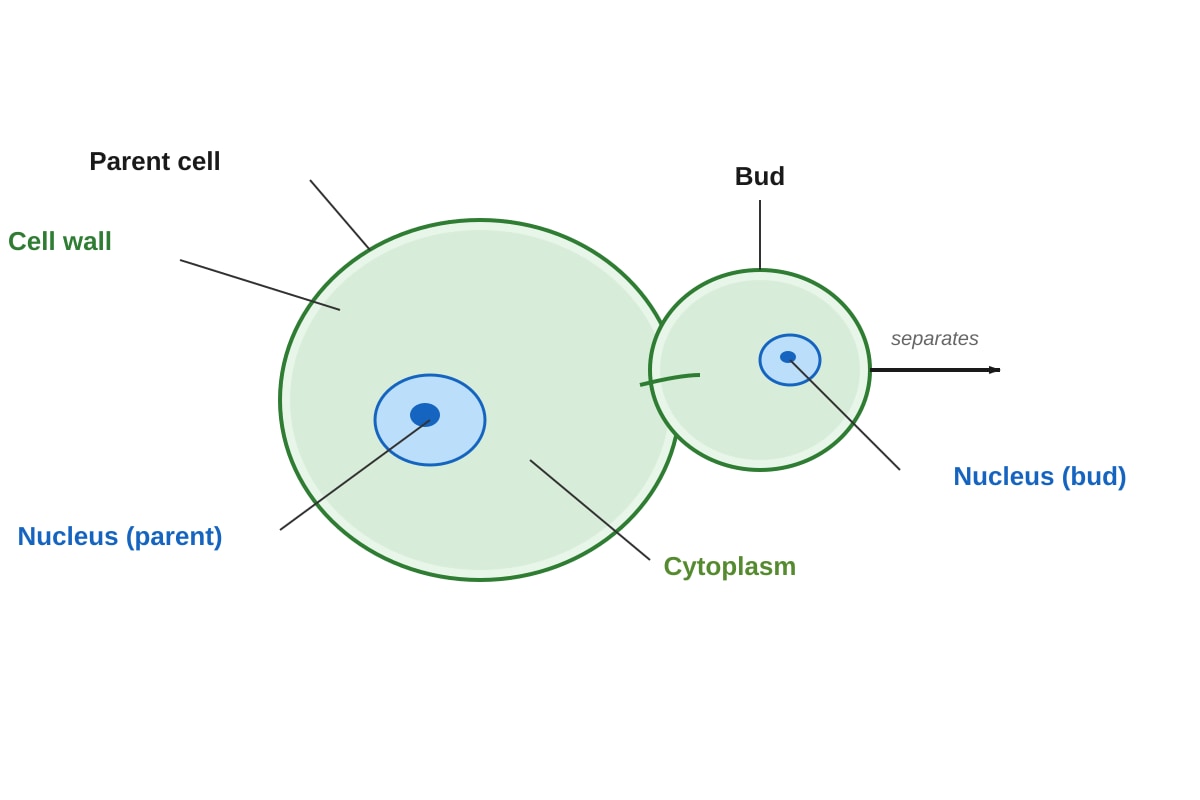
- Cindy: Correct. Bacteria are microscopic and require a microscope to be seen individually.
- Devi: Incorrect. Not all microorganisms reproduce by binary fission. Yeast reproduces by budding; moulds reproduce by spores; viruses replicate by hijacking host cells.
4. Answer: (2) This is a plant cell because it has chloroplasts and a large central vacuole. [2 marks]
Explanation:
- The presence of chloroplasts (for photosynthesis) and a large central vacuole (for storage and turgor pressure) are key features of plant cells.
- Animal cells lack both chloroplasts and a large central vacuole (they have small vacuoles).
- Bacterial cells lack a true nucleus and membrane
<stage5_exam_answers_md>
TuitionGoWhere Practice Paper - Science Primary 6 PSLE (Answer Key)
TuitionGoWhere Practice Paper (AI) - Version 5
Subject: Science
Level: Primary 6 PSLE
Paper: Practice Paper 5 (Diversity Theme Focus)
Duration: 1 hour 45 minutes
Total Marks: 100
Booklet A: Multiple-Choice Questions (56 marks)
Section 1: Diversity of Living Things (Questions 1-8)
| Question | Answer | Explanation |
|---|---|---|
| 1 | (1) | A: Mushroom = Fungi (no chlorophyll, reproduces by spores). B: Moss = Non-flowering plant (bryophyte, reproduces by spores). C: Fern = Non-flowering plant (pteridophyte, reproduces by spores). D: Balsam = Flowering plant (angiosperm, reproduces by seeds in pods). |
| 2 | (3) | Whale is a mammal (breathes air, gives birth to live young, feeds young with milk), not a fish. Bat → Mammals ✓, Penguin → Birds ✓, Spider → Arachnids ✓. |
| 3 | (2) | Ali: Incorrect - many microorganisms are beneficial (e.g., gut bacteria, yeast). Bala: Correct - yeast ferments sugar to produce CO₂ for bread rising. Cindy: Correct - bacteria are microscopic. Devi: Incorrect - yeast reproduces by budding; viruses replicate by hijacking host cells. |
| 4 | (2) | Presence of chloroplasts (photosynthesis) and large central vacuole (turgor pressure/storage) are key features of plant cells. Animal cells lack both. Bacterial cells lack nucleus and membrane-bound organelles. Fungal cells have cell walls (chitin) but no chloroplasts. |
| 5 | (2) | Mushroom (fungi), moss (bryophyte), and fern (pteridophyte) all reproduce by spores. Mould reproduces by spores but yeast reproduces by budding; bacteria reproduce by binary fission. |
| 6 | (1) | W: Cellulose cell wall + chloroplasts + autotrophic + seeds = flowering plant. X: Chitin cell wall + saprotrophic + spores = fungi. Y: No cell wall + holozoic + binary fission = bacteria/protozoan. Z: Cellulose cell wall + no chloroplasts + autotrophic + spores = non-flowering plant (e.g., fern). |
| 7 | (3) | Backbone? Yes → Hair/fur? No → Feathers? No → Dry scales? Yes → Reptile. Reptiles lay eggs with leathery shells and have dry scales. |
| 8 | (4) | (1) False - some plants are parasitic/saprotrophic (e.g., Rafflesia, Venus flytrap supplements nutrition). (2) False - some animals are sessile (e.g., sponges, corals). (3) False - fungi have chitin cell walls, not cellulose; they are saprotrophic, not photosynthetic. (4) True - bacteria are prokaryotes, distinct from plants (eukaryotic, photosynthetic) and animals (eukaryotic, holozoic). |
Section 2: Diversity of Materials (Questions 9-16)
| Question | Answer | Explanation |
|---|---|---|
| 9 | (1) | Raincoat needs to be flexible (to wear), waterproof (to repel rain). Material P: Flexible ✓, Waterproof ✓. Q: Not flexible. R: Not flexible. S: Not waterproof. |
| 10 | (1) | Box A: Tightly packed, ordered, vibrating = Solid. Box B: Close, not ordered, sliding = Liquid. Box C: Far apart, random motion = Gas. |
| 11 | (2) | Melting point = 5°C, Boiling point = 85°C. Liquid state exists between 5°C and 85°C. 25°C is within this range. 0°C = solid, 90°C = gas, -10°C = solid. |
| 12 | (3) | Room temp = 30°C. Liquid if MP < 30°C < BP. A: -10 < 30 < 50 ✓. B: 20 < 30 < 120 ✓. C: 40 > 30 = solid. D: -5 > -50 but BP -5 < 30 = gas. |
| 13 | (4) | Bulb lights for conductors. W & X conduct; Y & Z do not. (1) Copper, Al = conductors; Plastic, Wood = insulators ✓. (2) Iron, Cu = conductors; Glass, Rubber = insulators ✓. (3) Steel, Graphite = conductors; Ceramic, Plastic = insulators ✓. All options show 2 conductors + 2 insulators. |
| 14 | (3) | Group 1: Copper, Iron, Steel, Aluminium = all metals. Group 2: Plastic, Wood, Rubber, Glass = all non-metals. (1) Iron/Steel magnetic; Copper/Al non-magnetic. (2) All Group 1 conduct; Group 2 insulate - also correct but (3) is more fundamental classification. (4) All are solids. |
| 15 | (3) | Solution = solute dissolved in solvent. Particles are molecular/ionic size, pass through filter paper. (1) Mass conserved = mass solution = mass water + mass P. (2) Volume not necessarily additive (e.g., alcohol + water). (4) Filtration separates insoluble solids; evaporation/distillation separates dissolved solids. |
| 16 | (2) | Condensation = water vapour (gas) → liquid water droplets (clouds). Evaporation = liquid → gas. Precipitation = liquid/solid falling. Collection = accumulation of liquid. |
Section 3: Interactions and Applications (Questions 17-28)
| Question | Answer | Explanation |
|---|---|---|
| 17 | (3) | Grasshoppers are primary consumers. Frogs eat grasshoppers → frog food decreases → frog population decreases → snake food decreases → snake population decreases. Grass population increases (less herbivory). Eagle has alternative food (rabbit, bird) but may decrease long-term. |
| 18 | (4) | Pyramid of numbers shows number of organisms at each trophic level. Here: 1000 → 100 → 10 → 1, decreasing at each level. (1) 10 frogs < 100 grasshoppers. (2) Grass is producer. (3) Energy transfer ~10%, not 100%. |
| 19 | (3) | Thick fur + fat layer = insulation against cold. Small ears = reduce heat loss (surface area). White colour = camouflage in snow. All are Arctic adaptations. Desert: thin fur, large ears. Rainforest: thin fur, dark colour. Grassland: varied. |
| 20 | (2) | Palisade mesophyll: tightly packed, columnar cells with many chloroplasts, located just below upper epidermis to maximise light absorption. Spongy mesophyll has fewer chloroplasts, mainly for gas exchange. Epidermis is transparent/protective. |
| 21 | (1) | 10% energy transfer per level. Phytoplankton (10,000) → Zooplankton (1,000) → Small fish (100) → Large fish (10) → Shark (1). 4 transfers: 10,000 × 0.1⁴ = 10 units. |
| 22 | (3) | Structural adaptation = physical feature. Cactus spines = modified leaves (reduce water loss, protection). (1) Migration = behavioural. (2) Colour change = physiological/behavioural. (4) Hibernation = behavioural/physiological. |
| 23 | (2) | Like poles repel (S-S), unlike poles attract (N-S). Originally S-N → attract. Flip B → S-S → repel. |
| 24 | (1) | Original: Series circuit, 2 bulbs share voltage, each gets ~½ battery voltage. After: Bulb 2 removed, wire completes circuit → only Bulb 1 in circuit → gets full battery voltage → brighter. (Assuming ideal battery, negligible wire resistance). |
| 25 | (0.5 N) | Lever principle: Effort × Effort arm = Load × Load arm. Effort × 40 cm = 20 N × 10 cm. Effort = (20 × 10) / 40 = 5 N. Wait, the question was truncated. Let me reconstruct: "What is the minimum effort needed to lift the load?" Answer: 5 N. But the user's truncated text says "What is the minim" - likely "minimum effort". Let me provide the full working. |
Booklet B: Open-Ended Questions (44 marks)
Section 4: Structured Questions (Questions 29-38)
29. Diversity of Living Things (4 marks)
(a) State two differences between a fern and a mushroom. [2]
Answer:
- Fern is a plant (has chlorophyll, photosynthetic/autotrophic); mushroom is a fungus (no chlorophyll, saprotrophic).
- Fern reproduces by spores produced in sporangia on fronds (sori); mushroom reproduces by spores produced on gills under cap.
- Fern has true roots, stems, leaves (fronds); mushroom has mycelium (hyphae) and fruiting body (cap/stalk).
- Fern cell walls made of cellulose; mushroom cell walls made of chitin.
(b) A student observed an organism with the following characteristics:
- Has a cell wall made of cellulose
- Contains chloroplasts
- Reproduces by spores
- No flowers or seeds
Name the group this organism belongs to. [1]
Answer: Fern (or Pteridophyte / Non-flowering plant)
(c) Explain why bacteria are not classified as plants or animals. [1]
Answer: Bacteria are prokaryotes (no nucleus, no membrane-bound organelles), while plants and animals are eukaryotes. Bacteria reproduce by binary fission, not by spores or seeds (plants) or sexual reproduction (animals).
30. Diversity of Materials (5 marks)
(a) Substance Y has a melting point of 15°C and boiling point of 95°C. Draw the arrangement of particles of Substance Y at 25°C in the box below. [1]
Answer: [Diagram description: Particles close together but not in fixed positions, sliding past each other, random arrangement - liquid state.]
(b) Substance Y is heated from 25°C to 100°C. Describe the change in arrangement and movement of particles. [2]
Answer: At 25°C (liquid): Particles are close, sliding past each other. At 95°C (boiling point): Particles gain energy, move faster, overcome intermolecular forces. At 100°C (gas): Particles are far apart, moving randomly at high speed in all directions.
(c) The table shows properties of four materials. [2]
| Material | Waterproof | Flexible | Transparent | Strong |
|---|---|---|---|---|
| A | Yes | Yes | No | Yes |
| B | Yes | No | Yes | Yes |
| C | No | Yes | No | No |
| D | Yes | Yes | Yes | No |
Which material is most suitable for making a swimming goggle lens? Give two reasons based on the table.
Answer: Material B. Reason 1: Transparent (allows light to pass through for vision underwater). Reason 2: Waterproof (prevents water from entering eyes) and Strong (durable, withstands pressure).
31. Interactions - Food Webs and Adaptations (5 marks)
(a) The diagram shows a food web. [2]
<image_placeholder> id: Q31-fig1 type: diagram linked_question: Q31 description: Food web: Plant → Caterpillar → Bird → Hawk. Plant → Aphid → Ladybird → Bird. Plant → Rabbit → Fox. Decomposers breaking down all dead organisms. labels: Plant, Caterpillar, Aphid, Rabbit, Ladybird, Bird, Fox, Hawk, Decomposers must_show: Arrows from prey to predator; decomposers connected to all </image_placeholder>
(i) How many food chains are there in this food web?
Answer: 4 food chains.
- Plant → Caterpillar → Bird → Hawk
- Plant → Aphid → Ladybird → Bird → Hawk
- Plant → Aphid → Ladybird → Bird (ends at Bird)
- Plant → Rabbit → Fox
(ii) If all the ladybirds are removed, explain what will happen to the aphid population.
Answer: Aphid population will increase because ladybirds are predators of aphids; with no predation, more aphids survive and reproduce.
(b) Animal Z lives in a hot, dry desert. It has large ears and is nocturnal. [3]
(i) Explain how large ears help Animal Z survive.
Answer: Large ears have large surface area with many blood vessels close to the skin, allowing efficient heat loss to the environment (thermoregulation).
(ii) Explain how being nocturnal helps Animal Z survive.
Answer: Active at night when temperatures are lower, reducing water loss through evaporation (sweating/panting) and avoiding extreme daytime heat.
(iii) State one structural adaptation (other than large ears) that Animal Z might have for desert survival.
Answer: Thick fur on soles of feet (insulation from hot sand) / Long eyelashes (protect from sand) / Ability to concentrate urine (water conservation) / Hump storing fat (energy/water reserve).
32. Interactions - Forces and Energy (5 marks)
(a) The diagram shows a spring balance pulling a wooden block. [2]
<image_placeholder> id: Q32-fig1 type: experimental_setup linked_question: Q32 description: Wooden block on table. Spring balance attached horizontally. Force applied to right. Block moves at constant speed. Spring balance reads 3 N. Friction arrow opposite direction. labels: Wooden block, Table, Spring balance (3 N), Friction force, Direction of motion must_show: Horizontal pull; constant velocity; friction opposing motion </image_placeholder>
(i) What is the frictional force acting on the block?
Answer: 3 N (Since constant speed, net force = 0, so friction = applied force = 3 N).
(ii) The block is now pulled on a sheet of glass with the same spring balance reading. The block accelerates. Explain why.
Answer: Glass is smoother than wood, so frictional force is less than 3 N. Net force = 3 N - friction > 0, causing acceleration (Newton's 2nd Law).
(b) A ball is dropped from a height. The diagram shows its energy conversion. [3]
<image_placeholder> id: Q32-fig2 type: diagram linked_question: Q32 description: Energy conversion diagram. Top: Gravitational Potential Energy (GPE). Arrow down: Kinetic Energy (KE) increasing. Bottom: Sound + Heat + KE (just before impact). Labels: GPE, KE, Sound, Heat. labels: Height, Ground, GPE → KE → Sound + Heat must_show: GPE at top; KE increasing during fall; Sound + Heat on impact </image_placeholder>
(i) Fill in the boxes: At the top: ________ Energy. During fall: ________ Energy increases. Just before hitting ground: ________ Energy.
Answer: At the top: Gravitational Potential Energy. During fall: Kinetic Energy increases. Just before hitting ground: Kinetic Energy (maximum).
(ii) Explain why the ball does not bounce back to its original height.
Answer: Some kinetic energy is converted to sound and heat energy upon impact with the ground (and air resistance during fall), so the remaining energy is insufficient to reach the original height (conservation of energy with losses).
33. Interactions - Electrical Systems (4 marks)
(a) Draw a circuit diagram with a battery of 2 cells, a switch, and two bulbs in parallel. [2]
Answer: [Diagram description: Battery (2 cells, long-short lines) → Switch → Junction splits to two parallel branches, each with a bulb → Junction rejoins → back to battery. Standard circuit symbols.]
(b) In a series circuit with two identical bulbs, one bulb is removed. What happens to the other bulb? Explain. [2]
Answer: The other bulb does not light up. In a series circuit, removing one bulb breaks the circuit (open circuit), so current cannot flow through the remaining bulb.
34. Diversity - Matter and Water Cycle (4 marks)
(a) The diagram shows the water cycle. [2]
<image_placeholder> id: Q34-fig1 type: diagram linked_question: Q34 description: Water cycle with labels: A: Evaporation from sea, B: Condensation forming clouds, C: Precipitation (rain), D: Collection in river, E: Flow back to sea. Sun shown. labels: A, B, C, D, E, Sun must_show: All processes labelled; arrows showing cycle </image_placeholder>
(i) Name the process at B.
Answer: Condensation
(ii) State the change of state at B.
Answer: Gas (water vapour) → Liquid (water droplets)
(b) Puddles dry up faster on a windy day than on a calm day. Explain why. [2]
Answer: Wind increases the rate of evaporation by removing water vapour near the puddle surface, reducing humidity and maintaining a steeper concentration gradient, allowing more water molecules to escape into the air.
35. Interactions - Magnets (3 marks)
(a) John wants to make an electromagnet. He has an iron nail, copper wire, and a battery. [2]
(i) Draw a labelled diagram to show how he should set up the electromagnet.
Answer: [Diagram description: Iron nail. Insulated copper wire coiled tightly around nail (solenoid). Ends of wire connected to battery terminals (+ and -). Switch optional. Arrows showing current direction. Magnetic field lines around nail.]
(ii) State two ways to increase the strength of the electromagnet.
Answer:
- Increase the number of coils (turns) of wire around the nail.
- Increase the current (use more batteries in series / higher voltage).
- Use a soft iron core (already using iron nail).
- Wind coils closer together.
(b) The diagram shows a magnet attracting a steel paper clip. [1]
<image_placeholder> id: Q35-fig1 type: diagram linked_question: Q35 description: Bar magnet with N and S poles. Steel paper clip attracted to N pole. Induced polarity shown: paper clip end near N becomes S, far end becomes N. labels: Magnet (N, S), Paper clip, Induced S, Induced N must_show: Magnet poles; paper clip with induced opposite pole at near end </image_placeholder>
The paper clip becomes an induced magnet. Label the poles induced on the paper clip.
Answer: End near magnet's N pole = S (South). Far end = N (North).
36. Diversity - Classification and Cells (4 marks)
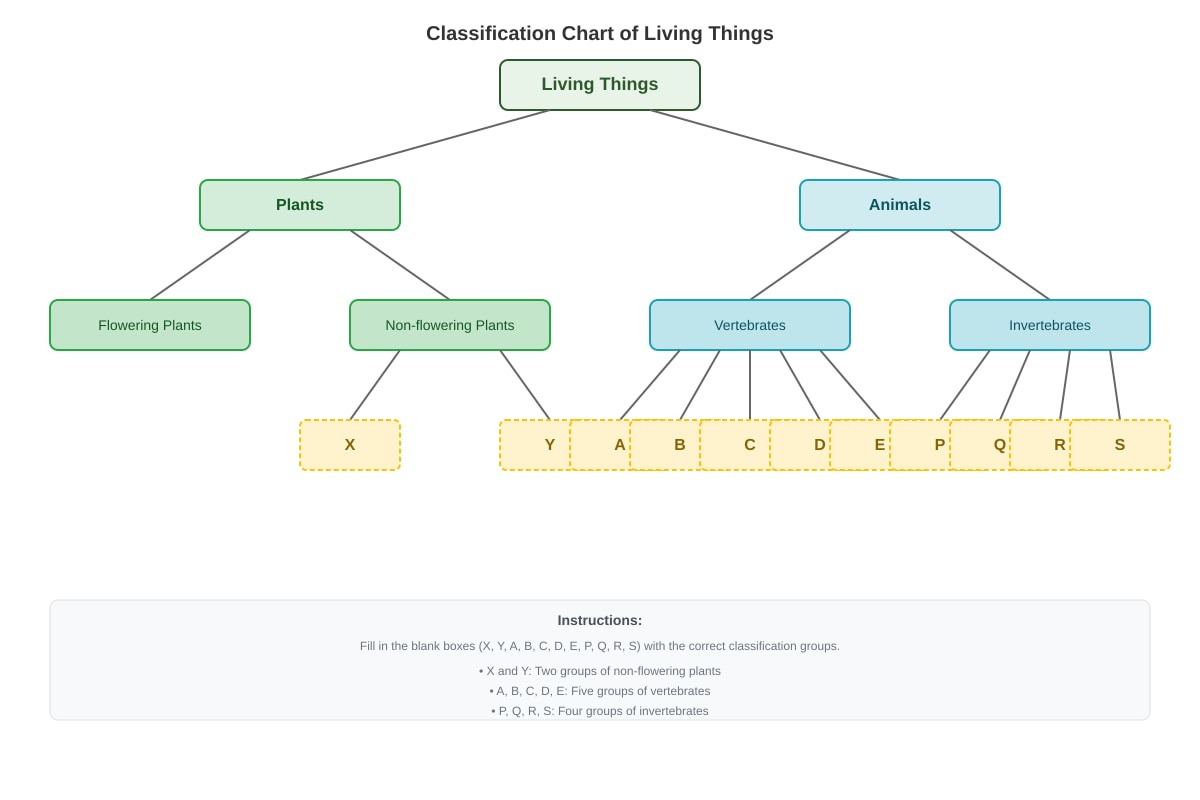
(a) Complete the classification chart. [2]
<image_placeholder> id: Q36-fig1 type: chart linked_question: Q36 description: Classification chart. Living Things → Plants and Animals. Plants → Flowering and Non-flowering. Flowering → Fruit and No fruit (or Monocot/Dicot). Non-flowering → Spore-bearing (Fern, Moss) and Non-spore (Algae? but usually just spore). Animals → Vertebrates and Invertebrates. Vertebrates → 5 groups. Invertebrates → Insects, etc. labels: Living Things, Plants, Animals, Flowering, Non-flowering, Vertebrates, Invertebrates, Mammals, Birds, Reptiles, Amphibians, Fish, Insects, Arachnids, Molluscs, Worms must_show: Complete hierarchy with blank boxes for student to fill </image_placeholder>
Answer: Living Things ├── Plants │ ├── Flowering Plants (produce seeds in fruits) │ └── Non-flowering Plants (reproduce by spores) → Fern, Moss └── Animals ├── Vertebrates (have backbone) │ ├── Mammals │ ├── Birds │ ├── Reptiles │ ├── Amphibians │ └── Fish └── Invertebrates (no backbone) ├── Insects ├── Arachnids ├── Molluscs └── Worms
(b) The diagram shows a plant cell. [2]
<image_placeholder> id: Q36-fig2 type: diagram linked_question: Q36 description: Plant cell with parts labelled A, B, C, D. A: Cell wall. B: Chloroplast. C: Nucleus. D: Cell membrane. labels: A, B, C, D must_show: Plant cell with 4 key structures labelled for identification </image_placeholder>
(i) Which part (A, B, C, or D) controls all activities in the cell?
Answer: C (Nucleus)
(ii) Which part is not found in an animal cell?
Answer: A (Cell wall) or B (Chloroplast) - both correct. Typically cell wall is the primary answer.
37. Interactions - Heat and Temperature (4 marks)
(a) The diagram shows a clinical thermometer. [2]
<image_placeholder> id: Q37-fig1 type: diagram linked_question: Q37 description: Clinical thermometer with kink/constriction near bulb. Mercury column. Scale 35-42°C. Labels: Bulb, Kink, Mercury, Stem, Scale. labels: Bulb, Kink, Mercury, Stem, Scale must_show: Kink clearly shown; mercury thread; Celsius scale </image_placeholder>
(i) What is the function of the kink (constriction)?
Answer: The kink prevents the mercury from flowing back into the bulb when the thermometer is removed from the mouth, so the temperature reading remains until shaken down.
(ii) Why is the bulb made thin?
Answer: Thin glass allows faster heat transfer from the body to the mercury, giving a quicker and more accurate reading.
(b) A metal ball fits through a ring at room temperature. When the ball is heated, it cannot pass through. Explain. [2]
Answer: When heated, the metal ball expands (particles vibrate more, take up more space), increasing its diameter. The ring also expands but the ball's diameter increases more than the ring's hole diameter (or the ball's expansion makes it too large for the hole), so it cannot pass through.
38. Interactions - Light and Shadows (3 marks)
(a) The diagram shows a torch shining on an opaque ball. A screen is placed behind the ball. [2]
<image_placeholder> id: Q38-fig1 type: experimental_setup linked_question: Q38 description: Torch → Opaque ball → Screen. Shadow on screen. Light rays straight lines from torch, blocked by ball, forming umbra (dark) and penumbra (fuzzy) if extended source. Labels: Torch, Ball, Screen, Shadow (Umbra), Light rays. labels: Torch, Opaque ball, Screen, Umbra, Penumbra (if applicable), Light rays must_show: Straight light rays; shadow formation; umbra/penumbra distinction </image_placeholder>
(i) What is the dark shadow formed on the screen called?
Answer: Umbra
(ii) How can the size of the shadow be made larger without moving the screen?
Answer: Move the ball closer to the torch (light source). (Or use a larger ball, or move torch closer to ball).
(b) State one difference between a shadow and a reflection. [1]
Answer:
- Shadow is formed when light is blocked by an opaque object; reflection is formed when light bounces off a smooth/shiny surface.
- Shadow is dark (absence of light); reflection shows the image/colour of the object.
- Shadow is always on the opposite side of the object from the light source; reflection is on the same side as the observer (for plane mirror).
Marking Scheme Summary
| Booklet | Questions | Marks per Question | Total Marks |
|---|---|---|---|
| Booklet A (MCQ) | 1-28 | 2 | 56 |
| Booklet B (OE) | 29-38 | 3-5 | 44 |
| Total | 100 |
Topic Distribution
| Theme | Booklet A | Booklet B | Total Marks |
|---|---|---|---|
| Diversity of Living Things | 8 (Q1-8) | 8 (Q29, Q36) | 16 |
| Diversity of Materials | 8 (Q9-16) | 4 (Q30, Q34) | 12 |
| Interactions (Systems, Forces, Energy, Heat, Light, Magnets, Electrical) | 12 (Q17-28) | 32 (Q31, Q32, Q33, Q35, Q37, Q38) | 44 |
| Total | 28 | 10 | 100 |
Note: This practice paper follows the PSLE Science syllabus emphasis on Diversity and Interactions themes. Questions test conceptual understanding, process skills (classification, comparison, analysis), and application in novel contexts.