AI Generated Exam Paper
Primary 6 PSLE Science Practice Paper 3
Free P6 PSLE Science Practice Paper 3, HY3 AI version, with questions, answers, and PSLE-focused practice for Singapore students.
These static practice materials are generated from the site's syllabus and paper-generation workflow, with source and model context shown so students and parents can evaluate the material before use.
Questions
TuitionGoWhere Practice Paper - Science Primary 6 PSLE
TuitionGoWhere Practice Paper (AI) — Version 3
Subject: Science
Level: Primary 6 PSLE
Paper: Practice Paper (Topic: Diversity)
Duration: 45 minutes
Total Marks: 40
Name: __________________________
Class: __________
Date: __________
Instructions:
- This practice paper has 20 questions on the topic of Diversity.
- Section A: 10 multiple-choice questions (1 mark each).
- Section B: 6 short-answer questions (2 marks each).
- Section C: 4 structured questions (total 8 marks).
- Answer all questions in the spaces provided.
- Marks for each question are shown in brackets [ ].
Section A (10 marks)
Answer all questions. Each question carries 1 mark.
1. Which of the following best describes biodiversity? [1]
A. The number of animals in a zoo
B. The variety of living things in a habitat
C. The size of the largest tree in a forest
D. The amount of water in a pond
2. A student groups organisms as follows: Group 1 — rose, fern, mango tree; Group 2 — dog, frog, eagle. What is the basis of classification? [1]
A. Group 1 can fly, Group 2 cannot
B. Group 1 are plants, Group 2 are animals
C. Group 1 live in water, Group 2 live on land
D. Group 1 are consumers, Group 2 are producers
3. Which of these is a structural adaptation of a cactus? [1]
A. Bright flowers that open at night
B. Thick stem to store water
C. Long legs to run fast
D. Sharp teeth to eat meat
4. In a freshwater pond, which organism is most likely a producer? [1]
A. Tadpole
B. Water beetle
C. Algae
D. Frog
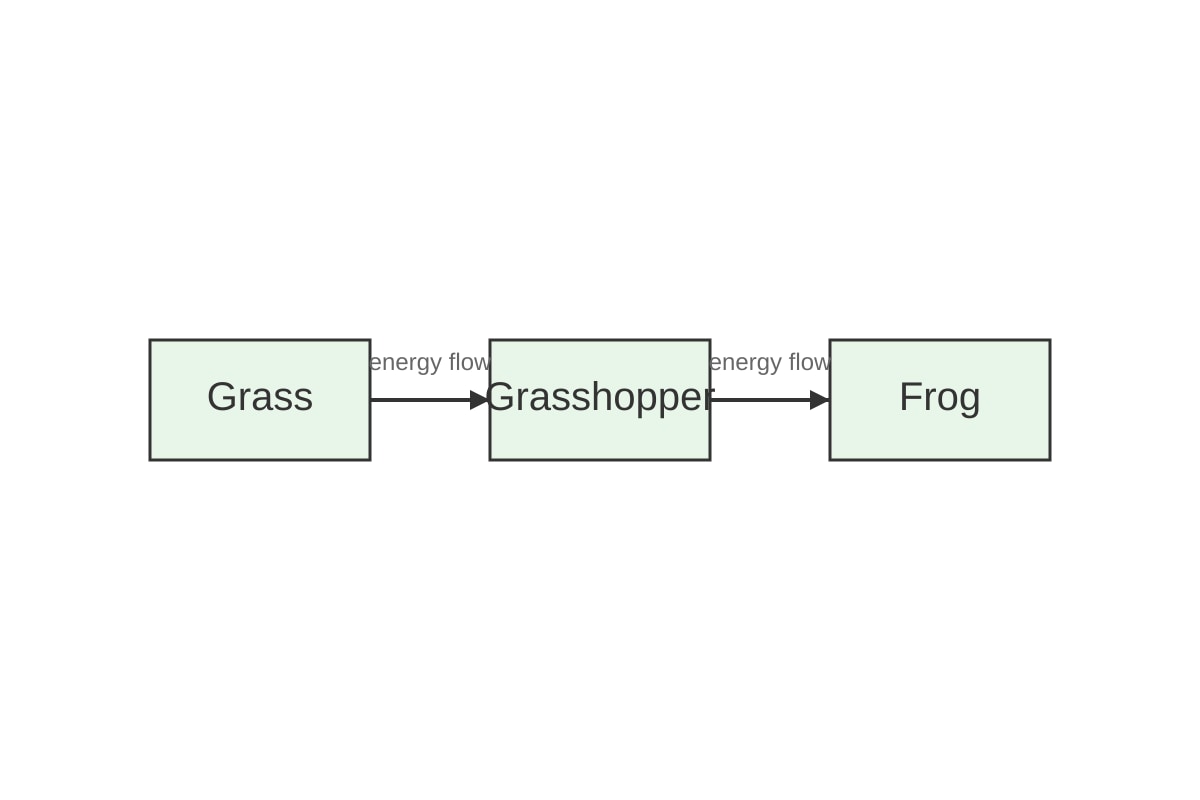
5. The diagram below shows a simple food chain.
Image pending generation: diagram for 5.
What does the arrow represent? [1]
A. Movement of the animal
B. Flow of energy
C. Equal size of organisms
D. Same habitat
6. Which habitat would most likely have the greatest diversity of living things? [1]
A. A clean pond with many plants and animals
B. A bare concrete field
C. A single type of crop farm
D. A dry empty bottle
7. A population is best described as: [1]
A. All living things in a country
B. A group of the same kind of organism living together
C. One individual animal
D. The non-living parts of a habitat
8. Which of the following is a behavioural adaptation? [1]
A. A bird having a pointed beak
B. A lizard having green skin
C. A bear hibernating in winter
D. A fish having gills
9. Decomposers are important because they: [1]
A. Make food using sunlight
B. Break down dead organisms and return nutrients
C. Hunt other animals for food
D. Produce oxygen
10. Which human activity helps to increase biodiversity? [1]
A. Cutting down all trees in a forest
B. Planting trees in a park
C. Dumping rubbish into a river
D. Using too much pesticide on crops
Section B (12 marks)
Answer all questions. Each question carries 2 marks.
11. Name two ways that organisms can be classified. [2]
12. Explain why a mangrove swamp can support a different community of organisms from a garden. [2]
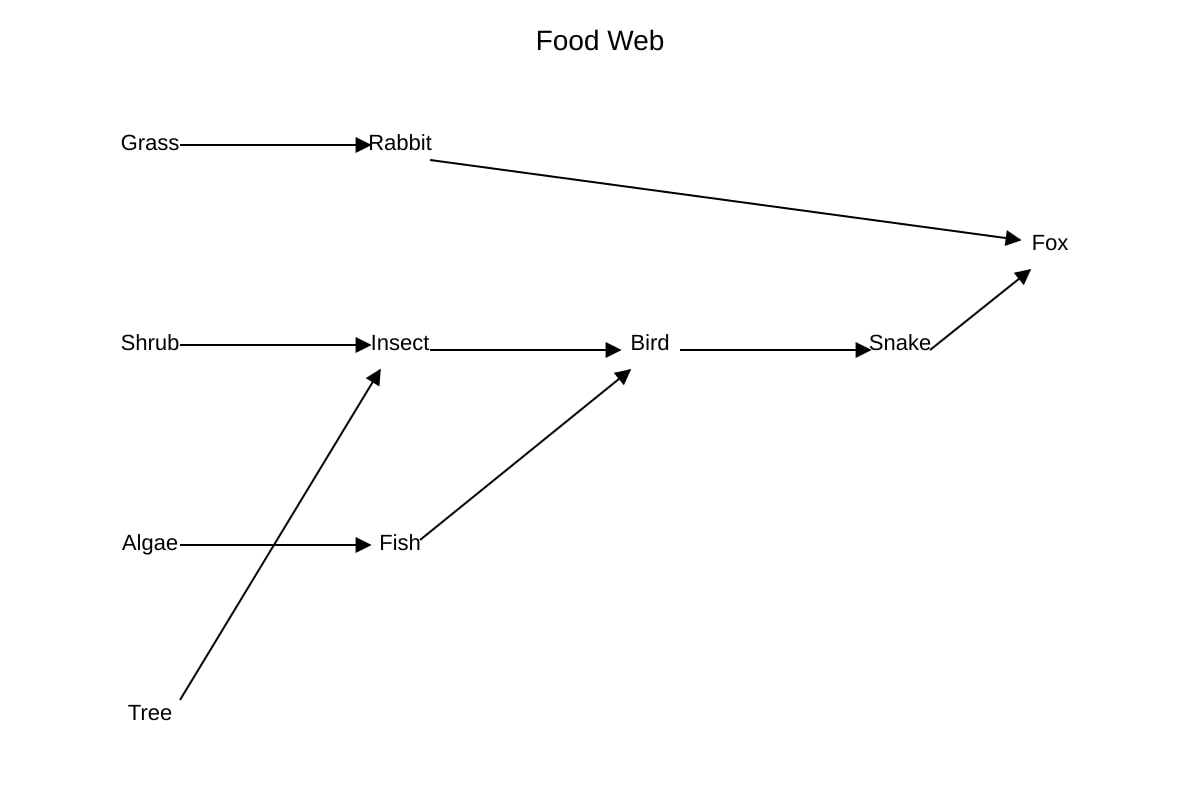
13. A food web is shown below.
Image pending generation: diagram for 13.
If the insect population drops suddenly, explain how the bird population may be affected. [2]
14. State one physical characteristic of the environment that affects where an organism can live, and give an example. [2]
15. Describe how a polar bear is adapted to its cold environment. Give one structural and one behavioural adaptation. [2]
16. Give two negative impacts of man on the environment and one positive impact. [2]
Section C (8 marks)
Answer all questions. Marks shown in brackets.
17. A student collected the following organisms from a field: grasshopper, wheat plant, sparrow, mushroom, butterfly, clover plant.
(a) Group them into producers, consumers, and decomposers. [3]
(b) Draw a possible food chain using two producers and one consumer from the list. [1]
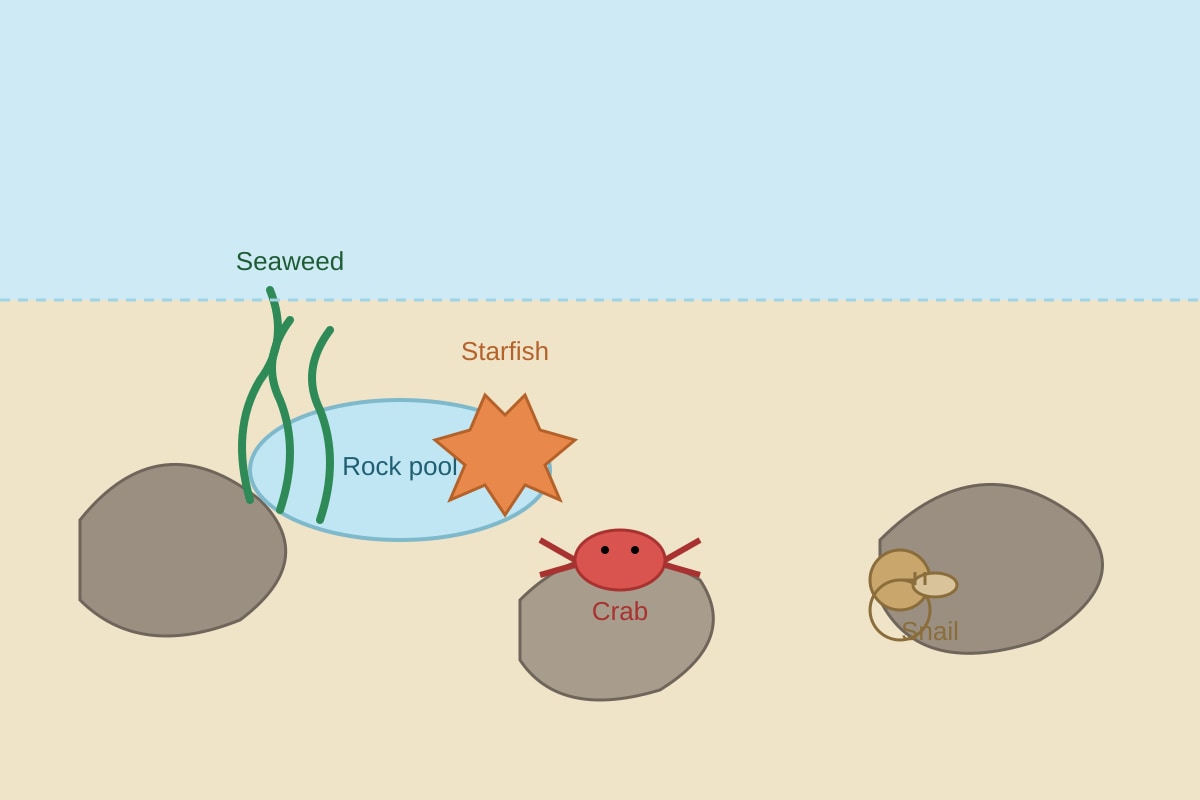
18. The picture shows a rocky seashore with crabs, seaweed, snails, and starfish.
Image pending generation: figure for 18.
(a) Name one producer and one consumer from this habitat. [1]
(b) Explain why the seashore community is different from a pond community. [2]
19. A class made a survey of trees in a park. They found 4 rambutan trees, 6 mango trees, 3 angus trees, and 7 coconut trees.
(a) What is the total number of trees? [1]
(b) Which tree type has the highest population? [1]
20. Explain how deforestation can cause a decrease in biodiversity. Use ideas of habitat and food chain in your answer. [2]
Answers
TuitionGoWhere Practice Paper — Science Primary 6 PSLE (Version 3) Answer Key
Topic: Diversity
Total Marks: 40
Section A (10 marks)
1. B [1]
Teaching note: Biodiversity means the variety of living things (plants, animals, microorganisms) in a habitat. A zoo, a single tree, or water amount does not show variety of life.
2. B [1]
Teaching note: Rose, fern, mango tree are plants (make their own food). Dog, frog, eagle are animals (eat other organisms). Classification is by plant vs animal.
3. B [1]
Teaching note: A cactus stores water in its thick stem — a structural adaptation for dry places. Bright night flowers are not the main water-saving feature; legs/teeth are animal features.
4. C [1]
Teaching note: Algae are plants/plant-like producers that make food by photosynthesis. Tadpole, beetle, frog are consumers.
5. B [1]
Teaching note: In a food chain, the arrow shows the direction of energy flow (from producer to consumer). The image shows Grass → Grasshopper → Frog.
6. A [1]
Teaching note: A pond with many plants and animals has high diversity. Bare field, single crop, empty bottle have few or no living things.
7. B [1]
Teaching note: Population = group of same species living and reproducing in one place. Not all living things (that is community), not one individual, not non-living.
8. C [1]
Teaching note: Hibernating is a behaviour (action) to survive cold. Beak, skin, gills are body structures.
9. B [1]
Teaching note: Decomposers (e.g. fungi, bacteria) break down dead things and return nutrients to soil/water. They do not make food from sun or hunt.
10. B [1]
Teaching note: Planting trees adds habitat and food, increasing diversity. Others reduce or harm living things.
Section B (12 marks)
11. [2]
Accepted answers (any 2):
- By whether they are plants or animals
- By habitat (land, water, air)
- By how they obtain food (producer, consumer, decomposer)
- By body features (e.g. backbone or no backbone)
Marking: 1 mark per correct way.
12. [2]
Mangrove swamp has salty water, muddy roots, tidal change; garden has soil, fresh water, different plants. These physical factors support different organisms.
Marking: 1 mark for stating different conditions, 1 mark for linking to different community.
13. [2]
Birds eat insects (and fish). If insects drop, one food source for birds is reduced, so bird population may decrease or switch to fish.
Marking: 1 mark for identifying bird depends on insect; 1 mark for explaining population effect.
14. [2]
Example: Temperature — desert lizards survive heat; polar fish need cold.
Marking: 1 mark for characteristic, 1 mark for example.
15. [2]
Structural: thick fur / fat layer for warmth. Behavioural: hibernating or migrating south.
Marking: 1 mark each.
16. [2]
Negative: deforestation, pollution (any 2 correct = 1m total). Positive: reforestation / conservation (1m).
Marking: 1 mark for two negatives, 1 mark for one positive.
Section C (8 marks)
17. [4]
(a) Producers: wheat plant, clover plant [1]
Consumers: grasshopper, sparrow, butterfly [1]
Decomposers: mushroom [1]
(b) Example: clover plant → grasshopper → sparrow [1]
Marking: 3m for correct groups, 1m for valid chain.
18. [3]
(a) Producer: seaweed [0.5]; Consumer: crab / snail / starfish [0.5]
(b) Seashore has salt water, waves, rock pools; pond has fresh still water. Different factors → different organisms. [2]
Marking: 1m total part (a), 2m part (b).
19. [2]
(a) Total = 4 + 6 + 3 + 7 = 20 trees [1]
(b) Coconut trees (7) [1]
Working: compare numbers 4,6,3,7 → highest is 7.
20. [2]
Deforestation removes trees (habitat) so animals lose shelter/food; food chains break, populations fall, diversity decreases.
Marking: 1m habitat loss, 1m food chain/diversity link.
Free quiz and exam paper access
Enter your details to view this paper
Your access is remembered on this device.