AI Generated Exam Paper
Primary 6 PSLE Science Practice Paper 2
Free P6 PSLE Science Practice Paper 2, HY3 AI version, with questions, answers, and PSLE-focused practice for Singapore students.
These static practice materials are generated from the site's syllabus and paper-generation workflow, with source and model context shown so students and parents can evaluate the material before use.
Questions
TuitionGoWhere Practice Paper - Science Primary 6 PSLE
TuitionGoWhere Practice Paper (AI)
Subject: Science
Level: Primary 6 PSLE
Paper: Practice Paper (Topic: Diversity) – Version 2 of 5
Duration: 45 minutes
Total Marks: 40
Name: ___________________________
Class: ________
Date: ____________
Instructions:
- This practice paper has 20 questions on the topic of Diversity.
- Section A: 10 multiple-choice questions (1 mark each).
- Section B: 6 short-answer questions (2 marks each).
- Section C: 4 structured questions (total 8 marks).
- Answer all questions in the spaces provided.
- No past-year exam evidence was used; this is syllabus-first AI-generated practice content.
Section A (10 marks)
Answer all questions. Each question carries 1 mark.
-
Which of the following best describes biodiversity?
A. The number of animals in a zoo
B. The variety of living things in a habitat
C. The size of the largest tree
D. The amount of rainfall in a forest -
A scientist groups organisms by whether they have a backbone. This is a form of:
A. Feeding habit classification
B. Habitat classification
C. Diversity based on body structure
D. Colour classification -
Which group of organisms can make their own food using sunlight?
A. Consumers
B. Decomposers
C. Producers
D. Predators -
Mangrove swamps and gardens are examples of different:
A. Populations
B. Communities
C. Habitats
D. Organisms -
An organism that breaks down dead leaves is a:
A. Producer
B. Decomposer
C. Consumer
D. Predator -
Which of these is a structural adaptation?
A. A bird migrating south
B. A lizard basking in the sun
C. A cactus storing water in its stem
D. A dog barking at strangers -
A food chain always starts with:
A. A predator
B. A consumer
C. A producer
D. A decomposer -
Which of the following is a negative impact of man on the environment?
A. Planting trees
B. Building nature reserves
C. Dumping rubbish into rivers
D. Using less plastic -
A group of the same type of fish living in a pond is a:
A. Community
B. Population
C. Habitat
D. Ecosystem -
Which physical factor does NOT directly affect where an organism can live?
A. Temperature
B. Light
C. Colour of the organism
D. Water availability
Section B (12 marks)
Answer all questions. Each question carries 2 marks.
-
Name two types of habitats and one organism found in each.
-
Explain the difference between a population and a community.
-
State two ways animals are adapted to obtain food. Give an example for each.
-
Describe how decomposers help the environment.
-
Give one positive and one negative impact of man on the environment.
-
A student sees a butterfly and a bee in a garden. Both can fly. Explain why this similarity does not mean they are the same species.
Section C (8 marks)
Answer all questions.
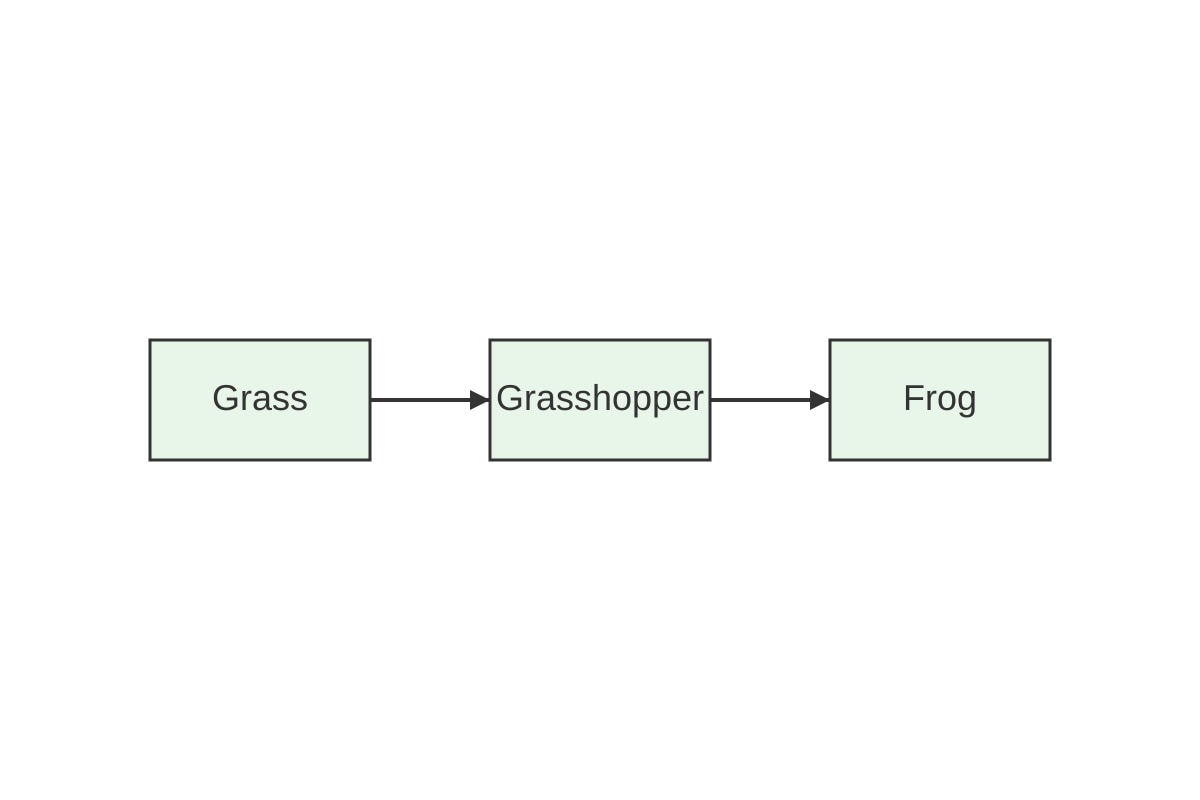
- The diagram below shows a simple food chain.
Image pending generation: diagram for Q17.
(a) Name the producer in the food chain. (1 mark)
(b) State the role of the frog. (1 mark)
-
Read the passage.
"Pangolins are nocturnal animals that curl into a ball when threatened. They eat ants using a long sticky tongue. Their scales protect them from predators."
(a) Name one behavioural adaptation shown. (1 mark)
(b) Name one structural adaptation shown. (1 mark) -
A pond community has tadpoles, algae, frogs, and dragonfly larvae.
(a) Which organism is the producer? (1 mark)
(b) Suggest what may happen if all frogs are removed by pollution. (1 mark) -
Man cuts down a forest to build houses.
(a) State one way this reduces diversity. (1 mark)
(b) Suggest one action to reduce the impact. (1 mark)
Answers
TuitionGoWhere Practice Paper - Science Primary 6 PSLE (Answer Key)
Subject: Science
Level: Primary 6 PSLE
Paper: Practice Paper (Topic: Diversity) – Version 2 of 5
Total Marks: 40
Section A Answers (10 marks)
- B — Biodiversity means the variety of living things in a habitat. (1 mark)
- C — Grouping by backbone is diversity based on body structure. (1 mark)
- C — Producers (plants) make food using sunlight (photosynthesis). (1 mark)
- C — Mangrove swamp and garden are habitats. (1 mark)
- B — Decomposers break down dead matter. (1 mark)
- C — Cactus storing water is a structural (body) adaptation. (1 mark)
- C — Food chains start with a producer. (1 mark)
- C — Dumping rubbish pollutes and is negative. (1 mark)
- B — Same fish type = population. (1 mark)
- C — Organism colour does not decide where it lives; physical factors do. (1 mark)
Section B Answers (12 marks)
- [2 marks]
- Habitat 1: Pond — organism: fish (or frog, algae) (1 mark)
- Habitat 2: Garden — organism: butterfly (or rose plant) (1 mark)
Teaching note: Habitat is the place where organisms live; different places support different life.
- [2 marks]
- Population: group of same organisms living together (1 mark)
- Community: many populations living together in a place (1 mark)
Teaching note: A pond may have a fish population and a frog population; together they form the pond community.
- [2 marks]
- Way 1: Sharp teeth to tear meat — e.g. lion (1 mark)
- Way 2: Long tongue to reach nectar — e.g. butterfly (1 mark)
(Other valid examples accepted.)
- [2 marks]
- Decomposers break down dead organisms/leaves (1 mark)
- This returns nutrients to soil and keeps environment clean (1 mark)
- [2 marks]
- Positive: planting trees / conservation (1 mark)
- Negative: deforestation / pollution (1 mark)
- [2 marks]
- Flying is a shared ability but species are defined by reproduction and traits (1 mark)
- Butterfly and bee have different body structures, life cycles, and cannot breed together (1 mark)
Section C Answers (8 marks)
-
(a) Grass (1 mark)
(b) Frog is a consumer / predator (1 mark)
Image note: Diagram must show Grass → Grasshopper → Frog; grass is producer as it makes food. -
(a) Nocturnal / curling into ball when threatened (1 mark)
(b) Scales protect from predators (1 mark) -
(a) Algae (1 mark)
(b) Tadpoles/dragonfly larvae increase; food web unbalanced (1 mark)
Teaching: Frogs eat larvae; removal causes prey rise. -
(a) Loss of forest habitats / fewer species (1 mark)
(b) Replant trees / build green corridors (1 mark)
Total: 10 + 12 + 8 = 40 marks.
Free quiz and exam paper access
Enter your details to view this paper
Your access is remembered on this device.