From Real Exams Exam Paper
Primary 6 PSLE Science Semestral Assessment 2 (End of Year) Paper 5
Free P6 PSLE Science SA2 Paper 5, Kimi2.6 Exam version, with questions, answers, and PSLE-focused practice for Singapore students.
These static practice materials are generated from the site's syllabus and paper-generation workflow, with source and model context shown so students and parents can evaluate the material before use.
Questions
Free quiz and exam paper access
Enter your details to view this paper
Your access is remembered on this device.
Answers
TuitionGoWhere Exam Practice (AI)
SA2 Practice Paper - Science
Primary 6 PSLE
Answer Key and Marking Scheme
Version 5 of 5
TOTAL MARKS: 60
SECTION A: Multiple Choice (20 marks)
Each correct answer: 1 mark
1. Answer: A
Explanation: Mushrooms, yeast, and bread mould are all fungi.
- Key concept: Fungi are a kingdom of organisms that include mushrooms, yeasts, moulds, and mildews. They do not photosynthesize and absorb nutrients from their environment.
- Why others wrong:
- B: Fern is a plant, not a fungus.
- C: Moss is a plant; mushroom is a fungus (already grouped incorrectly).
- D: Fern, orchid, and hibiscus are all flowering plants (except fern which is non-flowering plant).
2. Answer: A
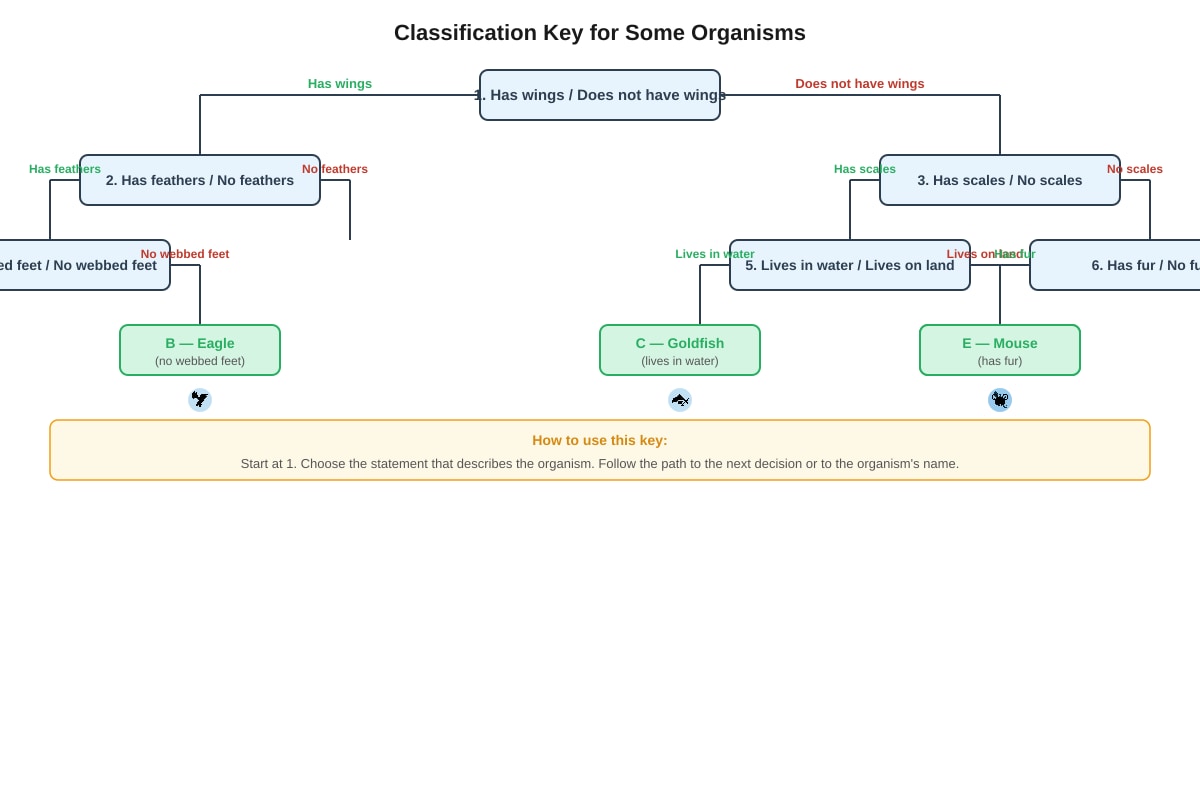
Explanation: Organism C is the goldfish, which has scales and lives in water.
- Key concept: Fish are aquatic vertebrates with scales and gills. In the dichotomous key, following "has wings → does not have feathers" gives eagle; "does not have wings → has scales → lives in water" gives goldfish.
- Visual verification: Following the key: no wings → has scales → lives in water = Organism C (goldfish).
- Why others wrong: D (lizard) lives on land; E (mouse) has fur; F (earthworm) has no scales.
3. Answer: C
Explanation: All female mammals produce milk to feed their young.
- Key concept: Mammals are distinguished by having hair/fur, giving birth to live young (mostly), and producing milk from mammary glands.
- Why others wrong:
- A: Only monotremes (platypus, echidna) lay eggs; most mammals give live birth.
- B: Amphibians have moist skin, not mammals.
- D: Reptiles and fish have scales.
4. Answer: C
Explanation: Organism R has wings but no feathers—this matches a bat, which is a mammal with wings made of skin stretched over bones.
- Key concept: Bats are mammals, not birds. They have wings for flight but lack feathers.
- Why others wrong:
- P has feathers = bird; Q has scales = reptile/fish; S has moist skin = amphibian.
5. Answer: A
Explanation: Fern, moss, and pine tree are all non-flowering plants.
- Key concept: Non-flowering plants reproduce by spores (ferns, mosses) or cones (gymnosperms like pine trees) rather than flowers.
- Why others wrong:
- B: Grass and hibiscus are flowering plants.
- C: Mushroom is a fungus, not a plant.
- D: Orchid and hibiscus are flowering plants.
6. Answer: B
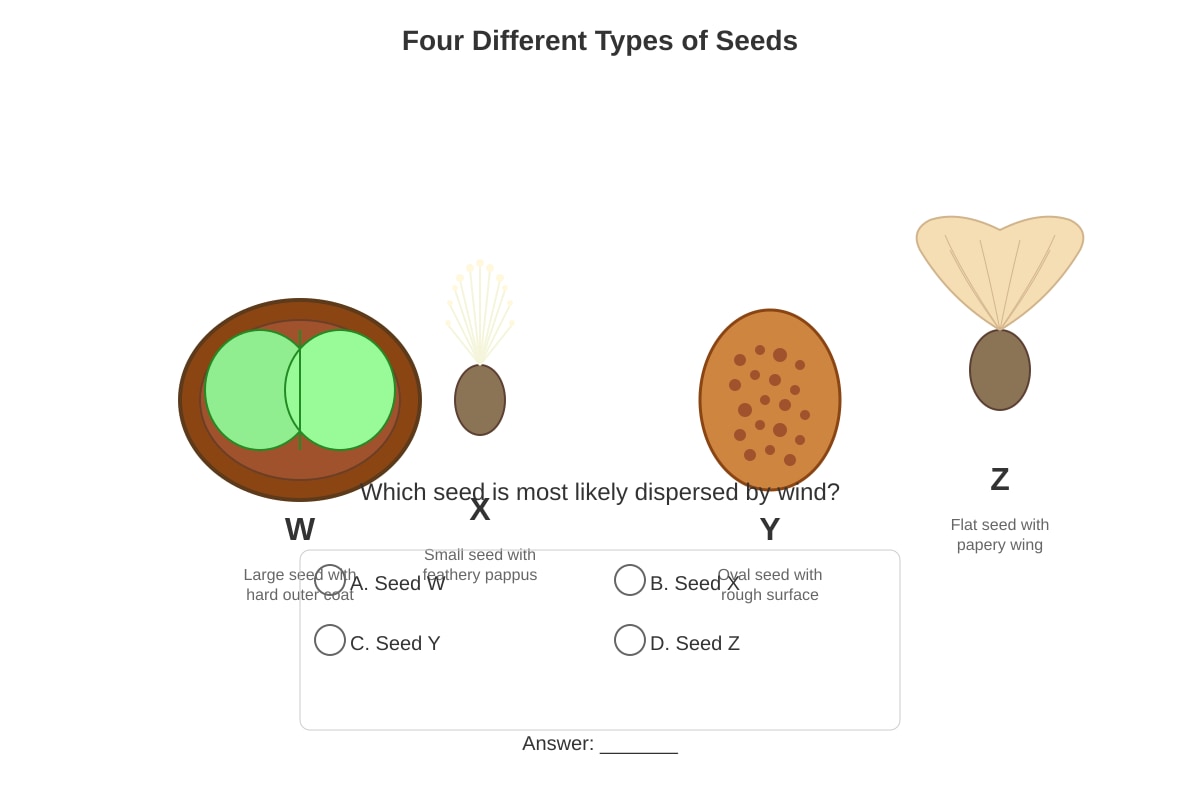
Explanation: Seed X has a feathery pappus structure that catches wind.
- Key concept: Wind-dispersed seeds are typically light with wing-like or feathery extensions that increase surface area to catch air currents.
- Visual verification: Seed X has the feathery/pappus structure characteristic of wind-dispersed seeds like dandelion.
- Why others wrong:
- W: Large with hard coat → dispersed by animals or water.
- Y: Rough surface → animal dispersal (hooks attach to fur).
- Z: Wing structure → also wind-dispersed, but X more clearly feather-like for wind.
7. Answer: B
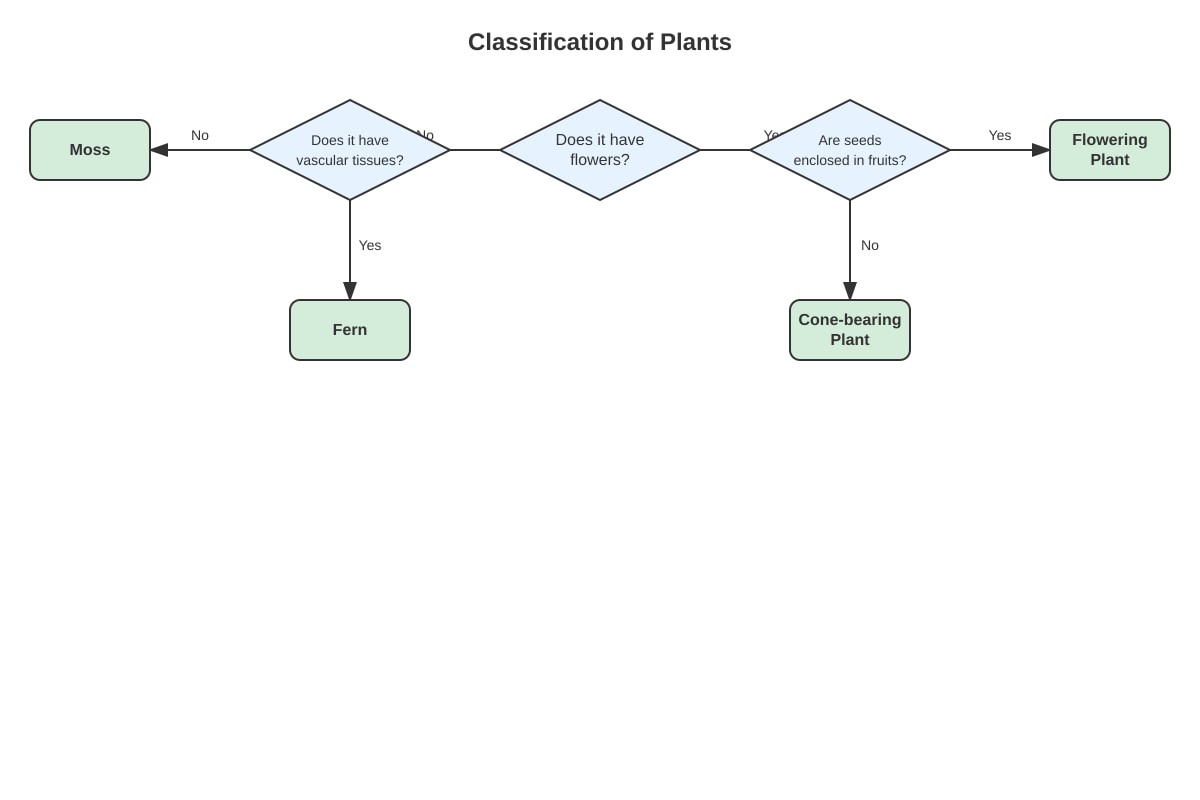
Explanation: Cycads have naked seeds in cones, making them cone-bearing plants (gymnosperms).
- Key concept: Cone-bearing plants (gymnosperms) produce seeds on cone scales without enclosing them in fruits. Flowering plants (angiosperms) enclose seeds in fruits.
- Why others wrong:
- A: Flowering plants have seeds in fruits.
- C/D: Ferns and mosses do not produce seeds at all.
8. Answer: D
Explanation: Bacteria are prokaryotes—they lack a true nucleus and can survive in almost any environment.
- Key concept: Bacteria are single-celled prokaryotes. They have no membrane-bound nucleus. Some are decomposers, some are parasites, some are photosynthetic, some can survive extreme conditions.
- Why others wrong:
- A: Bacteria do NOT have a nucleus.
- B: Not all bacteria feed on dead matter (some are photosynthetic, some parasitic).
- C: Bacteria do NOT have a nucleus.
9. Answer: D
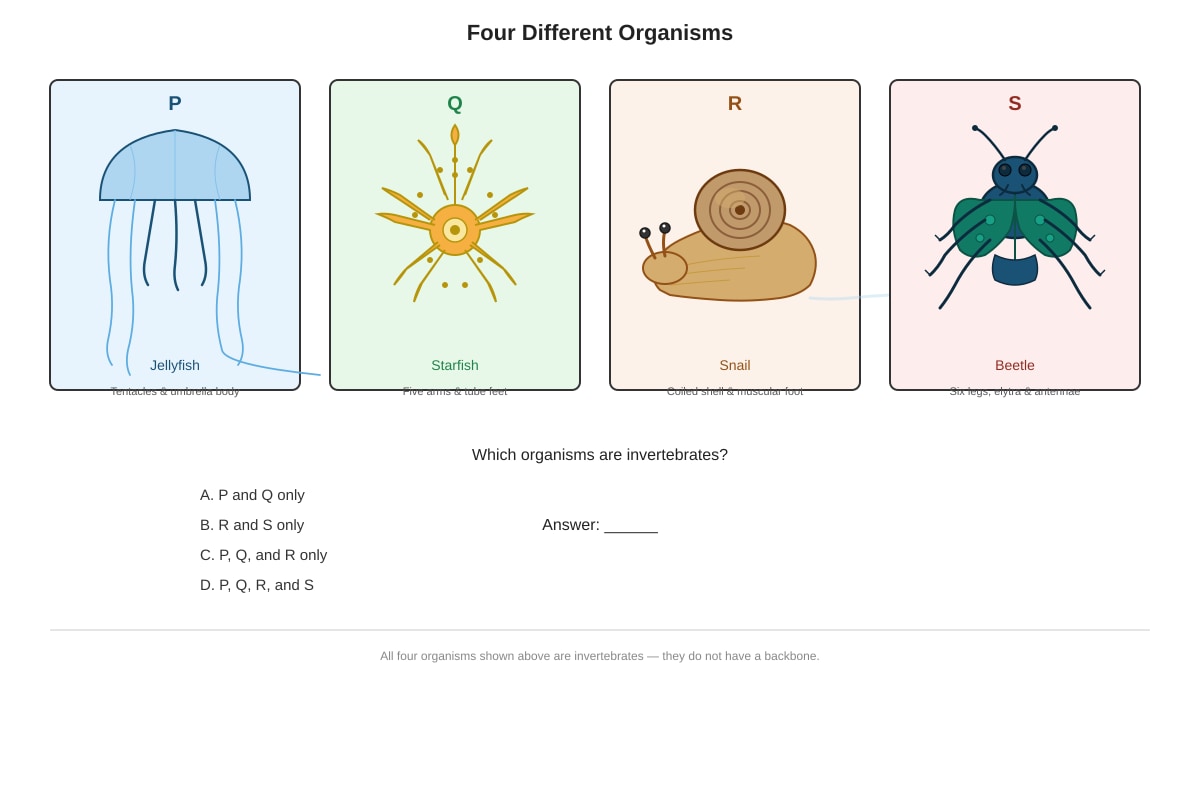
Explanation: All four organisms (jellyfish, starfish, snail, beetle) are invertebrates—they lack a backbone.
- Key concept: Invertebrates are animals without a vertebral column (backbone). This includes ~97% of animal species.
- Breakdown:
- P (jellyfish): Cnidarian, invertebrate
- Q (starfish): Echinoderm, invertebrate
- R (snail): Mollusc, invertebrate
- S (beetle): Arthropod (insect), invertebrate
10. Answer: B
Explanation: Plant cells contain chloroplasts for photosynthesis; animal cells do not.
- Key concept: Chloroplasts contain chlorophyll and are the site of photosynthesis in plant cells. This is a fundamental distinguishing feature.
- Why others wrong:
- A: Both have cell membranes.
- C: Both have nuclei.
- D: Cell size varies; not a reliable distinguishing feature.
11. Answer: C
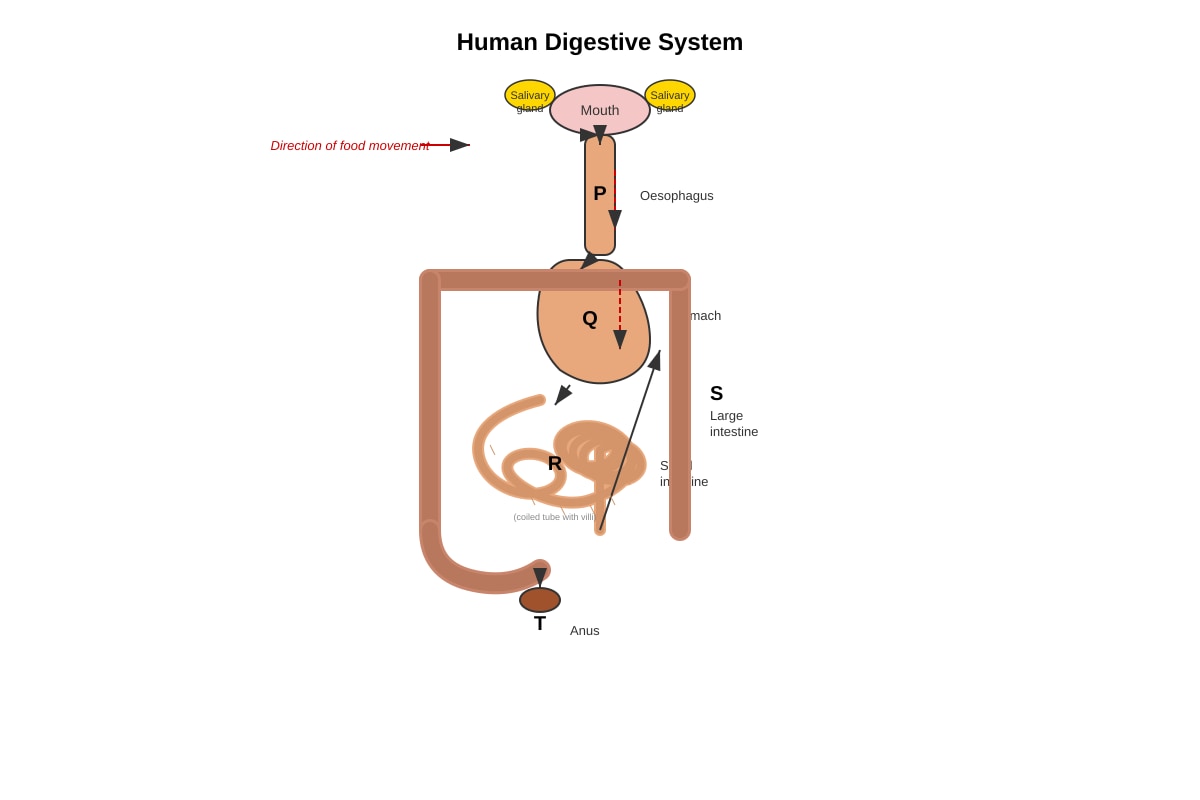
Explanation: R is the small intestine, where most digestion completes and most nutrient absorption occurs.
- Key concept: The small intestine has villi—microscopic finger-like projections that massively increase surface area for absorption. Digested food molecules pass through villi into bloodstream.
- Why others wrong:
- P (oesophagus): Transports food only.
- Q (stomach): Mechanical and chemical digestion, minimal absorption.
- S (large intestine): Absorbs water and minerals, not digested food.
12. Answer: A
Explanation: grass → grasshopper → frog → snake → eagle shows correct energy flow from producer to top consumer.
- Key concept: Food chains show energy transfer: producer → primary consumer (herbivore) → secondary consumer (carnivore/omnivore) → tertiary consumer → quaternary consumer.
- Why others wrong:
- B: Frog does not eat grass.
- C: Arrow direction reversed (energy flows from food to eater).
- D: Arrow direction reversed; grasshopper is not a producer.
13. Answer: B
Explanation: Air spaces in tissues reduce density, allowing the plant to float.
- Key concept: Aquatic plants like water hyacinth have aerenchyma tissue—specialized cells with large air spaces that provide buoyancy and oxygen transport.
- Why others wrong:
- A: Flexible stems help with water movement but not floating.
- C: Waxy leaves prevent waterlogging but don't cause floating.
- D: Deep roots would anchor plant, not help floating.
14. Answer: B
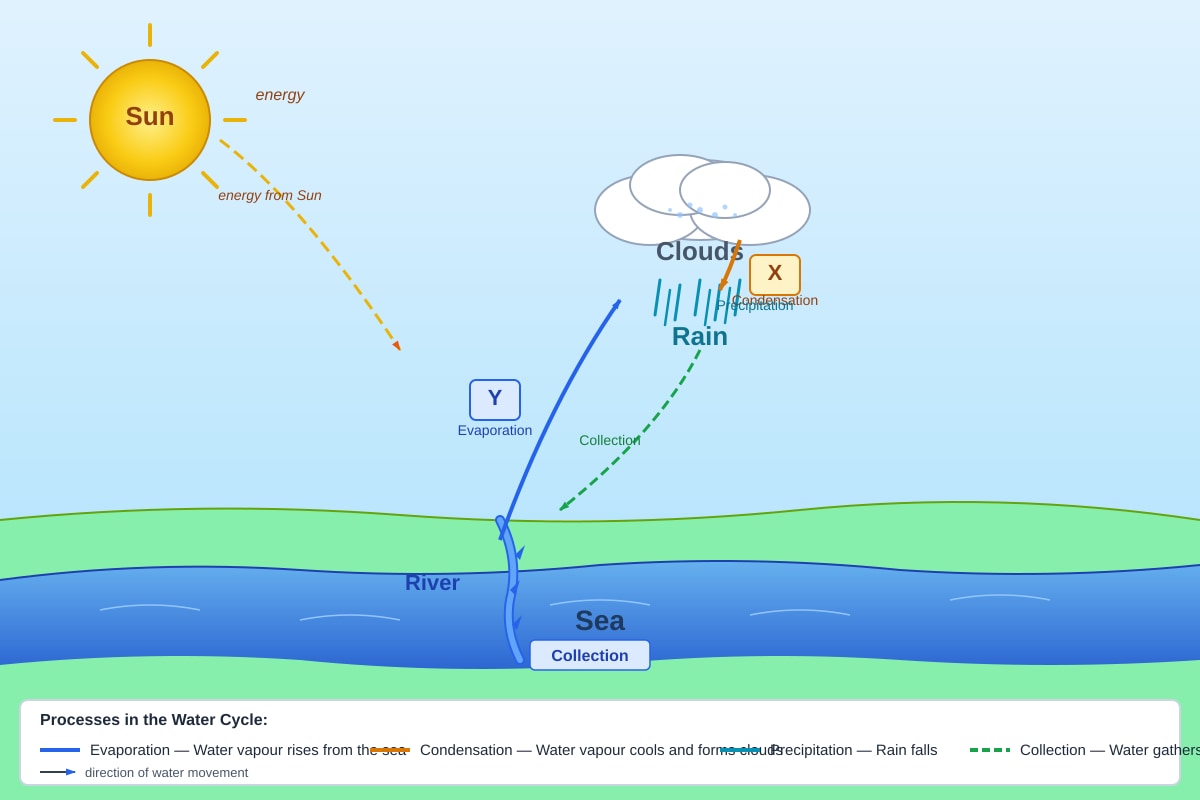
Explanation: Process X (clouds → rain) is condensation; Process Y (water → clouds) is evaporation.
- Key concept:
- Evaporation: Liquid water → water vapour (requires heat energy).
- Condensation: Water vapour → liquid droplets (releases heat, forms clouds).
- Precipitation: Water falling from clouds as rain, snow, etc.
- Visual verification: Y is arrow from water body upward to clouds = evaporation. X is within cloud formation leading to rain = condensation before precipitation.
15. Answer: C
Explanation: Ice melting into water is a physical change—no new substance forms, only state changes.
- Key concept: Physical changes alter form but not chemical composition (melting, freezing, boiling, dissolving, bending). Chemical changes produce new substances.
- Why others wrong:
- A: Burning produces new substances (CO₂, ash, water vapour).
- B: Rusting produces iron oxide (new substance).
- D: Mould growth involves metabolism producing new substances.
16. Answer: B
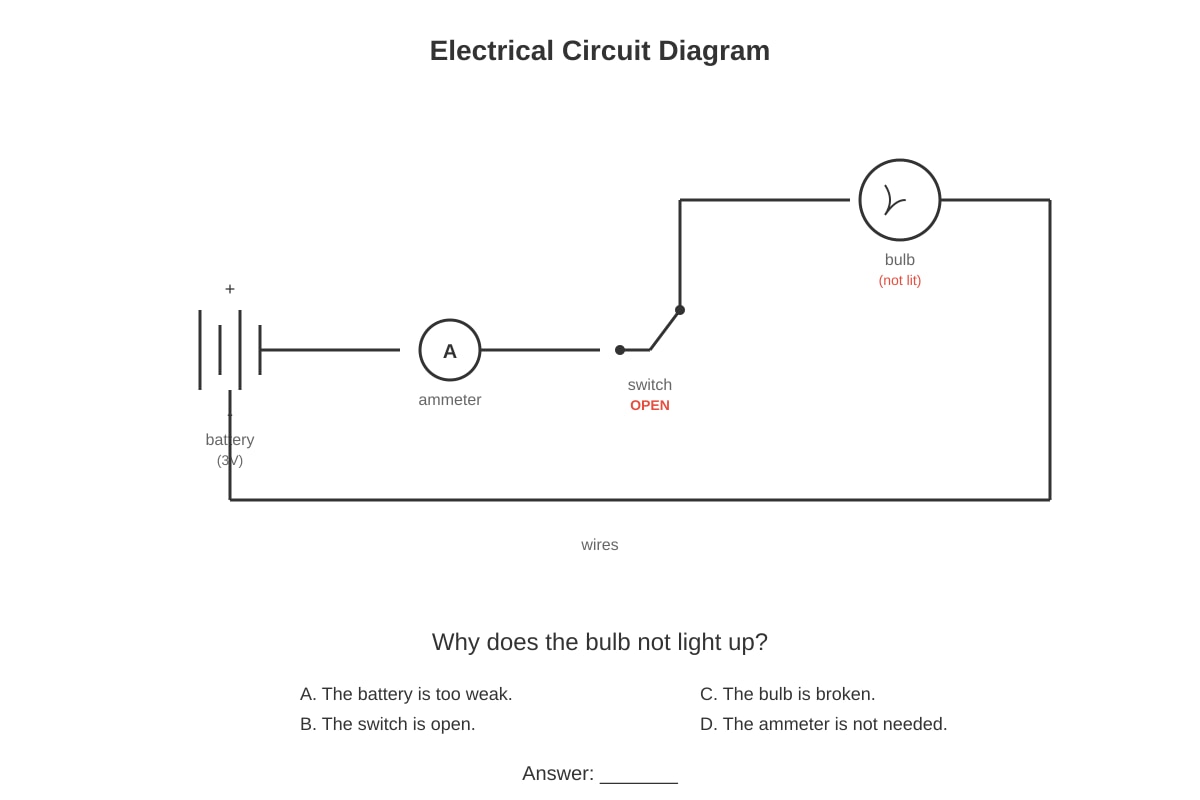
Explanation: The switch is open, breaking the circuit. Current cannot flow.
- Key concept: A complete closed path is needed for current. An open switch creates a gap in the circuit.
- Visual verification: Diagram shows switch labelled "OPEN" with visible gap in circuit path.
- Why others wrong: No evidence battery is weak, bulb broken, or ammeter affects circuit (ammeter in series is correct placement).
17. Answer: C
Explanation: Copper is a metal with free electrons that allow easy electron flow.
- Key concept: Metals (copper, silver, gold, aluminium) are good conductors due to metallic bonding with delocalized electrons. Non-metals (rubber, plastic, wood) lack free electrons.
18. Answer: C
Explanation: Iron is a ferromagnetic material—its domains align in a magnetic field.
- Key concept: Only iron, nickel, cobalt, and some rare earth alloys are strongly magnetic. Most materials are not attracted to magnets.
19. Answer: C
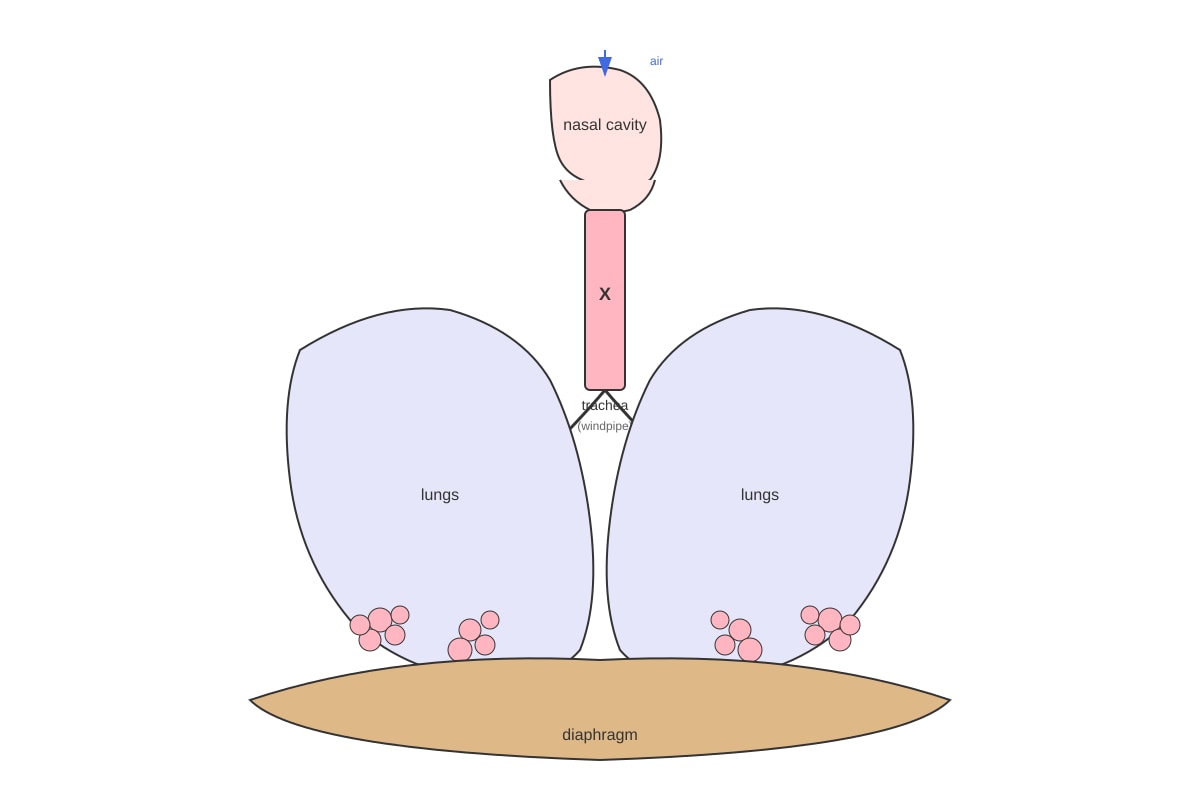
Explanation: Structure X (trachea) carries air to and from the lungs.
- Key concept: The trachea (windpipe) is a tube of cartilage rings that conducts air between larynx and bronchi. It does not exchange gases—that occurs in alveoli.
- Why others wrong:
- A: Gas exchange occurs in alveoli, not trachea.
- B: Nasal cavity filters/warms/moistens air; trachea continues some protection but main function is conduction.
- D: Trachea produces mucus, but this is not its primary/main function.
20. Answer: C
Explanation: A burning candle produces its own light through combustion.
- Key concept: Sources of light emit light energy (luminous). Reflected light (Moon, mirror, shadow) is not a source.
- Why others wrong:
- A: Mirror reflects light.
- B: Moon reflects sunlight.
- D: Shadow is absence of light.
SECTION B: Structured Questions (40 marks)
Question 21 (5 marks)
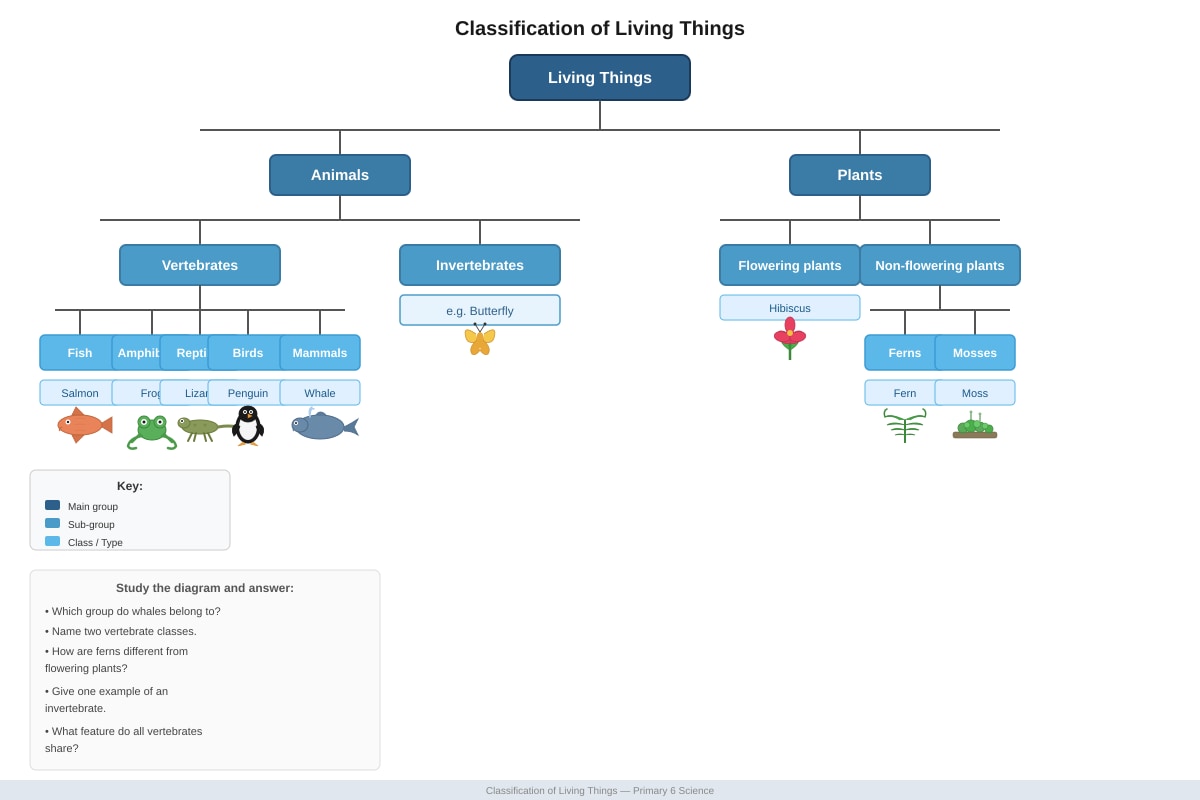
(a) State two differences between vertebrates and invertebrates. [2]
Answer:
| Vertebrates | Invertebrates |
|---|---|
| Have a backbone / vertebral column [1] | Do not have a backbone [1] |
| Internal skeleton made of bone/cartilage | External skeleton or no hard skeleton |
| Generally larger body size | Generally smaller body size |
| Fewer species (~5% of animals) | More species (~95% of animals) |
Marking: Any two valid differences, 1 mark each. Accept: backbone presence, skeleton type, size, or complexity of nervous system.
(b) Give two reasons why a whale is classified as a mammal and not as a fish. [2]
Answer:
- Whales breathe air through lungs (not gills) [1]. They must surface to breathe, unlike fish which extract oxygen from water using gills.
- Whales give birth to live young (most species) and feed their young with milk from mammary glands [1]. Fish typically lay eggs and do not produce milk. OR: Whales have hair/fur at some life stage (tiny hairs on snout of some species); whales are warm-blooded (endothermic).
Marking: Any two valid mammalian characteristics not shared with fish. Accept: lungs/breathing air, live birth, milk production, warm-blooded, hair presence. No mark for "has fins" or "lives in water" (fish traits).
(c) Name one characteristic that ferns and mosses share. [1]
Answer:
- They are both non-flowering plants / they reproduce using spores (not seeds) [1]
- They both need water for reproduction (flagellated sperm)
- They both lack seeds/flowers/fruits
Marking: Any one valid shared characteristic. Most expected: reproduce by spores / non-flowering / no seeds.
Question 22 (6 marks)
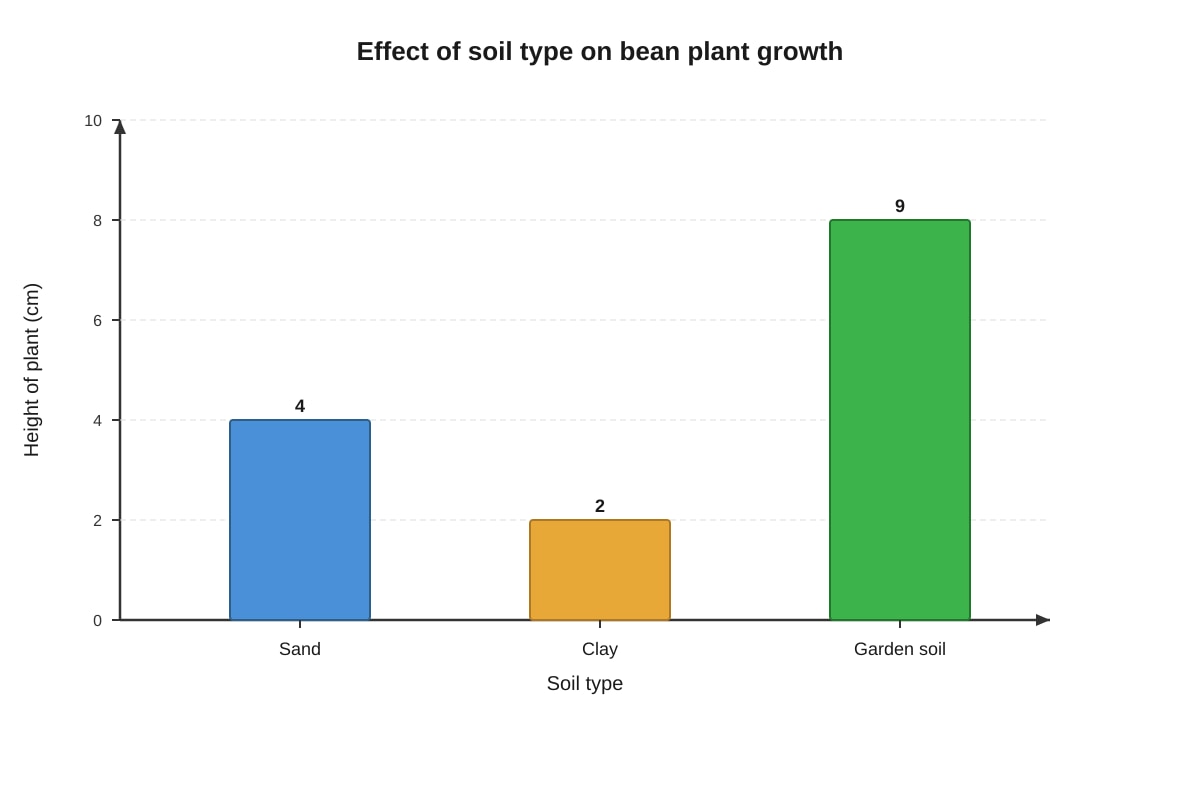
(a) Name the independent variable. [1]
Answer: The type of soil / sand, clay, or garden soil [1]
Explanation: The independent variable is what the investigator deliberately changes. Here, the students chose different soil types while keeping other conditions constant.
(b) Name two controlled variables. [2]
Answer: Any two from:
- Amount/quantity of soil [1]
- Amount/volume of water given [1]
- Amount of sunlight/light exposure [1]
- Type/number of bean seeds used [1]
- Size/type of pots [1]
- Temperature of environment [1]
Explanation: Controlled variables must be kept constant to ensure that differences in plant growth are caused only by the soil type, making this a fair test.
(c) Best soil type and explanation. [2]
Answer: Garden soil [1]
Explanation: The bean plant in garden soil grew tallest (9 cm) compared to sand (4 cm) and clay (2 cm) [1]. Garden soil typically contains a mixture of sand, clay, and organic matter (humus) which provides better water retention, drainage, and nutrients than pure sand or clay.
Common mistake: Stating "garden soil" without using data = 1 mark maximum. Must reference the heights.
(d) Suggest one improvement for reliability. [1]
Answer: Any one from:
- Repeat the experiment with more seeds/plants in each soil type and calculate an average [1]
- Use more than one plant per soil type to check if results are consistent [1]
- Conduct the experiment for a longer period to observe long-term growth patterns [1]
Explanation: Single measurements may be anomalous. Replication improves reliability by identifying outliers and establishing whether results are consistent.
Question 23 (5 marks)
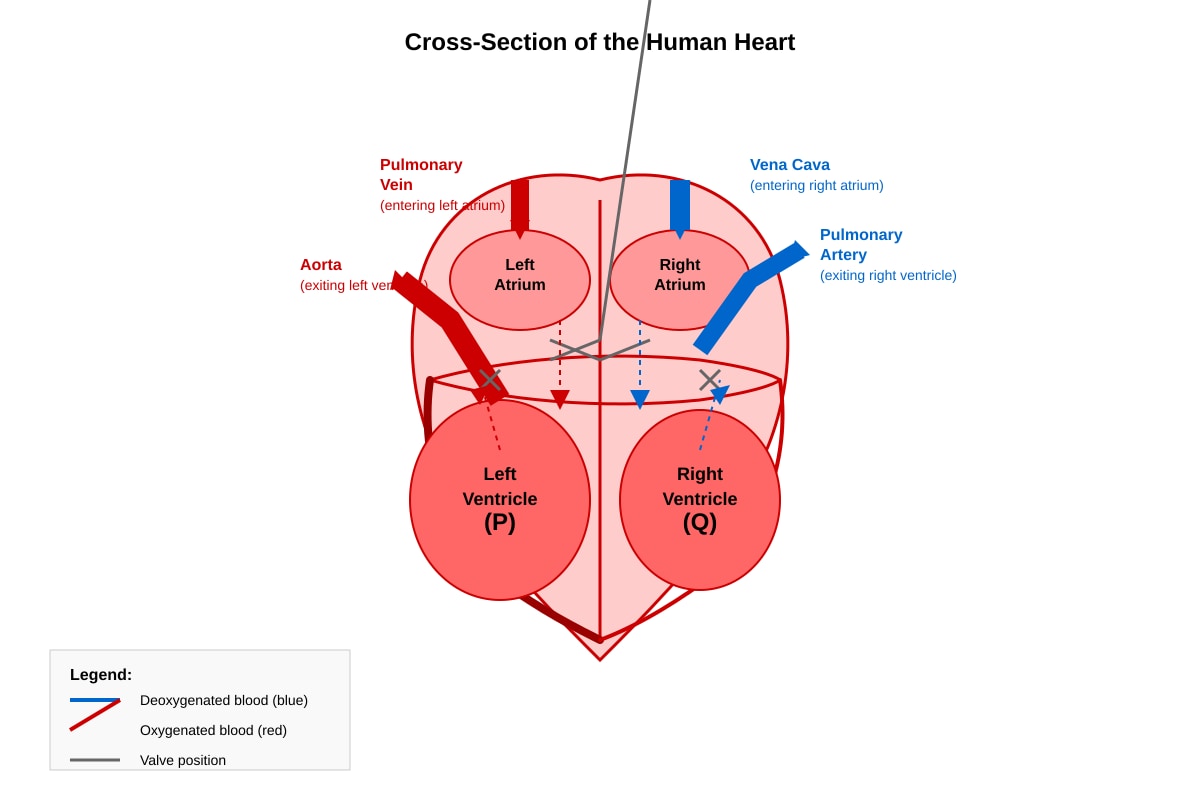
(a) Name the blood vessel to the lungs. [1]
Answer: Pulmonary artery [1]
Explanation: The pulmonary artery carries deoxygenated blood from the right ventricle to the lungs for oxygenation. Uniquely, this artery carries deoxygenated blood (arteries usually carry oxygenated blood away from heart).
(b) Why chamber P has thicker walls than chamber Q. [2]
Answer:
- P is the left ventricle and Q is the right ventricle [1]
- The left ventricle pumps blood to the entire body (systemic circulation) through the aorta, requiring greater pressure/force [1]
- The right ventricle only pumps blood to the lungs (pulmonary circulation) via the pulmonary artery, a much shorter distance requiring less pressure [1]
Marking: Identification of chambers (1 mark maximum if no explanation). Explanation must include distance/destination and pressure/force requirement.
(c) Why left ventricle wall is thicker than right ventricle. [2]
Answer:
- The left ventricle needs to pump blood around the whole body [1]
- This requires generating higher pressure to overcome resistance in the extensive systemic circulatory network [1]
- The right ventricle only pumps to the lungs, which are nearby and have lower resistance [implied in explanation]
Note: This is essentially the same concept as (b) but expressed from a different angle. Award full marks if student explains systemic vs pulmonary pressure requirements clearly.
Question 24 (6 marks)
(a) Name the producer. [1]
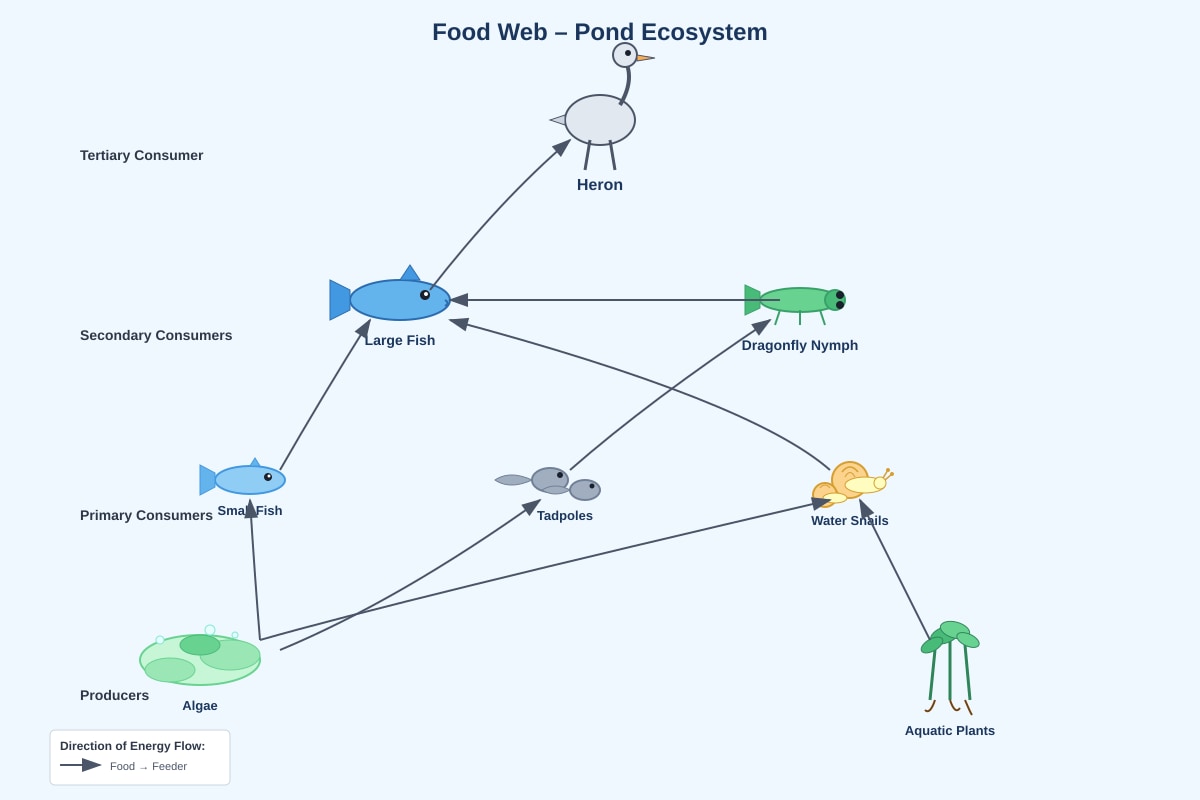
Answer: Algae and/or aquatic plants [1]
Explanation: Producers are autotrophs that make their own food through photosynthesis, forming the base of food chains/webs.
(b) Number of tertiary consumers. [1]
Answer: One / 1 [1] (the heron)
Explanation: Tertiary consumers are top predators at the fourth trophic level (producer → primary → secondary → tertiary). In this web: algae → small fish → large fish → heron.
(c) Food chain with four organisms. [1]
Answer: Any valid four-organism chain, e.g.:
- Algae → small fish → large fish → heron [1]
- Algae → water snails → small fish → large fish [1]
- Aquatic plants → water snails → small fish → large fish [1]
Marking: Must show correct arrow direction (energy flow); must have exactly 4 organisms; must start with producer.
(d) Effect of removing large fish on dragonfly nymphs. [3]
Answer:
- Population of dragonfly nymphs would increase initially [1]
- Large fish are predators of dragonfly nymphs [1] — removing predators eliminates a source of mortality
- However, the increase may be limited because: competition for food (algae/tadpoles) would increase among dragonfly nymphs; or the population might eventually crash due to overpopulation and resource depletion [1]
Alternative acceptable explanation: Dragonfly nymphs and large fish do not have a direct predator-prey link in the diagram (large fish eats dragonfly nymphs — check web). If student correctly identifies no direct link: "No effect/unchanged" [1] with explanation that large fish eat small fish and heron eats large fish, not dragonfly nymphs [2].
Visual check: Looking at the web — dragonfly nymphs → large fish (yes, arrow shows this). So large fish DO eat dragonfly nymphs. First explanation is correct.
Question 25 (6 marks)
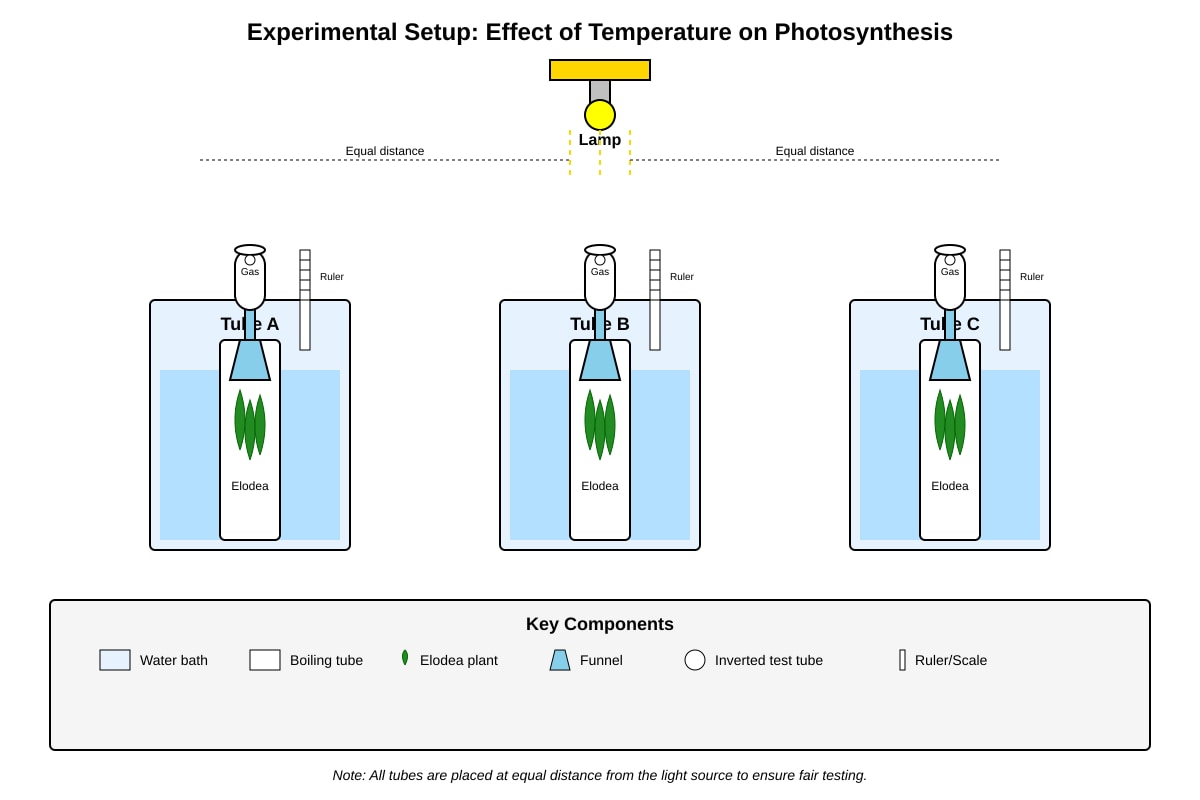
(a) Name the gas collected. [1]
Answer: Oxygen [1]
Explanation: During photosynthesis, plants use carbon dioxide and water in the presence of light to produce glucose and oxygen. The oxygen is released as bubbles from aquatic plants like Elodea.
Equation:
(b) Conclusion from results. [2]
Answer:
- The rate of photosynthesis increases from 20°C to 30°C, then decreases at 40°C [1]
- 30°C is the optimum temperature for this plant's photosynthesis [1]
- The number of bubbles (oxygen production) is highest at 30°C (28 bubbles) compared to 20°C (12) and 40°C (8) [data reference for full marks]
Marking: Must mention peak/ optimum and the decrease at higher temperature for 2 marks. Simple "higher temperature more photosynthesis" = 1 mark maximum (incorrect for 40°C data).
(c) Why bubbles decreased at 40°C. [2]
Answer:
- Enzymes involved in photosynthesis work best at an optimum temperature (around 30°C here) [1]
- At 40°C, enzymes are denatured / their active sites change shape, so they cannot function efficiently [1]
- This slows down the rate of photosynthesis, producing less oxygen
Alternative: Stomata may close at high temperature to reduce water loss, limiting CO₂ intake [1] + reducing photosynthesis [1]
Common mistake: Saying "plant dies" — plant does not immediately die, photosynthesis is reduced.
(d) Improvement for accuracy. [1]
Answer: Any one from:
- Use a gas syringe or measuring cylinder to collect and measure the actual volume of gas rather than counting bubbles [1]
- Count bubbles for a longer time period (e.g., 10 minutes) and calculate rate per minute [1]
- Repeat the experiment several times at each temperature and calculate a mean [1]
- Control light intensity more precisely with a fixed distance and same bulb [1]
- Use a data logger with oxygen sensor for precise measurement [1]
Question 26 (6 marks)
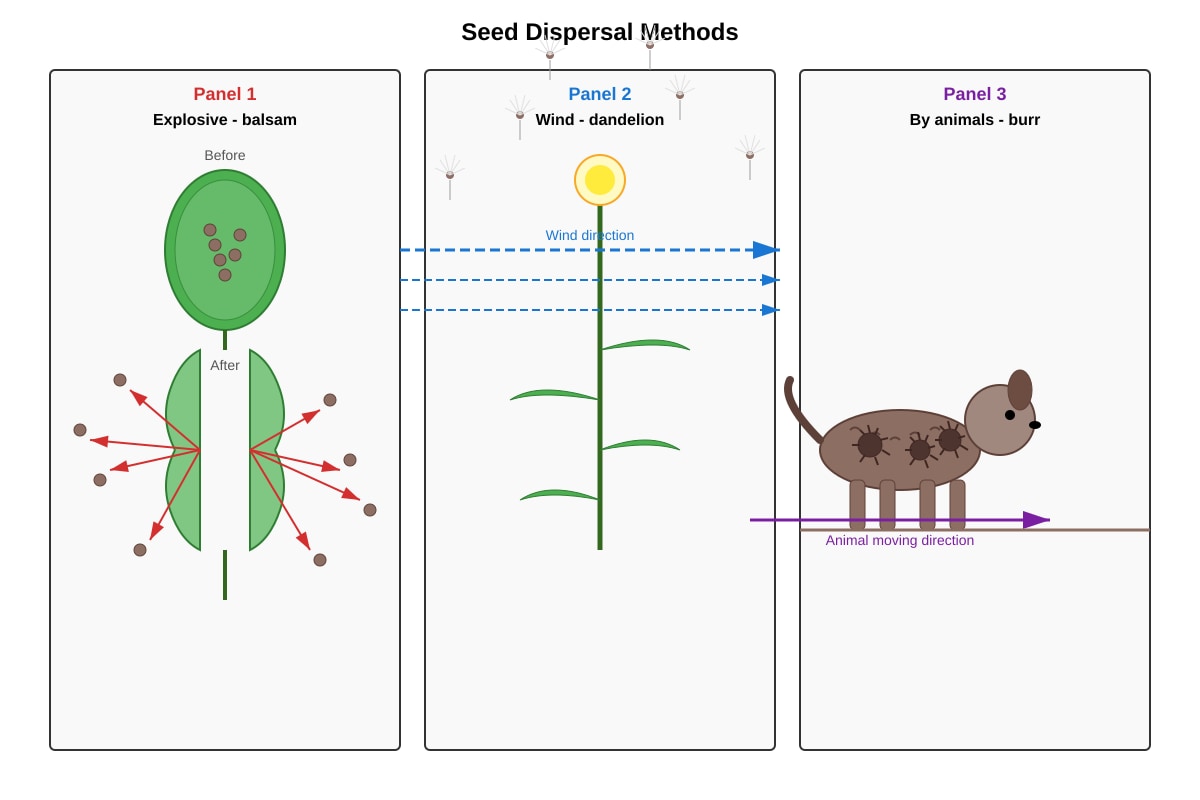
(a) Name dispersal method in Panel 1. [1]
Answer: Explosive mechanism / self-exploding / bursting [1]
(b) How dandelion seed structure aids wind dispersal. [2]
Answer:
- The dandelion seed has a feathery pappus/parachute-like structure [1]
- This increases surface area and creates air resistance, allowing the seed to be carried easily by wind over long distances [1]
- The seed is also light in weight, reducing the force needed for wind to lift it [implied]
Marking: Structure description (1) + functional explanation linked to wind (1).
(c) How burr hooks aid animal dispersal. [2]
Answer:
- The burr has hooks/spines on its surface [1]
- These attach to the fur/feathers of animals (or clothing of humans) as animals pass by [1]
- The burr is then carried to a new location where it may fall off or be groomed off, allowing germination away from the parent [1]
Marking: Structure (1) + attachment mechanism (1). "Sticks to animal fur" = 1 mark; full explanation of transport and drop-off = 2 marks.
(d) Advantage of dispersal away from parent plant. [1]
Answer: Any one from:
- Reduced competition for light, water, minerals, and space [1]
- Colonization of new habitats, increasing species survival [1]
- Reduced chance of pests/diseases accumulating near parent plant [1]
Question 27 (6 marks)
(a) Name the process. [1]
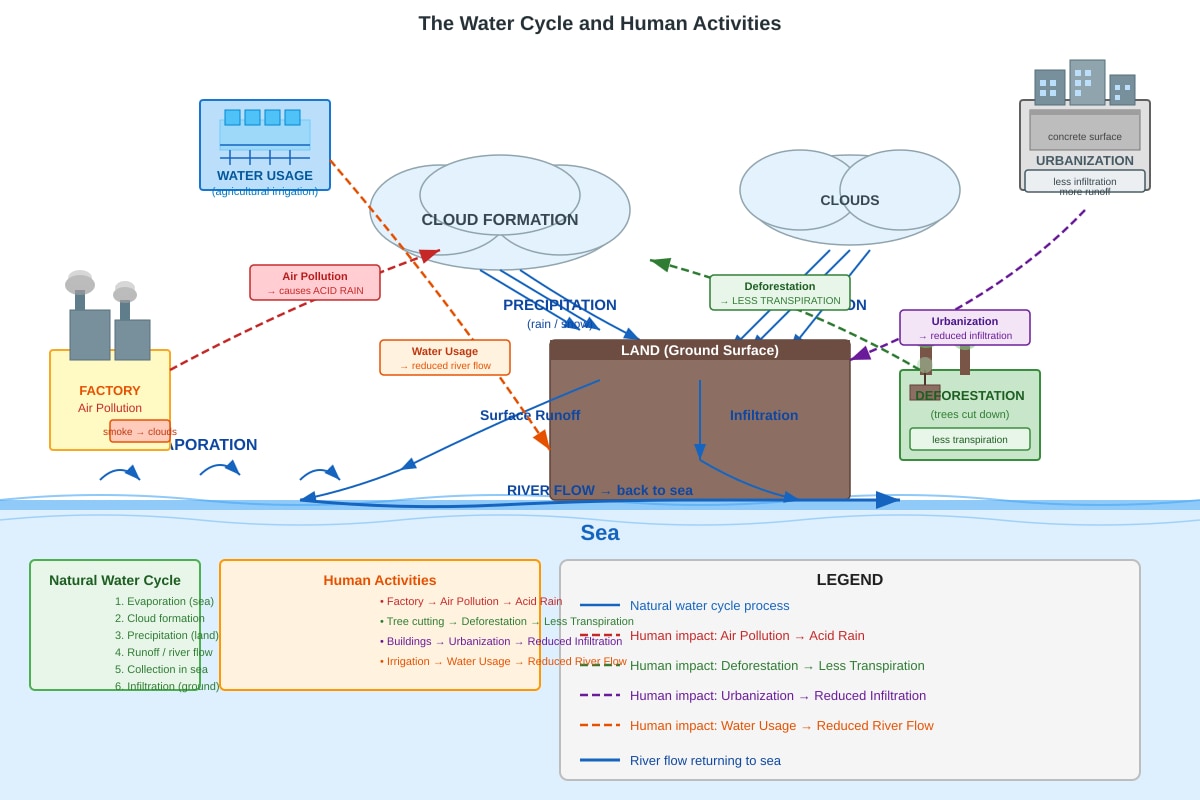
Answer: Evaporation [1]
Note: Accept "vaporisation" but not "boiling" (boiling is rapid evaporation at specific temperature; evaporation occurs at any temperature).
(b) How deforestation affects water cycle. [2]
Answer:
- Trees transpire — release water vapour from leaves into the atmosphere [1]
- With fewer trees, less transpiration occurs, so there is less water vapour in the air [1]
- This leads to reduced cloud formation and precipitation [1] OR increased surface runoff as water is not absorbed by tree roots [1]
Marking: Must mention transpiration and a clear consequence (less water in atmosphere / less rain / more runoff / less groundwater).
(c) Why urbanization causes flooding. [2]
Answer:
- Urban areas have many impermeable surfaces — concrete, roads, buildings — that prevent rainwater from soaking into the ground (infiltration) [1]
- This causes water to run off quickly into drains and rivers, overwhelming the drainage system during heavy rain [1]
- With less vegetation to absorb water and less soil exposed, flood risk increases [1]
Marking: Impermeable surfaces reduced infiltration (1) + rapid runoff overwhelming systems (1).
(d) Action to reduce air pollution. [1]
Answer: Any one valid action:
- Reduce burning of fossil fuels by using public transport / electric vehicles / cycling [1]
- Use cleaner energy sources like solar or wind power instead of coal-fired power stations [1]
- Install scrubbers/filters in factory chimneys to remove pollutants [1]
- Plant more trees to absorb pollutants like carbon dioxide and sulfur dioxide [1]
Note: Must clearly link to air pollution reduction that protects water cycle (acid rain prevention).
TOTAL MARKS VERIFICATION:
- Section A: 20 × 1 = 20 marks ✓
- Section B: 5 + 6 + 5 + 6 + 6 + 6 + 6 = 40 marks ✓
- GRAND TOTAL: 60 marks ✓