AI Generated Quiz
Primary 6 PSLE Mathematics Geometry Quiz
Free AI-Generated Qwen3.7 Plus Primary 6 PSLE Mathematics Geometry quiz with questions and answers for Singapore students. This page is rendered as a direct URL so the questions and answers can be discovered without pressing in-page buttons.
These static practice materials are generated from the site's syllabus and paper-generation workflow, with source and model context shown so students and parents can evaluate the material before use.
Questions
Primary 6 PSLE Mathematics Quiz - Geometry
Name: __________________________
Class: __________________________
Date: __________________________
Score: ________ / 50
Duration: 1 hour 30 minutes
Total Marks: 50
Instructions:
- Answer all questions.
- Write your answers in the spaces provided.
- For questions requiring working, show your complete working clearly. Marks may be awarded for method even if the final answer is incorrect.
- Unless otherwise stated, give your answers in the simplest form or correct to 2 decimal places where appropriate.
- Take unless otherwise stated.
Section A: Angles and Triangles (Questions 1–5)
Each question carries 2 marks.
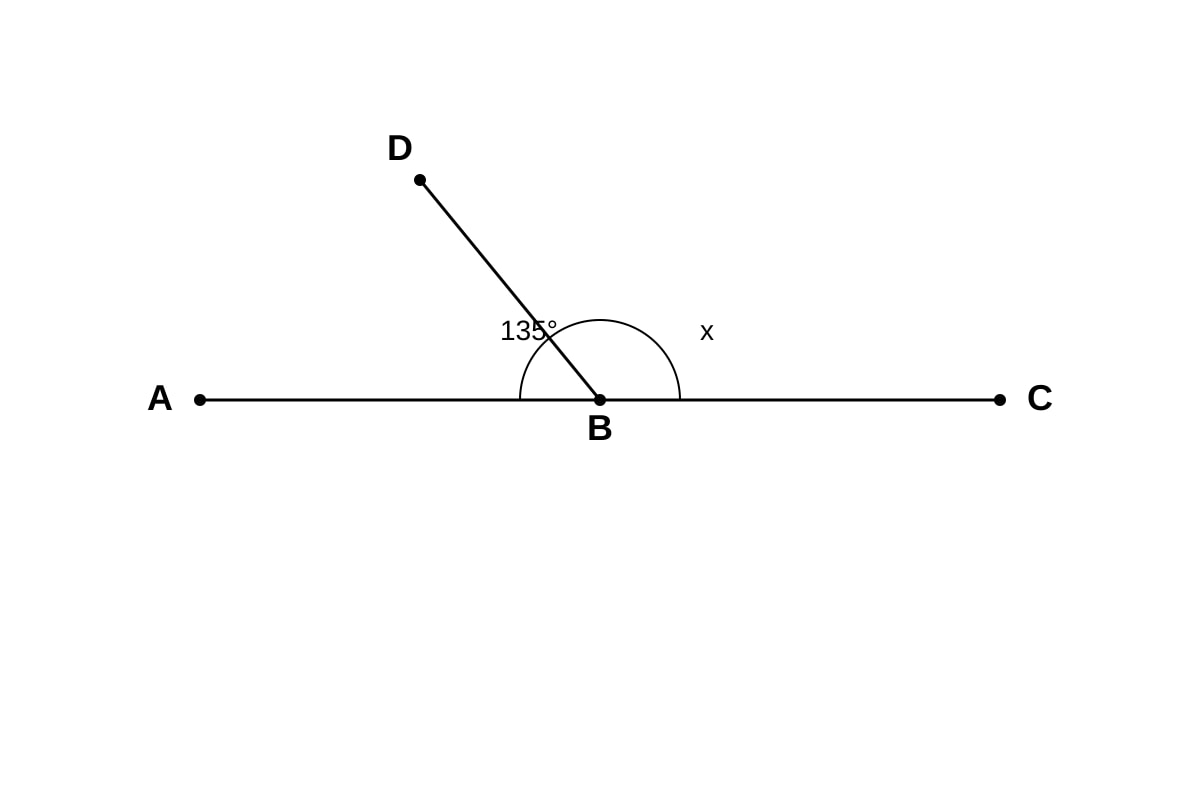
1. In the figure below, is a straight line. Find the value of .
<image_placeholder> id: Q1-fig1 type: diagram linked_question: Q1 description: A straight line ABC with a ray BD emerging from B. Angle ABD is labeled 135 degrees. Angle DBC is labeled x. labels: A, B, C, D, x, 135° values: Angle ABD = 135° must_show: Straight line ABC, Ray BD, Angle markings </image_placeholder>
_______________ [2]
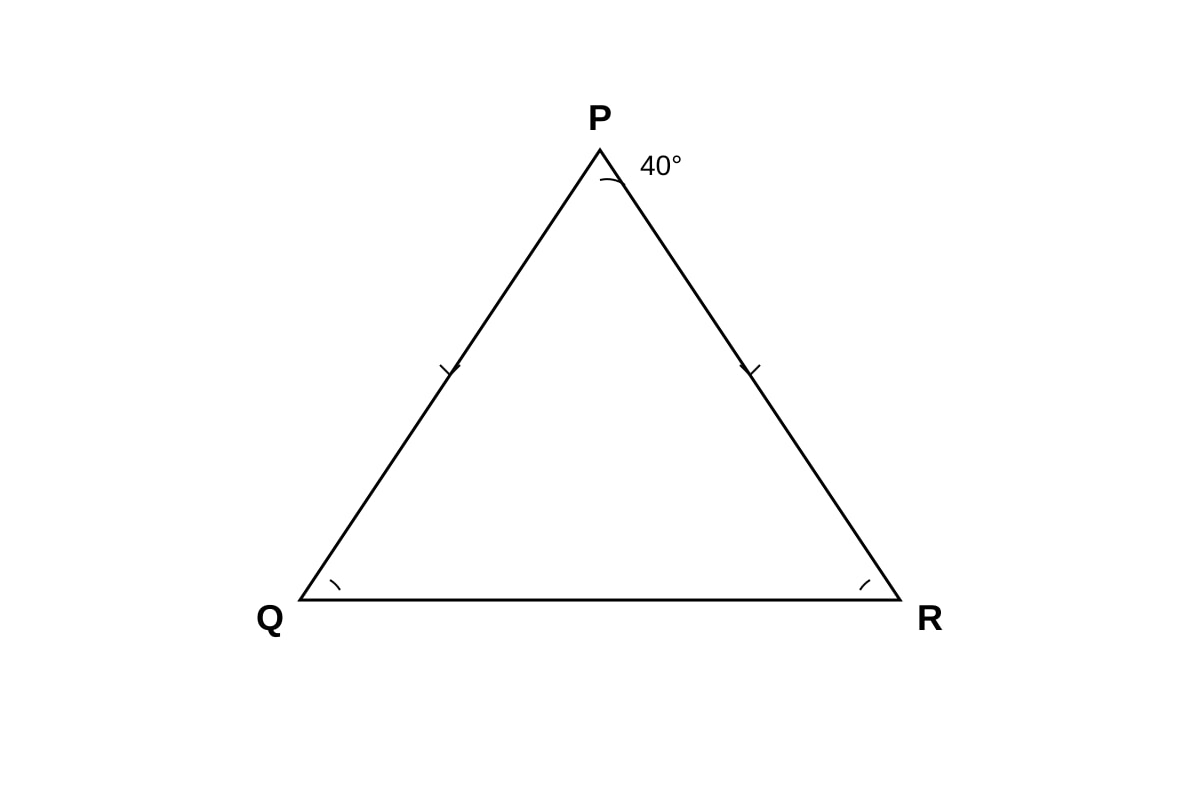
2. The figure shows an isosceles triangle where . Given that , find .
<image_placeholder> id: Q2-fig1 type: diagram linked_question: Q2 description: An isosceles triangle PQR with vertex P at the top. Side PQ equals side PR. The top angle QPR is 40 degrees. The base angle PQR is to be found. labels: P, Q, R, 40° values: Angle QPR = 40°, PQ = PR must_show: Tick marks on sides PQ and PR to indicate equality. </image_placeholder>
_______________ [2]
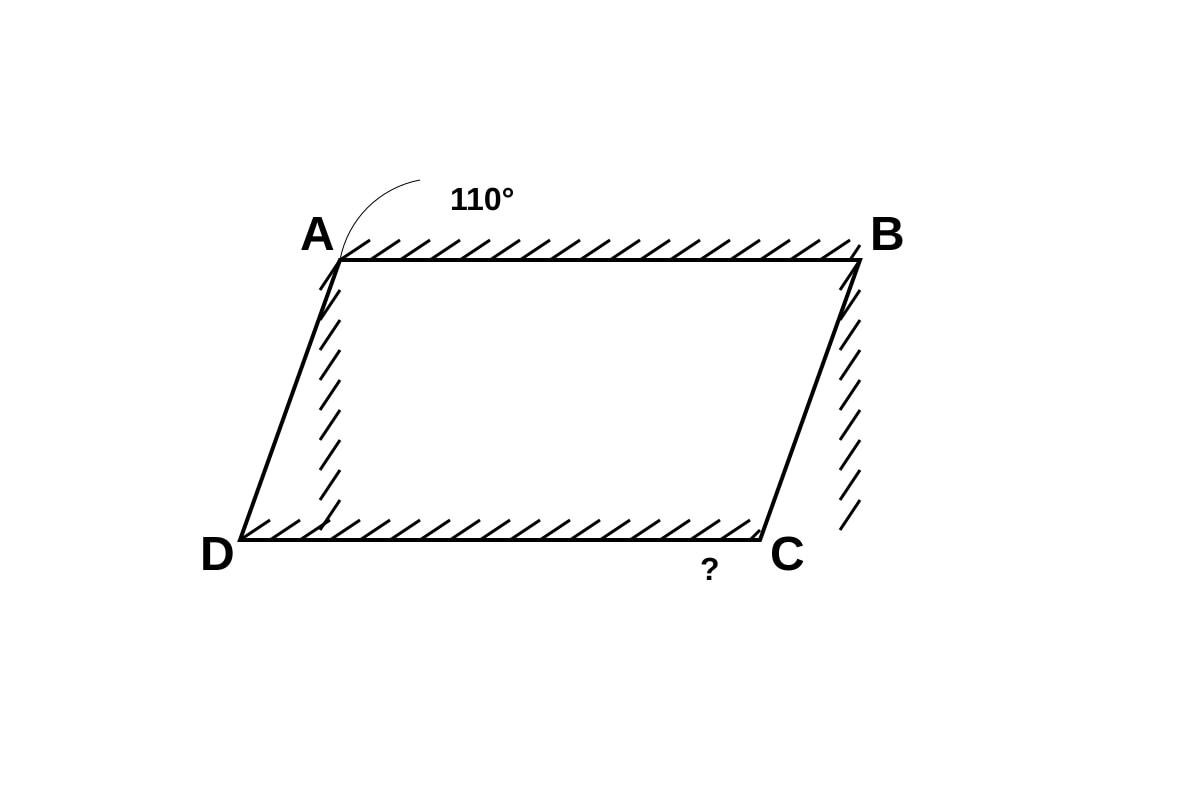
3. In the figure, is a parallelogram. Find .
<image_placeholder> id: Q3-fig1 type: diagram linked_question: Q3 description: A parallelogram ABCD. Angle DAB is labeled 110 degrees. Angle ADC is the unknown. labels: A, B, C, D, 110° values: Angle DAB = 110° must_show: Parallel indicators on AB/DC and AD/BC. </image_placeholder>
_______________ [2]
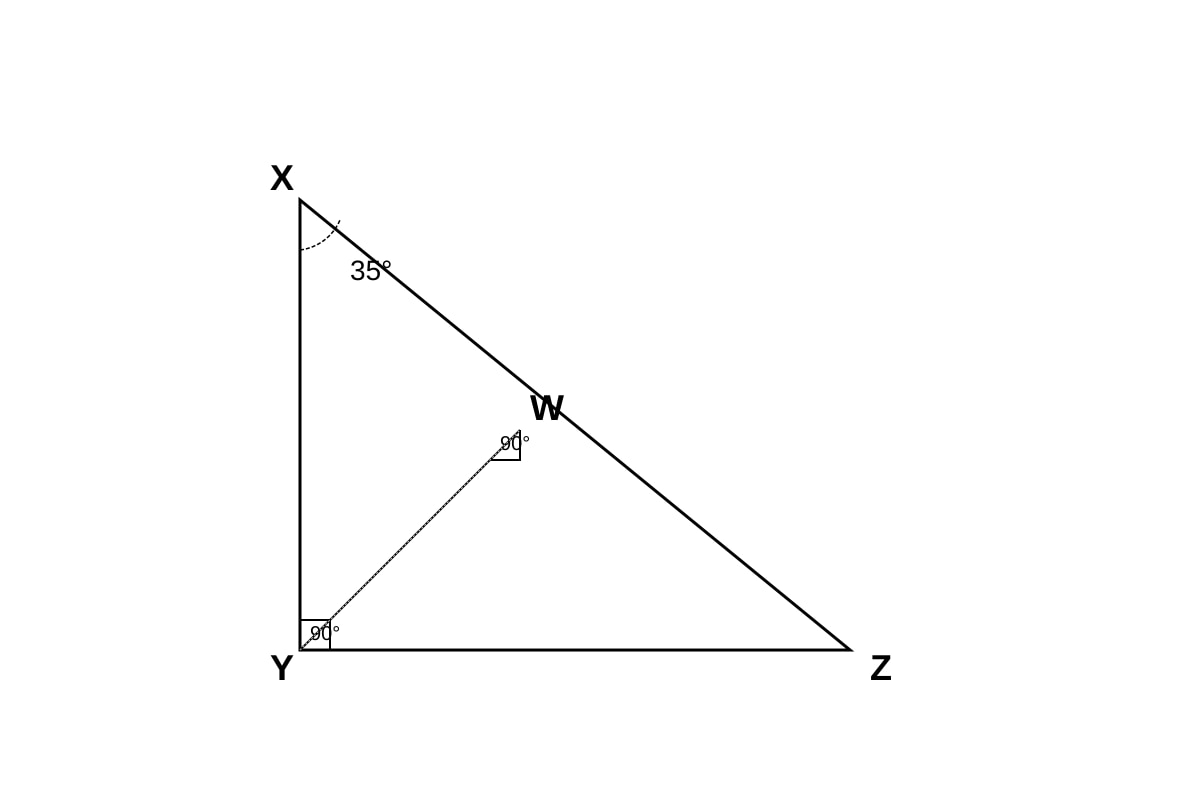
4. The figure shows a right-angled triangle with . is a point on such that is perpendicular to . If , find .
<image_placeholder> id: Q4-fig1 type: diagram linked_question: Q4 description: Right-angled triangle XYZ (right angle at Y). An altitude YW is drawn to the hypotenuse XZ. Angle YXZ is 35 degrees. labels: X, Y, Z, W, 35°, 90° (at Y and W) values: Angle YXZ = 35°, Angle XYZ = 90°, Angle YWX = 90° must_show: Right angle symbols at Y and W. </image_placeholder>
_______________ [2]
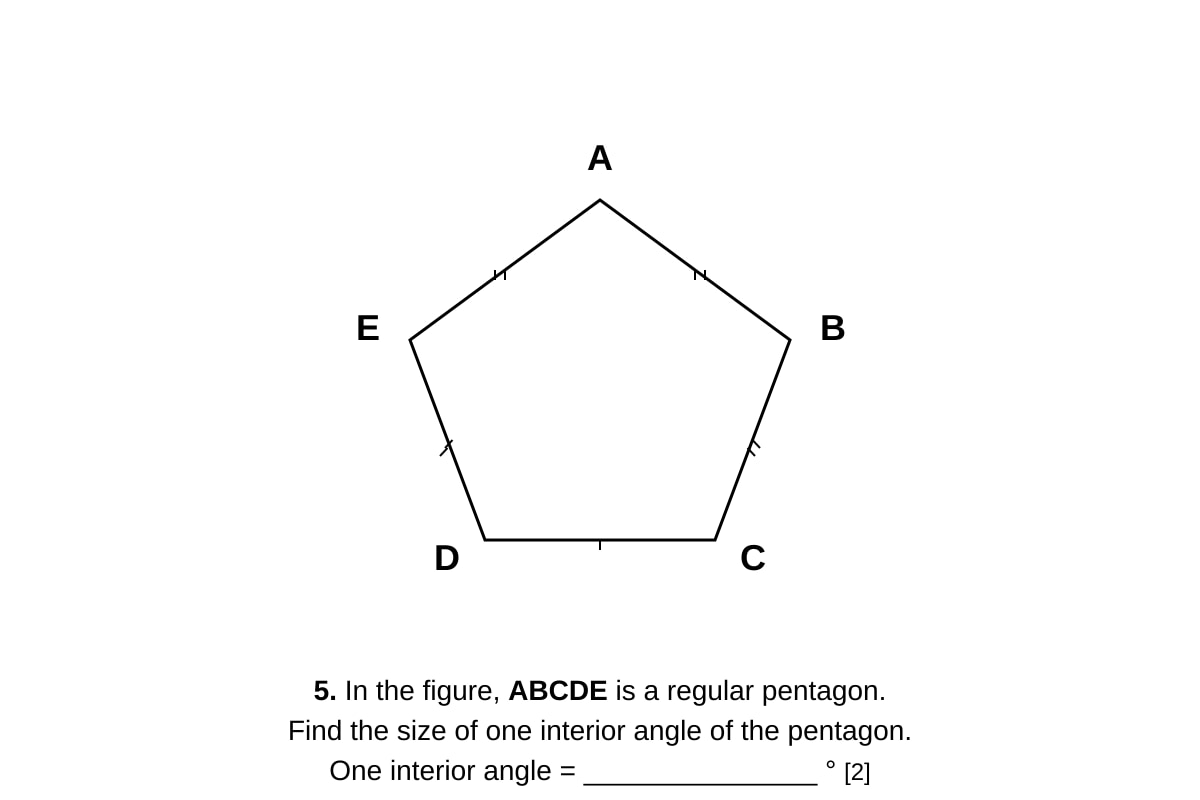
5. In the figure, is a regular pentagon. Find the size of one interior angle of the pentagon.
<image_placeholder> id: Q5-fig1 type: diagram linked_question: Q5 description: A regular pentagon ABCDE. labels: A, B, C, D, E values: Regular pentagon must_show: Equal side indicators. </image_placeholder>
One interior angle _______________ [2]
Section B: Circles and Composite Figures (Questions 6–12)
Questions 6–10 carry 2 marks each. Questions 11–12 carry 3 marks each.
6. Find the circumference of a circle with a diameter of . (Take )
Circumference _______________ [2]
7. Find the area of a semi-circle with a radius of . (Take )
Area _______________ [2]
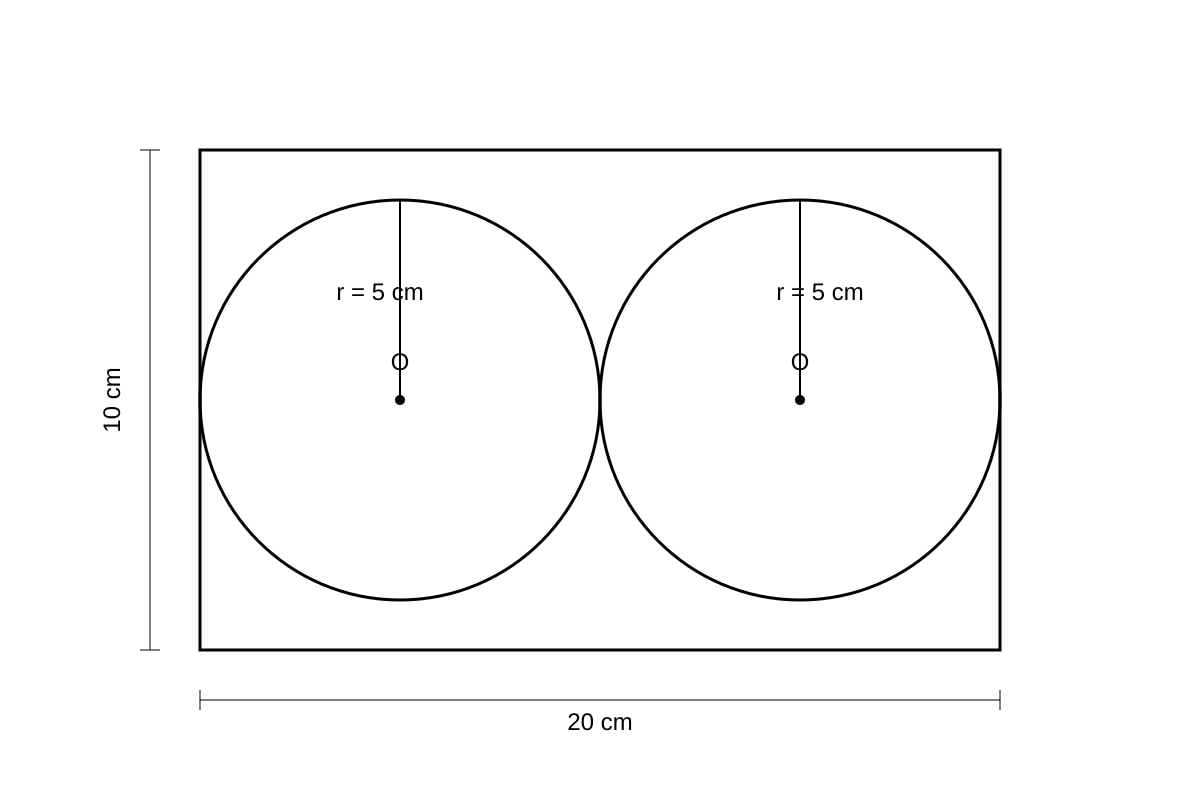
8. The figure shows two identical circles of radius touching each other externally inside a rectangle. The circles also touch the longer sides of the rectangle. Find the perimeter of the rectangle.
<image_placeholder> id: Q8-fig1 type: diagram linked_question: Q8 description: A rectangle containing two identical circles side-by-side. The circles touch each other in the middle and touch the top and bottom sides of the rectangle. They also touch the left and right ends of the rectangle. labels: r = 5 cm values: Radius = 5 cm must_show: Centers of circles, radius indicators. </image_placeholder>
Perimeter _______________ [2]
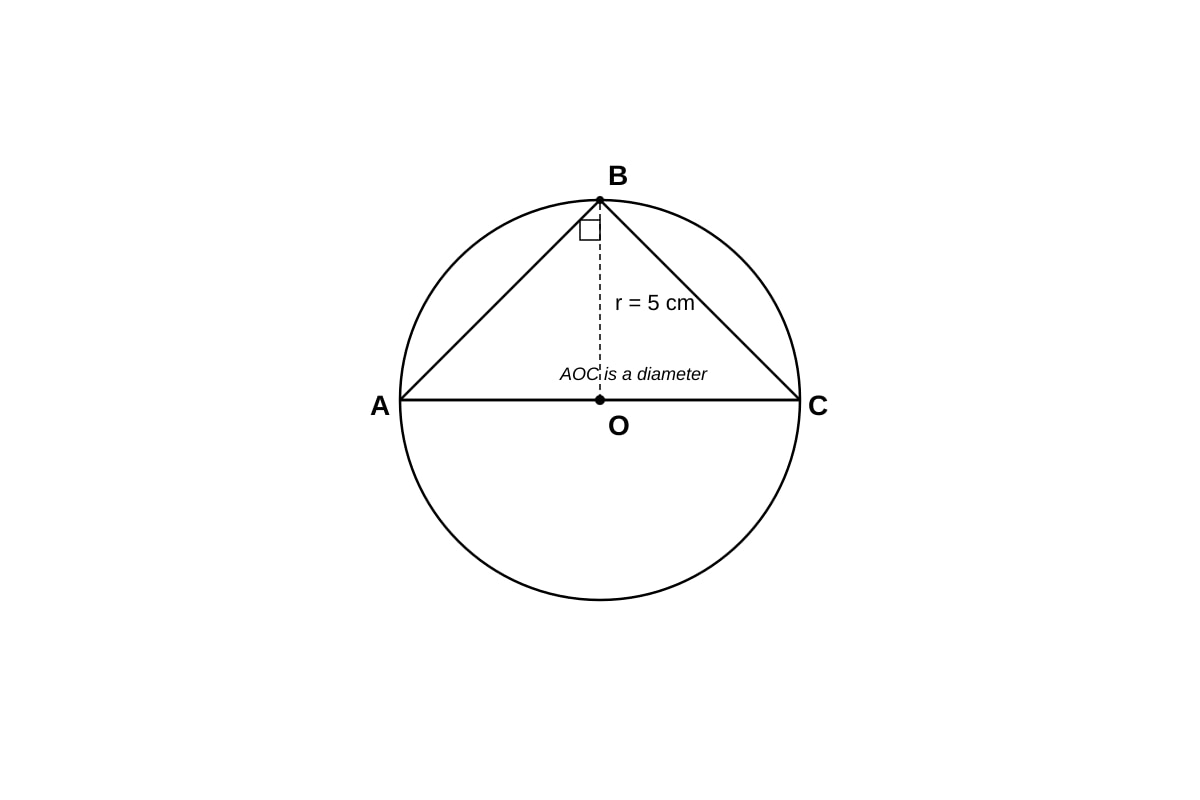
9. In the figure, is the center of the circle. is a diameter. Find .
<image_placeholder> id: Q9-fig1 type: diagram linked_question: Q9 description: A circle with center O. Diameter AOC is drawn horizontally. Point B is on the circumference above the diameter. Triangle ABC is formed. labels: A, B, C, O values: AOC is diameter must_show: Center O marked. </image_placeholder>
_______________ [2]
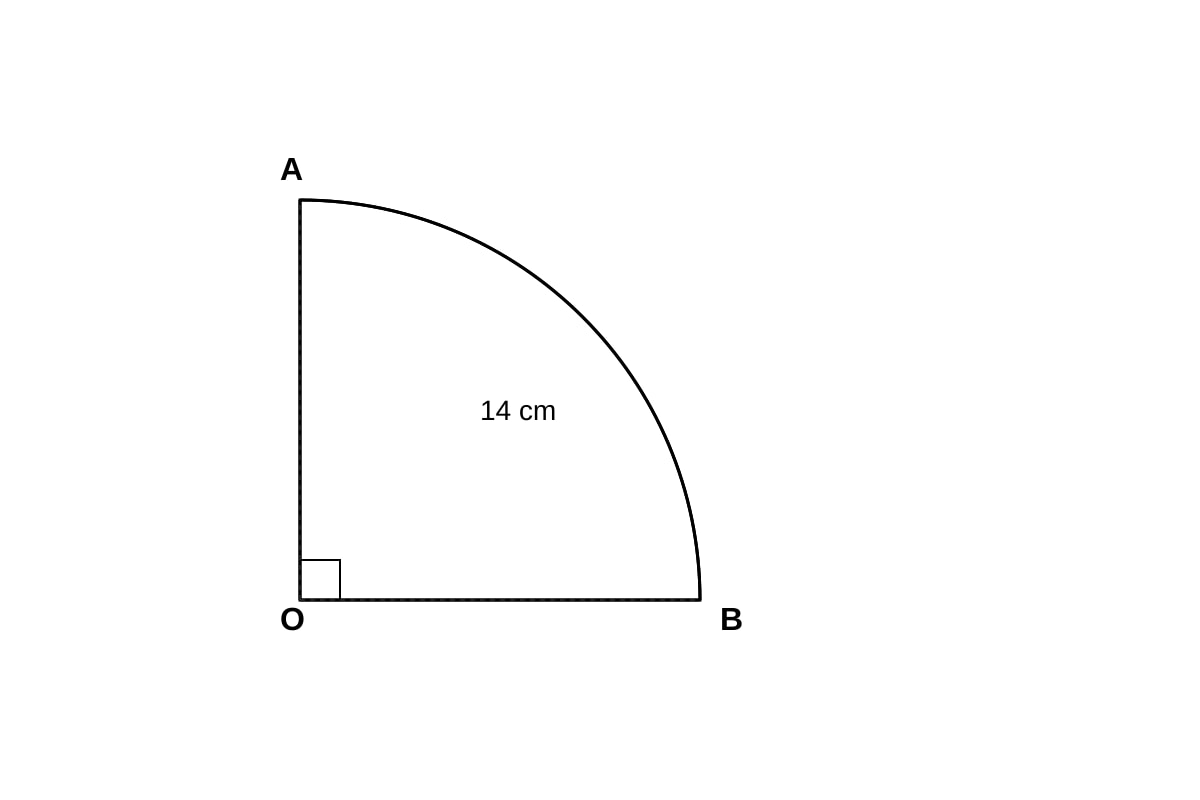
10. The figure shows a quadrant of a circle with radius . Find the perimeter of the quadrant. (Take )
<image_placeholder> id: Q10-fig1 type: diagram linked_question: Q10 description: A quadrant (quarter circle) with center O. Radius OA and OB are perpendicular. Arc AB connects them. labels: O, A, B, 14 cm values: Radius = 14 cm must_show: Right angle at O. </image_placeholder>
Perimeter _______________ [2]
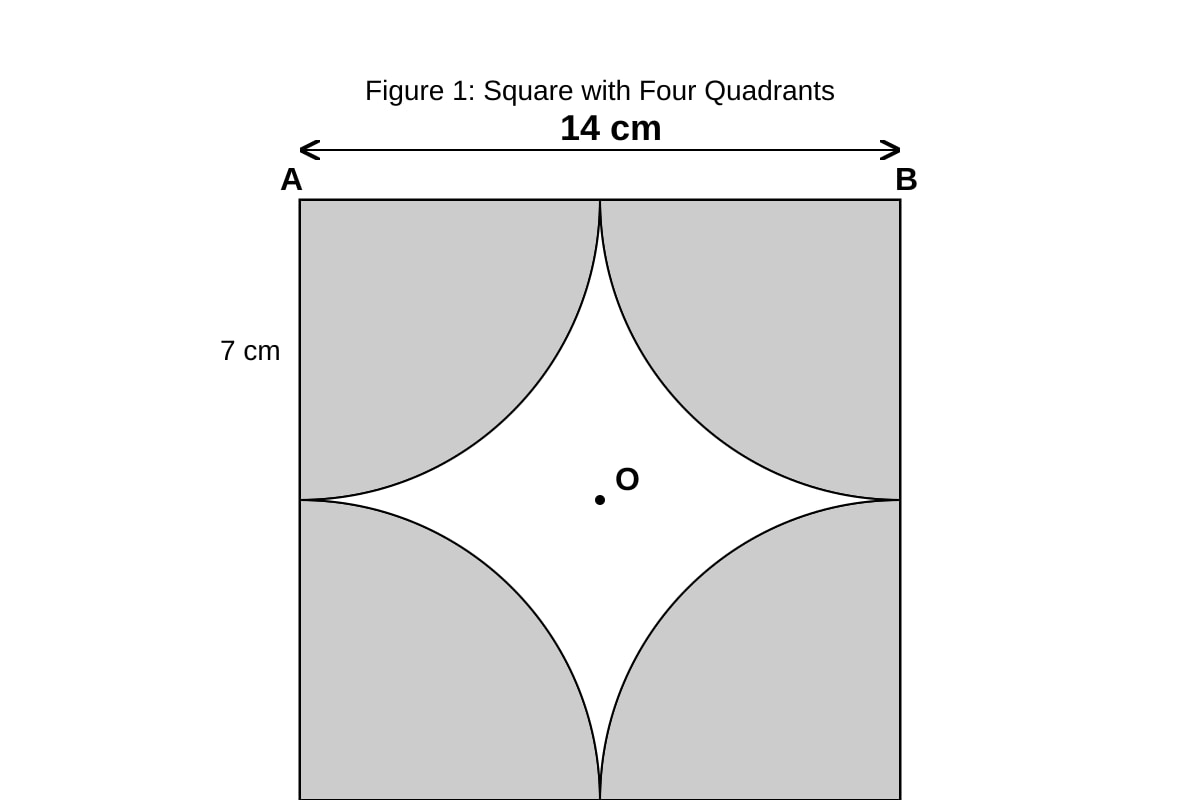
11. The figure shows a square of side with four identical quadrants drawn inside it, centered at each corner. The quadrants touch each other at the midpoints of the square's sides. Find the area of the unshaded region in the center. (Take )
<image_placeholder> id: Q11-fig1 type: diagram linked_question: Q11 description: A square. Four quarter-circles (quadrants) are drawn from each corner, meeting in the middle. The central region formed by the intersection of the empty space is unshaded, while the quadrants are shaded (or vice versa, question asks for unshaded center). Let's assume the quadrants are shaded and the center star-like shape is unshaded. Actually, standard P6 question: 4 quadrants inside a square usually leave a central shape. Wait, if radius is half side (7cm), they touch. The unshaded region is the space between the arcs? No, if they touch, there is no gap between them horizontally/vertically, but there is a central region bounded by 4 arcs. labels: 14 cm values: Side = 14 cm, Radius = 7 cm must_show: Square, 4 arcs meeting at center. </image_placeholder>
Area _______________ [3]
12. The figure shows a composite shape made of a semi-circle and a triangle. The diameter of the semi-circle is , which is also the base of the triangle. The height of the triangle is . Find the total area of the figure. (Take )
<image_placeholder> id: Q12-fig1 type: diagram linked_question: Q12 description: A triangle sitting on top of a semi-circle. The base of the triangle is the diameter of the semi-circle. labels: 10 cm (diameter/base), 12 cm (height of triangle) values: Diameter = 10 cm, Height = 12 cm must_show: Dashed line for height. </image_placeholder>
Total Area _______________ [3]
Section C: Complex Geometry and Problem Solving (Questions 13–20)
Questions 13–16 carry 3 marks each. Questions 17–20 carry 4 marks each.
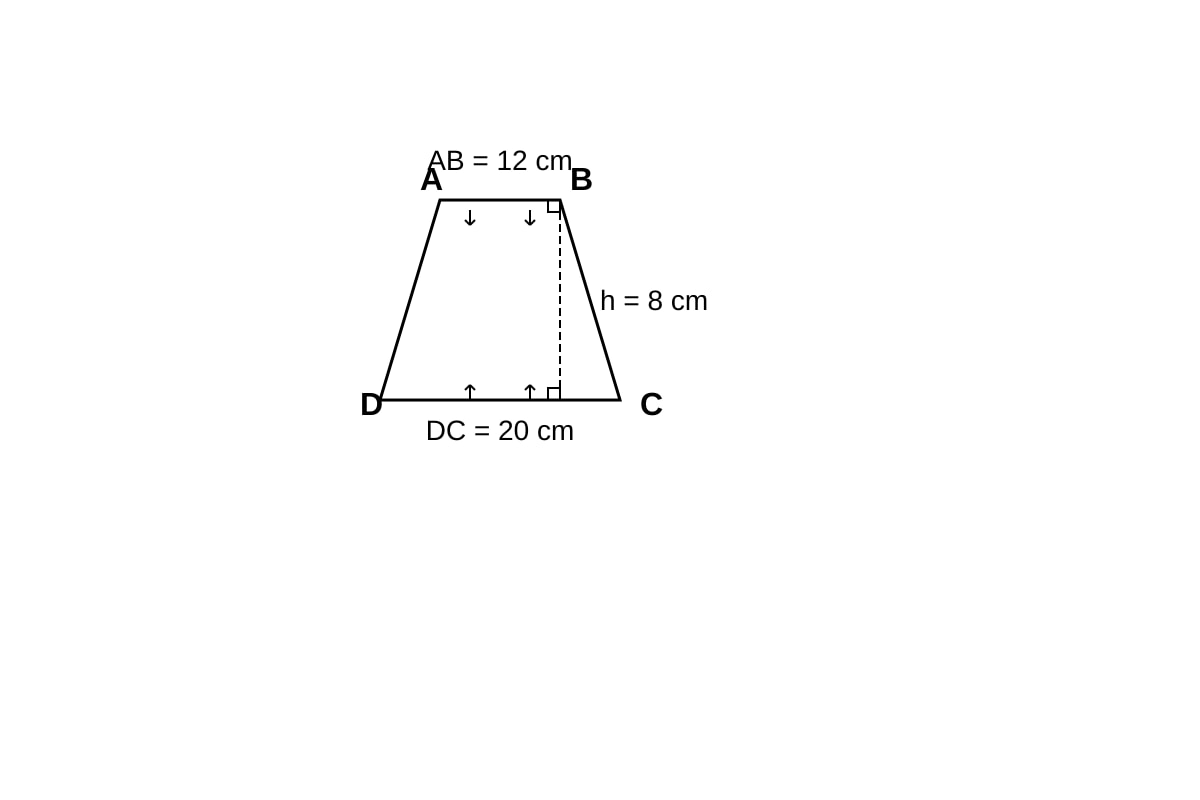
13. The figure shows a trapezium where is parallel to . , , and the height is . Find the area of the trapezium.
<image_placeholder> id: Q13-fig1 type: diagram linked_question: Q13 description: A trapezium ABCD. AB is the top parallel side, DC is the bottom. Height is indicated. labels: AB=12cm, DC=20cm, h=8cm values: AB=12, DC=20, h=8 must_show: Right angle symbol for height. </image_placeholder>
Area _______________ [3]
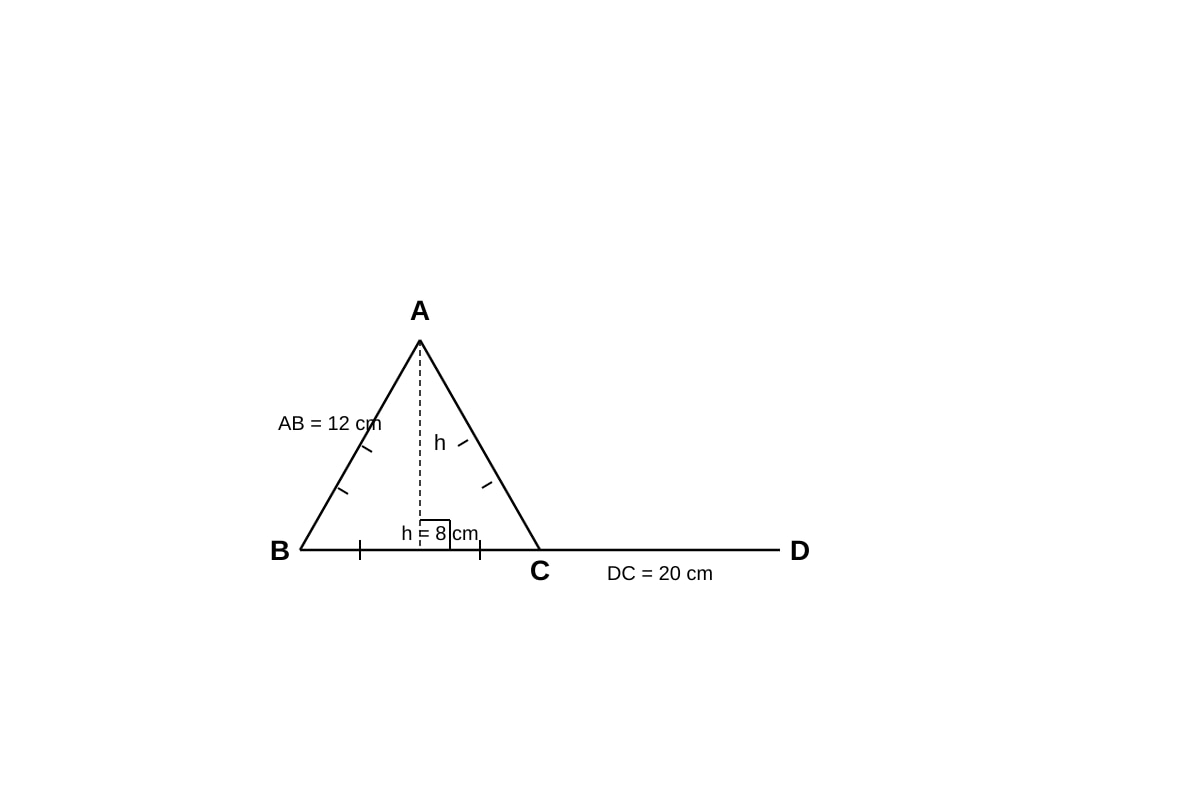
14. In the figure, is an equilateral triangle. is a straight line. Find .
<image_placeholder> id: Q14-fig1 type: diagram linked_question: Q14 description: Equilateral triangle ABC. Base BC is extended to D. labels: A, B, C, D values: Equilateral triangle must_show: Tick marks on all 3 sides of ABC. </image_placeholder>
_______________ [3]
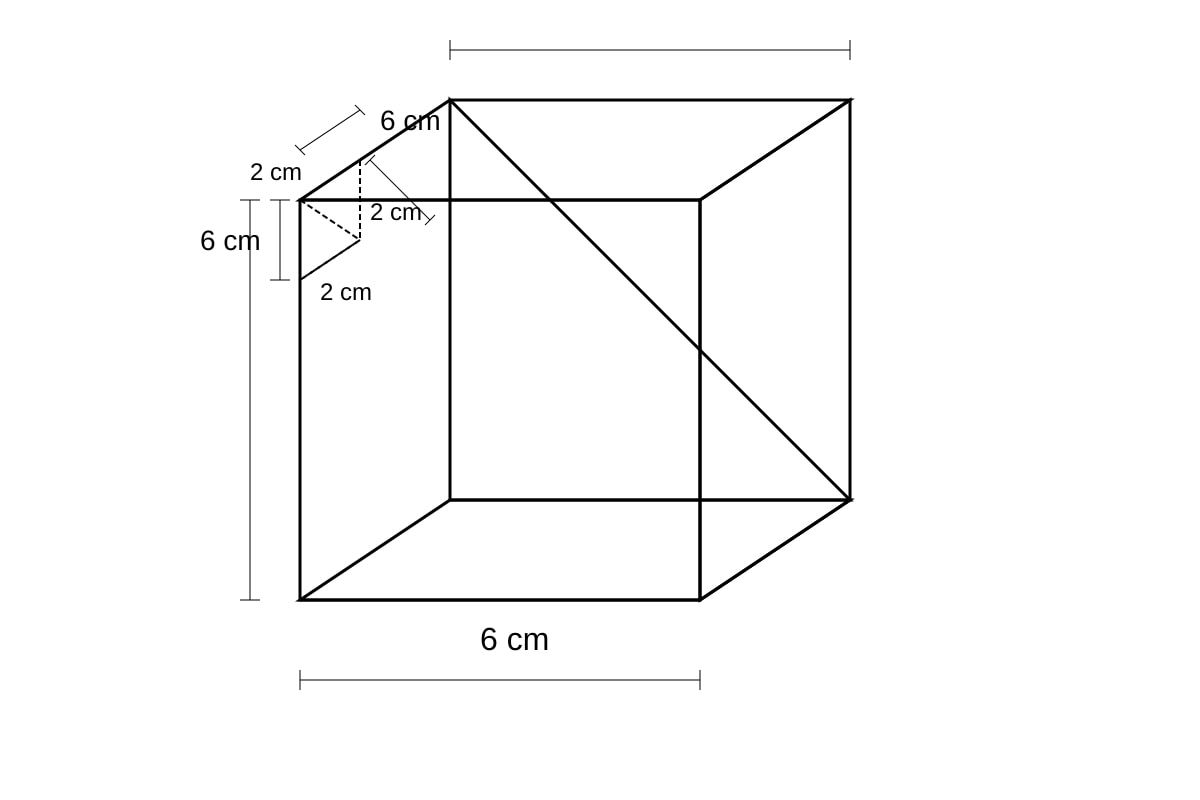
15. The figure shows a cube of side . A smaller cube of side is cut out from one of the corners. Find the surface area of the remaining solid.
<image_placeholder> id: Q15-fig1 type: diagram linked_question: Q15 description: A large cube with a small cubic corner removed. labels: 6 cm, 2 cm values: Large side=6, Small side=2 must_show: Dashed lines indicating the removed corner. </image_placeholder>
Surface Area _______________ [3]
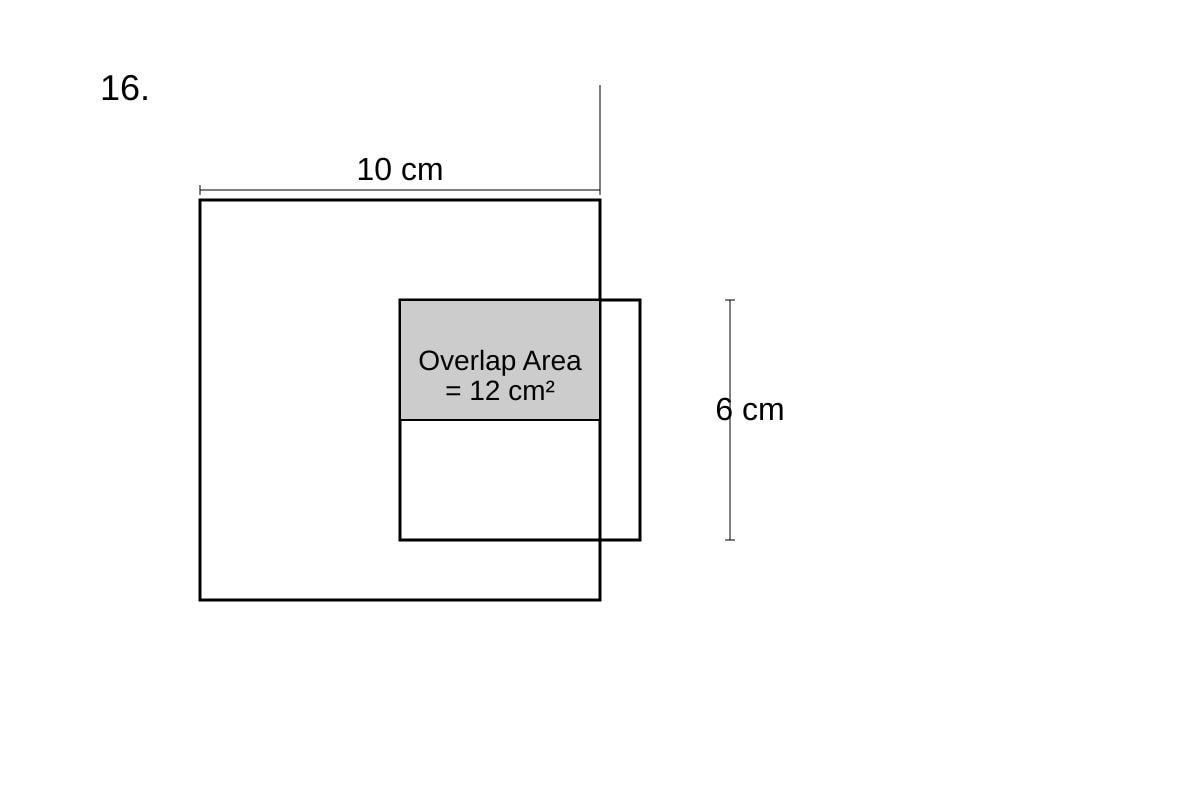
16. The figure shows two overlapping squares. The larger square has side and the smaller square has side . The overlapping region is a rectangle of area . Find the total area of the figure covered by the two squares.
<image_placeholder> id: Q16-fig1 type: diagram linked_question: Q16 description: Two squares overlapping. One larger, one smaller. The intersection is shaded. labels: 10 cm, 6 cm, Overlap Area = 12 cm² values: Side1=10, Side2=6, Overlap=12 must_show: Clear overlap region. </image_placeholder>
Total Area _______________ [3]
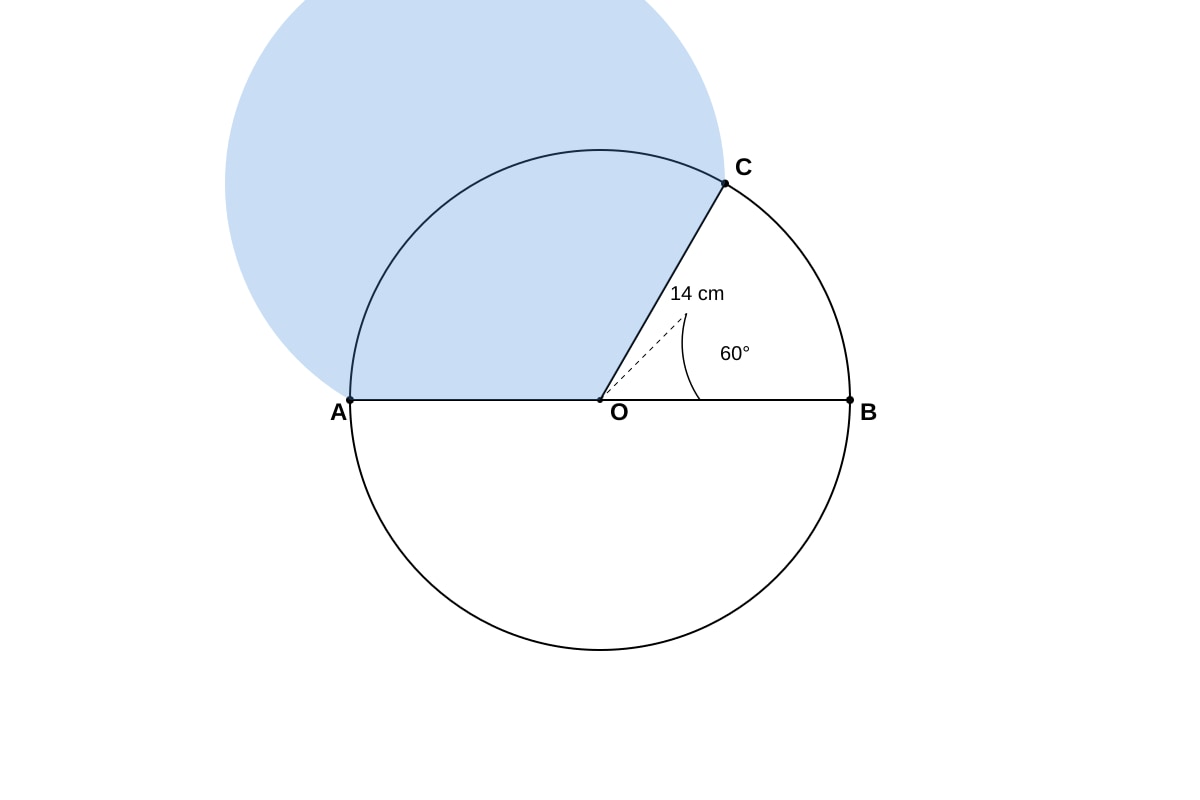
17. The figure shows a circle with center and radius . is a straight line. is a point on the circumference such that . Find the area of the shaded sector . (Take )
<image_placeholder> id: Q17-fig1 type: diagram linked_question: Q17 description: A circle with diameter AOB. Radius OC is drawn. Angle BOC is 60 degrees. Sector AOC is shaded. labels: O, A, B, C, 14 cm, 60° values: Radius=14, Angle BOC=60 must_show: Shaded region AOC. </image_placeholder>
Area of sector _______________ [4]
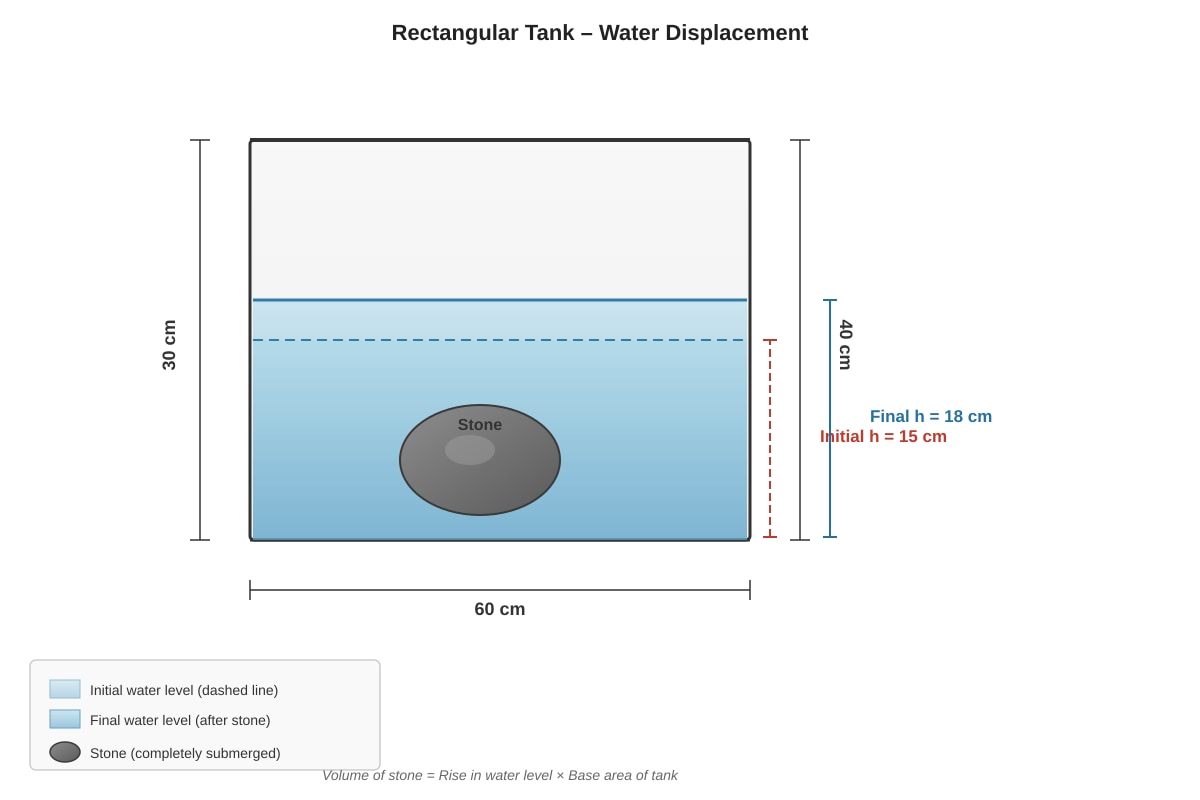
18. The figure shows a rectangular tank long, wide and high. It is filled with water to a height of . A stone is completely submerged in the water, causing the water level to rise to . Find the volume of the stone.
<image_placeholder> id: Q18-fig1 type: diagram linked_question: Q18 description: A rectangular tank partially filled with water. A stone is shown submerged. Water level rises. labels: 60cm, 40cm, 30cm, Initial h=15cm, Final h=18cm values: L=60, W=40, H_tank=30, h1=15, h2=18 must_show: Water levels before and after (or just the change). </image_placeholder>
Volume of stone _______________ [4]
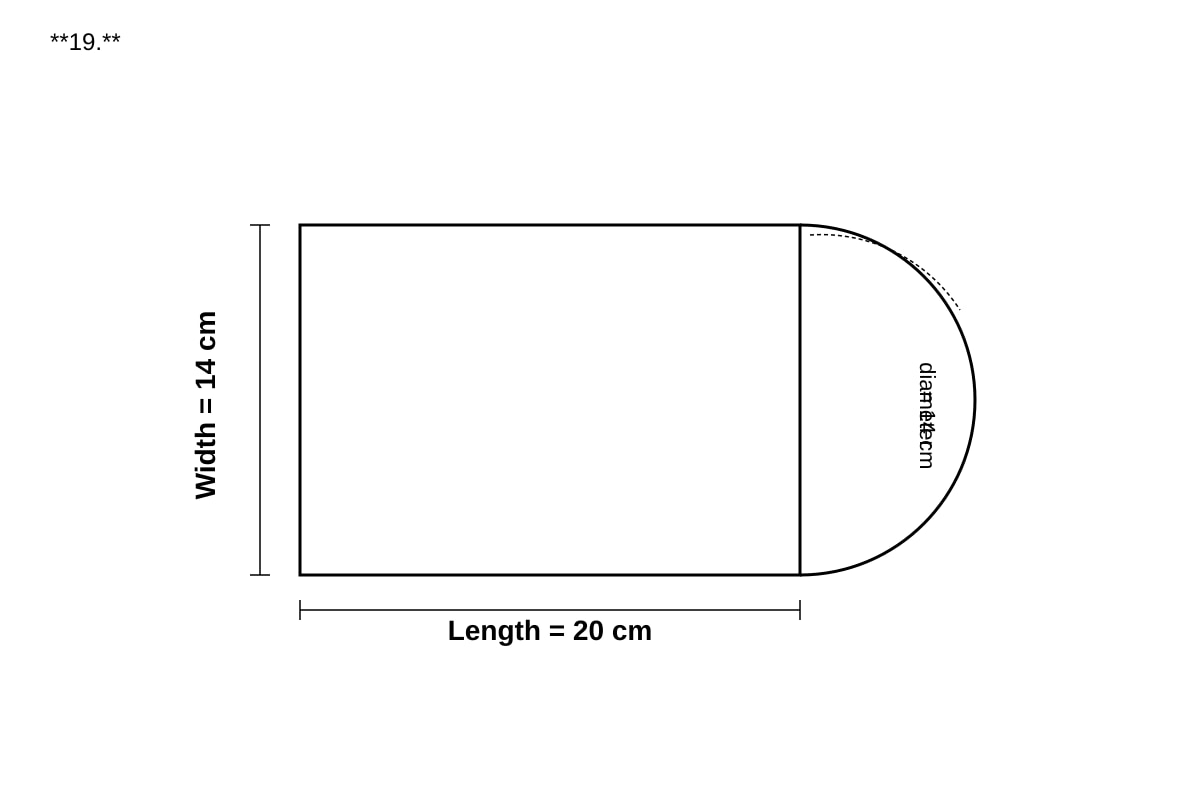
19. The figure shows a composite shape consisting of a semi-circle attached to a rectangle. The rectangle has length and width . The diameter of the semi-circle corresponds to the width of the rectangle. Find the perimeter of the entire figure. (Take )
<image_placeholder> id: Q19-fig1 type: diagram linked_question: Q19 description: A rectangle with a semi-circle bulging out from one of the shorter sides (width). labels: Length=20cm, Width=14cm values: L=20, W=14 (which is diameter) must_show: The side where the semi-circle is attached is internal (not part of perimeter). </image_placeholder>
Perimeter _______________ [4]
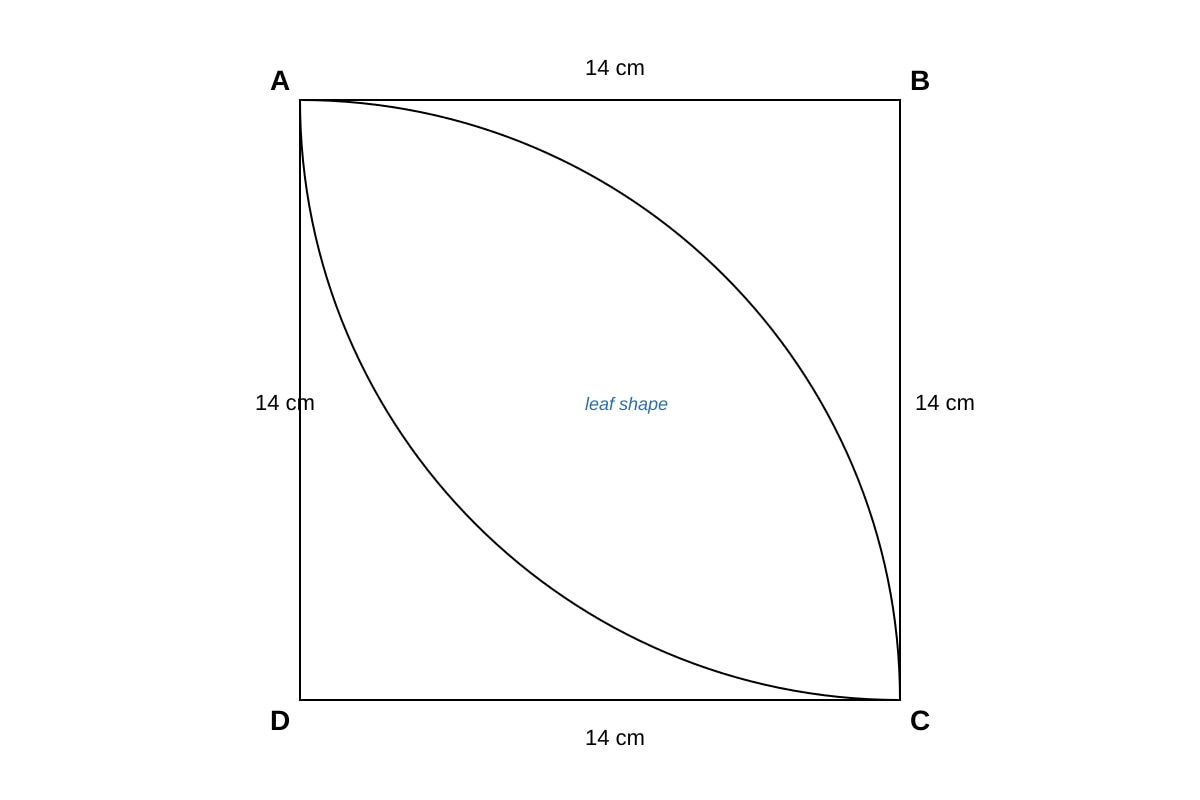
20. In the figure, is a square of side . Two quadrants are drawn with centers at and and radius . Find the area of the overlapping region (the leaf shape). (Take )
<image_placeholder> id: Q20-fig1 type: diagram linked_question: Q20 description: A square ABCD. A quadrant centered at B sweeps from A to C. A quadrant centered at D sweeps from A to C. They overlap in the middle forming a leaf shape. labels: 14 cm values: Side=14 must_show: The overlapping leaf-shaped region clearly defined. </image_placeholder>
Area of overlapping region _______________ [4]
Answers
Primary 6 PSLE Mathematics Quiz - Geometry (Answer Key)
General Note:
- is taken as unless specified as .
- Steps are shown for clarity. Students may use alternative valid methods (e.g., model drawing vs algebra).
Section A: Angles and Triangles
1. Answer:
- Concept: Angles on a straight line add up to .
- Working:
- Marking: 1 mark for subtraction setup, 1 mark for correct answer.
2. Answer:
- Concept: Base angles of an isosceles triangle are equal. Sum of angles in a triangle is .
- Working: Since , . Sum of angles .
- Marking: 1 mark for finding sum of base angles (), 1 mark for dividing by 2.
3. Answer:
- Concept: Consecutive interior angles between parallel lines add up to .
- Working: , so .
- Marking: 1 mark for property identification/subtraction, 1 mark for answer.
4. Answer:
- Concept: Sum of angles in a triangle is . Complementary angles.
- Working: In , and . In (right-angled at ): (Alternative: because both are complementary to ).
- Marking: 1 mark for finding or setting up relation, 1 mark for final answer.
5. Answer:
- Concept: Sum of interior angles of an -sided polygon is . For a regular polygon, divide by . Note: While the formula is secondary, P6 students are taught that a regular pentagon can be split into 3 triangles from one vertex, or they memorize the interior angle of common regular polygons.
- Working: Sum of interior angles . One interior angle .
- Marking: 1 mark for sum (), 1 mark for division.
Section B: Circles and Composite Figures
6. Answer:
- Concept: Circumference .
- Working:
- Marking: 1 mark for formula/substitution, 1 mark for answer.
7. Answer:
- Concept: Area of semi-circle .
- Working:
- Marking: 1 mark for calculation, 1 mark for halving.
8. Answer:
- Concept: Dimensions of bounding rectangle.
- Working: Radius . Diameter . Width of rectangle . Length of rectangle . Perimeter .
- Marking: 1 mark for identifying L and W, 1 mark for perimeter calc.
9. Answer:
- Concept: Angle in a semi-circle is a right angle.
- Working: Since is the diameter, the angle subtended at the circumference () is .
- Marking: 2 marks for correct answer (knowledge-based).
10. Answer:
- Concept: Perimeter of quadrant .
- Working: Arc length . Two radii . Total Perimeter . Wait, let me re-calculate. . Correct. . Correction in Answer Key: The previous draft said 36, which was incorrect. Correct Answer:
- Marking: 1 mark for arc length, 1 mark for adding radii.
11. Answer:
- Concept: Area of square minus area of 4 quadrants (which make 1 full circle).
- Working: Side of square . Area of square . Radius of each quadrant . 4 Quadrants Full Circle. Area of Circle . Unshaded Area .
- Marking: 1 mark for square area, 1 mark for circle area, 1 mark for subtraction.
12. Answer:
- Concept: Area of triangle + Area of semi-circle.
- Working: Triangle Base , Height . Area of Triangle . Semi-circle Radius . Area of Semi-circle . Total Area . Wait, re-reading Q12. "Take ". Calculation: . Total . Correct Answer:
- Marking: 1 mark for triangle area, 1 mark for semi-circle area, 1 mark for total.
Section C: Complex Geometry and Problem Solving
13. Answer:
- Concept: Area of trapezium .
- Working:
- Marking: 1 mark for sum of parallel sides, 1 mark for formula application, 1 mark for answer.
14. Answer:
- Concept: Exterior angle of a regular polygon / Angles on a straight line.
- Working: Interior angle of equilateral triangle . . is a straight line, so .
- Marking: 1 mark for identifying , 1 mark for subtraction, 1 mark for answer.
15. Answer:
- Concept: Surface area of a cube remains unchanged when a corner cube is removed (the 3 outer faces removed are replaced by 3 inner faces of the same area).
- Working: Original Surface Area . Removing a corner cube removes 3 faces of area but exposes 3 new internal faces of area . Net change . New Surface Area .
- Marking: 1 mark for original SA calc, 2 marks for reasoning that SA is unchanged.
16. Answer:
- Concept: Principle of Inclusion-Exclusion. Area() = Area() + Area() - Area().
- Working: Area of Large Square . Area of Small Square . Overlap . Total Area .
- Marking: 1 mark for individual areas, 1 mark for subtraction of overlap, 1 mark for answer.
17. Answer: (or )
- Concept: Area of sector. Angle at center.
- Working: is a straight line (). . . Fraction of circle . Area of Circle . Area of Sector Wait, calculation check: . Correct. . Correct Answer: (or )
- Marking: 1 mark for finding angle , 1 mark for area of full circle, 1 mark for fraction calculation, 1 mark for final answer.
18. Answer:
- Concept: Volume of displaced water = Volume of stone.
- Working: Rise in water level . Base Area of tank . Volume of stone .
- Marking: 1 mark for height difference, 1 mark for base area, 1 mark for multiplication, 1 mark for answer.
19. Answer:
- Concept: Perimeter of composite shape.
- Working:
The shape consists of:
- Three sides of the rectangle: Two lengths ( each) and one width (). The other width is internal. Sum .
- The arc of the semi-circle. Diameter . Arc Length . Total Perimeter .
- Marking: 1 mark for straight sides sum, 1 mark for arc length, 1 mark for addition, 1 mark for answer.
20. Answer:
- Concept: Area of overlap of two quadrants in a square.
- Working: Area of one quadrant . Area of two quadrants . Area of Square . The two quadrants cover the square, but the overlapping region is counted twice. Area of Overlap .
- Marking: 1 mark for area of one quadrant, 1 mark for sum of two quadrants, 1 mark for subtraction of square area, 1 mark for answer.