From Real Exams Quiz
Primary 6 PSLE Mathematics Angles Geometry Quiz
Free P6 PSLE Maths Angles Geometry quiz, Exam version, with questions, answers, and PSLE-focused practice for Singapore students.
These static practice materials are generated from the site's syllabus and paper-generation workflow, with source and model context shown so students and parents can evaluate the material before use.
Questions
Free quiz and exam paper access
Enter your details to view this paper
Your access is remembered on this device.
Answers
Answer Key: Primary 6 PSLE Mathematics Quiz - Angles Geometry
Section A: Multiple-Choice Questions
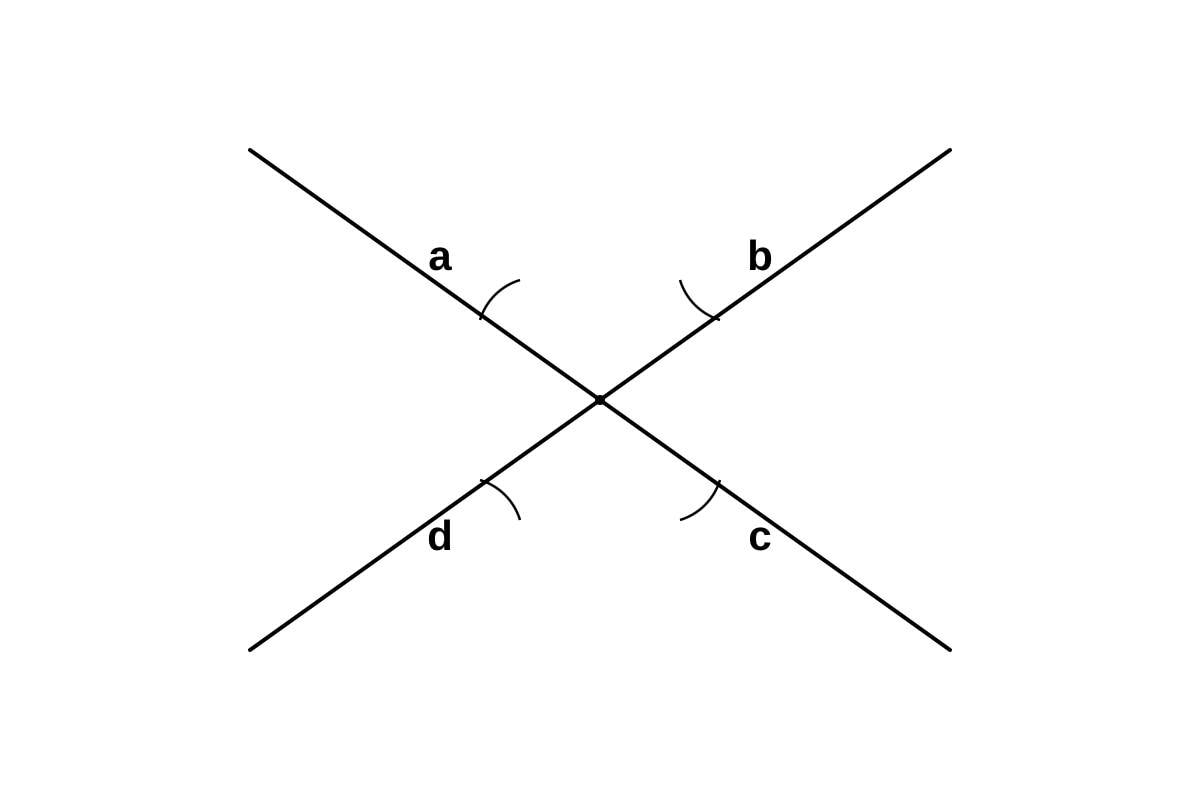
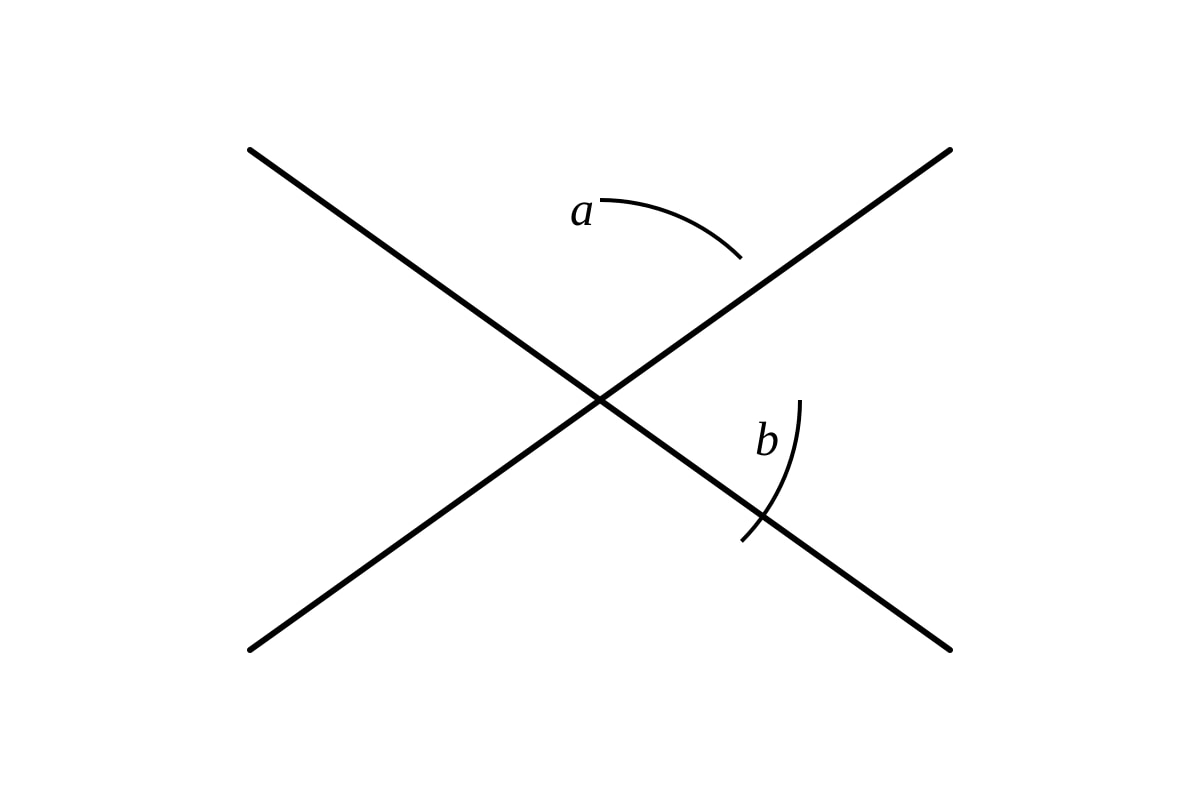
1. B) a and c
- Marks: 1
- Explanation: Vertically opposite angles are the angles opposite each other when two lines intersect. They are equal. In the diagram, angles a and c are opposite each other, so they are vertically opposite angles.
- Common mistake: Students may confuse adjacent angles (a and b) with vertically opposite angles.
2. B) 60°
- Marks: 1
- Explanation: The sum of angles in a triangle is 180°. Third angle = 180° - 35° - 85° = 60°.
- Common mistake: Students may forget that the sum is 180° and subtract from 360° instead.
3. B) 45°
- Marks: 1
- Explanation: A right-angled isosceles triangle has one 90° angle and two equal angles. The two equal angles sum to 90° (since 180° - 90° = 90°). Each equal angle = 90° ÷ 2 = 45°.
- Common mistake: Students may think the equal angles are 60° each (confusing with equilateral triangle).
4. B) 70°
- Marks: 1
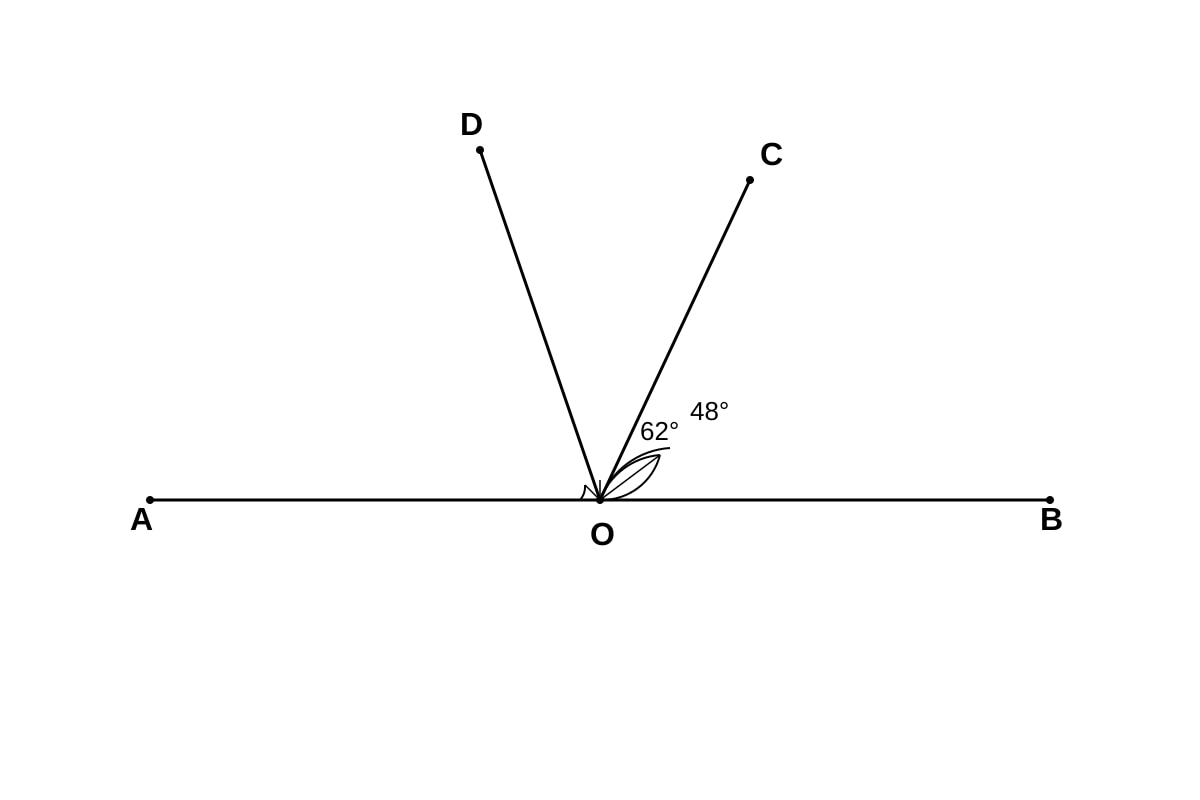
- Explanation: AOB is a straight line, so ∠AOB = 180°. ∠AOC + ∠COD + ∠BOD = 180°. So 62° + 48° + ∠BOD = 180°. ∠BOD = 180° - 62° - 48° = 70°.
- Common mistake: Students may forget that angles on a straight line sum to 180°.
5. B) All sides are equal.
- Marks: 1
- Explanation: A rhombus is a quadrilateral with all four sides equal in length. While a square is a special type of rhombus, a general rhombus does not have equal angles or right angles. A trapezium has one pair of parallel sides, but a rhombus has two pairs of parallel sides.
- Common mistake: Students may think all angles are equal (which is only true for a square).
Section B: Short-Answer Questions
6. ∠x = 72°
- Marks: 2 (1 mark for correct method, 1 mark for correct answer)
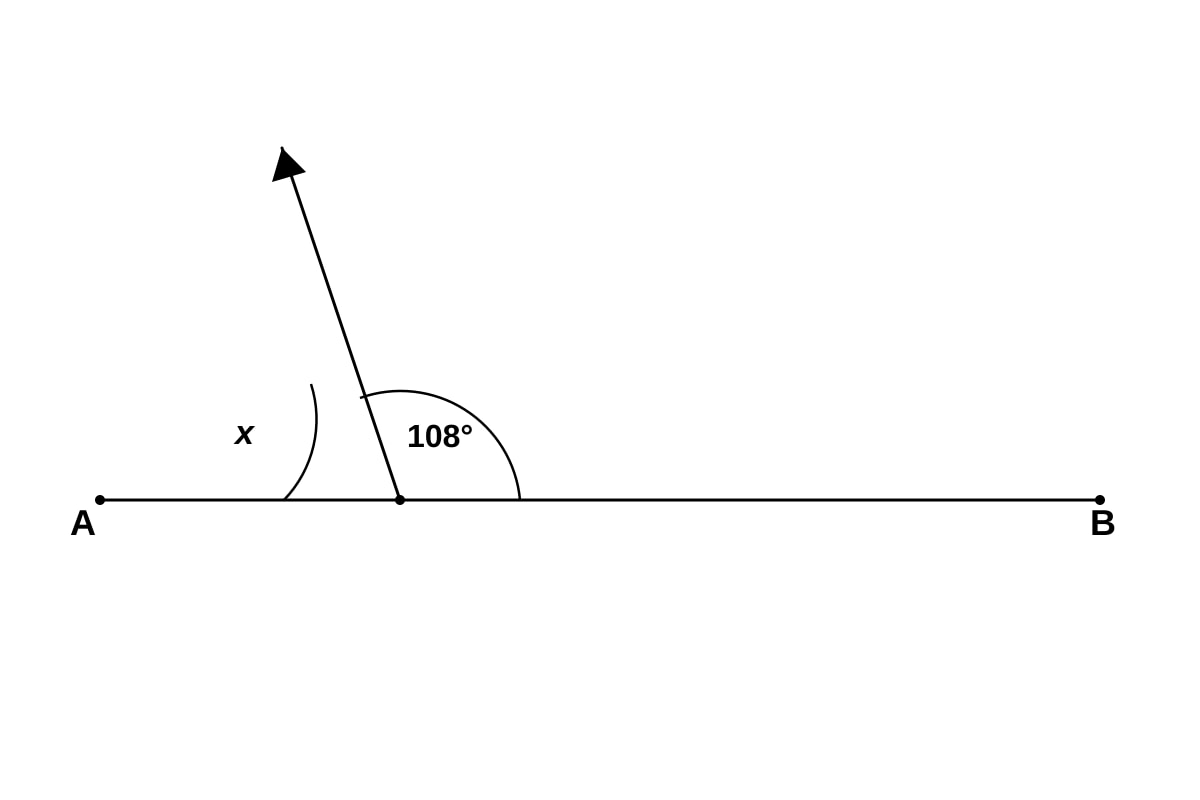
- Explanation: AB is a straight line, so the angles on the line sum to 180°. x + 108° = 180°. x = 180° - 108° = 72°.
- Key concept: Angles on a straight line add up to 180°.
7. ∠QPR = 52°
- Marks: 2 (1 mark for correct method, 1 mark for correct answer)
- Explanation: In triangle PQR, the sum of angles is 180°. ∠QPR + ∠PQR + ∠PRQ = 180°. ∠QPR + 90° + 38° = 180°. ∠QPR = 180° - 90° - 38° = 52°.
- Key concept: Sum of angles in a triangle is 180°.
8. ∠BCD = 65°
- Marks: 2 (1 mark for correct method, 1 mark for correct answer)
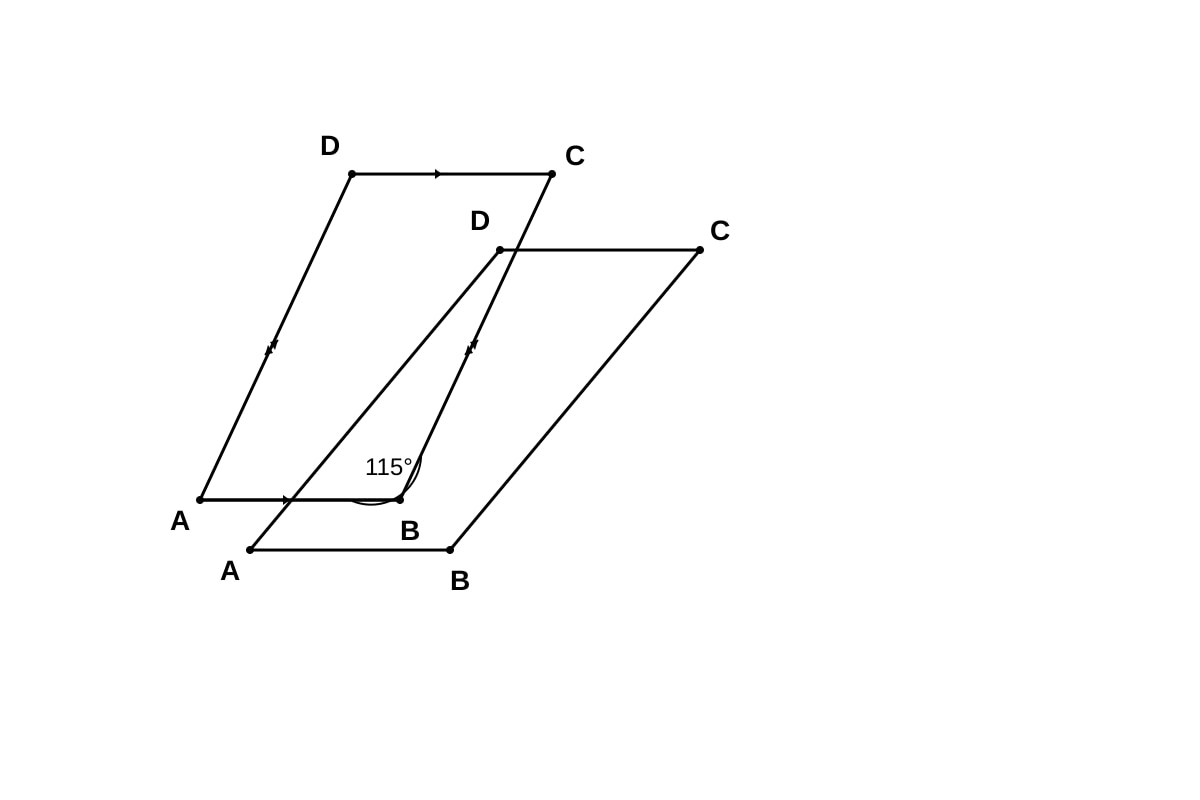
- Explanation: In a parallelogram, adjacent angles are supplementary (sum to 180°). ∠ABC + ∠BCD = 180°. 115° + ∠BCD = 180°. ∠BCD = 180° - 115° = 65°.
- Key concept: Adjacent angles in a parallelogram are supplementary.
- Alternative method: Opposite angles in a parallelogram are equal, so ∠BCD = ∠DAB. But we don't know ∠DAB directly. Using supplementary angles is more direct.
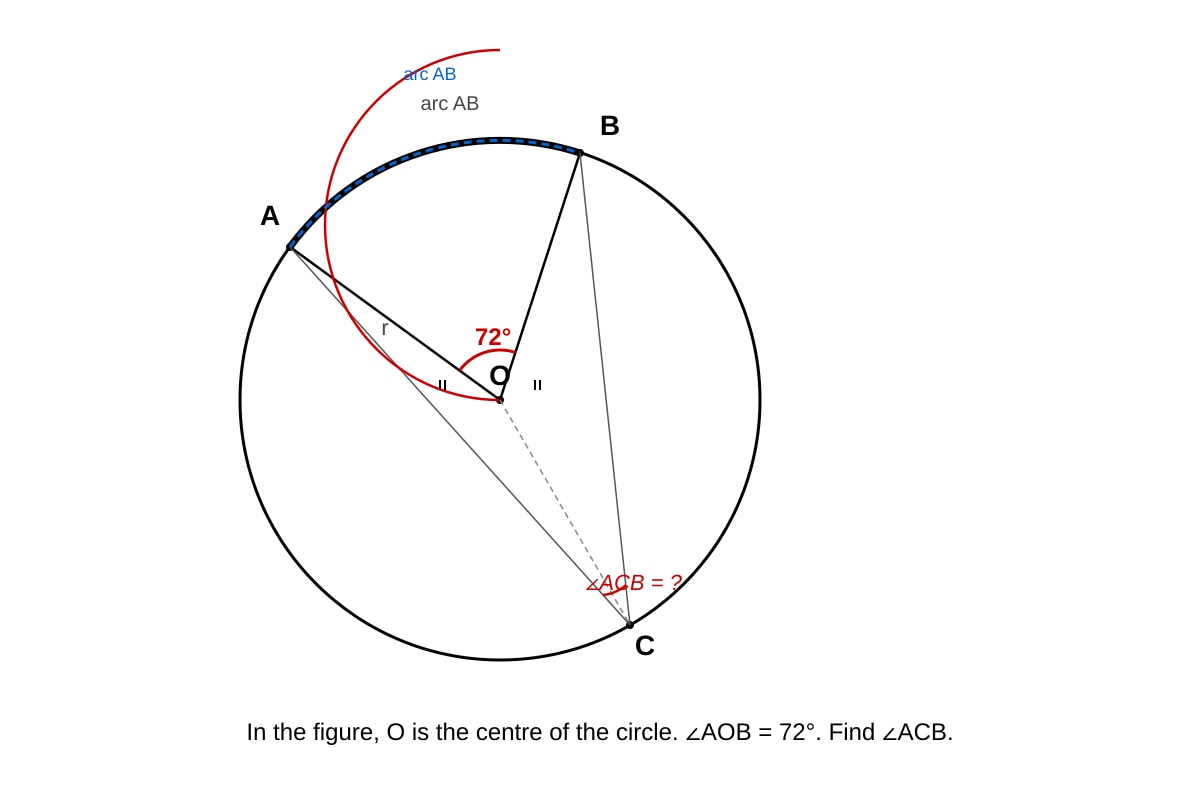
9. ∠ACB = 36°
- Marks: 2 (1 mark for correct method, 1 mark for correct answer)
- Explanation: The angle at the centre (∠AOB) is twice the angle at the circumference (∠ACB) subtended by the same arc AB. So ∠ACB = ∠AOB ÷ 2 = 72° ÷ 2 = 36°.
- Key concept: Angle at centre is twice angle at circumference (for the same arc).
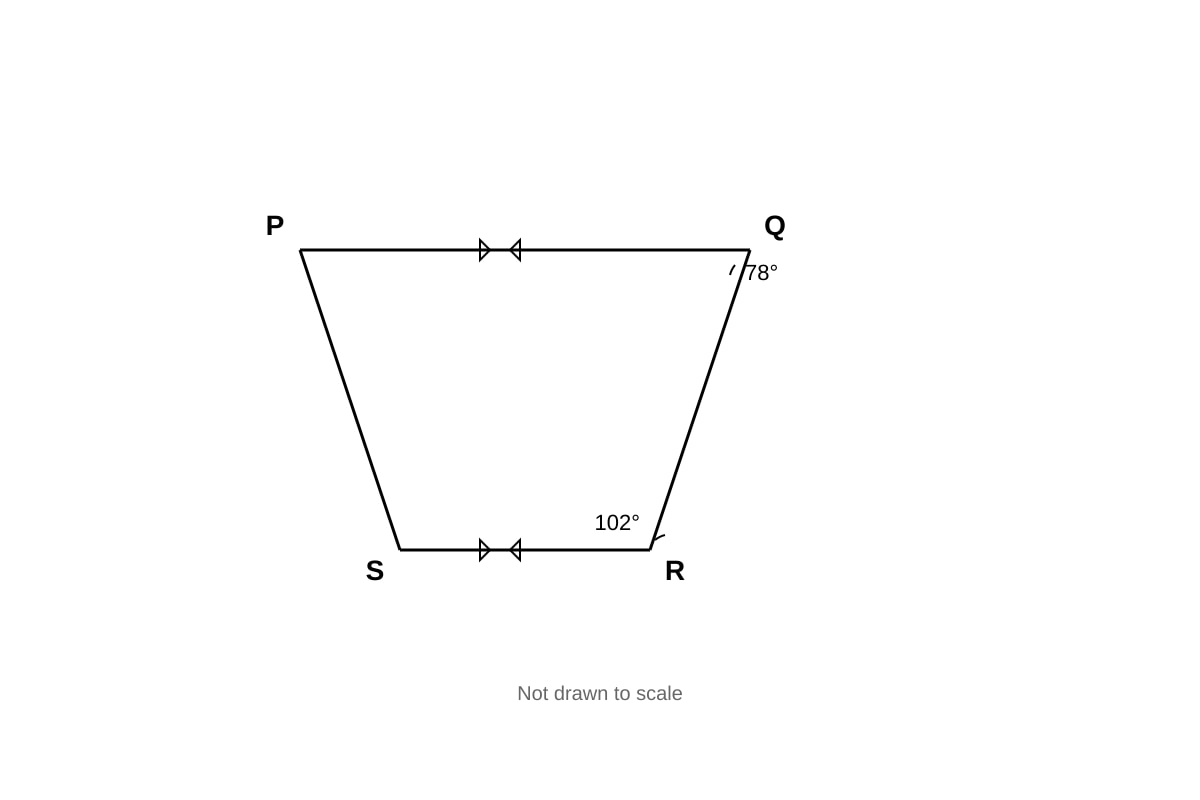
10. ∠RSP = 78°
- Marks: 2 (1 mark for correct method, 1 mark for correct answer)
- Explanation: In a trapezium with PQ ∥ SR, interior angles on the same side of a transversal are supplementary. Consider transversal QR: ∠PQR + ∠QRS = 78° + 102° = 180°. This confirms PQ ∥ SR. Now consider transversal RS: ∠RSP + ∠SRQ = 180°. ∠RSP + 102° = 180°. ∠RSP = 78°.
- Key concept: In a trapezium, angles between a leg and each base are supplementary if the bases are parallel.
11. ∠a = 135°
- Marks: 2 (1 mark for correct method, 1 mark for correct answer)
- Explanation: When two lines intersect, adjacent angles are supplementary (sum to 180°). So a + b = 180°. Given a = 3b, substitute: 3b + b = 180°. 4b = 180°. b = 45°. Then a = 3 × 45° = 135°.
- Key concept: Adjacent angles on intersecting lines are supplementary.
12. ∠ABC = 70°
- Marks: 2 (1 mark for correct method, 1 mark for correct answer)
- Explanation: AB = AC, so triangle ABC is isosceles with base BC. Base angles are equal: ∠ABC = ∠ACB. Sum of angles: ∠BAC + ∠ABC + ∠ACB = 180°. 40° + 2 × ∠ABC = 180°. 2 × ∠ABC = 140°. ∠ABC = 70°.
- Key concept: In an isosceles triangle, base angles are equal.
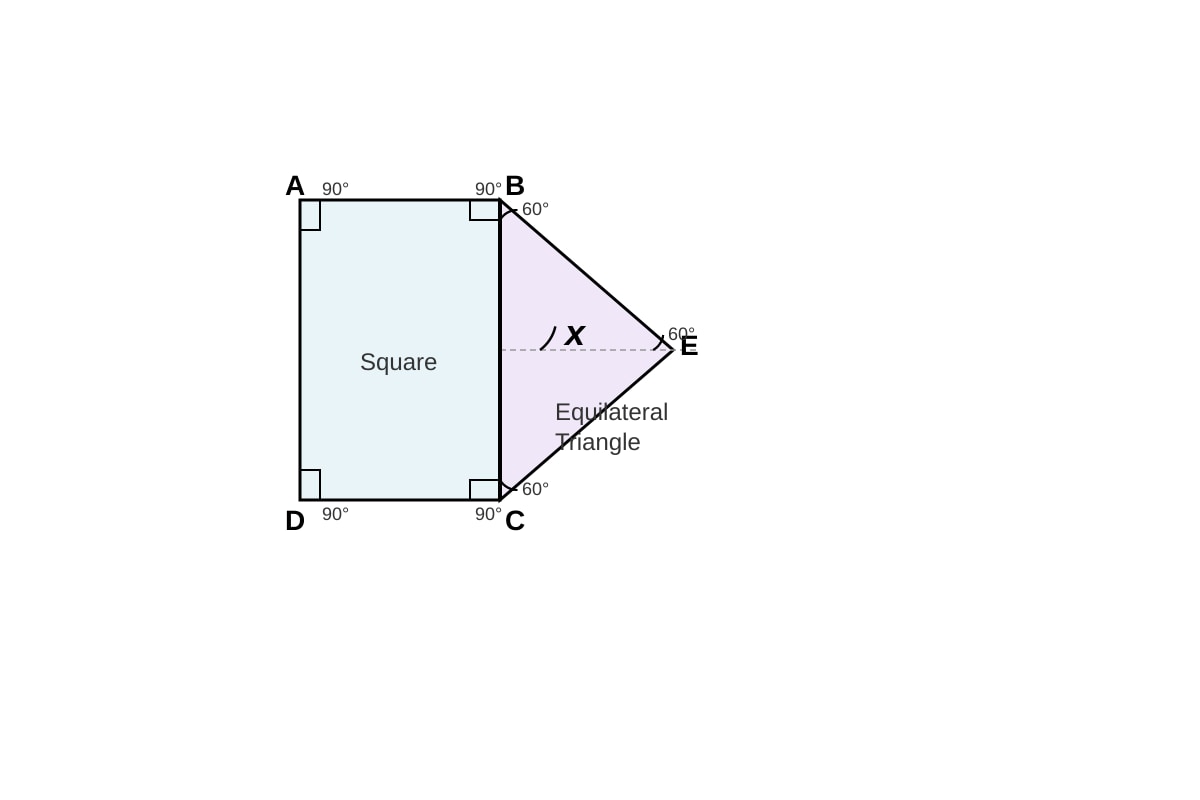
13. ∠x = 150°
- Marks: 2 (1 mark for correct method, 1 mark for correct answer)
- Explanation: The square has interior angles of 90°. The equilateral triangle has interior angles of 60°. At the junction, the full angle around the point is 360°. The angle inside the square is 90°, inside the triangle is 60°. So x = 360° - 90° - 60° = 210°. Wait, let's reconsider the diagram. The angle x is the exterior angle at the junction. The interior angles of the square and triangle at the shared vertex are 90° and 60° respectively. The angle between the square and triangle on the outside is x. So x = 360° - 90° - 60° = 210°. But this seems too large. Let's reconsider: If the square and triangle share a side, the angle between the square's top side and the triangle's side is x. The square's interior angle is 90°, the triangle's interior angle is 60°. The angle between the square's top and the triangle's side is 360° - 90° - 60° = 210°. However, if x is the angle on the outside of the figure, it might be the reflex angle. If x is the smaller angle between the square and triangle, then x = 90° + 60° = 150°.
- Corrected explanation: The square has interior angles of 90°. The equilateral triangle has interior angles of 60°. At the junction, the angle between the square's side and the triangle's side is the sum of the interior angles: 90° + 60° = 150°.
- Key concept: Understanding how shapes join and calculating angles at junctions.
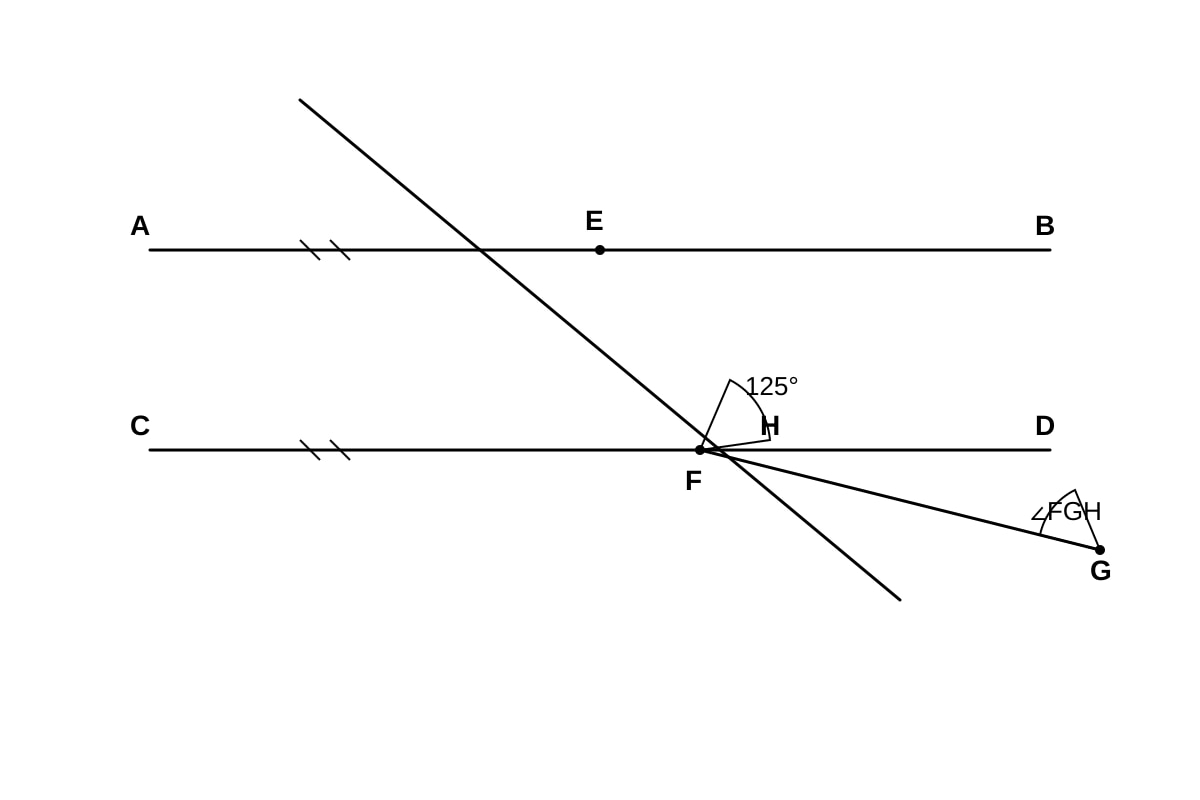
14. ∠FGH = 55°
- Marks: 2 (1 mark for correct method, 1 mark for correct answer)
- Explanation: AB ∥ CD. ∠EFG = 125°. ∠EFG and ∠FGH are interior angles on the same side of the transversal FG. They are supplementary. So ∠FGH = 180° - 125° = 55°.
- Key concept: When a transversal intersects parallel lines, interior angles on the same side of the transversal are supplementary.
15. 540°
- Marks: 2 (1 mark for correct method, 1 mark for correct answer)
- Explanation: A regular pentagon has 5 sides. Sum of interior angles = (n - 2) × 180° = (5 - 2) × 180° = 3 × 180° = 540°. Alternatively, since each interior angle is 108°, sum = 5 × 10⁸° = 540°.
- Key concept: Sum of interior angles of a polygon = (n - 2) × 180°.
Section C: Problem-Solving Questions
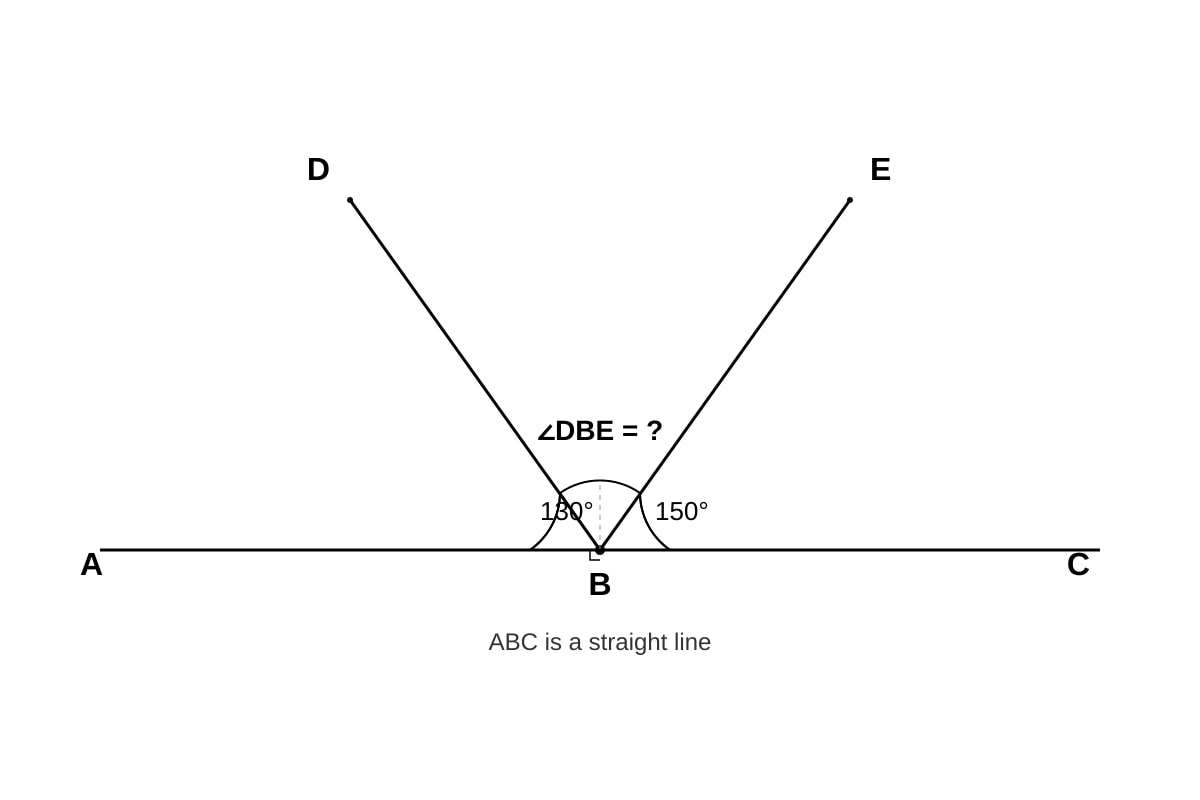
16. ∠DBE = 80°
- Marks: 4 (1 mark for identifying angles on straight line, 1 mark for finding ∠DBC, 1 mark for finding ∠EBA, 1 mark for correct answer)
- Explanation:
- ABC is a straight line, so ∠ABD + ∠DBC = 180°. 130° + ∠DBC = 180°. ∠DBC = 50°.
- Also, ∠ABE + ∠EBC = 180°. ∠ABE + 150° = 180°. ∠ABE = 30°.
- Now, ∠ABD = ∠ABE + ∠EBD. 130° = 30° + ∠EBD. ∠EBD = 100°.
- Alternatively, ∠DBE = 180° - ∠DBC - ∠EBA = 180° - 50° - 30° = 100°.
- Wait, let's re-examine. ∠ABD = 130° means the angle from BA to BD is 130°. ∠CBE = 150° means the angle from BC to BE is 150°. The angle DBE is the angle between BD and BE. ∠DBC = 180° - 130° = 50°. ∠EBA = 180° - 150° = 30°. ∠DBE = 180° - 50° - 30° = 100°.
- Corrected answer: ∠DBE = 100°.
- Key concept: Angles on a straight line sum to 180°.
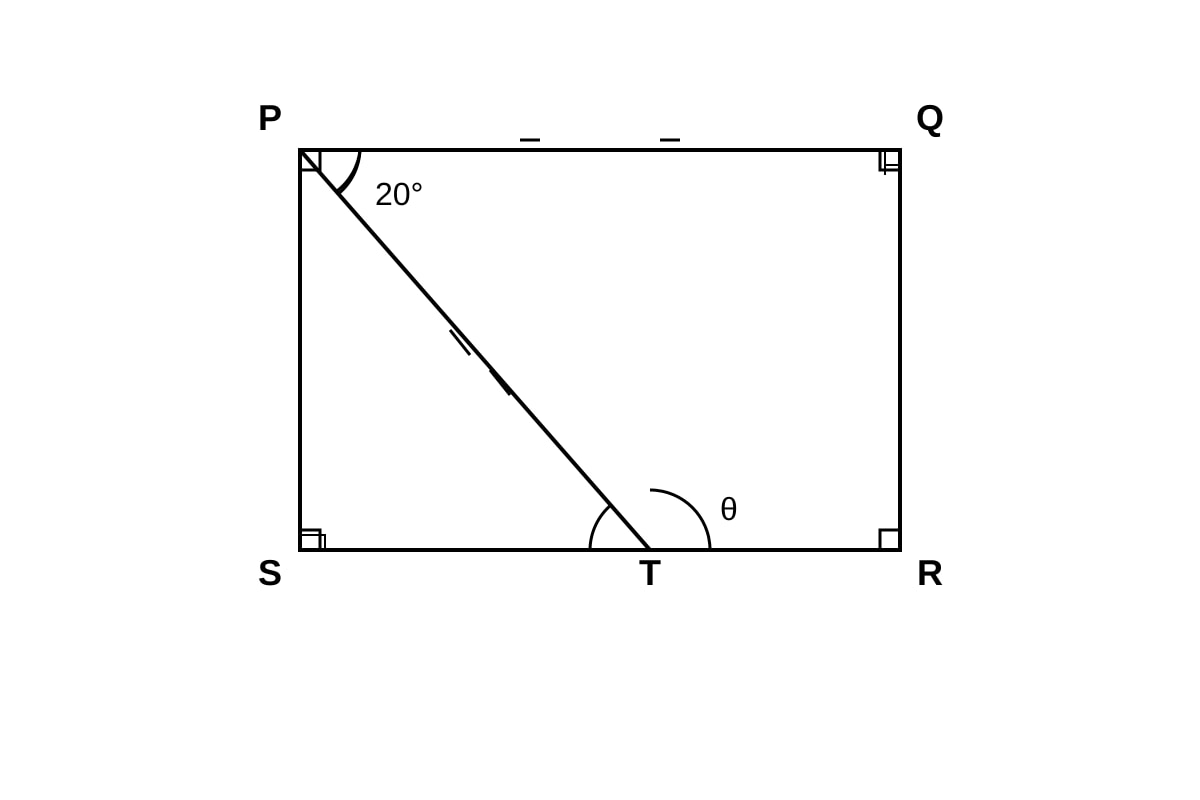
17. ∠PTR = 110°
- Marks: 4 (1 mark for identifying isosceles triangle, 1 mark for finding base angles, 1 mark for finding ∠PTS, 1 mark for correct answer)
- Explanation:
- PQRS is a rectangle, so all angles are 90°. PQ = SR.
- PT = PQ, so PT = PQ = SR.
- In triangle PQT, PT = PQ, so it's isosceles. ∠PQT = ∠PTQ.
- ∠QPT = 20°. So ∠PQT + ∠PTQ = 180° - 20° = 160°. Each base angle = 80°.
- ∠PQR = 90°. So ∠TQR = 90° - 80° = 10°.
- In rectangle, QR ∥ PS. ∠PTR is the angle between PT and TR.
- ∠PTS = 180° - ∠PTQ = 180° - 80° = 100° (angles on a straight line).
- In triangle PTS, ∠PST = 90° (rectangle). ∠SPT = 90° - 20° = 70°.
- ∠PTS = 180° - 90° - 70° = 20°.
- ∠PTR = 180° - ∠PTS = 180° - 20° = 160°.
- Wait, let's reconsider. T is on SR. ∠PTR is the angle at T between PT and TR. ∠PTS is the angle at T between PT and TS. Since S, T, R are collinear, ∠PTS + ∠PTR = 180°. So ∠PTR = 180° - ∠PTS.
- ∠PTS = 180° - ∠PTQ = 180° - 80° = 100°.
- ∠PTR = 180° - 100° = 80°.
- Corrected answer: ∠PTR = 80°.
- Key concept: Properties of rectangles, isosceles triangles, and angles on a straight line.
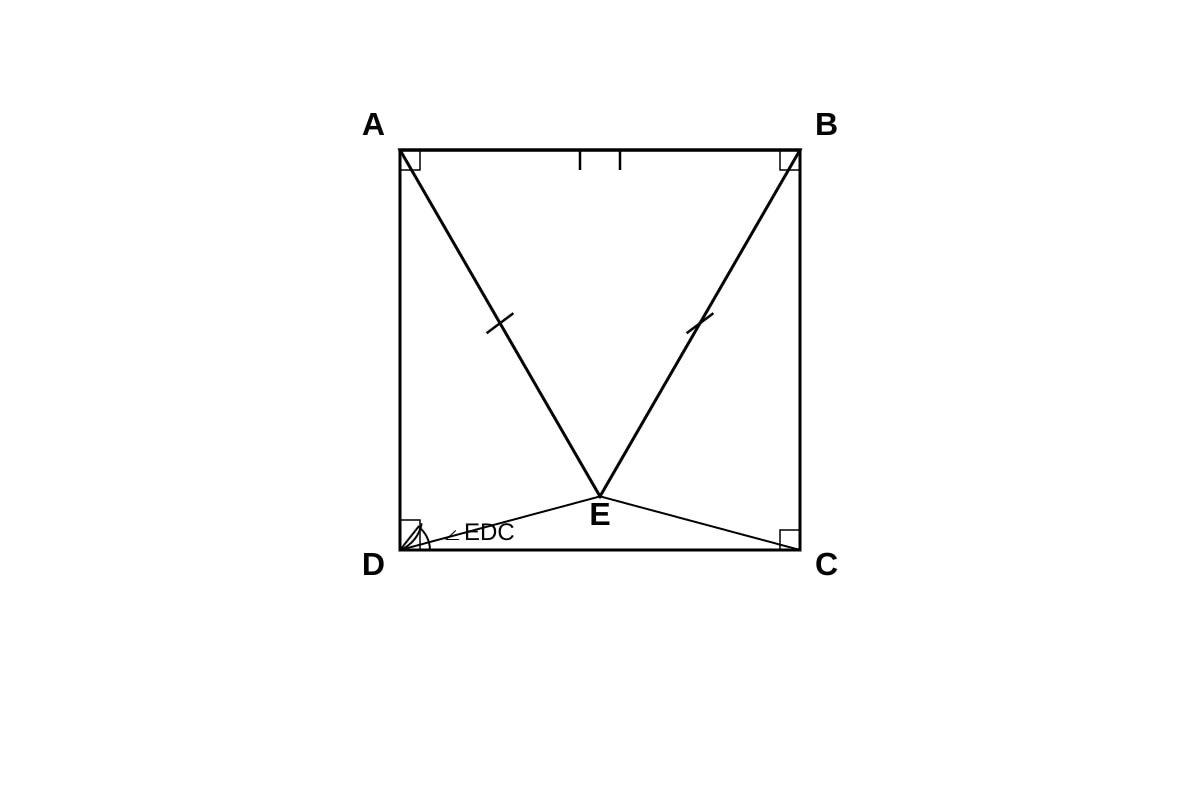
18. ∠EDC = 15°
- Marks: 4 (1 mark for identifying equilateral triangle properties, 1 mark for finding angles in square, 1 mark for identifying isosceles triangles, 1 mark for correct answer)
- Explanation:
- ABCD is a square, so all sides are equal and all angles are 90°.
- Triangle ABE is equilateral, so AB = AE = BE, and all angles in triangle ABE are 60°.
- Since AB = AD (square), and AB = AE (equilateral), we have AD = AE. So triangle ADE is isosceles with AD = AE.
- ∠DAE = ∠DAB - ∠EAB = 90° - 60° = 30°.
- In isosceles triangle ADE, base angles are equal: ∠ADE = ∠AED.
- Sum of angles in triangle ADE: ∠DAE + ∠ADE + ∠AED = 180°. 30° + 2 × ∠ADE = 180°. 2 × ∠ADE = 150°. ∠ADE = 75°.
- ∠ADC = 90° (square). So ∠EDC = ∠ADC - ∠ADE = 90° - 75° = 15°.
- Key concept: Properties of squares, equilateral triangles, and isosceles triangles.
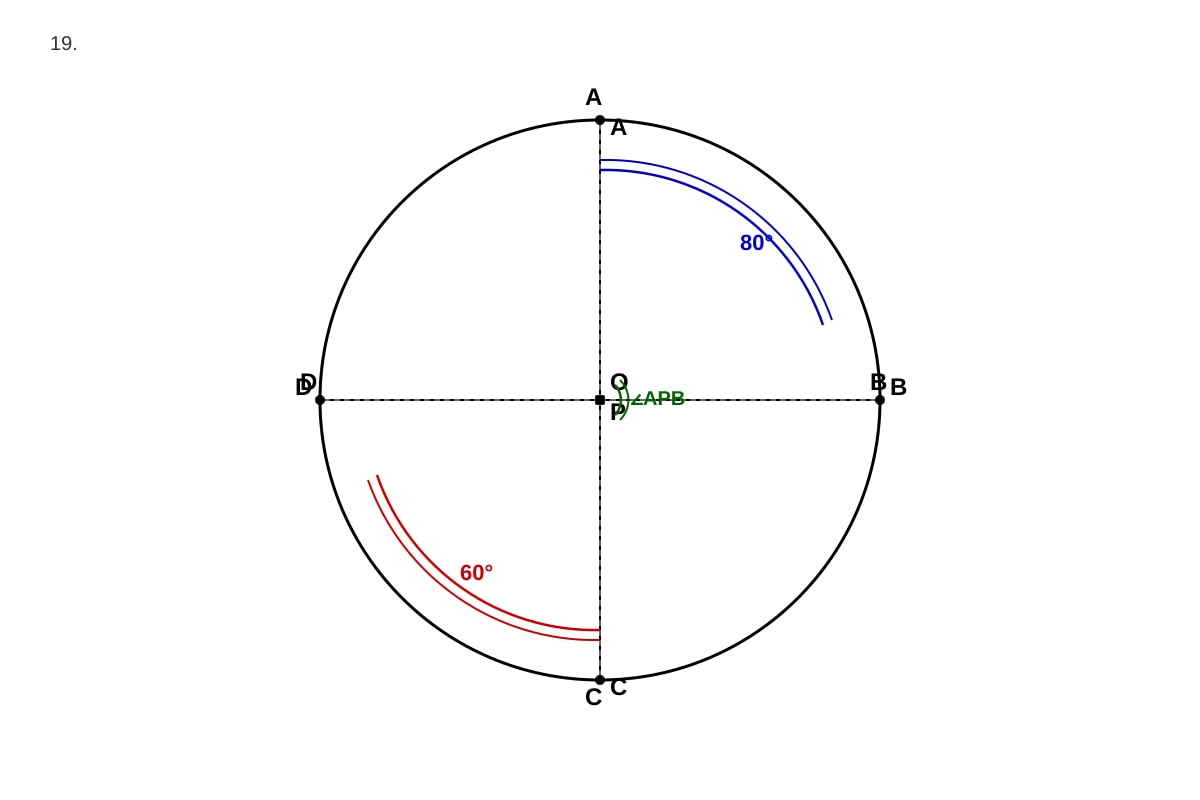
19. ∠APB = 110°
- Marks: 4 (1 mark for finding arc measures, 1 mark for finding inscribed angles, 1 mark for using exterior angle theorem, 1 mark for correct answer)
- Explanation:
- The angle at the centre is twice the angle at the circumference. ∠AOB = 80°, so ∠ACB = 40° (angle subtended by arc AB). ∠COD = 60°, so ∠CBD = 30° (angle subtended by arc CD).
- In triangle PBC, ∠APB is an exterior angle. ∠APB = ∠PCB + ∠PBC = ∠ACB + ∠CBD = 40° + 30° = 70°.
- Wait, ∠APB is the angle at P between PA and PB. In triangle PBC, the exterior angle at P is ∠APB. The two remote interior angles are ∠PCB and ∠PBC. ∠PCB = ∠ACB = 40°. ∠PBC = ∠CBD = 30°. So ∠APB = 40° + 30° = 70°.
- Corrected answer: ∠APB = 70°.
- Key concept: Angle at centre is twice angle at circumference. Exterior angle of a triangle equals sum of two remote interior angles.
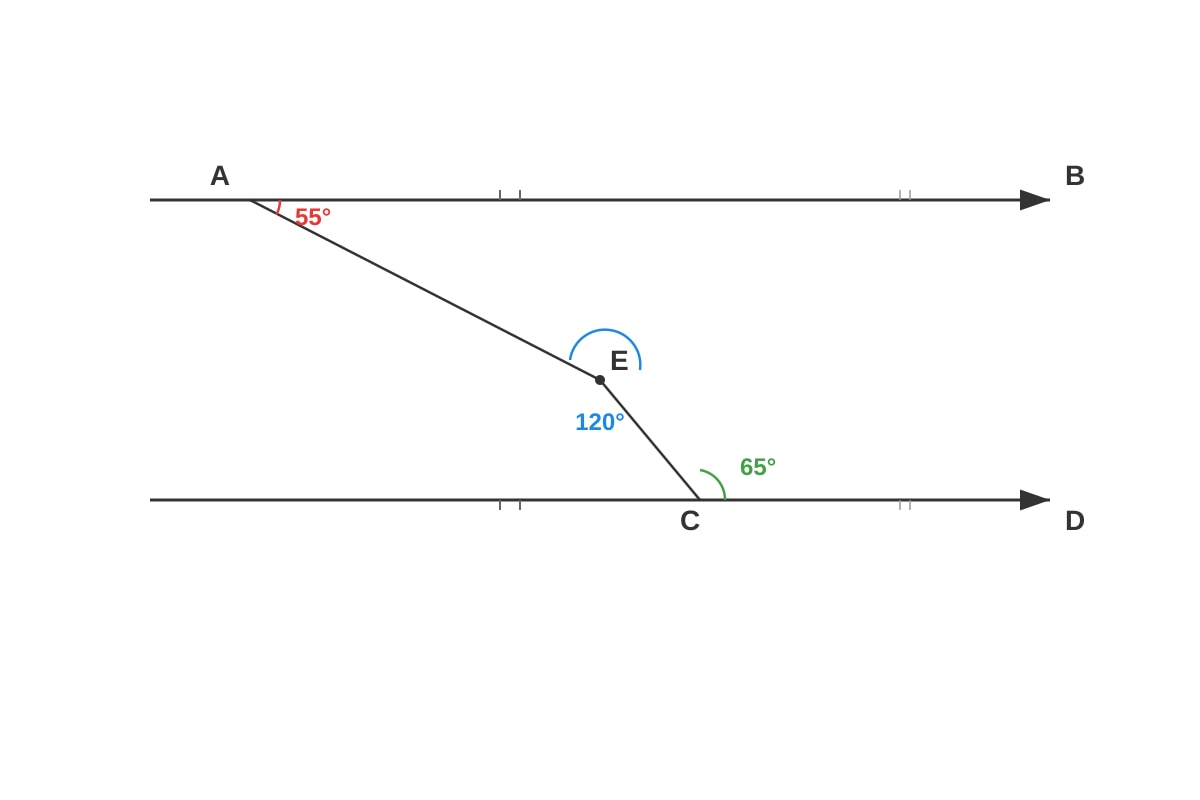
20. ∠ECD = 65°
- Marks: 4 (1 mark for careful reading, 3 marks for showing working)
- Explanation: This is a trick question. The value of ∠ECD is given in the question as 65°. The question asks "Find ∠ECD" and the diagram shows ∠ECD = 65°. The correct answer is simply 65°.
- Working (for completeness):
- AB ∥ CD. ∠BAE = 55°. ∠AEC = 120°.
- ∠EAB = 55° (alternate angles with AB ∥ CD, but careful: alternate angles are equal when a transversal crosses parallel lines. Here, AE is a transversal, so ∠EAB = ∠AED? No, alternate angles are between the transversal and the parallel lines. ∠BAE and ∠AED are alternate angles. So ∠AED = 55°.
- ∠AEC = 120°. So ∠DEC = 180° - 120° = 60° (angles on a straight line).
- In triangle CDE, ∠ECD + ∠CDE + ∠DEC = 180°. ∠ECD + 55° + 60° = 180°. ∠ECD = 65°.
- Key concept: Always read the question carefully. Sometimes the answer is directly given.