From Real Exams Quiz
Primary 6 PSLE Mathematics Angles Geometry Quiz
Free P6 PSLE Maths Angles Geometry quiz, Exam version, with questions, answers, and PSLE-focused practice for Singapore students.
These static practice materials are generated from the site's syllabus and paper-generation workflow, with source and model context shown so students and parents can evaluate the material before use.
Questions
Free quiz and exam paper access
Enter your details to view this paper
Your access is remembered on this device.
Answers
Answer Key: Primary 6 PSLE Mathematics Quiz - Angles Geometry
Section A: Multiple-Choice Questions (10 marks)
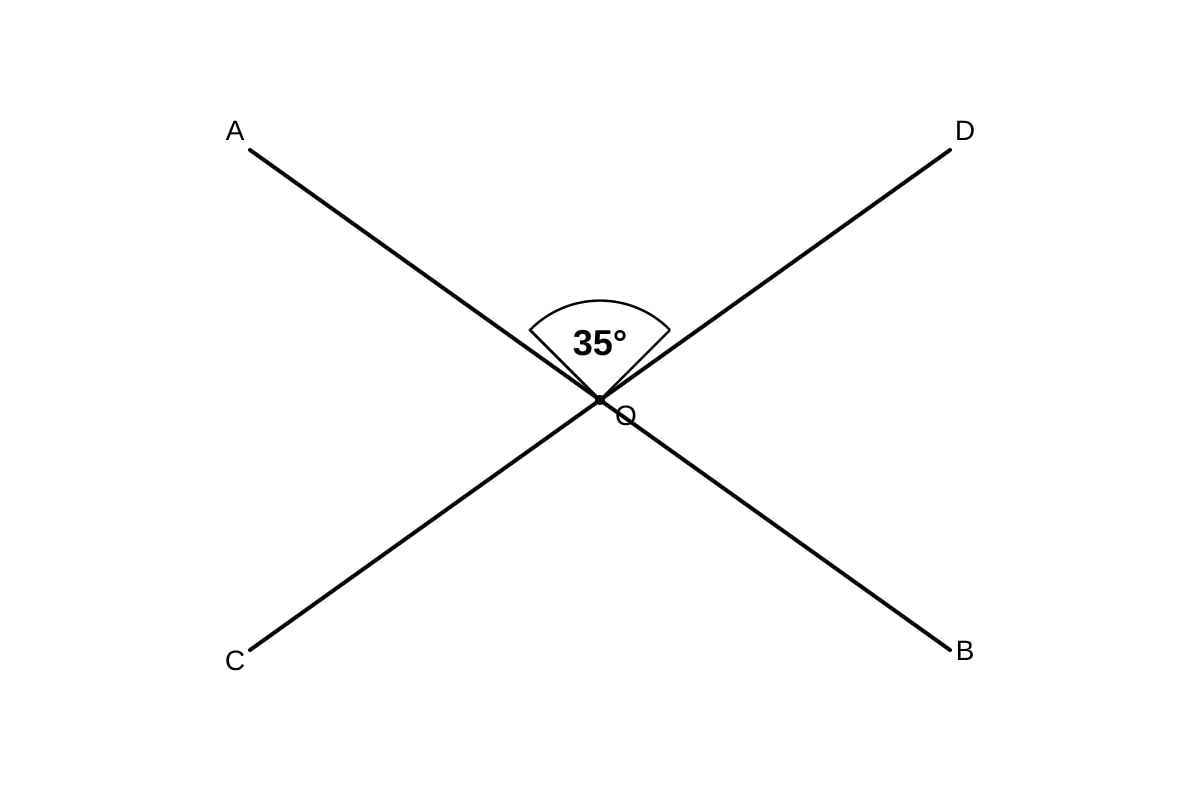
1. A) 35° (2 marks)
- Concept: Vertically opposite angles are equal.
- Explanation: When two straight lines intersect, the angles opposite each other are equal. Since one angle is 35°, the vertically opposite angle is also 35°.
- Common mistake: Students may think adjacent angles are equal. Remember: vertically opposite angles are equal; adjacent angles on a straight line sum to 180°.
2. B) 60° (2 marks)
- Concept: Angle sum of a triangle is 180°.
- Explanation: 180° - 45° - 75° = 60°.
- Working: 45 + 75 = 120. 180 - 120 = 60.
- Marking: Award 1 mark for correct method (subtracting from 180), 1 mark for correct answer.
3. C) All sides are equal. (2 marks)
- Concept: Properties of a parallelogram.
- Explanation: A parallelogram has opposite sides parallel and equal, opposite angles equal, and adjacent angles summing to 180°. However, all sides are equal only in a rhombus (a special type of parallelogram), not in all parallelograms.
- Common mistake: Students may confuse parallelogram with rhombus or square.
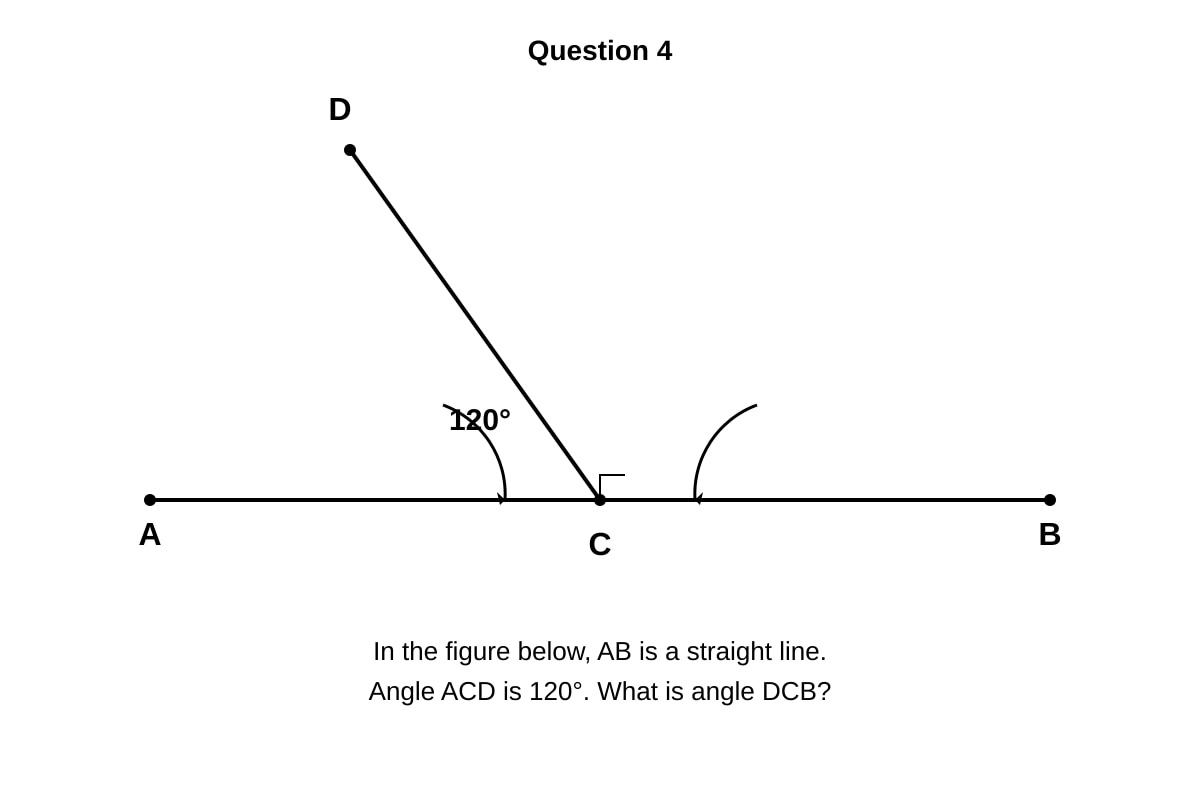
4. B) 60° (2 marks)
- Concept: Angles on a straight line sum to 180°.
- Explanation: ACD and DCB are adjacent angles on straight line AB. So, angle DCB = 180° - 120° = 60°.
- Working: 180 - 120 = 60.
- Marking: 1 mark for knowing straight line = 180°, 1 mark for correct answer.
5. C) 110° (2 marks)
- Concept: Adjacent angles in a rhombus sum to 180°.
- Explanation: A rhombus is a parallelogram, so adjacent angles are supplementary (sum to 180°). Adjacent angle = 180° - 70° = 110°.
- Working: 180 - 70 = 110.
- Common mistake: Students may think all angles are equal (like a square). Remember: only opposite angles are equal in a rhombus.
Section B: Short-Answer Questions (30 marks)
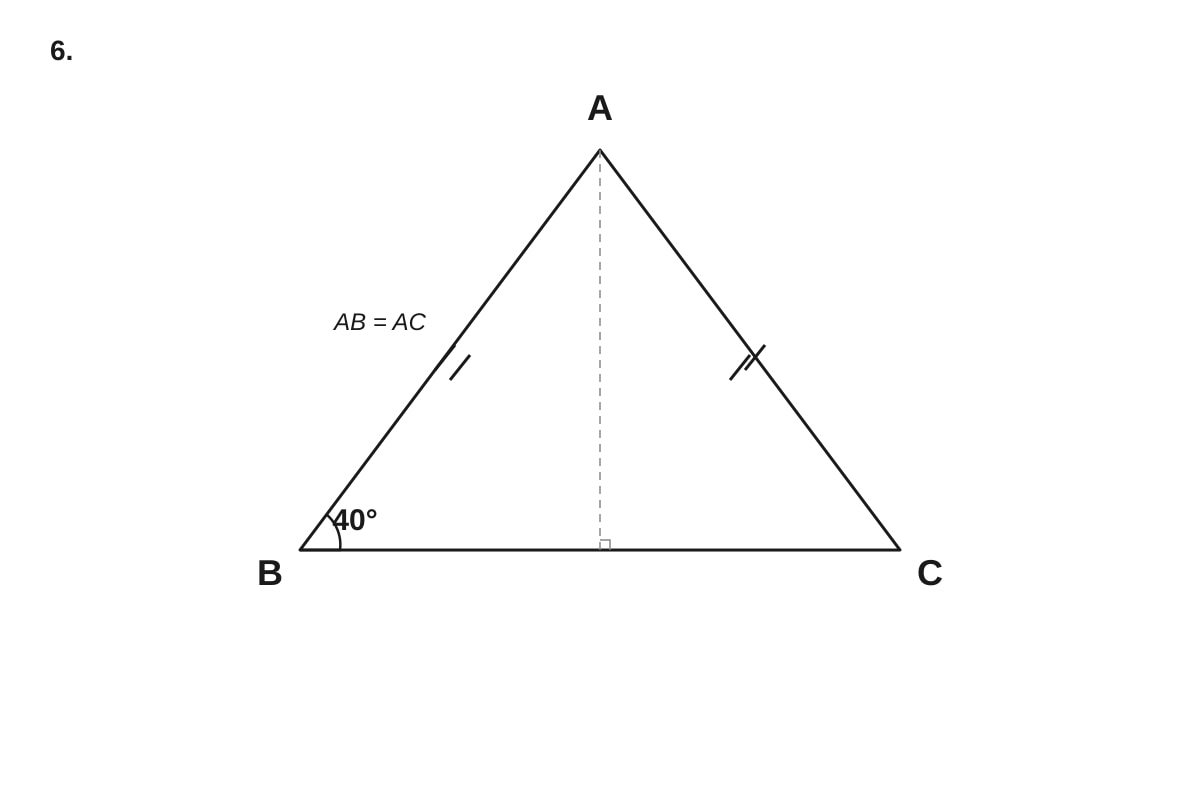
6. Answer: 100° (3 marks)
- Concept: Isosceles triangle properties and angle sum of triangle.
- Explanation: In an isosceles triangle with AB = AC, the base angles (at B and C) are equal. So angle ACB = angle ABC = 40°. Angle BAC = 180° - 40° - 40° = 100°.
- Working: 40 + 40 = 80. 180 - 80 = 100.
- Marking: 1 mark for identifying equal base angles, 1 mark for correct method, 1 mark for correct answer.
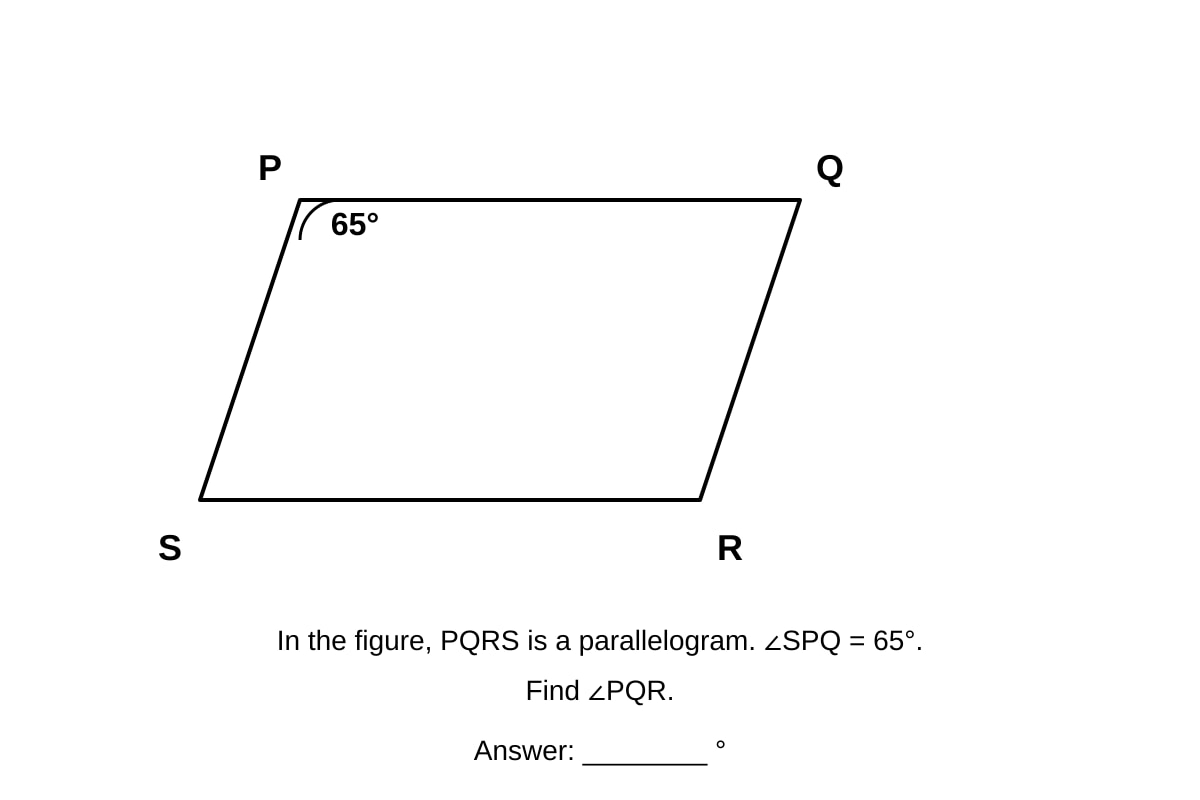
7. Answer: 115° (3 marks)
- Concept: Adjacent angles in a parallelogram sum to 180°.
- Explanation: In a parallelogram, adjacent angles are supplementary. Angle SPQ and angle PQR are adjacent. So angle PQR = 180° - 65° = 115°.
- Working: 180 - 65 = 115.
- Marking: 1 mark for identifying adjacent angles, 1 mark for correct method, 1 mark for correct answer.
8. Answer: 72° (3 marks)
- Concept: Angles on a straight line sum to 180°.
- Explanation: The two angles together form a straight line (180°). Other angle = 180° - 108° = 72°.
- Working: 180 - 108 = 72.
- Marking: 1 mark for knowing straight line = 180°, 1 mark for correct method, 1 mark for correct answer.
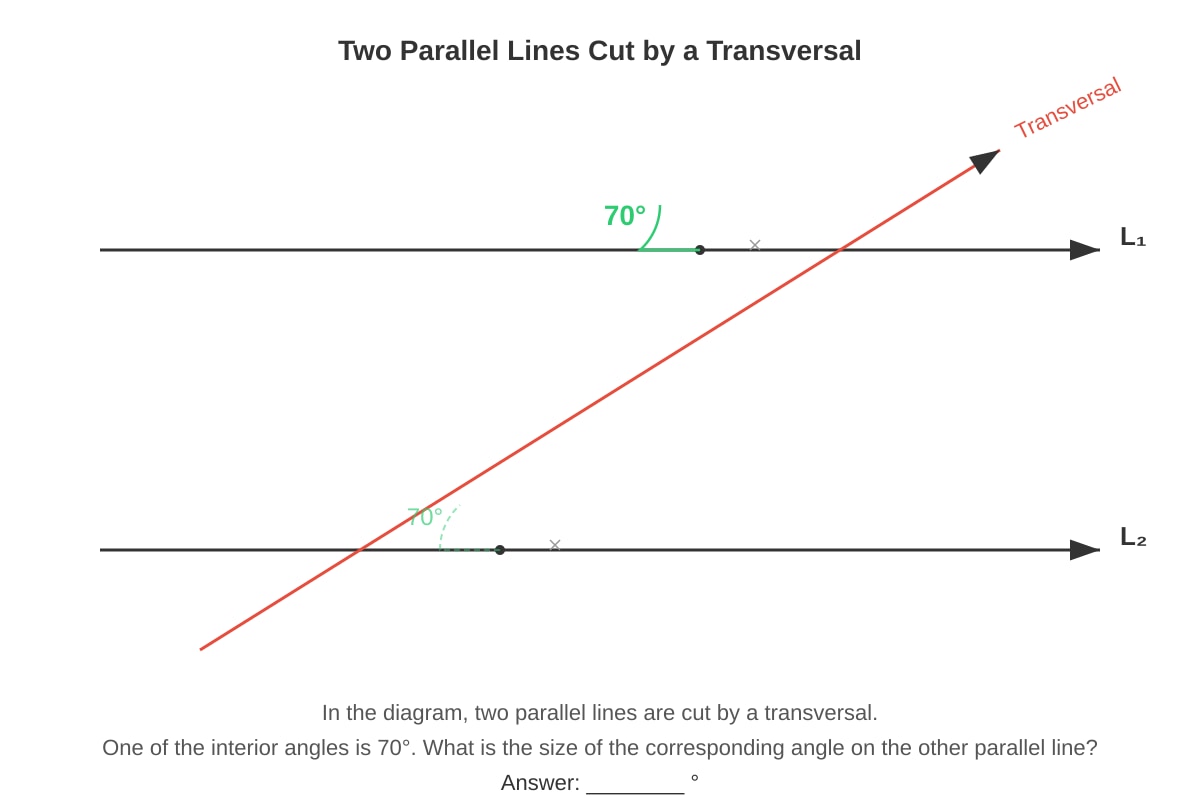
9. Answer: 70° (3 marks)
- Concept: Corresponding angles are equal when a transversal cuts parallel lines.
- Explanation: Corresponding angles are in the same relative position at each intersection. They are equal. So the corresponding angle is also 70°.
- Marking: 1 mark for identifying corresponding angles, 1 mark for knowing they are equal, 1 mark for correct answer.
10. Answer: 55° (3 marks)
- Concept: Angle sum of a triangle is 180°.
- Explanation: In triangle XYZ, angle X + angle Y + angle Z = 180°. So angle Z = 180° - 90° - 35° = 55°.
- Working: 90 + 35 = 125. 180 - 125 = 55.
- Marking: 1 mark for correct method, 1 mark for correct subtraction, 1 mark for correct answer.
11. Answer: 90° (3 marks)
- Concept: Angle sum of a quadrilateral is 360°.
- Explanation: Sum of three angles = 80° + 100° + 90° = 270°. Fourth angle = 360° - 270° = 90°.
- Working: 80 + 100 + 90 = 270. 360 - 270 = 90.
- Marking: 1 mark for knowing quadrilateral sum = 360°, 1 mark for correct method, 1 mark for correct answer.
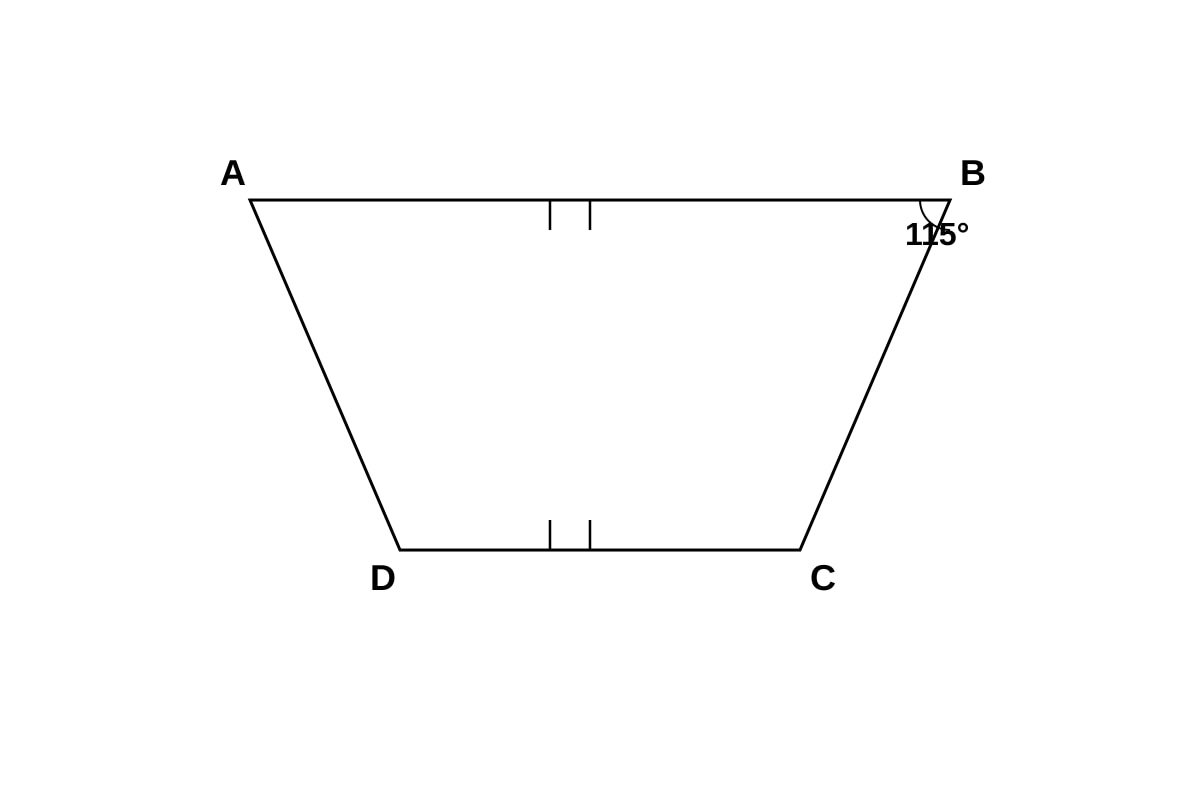
12. Answer: 65° (3 marks)
- Concept: Interior angles on the same side of a transversal are supplementary (sum to 180°) when lines are parallel.
- Explanation: In trapezium ABCD, AB is parallel to DC. Angles ABC and DCB are interior angles on the same side of transversal BC. So angle DCB = 180° - 115° = 65°.
- Working: 180 - 115 = 65.
- Marking: 1 mark for identifying parallel lines, 1 mark for correct angle relationship, 1 mark for correct answer.
13. Answer: 90° (3 marks)
- Concept: Angles around a point sum to 360°.
- Explanation: A full circle is 360°. Divided into 4 equal sectors: 360° ÷ 4 = 90°.
- Working: 360 ÷ 4 = 90.
- Marking: 1 mark for knowing full circle = 360°, 1 mark for correct division, 1 mark for correct answer.
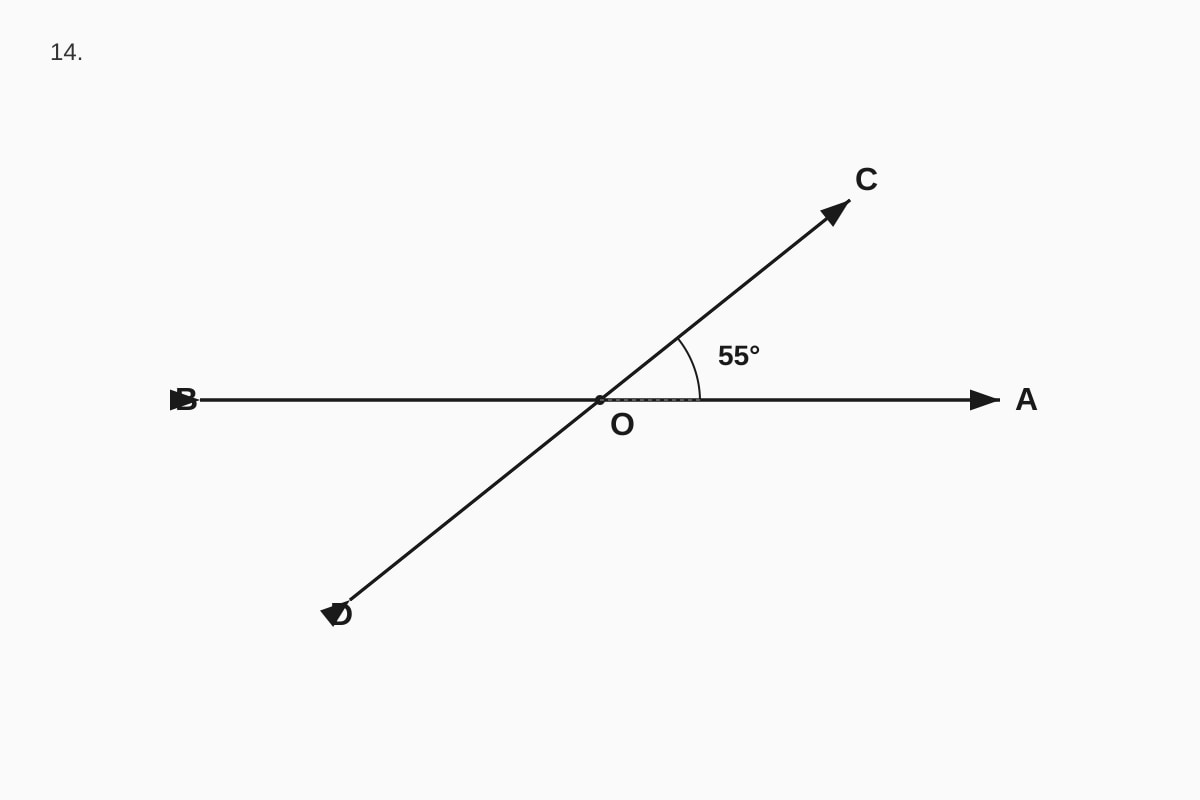
14. Answer: 55° (3 marks)
- Concept: Vertically opposite angles are equal.
- Explanation: Angles AOC and BOD are vertically opposite. So angle BOD = angle AOC = 55°.
- Marking: 1 mark for identifying vertically opposite angles, 1 mark for knowing they are equal, 1 mark for correct answer.
15. Answer: 108° (3 marks)
- Concept: Interior angle sum of a polygon = (n - 2) × 180°, where n is the number of sides.
- Explanation: For a pentagon (5 sides): sum of interior angles = (5 - 2) × 180° = 3 × 180° = 540°. Each interior angle of a regular pentagon = 540° ÷ 5 = 108°.
- Working: (5 - 2) × 180 = 540. 540 ÷ 5 = 108.
- Marking: 1 mark for correct formula, 1 mark for correct sum, 1 mark for correct answer.
Section C: Problem-Solving Questions (10 marks)
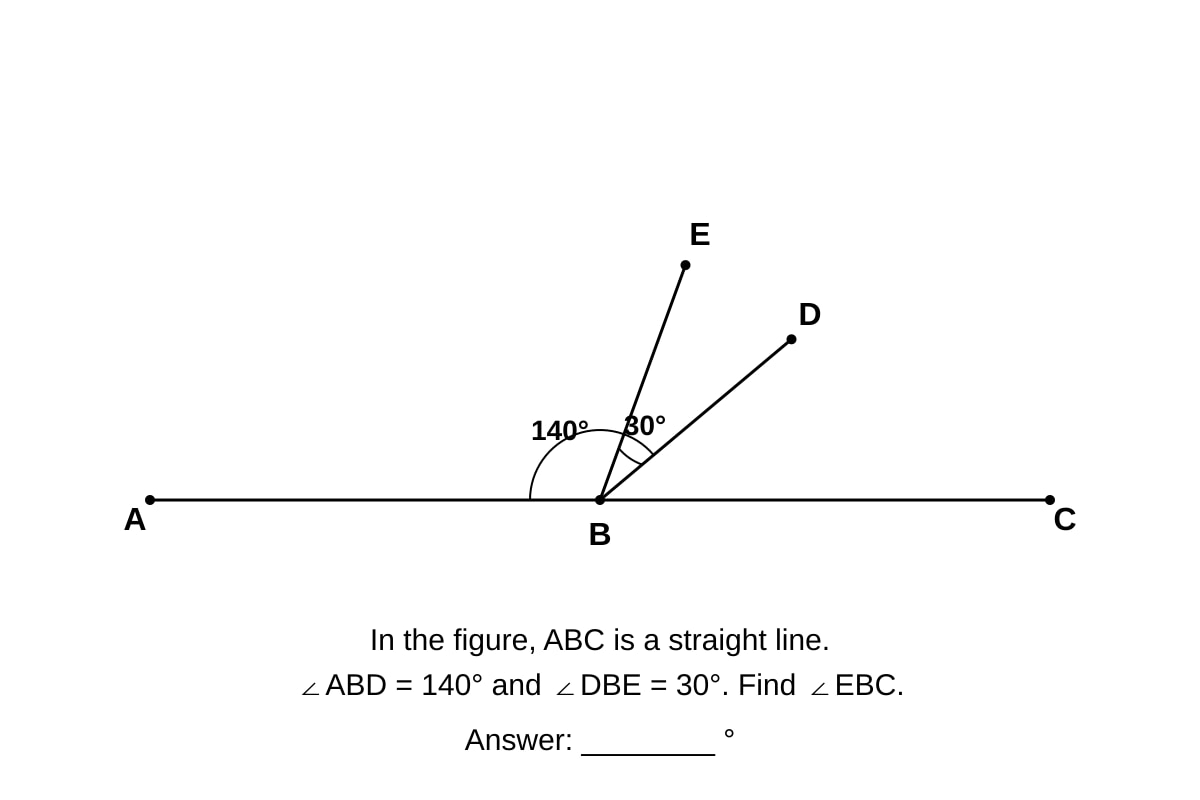
16. Answer: 10° (2 marks)
- Concept: Angles on a straight line sum to 180°.
- Explanation: ABC is a straight line. Angle ABD + angle DBE + angle EBC = 180°. So 140° + 30° + angle EBC = 180°. Angle EBC = 180° - 140° - 30° = 10°.
- Working: 140 + 30 = 170. 180 - 170 = 10.
- Marking: 1 mark for correct method, 1 mark for correct answer.
17. Answer: Angle P = 80°, Angle Q = 40° (2 marks)
- Concept: Angle sum of triangle and algebraic representation.
- Explanation: Let angle Q = x. Then angle P = 2x. Angle R = 60°. Sum: x + 2x + 60 = 180. So 3x = 120, x = 40. Angle Q = 40°, angle P = 80°.
- Working: 2x + x + 60 = 180 → 3x = 120 → x = 40. P = 2 × 40 = 80.
- Marking: 1 mark for correct equation setup, 1 mark for both correct answers.
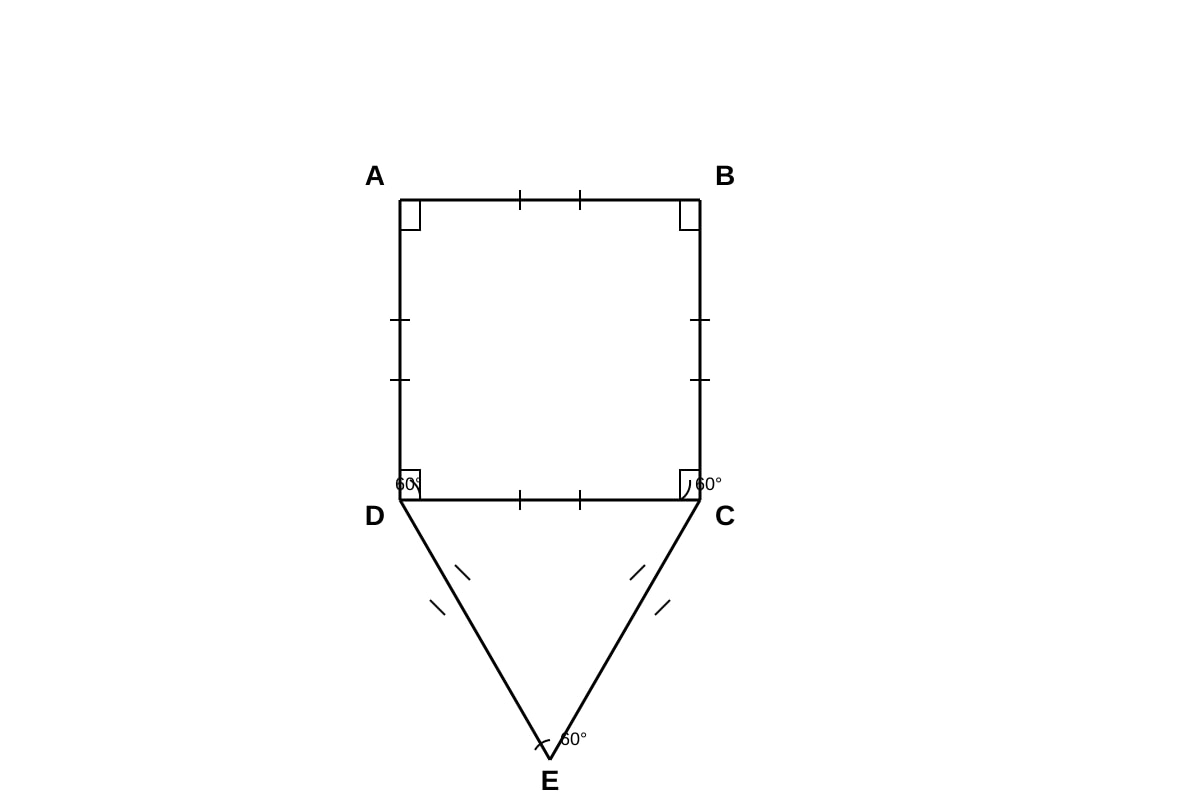
18. Answer: 150° (2 marks)
- Concept: Angles in a square (90°) and equilateral triangle (60°), and angles around a point.
- Explanation: In square ABCD, angle ADC = 90°. In equilateral triangle CDE, angle CDE = 60°. Angle ADE = angle ADC + angle CDE = 90° + 60° = 150°.
- Working: 90 + 60 = 150.
- Marking: 1 mark for identifying both angles correctly, 1 mark for correct answer.
19. Answer: 37.5° and 52.5° (2 marks)
- Concept: Complementary angles sum to 90°.
- Explanation: Let the smaller angle be x. Then the larger angle is x + 15. Sum: x + (x + 15) = 90. So 2x + 15 = 90, 2x = 75, x = 37.5. The angles are 37.5° and 52.5°.
- Working: 2x + 15 = 90 → 2x = 75 → x = 37.5. Other angle = 37.5 + 15 = 52.5.
- Marking: 1 mark for correct equation, 1 mark for both correct answers.
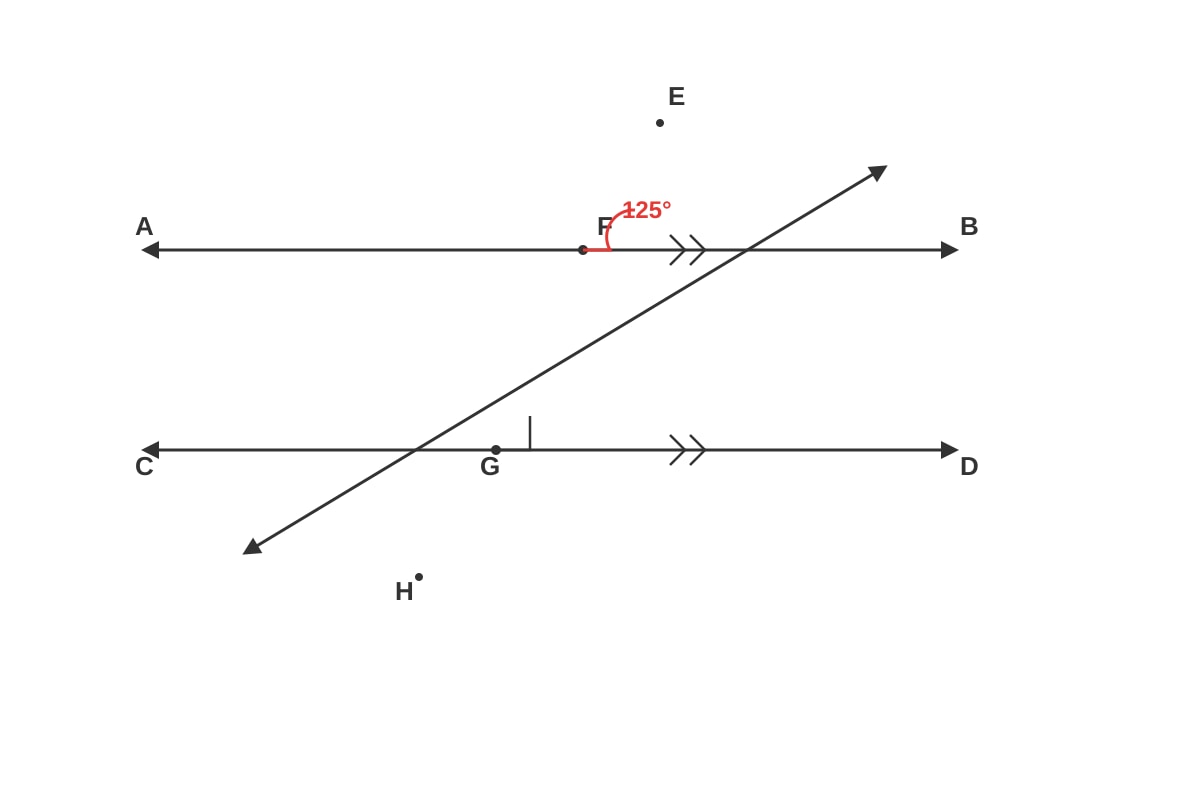
20. Answer: 55° (2 marks)
- Concept: Interior angles on the same side of a transversal are supplementary when lines are parallel.
- Explanation: AB is parallel to CD. Angles EFG and FGH are interior angles on the same side of transversal FG. So angle FGH = 180° - 125° = 55°.
- Working: 180 - 125 = 55.
- Marking: 1 mark for identifying the angle relationship, 1 mark for correct answer.
Total Marks: 50