AI Generated Quiz
Primary 6 PSLE Higher Chinese Speaking Quiz
Free P6 PSLE HCL Speaking quiz, Nemo3 AI version, with questions, answers, and PSLE-focused practice for Singapore students.
These static practice materials are generated from the site's syllabus and paper-generation workflow, with source and model context shown so students and parents can evaluate the material before use.
Questions
Free quiz and exam paper access
Enter your details to view this paper
Your access is remembered on this device.
Answers
Primary 6 PSLE Higher Chinese Quiz - Speaking (Answer Key)
Total Marks: 40
Section A: Video Stimulus Conversation (20 marks)
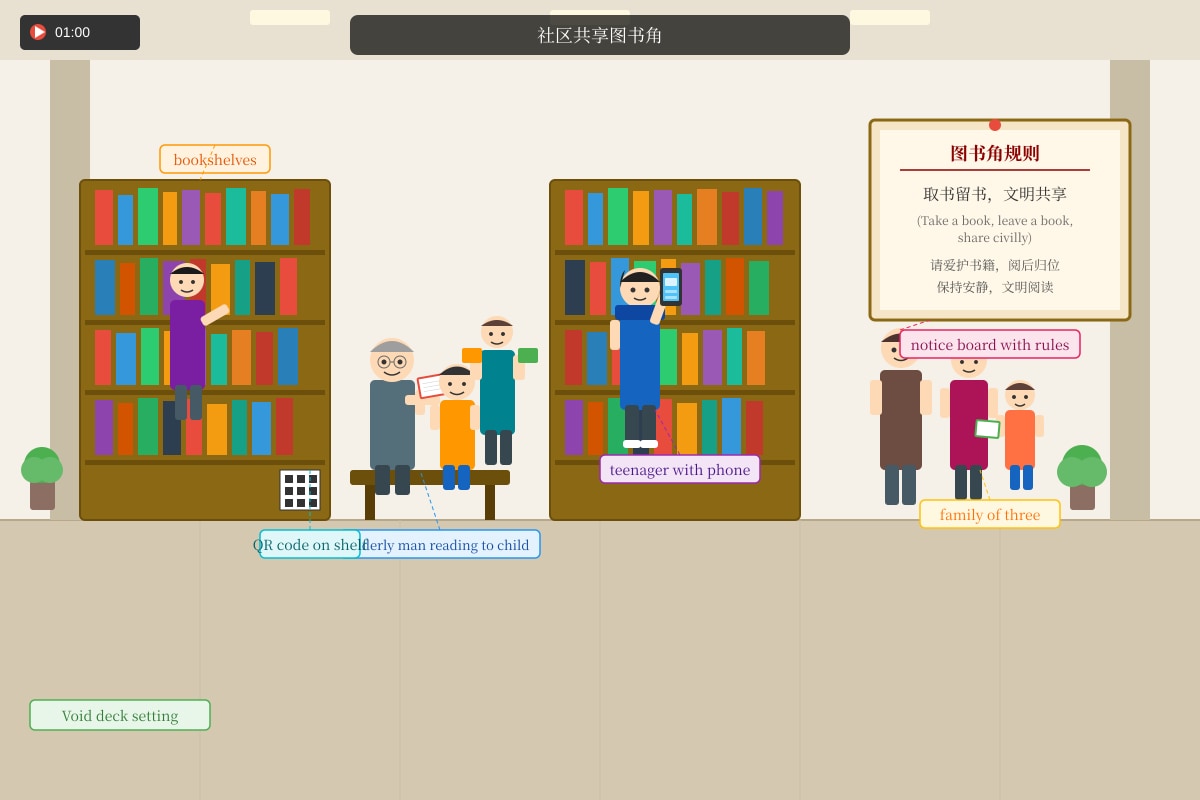
Q1. 视频中展示的"社区共享图书角"的核心理念是什么?请用一句简短的话概括。
[2 marks]
Answer: 核心理念是"书籍流动、邻里共享、文明互信",即通过无偿共享书籍促进社区阅读文化与人际连结。
Marking Notes:
- 1 mark for identifying "共享/流动/互信" 等核心词汇
- 1 mark for 完整句式表达,语意通顺
Common Mistake: 只写"共享书籍",未体现"社区/邻里/文明"层面。
Q2. 从视频中观察到的三个不同年龄层人群分别是谁?他们各自如何使用图书角?
[3 marks]
Answer:
- 长者(老人):在图书角阅读、给孩子讲故事,传承口述文化。
- 成年人/家长:陪伴孩子选书、亲子共读、讨论书籍内容。
- 青少年/儿童:浏览选书、扫码登记借阅、阅读绘本或青春文学。
Marking Notes:
- 每准确描述一类人群及其行为得 1 分,共 3 分
- 需对应视频画面细节(如"扫码"、"讲故事"、"亲子讨论")
Common Mistake: 只列出人群,未说明具体使用方式。
Q3. 布告栏上的"取书留书,文明共享"八个字,体现了怎样的社区精神?请结合视频画面举例说明。
[3 marks]
Answer: 体现"互信、互助、共治、共享"的社区治理精神。
举例:
- "取书留书"体现互信:居民自觉遵守规则,不设专人监管,靠自觉维持书籍流通(视频中书架书籍丰富、整齐)。
- "文明共享"体现共治:长者讲故事、青少年扫码登记、家庭共读,皆为自发文明行为,无争抢、毁坏现象。
Marking Notes: - 1 mark for 准确点出社区精神关键词(互信/共治/文明/共享等)
- 2 marks for 结合视频画面给出 2 个具体举例且解释到位
Common Mistake: 泛泛而谈"好习惯",未扣"社区精神"与视频细节。
Q4. 视频中青少年扫描二维码登记书籍,这反映了共享图书角在管理上有什么特点?
[2 marks]
Answer: 反映管理"数字化、自助化、去中心化":利用技术手段实现借阅登记、书籍追踪,降低人力成本,体现现代社区治理的智慧化趋势。
Marking Notes:
- 1 mark for 指出"数字化/科技/扫码/智能"等关键概念
- 1 mark for 阐述管理特点(自助/低成本/可追踪/去中心化)
Common Mistake: 只说"方便",未上升到管理模式层面。
Q5. 如果你是社区居民,你会如何推广这个共享图书角,让更多邻里参与?请提出两个具体建议。
[3 marks]
Answer (Sample):
- 举办主题阅读活动:如"亲子绘本周末会"、"长者口述历史分享会"、"青少年读书分享会",针对不同年龄层设计活动,增加参与粘性。
- 结合社交媒体与实体宣传:建立微信群/小程序发布新书推荐、读书打卡打卡领小礼品;在电梯海报、社区公告栏张贴"本月好书榜",营造阅读氛围。
Marking Notes:
- 每个建议 1.5 分:0.5 分为活动/方式名称,1 分为具体操作与针对性说明
- 建议需具可行性、针对性、创新性
Common Mistake: 建议过于笼统(如"多宣传"、"办活动"),缺乏细节。
Q6. 共享图书角可能面临哪些挑战?(如:书籍流失、损坏、选书单一等)请说出两点并提出相应对策。
[3 marks]
Answer:
- 挑战:书籍流失/不归还 → 对策:设置"诚信押金制"或"芝麻信用免押金借阅",定期盘点并公示流失情况,倡导诚信文化。
- 挑战:书籍陈旧、种类单一、缺乏新书 → 对策:设立"新书捐赠箱"、联合出版社/书店定期捐赠、开展"旧书换新书"活动、设立居民荐书机制。
Marking Notes:
- 每挑战+对策组合 1.5 分:挑战 0.5 分,对策 1 分(需具体可行)
- 对策应体现社区自治、多方联动思维
Common Mistake: 对策只说"加强管理",无具体执行方式。
Q7. 视频中长者给孩子讲故事的画面,说明了共享图书角的什么社会功能?
[2 marks]
Answer: 说明其具有"代际连结"与"文化传承"功能:打破年龄隔阂,让长者经验智慧通过故事传递给下一代,同时缓解长者孤独感,增强社区凝聚力。
Marking Notes:
- 1 mark for "代际交流/连结/互动"
- 1 mark for "文化传承/经验分享/情感纽带/社区凝聚"
Common Mistake: 只说"长者陪孩子读书",未上升到社会功能高度。
Q8. 你认为"共享"与"借阅"(如公立图书馆)有何本质区别?请简述。
[2 marks]
Answer:
- 所有权不同:共享图书多为居民捐赠,归社区共同所有;图书馆藏书为公共财产,由国家/机构购置管理。
- 管理模式不同:共享靠自治、信用、去中心化;图书馆有专业馆员、分类法、借阅系统、强制归还期限。
- 空间属性不同:共享嵌入生活场域(楼下、转角),零门槛、随时可及;图书馆为专用场馆,需前往、办证。
Marking Notes: - 任意两点各 1 分,需对比鲜明
- 关键词:所有权、管理模式、空间/准入门槛
Common Mistake: 只说"一个免费一个要证",未触及本质差异。
Section B: Conversation Topics (20 marks)
Q9. 谈谈你最近读过的一本最有意义的书,并分享它给你带来的启发。
[2 marks]
Answer (Sample): 最近读《给青少年的哲学启蒙书》,书中用浅显语言探讨"自由""正义""幸福"等大问题。启发我:思考没有标准答案,重要的是保持提问的勇气,学会用批判性思维看世界,不盲从权威。
Marking Notes:
- 1 mark for 书名+简要内容
- 1 mark for 个人启发(需具体、真诚、有深度)
- 接受任何合理书目与感悟
Teaching Note: Encourage students to prepare 2–3 books in advance; focus on personal insight not plot summary.
Q10. 你平时如何选择要读的书?(如:推荐、封面、作者、书评等)
[2 marks]
Answer (Sample): 我主要通过三个渠道:(1) 老师/图书管理员推荐的经典书单;(2) 关注"少儿阅读推广人"公众号的书评;(3) 同学互推"好书接龙"。偶尔会被封面吸引,但会先看目录和试读几页再决定。
Marking Notes:
- 1 mark for 列举 2 个以上具体渠道/方式
- 1 mark for 体现主动筛选思维(如"试读""看书评""跟书单")而非被动随缘
Common Mistake: 只说"看封面""随便拿",缺乏选择策略。
Q11. 电子书与实体书,你更喜欢哪一种?请说明理由。
[2 marks]
Answer (Sample): 我更喜欢实体书。理由:(1) 触感与书香带来仪式感,帮助专注;(2) 便于做笔记、折角、贴便利贴,思考痕迹可见;(3) 睡前读纸质书不伤眼、不干扰褪黑素。电子书适合通勤、查资料、调整字号,但深度阅读首选实体。
Marking Notes:
- 1 mark for 明确立场
- 1 mark for 2 条以上具体理由(对比优劣、结合场景)
- 无标准答案,重逻辑自洽
Teaching Note: Guide students to compare dimensions: sensory, cognitive, health, convenience, annotation.
Q12. 如果要向同龄人推荐一本中文课外阅读书目,你会推荐哪一本?为什么?
[2 marks]
Answer (Sample): 推荐曹文轩《草房子》。理由:语言优美纯净,故事发生在油麻地小学,贴近我们成长经历;人物鲜活(纸月、细马、杜小康),让人在悲欢中体会尊严、友谊、成长;是"能陪伴一生"的中文儿童文学经典。
Marking Notes:
- 1 mark for 书名+作者
- 1 mark for 推荐理由(语言/题材/人物/主题/情感共鸣等维度至少 2 点)
Common Mistake: 只说"很好看""很感人",无具体文本支撑。
Q13. 阅读对你的写作有什么帮助?请举具体例子说明。
[2 marks]
Answer (Sample): 阅读积累了词汇、句式、结构与素材。例:读鲁迅《朝花夕拾》学会"以小见大"写童年趣事,作文《奶奶的蒸笼》模仿其"先抑后扬"结构,开头写蒸笼旧、笨,结尾升华为奶奶的爱,获校刊刊登。
Marking Notes:
- 1 mark for 指出阅读对写作的具体助益维度(词汇/句式/结构/素材/思维/修辞等)
- 1 mark for 举出具体"阅读文本→写作应用→成果"的完整链条
Teaching Note: Emphasize the transfer from reading to writing; "模仿→内化→创新" is key.
Q14. 你认为小学生应该阅读哪些类型的书籍?(如:文学、科普、历史、传记等)请列举三类并说明理由。
[2 marks]
Answer (Sample):
- 文学名著(中外经典):培养语感、审美、同理心,奠定母语根基。
- 科普/科学读物:激发好奇心,建立科学思维,理解世界运作规律。
- 历史/传记/人文:拓宽时空视野,从前人成败中汲取智慧,确立家国情怀与人生格局。
Marking Notes:
- 3 类书籍各约 0.5 分,理由各约 0.17 分,共 2 分
- 理由需区分度高,对应不同育人目标(语言/思维/价值观)
Common Mistake: 三类理由雷同(如都说"增长知识")。
Q15. 遇到看不懂的古文或生僻字,你通常如何处理?
[2 marks]
Answer (Sample): 我会"三步走":(1) 猜——结合上下文、字形构造、熟知成语推测字义;(2) 查——用《现代汉语词典》/古汉语常用字字典/手机APP查准确释义、读音、用法;(3) 记——摘抄在"积累本"上,标注出处、造句、同义词,定期复习。实在不懂再请教师长。
Marking Notes:
- 1 mark for 体现"自主解决"策略(猜/查/记/问)
- 1 mark for 具体工具/方法(字典/APP/积累本/上下文推测)
Teaching Note: This tests metacognitive strategies; "猜-查-记" loop is a teachable routine.
Q16. 分享一次你与家人或朋友因共同阅读同一本书而产生的有趣对话或经历。
[2 marks]
Answer (Sample): 暑假和爸爸一起读《三体》,我们就"黑暗森林法则"辩论了整个晚上:爸爸认为人性本善、文明会合作,我引用书中公理推演"生存是文明第一需要"。最后查资料发现刘慈欣受霍布斯影响,我们达成共识:科幻是思想实验场,现实仍需守护善意。
Marking Notes:
- 1 mark for 具体场景(人/书/地点/时间)
- 1 mark for 对话内容体现思维碰撞/观点交锋/情感共鸣,而非单纯复述剧情
Common Mistake: 只说"我们聊了很久""很开心",无实质内容。
Q17. 你认为"阅读马拉松"或"读书会"等活动对培养阅读习惯有帮助吗?为什么?
[2 marks]
Answer (Sample): 有帮助。理由:(1) 仪式感与群体动力:固定时间、打卡、分享,利用社会压力与归属感对抗拖延;(2) 结构化输入:主题书单、导读、讨论,避免盲目选书、浅阅读;(3) 输出倒逼输入:准备分享迫使深读、做笔记、整理思路。但需警惕形式主义,核心仍是个人内在动机。
Marking Notes:
- 1 mark for 明确立场+ 2 条机制性理由(外部监督/结构支持/输出倒逼/社交奖励等)
- 1 mark for 批判性补充(如"警惕形式主义""内在动机才是根本")
Teaching Note: Higher Chinese expects critical balance, not just affirmation.
Q18. 如果你可以设计一个"理想的阅读空间",它会有什么特色?请描述三个特点。
[2 marks]
Answer (Sample):
- 分区灵动:深度阅读区(隔音、暖光、单人椅)、亲子共读区(地垫、绘本墙)、讨论区(可移动白板、圆桌),满足不同需求。
- 自然融合:落地窗引自然光、绿植净化空气、户外阅读露台,缓解视觉疲劳,身心放松。
- 智慧赋能:RFID自助借还、电子墨水屏推荐墙、语音笔记转文字、阅读数据看板(不侵隐私),技术服务于体验而非干扰。
Marking Notes:
- 3 个特点各约 0.67 分,需覆盖空间/环境/技术/人文等不同维度
- 加分项:体现"以人为本""包容多元""科技向善"理念
Common Mistake: 三点全是硬件(如"空调""WiFi""舒服椅子"),缺乏阅读空间的专业设计思维。
Q19. 有人说:"不读书,行万路,也只是个邮差。" 你如何理解这句话?
[2 marks]
Answer (Sample): 这句话强调阅读赋予经验以"深度"与"意义"。"行万路"提供感性素材,"读万卷"提供理性框架。若无阅读沉淀,见闻只是碎片化信息堆砌,如邮差传递信件却不懂内容。阅读让我们建立概念体系、批判思维、价值坐标,将体验转化为智慧。
Marking Notes:
- 1 mark for 解释"邮差"隐喻(传递不懂内容/碎片化/无内化)
- 1 mark for 阐述"读书"与"行路"的辩证关系(素材与框架/体验与反思/广度与深度)
Teaching Note: This tests philosophical reasoning; reference to "读万卷书,行万里路" original couplet expected.
Q20. 作为即将升上中学的小六学生,你打算如何保持良好的阅读习惯?请谈谈你的计划。
[2 marks]
Answer (Sample): 我计划:(1) 制定"周读一本、月深读一本"节奏,利用碎片时间读浅阅读,周末留 2 小时深度阅读;(2) 建立"读书卡片制":每本书记核心观点、金句、感悟、行动清单,期末汇编成册;(3) 组建 3-4 人"读书互证小组",月聚一次分享,互相监督;(4) 利用中学图书馆资源,向师长请教书单,拓宽阅读广度。
Marking Notes:
- 1 mark for 具体可执行的计划(时间/量化/工具/社群)
- 1 mark for 体现长期主义、系统性、从外部监督向内驱力转化的成熟度
Common Mistake: 笼统说"多读书""坚持读",无具体执行细节。
End of Answer Key