From Real Exams Quiz
Primary 6 PSLE Higher Chinese Speaking Quiz
Free P6 PSLE HCL Speaking quiz, Nemo3 Exam version, with questions, answers, and PSLE-focused practice for Singapore students.
These static practice materials are generated from the site's syllabus and paper-generation workflow, with source and model context shown so students and parents can evaluate the material before use.
Questions
Free quiz and exam paper access
Enter your details to view this paper
Your access is remembered on this device.
Answers
Primary 6 PSLE Higher Chinese Quiz - Speaking (Answer Key)
Total Marks: 40
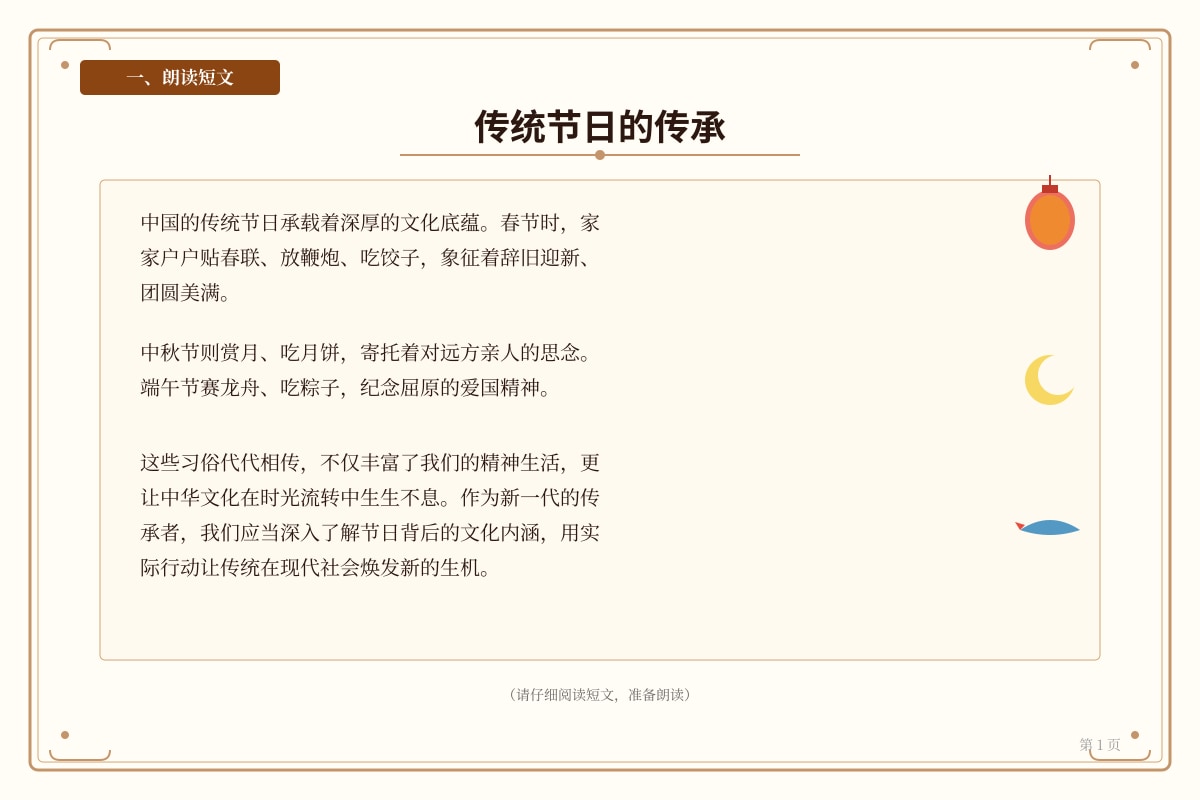
Section A: 朗读短文 (Reading Aloud) [10 marks]
1. Three words/phrases requiring careful pronunciation [3 marks]
Marking: 1 mark each for correct identification + accurate pinyin with tone marks.
Acceptable answers (any three):
- 底蕴 (dǐ yùn) — "蕴" often mispronounced as yùn⁴; correct is yùn⁴ but ensure not confused with yùn³
- 辞旧迎新 (cí jiù yíng xīn) — "辞" (cí²) not cī; "迎" (yíng²) not yǐng
- 寄托 (jì tuō) — "托" (tuō¹) not tuó²
- 屈原 (qū yuán) — "屈" (qū¹) not qǔ³
- 代代相传 (dài dài xiāng chuán) — "代" (dài⁴) not dài³; "传" (chuán²) not zhuàn⁴
- 生生不息 (shēng shēng bù xī) — see Q4 for tone change
- 焕发 (huàn fā) — "焕" (huàn⁴) not huǎn³
Common mistakes: Missing tone marks, confusing polyphonic characters (e.g., 传 chuán vs zhuàn), misreading 蕴 as yùn³.
2. Major pause positions [2 marks]
Correct answer: 这些习俗代代相传,// 不仅丰富了我们的精神生活,// 更让中华文化在时光流转中生生不息。
Marking: 1 mark per correctly placed "//" at clause boundaries (after "传" and after "生活").
Rationale: The sentence has three clauses: (1) 这些习俗代代相传, (2) 不仅丰富了我们的精神生活, (3) 更让中华文化在时光流转中生生不息. Major pauses separate main clauses.
Common mistake: Placing pauses mid-phrase (e.g., after "代代" or "精神").
3. Main message sentence [1 mark]
Correct answer: 作为新一代的传承者,我们应当深入了解节日背后的文化内涵,用实际行动让传统在现代社会焕发新的生机。
Marking: 1 mark for exact copy (minor punctuation variation accepted).
Rationale: This is the concluding call-to-action sentence that encapsulates the passage's purpose.
4. Tone change in "生生不息" [2 marks]
Correct explanation:
- Tone change rule: When two third-tone (上声) syllables are adjacent, the first changes to second tone (阳平).
- Original tones: 生 (shēng¹) + 生 (shēng¹) + 不 (bù⁴) + 息 (xī¹) — but "不" before a fourth-tone syllable changes to second tone (bú²).
- Actual pronunciation: shéng shēng bú xī (second tone + first tone + second tone + first tone).
Marking: 1 mark for identifying the 变调 rule (third-tone sandhi and/or "不" tone change), 1 mark for correct realised pronunciation.
Common mistake: Only mentioning one tone change, or writing original tones without sandhi.
5. Emotion/tone for final sentence [2 marks]
Suggested answer:
- Emotion: 坚定有力 / 充满希望 / 庄重感人 (firm & powerful / hopeful / solemn & moving)
- Reason: The final sentence is a call to action for the new generation. A firm, hopeful tone conveys responsibility and inspires listeners to take action, matching the message of cultural inheritance.
Marking: 1 mark for appropriate emotion adjective, 1 mark for valid justification linked to passage meaning.
Acceptable alternatives: 真挚深情 (sincere & deep) — because it appeals to cultural roots; 肃穆 (solemn) — because it treats tradition with reverence.
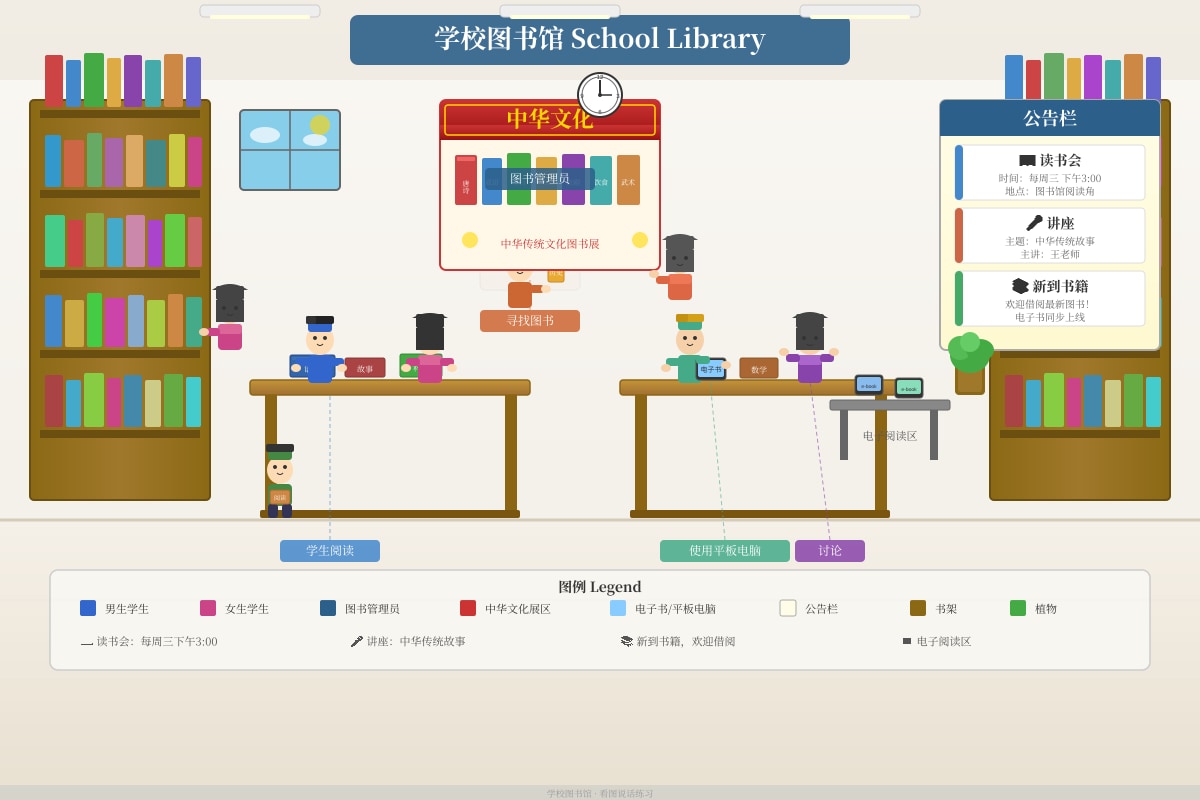
Section B: 看图说话 / 视频会话 (Picture Description / Video Conversation) [15 marks]
6. Scene description [4 marks]
Marking descriptors (4 marks total):
- Setting identified (school library) — 1 mark
- People & roles described (students, librarian, activities) — 1 mark
- Key activities mentioned (reading, discussing, using tablet, book display) — 1 mark
- Cultural element noted ("中华文化" display, notice board) — 1 mark
- Language quality: Fluent, complete sentences, appropriate vocabulary — embedded in above
Sample answer (for reference): 图里是学校图书馆的场景。几位同学在桌旁安静阅读,一位图书管理员正帮助同学找书。墙上有"中华文化"专题书架,展示传统节日、书法等书籍。一位同学在用平板电脑看电子书,布告栏贴着"读书会"和"讲座"的通知。整个图书馆既有纸质书也有电子设备,传统与现代并存。
7. Physical books vs digital devices for learning Chinese [3 marks]
Marking: 1 mark per valid, distinct reason (max 3). Reasons must be relevant to Chinese language/culture learning.
Acceptable reasons (any three):
- Physical books: 培养专注阅读习惯,减少干扰 (cultivate focused reading, fewer distractions)
- Physical books: 书法、古籍排版、纸张质感有助体会文字美感 (calligraphy, classical layout, tactile experience enhance appreciation of word aesthetics)
- Physical books: 护眼,适合长时间深度阅读 (eye-friendly, suitable for extended deep reading)
- Digital devices: 方便查字典、听发音、搜资料 (convenient dictionary, pronunciation, search)
- Digital devices: 电子书可调字体大小、背景色,适应不同需求 (adjustable font/background for accessibility)
- Digital devices: 可存大量古籍资源,随时随地学习 (vast classical resources, anytime access)
- Balanced view: 两者结合最好——纸质深读,电子查阅 (combination best: physical for deep reading, digital for reference)
Common mistake: Generic reasons not specific to Chinese learning (e.g., "digital is convenient" without elaboration).
8. Role-play: Tablet user response [3 marks]
Marking descriptors:
- Natural spoken tone (conversational, not written essay style) — 1 mark
- Answers both parts (what reading + whether convenient) — 1 mark
- Length 40-60 characters, coherent — 1 mark
Sample answer: 我在看《三国演义》电子版,字体可放大,生词一点就有注音和解释,还能听朗读,超方便!不过久看眼睛累,我会定时休息。
Key elements: Mentions specific book, highlights 2-3 digital features, acknowledges a drawback naturally.
9. Book Club activity proposal [3 marks]
Marking descriptors:
- Specific activity named — 1 mark
- Targeted at P6 interest/ability — 1 mark
- Clear reason for engagement — 1 mark
Sample answer: 建议举办"古诗词接龙闯关赛"。用游戏方式复习课内古诗、拓展课外名句,分组PK、设关卡奖励,既复习考点又增趣味,同学们爱玩也爱背。
Other acceptable activities: 绘本改编剧表演、中华文化手工坊(剪纸/书法/做香囊)、"我推荐一本好书"分享会、传统节日故事演播、成语故事短视频创作.
10. Role-play: Librarian guiding student [2 marks]
Marking descriptors:
- Helpful, polite tone — 1 mark
- Specific guidance (location, category, recommendation) — 1 mark
- Length 50-70 characters — embedded
Sample answer: 同学,中华文化书架在靠窗那排,按"节日习俗""历史人物""传统艺术"分类。想了解节日,推荐这本《中国传统节日故事》,图文并茂,很适合入门。
Section C: 会话 / 讨论 (Conversation / Discussion) [15 marks]
11. Favourite traditional festival [3 marks]
Marking descriptors:
- Names festival — 1 mark
- At least two distinct reasons (cultural meaning, family memory, food, activity, values) — 2 marks
- Length 60-80 characters, natural spoken flow — embedded
Sample answer: 我最喜欢中秋节。一是全家围坐赏月吃月饼,最有团圆温馨感;二是能听爷爷讲嫦娥奔月、吴刚伐桂的神话,感受古人浪漫想象,传承文化记忆。
12. View on peers finding traditions "outdated" [3 marks]
Marking descriptors:
- Acknowledges the perspective (empathy/understanding) — 1 mark
- States personal stance clearly — 1 mark
- Gives reasoned argument (cultural identity, modern relevance, innovation) — 1 mark
- Length 80-100 characters, balanced tone — embedded
Sample answer: 理解同龄人觉得形式繁琐、不酷。但我觉得习俗是文化载体,核心是情感与价值观。我们可以创新庆祝方式——如自己设计红包、拍短视频讲年俗,让传统活在当下,而非被丢弃。
13. Two activities for "Chinese Culture Week" [3 marks]
Marking descriptors:
- Two distinct, feasible activities — 2 marks
- Each with clear reason (educational value, inclusivity, engagement) — 1 mark (combined)
- Length 100-120 characters — embedded
Sample answer: 一、全校"汉字创意设计赛":结合美术课,人人设计一个汉字文化衫/书签,低年级涂色、高年级释义,作品展览让汉字走出课本。二、"非遗体验市集":邀请剪纸、糖画、面塑传承人进校,同学动手体验,近距离感受技艺魅力。
14. Is calligraphy still necessary? [3 marks]
Marking descriptors:
- Clear stance — 1 mark
- Two substantive reasons (cultural root, aesthetic discipline, cognitive benefit, identity) — 2 marks
- Length 80-100 characters, reasoned tone — embedded
Sample answer: 必要。书法不仅是写字,更是汉字结构美、笔画韵律的体现,练习能静心养性、深化对字义演变的理解。它是中华文脉的"活化石",失传则断文化根。数字时代更需笔墨沉淀,平衡快节奏生活。
15. Meaning of "孝" today + personal action [3 marks]
Marking descriptors:
- Defines "孝" in modern context (not just obedience; respect, care, companionship, understanding) — 1 mark
- Concrete personal example(s) — 1 mark
- Connection between concept and action — 1 mark
- Length 100-120 characters — embedded
Sample answer: 现代"孝"是尊重理解、陪伴关怀、分担家务,非盲目顺从。我每天放学主动洗碗扫地,周末陪爸妈散步聊天不玩手机,考砸了不隐瞒、和他们商量改进。用行动回应养育之恩,比买贵重礼物更实在。
16. Encouraging friend wanting to quit Higher Chinese [2 marks]
Marking descriptors:
- Empathetic, encouraging tone — 1 mark
- Constructive suggestion (specific strategy, mindset, or help-seeking) — 1 mark
- Length 60-80 characters — embedded
Sample answer: 别放弃,高华难是因为它带你进更深的文化世界。哪怕每天只多读一篇文言、背一首诗、写一段感悟,积少成多最有效。我陪你复习、练口语,有困难找老师、找我,咱们一起过关!
17. Facilitating fair participation in group discussion [2 marks]
Marking descriptors:
- Polite, inclusive leadership tone — 1 mark
- Specific facilitation technique (round-robin, time limit, inviting quiet members) — 1 mark
- Length 50-70 characters — embedded
Sample answer: 大家想法都很棒!为了听到每位同学的声音,我们用"轮流发言、每人两分钟"的方式,先请还没说话的同学分享?这样讨论更完整、更公平。
18. Invite an ancient scholar [3 marks]
Marking descriptors:
- Names a specific historical figure — 1 mark
- Creative but grounded conversation topic (connects figure's life/work to modern context) — 2 marks
- Length 80-100 characters — embedded
Sample answer: 邀请苏轼。想问:"人有悲欢离合,月有阴晴圆缺",面对现代人的焦虑内卷,您会怎么用"一蓑烟雨任平生"的豁达化解?还想请他品尝现代东坡肉、点评外卖文化,看他怎么用幽默解构生活。
Other acceptable figures: 李白 (romanticism vs modern pressure), 杜甫 (poet-historian view on today's world), 陶渊明 (reclusion vs modern hustle), 王羲之 (calligraphy in digital age).
19. Value of human creation in AI era [3 marks]
Marking descriptors:
- Clear stance (human creation has unique value) — 1 mark
- Two distinct reasons (emotional authenticity, lived experience, cultural continuity, intentionality, imperfection as beauty) — 2 marks
- Length 100-120 characters, thoughtful depth — embedded
Sample answer: AI能模仿形式,却无生命体验。人类创作源于真实喜怒哀乐、具体山河故土、代代相传的文化血脉,每字每句都有"人"在其中。这种有温度、有瑕疵、有历史厚度的表达,是算法无法生成的灵魂共鸣。
20. Closing response [2 marks]
Marking descriptors:
- Polite, reflective tone — 1 mark
- Substantive closing (gratitude, summary of learning, forward-looking) — 1 mark
- Length 40-60 characters — embedded
Sample answer: 谢谢老师耐心聆听。今天谈论传统与创新、AI与人性,让我更深思考如何做文化传承者。我会把讨论的启发带进生活,用行动让中华文化在指尖、心间生生不息。
Marking Summary
| Section | Questions | Max Marks |
|---|---|---|
| A: 朗读短文 | 1-5 | 10 |
| B: 看图/视频会话 | 6-10 | 15 |
| C: 会话/讨论 | 11-20 | 15 |
| Total | 20 | 40 |
Grade Boundaries (suggested):
- 36-40: Distinction (Excellent oral proficiency)
- 30-35: Merit (Good, with minor areas for improvement)
- 24-29: Pass (Adequate, needs development in fluency/depth)
- Below 24: Needs significant support
Note to markers: Accept valid alternatives not listed above. Award marks for communication effectiveness, not just "model answer" matching. Penalise: overly written/formal language in spoken tasks, responses far outside character limits, incomprehensible phrasing.