AI Generated Quiz
Primary 6 PSLE Higher Tamil Writing Quiz
Free P6 PSLE Higher Tamil Writing quiz, LongCat AI version, with questions, answers, and PSLE-focused practice for Singapore students.
These static practice materials are generated from the site's syllabus and paper-generation workflow, with source and model context shown so students and parents can evaluate the material before use.
Questions
Free quiz and exam paper access
Enter your details to view this paper
Your access is remembered on this device.
Answers
Primary 6 PSLE Higher Tamil Quiz - Writing
Answer Key
Section A: Grammar and Sentence Construction (Questions 1–10)
1. மாலை
- Explanation: "மாலை" means "evening/afternoon." The sentence means "He returned from school in the evening from Chennai." "முன்" means "before" and "பின்" means "after," which do not fit the context of time of day. The correct word to indicate the time of return is "மாலை."
- Mark: 1
2. போகிறோம்
- Explanation: "நாளை" (tomorrow) indicates future tense. "போகிறோம்" is the future tense form of "போக" (to go) for "we." "போனோம்" is past tense (we went), and "போகும்" is used for third person (he/she will go).
- Mark: 1
3. சோற்றை
- Explanation: The sentence means "Mother is cooking rice in the kitchen." "சோறு" is the noun (rice), but when it is the direct object of a verb, it takes the accusative case suffix "-ஐ" → "சோற்றை." "சோற்றுக்கு" is the dative case (for rice), which is incorrect here.
- Mark: 1
4. கவனமாக
- Explanation: The sentence means "The students read the book carefully." "கவனமாக" is an adverb meaning "carefully," which modifies the verb "படித்தனர்" (read). "கவனம்" is a noun (attention), and "கவனமான" is an adjective (attentive). An adverb is needed to describe how they read.
- Mark: 1
5. பெய்து
- Explanation: "பெய்து" is the conjunctive participle (adverbial participle) form of "பெய்" (to rain/rain). It connects two clauses: "Rain started falling. I took the umbrella." The conjunctive participle "பெய்து" means "having rained" or "after raining." "பெய்த" is past tense and "பெய்ய" is infinitive.
- Mark: 1
6. நான் பழம் சாப்பிட்டேன்.
- Explanation: The original sentence is in present tense: "நான் பழம் சாப்பிடுகிறேன்" (I eat fruit). To change to past tense, the verb "சாப்பிடுகிறேன்" becomes "சாப்பிட்டேன்" (I ate). The subject "நான்" and object "பழம்" remain the same.
- Common mistake: Students may write "சாப்பிட்டான்" or "சாப்பிட்டாள்" — these are for third person (he/she), not first person (I).
- Mark: 1
7. அவள் பாடல் பாடவில்லை.
- Explanation: To make a negative form in Tamil, the suffix "-வில்லை" is added to the verb root. "பாடுகிறாள்" (she sings) → root "பாட்" + "வில்லை" = "பாடவில்லை" (she did not sing). This is the standard negative construction in Tamil.
- Common mistake: Students may write "பாடுகிறாள் இல்லை" — this is grammatically incorrect. The correct form attaches the negative suffix directly to the verb root.
- Mark: 1
8. நான் விளையாட விரும்பினேன், ஆனால் மழை பெய்தது.
- Explanation: The conjunction "ஆனால்" (but) is used to join two contrasting sentences. The first sentence expresses a desire ("I wanted to play"), and the second gives the reason it couldn't happen ("it rained"). The comma before "ஆனால்" is standard punctuation.
- Common mistake: Students may place "ஆனால்" at the beginning of the second sentence without a comma, or may use "ஆனால்" incorrectly in the middle of a clause.
- Mark: 1
9. மாணவர்கள் பாடம் படிக்கிறார்கள்.
- Explanation: To change to plural: "மாணவன்" (student, singular) → "மாணவர்கள்" (students, plural). The verb must also change: "படிக்கிறான்" (he reads) → "படிக்கிறார்கள்" (they read). Both the subject and verb must agree in number.
- Common mistake: Students may change only the subject but not the verb, writing "மாணவர்கள் பாடம் படிக்கிறான்" — this is incorrect because the verb must also be plural.
- Mark: 1
10. அவர்கள் பூங்காவில் நடந்தார்களா?
- Explanation: To change a statement to a question in Tamil, the question suffix "-ஆ" is added at the end. "நடந்தார்கள்" (they walked) → "நடந்தார்களா?" (did they walk?). The question mark is also essential.
- Common mistake: Students may write "ஏன் அவர்கள் நடந்தார்கள்?" which changes the meaning to "Why did they walk?" — a yes/no question only requires the "-ஆ" suffix.
- Mark: 1
Section B: Vocabulary and Word Usage (Questions 11–15)
11. சத்தமாக
- Explanation: "சத்தமாக" means "loudly." The sentence means "The child cried loudly. So mother hugged it." The context (crying leading to being comforted) suggests loud crying. "மெதுவாக" (slowly/gently) and "அமைதியாக" (quietly) do not fit the context of a child crying.
- Mark: 1
12. சுவாரஸ்யமாக
- Explanation: "சுவாரஸ்யமாக" means "interestingly/engagingly." The sentence means "The teacher explained to the students interestingly." A teacher explaining to students would ideally do so in an engaging manner. "சலிப்பாக" (boringly) and "பயமாக" (fearfully) are inappropriate in this context.
- Mark: 1
13. மகிழ்ச்சியாக
- Explanation: "மகிழ்ச்சியாக" means "happily/joyfully." The sentence means "Everyone celebrated happily at the festival." Celebrations are associated with happiness. "கவலையாக" (worriedly) and "வெறுப்பாக" (disdainfully) are inappropriate for a festive context.
- Mark: 1
14. B — எதையும் கவனியாதிருத்தல்
- Explanation: The idiom "கண்ணை மூடிக்கொண்டு" literally means "with eyes closed" and figuratively means "to ignore everything / to turn a blind eye" — i.e., not paying attention to anything. This matches meaning (B) "எதையும் கவனியாதிருத்தல்."
- Mark: 1
15. C — மனம் வருந்துதல்
- Explanation: The idiom "நெஞ்சில் குத்துதல்" literally means "to poke the chest/heart" and figuratively means "to feel remorse / to feel guilty" — i.e., the heart aches with regret. This matches meaning (C) "மனம் வருந்துதல்." Option (A) "மிகவும் பயப்படுதல்" means "to be very afraid," which is a different emotion.
- Mark: 1
Section C: Guided Composition (Questions 16–20)
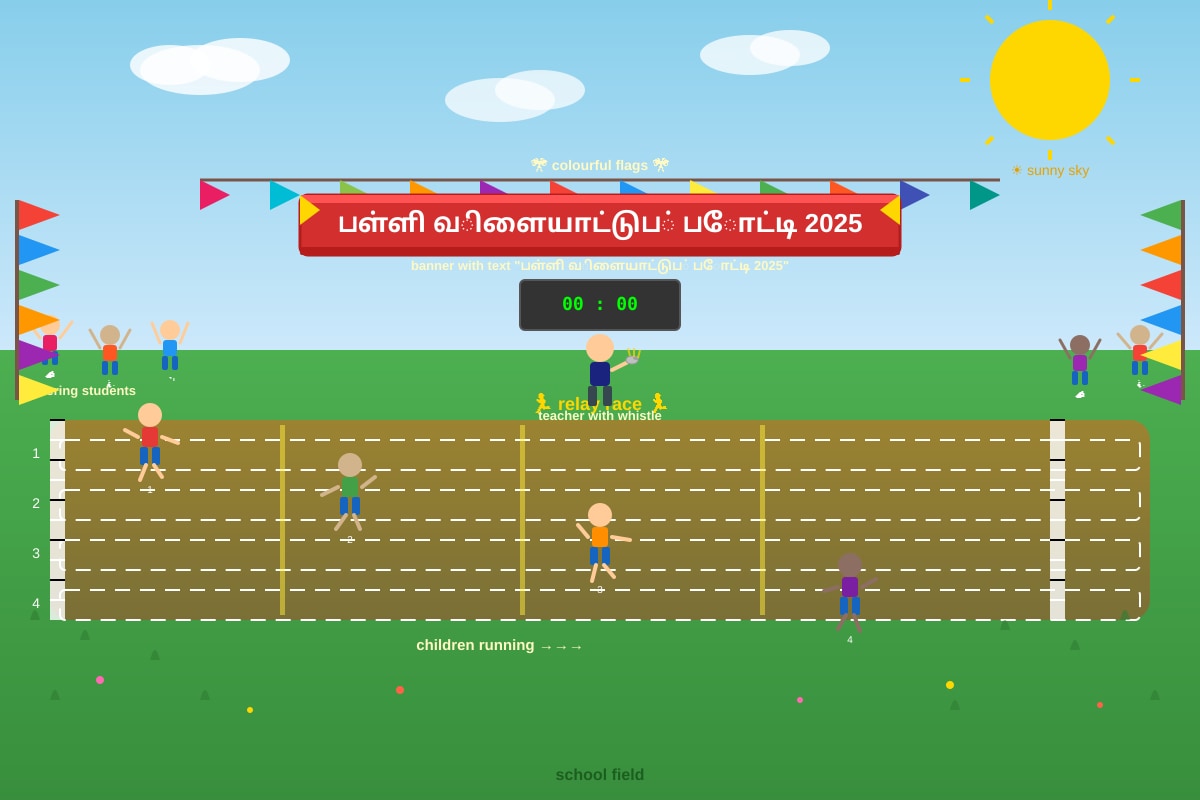
16. படத்தில் நடப்பது பள்ளி வளைவில் / மைதானத்தில்.
- Expected answer: "பள்ளி வளைவில்" (at the school ground) or "மைதானத்தில்" (on the field) or "பள்ளி விளையாட்டு மைதானத்தில்" (at the school sports field).
- Explanation: The image shows a school sports day scene on a school field/ground. Students should identify the location from the visual context — the banner reading "பள்ளி விளையாட்டுப் போட்டி 2025" confirms it is a school event on the school grounds.
- Image reference: The image shows a school field with children running, a banner, flags, and a teacher — all indicating a school sports ground.
- Mark: 1
17. படத்தில் நான்கு அல்லது ஐந்து குழந்தைகள் ஓடுகிறார்கள். அவர்கள் ரிலே ஓட்டப்பந்தயம் / தொடர்ஓட்டப் போட்டி ஓடுகிறார்கள் என்று நினைக்கிறேன்.
- Expected answer: Students should state the number of children they can see running (approximately 4–5 based on the image description) and identify the race as a relay race ("ரிலே ஓட்டம்" or "தொடர்ஓட்டப் போட்டி").
- Explanation: The image description mentions children running a relay race. Students should observe the image and count the children, then use the term "ரில" (relay) to describe the type of race. Accept any reasonable number (4, 5, or 6) based on what is visible.
- Image reference: The image shows children running on a field in what is described as a relay race, with other children cheering from the sidelines.
- Marking: 1 mark for identifying the number of children, 1 mark for identifying the type of race.
- Mark: 2
18. படத்தின் வானம் சூரியளைக் கொண்டு பிரகாசமாக இருக்கிறது / வெளிச்சமாக இருக்கிறது. இது எனக்கு மகிழ்ச்சியான உணர்வையும் உற்சாகமான உணர்வையும் தருகிறது.
- Expected answer: Students should describe the sky as sunny/bright and express a positive feeling such as happiness, excitement, or joy.
- Explanation: The image description states "The sun is shining brightly." Students should describe the weather/sky condition and connect it to a positive emotion appropriate for a sports day. Accept any reasonable positive emotion: மகிழ்ச்சி (happiness), உற்சாகம் (excitement), ஆர்வம் (enthusiasm), etc.
- Image reference: The image shows a sunny sky with the sun shining brightly over the sports day scene.
- Marking: 1 mark for describing the sky, 1 mark for expressing a feeling.
- Mark: 2
19. Model Answer (8 sentences):
என் பிடித்த உணவு சோறும் குழம்பும். என் அம்மா தினமும் சுவையான சோற்றையும் குழம்பையும் சமைக்கிறாள். சோற்றின் மணம் மிகவும் நல்லது. நான் சோற்றை மிகவும் விரும்புகிறேன். மதிய உணவில் எப்போதும் சோற்றையும் குழம்பையும் சாப்பிடுவேன். சில நேரங்களில் உணவகத்திலும் சோறு சாப்பிடுவேன். சோறு எனக்கு மிகவும் பிடித்தமான உணவு. அது என் உடலுக்கு ஆரோக்கியமாகவும் இருக்கிறது.
- Marking Scheme:
- 1 mark for each correct and relevant sentence (up to 8 sentences) = 4 marks
- Award marks for: correct grammar, relevant content, use of helping words, sentence variety, and coherence.
- Deduct 0.5 marks for each major grammatical error.
- Minimum mark: 0
- Mark: 4
20. Model Answer (10 sentences):
ஒரு நாள், ராஜு பள்ளியிலிருந்து திரும்பிக்கொண்டிருந்தான். பாதையோரத்தில் ஒரு சிறிய பறவை நிலத்தில் கிடந்ததைக் கண்டான். அந்தப் பறவை படும்பாடு இல்லாமல் அசையாமல் கிடந்தது. ராஜு பறவையிடம் அருகில் சென்று மெதுவாக அதை எடுத்துக்கொண்டான். அவன் முதல்தண்ணீர் கட்டியை எடுத்து பறவைக்கு மருத்துவம் செய்தான். அருகில் நின்ற அவன் நண்பி ப்ரியா இதைப் பார்த்து மகிழ்ச்சியாக சிரித்தாள். ப்ரியா உதவிக்காக வந்தாள். இருவரும் சேர்ந்து பறவையைக் காப்பாற்றினர். சில நாட்களில் பறவை ஆரோக்கியமாகிவிட்டது. ராஜுவும் ப்ரியாவும் பறவையை விடுதலை செய்தனர். பறவை வானத்தில் பறந்து சென்றது. ராஜுவுக்கு மிகுந்த மகிழ்ச்சி ஏற்பட்டது.
- Marking Scheme:
- Content (3 marks): Story should include: finding the bird, helping/treating the bird, recovery, and release. Award 3 marks for complete and creative story, 2 marks for adequate story, 1 mark for minimal story.
- Language & Grammar (2 marks): Correct Tamil grammar, appropriate vocabulary, proper sentence structure. Award 2 marks for mostly correct, 1 mark for some errors.
- Coherence & Length (1 mark): Story should flow logically and be approximately 10 sentences. Award 1 mark if both criteria are met.
- Common mistakes to watch for: Inconsistent tense, missing connectives, too few sentences, irrelevant content.
- Mark: 6
Section A Total: 10 marks Section B Total: 5 marks Section C Total: 25 marks Grand Total: 40 marks