AI Generated Quiz
Primary 6 PSLE Higher Tamil Speaking Quiz
Free P6 PSLE Higher Tamil Speaking quiz, Nemo3 AI version, with questions, answers, and PSLE-focused practice for Singapore students.
These static practice materials are generated from the site's syllabus and paper-generation workflow, with source and model context shown so students and parents can evaluate the material before use.
Questions
Free quiz and exam paper access
Enter your details to view this paper
Your access is remembered on this device.
Answers
Primary 6 PSLE Higher Tamil Quiz - Speaking (Answer Key & Teaching Notes)
Total Marks: 40
Section A: Reading Aloud (வாசித்தல்) — 10 Marks
Passage Assessment Criteria (Teacher Use):
| Criteria | Marks | Descriptors |
|---|---|---|
| Pronunciation & Articulation (உச்சரிப்பு மற்றும் வார்த்தை விளக்கம்) | 4 | Clear, accurate pronunciation of all words (including 'கபடி', 'பிரிந்து', 'மனோபலம்', 'முக்கியம்'). Correct Tamil phonemes (retroflex/dental distinction). |
| Fluency & Pace (நிலைமை மற்றும் வேகம்) | 3 | Smooth reading without hesitations or self-corrections. Appropriate pace — not too fast/rushed, not too slow. Observes punctuation (commas, full stops). |
| Expression & Intonation (உரைச்சல் மற்றும் தொனி மாறுபாடு) | 3 | Varies tone to reflect meaning (e.g., excitement for 'பிரபலமான', emphasis on 'முக்கியம்'). Uses appropriate pauses. Conveys the descriptive nature of the text. |
Teaching Notes:
- Key Vocabulary to Practise: பாரம்பரிய (traditional), விளையாட்டு (game), கிராமப்புறங்கள் (rural areas), அணி (team), தாக்கும்/பாதிக்கும் (attacking/defending), மனோபலம் (presence of mind), அணி வேலை (teamwork).
- Common Errors: Mispronouncing 'கபடி' as 'கபடி' (short 'a'), blending 'பிரிந்து' into 'பிரந்து', monotone reading of the list of skills at the end.
- Tip: Practise reading in "chunks" (phrase by phrase) rather than word by word.
Section B: Picture Discussion (படம் விவாதம்) — 15 Marks
2. Describe the picture in detail. (5 marks)
Expected Content Points (1 mark each, max 5):
- Setting: School canteen during recess (பள்ளி கேன்டீன், இடைவேளை நேரம்).
- Main Action (Foreground): 4 students sitting/eating together at a table; one boy sharing fruit with a girl (நான்கு மாணவர்கள் உடன் உணவு சாப்பிடுகிறார்கள்; ஒரு சிருவன் பழம் பகிர்கிறான்).
- Background Action: Canteen vendor serving noodles (கேன்டீன் வியாபாரி நூடுல்ஸ் வழங்குகிறார்).
- Environmental Details: Posters on wall ("Eat Healthy", "Reduce Food Waste" in English & Tamil); Recycling bin & Food waste bin (போஸ்டர்கள், மறுசெயலாக்க குப்பை தட்டி, உணவு குப்பை தட்டி).
- Atmosphere/Mood: Happy, friendly, orderly (சந்தோஷமாக, நட்பாக, ஒழுங்காக).
Sample Good Response: "இந்த படம் ஒரு பள்ளி கேன்டீனில் இடைவேளை நேரத்தைக் காட்டுகிறது. முன்னிலையில், நான்கு மாணவர்கள் ஒரு மேசையில் உடன் அமர்ந்து உணவு சாப்பிடுகிறார்கள். ஒரு சிருவன் ஒரு சிறுமிக்கு பழம் பகிர்ந்து கொடுக்கிறான். பின்னிலையில், கேன்டீன் அம்மா ஒரு மாணவுக்கு நூடுல்ஸ் வழங்குகிறார். சுவரில் 'உணவு தவறவிடாதீர்கள்', 'நலம் பெற சத்துண்டு சாப்பிடுங்கள்' போன்ற போஸ்டர்கள் தமிழிலும் ஆங்கிலத்திலும் உள்ளன. மறுசெயலாக்க மற்றும் உணவு குப்பை தட்டிகள் காணப்படுகின்றன. வைராக்கியம் இல்லாமல், அனbürgerும் சந்தோஷமாக இருப்பது காணப்படுகிறது."
Marking Notes: Award marks for specific vocabulary (முன்னிலை/பின்னிலை, வியாபாரி, மறுசெயலாக்கம்) and coherent structure (Setting -> People -> Action -> Details -> Mood).
3. What values are the students demonstrating? (4 marks)
Expected Values (1 mark for value + 1 mark for evidence/link, max 2 values = 4 marks):
- Sharing / Generosity (பகிர்வு / உதாரத்தன்மை): Boy sharing fruit with girl (S2 -> S3).
- Health Consciousness / Responsibility (ஆரோக்கியம் / பொறுப்பு): Eating home-cooked food from reusable containers; posters reinforce this.
- Environmental Care (சுற்றுச்சூழல் பாதுகாப்பு): Using reusable containers; bins segregated for recycling/food waste visible.
- Friendship / Camaraderie (நட்பு / சகோதரத்துவம்): Eating together, chatting happily.
Sample Response: "மாணவர்கள் பகிர்வு (Sharing) என்ற மதிப்பைக் காட்டுகின்றனர். ஒரு சிருவன் தனது பழத்தை ஒரு சிறுமியுடன் பகிர்ந்து கொள்கிறான். மேலும், அவர்கள் சுற்றுச்சூழல் பாதுகாப்பு (Environmental Care) மதிப்பையும் பின்பற்றுகின்றனர். அவர்கள் மறுசெயலாக்கக்கூடிய பெட்டிகளில் (reusable containers) உணவு கொண்டு வந்துள்ளனர் மற்றும் குப்பை தட்டிகள் பிரிக்கப்பட்டுள்ளன."
4. Suggest two practical ways for "Zero Waste Recess". (3 marks)
Expected Suggestions (1.5 marks each):
- Bring food in reusable containers/bento boxes instead of disposable plastic/styrofoam (மறுசெயலாக்கக்கூடிய பெட்டிகளில் உணவு கொண்டு வருதல்).
- Finish all food / Take only what you can eat to avoid food waste (உணவு முழுவதும் முடித்து விடுதல் / தேவையான அளவே எடுதல்).
- Use the correct bins — Recyclables in blue, Food waste in green/yellow (சரியான குப்பை தட்டியில் குப்பை போடுதல்).
- Bring own water bottle instead of buying plastic bottles (தனது தண்ணீர் பாட்டில் கொண்டு வருதல்).
Marking Notes: Must be practical and actionable by students. Generic answers like "Don't waste" get 0.5 marks only.
5. If you were S2 (sharing fruit), how would you feel? How encourage others? (3 marks)
Expected Response Structure:
- Feeling (1 mark): Happy (மகிழ்ச்சி), Satisfied (திருப்தி), Kind (நலன்), Builds friendship (நட்பு வலுவாகும்).
- Encouragement Strategy (2 marks):
- Lead by example / Share openly (தன்னுடையே நடத்தை மூலம்).
- Verbal encouragement: "You try sharing too, it feels good!" (தமிழில்: "நீங்களும் பகிர்ந்து பாருங்கள், நல்ல உணர்வு").
- Explain benefits: Less waste, more friends (குப்பை குறையும், நண்பர்கள் அதிகரிப்பர்).
Sample Response: "நான் மிகவும் மகிழ்ச்சி மற்றும் திருப்தி உணர்வேன். நண்பரை மகிழ்ச்சியாக வைத்ததில் சந்தோஷம். மற்றவர்களை ஊக்குவிக்க, நான் முதலாக பகிர்ந்து காட்டுவேன் (Lead by example). மேலும், 'பகிர்வதில் இனிமை உள்ளது, நட்பு வலுவாகும்' என்று சொல்லி உறுதிசெய்ய வலியுறுத்துவேன்."
Section C: Conversation (உரையாடல்) — 15 Marks
General Marking Guide per Question (3 marks each):
- Content & Relevance (1.5 marks): Answers the prompt directly, ideas are developed, personal example given.
- Language & Vocabulary (1 mark): Uses varied sentence structures, appropriate Higher Tamil vocabulary (e.g., not just 'நல்லது' but 'மிகுந்த பயன்', 'அவசியம்'), correct grammar (tense, case markers).
- Fluency & Interaction (0.5 marks): Natural flow, minimal hesitation, engages with examiner's follow-ups.
6. Memorable school event. (3 marks)
Key Elements: Specific event (Sports Day, Camp, Competition, Teacher's Day), Role played, Emotion/Value learned. Sample: "இந்த ஆண்டு விளையாட்டு தினம் எனக்கு மறக்க முடியாதது. நான் ரிலே ஓட்டத்தில் (Relay race) பங்கேற்றேன். நாங்கள் அணியாக ஓடி வெற்றி பெற்றோம். அணி வேலை (Teamwork) மற்றும் உறுதி (Perseverance) எனும் மதிப்புகளை கற்றேன்."
7. Teamwork vs Individual Talent. (3 marks)
Expected Stance: Agree (mostly) with nuance. Reasons: 1. Diverse skills needed (Ideas + Execution + Art + Tech). 2. Support covers weaknesses. 3. Real world needs collaboration. Counter-point (for balance): Individual brilliance can spark the idea/lead. Personal Example: "எங்கள் அறிவியல் திட்டத்தில் (Science project), ஒருவர் மாதிரி (model) செய்தார், மற்றோர் அறிக்கை (report) எழுதினார், நான் விளக்கம் (presentation) செய்தேன். அனைவரும் சேர்ந்து முதல் பரிசை பெற்றோம்."
8. Handling Exam Stress. (3 marks)
Strategies (Any 2, well explained):
- Timetable/Planning (திட்டமிடல்) — reduces last-minute panic.
- Breaks / Hobbies / Exercise (இடைவேளை / விளையாட்டு) — refreshes mind.
- Positive Self-talk / Mindfulness (நேர்மறை சிந்தனை / தியானம்).
- Group Study / Ask Teachers (கூட்டு படிப்பு / ஆசிரியரைக் கேள்வி) — clears doubts. Sample: "நான் தமிழ் மற்றும் கணிதத்திற்கும் பிரதித் திட்டம் (Revision timetable) தயாரித்து படிக்கிறேன். இது கடைசி நிமிடப் பயத்தை தவிர்க்கிறது. மேலும், ஹாக்கி அல்லது சைக்கிள் ஓட்டம் போல விளையாட்டு விளையாடி மனதை திறப்பதில் ஈடுபடுகிறேன்."
9. Friend Bullied by Senior. (3 marks)
Steps (Must be responsible/safe):
- Comfort friend (நண்பரை ஆறுதல்) — "Don't worry, I'm with you."
- Report to trusted adult IMMEDIATELY (நம்பகமான பெரியவரிடம் புகார்) — Teacher, Counsellor, Principal. Do not confront senior physically.
- Support friend through process (நிர்வாக செயல்முறையில் துணைநிலை). Sample: "முதலில் நண்பரை ஆறுவித்து, 'நீ ஒரு மட்டுமில்லை, நான் உன் பக்கமே' என்று சொல்வேன். பின்னர், துணை ஆசிரியர் அல்லது கவுன்சிலரிடம் (Trusted adult) உடனடியாக புகாரளிப்பேன். பெரிய மாணவருடன் தான் மோதுவதில்லை (No confrontation)."
10. Mobile Phones in School for Learning. (3 marks)
Structure: View (Agree/Disagree/Balanced) + 2 Supporting Points + 1 Counter-point. Sample (Balanced): "நான் சரியாக கட்டுப்படுத்தப்பட்டால் மட்டும் (With strict regulation) ஒப்புக்கொள்கிறேன். ஆதரவு: 1. விளக்கமுறைகள்/வீடியோக்கள் (Tutorials/Videos) மூலம் தன்னார்வமாக கற்பது சாத்தியம். 2. ஆன்லைன் விகிதங்கள்/அகராதிகள் (Online resources/Dictionaries) உடனடியாக அணுகலாம். எதிர்ப்பு: வினோதம்/சோஷியல் மீடியா (Distraction/Social Media) மூலம் கவனம் தவறும் அபாயம் அதிகம். எனவே, ஆசிரியர் மேற்பார்வையில் மட்டும் (Teacher supervision only) அனுமதிக்க வேண்டும்."
Section D: Stimulus-based Conversation (உத்வேக அடிப்படையிலான உரையாடல்) — 10 Marks
11. Meaning of Water Conservation + 2 Examples of Wastage. (3 marks)
Meaning (1 mark): Using water carefully, avoiding waste, saving for future (நீர் தவறவிடாமல், தேவையான அளவே பயன்படுத்துதல், எதிர்காலத்திற்காக சேமித்தல்). Examples (1 mark each):
- Leaving tap running while brushing teeth / washing dishes (பிரஷ் செய்யும் போது/உதவல்கள் கழுவும் போது கранை திறந்து வைத்தல்).
- Long showers / Using hose to wash car/porch (நீண்ட குளிர்ச்சி / கார், போர்ச் கழுவ ஹோஸ் பயன்படுத்துதல்).
- Ignoring leaking taps (சிதைக்கும் கிரானை மறந்து விடுதல்).
12. Three Creative Ways for Class Promotion. (3 marks)
Ideas (1 mark each, creativity rewarded):
- "Water Warrior" Badge Challenge: Daily checklist at home, weekly winner gets badge (வீட்டு நீர் சேமிப்பு பட்டியல், வாராந்திர வீரர் பேஜ்).
- Poster/Video Competition: "Save Water in 30 Seconds" — display in canteen/assembly (30 வினாடி வீடியோ/போஸ்டர் போட்டி).
- School Audit Walk: Class checks all taps/toilets for leaks, reports to admin (பள்ளி கிரானை தெர்வு நடத்துதல்).
- Rainwater Harvesting Demo/Model: Build a model, explain to juniors (மழை நீர் சேகரிப்பு மாதிரி உருவாக்கி விளக்குதல்).
13. Personal Experience Saving Water. (2 marks)
Structure: Situation -> Action -> Learning. Sample: "எங்கள் வீட்டில் கிரானை சிதைத்தது. அப்பா மற்றும் நான் வாஷர் மாற்றி (Changed washer) சிதைப்பு நிருத்தினோம். ஒரு வாரத்தில் பல லிட்டர் நீர் சேமித்தோம். 'சிறு தவறுகள் பெரிய நஷ்டம்' (Small faults = big loss) என கற்றேன்."
14. Children Influencing Adults. (2 marks)
Stance: Agree. Reasoning + Example (1+1): "ஆம், குட்டிகள் வீட்டில் 'நீர் ரக்ஷகர்கள்' (Water Guardians) ஆகலாம். எடுத்துக்காட்டாக, தாய்மார் உணவு கழுவும் போது கிரானை திறந்து வைத்திருந்தால், 'அம்மா, நீர் சேமிக்கவும், கிரானை மூடுங்கள்' என்று நினைவூட்டினால், அவர்கள் மாற்றம் செய்யலாம். குட்டிகளின் வார்த்தைகள் மார்பு ஏற்படுத்தும் (Children's words create change)."
Section E: Role-Play / Scenario Response (பங்கு விளையாட்டு / சூழ்நிலை பதில்) — 10 Marks
15. Class Monitor helping New Student (Non-Tamil speaker). (5 marks)
Marking Descriptors:
- Greeting & Empathy (1 mark): Warm welcome, acknowledge difficulty (Vanakkam, Welcome. Tamil kalakkalam, sariparkka mudiyum).
- Concrete Help Offered (2 marks): Buddy system (Naan un buddy), Translate key phrases (Toilet, Canteen, Homework), Show around school (Office, Library, Field).
- Language Use (1 mark): Simple, clear Tamil + English/Gestures. Encouraging tone.
- Sustained Interaction (1 mark): "Naalaiyum varuvaaya? Enakku kooda un peyar theriyum." (Building rapport).
Sample Script: "வணக்கம்! நான் இந்த வகுப்பு மானிட்டர் (Monitor). உங்கள் பெயர் என்ன? நான் ரவி. இங்கே வரவேற்கிறோம். தமிழ் தெரியாமல் போகாதே, நான் உதவுவேன். நான் உங்கள் படி другом (Buddy). கைதூவல், கேன்டீன், நூலகம் எல்லாம் காட்டி தருவேன். முக்கிய வார்த்தைகள்: 'நீர் குடிக்க', 'சாப்பிடு', 'வீட்டுக்கு போ' — இதை நான் தமிழில் சொல்லி கற்பிக்கிறேன். நாளை மீண்டும் வாருங்கள், நண்பராக இருப்போம்!"
16. Broke Library Book — Responding to Librarian. (5 marks)
Marking Descriptors:
- Honesty & Immediate Admission (1.5 marks): "மன்னிக்கவும், என்னிடம் தவறு நடந்து விட்டது." (Sorry, mistake happened by me). No lies/excuses.
- Explanation of Accident (1 mark): "பக்கம் திரும்பும் போது, கை விழுந்து விழுந்துவிட்டது." (Turning page, hand slipped, fell).
- Responsibility/Solution (1.5 marks): "நீதியான தண்டனை/மதிப்பு செலுத்துவேன். எவ்வளவு செலவு என சொல்லுங்கள்." (Accept punishment/pay cost. Tell me amount).
- Respectful Tone (1 mark): Polite register (நீங்கள், தயவு செய்து, மன்னிக்கவும்).
Sample Script: "அம்மா/அக்கா (Librarian), மன்னிக்கவும். என் கை விழுந்து புத்தகம் விழுந்து, முகவுரு கிடைச்சு உடைந்து விட்டது (Hand slipped, book fell, corner damaged). தவறு எனக்கே. புத்தகம் மதிப்பு அல்லது பழைய புத்தகம் வாங்கி தருவேன். என்ன செய்ய வேண்டும் என்று சொல்லுங்கள், நான் செய்யவேன்."
Section F: Picture Sequence Narration (பட வரிசை விவரிப்பு) — 10 Marks
17. Narrate the 4-panel story. (5 marks)
Marking Criteria:
- Sequencing & Connectors (2 marks): Correct order (Panel 1->4). Uses: முதலில் (First), அப்போது/பின்னர் (Then), பின்னர் (After that), இறுதியாக (Finally).
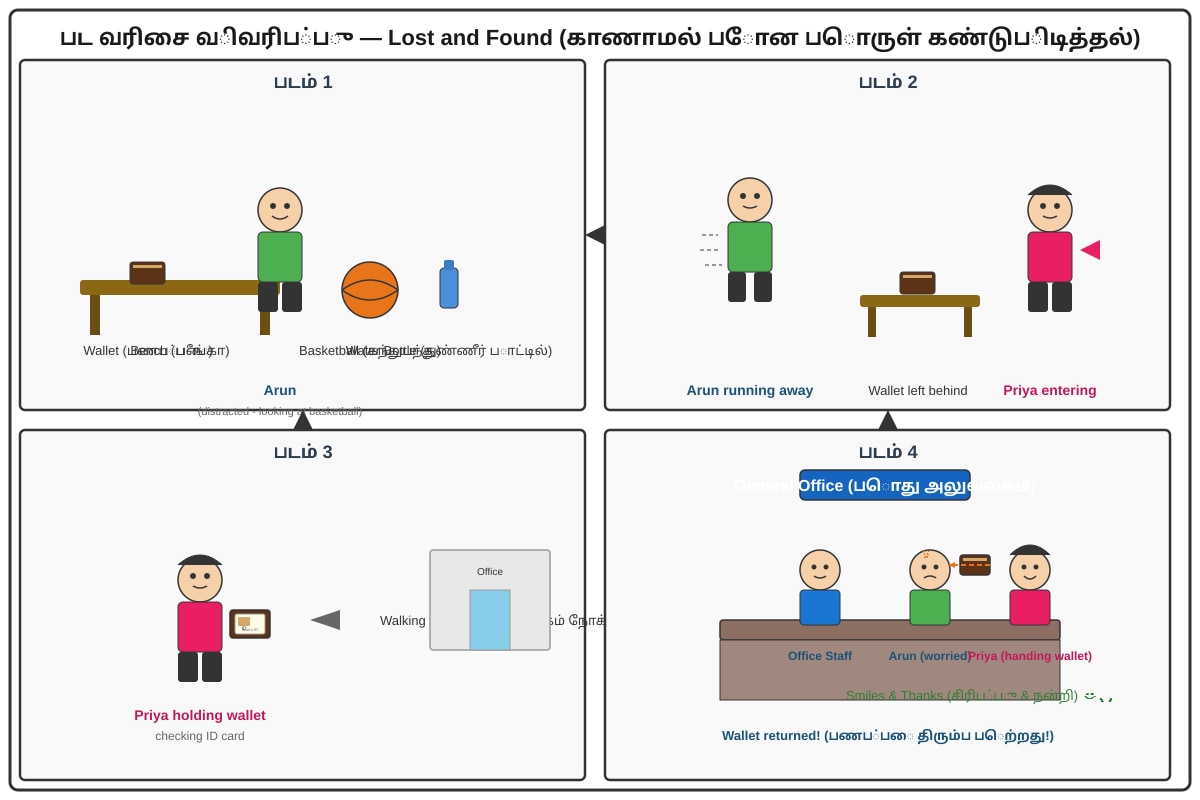
- Descriptive Detail (2 marks): Actions, expressions, objects (Wallet, ID, Office sign).
- Language Quality (1 mark): Past tense consistency (விழுந்தது, எடுத்து சென்றாள், கொடுத்தார்), varied vocab.
Sample Narration: "முதலில், அருண் பள்ளி கோர்ட்டில் பாஸ்கெட்பால் விளையாடுகிறான். அவன் பேஞ்சில் தண்ணீர் பாட்டில் மற்றும் பணக்குடை வைத்திருக்கிறான். அப்போது, அவன் வகுப்புக்குப் போக வேண்டிய நேரம் ஆக, ஓடி சென்றுவிடுகிறான். பின்னர், பிரியா என்ற ஒரு பெண் வந்து, பேஞ்சில் விட்டு போன பணக்குடையைக் கண்டு, அதை எடுத்து அंदर உள்ள அடையாள் அட்டையை (ID card) பார்க்கிறாள். அதன் மூலம், அவள் பணக்குடையை பொது அலுவலகத்திற்கு (General Office) கொண்டு செல்கிறாள். இறுதியாக, அருண் கவலையுடன் அலுவலகத்திற்கு வந்து, பிரியா பணக்குடையை அலுவலக ஊழியரிடம் கൈமാറுகிறாள். அருண் மகிழ்ந்து 'நன்றி' என்று சொல்லி, பிரியா சிரித்து விட்டு செல்கிறாள்."
18. Priya's Character Traits. (3 marks)
Traits (1 mark each + evidence):
- Observant / Alert (கவனிசை / விழிப்புணர்வு): Noticed wallet on bench when others didn't (Panel 2).
- Honest / Responsible (நேர்மை / பொறுப்பு): Didn't keep it; checked ID to find owner; took to Office (Panel 3).
- Kind / Helpful (நலன் / உதவி): Returned it personally, smiled (Panel 4).
19. Arun's Response & Prevention. (2 marks)
Response to Priya (1 mark): Sincere thanks, acknowledge effort. "பிரியா, உன் உதவிக்கு மிகவும் நன்றி. நீ இல்லையென்றால் என்ன ஆகியிருக்கும் என்று தெரியாது. நீ ஒரு நல்ல நண்பர்." Prevention (1 mark): Practical habit. "இனிமேல், பணக்குடையை பேன்சில் பெட்டியில்/பேகில் பாதுகாப்பாக வைத்து (Keep wallet safely in bag/pencil case) பின்னர் மட்டும் விளையாடுவேன். அல்லது கைசாக்கில் கட்டி (Tie to wrist) வைக்குவேன்."
Section G: Opinion & Justification (கருத்து மற்றும் உரிமை) — 10 Marks
20. P6 Leadership Roles for Sec School Prep. (5 marks)
Marking Rubric:
- Clear Stance (1 mark): Agree / Disagree / Qualified Agree.
- Three Distinct Reasons (3 marks — 1 each): Developed with explanation.
- Language & Persuasiveness (1 mark): Connectors (முதலாக, அடுத்து, இறுதியாக), Higher vocab (திறமை வளர்ச்சி, தன்னம்பிக்கை, பொறுப்பு உணர்வு).
Sample Reasons (Agree):
- தன்னம்பிக்கை மற்றும் பேச்சு திறன் (Confidence & Communication): Leading assembly/CCA forces public speaking, interacting with teachers/juniors — crucial for Sec 1 orientation/leadership.
- பொறுப்பு உணர்வு மற்றும் நேர மேலாண்மை (Responsibility & Time Management): Balancing prefect duties + PSLE prep teaches prioritization — direct prep for Sec heavier workload/CCA.
- தீர்மானம் எடுப்பது மற்றும் சமாதானம் (Decision Making & Conflict Resolution): Handling class disputes/organising events builds maturity — Sec school requires more independence.
Counter-view (if Disagree): Stress/Burnout risk; Not all ready; Academic focus paramount. (Must still give 3 reasons).
End of Answer Key
Teacher's Note: Use this key as a guide. Award marks holistically for communication effectiveness. Encourage students to record themselves and self-assess using the descriptors above.