AI Generated Quiz
Primary 6 PSLE Higher Tamil Speaking Quiz
Free P6 PSLE Higher Tamil Speaking quiz, Kimi2.6 AI version, with questions, answers, and PSLE-focused practice for Singapore students.
These static practice materials are generated from the site's syllabus and paper-generation workflow, with source and model context shown so students and parents can evaluate the material before use.
Questions
Free quiz and exam paper access
Enter your details to view this paper
Your access is remembered on this device.
Answers
Primary 6 PSLE Higher Tamil Quiz - Speaking: Answer Key
Total Marks: 20
Section A: Speaking情境理解 (Situational Understanding) — 8 marks
Question 1 (1 mark)
Expected answer: "வணக்கம், என் பெயர் [name]. நான் Primary 6-ல் படிக்கிறேன். உங்களைச் சந்தித்ததில் மகிழ்ச்சி" அல்லது அதற்கு ஒத்த அறிமுக வாக்கியம்.
Explanation: In Tamil greeting conventions, self-introduction requires stating one's name, class/grade, and a polite closing. The verb "சந்தித்ததில் மகிழ்ச்சி" (pleased to meet you) is the standard formal closing. Students should avoid overly casual forms like "என்னைக் கூப்பிடு" (call me...).
Common mistake: Using English-like structures or omitting the respectful closing phrase.
Question 2 (1 mark)
Expected answer: "வணக்கம்! வருக! வருக! உள்ளே வாருங்கள். நீங்கள் வந்ததற்கு மிக்க நன்றி" அல்லது அதற்கு ஒத்த வரவேற்பு வாக்கியம்.
Explanation: Tamil hospitality requires the doubled "வருக வருக" (welcome, welcome) for warmth, followed by an invitation to enter and gratitude for the visit. This three-part structure matches Singapore Tamil oral examination expectations.
Common mistake: Using only "hi" or single "welcome" without the traditional doubled form.
Question 3 (1 mark)
Expected answer: "அந்தப் பொருளின் விலை என்ன?" அல்லது "இதற்கு எவ்வளவு?" with polite particle "ங்க" appended if addressing an elder: "இதற்கு எவ்வளவுங்க?"
Explanation: Direct price questions in Tamil avoid imperative forms. The honorific "ங்க" (from "அங்காளி") is crucial when addressing shopkeepers in Singapore context, showing respect for service workers.
Question 4 (1 mark)
Expected answer: "கவலைப்படாதே. அடுத்த முறை நீ நல்ல மதிப்பெண் எடுப்பாய். நான் உனக்கு உதவத் தயாராக இருக்கிறேன்" அல்லது அதற்கு ஒத்த ஆறுதல்.
Explanation: Tamil consolation avoids blame mention. The structure is: reassurance + future hope + offered support. This reflects the cultural value of முயற்சி (effort) over immediate results.
Common mistake: Mentioning the failure directly ("you failed") rather than focusing forward.
Question 5 (1 mark)
Expected answer: "சிரித்த முகத்துடன்: தாராளமாக அமருங்கள் அம்மா/அப்பா. நான் வேறு இடம் தேடுகிறேன்" அல்லது அதற்கு ஒத்த Giving up seat.
Explanation: The response must include: (a) respectful address with age-appropriate honorific, (b) gracious permission ("தாராளமாக"), (c) self-action to resolve. Singapore PSLE oral rewards such complete sociolinguistic awareness.
Question 6 (1 mark)
Expected answer: "உங்கள் கருத்து சரியானதுதான், ஆனால் என் கருத்திலும் சில நல்ல அம்சங்கள் உள்ளன. இரண்டையும் கலந்து பார்ப்போமா?" அல்லது அதற்கு ஒத்த collaborative language.
Explanation: Tamil oral examinations value ஒற்றுமை வழிகாட்டும் மொழி (consensus-building language). The structure validates others first, then presents one's view as additional, not opposing.
Question 7 (1 mark)
Expected answer: "நான் நேற்று ஒரு அற்புதமான திரைப்படம் பார்த்தேன். அதன் பெயர் ______. அதைப் பற்றி உன்னிடம் சொல்ல விரும்புகிறேன்" அல்லது அதற்கு ஒத்த structured opening.
Explanation: PSLE Tamil oral narrative requires: temporal marker + evaluation + topic announcement + listener engagement. This four-moves structure signals planned discourse.
Question 8 (1 mark)
Expected answer: "மன்னிக்கவும், ஐயா/மேடம். எனக்கு இரண்டு நாட்கள் விடுப்பு வேண்டும். காரணம்: ________. என் வேலையை முன்கூட்டியே முடிக்கிறேன்" அல்லது அதற்கு ஒத்த formal request.
Explanation: Formal Tamil request structure: apology + honorific + specific request + reason + mitigation offer. The "முன்கூட்டியே" (in advance) commitment is culturally expected.
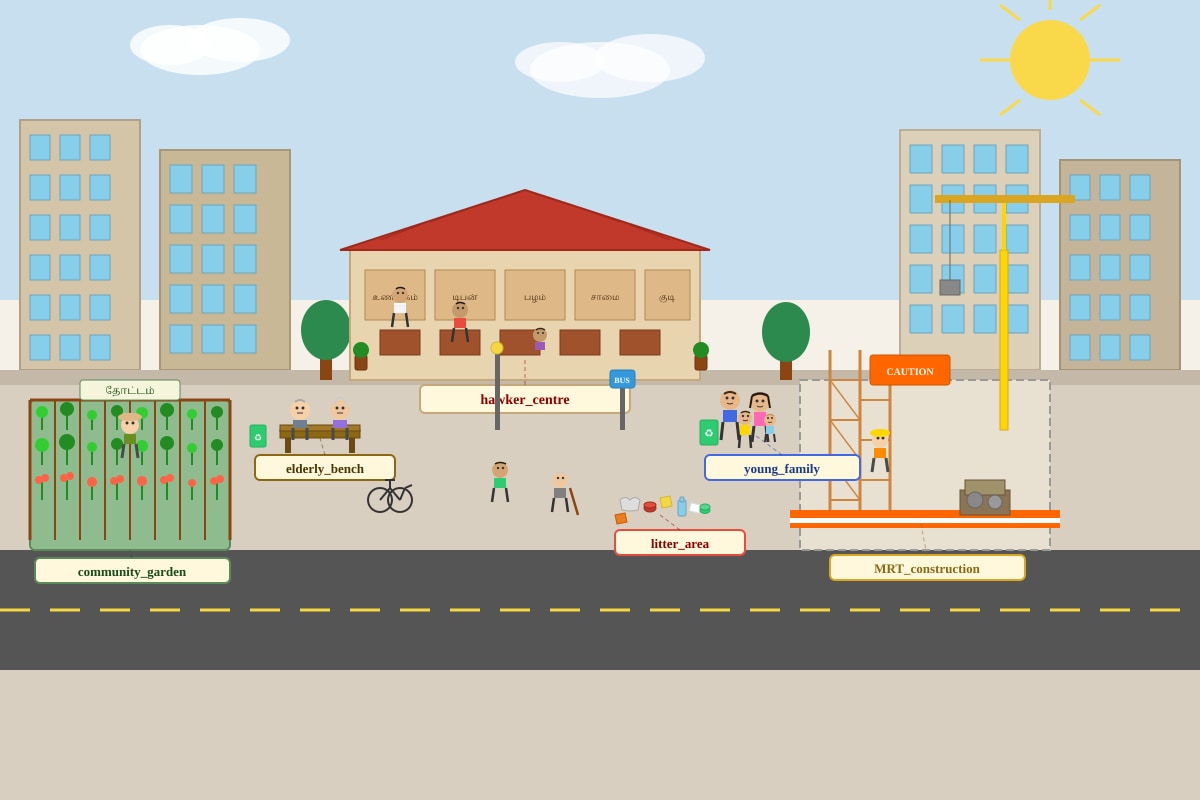
Section B: Oral Picture Discussion (9 marks)
Question 9 (2 marks)
Marking descriptor:
- 2 marks: Three distinct, clearly described elements with at least one specific detail each
- 1 mark: Three elements listed but lacking specificity, or only two well-described
- 0 marks: Fewer than two elements or irrelevant descriptions
Expected answer points:
- சந்தை (Market/Hawker centre): "பழைய ஹாக்கர் சென்டர் ஒன்றில் மக்கள் உணவு வாங்குகிறார்கள்"
- சமூகப் பூங்கா (Community garden): "முதியவர்கள் மற்றும் குழந்தைகள் ஒன்றாகத் தோட்டப் பணி செய்கிறார்கள்"
- எம்ஆர்டி கட்டுமானம் (MRT construction): "புதிய ரயில் நிலையம் கட்டப்பட்டுக் கொண்டிருக்கிறது"
Alternative valid elements: elderly on bench, young family with stroller, litter near market
Explanation: PSLE picture discussion rewards thematic grouping. The three elements should span different domains (social/economic, environmental/intergenerational, infrastructural/developmental) to show analytical depth.
Question 10 (2 marks)
Marking descriptor:
- 2 marks: Clear age contrast identified with specific actions for at least two age groups
- 1 mark: Age groups mentioned but actions vague or only one group detailed
- 0 marks: No age reference or incorrect action-description pairing
Expected answer:
- முதியவர்கள் (Elderly): "பெஞ்சில் அமர்ந்து ஓய்வெடுக்கிறார்கள் அல்லது செடிகளுக்கு நீர் ஊற்றுகிறார்கள்"
- இளைஞர்கள்/பெற்றோர் (Young adults/Parents): "குழந்தையுடன் நடந்து செல்கிறார்கள் அல்லது கடையில் வாங்குகிறார்கள்"
- குழந்தைகள் (Children): "பூங்காவில் விளையாடுகிறார்கள்"
Explanation: The key skill is வயது-செயல் இணைப்பு (age-action collocation). Students must match demographically probable activities, not just list what they see.
Question 11 (1 mark)
Expected answer: "பல தலைமுறை சமூகம்" (multigenerational society) or "நகர்ப்புற சமூகம்" (urban society) or "சிங்கப்பூர் சமூகம்"
Explanation: Any one accurate socio-spatial descriptor accepted. The concept tested is social categorization vocabulary—can students name the type of community shown?
Question 12 (2 marks)
Marking descriptor:
- 2 marks: Two distinct environmental/social issues identified with location reference
- 1 mark: Two issues but one not clearly in picture, or one issue well-located
- 0 marks: Issues not visible or generic without picture reference
Expected answer:
- குப்பை/மாசு (Litter/Pollution): "சந்தை அருகே குப்பை கிடக்கிறது; இது சுற்றுச்சூழலுக்குத் தீங்கு"
- கட்டுமான இரைச்சல்/தூசி (Construction noise/dust): "எம்ஆர்டி கட்டுமானம் மக்களின் அமைதியைக் குலைக்கிறது" OR "இடப்பற்றாக்குறை" (if student notes loss of green/open space)
Alternative: "முதியவர்களுக்கான இடம் குறைவு" if supported by bench crowding description.
Question 13 (1 mark)
Expected answer: Any practical, polite suggestion such as:
- "குப்பைகளைத் தயவுசெய்து குப்பைத்தொட்டியில் போடுங்கள்"
- "பூங்காவைப் பாதுகாப்போம்; அனைவருக்கும் பயன்படும்"
- "கட்டுமான நேரத்தில் அதிக இரவு வேலை தவிர்ப்போம்"
Explanation: Advice must be ** doable, inclusive** (அனைவரும்), and politely imperative (–ஓம்/–ங்கள் forms). Commands alone (-அய் forms) lose marks.
Question 14 (1 mark)
Expected answer: Any coherent thematic title such as:
- "எங்கள் சமூகத்தின் முகம்"
- "மாறும் நகரம், நிலையான மக்கள்"
- "தலைமுறைகளின் சந்திப்பு"
Explanation: Title should capture tension or unity in the scene. Best titles are metaphorical ("முகம்" for face/identity) or paradoxical ("மாறும்/நிலையான").
Section C: Conversation (3 marks)
Question 15 (1 mark)
Expected answer elements: Specific program name + at least one benefit with explanation
Example: "எங்கள் பள்ளியில் 'தமிழ்மொழி வாரம்' நடக்கிறது. இதில் கவிப்புலி விழா, விவாதப் போட்டி உள்ளன. இது எங்கள் பேச்சாற்றலையும், தமிழ் மீதான பற்றையும் வளர்க்கிறது"
Explanation: The திட்டம் + செயல்பாடு + இரட்டைப் பயன் structure (program + activity + dual benefit) is the PSLE conversational ideal. Vague "we learn Tamil" responses score 0.
Question 16 (1 mark)
Expected answer: Two challenges + one coping strategy, or one well-developed challenge with strategy
Example challenges: "ஆங்கிலம் அதிகம் பேசப்படுவது; தமிழில் பதில் கண்டுபிடிக்க மெதுவாக இருக்கிறது" Example strategy: "தினமும் தமிழ் செய்தித்தாள் வாசிப்பது; தமிழ் திரைப்படங்கள் பார்ப்பது"
Explanation: The சவால்-வெற்றி (challenge-triumph) narrative arc is highly valued. Merely listing problems without agency ("I have no chance to speak") scores poorly.
Question 17 (1 mark)
Expected answer: Specific service + beneficiary + personal connection
Example: "என் பகுதியில் உள்ள முதியவர்களுக்கு உணவு வழங்கும் தன்னார்வலர் ஆவேன். என் பாட்டி அவர்களில் ஒருவர்; அவர் தனிமையாக இருப்பதைக் கண்டேன்"
Explanation: PSLE rewards சுய அனுபவ இணைப்பு (personal experience link). Abstract "help the poor" lacks the narrative authenticity examiners seek.
Passage-based Questions 18-20 (3 marks)
Question 18 (1 mark)
Expected answer: "தமிழ்ப் பேச்சுத்திறன் வளர்ந்தது; சிந்தனை ஆழம் பெற்றது" (directly from text: "பேச்சுத்திறனையும், சிந்தனையையும் வளர்த்துள்ளது")
Explanation: Direct text retrieval. Both benefits must be stated in Tamil terms from passage.
Question 19 (1 mark)
Expected answer: Two of:
- வலியுச்சரிப்பு (Stress): "தீக்குளிப்பு" requires emphasis on "தீ" fire imagery
- இடைநிறுத்தம் (Pause): at punctuation ";" and "."
- உணர்வுச்சாயல் (Intonation): rising for "?" in quoted admiration
- வேகக்கட்டுப்பாடு (Pace): slower for poetic appreciation sections
Explanation: Tamil oral reading assessment explicitly tests prosodic awareness. Students should name the technical term and illustrate with passage example.
Question 20 (1 mark)
Expected answer: தீக்குளிப்பு
Pronunciation rule: வல்லினம் மிக்கல் (hard consonant strengthening). The "க்" in "தீக்" must be pronounced as /k/ (unvoiced velar stop), not softened to /g/ or elided. The subsequent "குளி" begins with soft /k/ but the compound requires clear juncture.
Explanation: This tests இணைப்பு எழுத்து விதி (sandhi rules). The –க்- semivowel in compound words is a classic PSLE pronunciation trap; students often write "தீகுளிப்பு" (missing the hard stop marker) or mispronounce as "தீகுளிப்பு" (softened).
END OF ANSWER KEY
Total: 20 marks ✓