AI Generated Quiz
Primary 6 PSLE Higher Tamil Speaking Quiz
Free P6 PSLE Higher Tamil Speaking quiz, AI version, with questions, answers, and PSLE-focused practice for Singapore students.
These static practice materials are generated from the site's syllabus and paper-generation workflow, with source and model context shown so students and parents can evaluate the material before use.
Questions
Free quiz and exam paper access
Enter your details to view this paper
Your access is remembered on this device.
Answers
Primary 6 PSLE Higher Tamil Quiz - Speaking - Answer Key
Total Marks: 40
Section A: Reading Aloud (10 marks)
General Marking Notes for Section A:
- 2 marks: Fluent reading with clear pronunciation, correct intonation, and appropriate pace. No or very few hesitations.
- 1 mark: Reading is mostly clear but with some hesitations, minor pronunciation errors, or uneven pace.
- 0 marks: Reading is very hesitant, unclear, or with major pronunciation errors.
1. Read the first sentence of the passage aloud. (2 marks)
- Expected text: "தமிழ் மொழி மிகப் பழமையான மொழிகளில் ஒன்றாகும்."
- Marking: Award 2 marks for clear pronunciation of "பழமையான", "மொழிகளில்", and "ஒன்றாகும்". The student should pause slightly after "தமிழ் மொழி".
2. Read the second and third sentences aloud. (2 marks)
- Expected text: "உலகில் பல கோடி மக்கள் தமிழ் பேசுகிறார்கள். தமிழர்கள் தங்கள் பண்பாட்டைப் பாதுகாக்க மொழியை மிகவும் முக்கியமாகக் கருதுகிறார்கள்."
- Marking: Award 2 marks for correct pronunciation of "கோடி", "பேசுகிறார்கள்", "பண்பாட்டைப்", "பாதுகாக்க", and "கருதுகிறார்கள்". The student should show a slight pause between the two sentences.
3. Read the fourth and fifth sentences aloud. (2 marks)
- Expected text: "பள்ளிகளில் தமிழ் மொழி கற்பிக்கப்படுகிறது. தமிழ் இலக்கியம் மிகவும் வளமானது."
- Marking: Award 2 marks for correct pronunciation of "கற்பிக்கப்படுகிறது", "இலக்கியம்", and "வளமானது". The student should stress "மிகவும்" appropriately.
4. Read the sixth sentence aloud. (2 marks)
- Expected text: "சங்க இலக்கியம் தமிழின் தொன்மையைக் காட்டுகிறது."
- Marking: Award 2 marks for correct pronunciation of "சங்க", "இலக்கியம்", "தொன்மையைக்", and "காட்டுகிறது". The student should pronounce the consonant cluster "ங்க" correctly.
5. Read the last two sentences aloud. (2 marks)
- Expected text: "இன்று பல நாடுகளில் தமிழ் மொழி பேசப்படுகிறது."
- Marking: Award 2 marks for correct pronunciation of "நாடுகளில்" and "பேசப்படுகிறது". The student should read with a concluding intonation.
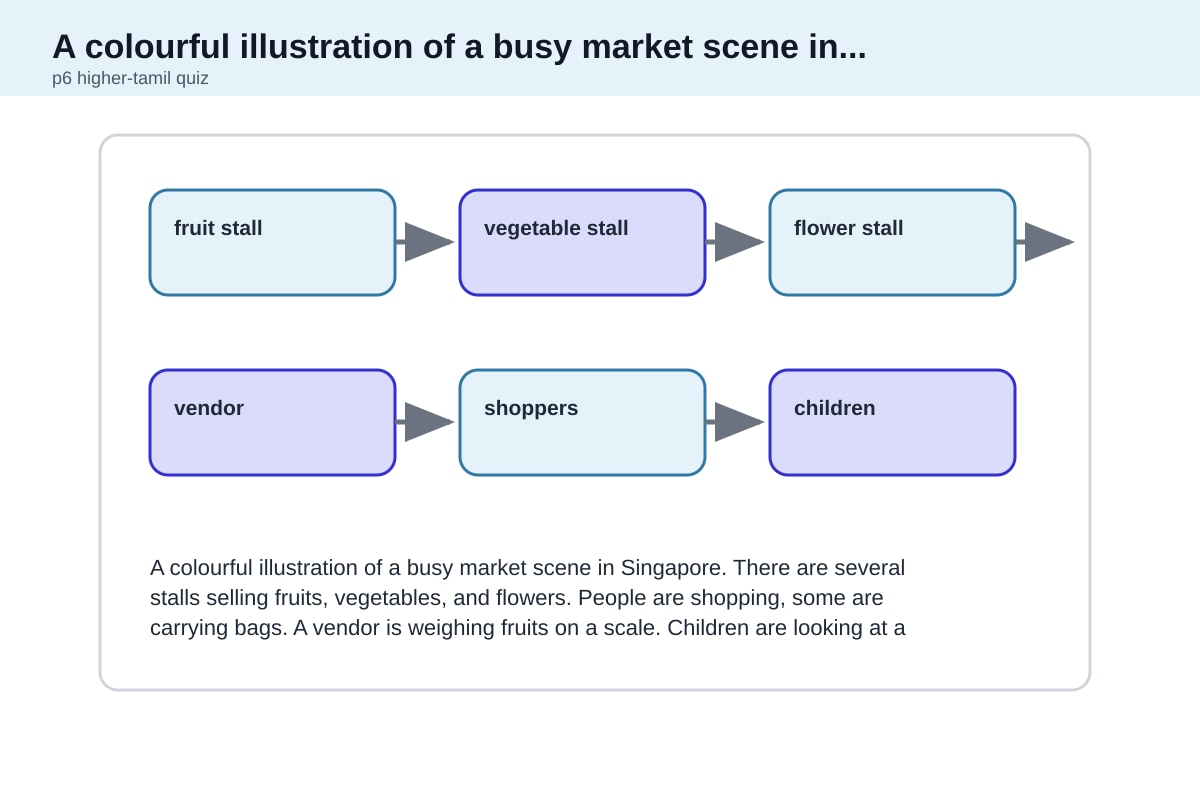
Section B: Picture Description (15 marks)
General Marking Notes for Section B:
- Marks are awarded for content relevance, vocabulary range, grammatical accuracy, and fluency.
- Partial marks can be given for partially correct or less detailed answers.
6. Describe what you see in the picture in 3–4 sentences. (3 marks)
- Expected answer (example): "இந்தப் படத்தில் ஒரு பரபரப்பான சந்தையைக் காண்கிறோம். பல கடைகளில் பழங்கள், காய்கறிகள் மற்றும் பூக்கள் விற்கப்படுகின்றன. மக்கள் கடைகளில் பொருட்களை வாங்கிக் கொண்டிருக்கிறார்கள். சில குழந்தைகள் பொம்மைக் கடையைப் பார்த்துக் கொண்டிருக்கிறார்கள்."
- Marking:
- 3 marks: Describes at least 3 different elements (e.g., stalls, people, activities, background) with good vocabulary and grammar.
- 2 marks: Describes 2 elements with reasonable clarity.
- 1 mark: Describes 1 element or uses very simple/basic language.
- 0 marks: No relevant description.
7. What are the people in the picture doing? Give two examples. (3 marks)
- Expected answer (example): "மக்கள் பழங்கள் மற்றும் காய்கறிகள் வாங்கிக் கொண்டிருக்கிறார்கள். ஒரு வியாபாரி தராசில் பழங்களை நிறுத்துக் கொண்டிருக்கிறார்."
- Marking:
- 3 marks: Two clear, grammatically correct actions described.
- 2 marks: Two actions described but with minor errors.
- 1 mark: Only one action described.
- 0 marks: No relevant answer.
8. Why do you think markets are important for a community? Give two reasons. (3 marks)
- Expected answer (example): "சந்தைகள் சமூகத்திற்கு முக்கியமானவை, ஏனென்றால் அவை புதிய உணவுப் பொருட்களை வழங்குகின்றன. மேலும், மக்கள் ஒருவரை ஒருவர் சந்தித்துப் பேசுவதற்கான இடமாகவும் சந்தைகள் உள்ளன."
- Marking:
- 3 marks: Two well-explained reasons with good vocabulary.
- 2 marks: Two reasons given but explanation is basic.
- 1 mark: One reason given.
- 0 marks: No relevant answer.
9. Imagine you are at this market. What would you buy and why? (3 marks)
- Expected answer (example): "நான் இந்தச் சந்தையில் பழங்கள் வாங்குவேன், ஏனென்றால் அவை ஆரோக்கியமானவை. நான் ஆப்பிள் மற்றும் திராட்சை வாங்க விரும்புகிறேன், ஏனெனில் அவை மிகவும் சுவையானவை."
- Marking:
- 3 marks: Specific item mentioned with a clear, logical reason. Good sentence structure.
- 2 marks: Item mentioned with a basic reason.
- 1 mark: Only the item mentioned, no reason.
- 0 marks: No relevant answer.
10. How does this market scene make you feel? Explain your answer. (3 marks)
- Expected answer (example): "இந்தச் சந்தைக் காட்சி எனக்கு மகிழ்ச்சியைத் தருகிறது, ஏனென்றால் இது மிகவும் உற்சாகமாக இருக்கிறது. நிறைய மக்கள் இருப்பதும், வண்ணமயமான பொருட்கள் இருப்பதும் எனக்கு மிகவும் பிடிக்கும்."
- Marking:
- 3 marks: A clear feeling (e.g., happy, excited, curious) is stated and well-explained with reference to the picture.
- 2 marks: A feeling is stated but the explanation is brief or less connected to the picture.
- 1 mark: Only the feeling is stated.
- 0 marks: No relevant answer.
Section C: Conversation (15 marks)
General Marking Notes for Section C:
- Marks are awarded for content relevance, vocabulary range, grammatical accuracy, and fluency.
- For 2-mark questions, 1 mark is for content and 1 mark is for language quality.
- For 1-mark questions, 1 mark is for a clear and relevant response.
11. What is your favourite festival? Why do you like it? (2 marks)
- Expected answer (example): "எனக்கு மிகவும் பிடித்த பண்டிகை தீபாவளி. ஏனென்றால் அந்த நாளில் வீடு முழுவதும் விளக்குகளால் அலங்கரிக்கப்படும், மேலும் பல இனிப்புகள் செய்வோம்."
- Marking:
- 2 marks: Festival named and a clear reason given.
- 1 mark: Festival named but reason is unclear or missing.
- 0 marks: No relevant answer.
12. How do you celebrate this festival at home? (2 marks)
- Expected answer (example): "நாங்கள் வீட்டைச் சுத்தம் செய்து, புதிய அலங்காரங்கள் செய்வோம். காலையில் எழுந்து புது உடைகள் அணிந்து, கோயிலுக்குச் செல்வோம்."
- Marking:
- 2 marks: Two or more celebration activities described clearly.
- 1 mark: One activity described.
- 0 marks: No relevant answer.
13. What special food do you eat during this festival? (2 marks)
- Expected answer (example): "நாங்கள் தீபாவளிக்கு முறுக்கு, லட்டு, மற்றும் சீடை போன்ற பல வகையான இனிப்புகள் மற்றும் காரங்கள் செய்வோம்."
- Marking:
- 2 marks: Specific food items named (at least two).
- 1 mark: General food mentioned (e.g., "இனிப்புகள்").
- 0 marks: No relevant answer.
14. Do you wear special clothes on this day? Describe them. (2 marks)
- Expected answer (example): "ஆம், நான் புதிய பட்டுப் புடவை அணிவேன். அது சிவப்பு நிறத்தில் தங்கக் கரை கொண்டது."
- Marking:
- 2 marks: "Yes" or "No" stated, and a clear description given.
- 1 mark: Only "Yes" or "No" stated, or a very basic description.
- 0 marks: No relevant answer.
15. Who do you celebrate this festival with? (1 mark)
- Expected answer (example): "நான் என் குடும்பத்தினருடன் கொண்டாடுகிறேன். (அம்மா, அப்பா, தம்பி/தங்கை)"
- Marking:
- 1 mark: At least one person/group mentioned.
- 0 marks: No relevant answer.
16. What is your favourite part of the celebration? Why? (2 marks)
- Expected answer (example): "எனக்கு மிகவும் பிடித்த பகுதி பட்டாசு வெடிப்பது. ஏனென்றால் அது மிகவும் அழகாக இருக்கும் மற்றும் மிகவும் வேடிக்கையாக இருக்கும்."
- Marking:
- 2 marks: Favourite part stated and a clear reason given.
- 1 mark: Favourite part stated but reason is unclear or missing.
- 0 marks: No relevant answer.
17. Do you visit any special places during this festival? Where? (1 mark)
- Expected answer (example): "ஆம், நாங்கள் கோயிலுக்குச் செல்வோம்."
- Marking:
- 1 mark: "Yes" or "No" stated, and a place is mentioned if "Yes".
- 0 marks: No relevant answer.
18. How does the festival bring your family together? (1 mark)
- Expected answer (example): "இந்தப் பண்டிகை எங்கள் குடும்பத்தை ஒன்று சேர்க்கிறது, ஏனென்றால் நாங்கள் அனைவரும் ஒன்றாகச் சமைத்து, சாப்பிட்டு, மகிழ்ச்சியாக நேரத்தை செலவிடுகிறோம்."
- Marking:
- 1 mark: A clear explanation of how the festival unites the family.
- 0 marks: No relevant answer.
19. What does this festival teach you about your culture? (1 mark)
- Expected answer (example): "இந்தப் பண்டிகை நமது பண்பாட்டின் முக்கியத்துவத்தைக் கற்பிக்கிறது. பகிர்வு, மரியாதை மற்றும் மகிழ்ச்சி ஆகியவற்றை இது கற்றுத் தருகிறது."
- Marking:
- 1 mark: A clear cultural value or lesson mentioned.
- 0 marks: No relevant answer.
20. If you could add one new tradition to this festival, what would it be? Why? (1 mark)
- Expected answer (example): "நான் ஒரு புதிய பாரம்பரியத்தைச் சேர்க்க விரும்பினால், அனைவரும் ஒன்றாக ஒரு மரத்தை நடுவது. ஏனென்றால் அது சுற்றுச்சூழலுக்கு நல்லது."
- Marking:
- 1 mark: A creative and logical new tradition suggested with a brief reason.
- 0 marks: No relevant answer.
End of Answer Key