AI Generated Quiz
Primary 6 PSLE Higher Tamil Speaking Quiz
Free P6 PSLE Higher Tamil Speaking quiz, AI version, with questions, answers, and PSLE-focused practice for Singapore students.
These static practice materials are generated from the site's syllabus and paper-generation workflow, with source and model context shown so students and parents can evaluate the material before use.
Questions
Free quiz and exam paper access
Enter your details to view this paper
Your access is remembered on this device.
Answers
Primary 6 PSLE Higher Tamil Quiz - Speaking: Answer Key
Total Marks: 40
Section A: Personal Introduction (5 questions × 2 marks = 10 marks)
General Marking Note for Section A: Award marks for fluency, clarity, pronunciation, and ability to answer in a complete sentence. The content should be relevant and appropriate.
Question 1: உனக்கு என்ன பிடித்த விளையாட்டு? ஏன்? (What is your favourite game? Why?) [2 marks]
- Expected Answer (Example): "எனக்குப் பிடித்த விளையாட்டு கால்பந்து. ஏனென்றால் அது மிகவும் வேகமான விளையாட்டு, அதில் அணி விளையாட்டுத் திறன் முக்கியம்."
- Marking:
- 1 mark for clearly naming a game (e.g., கால்பந்து, மறைந்து பிடித்தல், கிரிக்கெட்).
- 1 mark for giving a clear and logical reason (e.g., "ஏனென்றால் அது உடற்பயிற்சி தரும்," "எனக்கு அது மிகவும் மகிழ்ச்சியாக இருக்கும்").
- Teaching Note: This question assesses the student's ability to express a personal preference and justify it. Encourage students to use "ஏனென்றால்" (because) to link their reason.
Question 2: நீ உன் விடுமுறை நாட்களை எப்படிக் கழிப்பாய்? (How do you spend your holidays?) [2 marks]
- Expected Answer (Example): "நான் எனது விடுமுறை நாட்களை நண்பர்களுடன் விளையாடியும், புத்தகங்கள் படித்தும், குடும்பத்தினருடன் சுற்றுலா சென்றும் கழிப்பேன்."
- Marking:
- 1 mark for mentioning one or more activities (e.g., படித்தல், விளையாடுதல், பயணம்).
- 1 mark for speaking fluently and using a full sentence. The answer should feel like a natural description of their break.
- Teaching Note: Look for a range of vocabulary. A simple "வீட்டில் இருப்பேன்" is acceptable, but more detail shows better command. The answer should be in the future or habitual present tense (கழிப்பேன்).
Question 3: உனக்குப் பிடித்த பள்ளிப் பாடம் எது? உன் பதிலுக்கு ஒரு காரணம் சொல். (Which school subject do you like? Give a reason for your answer.) [2 marks]
- Expected Answer (Example): "எனக்குப் பிடித்த பாடம் அறிவியல். ஏனென்றால் புதிய புதிய கண்டுபிடிப்புகளைப் பற்றி தெரிந்துகொள்வது மிகவும் சுவாரஸ்யமாக இருக்கிறது."
- Marking:
- 1 mark for clearly stating the subject (e.g., தமிழ், கணிதம், அறிவியல்).
- 1 mark for providing a specific and sensible reason.
- Teaching Note: Ensure the reason is linked to the subject. Avoid generic reasons like "அது எளிது" (it is easy) and encourage more thoughtful ones.
Question 4: உன் குடும்பத்தில் யாரை அதிகம் மதிக்கிறாய்? ஏன்? (Whom in your family do you admire the most? Why?) [2 marks]
- Expected Answer (Example): "நான் என் அம்மாவை அதிகம் மதிக்கிறேன். ஏனென்றால் அவர் மிகவும் கடினமாக உழைத்து என் படிப்பிற்கு உதவுகிறார்."
- Marking:
- 1 mark for naming a family member (e.g., அப்பா, அம்மா, தாத்தா).
- 1 mark for a clear, heartfelt reason that shows understanding of the word "மதித்தல்" (admire/respect).
- Teaching Note: "மதித்தல்" (ma-dhi-th-thal) implies deep respect and admiration. The answer should reflect why the student holds that person in high regard.
Question 5: உனக்கொரு நண்பன்/நண்பி இருக்கிறாளா? அவன்/அவளைப் பற்றி இரண்டு வாக்கியங்களில் சொல். (Do you have a friend? Describe him/her in two sentences.) [2 marks]
- Expected Answer (Example): "ஆம், எனக்கு ஒரு நண்பன் இருக்கிறான். அவன் மிகவும் நல்லவன், எப்போதும் எனக்கு உதவி செய்வான்."
- Marking:
- 1 mark for answering "ஆம்" (Yes) and naming or identifying the friend.
- 1 mark for giving at least two descriptive points (e.g., character, habits, what they do together).
- Teaching Note: Train students to use the correct pronoun (அவன் for boy, அவள் for girl). The two sentences should be distinct and descriptive.
Section B: Picture Description (5 questions × 2 marks = 10 marks)
General Marking Note for Section B: Award marks for relevant observations, appropriate vocabulary, clear sentence structure, and the ability to infer information from the picture.
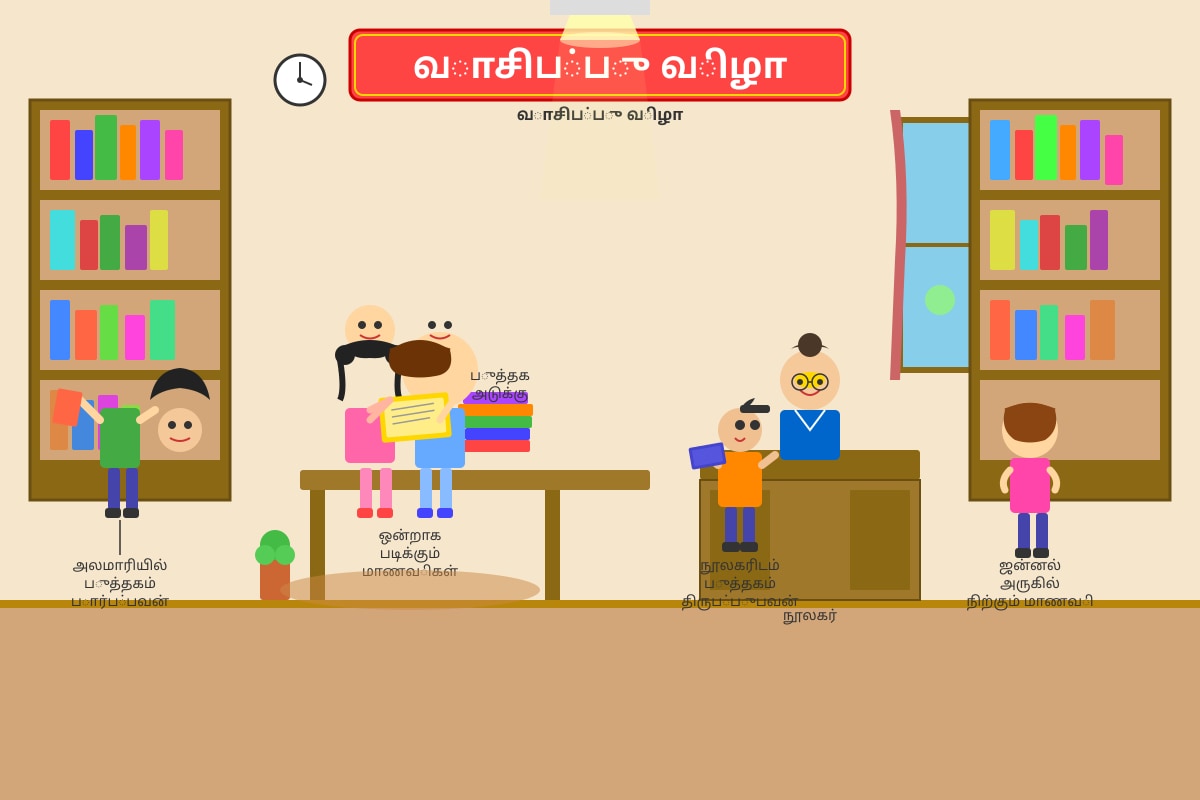
Question 6: இந்தப் படத்தில் நீ என்ன பார்க்கிறாய்? (What do you see in this picture?) [2 marks]
- Expected Answer (Example): "இந்தப் படத்தில் ஒரு பள்ளி நூலகத்தைப் பார்க்கிறேன். மாணவர்கள் புத்தகங்களைப் படித்துக்கொண்டும், எடுத்துக்கொண்டும் இருக்கிறார்கள். ஒரு பதாகையில் 'வாசிப்பு விழா' என்று எழுதியிருக்கிறது."
- Marking:
- 1 mark for identifying the setting (e.g., நூலகம், பள்ளி).
- 1 mark for mentioning at least two specific elements from the image (e.g., மாணவர்கள், புத்தகங்கள், பதாகை, நூலகர்).
- Teaching Note: The student is describing what they see literally. Encourage a systematic description: setting -> people -> objects.
Question 7: படத்தில் உள்ள மாணவர்கள் என்ன செய்கிறார்கள்? (What are the students in the picture doing?) [2 marks]
- Expected Answer (Example): "ஒரு மாணவன் புத்தகத்தை எடுக்கிறான். இரண்டு மாணவிகள் ஒன்றாக அமர்ந்து புத்தகம் படிக்கிறார்கள். இன்னொரு மாணவன் நூலகரிடம் புத்தகத்தைத் திருப்பிக் கொடுக்கிறான்."
- Marking:
- 1 mark for describing at least two different actions.
- 1 mark for using appropriate verbs (e.g., படிக்கிறார்கள், எடுக்கிறான், கொடுக்கிறான்).
- Teaching Note: This question focuses on actions. Students must use the present continuous tense (e.g., படித்துக் கொண்டிருக்கிறார்கள், எடுத்துக் கொண்டிருக்கிறான்).
Question 8: இந்த இடம் எங்கே இருக்கும் என்று நினைக்கிறாய்? உன் பதிலை விளக்கு. (Where do you think this place is? Explain your answer.) [2 marks]
- Expected Answer (Example): "இது ஒரு பள்ளி நூலகமாக இருக்கும் என்று நினைக்கிறேன். ஏனென்றால் அங்கே பல புத்தகங்கள் அடுக்கியிருக்கின்றன, ஒரு நூலகர் இருக்கிறார், மாணவர்கள் அமைதியாகப் படிக்கிறார்கள்."
- Marking:
- 1 mark for correctly identifying the place (e.g., நூலகம், பள்ளி).
- 1 mark for providing at least one reason from the picture to support the answer.
- Teaching Note: This is an inferential question. The student must say where they think it is and explain why they think so. "ஏனென்றால்" (because) is a key word here.
Question 9: "வாசிப்பு விழா" பற்றி இந்தப் படம் உனக்கு என்ன சொல்கிறது? (What does this picture tell you about a "Reading Festival"?) [2 marks]
- Expected Answer (Example): "வாசிப்பு விழா என்பது புத்தகங்களைப் படிப்பதற்கு ஊக்குவிக்கும் ஒரு நிகழ்வு என்று இந்தப் படம் சொல்கிறது. மாணவர்கள் ஆர்வமாகப் புத்தகங்களைப் படிப்பதிலிருந்து அதைப் புரிந்துகொள்ளலாம்."
- Marking:
- 1 mark for stating the purpose of the festival (e.g., வாசிப்பை ஊக்குவித்தல், புத்தகத்தின் முக்கியத்துவம்).
- 1 mark for using evidence from the picture to support the statement (e.g., students are reading).
- Teaching Note: This requires understanding the banner's message and the overall scene. "இந்தப் படம் நமக்கு சொல்லும் செய்தி..." is a good way to start.
Question 10: இந்தப் படத்தில் நீ எந்த மாணவனாக/மாணவியாக இருக்க விரும்புவாய்? ஏன்? (In this picture, which student would you like to be? Why?) [2 marks]
- Expected Answer (Example): "நான் புத்தகம் படித்துக்கொண்டிருக்கும் பெண்ணாக இருக்க விரும்புகிறேன். ஏனென்றால் எனக்குப் புத்தகம் படிப்பதில் மிகுந்த ஆர்வம். நண்பருடன் சேர்ந்து படிப்பது மிகவும் மகிழ்ச்சியாக இருக்கும்."
- Marking:
- 1 mark for choosing and describing the student they want to be.
- 1 mark for giving a clear, personal reason for the choice.
- Teaching Note: This is a personal response question. The "why" is more important than the "which". A good answer links their own interests to a character in the picture.
Section C: Stories & Situations (5 questions × 2 marks = 10 marks)
General Marking Note for Section C: Award marks for comprehension, logical reasoning, empathy, and the ability to express opinions clearly.
Text 1: The Mango Sapling Story
Question 11: குமார் தனது மாமரக் கன்றை எப்படிப் பராமரித்தான்? (How did Kumar take care of his mango sapling?) [2 marks]
- Expected Answer (Example): "குமார் ஒவ்வொரு நாளும் அந்த மாமரக் கன்றுக்குத் தண்ணீர் ஊற்றி, உரம் போட்டு, பராமரித்து வந்தான்."
- Marking:
- 1 mark for mentioning watering (தண்ணீர் ஊற்றுதல்).
- 1 mark for mentioning fertilising/care (உரம் போடுதல்/பராமரித்தல்).
- Teaching Note: This is a direct recall question. The answer can be found verbatim in the text. "ஒவ்வொரு நாளும்" (every day) shows consistency.
Question 12: இந்தக் கதையின் மூலம் நாம் என்ன கற்றுக்கொள்ளலாம்? (What can we learn from this story?) [2 marks]
- Expected Answer (Example): "இந்தக் கதையின் மூலம் நாம் பொறுமை மற்றும் கடின உழைப்பின் முக்கியத்துவத்தைக் கற்றுக்கொள்ளலாம். ஒரு சிறிய கன்றைப் பராமரித்தால், அது பெரிய மரமாக வளர்ந்து நமக்குப் பலனைத் தரும்."
- Marking:
- 1 mark for stating the moral or lesson (e.g., பொறுமை, உழைப்பு, பராமரிப்பு).
- 1 mark for explaining why that lesson is learned, linking it back to the story (e.g., சிறிய கன்று பெரிய மரமானது).
- Teaching Note: Questions about a story's lesson are common. Encourage students to think beyond the surface. Key ideas here are perseverance, nurturing, and the idea that effort over time yields results.
Text 2: The New Student Situation
Question 13: இந்தச் சூழ்நிலையில் புதிய மாணவருக்கு என்ன பிரச்சினை இருக்கலாம்? (In this situation, what problem might the new student have?) [2 marks]
- Expected Answer (Example): "புதிய மாணவருக்கு வெட்கம் அல்லது தனிமை போன்ற பிரச்சினை இருக்கலாம். ஏனென்றால் அவர் புதிய இடம், புதிய நண்பர்கள் இல்லாததால் யாரிடமும் பேசாமல் தனியாக உட்கார்ந்திருக்கிறார்."
- Marking:
- 1 mark for identifying an emotional/social problem (e.g., வெட்கம், தனிமை, பயம், கூச்சம்).
- 1 mark for giving a logical reason based on the text (e.g., புதிய இடம், நண்பர்கள் இல்லை).
- Teaching Note: This requires empathy. The student must "read between the lines" to understand the new student's feelings. The key phrase in the text is "யாரிடமும் பேசாமல் தனியாக உட்கார்ந்திருந்தார்."
Question 14: நீங்கள் அவரிடம் என்ன சொல்லி நட்பாகப் பழகலாம்? (What can you say to him to be friendly?) [2 marks]
- Expected Answer (Example): "நான் அவரிடம், 'வணக்கம்! நீங்கள் எந்த ஊரிலிருந்து வந்தீர்கள்? எங்கள் வகுப்பில் உங்களை வரவேற்கிறோம். நாங்கள் ஒன்றாகச் சேர்ந்து விளையாடலாமா?' என்று கேட்பேன்."
- Marking:
- 1 mark for a polite and welcoming greeting (e.g., வணக்கம், வரவேற்கிறோம்).
- 1 mark for asking a question or making an offer to include him (e.g., எந்த ஊர்? விளையாடலாமா? சேர்ந்து படிக்கலாமா?).
- Teaching Note: This tests practical conversational Tamil. The answer should simulate a real conversation. It should be positive and inclusive. Direct translation from English is okay, but natural Tamil phrases are better.
Question 15: புதிய மாணவர் வகுப்பில் சேர்ந்தால், அவருக்கு நாம் எப்படி உதவலாம்? உன் கருத்தைச் சொல். (If a new student joins the class, how can we help him/her? Give your opinion.) [2 marks]
- Expected Answer (Example): "என் கருத்துப்படி, நாம் அவருக்கு வகுப்பறையைச் சுற்றிக் காண்பித்து, நண்பர்களை அறிமுகப்படுத்தி வைக்கலாம். முதலில் சில நாட்கள் அவருடன் சேர்ந்து இடைவேளையில் அமர்ந்து பழகலாம். இது அவர் வசதியாக உணர உதவும்."
- Marking:
- 1 mark for stating one clear and practical suggestion (e.g., சுற்றிக் காண்பித்தல், நண்பர்களை அறிமுகம் செய்தல், பாடத்தில் உதவுதல்).
- 1 mark for explaining why the suggestion helps, showing empathy.
- Teaching Note: This is an opinion-based question. The student is expected to give a well-reasoned view. Used phrases like "என் கருத்துப்படி" (in my opinion) or "நான் நினைக்கிறேன்" (I think). Practical, implementable suggestions score higher.
Section D: Oral Tasks (5 questions × 2 marks = 10 marks)
General Marking Note for Section D: Award marks for task completion, vocabulary, organisation of thoughts, and fluency within the time limit.
Question 16: Task: ஒரு நிமிடம் மட்டுமே. மேகம் பற்றி நீ அறிந்ததைச் சொல். (Task: For one minute only. Tell what you know about clouds.) [2 marks]
- Expected Answer (Example): "மேகம் என்றால் என்னவென்று நான் சொல்கிறேன். மேகம் வானத்தில் மிதக்கும் நீர்த்துளிகள் மற்றும் பனிக்கட்டியால் ஆனது. சூரியன் கடல் மற்றும் ஏரிகளில் உள்ள நீரை ஆவியாக்குகிறது. அந்த நீராவி மேலே செ
<stage5_quiz_answers_md>
Primary 6 PSLE Higher Tamil Quiz - Speaking: Answer Key
Total Marks: 40
Section A: Personal Introduction (5 questions × 2 marks = 10 marks)
General Marking Note for Section A: Award marks for fluency, clarity, pronunciation, and ability to answer in a complete sentence. The content should be relevant and appropriate.
Question 1: உனக்கு என்ன பிடித்த விளையாட்டு? ஏன்? (What is your favourite game? Why?) [2 marks]
- Expected Answer (Example): "எனக்குப் பிடித்த விளையாட்டு கால்பந்து. ஏனென்றால் அது மிகவும் வேகமான விளையாட்டு, அதில் அணி விளையாட்டுத் திறன் முக்கியம்."
- Marking:
- 1 mark for clearly naming a game (e.g., கால்பந்து, மறைந்து பிடித்தல், கிரிக்கெட்).
- 1 mark for giving a clear and logical reason (e.g., "ஏனென்றால் அது உடற்பயிற்சி தரும்," "எனக்கு அது மிகவும் மகிழ்ச்சியாக இருக்கும்").
- Teaching Note: This question assesses the student's ability to express a personal preference and justify it. Encourage students to use "ஏனென்றால்" (because) to link their reason.
Question 2: நீ உன் விடுமுறை நாட்களை எப்படிக் கழிப்பாய்? (How do you spend your holidays?) [2 marks]
- Expected Answer (Example): "நான் எனது விடுமுறை நாட்களை நண்பர்களுடன் விளையாடியும், புத்தகங்கள் படித்தும், குடும்பத்தினருடன் சுற்றுலா சென்றும் கழிப்பேன்."
- Marking:
- 1 mark for mentioning one or more activities (e.g., படித்தல், விளையாடுதல், பயணம்).
- 1 mark for speaking fluently and using a full sentence. The answer should feel like a natural description of their break.
- Teaching Note: Look for a range of vocabulary. A simple "வீட்டில் இருப்பேன்" is acceptable, but more detail shows better command. The answer should be in the future or habitual present tense (கழிப்பேன்).
Question 3: உனக்குப் பிடித்த பள்ளிப் பாடம் எது? உன் பதிலுக்கு ஒரு காரணம் சொல். (Which school subject do you like? Give a reason for your answer.) [2 marks]
- Expected Answer (Example): "எனக்குப் பிடித்த பாடம் அறிவியல். ஏனென்றால் புதிய புதிய கண்டுபிடிப்புகளைப் பற்றி தெரிந்துகொள்வது மிகவும் சுவாரஸ்யமாக இருக்கிறது."
- Marking:
- 1 mark for clearly stating the subject (e.g., தமிழ், கணிதம், அறிவியல்).
- 1 mark for providing a specific and sensible reason.
- Teaching Note: Ensure the reason is linked to the subject. Avoid generic reasons like "அது எளிது" (it is easy) and encourage more thoughtful ones.
Question 4: உன் குடும்பத்தில் யாரை அதிகம் மதிக்கிறாய்? ஏன்? (Whom in your family do you admire the most? Why?) [2 marks]
- Expected Answer (Example): "நான் என் அம்மாவை அதிகம் மதிக்கிறேன். ஏனென்றால் அவர் மிகவும் கடினமாக உழைத்து என் படிப்பிற்கு உதவுகிறார்."
- Marking:
- 1 mark for naming a family member (e.g., அப்பா, அம்மா, தாத்தா).
- 1 mark for a clear, heartfelt reason that shows understanding of the word "மதித்தல்" (admire/respect).
- Teaching Note: "மதித்தல்" (ma-dhi-th-thal) implies deep respect and admiration. The answer should reflect why the student holds that person in high regard.
Question 5: உனக்கொரு நண்பன்/நண்பி இருக்கிறாளா? அவன்/அவளைப் பற்றி இரண்டு வாக்கியங்களில் சொல். (Do you have a friend? Describe him/her in two sentences.) [2 marks]
- Expected Answer (Example): "ஆம், எனக்கு ஒரு நண்பன் இருக்கிறான். அவன் மிகவும் நல்லவன், எப்போதும் எனக்கு உதவி செய்வான்."
- Marking:
- 1 mark for answering "ஆம்" (Yes) and naming or identifying the friend.
- 1 mark for giving at least two descriptive points (e.g., character, habits, what they do together).
- Teaching Note: Train students to use the correct pronoun (அவன் for boy, அவள் for girl). The two sentences should be distinct and descriptive.
Section B: Picture Description (5 questions × 2 marks = 10 marks)
General Marking Note for Section B: Award marks for relevant observations, appropriate vocabulary, clear sentence structure, and the ability to infer information from the picture.
Question 6: இந்தப் படத்தில் நீ என்ன பார்க்கிறாய்? (What do you see in this picture?) [2 marks]
- Expected Answer (Example): "இந்தப் படத்தில் ஒரு பள்ளி நூலகத்தைப் பார்க்கிறேன். பல மாணவர்கள் புத்தகங்களைப் படித்துக் கொண்டிருக்கிறார்கள். ஒரு பையன் புத்தக அலமாரியில் புத்தகத்தைப் பார்க்கிறான்."
- Marking:
- 1 mark for identifying the setting (e.g., நூலகம், பள்ளி).
- 1 mark for describing at least two specific elements or actions from the picture.
- Teaching Note: Encourage students to start with a general description and then add details. Use of location words (இடது, வலது, முன்) is a plus.
Question 7: படத்தில் உள்ள மாணவர்கள் என்ன செய்கிறார்கள்? (What are the students in the picture doing?) [2 marks]
- Expected Answer (Example): "சில மாணவர்கள் புத்தகங்களைப் படிக்கிறார்கள். ஒரு மாணவன் நூலகரிடம் புத்தகத்தைத் திருப்பிக் கொடுக்கிறான். இன்னொரு மாணவி ஜன்னல் அருகில் நின்று வெளியே பார்க்கிறாள்."
- Marking:
- 1 mark for describing the actions of at least two different students.
- 1 mark for using appropriate action verbs (e.g., படித்தல், பார்த்தல், கொடுத்தல், நிற்றல்).
- Teaching Note: Focus on the variety of actions. Students should not just say "அவர்கள் படிக்கிறார்கள்" but differentiate the activities.
Question 8: இந்த இடம் எங்கே இருக்கும் என்று நினைக்கிறாய்? உன் பதிலை விளக்கு. (Where do you think this place is? Explain your answer.) [2 marks]
- Expected Answer (Example): "இது ஒரு பள்ளி நூலகமாக இருக்கும் என்று நினைக்கிறேன். ஏனென்றால் புத்தக அலமாரிகள் உள்ளன, மாணவர்கள் அமைதியாகப் படிக்கிறார்கள், மேலும் 'வாசிப்பு விழா' என்ற பதாகையும் உள்ளது."
- Marking:
- 1 mark for correctly identifying the place as a library (or school library).
- 1 mark for providing at least two clear reasons from the picture to support the answer.
- Teaching Note: This tests inferential skills. Students must use visual clues (books, banner, librarian) to justify their answer.
Question 9: "வாசிப்பு விழா" பற்றி இந்தப் படம் உனக்கு என்ன சொல்கிறது? (What does this picture tell you about a "Reading Festival"?) [2 marks]
- Expected Answer (Example): "இந்தப் படம் வாசிப்பு விழா என்பது புத்தகங்களைப் படிப்பதை ஊக்குவிக்கும் ஒரு நிகழ்வு என்று சொல்கிறது. மாணவர்கள் ஆர்வமாகப் புத்தகங்களைப் படிப்பதையும், நூலகம் அலங்கரிக்கப்பட்டிருப்பதையும் பார்க்க முடிகிறது."
- Marking:
- 1 mark for stating that the festival is about reading or promoting books.
- 1 mark for linking the visual elements (students reading, banner, library setup) to the concept of a festival.
- Teaching Note: The answer should go beyond just translating the banner. It should explain the purpose and atmosphere of the festival as shown in the picture.
Question 10: இந்தப் படத்தில் நீ எந்த மாணவனாக/மாணவியாக இருக்க விரும்புவாய்? ஏன்? (In this picture, which student would you like to be? Why?) [2 marks]
- Expected Answer (Example): "நான் ஒன்றாகப் படிக்கும் இரண்டு மாணவிகளில் ஒருவளாக இருக்க விரும்புகிறேன். ஏனென்றால் நண்பருடன் சேர்ந்து படிப்பது மிகவும் மகிழ்ச்சியாக இருக்கும், மேலும் நம்மால் கருத்துக்களைப் பகிர்ந்து கொள்ள முடியும்."
- Marking:
- 1 mark for clearly identifying a specific student/group from the picture.
- 1 mark for giving a personal and logical reason for the choice.
- Teaching Note: This is a personal response question. Accept any reasonable choice as long as it is justified. Encourage students to use "ஏனென்றால்" (because).
Section C: Stories & Situations (5 questions × 2 marks = 10 marks)
General Marking Note for Section C: Award marks for comprehension, logical reasoning, ability to express opinions, and use of appropriate vocabulary.
Question 11: குமார் தனது மாமரக் கன்றை எப்படிப் பராமரித்தான்? (How did Kumar take care of his mango sapling?) [2 marks]
- Expected Answer (Example): "குமார் ஒவ்வொரு நாளும் மாமரக் கன்றுக்குத் தண்ணீர் ஊற்றி, உரம் போட்டு, பராமரித்து வந்தான்."
- Marking:
- 1 mark for mentioning at least one specific action (e.g., தண்ணீர் ஊற்றுதல், உரம் போடுதல்).
- 1 mark for accurately describing the care as regular/daily (e.g., "ஒவ்வொரு நாளும்").
- Teaching Note: This is a direct comprehension question. The answer should be drawn from the text.
Question 12: இந்தக் கதையின் மூலம் நாம் என்ன கற்றுக்கொள்ளலாம்? (What can we learn from this story?) [2 marks]
- Expected Answer (Example): "இந்தக் கதையின் மூலம் நாம் விடாமுயற்சியும், பொறுமையும் முக்கியம் என்பதைக் கற்றுக்கொள்ளலாம். சிறிய கன்றை பராமரித்தால், அது பெரிய மரமாக வளர்ந்து பலன் தரும்."
- Marking:
- 1 mark for identifying a moral or lesson (e.g., விடாமுயற்சி, பொறுமை, கடின உழைப்பு).
- 1 mark for explaining how the story demonstrates that lesson.
- Teaching Note: This tests the ability to infer a moral. Common themes are patience, hard work, and nurturing.
Question 13: இந்தச் சூழ்நிலையில் புதிய மாணவருக்கு என்ன பிரச்சினை இருக்கலாம்? (In this situation, what problem might the new student have?) [2 marks]
- Expected Answer (Example): "புதிய மாணவருக்கு வெட்கமாக இருக்கலாம் அல்லது புதிய இடம் என்பதால் பயமாக இருக்கலாம். அவருக்கு நண்பர்கள் இல்லாததால் தனிமையாக உணரலாம்."
- Marking:
- 1 mark for identifying a plausible problem (e.g., வெட்கம், பயம், தனிமை, புதிய சூழல்).
- 1 mark for explaining the problem in relation to the situation.
- Teaching Note: Encourage empathy. Students should think about the feelings of a new person.
Question 14: நீங்கள் அவரிடம் என்ன சொல்லி நட்பாகப் பழகலாம்? (What can you say to him to be friendly?) [2 marks]
- Expected Answer (Example): "நான் அவரிடம், 'வணக்கம், உங்கள் பெயர் என்ன? நான் உங்களுடன் பழக விரும்புகிறேன். நீங்கள் எங்கிருந்து வந்தீர்கள்?' என்று கேட்பேன்."
- Marking:
- 1 mark for suggesting a friendly greeting or introduction.
- 1 mark for proposing a specific question or conversation starter.
- Teaching Note: The answer should be a direct quote of what the student would say. It should be polite and welcoming.
Question 15: புதிய மாணவர் வகுப்பில் சேர்ந்தால், அவருக்கு நாம் எப்படி உதவலாம்? உன் கருத்தைச் சொல். (If a new student joins the class, how can we help him/her? Give your opinion.) [2 marks]
- Expected Answer (Example): "நாம் அவருக்கு வகுப்பைச் சுற்றிக் காட்டலாம், பாடங்களில் உதவலாம், இடைவேளையில் அவருடன் விளையாடலாம், மற்ற மாணவர்களுக்கு அறிமுகப்படுத்தலாம்."
- Marking:
- 1 mark for suggesting at least one practical way to help.
- 1 mark for the suggestion being thoughtful and inclusive.
- Teaching Note: This is an opinion question. Look for practical and kind suggestions. The answer should use "நாம்" (we) to show collective responsibility.
Section D: Oral Tasks (5 questions × 2 marks = 10 marks)
General Marking Note for Section D: Award marks for task completion, fluency, coherence, creativity, and use of appropriate vocabulary. For tasks with a time limit, assess the ability to speak continuously.
Question 16: Task: ஒரு நிமிடம் மட்டுமே. மேகம் பற்றி நீ அறிந்ததைச் சொல். (Task: For one minute only. Tell what you know about clouds.) [2 marks]
- Expected Answer (Example): "மேகங்கள் வெவ்வேறு வடிவங்களில் இருக்கும். அவை வெள்ளையாகவும், சாம்பல் நிறமாகவும் இருக்கும். மழை பெய்யும் போது மேகங்கள் கருப்பாக மாறும். மேகங்கள் நீராவியால் ஆனவை. அவை மிக உயரத்தில் பறக்கும்."
- Marking:
- 1 mark for speaking for a reasonable duration (at least 30 seconds) with relevant facts.
- 1 mark for providing at least three distinct pieces of information about clouds.
- Teaching Note: This tests the ability to speak extemporaneously on a simple topic. Encourage a logical flow of ideas.
Question 17: Task: உனக்குப் பிடித்த உணவுப் பண்டம் எது? அது எப்படித் தயாரிக்கப்படுகிறது என்று விளக்கு. (Task: What is your favourite food? Explain how it is prepared.) [2 marks]
- Expected Answer (Example): "எனக்குப் பிடித்த உணவு இட்லி. இட்லி செய்ய, முதலில் அரிசி மற்றும் உளுந்தை ஊற வைக்க வேண்டும். பிறகு அவற்றை அரைத்து மாவாக்கி, புளிக்க வைக்க வேண்டும். பின்னர் அந்த மாவை இட்லி தட்டில் ஊற்றி வேக வைக்க வேண்டும்."
- Marking:
- 1 mark for naming the food and giving a basic description.
- 1 mark for explaining at least two steps in the preparation process in a logical order.
- Teaching Note: Look for sequential words like "முதலில்," "பிறகு," "பின்னர்" (first, then, after that).
Question 18: Task: பின்வரும் வார்த்தைகளைப் பயன்படுத்தி ஒரு சிறு கதை சொல்: "கடற்கரை, நண்பன், பந்து, அலை". (Task: Tell a short story using these words: "beach, friend, ball, wave".) [2 marks]
- Expected Answer (Example): "நேற்று நானும் என் நண்பனும் கடற்கரைக்குச் சென்றோம். நாங்கள் கடற்கரையில் பந்து விளையாடிக் கொண்டிருந்தோம். திடீரென்று ஒரு பெரிய அலை வந்து எங்கள் பந்தை அடித்துச் சென்றுவிட்டது. நாங்கள் சிரித்துக் கொண்டே அலைகளைப் பார்த்தோம்."
- Marking:
- 1 mark for using all four given words correctly in the story.
- 1 mark for creating a coherent and logical short story.
- Teaching Note: This tests creativity and vocabulary usage. The story does not need to be long, but it must make sense.
Question 19: Task: நீ பள்ளியின் பசுமைச் சூழல் குழுவின் தலைவன்/தலைவி. பள்ளியில் ஒரு மரம் நடும் நிகழ்வை எப்படி ஏற்பாடு செய்வாய்? (Task: You are the leader of the school's Green Environment Club. How would you organise a tree-planting event at school?) [2 marks]
- Expected Answer (Example): "முதலில், நான் மரக்கன்றுகளை வாங்க ஏற்பாடு செய்வேன். பிறகு, மாணவர்களுக்கு அறிவிப்பு செய்து, அவர்களைப் பங்கேற்க அழைப்பேன். நிகழ்வு நாளில், ஆசிரியர்களின் உதவியுடன் மாணவர்களைக் குழுக்களாகப் பிரித்து, பள்ளி வளாகத்தில் மரங்களை நடுவேன். இறுதியில், அனைவருக்கும் நன்றி கூறுவேன்."
- Marking:
- 1 mark for outlining a clear plan with at least two steps.
- 1 mark for demonstrating leadership and organisational skills.
- Teaching Note: The answer should show an understanding of planning (e.g., preparation, invitation, execution).
Question 20: Task: உன் பள்ளி நூலகம் பற்றி சில வாக்கியங்களில் விளக்கு. அங்கு நீ என்ன பார்க்கிறாய், என்ன செய்ய விரும்புகிறாய்? (Task: Describe your school library in a few sentences. What do you see there, and what do you like to do there?) [2 marks]
- Expected Answer (Example): "எங்கள் பள்ளி நூலகம் மிகவும் பெரியது. அங்கு நிறைய புத்தக அலமாரிகள் உள்ளன. நான் அங்கு கதைப் புத்தகங்களையும், அறிவியல் புத்தகங்களையும் பார்க்கிறேன். நான் அமைதியாக உட்கார்ந்து புத்தகங்களைப் படிக்க விரும்புகிறேன்."
- Marking:
- 1 mark for describing what is seen in the library (e.g., books, shelves, tables).
- 1 mark for describing a preferred activity in the library.
- Teaching Note: This is a descriptive task. Encourage students to use descriptive adjectives (e.g., பெரிய, அமைதியான, நிறைய).
— End of Answer Key —