AI Generated Exam Paper
Primary 6 PSLE Higher Tamil Practice Paper 5
Free P6 PSLE Higher Tamil Practice Paper 5, Kimi2.6 AI version, with questions, answers, and PSLE-focused practice for Singapore students.
These static practice materials are generated from the site's syllabus and paper-generation workflow, with source and model context shown so students and parents can evaluate the material before use.
Questions
Free quiz and exam paper access
Enter your details to view this paper
Your access is remembered on this device.
Answers
TuitionGoWhere Practice Paper - Higher Tamil Primary 6 PSLE
Answer Key and Marking Scheme Version: 5 of 5 Total Marks: 100
Section A: Vocabulary and Word Recognition (10 marks)
1. Answer: (b) உபகாரம் [2 marks]
Explanation:
- "உதவி" (uthavi) means "help" or "assistance"
- "உபகாரம்" (upakaaram) is the direct synonym meaning "favour" or "help rendered"
Why other options are wrong:
- (a) துன்பம் = suffering, opposite meaning
- (c) பகை = enmity/hatred, opposite meaning
- (d) வேண்டுகோள் = request, not synonymous with help given
Teaching note: Common compound: "உதவி செய்" = to help; "உபகாரம் புரி" = to do a favour.
2. Answer: (c) வளமாக வளர்ந்தன [2 marks]
Explanation:
- "செழித்தன" (chezhiththan) comes from the root "செழிப்பு" meaning prosperity/abundance
- Used to describe fertile, thriving fields after rain
Why other options are wrong:
- (a) வறண்டன = dried up, opposite meaning
- (b) சோர்ந்தன = withered/tired, opposite meaning
- (d) மஞ்சளாகின = turned yellow, unrelated
Teaching note: "செழித்த நாடு" = prosperous country; "செழிப்பு" = prosperity.
3. Answer: (c) சாதாரணமான [2 marks]
Explanation:
- "எளிமை" (elimai) = simplicity/humbleness
- "எளிமையான" describes something simple, unpretentious, ordinary
Why other options are wrong:
- (a) கஷ்டமான = difficult/hard (confuses simplicity with hardship)
- (b) பணக்கார = rich, opposite meaning
- (d) கடினமான = difficult/strenuous
Teaching note: "எளிமையான வாழ்க்கை" = simple living; contrast with "ஐஸ்வரியம்" = wealth/luxury.
4. Answer: (b) உற்சாகத்துடன் [2 marks]
Explanation:
- "ஆர்வம்" (aarvam) = enthusiasm/eagerness/interest
- "ஆர்வத்துடன்" = with enthusiasm
Why other options are wrong:
- (a) சோர்வுடன் = with tiredness, opposite
- (c) பயத்துடன் = with fear, wrong emotion
- (d) கோபத்துடன் = with anger, wrong emotion
Teaching note: Related words: "ஆர்வமான" = enthusiastic (adjective); "ஆர்வலன்" = enthusiast.
5. Answer: (b) கவனமாக [2 marks]
Explanation:
- "கண்டிப்பாக" (kandippaaga) in this medical context means "thoroughly/carefully/strictly" — describing careful examination
- "கவனமாக" = carefully/attentively matches this meaning
Why other options are wrong:
- (a) மெதுவாக = slowly (wrong aspect; not about speed)
- (c) அலட்சியமாக = carelessly, opposite meaning
- (d) வேகமாக = quickly, wrong aspect
Teaching note: "கண்டிப்பு" has multiple uses: strictness (கண்டிப்பான ஆசிரியர்), certainty (கண்டிப்பாக வருவேன் = I will definitely come). Context determines meaning.
Section B: Short Passage Comprehension (20 marks)
6. Answer [2 marks]: சங்க இலக்கியங்கள் தமிழ் மொழியின் பழமையையும் செழுமையையும் எடுத்துக்காட்டுகின்றன.
Marking:
- 1 mark: reference to antiquity/பழமை
- 1 mark: reference to richness/sophistication/செழுமை
Teaching note: "சங்கம்" refers to the ancient academies of poets; the Sangam literature (circa 300 BCE–300 CE) represents the earliest extant Tamil literature. "பழமை" = age/ancientness; "செழுமை" = richness/flourishing state.
7. Answer [2 marks]: திருக்குறள் உலக இலக்கியங்களில் ஒன்றாக திகழ்கிறது.
Marking:
- 2 marks: correct identification of global/world literature status
Alternative acceptable answer: திருக்குறள் உலகப் புகழ்பெற்ற இலக்கியமாக திகழ்கிறது.
Teaching note: Thirukkural (c. 5th century CE) is often called "Ulaga Pothumarai" (Universal Veda). Its 1330 couplets cover ethics, politics, and love. UNESCO has recognized it.
8. Answer [6 marks]: Any three of the following (2 marks each):
- ஆங்கிலத்தின் ஆதிக்கம் — dominance/influence of English language
- தொழில்நுட்ப வளர்ச்சி — technological development
- கலாச்சார மாற்றங்கள் — cultural changes
Marking per point (2 marks):
- 1 mark: identify the challenge
- 1 mark: explain briefly how it threatens Tamil (e.g., English used for jobs/technology; young people prefer English; Western culture displaces Tamil traditions)
Teaching note: These are standard PSLE-type content points. Students should demonstrate understanding that "economically powerful languages" and "globalization" create pressure on mother tongues.
9. Answer [4 marks]: Any two of the following (2 marks each):
- பள்ளிகளில் தமிழ் கற்பித்தல் — Tamil taught in schools
- இலக்கியப் போட்டிகள் — literary competitions
- இணையதளங்கள் மூலம் தமிழின் வளர்ச்சி — growth through websites/internet
Marking per point (2 marks):
- 1 mark: name the method
- 1 mark: brief explanation of how it helps (e.g., schools ensure young generation learns; competitions create interest and talent; internet reaches global Tamil community)
Teaching note: Singapore's Tamil community specifically uses these methods — Mother Tongue policy in schools, SYF competitions, Tamil digital media (Tamil Murasu online, Oli 96.8FM).
10. Answer [6 marks]:
Expected response structure:
Literal meaning (2 marks): Every student must take responsibility for developing/growing the Tamil language. It is not only teachers' or parents' duty.
Personal opinion with expansion (4 marks): Student should explain:
- Why students are crucial (next generation, energy, creativity)
- Concrete actions: reading Tamil books daily, writing in Tamil, speaking Tamil at home
- Community aspect: teaching younger siblings, participating in Tamil activities
Sample marking breakdown:
- 2 marks: accurate paraphrase of the statement
- 2 marks: at least two concrete actions a student can take
- 2 marks: logical reasoning connecting these actions to Tamil's preservation
Teaching note: This is a value-based inference question. Strong answers connect individual responsibility to collective cultural survival — the "ஒவ்வொருவரும்" (each person) emphasizes distributed responsibility.
Section C: Visual Text Comprehension (20 marks)
11. Answer: (b) பேருந்தில் [2 marks]
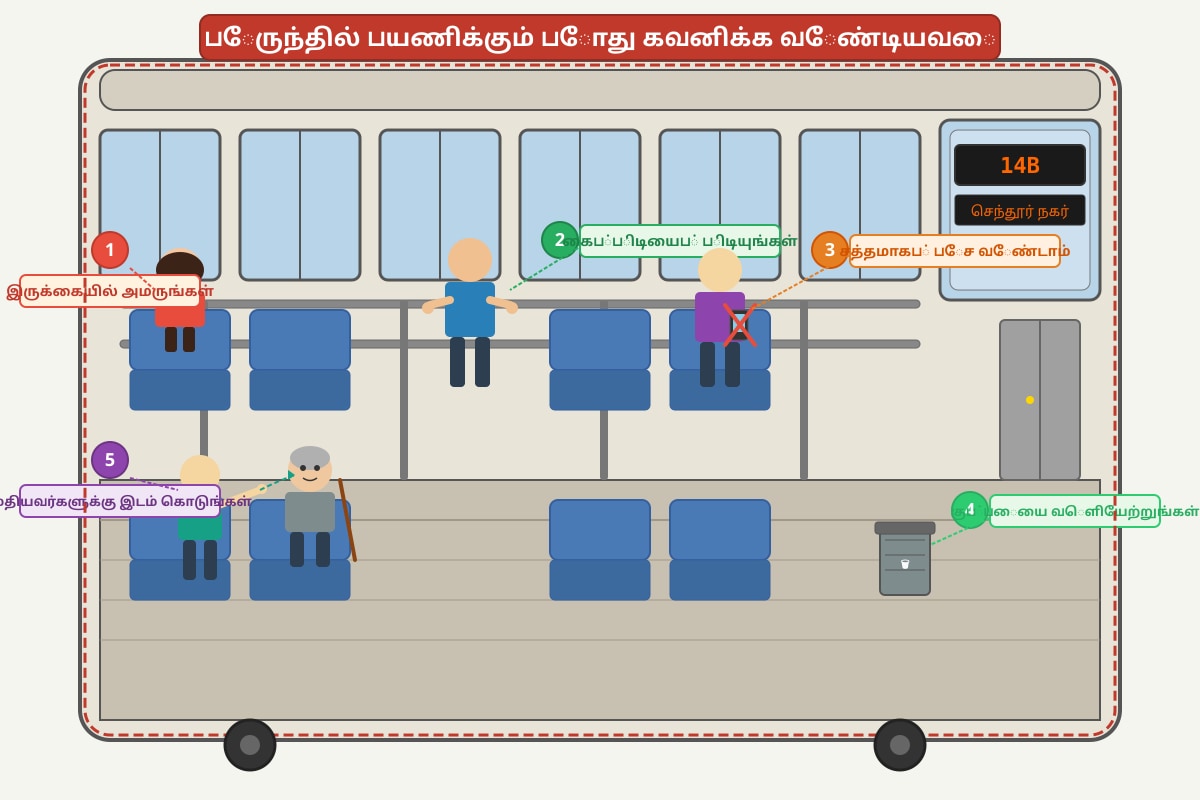
Explanation: The poster title explicitly states "பேருந்தில் பயணிக்கும் போது" (when traveling in the bus). The visual shows bus interior elements: seats, handrails, destination display.
Expected visual features from placeholder Q11-15-fig1:
- Bus interior with rows of seats
- Handrails for standing passengers
- Front display showing "14B" and "செந்தூர் நகர்"
- Multiple passengers seated and standing
12. Answer [4 marks]: Any two of these five (2 marks each):
- இருக்கையில் அமருங்கள் — Please be seated
- கைப்பிடியைப் பிடியுங்கள் — Hold the handrail
- சத்தமாகப் பேச வேண்டாம் — Do not speak loudly
- குப்பையை வெளியேற்றுங்கள் — Dispose of rubbish
- முதியவர்களுக்கு இடம் கொடுங்கள் — Give seat to elderly
Marking per answer (2 marks):
- 1 mark: correct identification from visual
- 1 mark: accurate Tamil quotation or clear description
Teaching note: Visual texts require matching text labels to visual elements. Students must read both text and image.
13. Answer [4 marks]:
Key points for marking:
- Elderly people have physical weakness (முதியவர்களுக்கு உடல் வலிமை குறைவு) [1 mark]
- Standing for long causes fatigue/pain (நீண்ட நேரம் நிற்க முடியாது) [1 mark]
- Offering seats shows respect/cultural value (மரியாதை, கலாச்சாரம்) [1 mark]
- Creates harmonious society (ஒற்றுமையான சமூம்) [1 mark]
Teaching note: Singapore's Land Transport Authority explicitly promotes this as part of gracious commuting culture. Tamil students should connect to both Tamil cultural values (மூத்தோர் மதித்தல்) and Singapore social norms.
14. Answer [4 marks]:
Key points:
- Disturbs other passengers (மற்ற பயணிகளுக்கு இடையூறு) [1 mark]
- Violates public etiquette (பொதுவிடைத்தில் நடத்தை விதி) [1 mark]
- Causes stress/noise pollution (சத்தமாற்றல்/மன அழுத்தம்) [1 mark]
- May cause safety issues — can't hear announcements (அறிவிப்புகளைக் கேட்க முடியாது) [1 mark]
Teaching note: Connect to broader themes: consideration for others (பிறருக்கு இடையூறு செய்யாதல்), maintaining peaceful public spaces.
15. Answer [6 marks]:
Expected structure:
| Marks | Requirement |
|---|---|
| 2 marks | Name one additional good habit |
| 2 marks | Explain the benefit to self/others |
| 2 marks | Connect to broader social responsibility |
Sample strong answer:
கூடுதல் நல்ல பழக்கம்: காயமடைந்தவர்களுக்கு உதவி செய்தல் / Helping injured persons
பயன்: விபத்து ஏற்பட்டால் உடனடி உதவி கிடைக்கும்; உயிரைக் காக்கலாம் / Immediate help available; can save lives
சமூகப் பொறுப்பு: ஒவ்வொருவரும் ஒருவருக்கொருவர் உதவுவது நல்ல சமூகத்தின் அடையாளம் / Mutual help is mark of good society
Other acceptable habits: Queue properly, keep pathway clear, report suspicious items, help children/boarding passengers.
Section D: Long Passage Comprehension (50 marks)
16. Answer [4 marks]: Any two details (2 marks each):
- கடல் அமைதியாக இருந்தது — The sea was calm/peaceful
- வானம் தெளிவாகக் காணப்பட்டது — The sky was clear/bright
- காலை நேரம் — It was morning time
- மீனவர்கள் வலைகளைச் சரிசெய்தனர்; குழந்தைகள் விளையாடினர் — People working and playing normally (atmosphere of normalcy)
Marking: Each correct detail with source reference (பகுதி 1) earns 2 marks.
Teaching note: The contrast between calm beginning and sudden disaster is a standard narrative technique. Students should identify this as "முன்னேற்பாடு" (foreshadowing) through contrast.
17. Answer [6 marks]:
What they did (3 marks):
- மீனவர்கள் தங்கள் படகுகளை விட்டுவிட்டு ஓட முடியவில்லை [1 mark]
- கடலுக்கு ஆழமான பகுதிக்குப் படகுகளை இயக்கினர் [2 marks: direction + purpose]
Why (3 marks):
- படகுகள் அவர்களின் வாழ்வாதாரம் / livelihood source [1 mark]
- கரையில் இருந்தால் பேரலை தாக்கும் / waves hit shore first [1 mark]
- ஆழ்கடலில் அலைகள் குறைவாக இருக்கும் / deep sea has less wave impact [1 mark]
Teaching note: This tests scientific understanding (tsunami physics: waves slow and grow taller in shallow water; deep water safer) combined with comprehension. Strong answers mention both emotional attachment to boats and physical safety logic.
18. Answer [6 marks]: Any three effects (2 marks each):
- பல குடிசைகள் அழிந்தன — many huts were destroyed
- சாலைகள் தண்ணீரால் மூடப்பட்டன — roads were flooded/covered with water
- கடல் கரையைத் தாக்கியது — the sea struck/hit the shore
- மீனவர்கள் படகுகளை விட்டு ஓட முடியவில்லை — fishermen couldn't abandon boats (implied ongoing hardship)
Marking per effect (2 marks):
- 1 mark: identification from text
- 1 mark: brief elaboration or consequence
19. Answer [12 marks]:
Author's learning from text (6 marks):
| Marks | Point |
|---|---|
| 2 | இயற்கை எப்போது வேண்டுமானாலும் தன் சக்தியைக் காட்டலாம் — Nature can show its power anytime |
| 2 | நாம் இயற்கையைப் புரிந்துகொண்டு மதிக்க வேண்டும் — We must understand and respect nature |
| 2 | கடலோர வீடுகள், மரவெட்டல், கடல் மாசு = இயற்கையின் கோபம் அதிகரிக்கும் — Human actions increase nature's anger |
Student's opinion (6 marks):
| Marks | Requirement |
|---|---|
| 2 | Agree with author's view, with personal stance |
| 2 | Provide specific example (Singapore flooding, climate change, local environmental issue) |
| 2 | Suggest action: conservation, less pollution, sustainable living |
Teaching note: This is a synthesis question requiring text-based inference plus personal application. The "கோபம்" metaphor personifies nature — students should recognize this as literary device but interpret the real meaning: natural disasters result from ecological imbalance.
20. Answer [22 marks]:
This is an extended response requiring procedure, reasoning, and personal application.
Marking descriptors:
| Band | Marks | Description |
|---|---|---|
| Excellent | 19–22 | Clear 4–5 step procedure with logical sequencing, reasons for each step, personal responsibility, help to others, reference to text learning |
| Good | 15–18 | 3–4 steps with mostly clear reasons, some personal application |
| Satisfactory | 11–14 | 2–3 steps, basic reasons, limited expansion |
| Developing | 7–10 | Simple list, minimal reasoning |
| Weak | 0–6 | Irrelevant, off-topic, or extremely brief |
Strong answer structure (model for full marks):
Step 1: Immediate response (5 marks)
- ஒலிபெருக்கி எச்சரிக்கை கேட்டதும் உடனடியாக ஓடுவேன் — Run immediately on hearing warning
- உயரமான இடத்தை நோக்கி ஓடுவேன் — Run to high ground
- Reason: பேரலை கரையைத் தாக்கும்; தாமதம் உயிருக்கு ஆபத்து — waves hit shore; delay is dangerous
Step 2: Safety during evacuation (5 marks)
- மின்சார உபகரணங்களைத் தொடமாட்டேன் — won't touch electrical appliances
- மரங்களைப் பிடித்துக்கொள்வேன் — hold trees if needed
- குடும்பத்தினருடன் இருப்பேன் — stay with family group
- Reason: மின்சாரம் தாக்கலாம்; தனியாக இருப்பது ஆபத்தானது — electrocution risk; separation is dangerous
Step 3: Helping others (4 marks)
- அண்டை வீட்டு முதியவர்களுக்கு உதவுவேன் — help elderly neighbors
- குழந்தைகளுக்கு உதவி செய்வேன் — help children
- Reason: சமூகப் பொறுப்பு; நான் நல்ல குடிமகன் — social responsibility; good citizenship
Step 4: After reaching safety (4 marks)
- அதிகாரிகளுக்குத் தகவல் தருவேன் — inform officials
- செய்திகளைக் கேட்டு நிலைமையை அறிவேன் — listen to news for updates
- Reason: மீட்புப் பணைகளுக்கு உதவி; மீண்டும் ஆபத்து வந்தால் தெரிந்துகொள்ள — aid rescue; know if further danger
Step 5: Long-term preparedness (4 marks)
- எங்கள் குடும்பம் அவசரக் காலத் திட்டம் வகுப்போம் — family emergency plan
- முக்கியப் பொருட்களை ஆயத்தமாக வைப்போம் — keep emergency kit ready
- Reason: முன்னேற்பாடு பாதுகாப்பை அதிகரிக்கும்; இயற்கையை மதித்து வாழ வேண்டும் — preparation increases safety; must respect nature
Common mistakes to flag:
- Staying to watch waves or take photos (dangerous curiosity)
- Going to basement/underground for shelter (wrong direction)
- Driving car (traffic jam risk, useless against water)
- Separating from family to "save" belongings
Final Mark Summary
| Section | Marks |
|---|---|
| A (Q1–5) | 10 |
| B (Q6–10) | 20 |
| C (Q11–15) | 20 |
| D (Q16–20) | 50 |
| Total | 100 |
End of Answer Key