AI Generated Exam Paper
Primary 6 PSLE Higher Tamil Practice Paper 2
Free P6 PSLE Higher Tamil Practice Paper 2, Nemo3 AI version, with questions, answers, and PSLE-focused practice for Singapore students.
These static practice materials are generated from the site's syllabus and paper-generation workflow, with source and model context shown so students and parents can evaluate the material before use.
Questions
Free quiz and exam paper access
Enter your details to view this paper
Your access is remembered on this device.
Answers
TuitionGoWhere Practice Paper - Higher Tamil Primary 6 PSLE (Answer Key)
Subject: Higher Tamil
Level: Primary 6 PSLE
Paper: Practice Paper 2 (Version 2 of 5)
Total Marks: 100
Section A: Language Use [30 marks]
Part 1: Vocabulary MCQ (5 × 2 = 10 marks)
1. (A) அன்புடன்
Explanation: The sentence describes a mother giving food to her daughter. "அன்புடன்" (with love) fits the context of a caring action. The other options (selling, preparing, buying) do not fit the blank grammatically or contextually as an adverb describing how she gave it.
[2]
2. (B) அமைதியாக
Explanation: During heavy rain, people sit "அமைதியாக" (quietly/calmly). "ஓடி" (ran), "பேசி" (talked), "விளையாடி" (played) are inappropriate actions for the context of heavy rain.
[2]
3. (A) கவனமாக
Explanation: A teacher checks students' work "கவனமாக" (carefully/attentively). This is the expected professional behaviour. The other adverbs (quickly, wrongly, badly) contradict the role of a teacher.
[2]
4. (A) பிடித்தோம்
Explanation: "கடைசி நிமிடத்தில்" (at the last minute) implies a successful rush to catch the bus. "பிடித்தோம்" (caught) is the logical positive outcome. The other options mean missed, ran, stood — which do not fit the relief implied by "last minute".
[2]
5. (A) முழுமையாக
Explanation: Trusting a father's words "முழுமையாக" (completely/fully) shows strong faith. "பகுதியாக" (partially), "தவறாக" (wrongly), "மறந்து" (forgot) do not convey the intended meaning of deep trust.
[2]
Part 2: Grammar Cloze (5 × 2 = 10 marks)
6. போகும் / போக வேண்டிய
Explanation: The sentence is in past tense ("தாமதமாயிருந்தது" - was late). The infinitive "போகும்" (to go) or "போக வேண்டிய" (needed to go) fits the noun phrase "நேரம்" (time). "போகும் நேரம்" = time to go.
[2]
7. பார்த்து
Explanation: The structure "__________ கொண்டு நின்றேன்" (stood doing...) requires the adverbial participle (வினையெச்சம்). "பார்த்து" (having seen/looking) is the correct form of "பார்" (see).
[2]
8. பாடி
Explanation: Similar to Q7, "__________ அனைவரையும் முகமூடி செய்தாள்" requires an adverbial participle showing the action done while achieving the result. "பாடி" (having sung) is the correct form of "பாடு" (sing).
[2]
9. இருந்த
Explanation: "நாங்கள் வீட்டில் __________ நேரம்" (The time we were/stayed at home). The relative participle (பெயரெச்சம்) of "இரு" (stay/be) in past tense is "இருந்த". "இருந்த நேரம்" = the time (when we) stayed.
[2]
10. இயக்கி
Explanation: "தகப்பன் கார் __________ அலுவலகம் சென்றார்" (Father went to office driving the car). The adverbial participle of "இயக்கு" (drive) is "இயக்கி", showing the means/manner of going.
[2]
Part 3: Sentence Transformation / Synthesis (5 × 2 = 10 marks)
11. ராமு வேகமாக ஓடினேனவே, அவன் பேருந்தை பிடித்தார்.
Explanation: Combine two sentences using "எனவே" (therefore/so). The first action (running fast) is the cause, the second (catching bus) is the effect. The subject "அவன்" (he) is retained in the second clause for clarity.
[2]
12. சீதா புத்தகம் வாசிக்கிறாள் அதோடு கதை எழுதுகிறாள்.
Explanation: Combine using "அதோடு" (and also/besides) to show simultaneous or additional actions by the same subject. The subject "சீதா" is not repeated.
[2]
13. ஆசிரியர் நாங்கள் வீட்டுக்குப் போகலாமா என்று கேட்டார்.
Explanation: Direct speech to reported speech. Changes: "நீங்கள்" → "நாங்கள்" (if teacher includes self) or "நீங்கள்" (if addressing students). Standard school context: Teacher asks students → "நீங்கள் வீட்டுக்குப் போகலாமா" becomes "நீங்கள் வீட்டுக்குப் போகலாமா என்று கேட்டார்". Acceptable answer: ஆசிரியர் நீங்கள் வீட்டுக்குப் போகலாமா என்று கேட்டார்.
[2]
14. இது அதிகமாய் பழமையான புத்தகம் எனக்கும் வாசிக்க முடியாது.
Explanation: Use the structure "அதிகமாய் [adjective]... முடியாது" (too [adjective] to...). "மிகவும்" (very) changes to "அதிகமாய்" (excessively/too). The negative potential "முடியாது" (cannot) completes the structure.
[2]
15. மணி தன் வேலையை முடித்து விட்டு வீட்டுக்கு போனான்.
Explanation: Use "முடித்து விட்டு" (having completed/finished) as an adverbial participle phrase indicating the first action is fully completed before the second begins. "முடித்து" alone is possible but "முடித்து விட்டு" emphasizes completion (perfective aspect).
[2]
Section B: Comprehension [40 marks]
Passage 1
16. ரவி மற்றும் சீதா இரு சகோதரர்கள். (Ravi and Seetha are two siblings.)
Marking: 1 mark for identifying they are siblings.
[1]
17. ஒரு சிறிய கிராமத்தில். (In a small village.)
Marking: 1 mark for "கிராமத்தில்" (village) or "சிறிய கிராமத்தில்".
[1]
18. விவசாயி (Farmer) / நெல், புல்லரிசி போன்ற பயிர்களை விளைச்சி விற்பனை செய்து குடும்பத்தைப் பேற்றுக்கொண்டு வந்தார்.
Marking: 1 mark for "விவசாயி" or description of farming work.
[1]
19. நதியில் நீர்மட்டம் ஏறியது. தகப்பனின் வயலில் நீர் நிரம்பியது. பயிர்கள் தூங்கி விட்டன. (Any two points: water level rose, field flooded, crops drowned/destroyed.)
Marking: 1 mark each for any two correct details from text.
[2]
20. "அப்பா, நாம் வேறு வேலை தேடலாம்" என்று கூறினார். (Father, we can look for another job.)
Marking: 1 mark for "வேறு வேலை தேடலாம்" (look for other job), 1 mark for addressing father/context.
[2]
21. "இது நமது மரபு. நாம் இதை விட மாட்டோம்" என்று பதில் அளித்தார். (This is our heritage/tradition. We will not give this up.)
Marking: 1 mark for "மரபு" (heritage/tradition), 1 mark for "விட மாட்டோம்" (will not give up).
[2]
22. மரபு = பாரம்பரியம் / தொண்டு / குடிமை / வழக்கம். (Tradition / heritage / duty / custom.)
Marking: 2 marks for any correct synonym explaining the meaning in context.
[2]
23. முடிவு / தீர்ப்பு / மனோபலம். (Decision / resolution / determination.)
Marking: 2 marks for correct synonym (சமநிலை சொல்).
[2]
24. தகப்பன் தன் வேலையில் (விவசாயத்தில்) பெரிய நம்பிக்கையும், தீர்மானமும் உடையவர். மழை பேதை பயிர்கள் நஷ்டமாயினும், அவர் வேறு வேலை தேடாமல் மீண்டும் வயலைத் தயாரித்து விதைத்தார். இது அவருடைய உழைப்பு மனோபலத்தையும், மரபைப் பற்றிய பக்தியையும் காட்டுகிறது.
Marking: 3 marks. 1 mark for identifying quality (determination/perseverance), 1 mark for evidence (re-planting after flood), 1 mark for value (respect for tradition/hard work).
[3]
25. கடின நேரங்களிலும் ஒருவர் தன் கடமையையும் மரபையும் விட்டு விடக்கூடாது. உழைப்பு மற்றும் தீர்மானம் மூலம் மறுபடியும் உயரலாம். தகப்பனின் நடத்தை எங்களுக்கு உத்வேகம் தருகிறது.
Marking: 3 marks. 1 mark for lesson (perseverance/duty), 1 mark for connection to text (father's action), 1 mark for personal reflection/application.
[3]
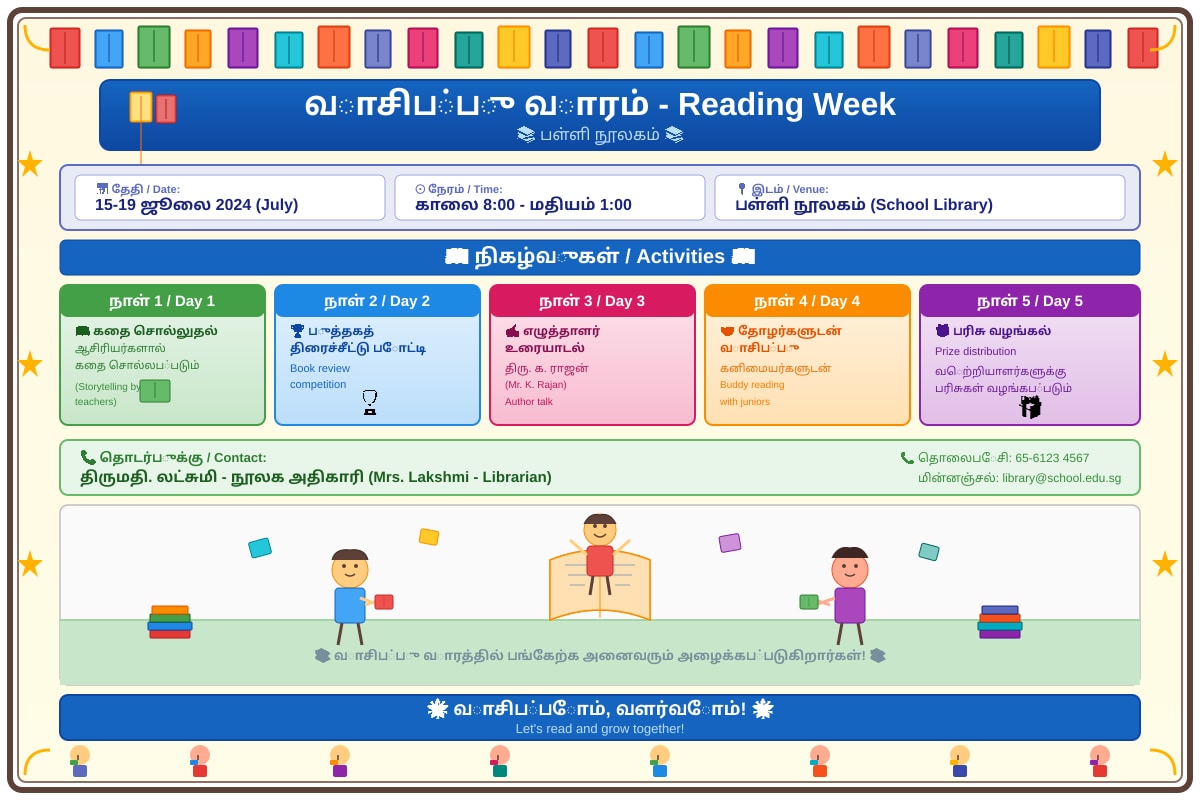
Passage 2 (Visual Stimulus)
26. 15-19 ஜூலை 2024 (15th to 19th July 2024)
Marking: 1 mark for correct dates.
[1]
27. பள்ளி நூலகம் (School Library)
Marking: 1 mark for correct venue.
[1]
28. நாள் 3-ல் ஆசிரியர் கே. ராஜன் அவர்களின் உரை நிகழ்வு (Author talk by Mr. K. Rajan)
Marking: 1 mark for "Author talk" / "உரை நிகழ்வு", 1 mark for "Mr. K. Rajan" / "கே. ராஜன்".
[2]
29. திருமதி லட்சுமி (நூலகக்காரர்) - Mrs. Lakshmi (Librarian)
Marking: 1 mark for correct contact person.
[1]
30. "வாசிப்போம், வளர்வோம்" என்பது வாசிப்பதன் மூலம் அறிவும், திறமையும் வளர்த்து வாழ்வில் முன்னேறலாம் என்பதைக் குறிக்கிறது. (Let's read and grow - by reading we grow in knowledge and skills to progress in life.)
Marking: 2 marks. 1 mark for literal meaning, 1 mark for deeper significance (growth through reading).
[2]
31. (Any two valid points, e.g.)
- வாசிப்பு பழக்கம் வளரும். (Reading habit improves.)
- புதிய புத்தகங்கள், ஆசிரியர்கள் அறியலாம். (Discover new books/authors.)
- பேச்சு திறன், விமர்சன திறன் மேம்படும். (Speaking/critical thinking skills improve.)
- இனங்கள், பரிசுகள் வெல்ல வாய்ப்பு. (Chance to win prizes.)
Marking: 1.5 marks per point (total 3). Accept any reasonable benefit related to the activities listed.
[3]
Section C: Composition [30 marks]
General Marking Guidelines for Composition (30 marks):
| Criteria | Marks | Descriptors |
|---|---|---|
| Content & Relevance | 10 | Addresses chosen topic fully; ideas well-developed, logical, engaging; clear focus throughout. |
| Organization & Structure | 6 | Clear introduction, body, conclusion; effective paragraphing; cohesive devices (linkers, sequencing) used well. |
| Language (Vocabulary & Grammar) | 8 | Wide range of appropriate vocabulary; accurate grammar, spelling, punctuation; varied sentence structures; idiomatic usage. |
| Style & Tone | 6 | Personal voice evident; tone appropriate for topic (reflective, descriptive, persuasive); engages reader. |
Total: 30 marks
Topic-Specific Content Points (Guidance for Markers)
Topic 1: "நான் ஒரு கடின நேரத்தில் உதவிய நாள்" (The day I helped someone in a difficult time)
Expected Content:
- Introduction: Set the scene (when, where, who). The "difficult time" (accident, illness, loss, bullying, natural disaster, academic struggle).
- Body: Describe the help given (actions, words, effort). Challenges faced while helping. The recipient's reaction. Your feelings during/after.
- Conclusion: Reflection on the value of helping/empathy. Lesson learned. Impact on self/others. Key Vocabulary: உதவி (help), மனோபலம் (determination), அனுபவம் (experience), கருணை (compassion), திருப்தி (satisfaction).
Topic 2: "என் பள்ளியில் நடந்த ஒரு நினைவு விழா" (A memorable event that happened in my school)
Expected Content:
- Introduction: Name the event (Sports Day, Annual Day, Teacher's Day, Farewell, Competition, Guest Visit). Date/Context.
- Body: Sequence of events (preparation, highlights, performances, speeches, funny/emotional moments). Your role (participant, organizer, audience). Sensory details (sights, sounds, feelings).
- Conclusion: Why it is memorable. Lasting impact. Value of school community. Key Vocabulary: நினைவு (memory), விழா (festival/event), பங்கேற்பு (participation), ஒற்றுமை (unity), மகிழ்ச்சி (joy).
Topic 3: "தேவையற்ற சமயத்தில் மோபைல் ഫோன் பயன்படுத்துவதன் தீமைகள்" (The harms of using mobile phones unnecessarily)
Expected Content:
- Introduction: Hook (prevalence of phones). Thesis: Excessive/unnecessary use has serious harms.
- Body Paragraphs (Point-Evidence-Explanation):
- Health: Eye strain, posture, sleep disruption, radiation concerns.
- Academic/Social: Distraction, reduced focus, less face-to-face interaction, cyberbullying risk.
- Psychological: Addiction, anxiety (FOMO), reduced creativity/outdoor play.
- Conclusion: Summary of harms. Call to action (balanced use, parental guidance, self-discipline). Positive alternative uses. Key Vocabulary: தீமைகள் (harms), அடிமை (addiction), கவனவிதிர்வு (distraction), ஆரோக்கியம் (health), சமநிலை (balance).
Common Mistakes to Avoid (Marking Notes):
- Off-topic: Writing a story for Topic 3 (expository/argumentative) or an essay for Topic 1/2 (narrative/recount). Penalize under Content.
- Word Count: < 150 words. Penalize 2-4 marks from Content/Organization.
- Language Errors: Repeated basic grammar errors (case endings, tense, subject-verb agreement), spelling errors (especially common words), SMS language. Penalize under Language.
- Lack of Paragraphs: Single block of text. Penalize under Organization.
- Cliché Endings: "அதுவே நான் கற்றுக்கொண்ட பாடம்" without specific reflection. Lower Style marks.
END OF ANSWER KEY