AI Generated Quiz
Primary 6 PSLE English Comprehension Quiz
Free P6 PSLE English Comprehension quiz, HY3 AI version, with questions, answers, and PSLE-focused practice for Singapore students.
These static practice materials are generated from the site's syllabus and paper-generation workflow, with source and model context shown so students and parents can evaluate the material before use.
Questions
Free quiz and exam paper access
Enter your details to view this paper
Your access is remembered on this device.
Answers
Primary 6 PSLE English Quiz - Comprehension (Answer Key)
Total Marks: 30
Note: This is syllabus-first content from LLM-inferred templates, not past-year exam derived.
Section A: Literal Comprehension (Q1–5)
-
B (1 mark)
Teaching note: The first sentence states "opened a new exhibition on recycling last Saturday". Literal recall – scan for the day. -
B (1 mark)
Teaching note: "More than 300 students" is explicitly stated. Avoid choosing exact numbers not given. -
B (1 mark)
Teaching note: "The guide, Mr Tan" identifies him directly. -
B (1 mark)
Teaching note: "making pencil holders from used containers" gives the object. -
B (1 mark)
Teaching note: Topic is recycling exhibition; main idea from first sentence.
Section B: Vocabulary and Short Answer (Q6–10)
-
Worried / nervous / uneasy (1 mark)
Teaching note: "anxious" before a recital with trembling hands shows worry. Define: anxious = feeling worried about something that may happen. -
Because she was nervous/anxious before playing (1 mark)
Teaching note: Link "anxious before" and "hands trembled as she walked on". Cause–effect literal inference. -
relief (1 mark)
Teaching note: "sense of relief and pride" after fear = relief. Vocabulary match. -
Applauded loudly (1 mark)
Teaching note: Last sentence states audience action. -
smooth / confident / good (1 mark)
Teaching note: "music flowed smoothly" → smooth performance.
Section C: Inferential and Evaluative (Q11–20)
-
(2 marks)
Answer: The light was broken / not working; it had not been used for many years and was not maintained.
Marking: 1 mark for "not used for years", 1 mark for "light no longer shone / broken".
Teaching note: Infer from "no longer shone at night" + "not used for many years". -
(2 marks)
Answer: He feels happy/appreciative that young people value the lighthouse; he remembers its past importance.
Marking: 1 mark for positive feeling, 1 mark for connection to past saving boats.
Teaching note: "I am glad" shows approval; quote evidence. -
(2 marks)
Answer: To preserve history / help the village / learn about heritage.
Marking: Any one reasonable reason with explanation = 2 marks.
Teaching note: Inference from volunteer action + elder's value statement. -
(2 marks)
Answer: Helpful – they restored, scraped, repainted, fixed windows.
Marking: 1 mark word, 1 mark reason from text.
Teaching note: Contrast with lazy/careless which contradict actions. -
(2 marks)
Answer: Yes – it saved boats before / No – too old; either with reason.
Marking: 1 mark stance, 1 mark reason.
Teaching note: Evaluative; accept any justified view. -
(1 mark)
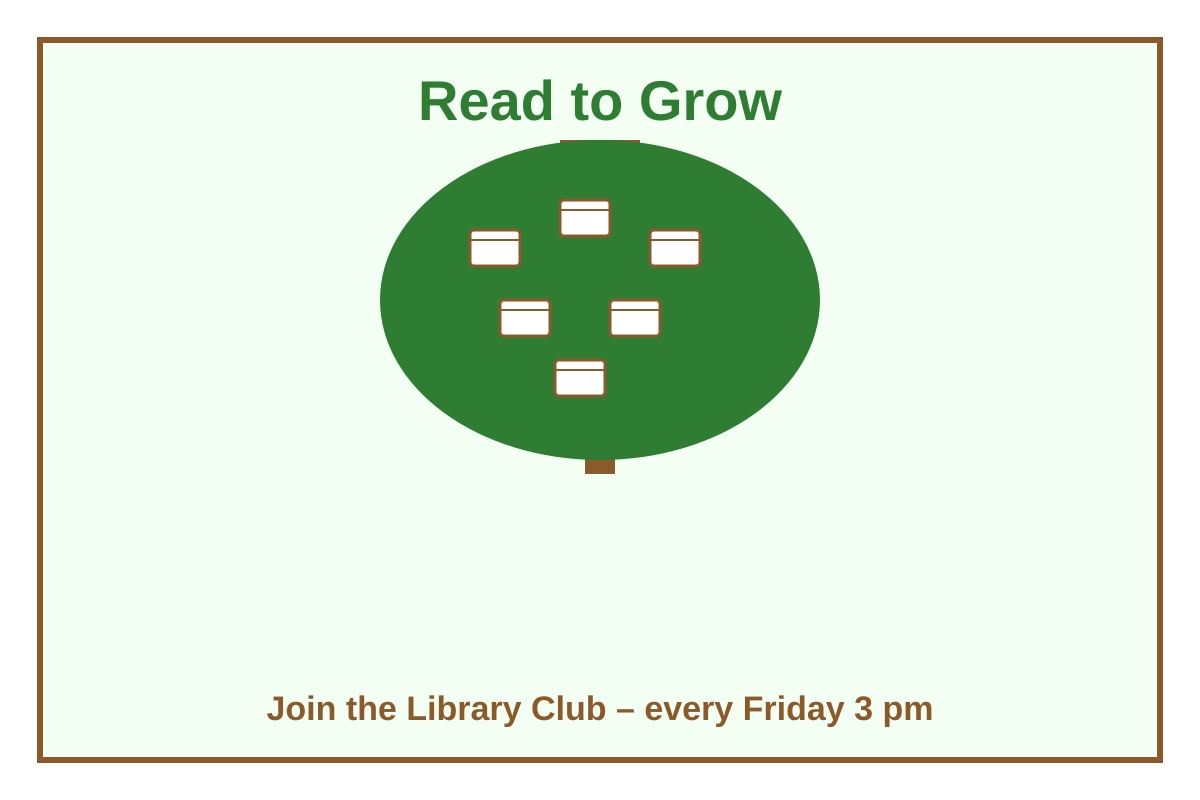
Answer: Every Friday 3 pm.
Teaching note: From bottom text in placeholder. -
(2 marks)
Answer: To encourage students to join the Library Club / promote reading.
Marking: 1 mark promote reading, 1 mark join club.
Teaching note: Poster purpose = persuade/info. -
(2 marks)
Answer: Tree symbolises growth; books as leaves show reading helps you grow.
Marking: 1 mark growth link, 1 mark books-leaves explanation.
Teaching note: Visual metaphor inference. -
(1 mark)
Answer: Students / pupils (school context).
Teaching note: School poster → students. -
(2 marks)
Answer: e.g., add QR code for sign-up because easier to join.
Marking: 1 mark addition, 1 mark reason.
Teaching note: Evaluative improvement; must justify.