From Real Exams Quiz
Primary 6 PSLE English Oral Quiz
Free P6 PSLE English Oral quiz, HY3 Exam version, with questions, answers, and PSLE-focused practice for Singapore students.
These static practice materials are generated from the site's syllabus and paper-generation workflow, with source and model context shown so students and parents can evaluate the material before use.
Questions
Primary 6 PSLE English Quiz - Oral
Name: ___________________________
Class: ___________________________
Date: ___________________________
Score: ___________ / 20
Duration: 40 minutes
Total Marks: 20
Instructions:
This quiz practices the PSLE Oral Communication components: Reading Aloud and Stimulus-Based Conversation. Answer all 20 questions. Section A tests reading aloud awareness. Section B uses picture stimuli for conversation practice. Section C tests spoken response strategies. Write your answers in the spaces provided.
Section A: Reading Aloud (Questions 1–5)
1. (1 mark) Which of the following should you do when reading aloud a sentence that ends with a question mark?
A) Read it in a flat tone
B) Raise your voice pitch at the end
C) Speak very quickly
D) Whisper the last word
2. (1 mark) In the phrase "The little girl gently closed the book", which word is most likely to need softer expression when read aloud?
A) The
B) girl
C) gently
D) book
3. (1 mark) Why is punctuation important when reading aloud?
A) It tells you how long to pause
B) It shows the author's name
C) It changes the spelling of words
D) It is only for written work
4. (1 mark) A passage contains: "Hurry! The bus is leaving." How should "Hurry!" be read?
A) Slowly and calmly
B) With urgency and a loud tone
C) In a singing voice
D) With a laugh
5. (1 mark) Which reading habit shows good fluency?
A) Stopping at every word
B) Reading with natural phrasing and few pauses
C) Mispronouncing long words
D) Ignoring commas
Section B: Stimulus-Based Conversation – Picture Discussion (Questions 6–15)

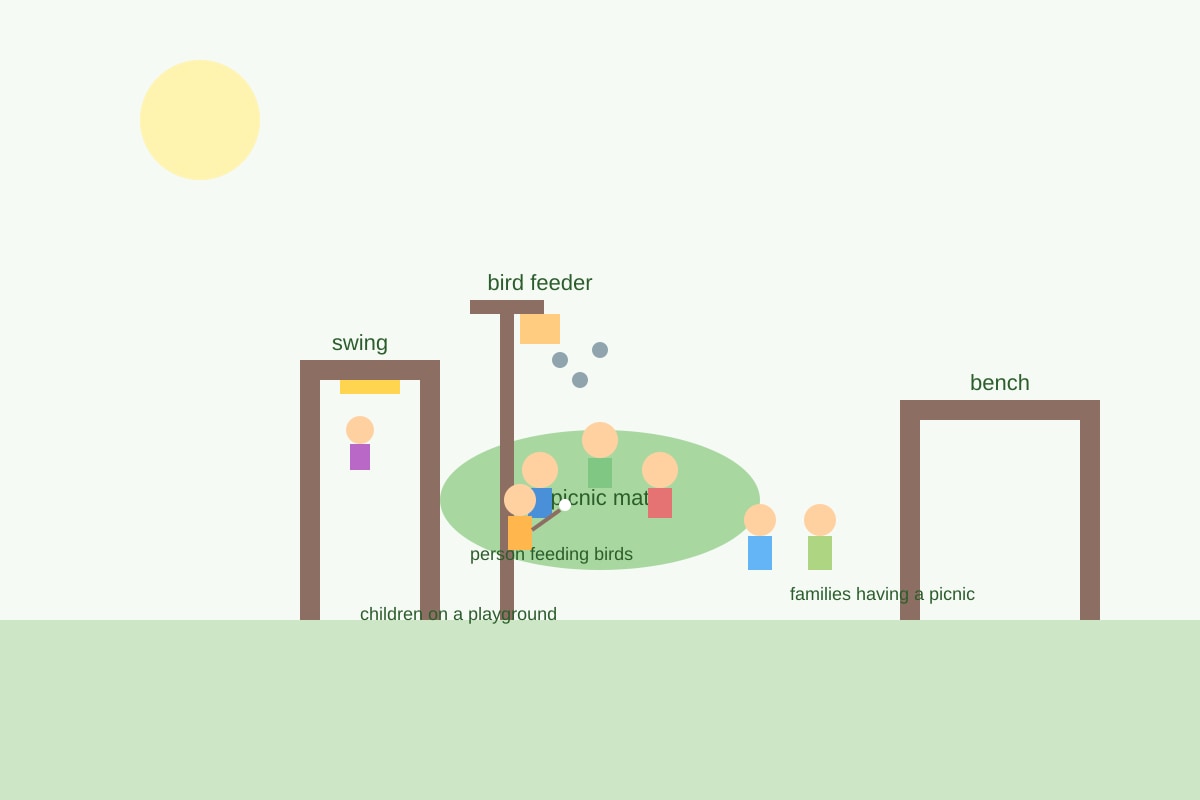
Generated diagram for Q6.
6. (1 mark) Look at the picture. What is the main activity shown in the park?
7. (2 marks) Describe two things you see in the picture that make the park enjoyable for children.
(a) _______________________________________________________
(b) _______________________________________________________
8. (2 marks) Do you think parks are important for a neighbourhood? Give one reason.

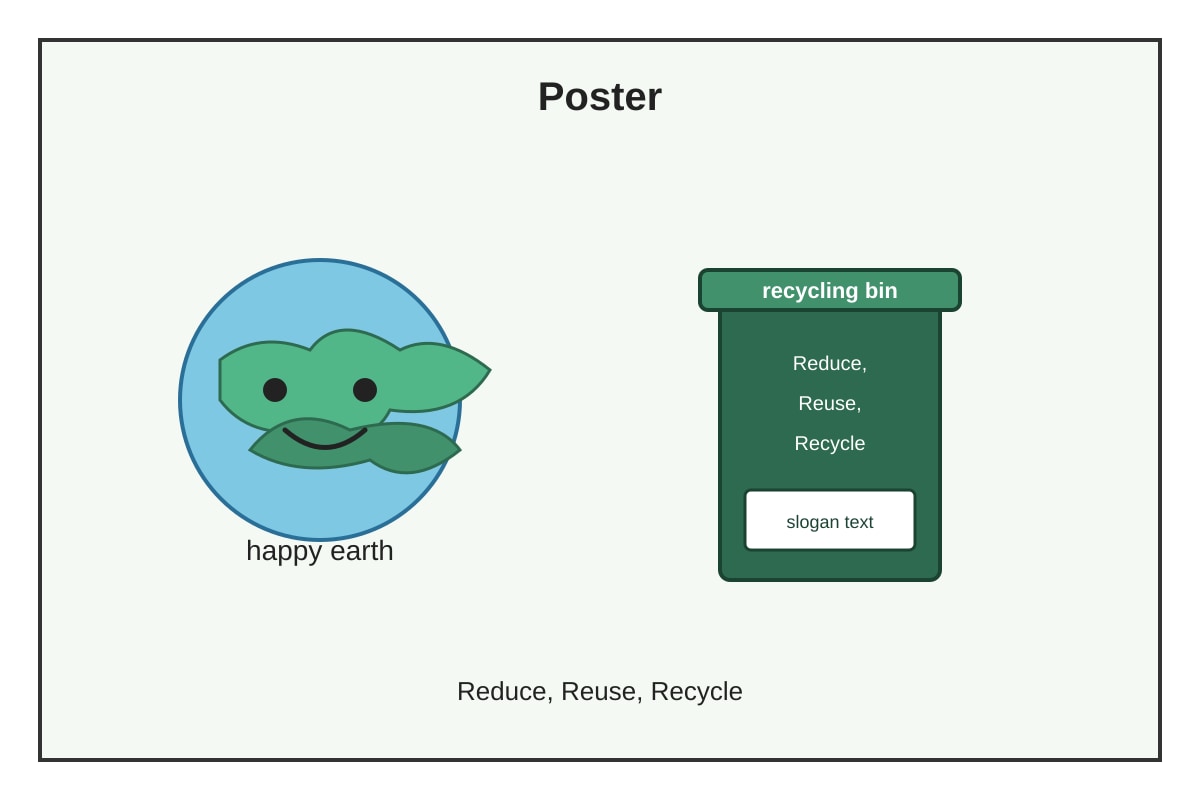
Generated diagram for Q9.
9. (1 mark) What is the message of the poster?
10. (2 marks) Give two ways a student can follow the poster's message at school.
(a) _______________________________________________________
(b) _______________________________________________________
11. (2 marks) If the examiner asks, "Why should we recycle?", give a personal opinion with a reason.

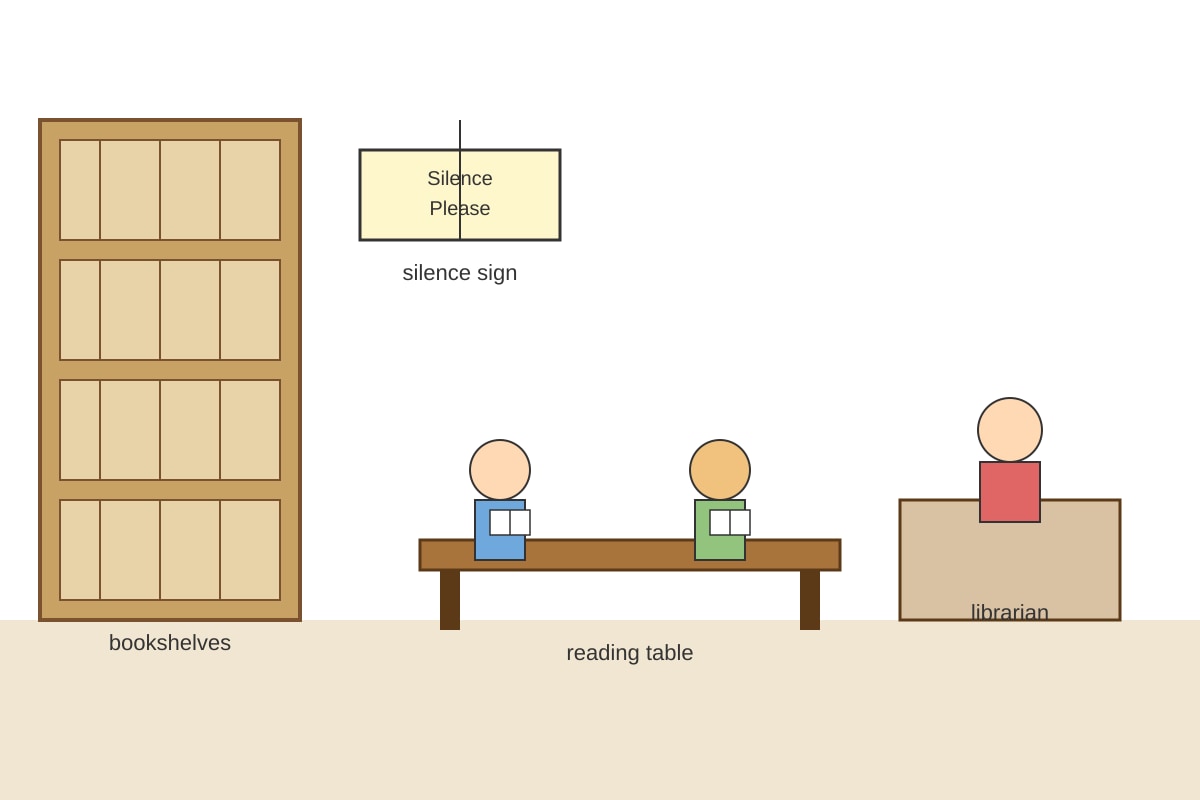
Generated diagram for Q12.
12. (1 mark) Where is this scene taking place?
13. (2 marks) Explain why the "Silence Please" sign is important in this place.
14. (2 marks) Compare visiting a park (Q6 picture) and a library (Q12 picture). Which do you prefer and why?
15. (1 mark) In stimulus-based conversation, what should you do if you do not understand the examiner's question?
A) Guess silently
B) Politely ask for the question to be repeated
C) Change the topic
D) Walk away
Section C: Spoken Response Strategies (Questions 16–20)
16. (1 mark) Which of these is a good way to start your opinion in a conversation?
A) "I think that…"
B) "You are wrong because…"
C) "Nobody cares about…"
D) "The teacher said…"
17. (2 marks) The examiner asks: "Should primary school students have homework on weekends?" Give your view and one reason.
18. (2 marks) What are two non-verbal skills that help in oral communication?
(a) _______________________________________________________
(b) _______________________________________________________
19. (2 marks) The examiner shows a picture of a flooded road. Give one problem it causes and one solution.
Problem: __________________________________________________
Solution: _________________________________________________
20. (1 mark) Why is it useful to give examples when answering oral questions?
A) To fill time
B) To make your answer clearer and more interesting
C) To confuse the examiner
D) Examples are not needed
Answers
Primary 6 PSLE English Quiz - Oral (Answer Key)
Total Marks: 20
Topic: Oral Communication (Reading Aloud & Stimulus-Based Conversation)
Section A: Reading Aloud
1. B (1 mark)
Teaching note: A question mark shows a question; when reading aloud, pitch usually rises at the end to signal enquiry.
Common mistake: Choosing A (flat tone) loses the question meaning.
2. C (1 mark)
Teaching note: "Gently" is an adverb describing a soft action; expression should be softer on this word to show meaning.
Marking: Accept "gently" only.
3. A (1 mark)
Teaching note: Punctuation such as commas and full stops tell the reader when to pause; this aids fluency and meaning.
4. B (1 mark)
Teaching note: "Hurry!" is an exclamation showing urgency; read loudly and quickly.
Marking: B is correct; A is opposite in tone.
5. B (1 mark)
Teaching note: Fluency means reading smoothly with natural phrasing; pausing only at punctuation, not every word.
Section B: Stimulus-Based Conversation
6. (1 mark) Families having a picnic / children playing / people at park.
Teaching note: Main activity = what most people are doing. From Q6-fig1, picnic and playground are central.
7. (2 marks – 1 each)
(a) Playground with swing – children can play.
(b) Open space for picnic – families relax.
Teaching note: Picture Q6-fig1 shows swing and picnic mat; describe visible child-friendly items.
8. (2 marks – 1 for view, 1 for reason)
Yes, parks are important because they give neighbours a place to meet and children space to exercise.
Marking descriptors: Statement (1) + reasoned reason (1).
9. (1 mark) We should reduce, reuse, and recycle to help the earth.
Teaching note: Poster Q9-fig2 slogan states it directly.
10. (2 marks – 1 each)
(a) Use both sides of paper.
(b) Put used cans in recycling bin.
Teaching note: School-based actions matching "reuse" and "recycle".
11. (2 marks – 1 opinion, 1 reason)
I think we should recycle because it keeps our environment clean and saves resources.
Marking: Personal opinion accepted if backed by a clear reason.
12. (1 mark) A library.
Teaching note: Q12-fig3 shows bookshelves and silence sign.
13. (2 marks – 1 each point)
It helps people concentrate on reading; it respects others who need quiet.
Teaching note: Link sign to purpose of library.
14. (2 marks – 1 preference, 1 reason)
I prefer the park because I can play outside with friends, while the library is too quiet for me.
Marking: Compare both, state choice with reason.
15. B (1 mark)
Teaching note: Asking politely to repeat shows active listening and confidence.
Section C: Spoken Response Strategies
16. A (1 mark)
Teaching note: "I think that…" is a polite, clear opinion starter.
17. (2 marks – 1 view, 1 reason)
No, students should not have weekend homework because they need rest to recharge.
Marking: Any reasonable view + reason awarded.
18. (2 marks – 1 each)
(a) Eye contact
(b) Smiling / nodding
Teaching note: Non-verbal skills support spoken message.
19. (2 marks – 1 each)
Problem: Cars cannot pass / accidents.
Solution: Use a detour / close road for repair.
Teaching note: Flood picture inferred; logical link required.
20. B (1 mark)
Teaching note: Examples clarify and engage listener.
Free quiz and exam paper access
Enter your details to view this paper
Your access is remembered on this device.