AI Generated Quiz

Primary 6 PSLE Chinese Reading Quiz

Free AI-Generated NVIDIA Nemotron 3 Ultra 550B A55B Free Primary 6 PSLE Chinese Reading quiz with questions and answers for Singapore students. This page is rendered as a direct URL so the questions and answers can be discovered without pressing in-page buttons.

These static practice materials are generated from the site's syllabus and paper-generation workflow, with source and model context shown so students and parents can evaluate the material before use.

Primary 6 PSLE Chinese AI Generated Generated by NVIDIA Nemotron 3 Ultra 550B A55B Free Updated 2026-06-07

Questions

<!-- TuitionGoWhere generation metadata: stage=5-1; model=nvidia/nemotron-3-ultra-550b-a55b:free; model_label=NVIDIA Nemotron 3 Ultra 550B A55B Free; generated=2026-06-06; Sources: Stage 4-0 LLM templates, syllabus context, and Stage 2 evidence where available. -->

Primary 6 PSLE Chinese Quiz - Reading

Name: ________________________
Class: Primary 6 _______
Date: ________________________
Score: _____ / 40

Duration: 45 minutes
Total Marks: 40

Instructions:

  1. This quiz contains 20 questions across three sections.
  2. Read all passages and questions carefully.
  3. Write your answers in the spaces provided.
  4. For multiple-choice questions, write the letter (A, B, C, or D) in the answer blank.
  5. Marks for each question are shown in brackets [ ].

Section A: Vocabulary in Context (Questions 1–5) [10 marks]

Questions 1–3: Read the passage below and choose the most suitable word for each blank. Write the letter (A, B, C, or D) in the answer blank.

老陈是个性格______的人。面对生活中的挫折,他从不轻言放弃,总是______地寻找解决问题的办法。邻居们都说他是个有毅力的人,但他只是淡淡一笑:"______,方能成功。"

1. 老陈是个性格______的人。
A. 坚强不屈
B. 百折不挠
C. 坚持不懈
D. 锲而不舍
Answer: _____ [2]

2. 面对生活中的挫折,他从不轻言放弃,总是______地寻找解决问题的办法。
A. 执着
B. 执著
C. 执拗
D. 执意
Answer: _____ [2]

3. "______,方能成功。"
A. 坚持不懈
B. 锲而不舍
C. 百折不挠
D. 持之以恒
Answer: _____ [2]

Questions 4–5: Explain the difference in meaning and usage between the following pairs of words. Write your answer in complete sentences.

4. "沉默" vs "静默" vs "缄默" — Explain the nuance of each word and give one appropriate context for each. [2]

Answer:


5. "生活环境" vs "生存环境" — Explain the difference in meaning and give one sentence for each showing correct usage. [2]

Answer:


Section B: Sentence Transformation and Rhetoric (Questions 6–10) [12 marks]

6. Rewrite the following sentence using the 被字句 (passive voice) structure, keeping the original meaning. [2]

老师耐心地指导每一位学生完成作业。

Answer: ________________________________________________________________________

7. Rewrite the following sentence using the 把字句 structure, keeping the original meaning. [2]

这首诗深深地打动了在场的每一个人。

Answer: ________________________________________________________________________

8. Combine the two sentences into one using a complex sentence structure (e.g., 只有……才……, 尽管……但是……, 不但……而且……). [2]

他每天坚持练习书法。他的字迹才变得工整美观。

Answer: ________________________________________________________________________

9. Identify the rhetorical device used in the following sentence and explain its effect. [3]

"时间是海绵里的水,只要愿意挤,总还是有的。" — 鲁迅

Rhetorical device: _______________________________________________________________
Effect: _________________________________________________________________________


10. Rewrite the following plain sentence using parallelism (排比) and contrast (对比) to enhance its expressive power. [3]

读书有好处,不读书有坏处。

Answer: ________________________________________________________________________


Section C: Reading Comprehension (Questions 11–20) [18 marks]

Questions 11–15: Read the passage below and answer the questions that follow.

《那棵老槐树》

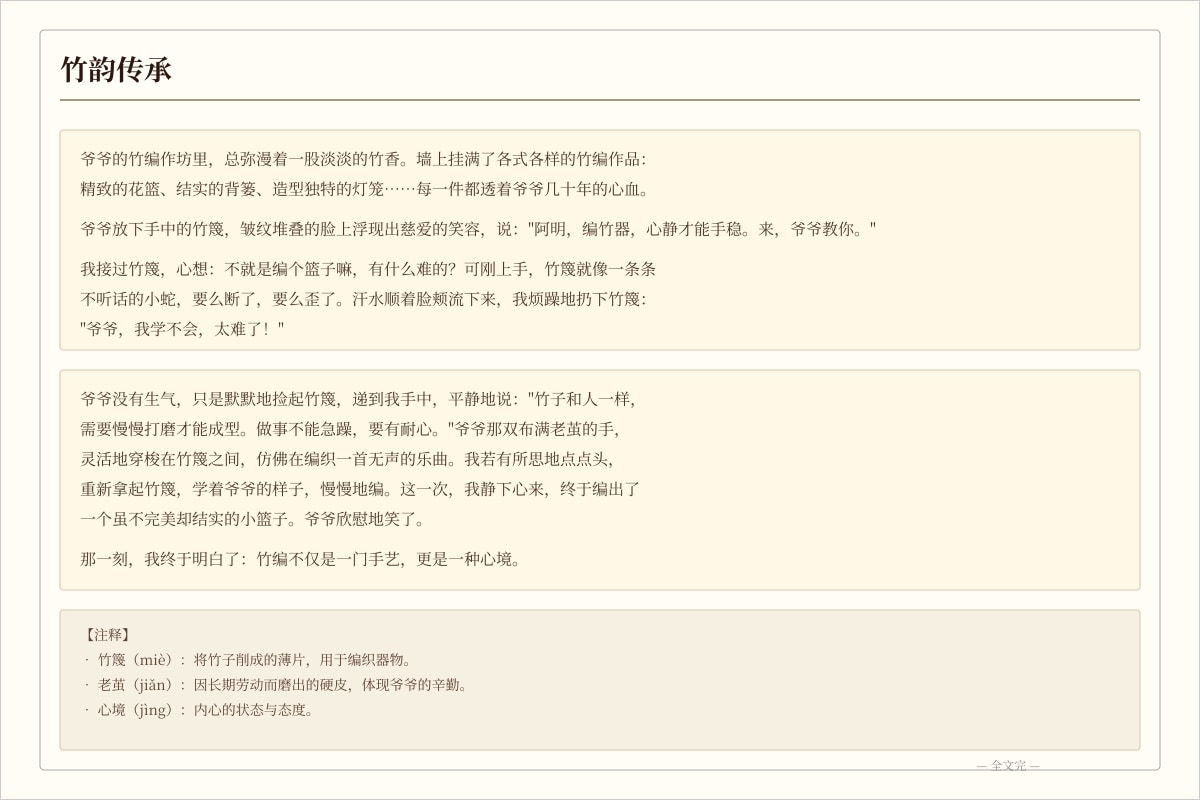
院子里那棵老槐树,陪伴了我整个童年。

春天,它抽出嫩绿的枝条,开满了米黄色的小花,香气四溢。我们常在树下做游戏,风一吹,花瓣像雪花一样飘落在我们的头上、肩上、书本上。那时,我觉得世界上最美好的事,莫过于此。

夏天,它撑起一把巨大的绿伞,为我们遮挡烈日。蝉在树上不知疲倦地鸣叫,我们在树下乘凉、下棋、讲故事。爷爷常坐在石凳上,给我们讲他小时候的事,讲这棵树是怎么从一颗小树苗长成今天这般参天大树的。

秋天,槐花谢了,结出了豆荚。我们把豆荚当成玩具,比赛谁扔得备的远。风吹过,树叶沙沙作响,仿佛在低声诉说着什么。

冬天,树叶落光了,只剩下光秃秃的枝桠在寒风中摇曳。但我知道,它的根深深扎在泥土里,默默积蓄力量,等待下一个春天的到来。

后来,我离开家乡去外地求学、工作。每次回家,第一件事就是去看那棵树。它依然在那里,枝繁叶茂,仿佛从未改变。

去年冬天,一场大雪压断了它的主干。看着满地的枝桠,我心如刀绞。爷爷拍拍我的肩膀说:"树虽断了,根还在。春天来了,它还会发新芽的。"

今年春天,我真的在断干旁看到了几株嫩绿的新芽,在阳光中顽强地生长着。

11. 根据短文内容,老槐树在四个季节的特点分别是什么?请填入下表中。[4]

季节老槐树的特点
春天
夏天
秋天
冬天

12. 文中写道:"风一吹,花瓣像雪花一样飘落在我们的头上、肩上、书本上。" 这句话运用了什么修辞手法?其表达效果是什么?[2]

Answer:


13. 爷爷为什么要给"我们"讲这棵树从小树苗长成参天大树的过程?这反映了爷爷怎样的用意?[3]

** ###《原体 <<< <<<stagestage> < <<<stagestage<stage<<stage<stage<<stage5<stage<阶<<<stage5_.md> <stage<< stage< << stage5> <stage5>

<stage1<stage<__stage<} stage<<stage5<stage< <<stage5Stage<stage<<stage5 <stage5_stagestage<stage<<stage<</stage> <stage5<<Stage正 stage< <stage5> </stage5> </stage5 stage1</stage> </stage5> </stage5> </stage5> </stage5> </stage> </stage> </stage> </stage> </tag </</</<stagestage <stage5> </stagestage<stage6</

</> < </<stage5> < stage</stage </<>

________</stage </< }

</<image>

</<image1</

</<image1</div> </<image1</> </</</</</</</<

</

get

<stage1</head> </stage> </stage>

</head>

<stage5_quiz_md> Answer:
爷爷想让孩子们明白,事物的成长需要时间和耐心,正如老槐树从小树苗长成大树经历了风雨岁月。这反映了爷爷希望孙辈们珍惜当下、坚持不懈、脚踏实地成长的教育用意。[3]

14. "它的根深深扎在泥土里,默默积蓄力量,等待下一个春天的到来。" 请用自己的话解释这句话在文中的双重含义(表层含义与深层寓意)。[3]

Answer:


15. 文章结尾写道:"今年春天,我真的在断干旁看到了几株嫩绿的新芽,在阳光中顽强地生长着。" 这呼应了文中哪一句话?请原文抄写,并说明这样结尾的作用。[3]

Answer:
呼应句子:______________________________________________________________________
作用:__________________________________________________________________________


Questions 16–20: Read the passage below and answer the questions that follow.

《阅读,是一场与灵魂的约会》

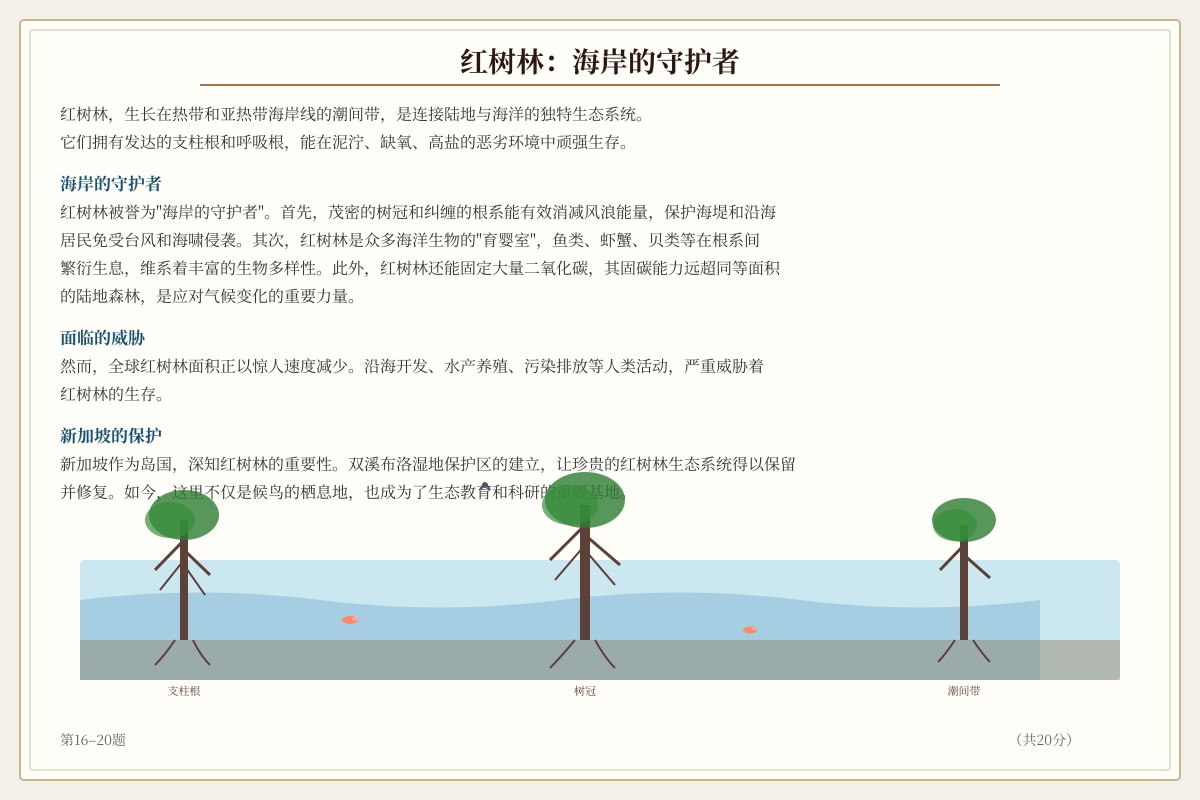
有人问:"读书有什么用?读了也会忘,何必费神?"

这让我想起杨绛先生的一句话:"你的阅读量,藏在你的气质里;你走过的路,藏在你的骨骼里。"

阅读,从来不是为了考试、为了炫耀、为了即时的回报。它是一场漫长的、隐秘的、与灵魂的约会。

你读过的书,化作你骨血里的风骨,化作你谈吐间的温润,化作你面对困境时的从容,化作你深夜里独自疗愈的力量。

在这个碎片化、快节奏的时代,我们习惯了十秒视频、三分钟短文、标题党资讯。我们的注意力被切割、贩卖、消费,思维变得浅薄、浮躁、易碎。

而阅读,是对抗碎片化最有力的武器。它要求我们放慢脚步,沉下心来,与作者的思想对话,与经典的智慧共鸣。

读一本好书,像是在深夜里点亮一盏灯,照亮内心幽暗的角落;像是在荒原上遇见一眼泉水,滋润干裂的灵魂。

不必焦虑读了会忘。正如你吃过的饭,早已化作血肉,虽不记得每一餐菜单,却支撑起你的生命躯壳。读过的书,虽忘记情节细节,却早已融入你的认知底色,成为你看世界的眼界、想问题的深度、做选择的底气。

所以,请从今晚开始,放下手机,拿起一本书。哪怕只读十页、二十页。

因为,阅读,是你给自己最好的礼物;是这喧嚣世界里,留给灵魂最后的体面与自由。

16. 文中引用杨绛先生的话:"你的阅读量,藏在你的气质里;你走过的路,藏在你的骨骼里。" 请结合上下文解释这句话的含义。[2]

Answer:


17. 作者认为"阅读,是对抗碎片化最有力的武器"。请从文中找出两个论据支持这一观点。[2]

Answer:
(1) ___________________________________________________________________________
(2) ___________________________________________________________________________

18. 第6段用了两个比喻:"像是在深夜里点亮一盏灯……像是在荒原上遇见一眼泉水……" 请分别说明这两个比喻的喻体及其表达的含义。[3]

Answer:
比喻一:喻体 _______________,含义 ___________________________________________
比喻二:喻体 _______________,含义 ___________________________________________

19. 最后一段说:"阅读,是你给自己最好的礼物;是这喧嚣世界里,留给灵魂最后的体面与自由。" 请结合全文谈谈你对"体面与自由"的理解。[3]

Answer:


20. 综合两篇阅读材料(《那棵老槐树》与《阅读,是一场与灵魂的约会》),请用"根"和"叶"的关系,比喻"阅读"与"人生成长"的关系,写一段不少于80字的感悟。[5]

Answer:


End of Quiz

Answers

<!-- TuitionGoWhere generation metadata: stage=5-1; model=nvidia/nemotron-3-ultra-550b-a55b:free; model_label=NVIDIA Nemotron 3 Ultra 550B A55B Free; generated=2026-06-06; Sources: Stage 4-0 LLM templates, syllabus context, and Stage 2 evidence where available. -->

Primary 6 PSLE Chinese Quiz - Reading: Answer Key & Marking Guide

Total Marks: 40
Suggested Time: 45 minutes


Section A: Vocabulary in Context (Questions 1–5) [10 marks]

1. Answer: B [2 marks]
Reasoning: "百折不挠" (bǎi zhé bù náo) means "never yield despite numerous setbacks," perfectly describing 老陈's character when facing life's challenges. "坚强不屈" emphasizes unyielding strength; "坚持不懈" and "锲而不舍" emphasize persistence but don't capture the "withstanding setbacks" nuance as precisely.

2. Answer: A [2 marks]
Reasoning: "执着" (zhí zhuó) means "persistent, devoted" (positive connotation). "执著" is a variant form but "执着" is the standard modern usage. "执拗" (zhí niù) means "stubborn/obstinate" (negative). "执意" (zhí yì) means "insist on doing something" (often despite opposition).

3. Answer: D [2 marks]
Reasoning: "持之以恒" (chí zhī yǐ héng) means "persevere consistently" and fits the structure "______,方能成功" (Only by ______ can one succeed) as a guiding principle. The other idioms describe qualities but "持之以恒" best functions as the method for success.

4. Answer: [2 marks — 0.5 per nuance + 0.5 per context]

  • 沉默 (chén mò): Neutral/descriptive. Refers to not speaking, being quiet. Context: 会议室里一片沉默,大家都在思考。
  • 静默 (jìng mò): Literary/descriptive. Emphasizes quietness, stillness, absence of sound. Context: 深夜的街道静默无声,只有路灯孤独地亮着。
  • 缄默 (jiān mò): Formal/written. Deliberate choice to remain silent, often due to caution, protest, or secrecy. Context: 面对无理的指责,他选择缄默不语,等待真相大白。

5. Answer: [2 marks — 1 per difference + 1 per sentence]

  • 生活环境 (shēng huó huán jìng): Refers to the surroundings affecting daily life quality (housing, amenities, community, pollution). Sentence: 这个小区绿化好、设施全,生活环境非常优越。
  • 生存环境 (shēng cún huán jìng): Refers to the fundamental conditions necessary for existence/survival (resources, climate, ecological balance, safety). Sentence: 气候变化严重威胁了北极熊的生存环境。

Section B: Sentence Transformation and Rhetoric (Questions 6–10) [12 marks]

6. Answer: [2 marks]
每一位学生都老师耐心地指导完成作业。
(Key: Object → Subject + 被 + Original Subject + Verb + 了/完/成)

7. Answer: [2 marks]
这首诗在场的每一个人深深地打动
(Key: Subject + 把 + Object + 都 + Verb + 了)

8. Answer: [2 marks]
只有他每天坚持练习书法,变得工整美观。
(Acceptable alternatives: 尽管……但是…… / 不但……而且…… with logical adjustment)

9. Answer: [3 marks — 1 for device, 2 for effect]
Rhetorical device: 比喻 / 隐喻
Effect: 将抽象无形的"时间"比作海绵里的水,形象地说明时间可以通过挤压(努力利用)而获得,论证了"时间是挤出来的"这一道理,极具说服力和感染力。

10. Answer: [3 marks — 1 for parallelism, 1 for contrast, 1 for expression]
读书,能充实头脑、陶冶情操、增长智慧,让人在喧嚣中守住内心的宁静;
不读书,会思想贫瘠、精神空虚、见识短浅,让人在浮躁中迷失前行的方向。
(Other valid parallel/contrast structures accepted)


Section C: Reading Comprehension (Questions 11–20) [18 marks]

Passage 1: 《那棵老槐树》

11. Answer: [4 marks — 1 per season]

季节老槐树的特点
春天抽出嫩绿枝条,开满米黄色小花,香气四溢
夏天撑起巨大绿伞,遮挡烈日,供人乘凉
秋天槐花谢了,结出豆荚,树叶沙沙作响
冬天树叶落光,光秃秃的枝桠在寒风中摇曳,根深扎泥土积蓄力量

12. Answer: [2 marks — 1 device, 1 effect]
修辞手法: 比喻(明喻)
表达效果: 将槐花瓣飘落比作雪花,形象生动地描绘了花瓣飘落的姿态、数量之多及轻盈洁白的特点,营造了美好、浪漫、童真童趣的氛围。

13. Answer: [3 marks — 1 reason, 2 intention]
原因/用意: 爷爷借树的成长历程,教育孩子们成长需要经历风雨、需要时间积累、需要脚踏实地;同时寄托了对家族/传承的眷恋,希望孙辈像老槐树一样扎根、坚韧、生生不息。

14. Answer: [3 marks — 1 surface, 2 deep]
表层含义: 老槐树冬天落叶看似枯死,实则根系深扎土壤,吸收养分,储存能量,为来年春天发芽做准备。
深层寓意: 象征人生低谷期要沉得住气、耐得住寂寞,在逆境中默默积蓄力量、修养内功,坚信寒冬过后必有春暖花开,体现生命的韧性与希望。

15. Answer: [3 marks — 1 quote, 2 function]
呼应句子: "但我知道,它的根深深扎在泥土里,默默积蓄力量,等待下一个春天的到来。" / "爷爷拍拍我的肩膀说:'树虽断了,根还在。春天来了,它还会发新芽的。'"
作用: 形成首尾呼应/前后呼应结构,验证了"根在则生"的生命哲理,升华主题——生命虽遭重创(主干断裂),但根基未失,精神传承延续,象征希望与新生。


Passage 2: 《阅读,是一场与灵魂的约会》

16. Answer: [2 marks]
阅读的积累不会白费,它潜移默化地塑造一个人的气质风度、谈吐举止(藏在气质里);人生的阅历磨练则铸就一个人的骨气脊梁、内在力量(藏在骨骼里)。两者皆为内化于心、外化于行的深沉积淀。

17. Answer: [2 marks — 1 each]
(1) 阅读要求我们放慢脚步、沉下心来,与作者思想对话、与经典智慧共鸣(对抗注意力被切割、思维浅薄浮躁)。
(2) 阅读能照亮内心幽暗角落、滋润干裂灵魂、融入认知底色、成为看世界的眼界和想问题的深度(对抗碎片化带来的精神空虚)。

18. Answer: [3 marks — 0.5 per 喻体, 1 per 含义]
比喻一:喻体 灯/光;含义:阅读能启迪心智,驱散内心的迷茫、黑暗与无知,给人指引与希望。
比喻二:喻体 泉水/水;含义:阅读能滋养干涸疲惫的精神世界,给予心灵慰藉、力量与生机。

19. Answer: [3 marks]
体面: 在喧嚣浮躁、随波逐流的时代,坚持阅读保持独立思考、精神丰盈、不被裹挟,是对自我尊严的守护。
自由: 阅读让人拥有广阔眼界与深度思考,不受碎片信息操控,拥有精神层面的超越与自主选择权。
理解: 阅读让灵魂不随波逐流,在物质匮乏时精神富足,在喧嚣世界里守住内心净土,这是最高级的体面与自由。

20. Answer: [5 marks — Content 3, Language 2]
Sample Answer:
阅读是人生的"根",人生成长是茂盛的"叶"。老槐树根扎得深,历经风雨仍能春来发芽;人若以阅读为根,汲取经典智慧养分,便能在岁月长河中沉淀底蕴、筑牢根基。碎片化时代如寒冬烈风,易吹落浮华之叶,唯有阅读深植心田,才能让人生之树四季常青、枝繁叶茂。读过的书化作骨血风骨,正如树根输送生机,支撑起人生的高度与厚度。扎根阅读,方得人生生生不息。

(Marking: Clear "根/叶" metaphor [1], connects both passages [1], insightful reflection [1], fluent language ≥80 chars [2])


Marking Summary

SectionQuestionsMax MarksKey Focus
A1–510Vocabulary precision, nuance distinction, context usage
B6–1012Sentence structures (被/把/复句), Rhetoric identification & application
C11–159Passage 1: Detail retrieval, rhetorical analysis, character motive, symbolic meaning, structural echo
C16–209Passage 2: Quote interpretation, argument evidence, metaphor analysis, thematic understanding, cross-text synthesis

Total: 40 marks

Grade Boundaries (Suggested):

  • A (Distinction):* 36–40
  • A (Excellent): 32–35
  • B (Good): 26–31
  • C (Pass): 20–25
  • Below Pass: <20