AI Generated Quiz

Primary 5 Science Systems Quiz

Free Kimi AI-generated P5 Science Systems quiz with questions, answers, and syllabus-aligned practice for Singapore students preparing for school assessments.

These static practice materials are generated from the site's syllabus and paper-generation workflow, with source and model context shown so students and parents can evaluate the material before use.

Primary 5 Science AI Generated Generated by Kimi K2.6 Free Updated 2026-06-09

Questions

<!-- TuitionGoWhere generation metadata: stage=5-1; model=moonshotai/kimi-k2.6:free; model_label=Kimi K2.6 Free; generated=2026-06-09; Sources: Stage 4-0 LLM templates, syllabus context, and Stage 2 evidence where available. -->

Primary 5 Science Quiz - Systems

Name: _________________________________

Class: _________________________________

Date: _________________________________

Score: ________ / 40

Duration: 40 minutes

Total Marks: 40 marks

Instructions: Answer all questions. Write your answers in the spaces provided. For multiple choice questions, circle the correct answer.


Section A: Multiple Choice (Questions 1–10, 1 mark each)

Choose the correct answer and circle it.


1. Which of the following is NOT a function of the human circulatory system?

A) Transporting oxygen to body cells
B) Removing waste products from cells
C) Producing red blood cells in the lungs
D) Transporting nutrients from digested food

Answer: _________________________________


2. In a flowering plant, which vessel transports water and mineral salts from the roots to the leaves?

A) Phloem
B) Xylem
C) Stomata
D) Vein

Answer: _________________________________


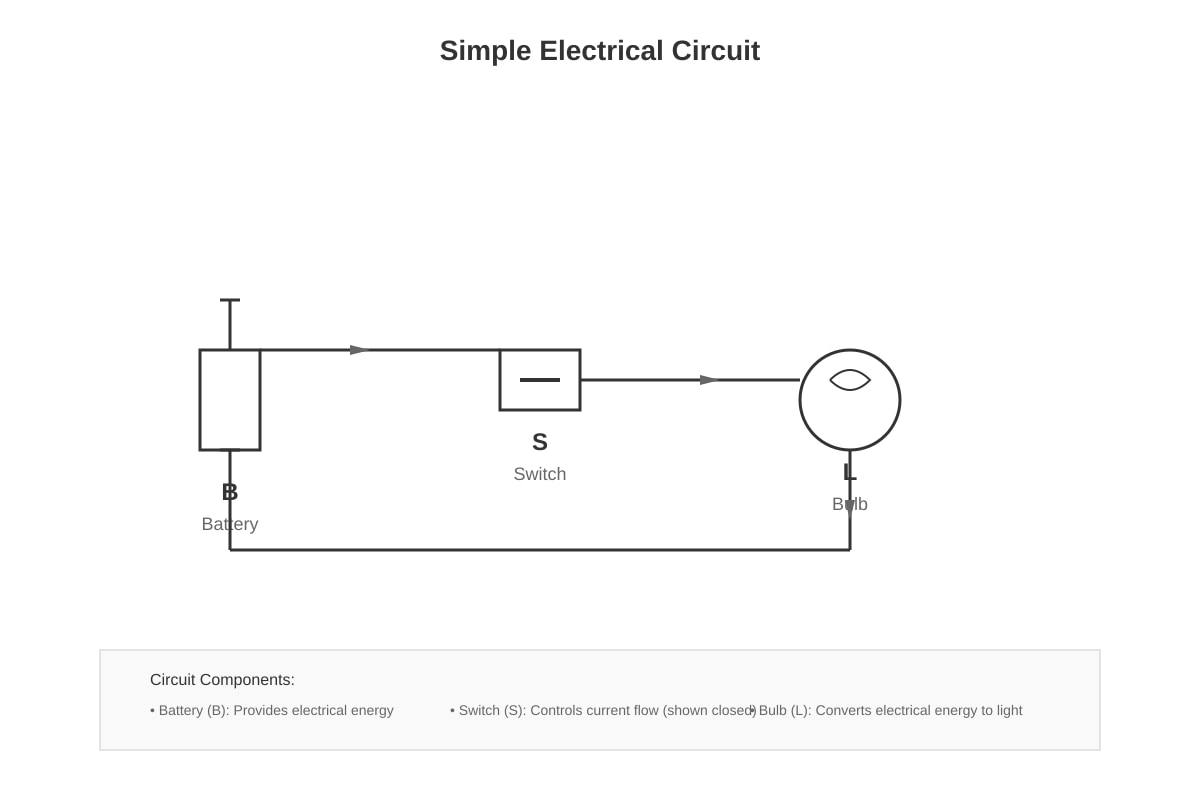
3. The diagram below shows a simple electrical circuit.

<image_placeholder> id: Q3-fig1 type: diagram linked_question: Q3 description: Simple series circuit with battery, switch, and bulb connected with wires labels: Battery (labelled B), Switch (labelled S), Bulb (labelled L), Wires connecting all components values: None must_show: Closed switch, complete circuit path from positive to negative terminal, standard circuit symbols for each component </image_placeholder>

What happens to the bulb when switch S is closed?

A) It lights up because the circuit is complete
B) It does not light up because there is no cell
C) It flickers because the circuit is broken
D) It lights up only if the battery is reversed

Answer: _________________________________


4. Which gas is taken in by humans during respiration and transported by the circulatory system?

A) Carbon dioxide
B) Nitrogen
C) Oxygen
D) Hydrogen

Answer: _________________________________


5. In the water cycle, what process occurs when water vapour rises and cools down in the atmosphere?

A) Evaporation
B) Condensation
C) Precipitation
D) Collection

Answer: _________________________________


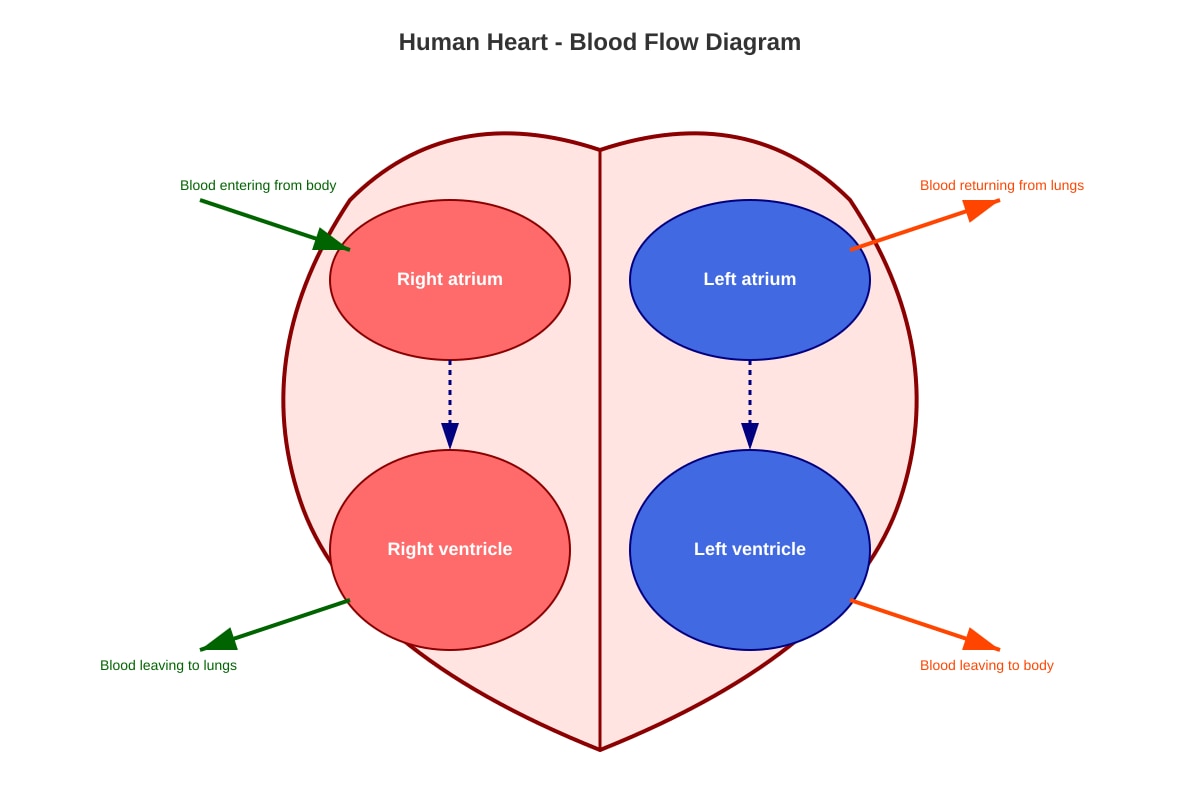
6. The diagram shows the human heart with blood flow directions indicated by arrows.

<image_placeholder> id: Q6-fig1 type: diagram linked_question: Q6 description: Simplified diagram of human heart showing four chambers with arrows indicating blood flow direction labels: Right atrium, Right ventricle, Left atrium, Left ventricle, Arrows showing blood entering from body, Arrows showing blood leaving to lungs, Arrows showing blood returning from lungs, Arrows showing blood leaving to body values: None must_show: Clear separation of right and left sides, direction arrows with correct flow pattern, labels on all four chambers </image_placeholder>

Blood returning from the lungs enters which chamber of the heart?

A) Right atrium
B) Right ventricle
C) Left atrium
D) Left ventricle

Answer: _________________________________


7. Which part of a plant's transport system carries food made in the leaves to other parts of the plant?

A) Xylem
B) Phloem
C) Root hair
D) Stem

Answer: _________________________________


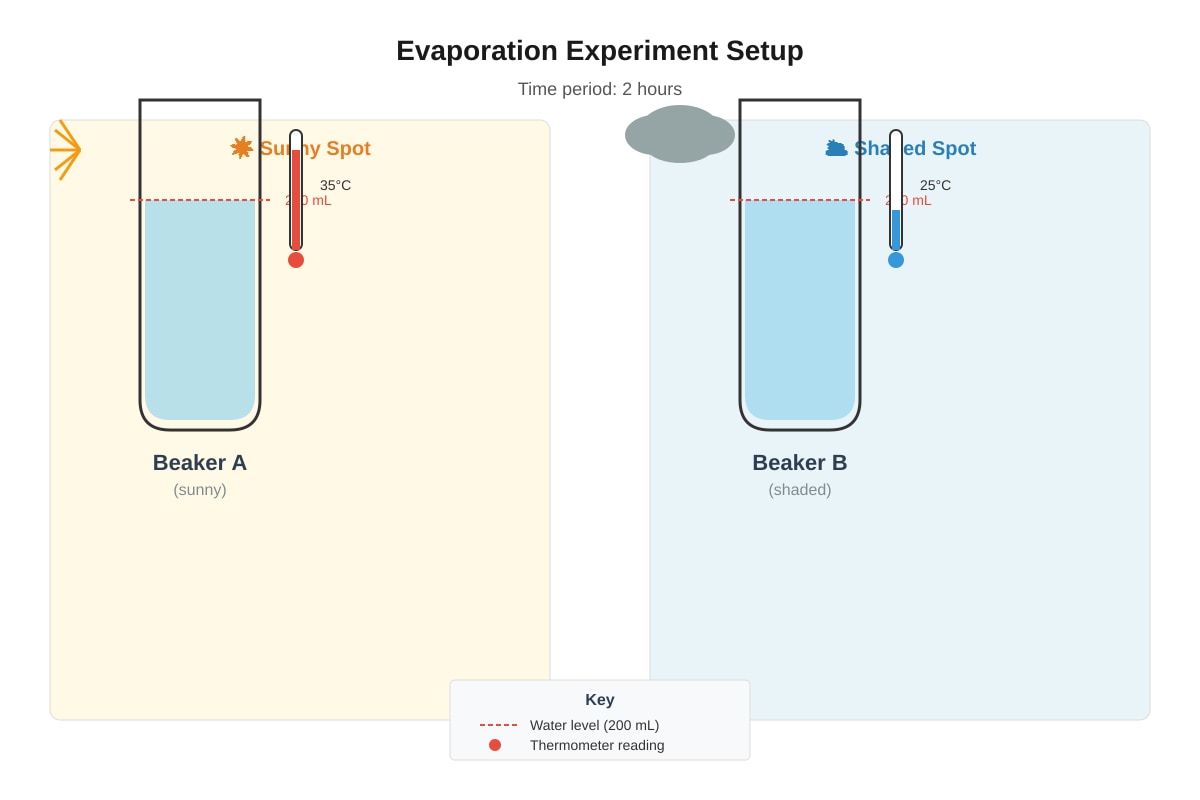
8. A student sets up two beakers as shown below to investigate evaporation.

<image_placeholder> id: Q8-fig1 type: experimental_setup linked_question: Q8 description: Two identical open beakers containing equal volumes of water, one placed in a sunny spot and one in a shaded spot labels: Beaker A (sunny), Beaker B (shaded), Equal water levels marked with lines, Thermometer symbols showing different temperatures values: 200 mL water in each beaker, temperature indicator ~35°C for A and ~25°C for B must_show: Identical beakers with same water volume, clear temperature difference indicated, labels showing location conditions, time period of 2 hours noted </image_placeholder>

After two hours, which beaker would likely have less water? What does this tell us about evaporation?

A) Beaker B; evaporation is faster in cooler places
B) Beaker A; evaporation is faster at higher temperatures
C) Beaker A; evaporation only happens in sunlight
D) Beaker B; shade prevents all evaporation

Answer: _________________________________


9. In an electrical circuit, what is the function of a switch?

A) To provide electrical energy to the circuit
B) To control whether the circuit is open or closed
C) To increase the voltage of the circuit
D) To convert electrical energy to light energy

Answer: _________________________________


10. Which of the following correctly matches the human organ system with its main function?

A) Respiratory system — Digests food and absorbs nutrients
B) Digestive system — Exchanges gases with the environment
C) Circulatory system — Transports substances around the body
D) Nervous system — Pumps blood to all parts of the body

Answer: _________________________________


Section B: Short Answer (Questions 11–18, 2 marks each)

Answer in the spaces provided.


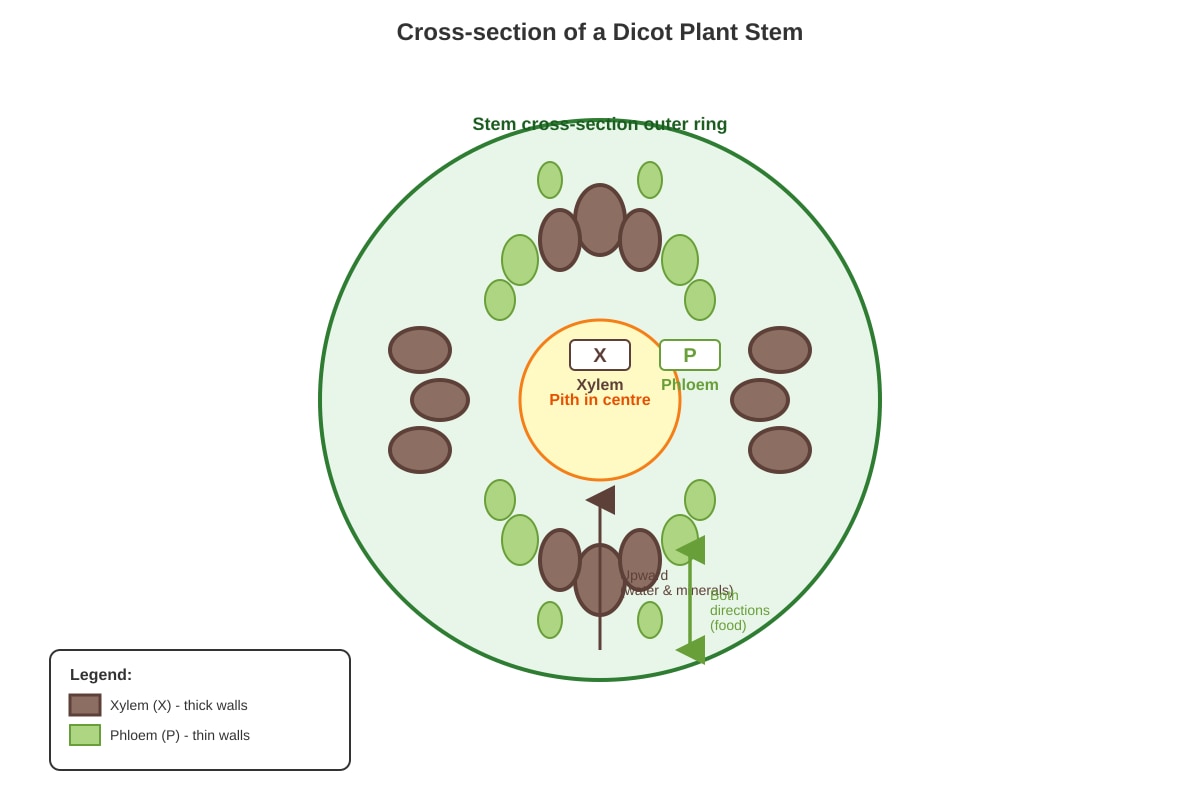
11. The diagram shows a simplified plant transport system.

<image_placeholder> id: Q11-fig1 type: diagram linked_question: Q11 description: Cross-section of plant stem showing xylem and phloem vessels arranged in a typical dicot stem pattern labels: Xylem (X), Phloem (P), Stem cross-section outer ring, Pith in centre values: None must_show: Xylem as thicker-walled vessels, phloem as thinner-walled vessels, clear labels with X and P, arrows showing upward direction for xylem and both directions for phloem </image_placeholder>

(a) Name the substance transported by structure X. [1]


(b) Explain why structure P is important for the plant's growth. [1]


12. Mei Ling measures her heart rate before and after running for 5 minutes.

ActivityHeart rate (beats per minute)
Before running72
After running135

(a) Explain why Mei Ling's heart rate increased after running. [1]


(b) Name one substance that her blood needed to transport more of to her muscles during running. [1]


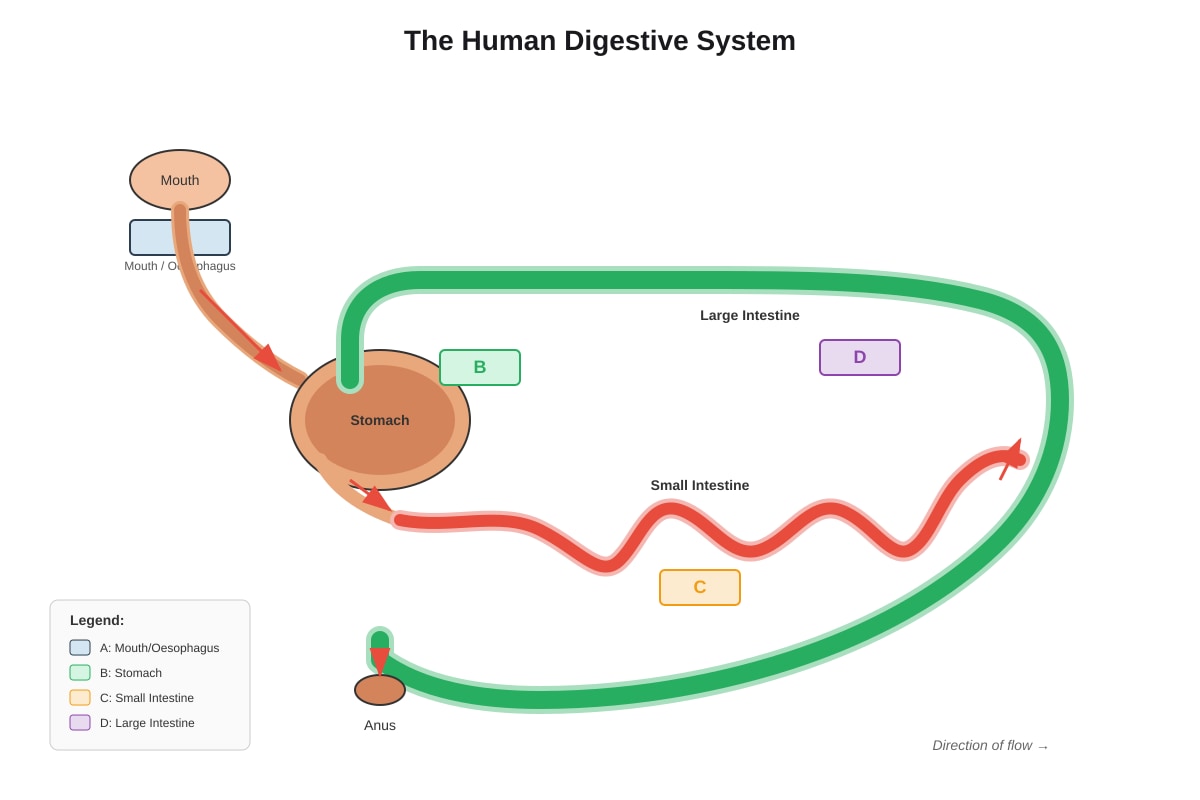
13. The diagram shows the human digestive system with parts labelled A, B, C, and D.

<image_placeholder> id: Q13-fig1 type: diagram linked_question: Q13 description: Simplified diagram of human digestive system from mouth to anus with four main parts labelled A-D labels: A (mouth/oesophagus area), B (stomach), C (small intestine), D (large intestine) values: None must_show: Flow direction from A to D, basic shape recognisable as digestive tract, clear label positions with A, B, C, D letters </image_placeholder>

(a) In which labelled part does most absorption of digested food into the blood occur? [1]


(b) Explain one adaptation of this part that helps with absorption. [1]


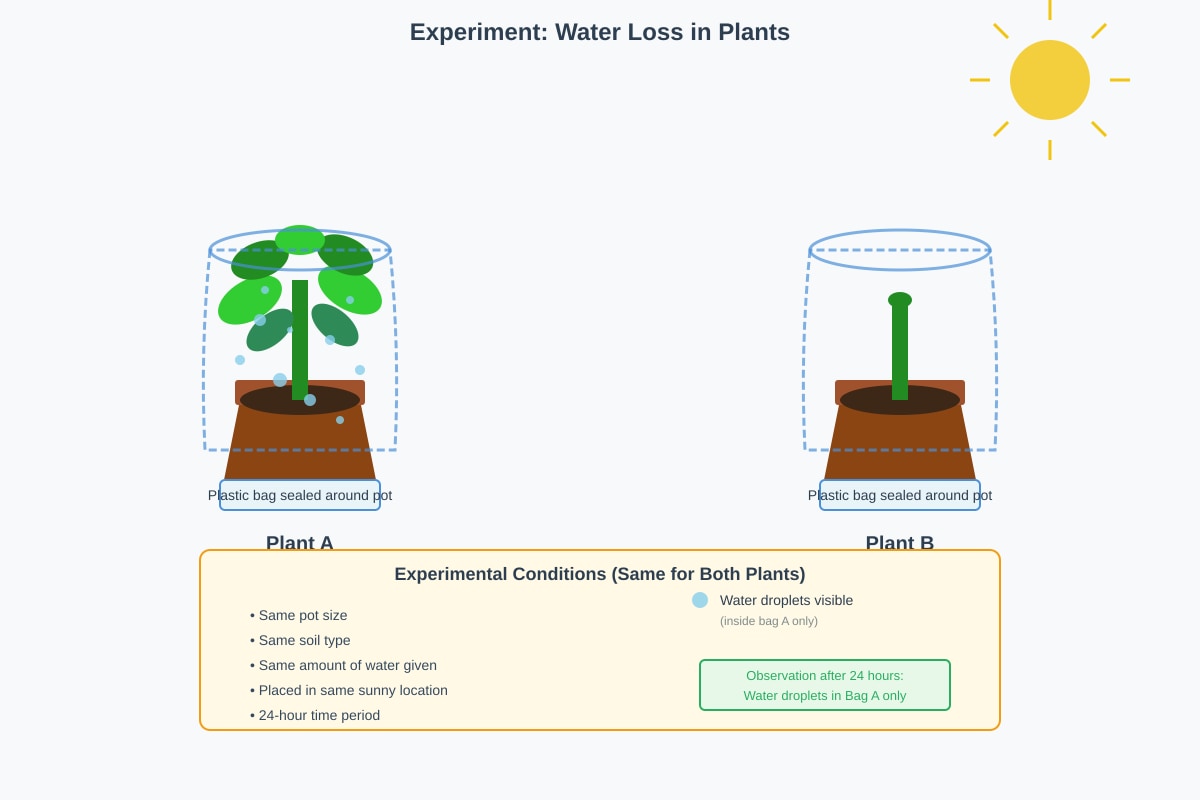
14. A student sets up an experiment to show that plants lose water through their leaves.

<image_placeholder> id: Q14-fig1 type: experimental_setup linked_question: Q14 description: Two identical potted plants in sealed transparent plastic bags, one with leaves intact and one with all leaves removed, placed in same sunny location labels: Plant A (with leaves), Plant B (without leaves), Plastic bags sealed around pots, Water droplets visible on inside of bag A only values: Same pot size, same soil type, same amount of water given, 24-hour time period must_show: Clear difference in water droplets between bags, labels identifying which plant has leaves, sealed bags around both, identical conditions </image_placeholder>

(a) What is the name of the process by which plants lose water through their leaves? [1]


(b) Explain why water droplets formed inside the bag around Plant A but not around Plant B. [1]


15. The diagram shows a circuit with two bulbs arranged in different ways.

<image_placeholder> id: Q15-fig1 type: diagram linked_question: Q15 description: Two circuit diagrams side by side showing same components arranged differently labels: Circuit X (bulbs in series with single switch and battery), Circuit Y (bulbs in parallel with single switch and battery), Bulb 1 and Bulb 2 in each, Battery labelled 3V, Switch S values: 3V battery, identical bulbs must_show: Series connection in X (single path), parallel connection in Y (branched paths), identical components, clear circuit symbols </image_placeholder>

(a) In which circuit, X or Y, would both bulbs still light up if one bulb is removed? [1]


(b) Explain your answer. [1]


16. The table shows information about three different animals and their heart rates.

AnimalBody sizeHeart rate (beats per minute)
MouseSmall600
HumanMedium72
ElephantLarge25

(a) Describe the pattern between body size and heart rate shown in the table. [1]


(b) Suggest why a mouse needs a faster heart rate than an elephant. [1]


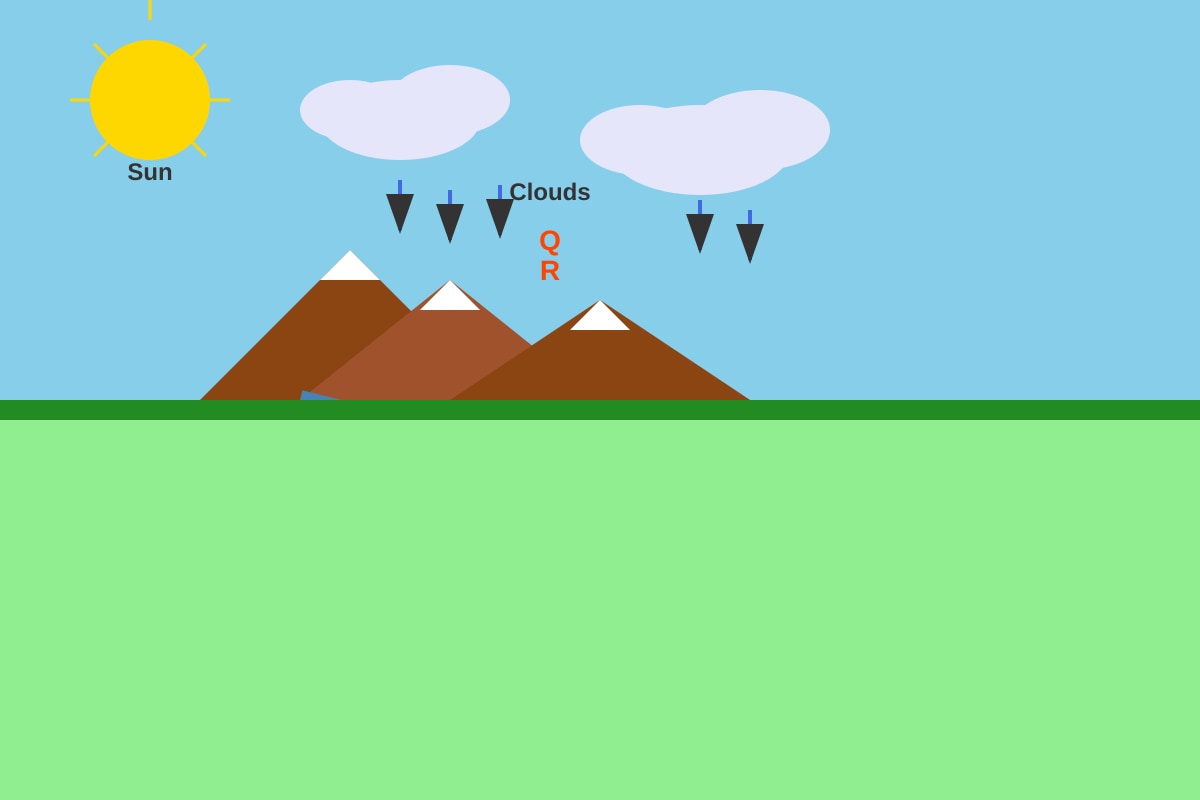
17. The diagram shows the water cycle with processes labelled P, Q, R, and S.

<image_placeholder> id: Q17-fig1 type: diagram linked_question: Q17 description: Standard water cycle diagram showing main processes and water stores labels: P (arrow from water surface rising upward), Q (clouds forming), R (rain falling), S (water flowing in river to sea), Sun, Clouds, Mountains, Sea/Lake, River values: None must_show: P as upward arrows from water surface, Q as cloud formation stage, R as downward arrows from clouds, S as horizontal flow in river, sun providing energy, complete cyclic pattern </image_placeholder>

(a) Name the processes labelled P and R. [1]

P: _________________________________________________________________

R: _________________________________________________________________

(b) Explain why the Sun is important for process P to occur. [1]


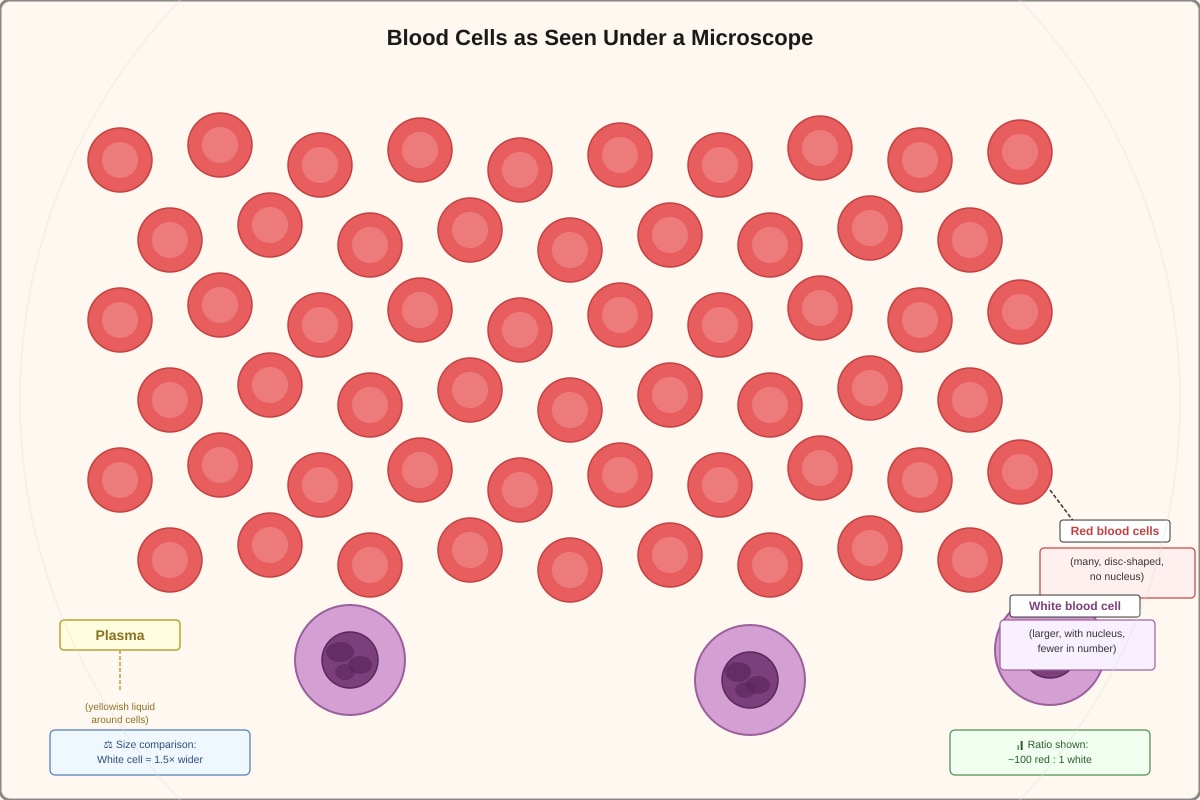
18. The diagram shows blood cells as seen under a microscope.

<image_placeholder> id: Q18-fig1 type: diagram linked_question: Q18 description: Microscope view of blood smear showing two main types of cells - red blood cells and white blood cells labels: Red blood cells (many, disc-shaped, no nucleus), White blood cell (larger, with nucleus, fewer in number), Plasma values: Typical ratio shown visually as ~100 red cells to 1 white cell must_show: Biconcave disc shape of red cells, presence of nucleus in white cell only, relative size difference, clear labels </image_placeholder>

(a) Explain how the shape of the red blood cell helps it to carry out its function. [1]


(b) Give one difference, other than shape, between red blood cells and the white blood cell shown. [1]


Section C: Application and Analysis (Questions 19–20, 4 marks each)

Answer in the spaces provided. Show your reasoning clearly.


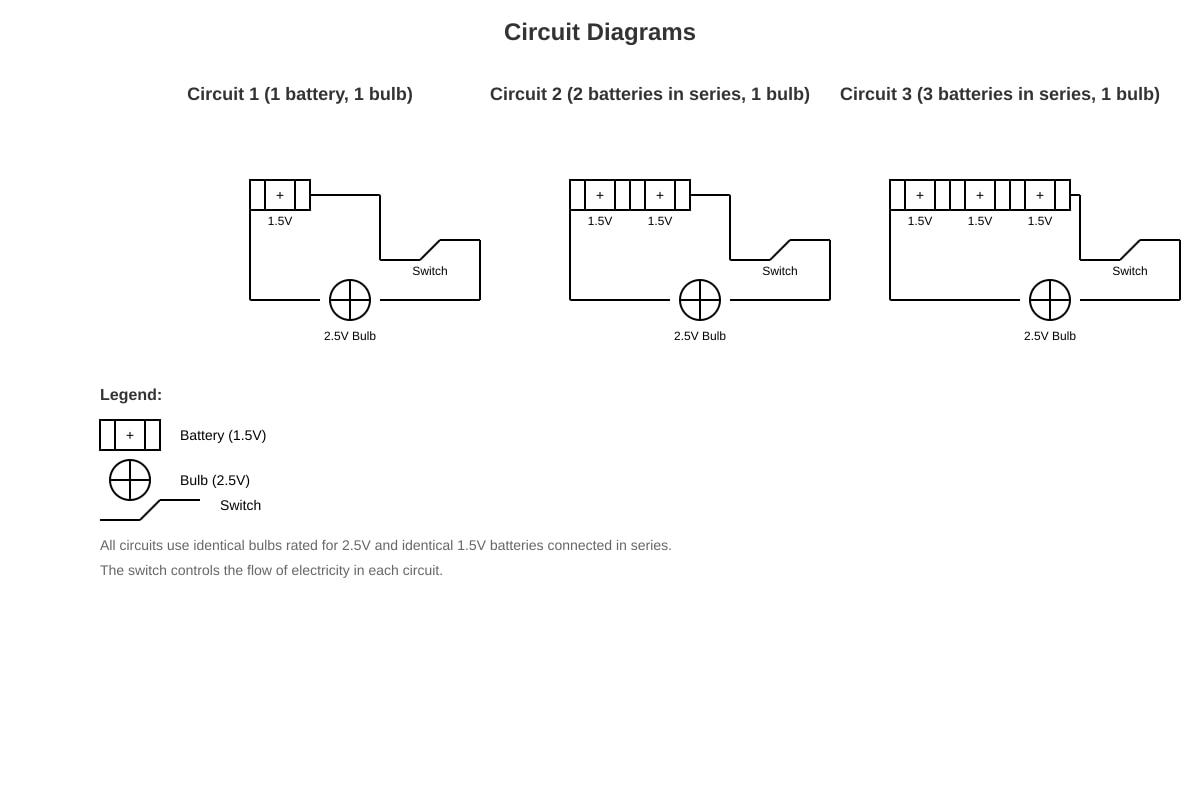
19. David investigates how the number of batteries in a circuit affects the brightness of a bulb. He sets up the following circuits:

<image_placeholder> id: Q19-fig1 type: diagram linked_question: Q19 description: Three circuit diagrams showing same bulb with different numbers of identical batteries in series labels: Circuit 1 (1 battery, 1 bulb), Circuit 2 (2 batteries in series, 1 bulb), Circuit 3 (3 batteries in series, 1 bulb), All with same bulb type and switch values: 1.5V batteries, identical bulbs rated for 2.5V must_show: Series connection of batteries, increasing number from 1 to 3, same bulb symbol in each, same switch, clear battery symbols with + and - marked </image_placeholder>

CircuitNumber of batteriesBulb brightness
11Dim
22Normal
33Very bright

(a) Explain why the bulb in Circuit 3 is brighter than in Circuit 1. [2]


(b) David adds a second bulb in series to Circuit 3. Predict what would happen to the brightness of both bulbs compared to the single bulb in Circuit 3. Explain your answer. [2]


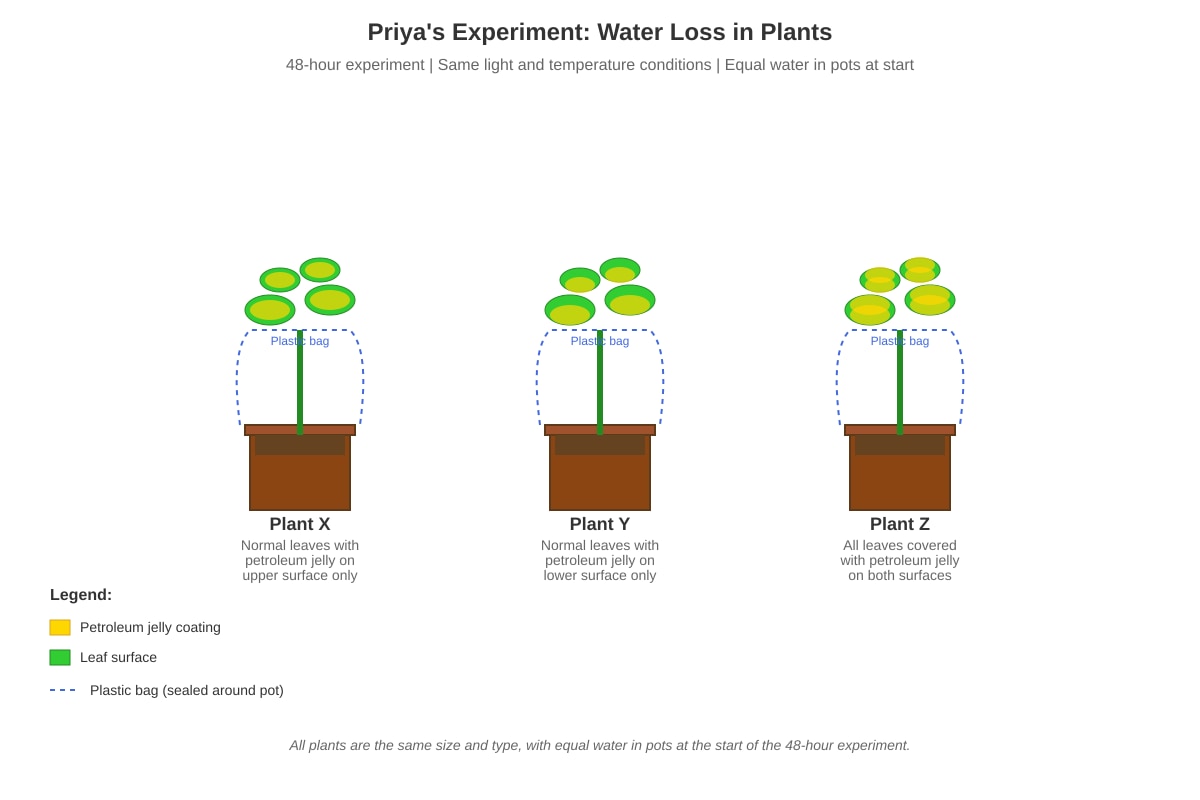
20. Priya investigates water loss in plants. She sets up the following experiment:

<image_placeholder> id: Q20-fig1 type: experimental_setup linked_question: Q20 description: Three similar potted plants with different leaf conditions placed in same conditions labels: Plant X (normal leaves with petroleum jelly on upper surface only), Plant Y (normal leaves with petroleum jelly on lower surface only), Plant Z (all leaves covered with petroleum jelly on both surfaces), Plastic bags around pots, Same plant size and type values: Equal water in pots at start, 48-hour experiment, same light and temperature conditions must_show: Clear difference in jelly application, labels on each plant, sealed bags around pots, identical plant size and pot type, control setup </image_placeholder>

After 48 hours, Priya observes the following:

PlantWater droplets in bagAmount of water left in pot
XFewMost
YManyLeast
ZNoneMost

(a) Explain why Plant Y lost the most water. [2]


(b) Stomata are tiny openings found mainly on the lower surface of leaves. Using the information from Priya's experiment, explain why you think most stomata are found on the lower surface rather than the upper surface of leaves. [2]


END OF QUIZ

Answers

<!-- TuitionGoWhere generation metadata: stage=5-1; model=moonshotai/kimi-k2.6:free; model_label=Kimi K2.6 Free; generated=2026-06-09; Sources: Stage 4-0 LLM templates, syllabus context, and Stage 2 evidence where available. -->

Primary 5 Science Quiz - Systems: Answer Key

Total Marks: 40 marks


Section A: Multiple Choice (1 mark each)

1. C — Producing red blood cells in the lungs

Explanation: Red blood cells are produced in the bone marrow, not the lungs. The circulatory system does transport oxygen (A), remove waste (B), and transport nutrients from digested food (D). Lungs are for gas exchange, not blood cell production.


2. B — Xylem

Explanation: Xylem vessels transport water and dissolved mineral salts from the roots up to the leaves and other parts of the plant. Phloem (A) transports food, not water. Stomata (C) are pores for gas exchange, not vessels. Vein (D) is a term used in animals, not plant transport tissue.


3. A — It lights up because the circuit is complete

Explanation: When the switch is closed, the circuit forms a complete loop from the positive terminal of the battery, through the switch and bulb, back to the negative terminal. Electric current can flow, so the bulb lights up. For a bulb to light, we need a complete circuit with a power source (battery), not just any closed loop.


4. C — Oxygen

Explanation: During respiration, humans take in oxygen from the air. This oxygen is absorbed into the blood in the lungs and transported by red blood cells to all body cells. Cells use oxygen to release energy from food. Carbon dioxide (A) is a waste product released, not taken in.


5. B — Condensation

Explanation: Condensation is the process where water vapour cools down and changes back into liquid water droplets, forming clouds. Evaporation (A) is when liquid water turns to vapour (happens at the surface of water bodies). Precipitation (C) is water falling as rain, snow, etc. Collection (D) is water gathering in oceans, lakes, etc.


6. C — Left atrium

Explanation: Blood returning from the lungs (oxygen-rich blood) enters the left atrium of the heart. From there it passes to the left ventricle and is pumped out to the body. The right side (A and B) receives deoxygenated blood returning from the body and pumps it to the lungs. Remember: "Left = Lungs return" helps recall this flow pattern.


7. B — Phloem

Explanation: Phloem transports food (sugar/glucose) made during photosynthesis in the leaves to all other parts of the plant, including roots, fruits, and growing areas. Xylem (A) carries water upward only. This transport of food in phloem is sometimes called translocation.


8. B — Beaker A; evaporation is faster at higher temperatures

Explanation: Beaker A in the sunny spot has a higher temperature. Higher temperature gives water particles more kinetic energy, so more particles can escape from the liquid surface as water vapour. Evaporation occurs at any temperature (not only in sunlight as C suggests), and shade does not prevent all evaporation (D is wrong) — it just slows it down.


9. B — To control whether the circuit is open or closed

Explanation: A switch is a control device. When open (off position), it breaks the circuit so current cannot flow. When closed (on position), it completes the circuit so current can flow. The battery (A) provides energy, not the switch. Voltage increase (C) and energy conversion (D) are functions of other components.


10. C — Circulatory system — Transports substances around the body

Explanation: The circulatory system (heart, blood, blood vessels) transports oxygen, nutrients, hormones, and waste products. A is wrong because digestion is the digestive system's role. B is wrong because gas exchange is the respiratory system. D is wrong because pumping blood is the heart's function within the circulatory system, not the nervous system's.


Section B: Short Answer (2 marks each)

11. (a) Water and mineral salts [1]

(b) Phloem transports food/sugars made in leaves to other parts of the plant [1]. Without this, roots and other non-photosynthetic parts would not receive the energy they need to grow and survive.

Note: Accept "food," "sugar," or "glucose." The explanation must mention transport to other parts of the plant.


12. (a) The muscles need more oxygen and nutrients/there is more carbon dioxide to remove [1]. The heart pumps faster to deliver more oxygenated blood and remove more waste products.

(b) Oxygen [1] (accept carbon dioxide, glucose, nutrients)

Explanation: During exercise, muscle cells respire faster and need more oxygen to release energy. The heart rate increases to pump blood faster around the body. Common mistake: saying "oxygen" alone without explaining why more is needed.


13. (a) Part C [1]

(b) It has villi / it is very long / it has thin walls / good blood supply [1]

Explanation: The small intestine (C) is the main site of absorption. Villi are tiny finger-like projections that massively increase the surface area for absorption. The walls are one-cell thick, allowing quick diffusion into blood. Long length (~6 metres in adults) provides more time and surface for absorption.


14. (a) Transpiration [1]

(b) Plant A has leaves with stomata through which water vapour escapes [1]. Plant B has no leaves, so no transpiration can occur / water cannot escape. The water vapour condenses on the cooler inside surface of the plastic bag.

Explanation: Transpiration is the loss of water vapour from plant leaves through stomata. The sealed bag traps this water vapour, which condenses into visible droplets. Without leaves, this process cannot happen.


15. (a) Circuit Y [1]

(b) In a parallel circuit, there are multiple paths for current [1]. If one bulb is removed/breaks, current can still flow through the other path. In series (Circuit X), there is only one path, so removing one bulb breaks the entire circuit.

Key concept: Parallel circuits provide independent paths; series circuits have dependent components.


16. (a) As body size increases, heart rate decreases / there is an inverse relationship [1]

(b) Smaller animals lose heat faster (have higher surface area to volume ratio) [1], so they need faster blood circulation to maintain body temperature / deliver more energy for heat production.

Alternative answer: Smaller animals have higher metabolic rates and need to transport oxygen and nutrients faster to supply their active cells.


17. (a) P: Evaporation [0.5]; R: Precipitation [0.5]

(b) The Sun provides heat energy [0.5] which causes water particles to gain kinetic energy and change from liquid to gas / water vapour [0.5].

Explanation: Evaporation requires energy input. The sun's thermal energy increases the kinetic energy of water molecules at the surface of water bodies, allowing them to escape into the air as water vapour.


18. (a) The biconcave (doughnut/disc) shape increases surface area [0.5] for absorbing oxygen / allows more oxygen to be carried [0.5]

(b) Red blood cells have no nucleus / red blood cells contain haemoglobin / white blood cells fight germs while red blood cells carry oxygen / there are more red blood cells than white blood cells [1]

Note: Any valid difference other than shape is acceptable. The no-nucleus feature allows more space for haemoglobin, the iron-containing protein that binds oxygen.


Section C: Application and Analysis (4 marks each)

19. (a) More batteries in series provide higher total voltage [1]. The voltage adds up (1.5V + 1.5V + 1.5V = 4.5V in Circuit 3 vs 1.5V in Circuit 1) [1]. Higher voltage pushes more current through the bulb, making it brighter. Note: Accept conceptual explanation without calculation.

Marking breakdown: [1] for recognising voltage increases with more batteries; [1] for linking higher voltage to more current/brightness.

(b) Both bulbs would be dimmer than the single bulb in Circuit 3 [1]. In a series circuit, the voltage is shared between components / there is only one path so resistance increases / current decreases through each bulb [1].

Explanation: With two bulbs in series, the total resistance increases and each bulb gets only part of the total voltage. The current through both bulbs is the same but less than with one bulb, so both glow less brightly. This is a key difference between series and parallel arrangements.


20. (a) Plant Y had petroleum jelly only on the upper surface, leaving the lower surface with stomata uncovered [1]. Water vapour could still escape through stomata on the lower surface / more stomata are on the lower surface, so water loss was greatest [1].

Explanation: The petroleum jelly blocks stomata and prevents transpiration. By only covering the upper surface, Plant Y still had functional stomata on the lower surface where most stomata are located.

(b) Plant X (upper surface covered) lost little water, while Plant Y (lower surface covered) lost much water [1]. This shows that most stomata must be on the lower surface / if stomata were mainly on top, Plant X would have lost the most water [1].

Explanation: The experimental results provide evidence: minimal water loss when upper surface is blocked (Plant X) but major water loss when lower surface is blocked (Plant Y). Therefore, the lower surface must have more stomata. This is an adaptation to reduce water loss — lower stomata are shaded from direct sun and wind.

Note: Accept answers that correctly interpret the pattern even if phrased differently. The key is using the data pattern to infer stomata location.


END OF ANSWER KEY