AI Generated Quiz
Primary 5 Science Systems Quiz
Free P5 Science Systems quiz, HY3 AI version, with questions, answers, and syllabus-aligned practice for Singapore students.
These static practice materials are generated from the site's syllabus and paper-generation workflow, with source and model context shown so students and parents can evaluate the material before use.
Questions
Free quiz and exam paper access
Enter your details to view this paper
Your access is remembered on this device.
Answers
Primary 5 Science Quiz - Systems (Answer Key)
Total Marks: 40
Topic: Systems (Plant Transport, Human Respiratory & Circulatory, Electrical Systems)
Note: Syllabus-first content from LLM-inferred templates; not past-year exam derived.
Section A Answers (1 mark each)
-
B) Water-carrying tube
Teaching note: Plants have tubes inside the stem. The water-carrying tube moves water from roots up to leaves. Food-carrying tube moves made food down. Choice B is correct. -
C) Heart
Teaching note: Nose, windpipe, lungs are respiratory parts. Heart belongs to circulatory system, not respiratory. -
C) Oxygen
Teaching note: Air has nitrogen, oxygen, carbon dioxide, water vapour. Humans need oxygen for life processes; carbon dioxide is given out. -
B) A closed circuit
Teaching note: Current flows only when circuit is closed (complete loop). Open switch breaks loop. -
C) Iron
Teaching note: Metal like iron lets current pass (conductor). Rubber, wood, plastic stop current (insulators). -
B) To pump blood around the body
Teaching note: Heart is a muscle that pushes blood through blood vessels. -
B) To transport oxygen and digested food
Teaching note: Circulatory system uses blood vessels to carry oxygen and food to cells, and carbon dioxide away. -
B) Water cannot reach the leaves
Teaching note: Blocked water-carrying tubes stop water movement; leaves lose support and wilt. -
C) Glass rod
Teaching note: Glass does not conduct electricity; metal items in A, B, D are conductors. -
B) gills
Teaching note: Fish live in water and use gills to take dissolved oxygen from water; humans use lungs for air.
Section B Answers (2 marks each)
- Two parts + one function each (1 mark per part):
- Nose: lets air enter the body (or warms/filters air).
- Windpipe: carries air to the lungs.
- Lungs: where oxygen enters blood and carbon dioxide leaves.
Accept any two with correct function. Marking: 1 mark each.
-
Open switch = broken loop (1m); current cannot flow (1m).
Teaching note: A switch open means the wire path is broken. Without a closed path, electricity cannot move, so bulb stays off. -
Food via food-carrying tube (1m); water via water-carrying tube (1m).
Teaching note: Plants use two tube types: one for water up, one for food made in leaves to other parts. -
Any two differences (1m each), e.g.:
- Plants use tubes; humans use blood vessels.
- Plants move water and food in tubes; humans move blood with oxygen/food/CO₂ in vessels.
- Plants do not have a heart; humans use heart to pump.
Marking: 1 mark per valid difference.
-
They must work together so body gets oxygen and food (1m) and removes waste (1m).
Teaching note: Digestive breaks food, circulatory carries it, respiratory gives oxygen. All needed for cells to live. -
Two insulators (1m) + reason used (1m), e.g.:
- Plastic: covers wires so user safe from shock.
- Rubber: handles of tools stop current to user.
Marking: 0.5–1m per example depending on clarity.
Section C Answers (3 marks each)
- Three reasons (1m each):
- Battery dead / not connected: no energy source → no current.
- Wire broken / loose: open circuit → current stops.
- Bulb fused / wrong type: no light even if current flows.
- Switch open: breaks loop.
Any three with brief explanation. Marking descriptors: 1m per correct cause + link to no light.
-
Water enters roots (1m) → moves up water-carrying tube (1m) → reaches leaves (1m).
Teaching note: Root hairs take in water from soil. Tube connects root to leaf. This is passive transport by tube structure. No xylem/phloem terms required by syllabus.* -
Similarity (1m): Both take in oxygen and give out carbon dioxide.
Differences (2m):
- Human uses lungs and air; fish uses gills and water (1m).
- Human gets oxygen from air; fish gets dissolved oxygen from water (1m).
Marking: 1m similarity, 1m per difference.
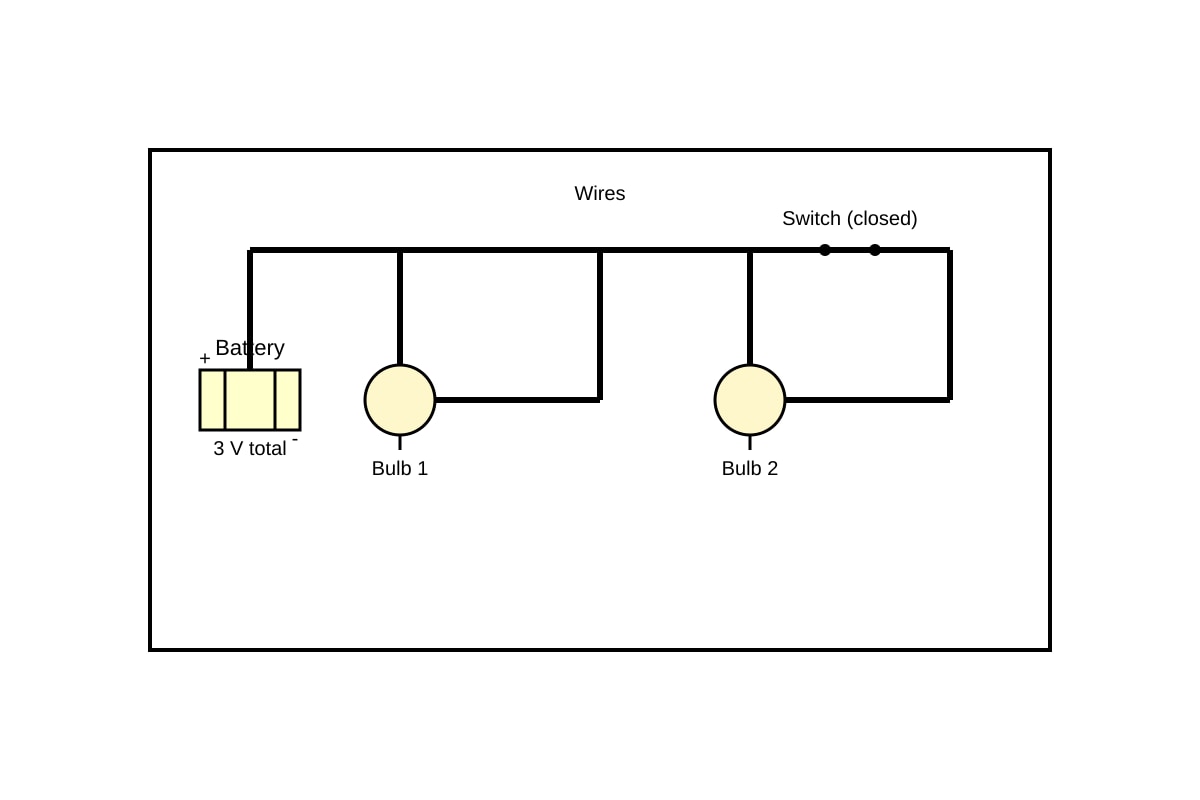
- Other bulb goes out (1m). In series, one loop (1m); removing bulb breaks circuit so no current to either (1m).
Visual check: Image must show both bulbs in single loop with closed switch. If bulb removed, loop open.
Teaching note: Series means same path. Break at any point stops all current.