AI Generated Quiz
Primary 5 Science Life Cycles Quiz
Free P5 Science Life Cycles quiz, Kimi2.6 AI version, with questions, answers, and syllabus-aligned practice for Singapore students.
These static practice materials are generated from the site's syllabus and paper-generation workflow, with source and model context shown so students and parents can evaluate the material before use.
Questions
Free quiz and exam paper access
Enter your details to view this paper
Your access is remembered on this device.
Answers
Primary 5 Science Quiz - Life Cycles (Answer Key)
Total Marks: 40 marks
Section A: Multiple Choice (Questions 1–8)
1. B — Egg → Larva → Pupa → Adult [1 mark]
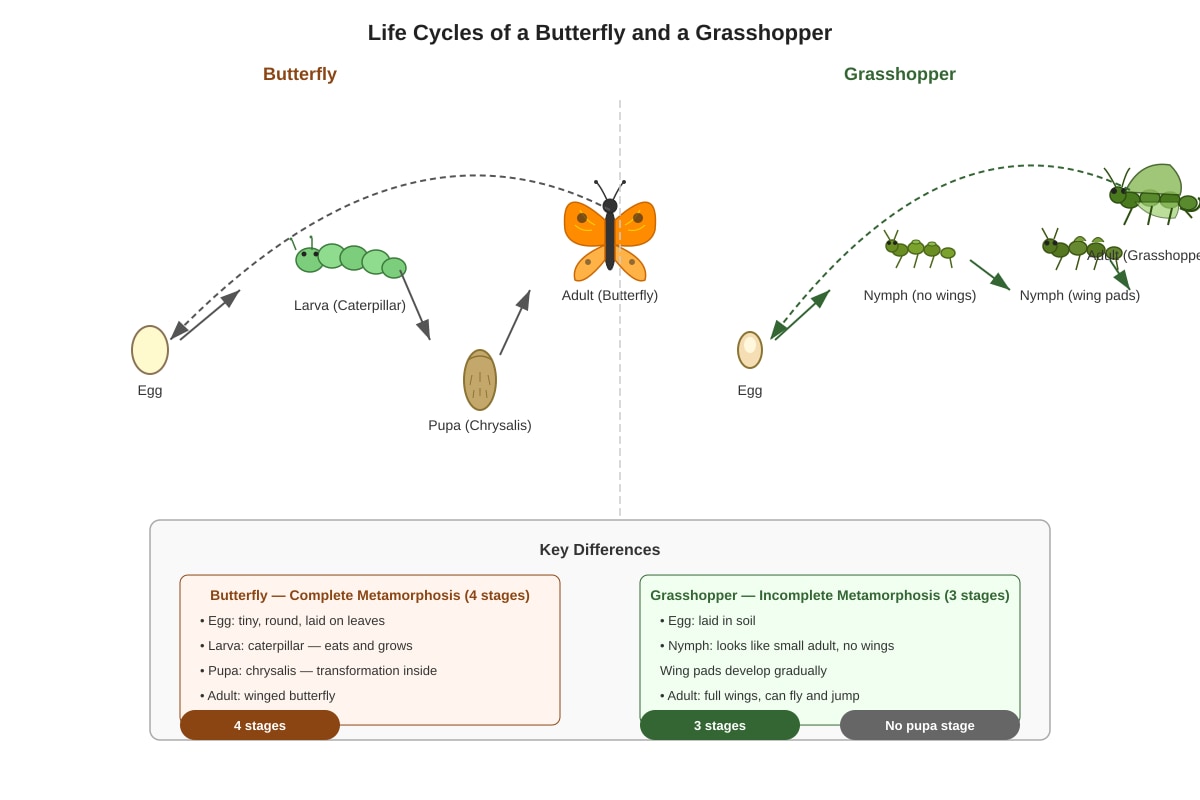
Explanation: The life cycle of a butterfly has four stages called complete metamorphosis. The larva (caterpillar) hatches from the egg, eats and grows, then forms a pupa (chrysalis) where it transforms into an adult butterfly. This is different from incomplete metamorphosis which has only three stages and no pupa stage.
2. B — anther to the stigma [1 mark]
Explanation: Pollination is the transfer of pollen grains from the anther (male part) to the stigma (female part). The anther is at the top of the filament and produces pollen. The stigma is at the top of the style and is sticky to catch pollen. After pollination, fertilisation can occur when the pollen tube grows down to the ovary.
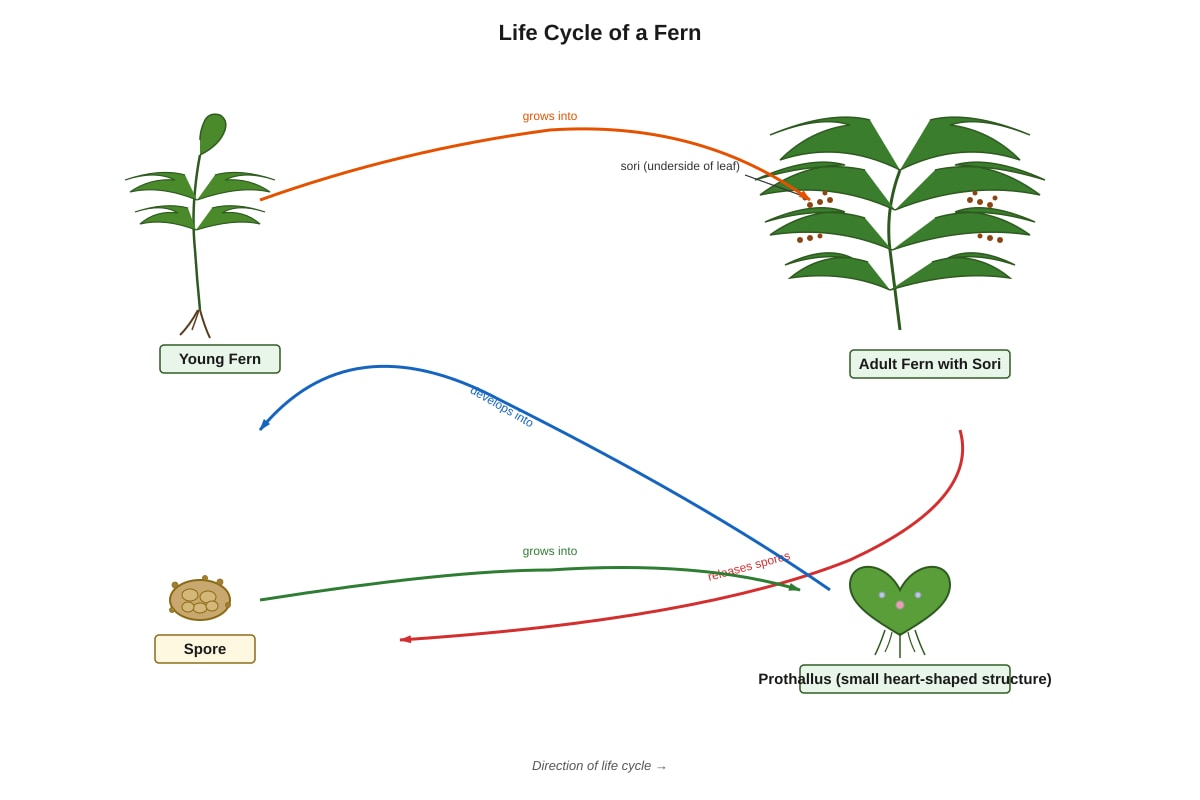
3. B — spores [1 mark]
Explanation: Ferns do not produce flowers, fruits, or seeds. They reproduce by producing spores in structures called sori (singular: sorus) on the underside of their fronds (leaves). When spores land in a damp place, they grow into a small heart-shaped structure called a prothallus, which produces male and female cells for fertilisation. This is different from seed-producing plants like flowering plants and conifers.
4. B — taking stem cuttings from the parent plant [1 mark]
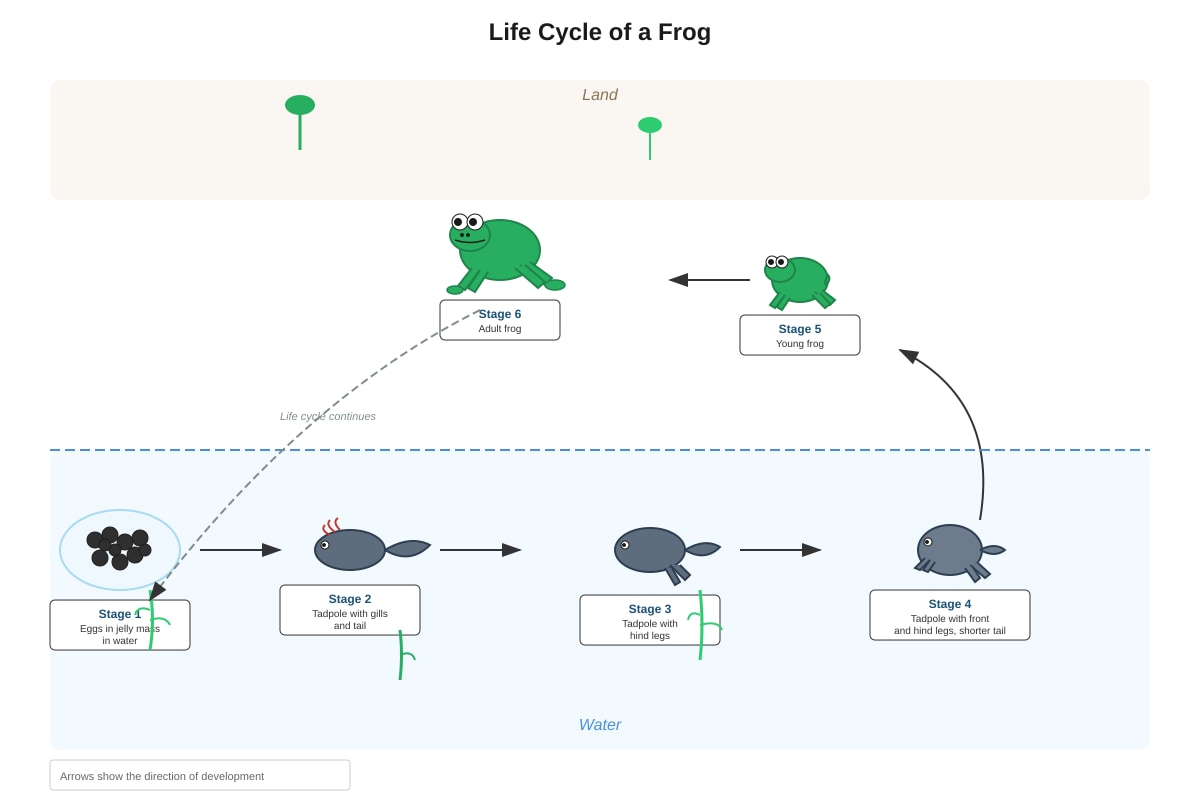
Explanation: Stem cuttings are a method of asexual (vegetative) reproduction. The new plants produced will be genetically identical to the parent plant because they come directly from the parent's body tissue, not from seeds formed by sexual reproduction. Growing from seeds (options A and C) involves sexual reproduction with pollination and fertilisation, which produces variation. Cross-pollination (option D) deliberately creates different combinations of characteristics.
5. A — P: mosquito, Q: chicken, R: butterfly [1 mark]
Explanation: Mosquitoes have four stages (egg, larva, pupa, adult) with early stages in water — complete metamorphosis. Chickens have three stages (egg, chick, adult) with development on land. Butterflies have four stages (egg, larva, pupa, adult) with all stages on land. Frogs have 3 stages (egg, tadpole, adult) with early development in water, not 4 stages. Grasshoppers have incomplete metamorphosis (3 stages: egg, nymph, adult) with development on land.
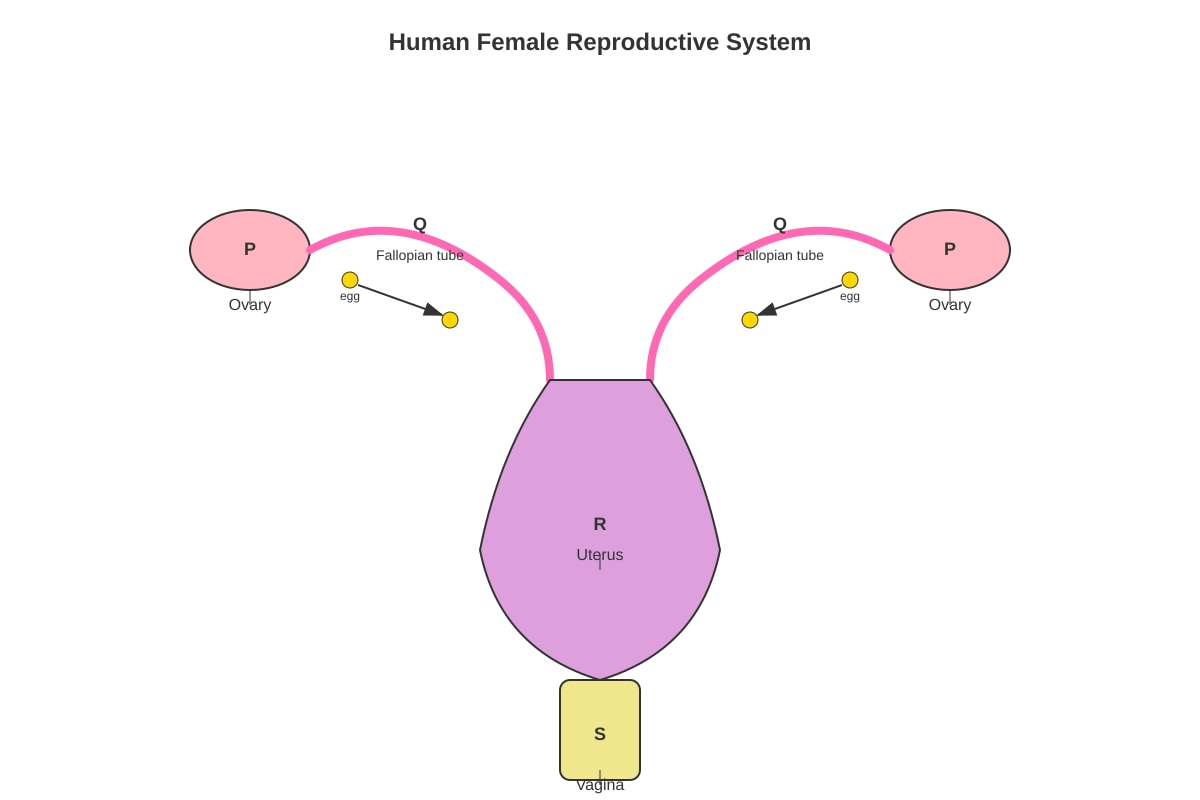
6. C — fallopian tube [1 mark]
Explanation: Fertilisation occurs when a male reproductive cell (sperm) fuses with a female reproductive cell (egg) in the fallopian tube (also called the oviduct). The fertilised egg then travels to the uterus where it develops into a baby. The ovary produces eggs, the uterus is where the baby develops, and the vagina is the birth canal.
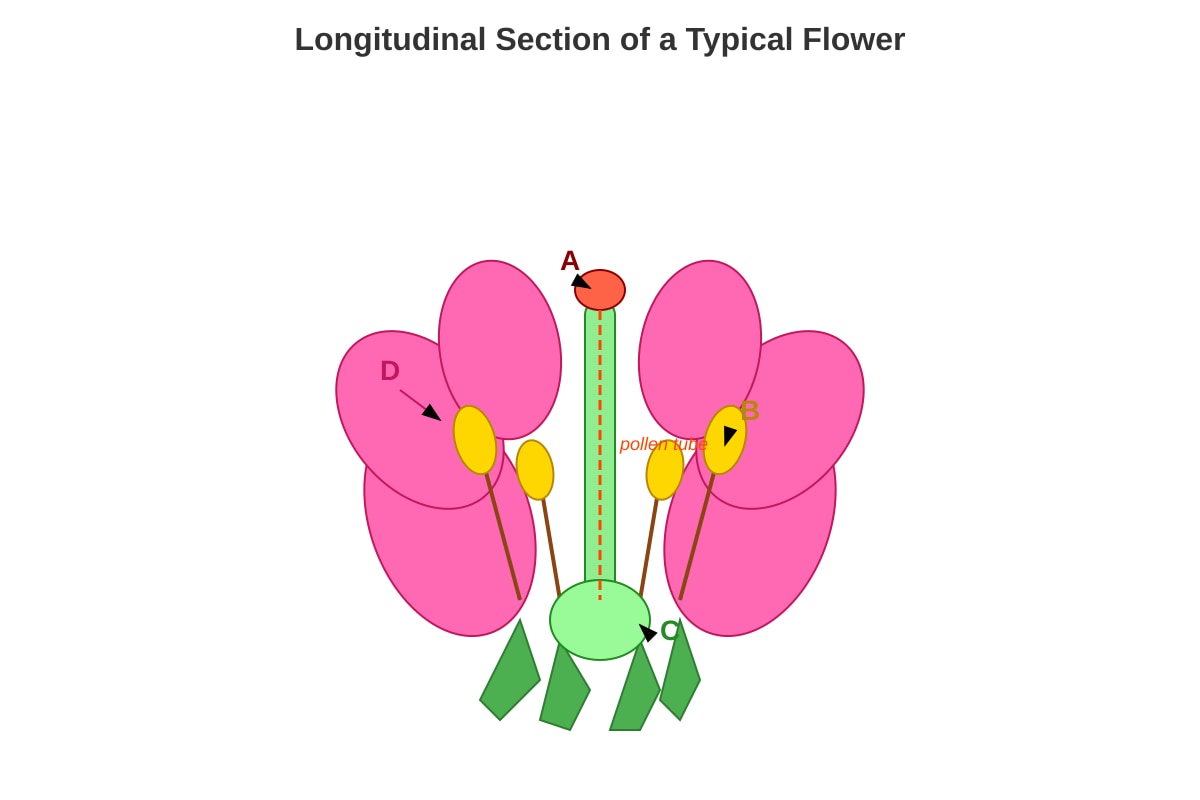
7. B — B [1 mark]
Explanation: Part B is the anther, which is the top part of the stamen (the male reproductive organ). The anther produces pollen grains which contain the male reproductive cells. Part A is the stigma (female, receives pollen), part C is the ovary (female, contains ovules), and part D is the petal (attracts pollinators).
8. B — a seed develops into a young plant [1 mark]
Explanation: Germination is the process where a seed begins to grow and develop into a new plant. It requires water, air (oxygen), and a suitable temperature. Fertilisation (option A) is the fusion of male and female reproductive cells. Fruit development (option C) happens after fertilisation in flowering plants. Spore release (option D) is how ferns and some other plants reproduce, not germination.
Section B: Fill in the Blanks and Short Answer (Questions 9–14)
9. (a) anther; stamen [1 mark]
Explanation: The stamen is the male reproductive organ of a flower. It has two parts: the filament (stalk) and the anther (top part that produces pollen grains). This is the first step in sexual reproduction in flowering plants.
(b) ovule; ovary [1 mark]
Explanation: After pollination and fertilisation, the ovule (which contains the female reproductive cell) develops into a seed. The ovary (which contains the ovules) develops into a fruit that protects the seeds and helps in seed dispersal. This is why fruits contain seeds.
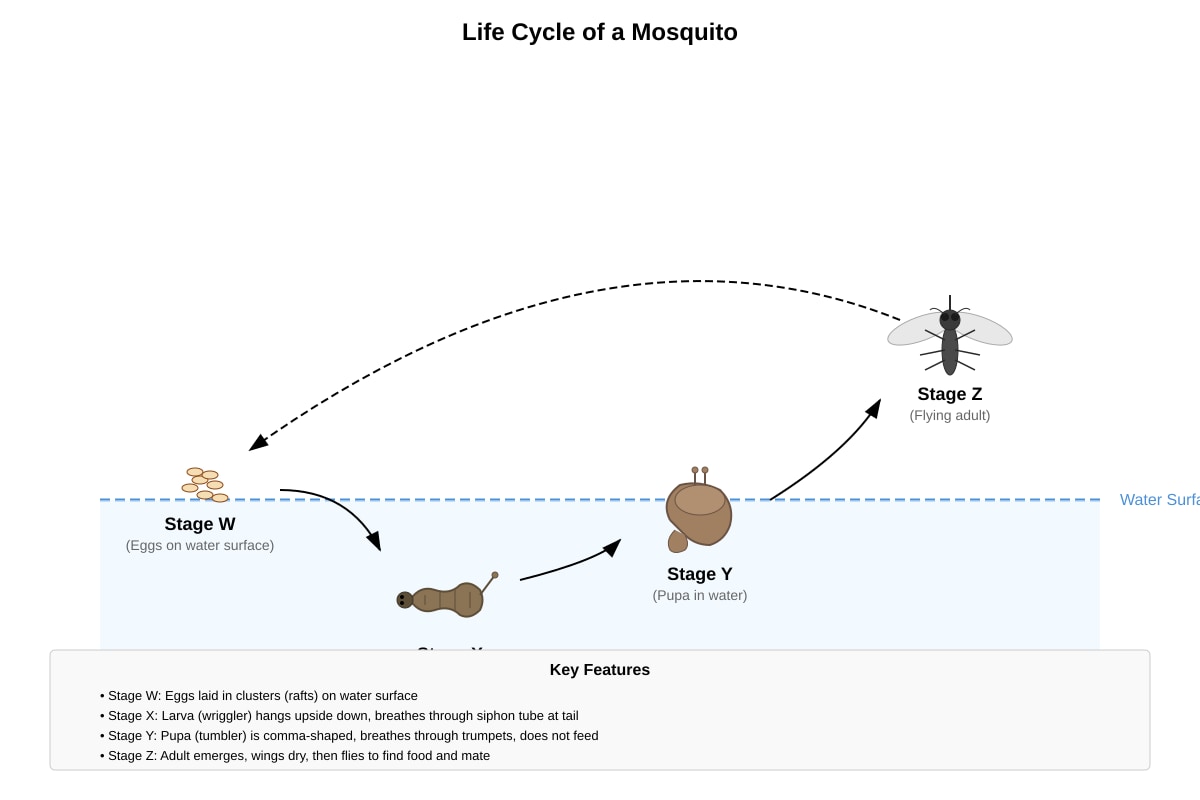
10. (a) W: egg; X: larva; Y: pupa; Z: adult [2 marks]
Marking: 1 mark for 2–3 correct answers; 2 marks for all 4 correct. Deduct for incorrect spellings if meaning is unclear.
(b) The mosquito's life cycle has four distinct stages (egg → larva → pupa → adult) with a pupa stage where the larva undergoes a complete change in body form. [1 mark]
Explanation: Complete metamorphosis means the young (larva) looks completely different from the adult and there is a non-feeding, resting pupa stage in between where the body is reorganised. Incomplete metamorphosis (like in grasshoppers) has no pupa stage — the nymph looks like a small adult.
11. (a) Fallopian tube / Oviduct [1 mark]
Explanation: The fallopian tube (also called oviduct) is the tube that carries the egg from the ovary to the uterus. This is where fertilisation normally occurs.
(b) Fertilisation must occur at Q (fallopian tube) because if it occurred at R (uterus), the fertilised egg would not be able to implant and develop properly. / The fallopian tube provides the right environment for the sperm to meet the egg, and the fertilised egg needs time to develop and travel to the uterus where it can implant in the lining. [2 marks]
Mark breakdown: 1 mark for explaining that the fallopian tube is where sperm and egg meet; 1 mark for explaining that the fertilised egg then travels to the uterus for development OR that the uterus lining prepares for implantation.
Explanation: The egg is released from the ovary (P) and enters the fallopian tube. Sperm travel up to meet it here. The fertilised egg takes several days to reach the uterus, during which it begins dividing. By the time it reaches the uterus, it is ready to implant in the thickened lining.
12. (a) A [1 mark]
(b) Method A involves seeds, which are produced after pollination (transfer of pollen from male to female part) and fertilisation (fusion of male and female reproductive cells). These two processes are part of sexual reproduction which involves two parents and mixing of genetic material. [1 mark]
Explanation: Sexual reproduction in plants involves flowers, pollination, fertilisation, and seed production. The other methods (B, C, D) are all asexual/vegetative reproduction where new plants grow from parts of one parent plant without seeds, so they are genetically identical to the parent.
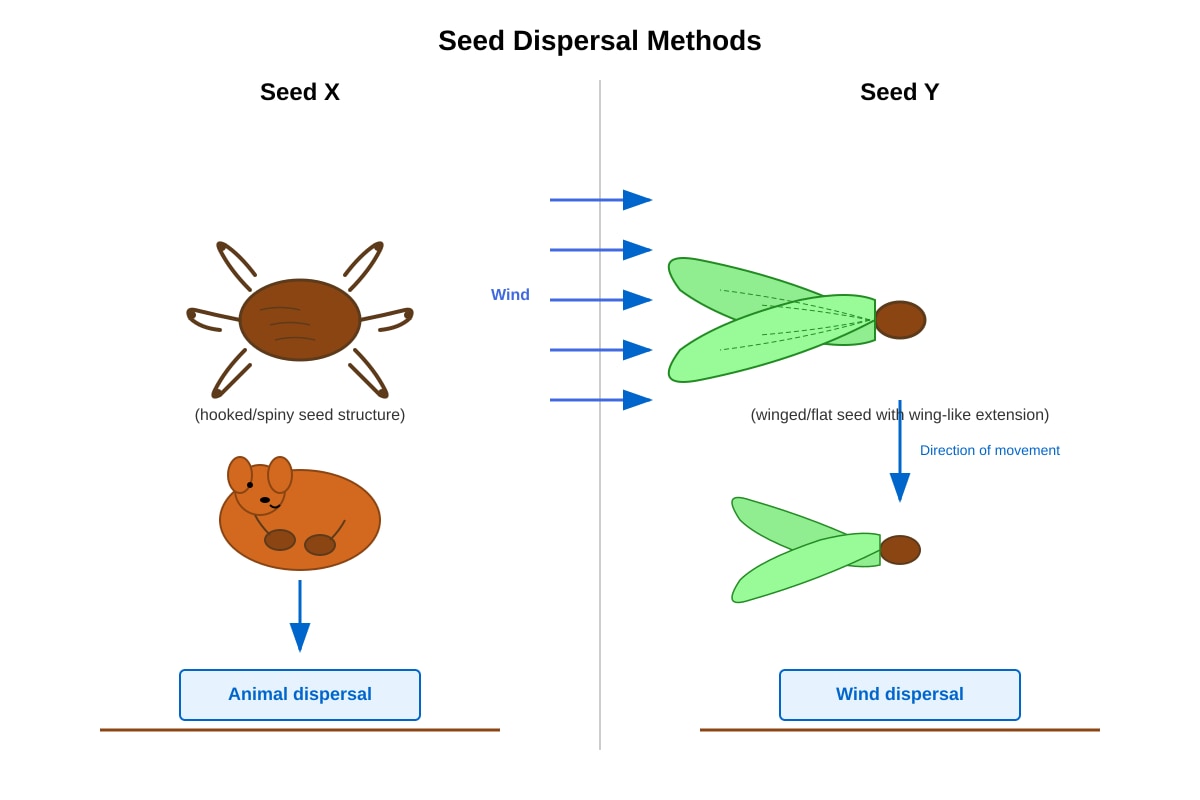
13. (a) Seed X: by animals / animal dispersal; Seed Y: by wind / wind dispersal [2 marks]
(b) The hooks/spines on Seed X can attach to the fur or feathers of animals. When animals move, they carry the seeds to new locations. [1 mark]
Explanation: Seed X has structures that hook onto animals (like burdock or love grass). Seed Y has a wing or parachute structure that allows it to be carried by wind (like maple or dandelion seeds). Being dispersed away from the parent plant reduces competition for light, water, and nutrients, and allows colonisation of new areas.
14. Any two from: [2 marks]
| Condition needed | Why it is necessary |
|---|---|
| Water | To soften the seed coat and activate enzymes that digest stored food for the growing embryo |
| Air (oxygen) | For respiration to release energy for growth of the embryo |
| Suitable temperature | For enzymes to work best for the chemical reactions of germination |
Mark breakdown: 1 mark for each correct condition with valid explanation (max 2 marks).
Common mistake: Students often write "sunlight" as a condition, but seeds can germinate in darkness. Light is needed later for photosynthesis by the seedling, not for germination itself.
Section C: Application and Reasoning (Questions 15–20)
15. (a) complete; incomplete [2 marks]
Mark breakdown: 1 mark each.
(b) Any two valid differences: [2 marks]
- The butterfly has a pupa stage, but the grasshopper does not.
- The grasshopper nymph looks like a small adult, but the butterfly larva (caterpillar) looks completely different from the adult.
- The butterfly larva lives in a different habitat/eats different food from the adult; grasshopper nymph eats same food as adult.
- The grasshopper nymph gradually develops wings; the butterfly wings develop inside the pupa.
Mark breakdown: 1 mark for each clear, correct difference.
Explanation: Complete metamorphosis (butterfly, moth, beetle, fly) has four stages with a dramatic change in body form. Incomplete metamorphosis (grasshopper, cockroach, dragonfly) has three stages where the young (nymph) resembles the adult but lacks fully developed wings and reproductive organs.
16. (a) Bright red petals attract insects/bees/birds that pollinate the flower. [1 mark]
The sweet nectar attracts pollinators which come to drink it and pick up/deliver pollen. [1 mark]
Explanation: These are adaptations for insect or bird pollination. Bright colours are visible signals, nectar is food reward, and a sticky stigma helps pollen grains adhere when pollinators visit.
(b) If seeds fall and grow near the parent plant, they would compete for limited resources like light, water, and minerals. [1 mark]
Being dispersed far away allows seeds to grow in new areas with less competition and more resources, increasing their chance of survival. [1 mark]
Explanation: This is important for the survival of the species. Different dispersal methods (wind, water, animal, explosive) have evolved to help seeds reach suitable habitats away from the parent.
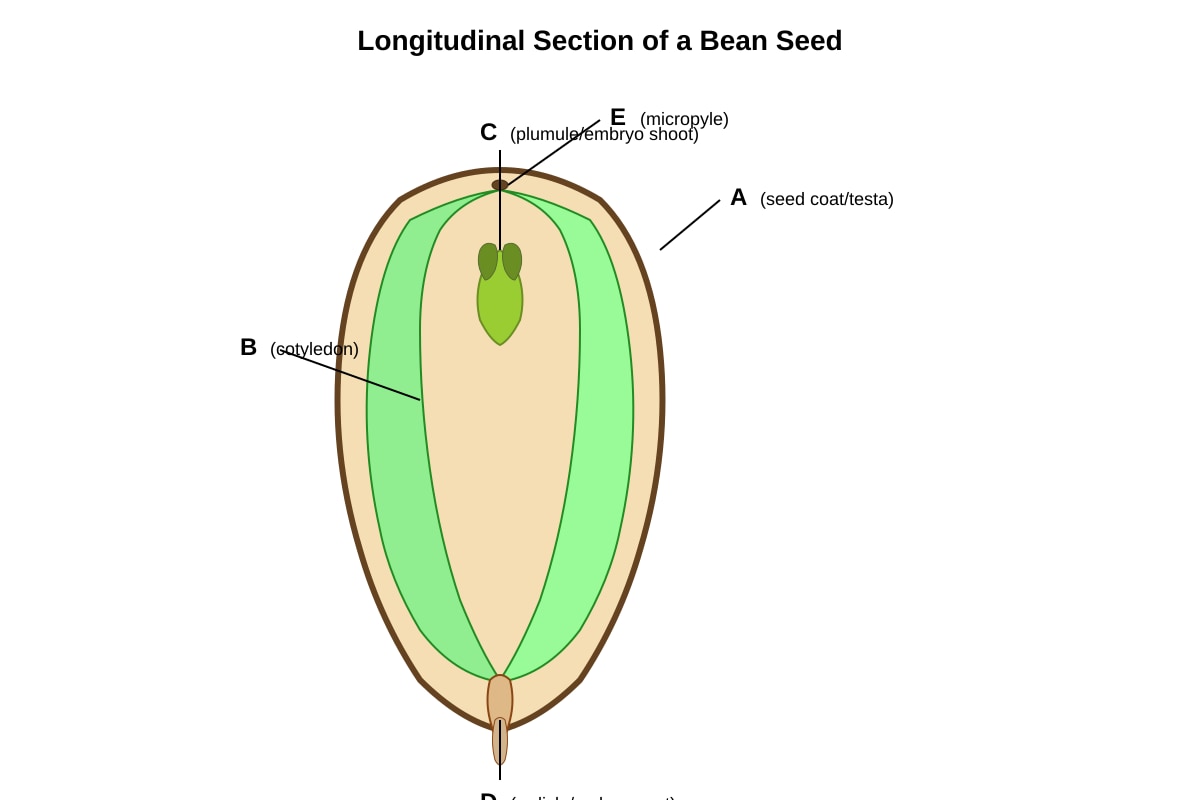
17. (a) B: cotyledon; C: plumule / embryo shoot [2 marks]
Mark breakdown: 1 mark each. Accept "seed leaf" for cotyledon.
(b) The cotyledon stores food (starch) for the developing embryo. During germination, this stored food is broken down and provides energy for the embryo to grow until the seedling can make its own food by photosynthesis. [2 marks]
Mark breakdown: 1 mark for stating food storage; 1 mark for explaining it provides energy for growth before photosynthesis begins.
(c) D (the radicle) [1 mark]
Explanation: The radicle is the embryonic root. It grows downward into the soil to anchor the plant and absorb water and minerals. The plumule (C) grows upward to become the shoot system with leaves and stem.
18. (a) Any two valid differences: [2 marks]
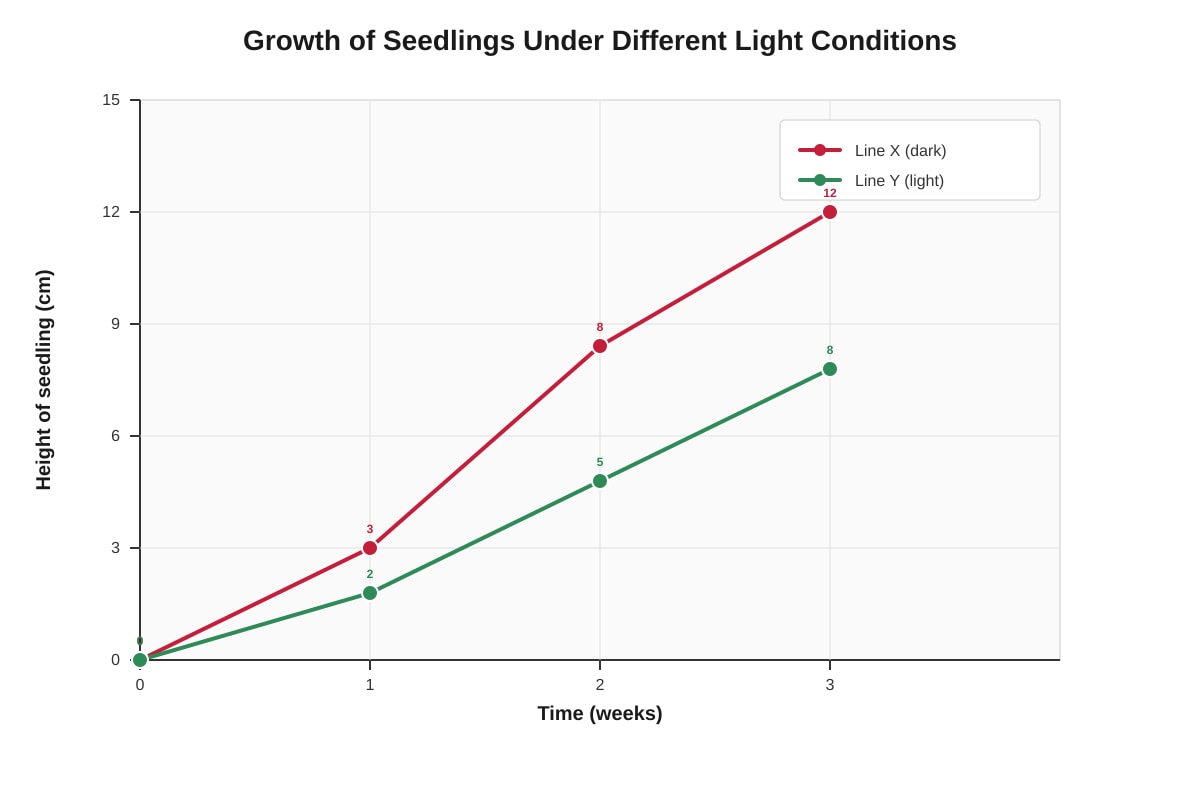
- Seedling X is taller than Seedling Y after three weeks (12 cm vs 8 cm).
- Seedling X is pale/yellow while Seedling Y is green.
- Seedling X is thin and spindly while Seedling Y is sturdy/thick-stemmed.
- Seedling Y has more leaves / larger leaves than Seedling X.
Mark breakdown: 1 mark for each difference with data reference where appropriate. Must describe the visual characteristics, not just height.
(b) In darkness, Seedling X cannot photosynthesise to make food, so it grows tall quickly to try to reach light. [1 mark]
This is called etiolation — the plant uses stored energy from the seed to grow rapidly in height with a thin stem and small leaves, rather than growing sturdy and green like Seedling Y which can photosynthesise in light. [1 mark]
Explanation: This is a survival adaptation. Plants can detect light direction and will bend and stretch toward it (phototropism). In prolonged darkness, the seedling becomes etiolated — tall, pale, and weak — because it is searching for light rather than investing energy in chlorophyll production and sturdy growth.
19. (a) Any two valid differences: [2 marks]
- The tadpole has gills for breathing in water; the adult frog has lungs for breathing air.
- The tadpole has a tail for swimming; the adult frog has four legs for hopping and swimming.
- The tadpole lives entirely in water; the adult frog lives on land and water.
- The tadpole eats algae/plants; the adult frog eats insects/small animals.
- The tadpole has no legs; the adult frog has four legs.
Mark breakdown: 1 mark for each clear, correct difference.
(b) The tadpole has gills for breathing underwater, which need to be surrounded by water to extract dissolved oxygen. [1 mark]
The tadpole's body is not adapted for life on land — it has no legs for movement and no lungs developed yet for breathing air. [1 mark]
Explanation: This is an example of metamorphosis where the body structure completely changes. The tadpole gradually develops lungs, legs, and loses its tail as it transforms into an adult frog that can live on land.
(c) The eggs would dry out and die. [1 mark]
Frog eggs are laid in jelly masses that need water to keep them moist and provide oxygen. Without water, the jelly would dry out, the embryos would not get enough oxygen, and development would stop. [1 mark]
Explanation: Frog eggs do not have a protective shell like bird or reptile eggs. Their jelly coating absorbs water and allows gas exchange. This is why frogs must lay eggs in water, and their breeding is often triggered by rainfall.
20. (a) Any two valid constants: [2 marks]
- Same type/variety of strawberry plant used for all methods.
- Same amount of water given to all plants.
- Same temperature/light conditions for all plants.
- Same type of soil/pot size.
- Same time of year/starting time.
Mark breakdown: 1 mark for each valid controlled variable. Must be something that could actually affect the results and should be kept the same for fair testing.
(b) Runners are a form of vegetative/asexual reproduction, so the new plant is already partially developed and can grow faster. [1 mark]
Plants from runners skip the seed germination stage which takes time, and they already have roots and shoots starting to form, so they can bear fruit sooner than plants grown from seeds. [1 mark]
Explanation: Runners are horizontal stems that grow along the ground with new plantlets at nodes. These plantlets already have small roots and leaves, so they establish quickly when they touch soil. Seeds must first germinate, which involves activating enzymes, breaking down stored food, and slowly developing embryonic structures.
(c) All runner plants have the same desirable characteristics as the parent (same sweetness, size, disease resistance, etc.). [1 mark]
The farmer can be certain of the fruit quality and quantity, which is important for selling and predictability. There is no variation that might produce poor-quality fruit. [1 mark]
Explanation: Asexual reproduction produces clones — genetically identical organisms. This is valuable in farming and gardening to maintain consistent quality. Sexual reproduction (seeds) creates genetic variation which can be unpredictable, though it may occasionally produce improved varieties.
END OF ANSWER KEY