AI Generated Quiz
Primary 5 Science Heat Quiz
Free P5 Science Heat quiz, GLM5.3 AI version, with questions, answers, and syllabus-aligned practice for Singapore students.
These static practice materials are generated from the site's syllabus and paper-generation workflow, with source and model context shown so students and parents can evaluate the material before use.
Questions
Free quiz and exam paper access
Enter your details to view this paper
Your access is remembered on this device.
Answers
Primary 5 Science Quiz - Heat: Answer Key
Total Marks: 55
Answer 1.
B. a form of energy
Marking note: Award 2 marks for the correct option only.
Answer 2.
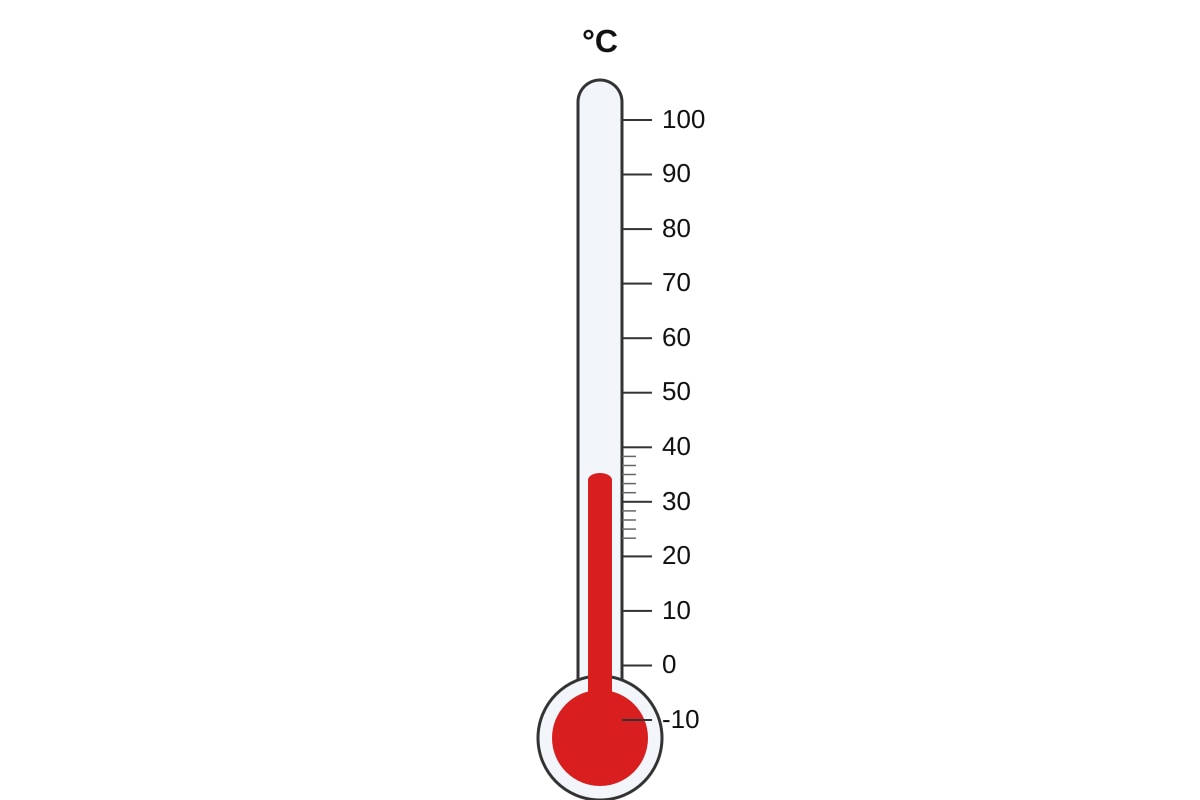
B. 34 °C
Marking note: Read the scale carefully; each small tick between 30 and 40 represents 1 °C.
Answer 3.
B. From the soup to the bowl — heat always flows from the hotter object to the cooler object.
New-student explanation: The soup is at 80 °C and the bowl is at 28 °C, so heat moves from the hotter soup into the cooler bowl until their temperatures become equal.
Answer 4.
A. Copper
Answer 5.
B. They are poor conductors of heat, so less heat reaches the hand.
Answer 6.
(a) Temperature tells us how hot or cold an object is. (b) A thermometer.
Marking note: 1 mark per part; spelling of "thermometer" should be close enough to recognise.
Answer 7.
The tea loses heat to the cooler surroundings, so its temperature falls (decreases).
New-student explanation: Heat always flows from a hotter object to cooler surroundings, so the hot tea cools down over ten minutes.
Answer 8.
Pure ice melts at 0 °C; pure water boils at 100 °C at sea level.
Marking note: Both temperatures needed for full marks; accept "freezing point of water" wording for the melting point.
Answer 9.
Metal is a better conductor of heat than wood, so the railing conducts heat away from the hand faster, making it feel colder even though both are at the same temperature.
New-student explanation: Both objects are at 24 °C, which is below hand temperature. The metal pulls heat out of your hand quickly, so it feels colder; wood conducts slowly, so it feels warmer.
Answer 10.
The thermometer and the patient's body have reached the same temperature, so there is no more net heat flow between them and the reading stops changing.
Answer 11.
(a) The butter on the metal spoon. (b) Metal is the best conductor of heat among the four materials, so heat travels fastest along it and melts its butter first. Plastic, wood and glass are poorer conductors, so their butter melts later.
Marking note: (a) 1 mark for naming the metal spoon only; (b) 2 marks — 1 for identifying metal as best conductor, 1 for linking fastest heat travel to earliest melting.
Answer 12.
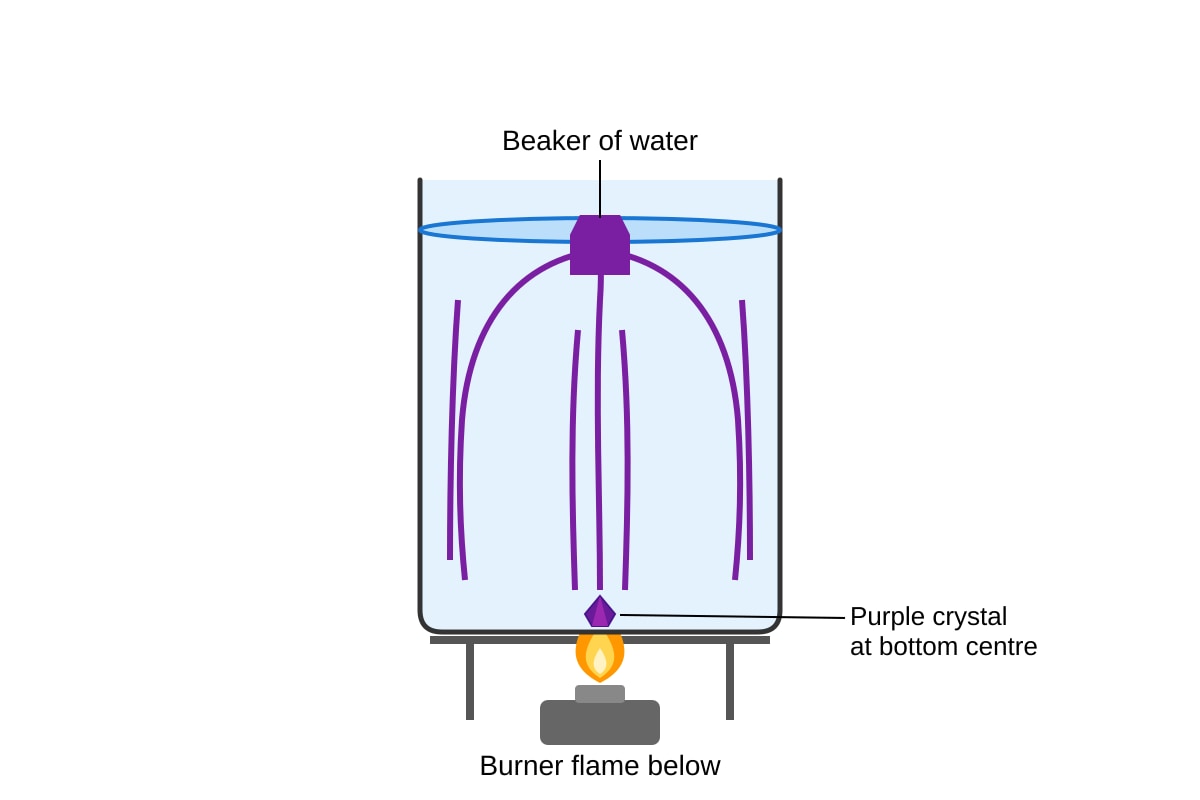
(a) Convection. (b) Heated water expands, becomes less dense and rises; cooler, denser water sinks to replace it, forming convection currents that carry the purple streaks around the beaker.
Marking note: (b) 2 marks — 1 for expansion/lower density causing rising, 1 for cooler denser water sinking to take its place.
Answer 13.
(a) Light colours are poor absorbers (good reflectors) of heat radiation, so light-coloured clothes gain less heat from the sun and keep the wearer cooler. (b) The black shirt.
Answer 14.
Hot water heats the metal lid and makes it expand. Metal expands more than glass when heated by the same amount, so the expanded lid becomes looser and easier to open.
Marking note: 4 marks — 1 for lid gains heat/expands, 1 for metal expanding more than glass, 1 for lid becoming looser, 1 for easier to open. Also accept that hot water may dissolve the sticky substance, but expansion must be mentioned for full marks.
Answer 15.
It stays cold longer. Wool is a poor conductor of heat (an insulator), so it slows down heat flowing from the warmer surroundings into the cold bottle.
Marking note: 3 marks — 1 for "stays cold longer", 1 for wool as poor conductor/insulator, 1 for explaining slowed heat flow into the bottle.
Answer 16.
(i) The vacuum has no matter, so it prevents heat loss by conduction and convection across the walls. (ii) The shiny silvered surfaces reflect heat radiation back, reducing heat transfer by radiation.
Marking note: (i) 2 marks — 1 for no matter/no conduction, 1 for no convection; (ii) 1 mark for reflecting radiation.
Answer 17.
(a) The ice cube on the metal plate. (b) Metal conducts heat from the surrounding air and plate to the ice much faster than plastic. More heat reaches the ice each second, so it gains heat faster and melts sooner.
Marking note: (b) 3 marks — 1 for metal as better conductor, 1 for faster heat transfer to the ice, 1 for linking faster heat gain to faster melting.
Answer 18.
(a) No, it will not fit through. (b) Metals expand when heated; the ball gains heat, expands in all directions, and becomes too large to pass through the ring. (c) It contracts as it cools and fits through the ring again.
Marking note: (c) Accept "contracts back to its original size" for the mark.
Answer 19.
(a) Example: metal cooking pots — they conduct heat quickly to cook food evenly. (b) Example: oven gloves or cork pan handles — they are insulators that slow heat reaching the hands.
Marking note: In each part, award 1 mark for a correct everyday example and 1 mark for a suitable reason linking the property to the use.
Answer 20.
(i) Conduction. (ii) Convection. (iii) Radiation. (iv) All three are ways heat transfers from a hotter place/object to a cooler place/object (heat flows from hotter to cooler).
Marking note: 1 mark per part; (iv) requires the idea that heat flows from hotter to cooler without needing any specific medium statement.
END OF ANSWER KEY