AI Generated Quiz

Primary 5 Science Diversity Quiz

Free AI-Generated NVIDIA Nemotron 3 Ultra 550B A55B Free Primary 5 Science Diversity quiz with questions and answers for Singapore students. This page is rendered as a direct URL so the questions and answers can be discovered without pressing in-page buttons.

These static practice materials are generated from the site's syllabus and paper-generation workflow, with source and model context shown so students and parents can evaluate the material before use.

Primary 5 Science AI Generated Generated by NVIDIA Nemotron 3 Ultra 550B A55B Free Updated 2026-06-07

Questions

<!-- TuitionGoWhere generation metadata: stage=5-1; model=nvidia/nemotron-3-ultra-550b-a55b:free; model_label=NVIDIA Nemotron 3 Ultra 550B A55B Free; generated=2026-06-05; Sources: Stage 4-0 LLM templates, syllabus context, and Stage 2 evidence where available. -->

Primary 5 Science Quiz - Diversity

Name: ___________________________
Class: Primary 5 _______
Date: ___________________________
Score: _______ / 50

Duration: 45 minutes
Total Marks: 50

Instructions:

  1. Answer all questions.
  2. For Section A, choose the correct option and write its letter (A, B, C, or D) in the bracket provided.
  3. For Section B and C, write your answers in the spaces provided.
  4. The number of marks for each question is shown in brackets [ ].
  5. Read each question carefully before answering.

Section A: Multiple-Choice Questions (10 × 1 mark = 10 marks)

For each question, choose the correct answer and write its letter in the bracket.

1. Which of the following is a characteristic of all living things?
A. They can move from place to place.
B. They reproduce to ensure continuity of their kind.
C. They make their own food.
D. They have a backbone.
[ ] [1]

2. The diagram below shows a cell.
<image_placeholder> id: Q2-fig1 type: diagram linked_question: Q2 description: A labelled animal cell diagram showing cell membrane, cytoplasm, nucleus, and mitochondria. No cell wall or chloroplasts. labels: Cell membrane, Cytoplasm, Nucleus, Mitochondria values: None must_show: Clear labels for all four organelles; absence of cell wall and chloroplasts </image_placeholder>
Based on the diagram, which type of cell is this?
A. Plant cell
B. Animal cell
C. Bacterial cell
D. Fungal cell
[ ] [1]

3. Fungi and bacteria are classified as microorganisms. Which statement about them is correct?
A. Both fungi and bacteria can make their own food.
B. Both fungi and bacteria reproduce by spores.
C. Fungi are decomposers while bacteria can be decomposers or producers.
D. Bacteria have a nucleus but fungi do not.
[ ] [1]

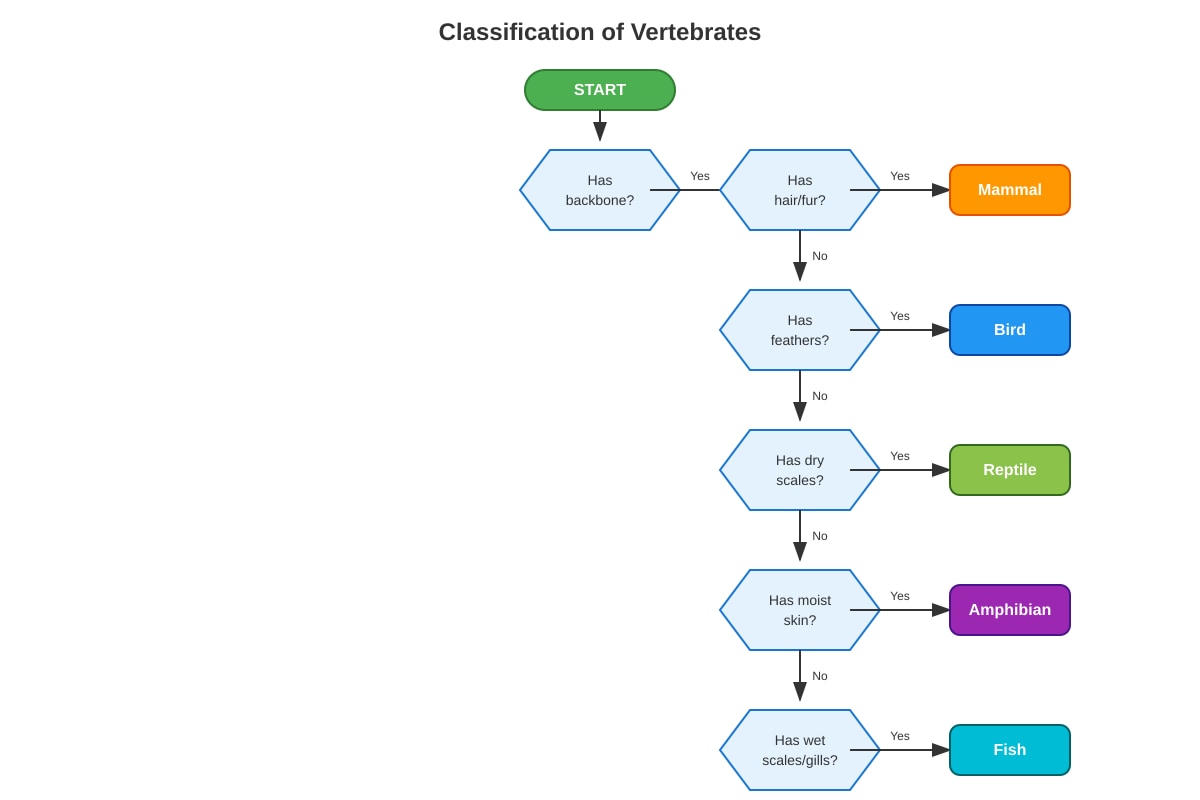
4. A student observed an organism that has moist skin, lays eggs in water, and undergoes metamorphosis. Which group does this organism belong to?
A. Reptiles
B. Amphibians
C. Fish
D. Mammals
[ ] [1]

5. Which of the following plants reproduces by spores?
A. Mango tree
B. Bird's nest fern
C. Hibiscus plant
D. Bean plant
[ ] [1]

6. The table below shows characteristics of four organisms.

OrganismHas backboneLays eggsHas feathersProduces milk
WYesYesYesNo
XYesNoNoYes
YYesYesNoNo
ZNoYesNoNo

Which organism is a mammal?
A. W
B. X
C. Y
D. Z
[ ] [1]

7. In flowering plants, which part develops into the fruit after fertilisation?
A. Ovary
B. Ovule
C. Stigma
D. Anther
[ ] [1]

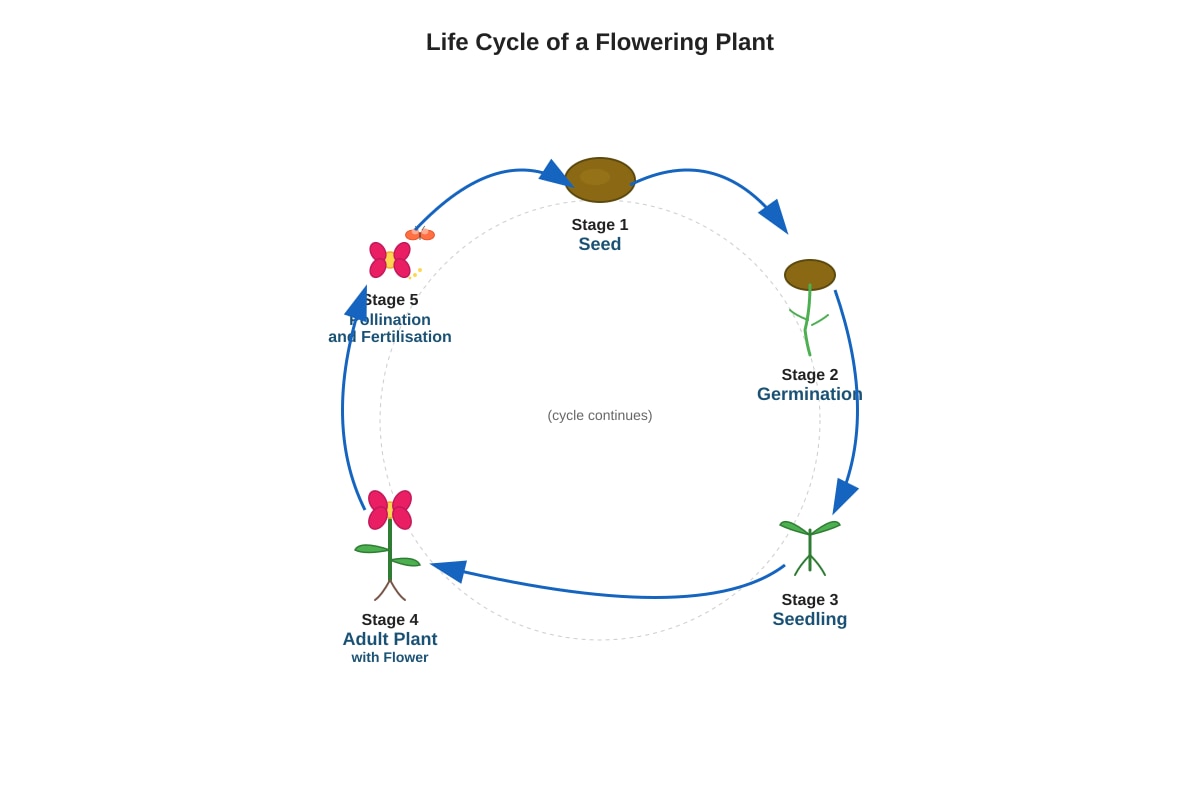
8. Which of the following shows the correct order of stages in the life cycle of a flowering plant?
A. Seed → Seedling → Adult plant → Flower → Fruit → Seed
B. Seed → Flower → Seedling → Adult plant → Fruit → Seed
C. Seed → Adult plant → Seedling → Flower → Fruit → Seed
D. Seed → Seedling → Flower → Adult plant → Fruit → Seed
[ ] [1]

9. Pollination is the transfer of pollen grains from the anther to the ________.
A. ovary
B. ovule
C. stigma
D. style
[ ] [1]

10. Which of the following is NOT a method of seed dispersal?
A. By wind
B. By water
C. By animals
D. By photosynthesis
[ ] [1]


Section B: Short-Answer Questions (10 × 2 marks = 20 marks)

Write your answers in the spaces provided.

11. State two differences between a plant cell and an animal cell.


______________________________________________________________________________ [2]

12. The diagram below shows a bacterium.
<image_placeholder> id: Q12-fig1 type: diagram linked_question: Q12 description: A simple bacterial cell diagram showing cell wall, cell membrane, cytoplasm, and genetic material (no nucleus). Flagella may be shown. labels: Cell wall, Cell membrane, Cytoplasm, Genetic material (nucleoid), Flagella (optional) values: None must_show: Absence of a true nucleus; presence of cell wall; genetic material not enclosed in nuclear membrane </image_placeholder>
(a) Name the part labelled X (the genetic material).
______________________________________________________________________________ [1]

(b) Explain why bacteria are not classified as plants or animals.


______________________________________________________________________________ [1]

13. Classify the following organisms into the correct groups in the table below.
Moss, Mould, Yeast, Fern, Mushroom, Bacteria

Non-flowering PlantsFungiBacteria

14. The diagram below shows the life cycle of a mosquito.
<image_placeholder> id: Q14-fig1 type: diagram linked_question: Q14 description: Life cycle of a mosquito showing four stages: Egg → Larva → Pupa → Adult. Arrows indicate progression. Labels for each stage. labels: Egg, Larva, Pupa, Adult values: None must_show: Four distinct stages in correct cyclic order; aquatic environment implied for larva and pupa </image_placeholder>
(a) Name the stage that comes after the larva.
______________________________________________________________________________ [1]

(b) State one difference between the larva and the adult mosquito.
______________________________________________________________________________ [1]

15. A student wants to group animals based on their body covering. Complete the table below.

AnimalBody Covering
Snake
Penguin
Frog
Whale

16. The diagram below shows a flower.
<image_placeholder> id: Q16-fig1 type: diagram linked_question: Q16 description: A longitudinal section of a typical flowering plant flower showing sepal, petal, stamen (anther and filament), and pistil (stigma, style, ovary with ovules inside). labels: Sepal, Petal, Anther, Filament, Stigma, Style, Ovary, Ovule values: None must_show: Clear labels for all parts; ovules visible inside ovary </image_placeholder>
(a) Name the part labelled Y (the stigma).
______________________________________________________________________________ [1]

(b) State the function of the part labelled Z (the anther).
______________________________________________________________________________ [1]

17. Explain the difference between self-pollination and cross-pollination.


______________________________________________________________________________ [2]

18. The table below shows three fruits/seeds and their dispersal methods. Complete the table.

Fruit/SeedDispersal MethodCharacteristic that helps dispersal
DandelionBy wind
CoconutFibrous husk traps air
Love grassBy animals

19. Seeds need certain conditions to germinate. State three conditions necessary for seed germination.


______________________________________________________________________________ [2]

20. The diagram below shows a young seedling.
<image_placeholder> id: Q20-fig1 type: diagram linked_question: Q20 description: A seedling with seed leaves (cotyledons), shoot, and root. The seed leaves are green and enlarged. The shoot is growing upwards, root downwards. labels: Seed leaves (cotyledons), Shoot, Root values: None must_show: Green seed leaves; distinct shoot and root; seed coat remnants optional </image_placeholder>
(a) What is the function of the seed leaves (cotyledons) in the young seedling?
______________________________________________________________________________ [1]

(b) The seedling is placed in a dark cupboard for a week. Predict what will happen to the seed leaves and explain why.


______________________________________________________________________________ [1]


Section C: Structured / Open-Ended Questions (4 × 5 marks = 20 marks)

16. The flowchart below shows a classification key for five organisms: A, B, C, D, and E.
<image_placeholder> id: Q16-fig1 type: diagram linked_question: Q16 description: A dichotomous classification flowchart. Start: "Does it make its own food?" Yes → "Does it have flowers?" Yes → Organism A; No → Organism B. No → "Does it have a nucleus?" Yes → "Is it a decomposer?" Yes → Organism C; No → Organism D. No → Organism E. labels: Decision nodes and organism labels A, B, C, D, E values: None must_show: Clear yes/no branches; five terminal organisms A–E </image_placeholder>
(a) Based on the flowchart, which organism(s) is/are a flowering plant?
______________________________________________________________________________ [1]

(b) Which organism is a bacterium? Explain your answer.


______________________________________________________________________________ [2]

(c) Organism C is a mushroom. State one characteristic of fungi that makes them different from plants.
______________________________________________________________________________ [1]

(d) Organism D is a fern. How does a fern reproduce?
______________________________________________________________________________ [1]

17. Study the life cycles of the butterfly and the grasshopper shown below.
<image_placeholder> id: Q17-fig1 type: diagram linked_question: Q17 description: Two life cycle diagrams side by side. Butterfly: Egg → Larva (caterpillar) → Pupa (chrysalis) → Adult. Grasshopper: Egg → Nymph (resembles small adult, no wings) → Adult (with wings). Arrows show progression. labels: All stages labelled for both organisms values: None must_show: Four stages for butterfly (complete metamorphosis); three stages for grasshopper (incomplete metamorphosis); nymph resembles adult but smaller and wingless </image_placeholder>
(a) State one similarity between the life cycles of the butterfly and the grasshopper.
______________________________________________________________________________ [1]

(b) State two differences between the life cycles of the butterfly and the grasshopper.


______________________________________________________________________________ [2]

(c) The young of the grasshopper is called a nymph. How does the nymph differ from the adult grasshopper?
______________________________________________________________________________ [1]

(d) Why is the pupa stage important for the butterfly?
______________________________________________________________________________ [1]

18. The diagram below shows the reproductive parts of a flowering plant.
<image_placeholder> id: Q18-fig1 type: diagram linked_question: Q18 description: A diagram showing pollination and fertilisation process. Top: anther releasing pollen grains onto stigma. Middle: pollen tube growing down style into ovary. Bottom: pollen tube entering ovule through micropyle; male reproductive cell fusing with female reproductive cell. labels: Anther, Stigma, Style, Ovary, Ovule, Pollen tube, Male reproductive cell, Female reproductive cell values: None must_show: Pollen tube growth from stigma to ovule; fertilisation event inside ovule </image_placeholder>
(a) Name the process shown in the diagram where the male reproductive cell fuses with the female reproductive cell.
______________________________________________________________________________ [1]

(b) After fertilisation, the ovule develops into the ________ and the ovary develops into the ________.
______________________________________________________________________________ [1]

(c) State one way in which cross-pollination benefits the plant compared to self-pollination.
______________________________________________________________________________ [1]

(d) The diagram shows a pollen tube growing down the style. Explain why the pollen tube is necessary for fertilisation in flowering plants.


______________________________________________________________________________ [2]

19. Seeds can be dispersed by various methods. The table below shows four fruits/seeds.
<image_placeholder> id: Q19-fig1 type: diagram linked_question: Q19 description: Four fruit/seed diagrams: (A) Sycamore seed with wing, (B) Coconut with fibrous husk, (C) Xanthium (bur) with hooks, (D) Splitting pod (e.g., pea/bean) twisting open. labels: A: Sycamore seed (wing), B: Coconut (fibrous husk), C: Xanthium (hooks), D: Splitting pod values: None must_show: Clear structural features for each dispersal method </image_placeholder>
(a) Match each fruit/seed (A, B, C, D) to its dispersal method.

Fruit/SeedDispersal Method
A
B
C
D

(b) For fruit/seed C, name the structural adaptation that helps in its dispersal.
______________________________________________________________________________ [1]

(c) Explain how the adaptation in (b) helps in seed dispersal.


______________________________________________________________________________ [1]

(d) A student claims that "All fruits dispersed by wind are light and have wing-like structures." Is this statement correct? Explain your answer.


______________________________________________________________________________ [1]

20. The diagram below shows a young plant growing from a seed.
<image_placeholder> id: Q20-fig1 type: diagram linked_question: Q20 description: A seedling with seed leaves (cotyledons), shoot, and root. The seed leaves are green and enlarged. The shoot is growing upwards, root downwards. labels: Seed leaves (cotyledons), Shoot, Root values: None must_show: Green seed leaves; distinct shoot and root; seed coat remnants optional </image_placeholder>
(a) The seed leaves are green. What process can the seed leaves carry out?
______________________________________________________________________________ [1]

(b) The mass of the seedling was measured every two days. The graph below shows the change in mass of the seed leaves and the shoot over time.
<image_placeholder> id: Q20-fig2 type: graph linked_question: Q20 description: Line graph with x-axis: Time (days) 0, 2, 4, 6, 8, 10. Two lines: 'Mass of seed leaves' decreasing from high to low; 'Mass of shoot' increasing from low to high. Lines cross around day 6. labels: x-axis: Time (days), y-axis: Mass (g); Line 1: Mass of seed leaves; Line 2: Mass of shoot values: None must_show: Decreasing trend for seed leaves; increasing trend for shoot; crossover point visible </image_placeholder>
(i) Describe the change in mass of the seed leaves over the 10 days.
______________________________________________________________________________ [1]

(ii) Explain why the mass of the seed leaves changes in this way.


______________________________________________________________________________ [1]

(iii) The mass of the shoot increases even though the seedling is not given any fertiliser. Where does the substance for the increase in mass come from?
______________________________________________________________________________ [1]

(c) The seedling is placed in a dark cupboard for a week. Predict what will happen to the seed leaves and explain why.


______________________________________________________________________________ [1]

Answers

<!-- TuitionGoWhere generation metadata: stage=5-1; model=nvidia/nemotron-3-ultra-550b-a55b:free; model_label=NVIDIA Nemotron 3 Ultra 550B A55B Free; generated=2026-06-05; Sources: Stage 4-0 LLM templates, syllabus context, and Stage 2 evidence where available. -->

Primary 5 Science Quiz - Diversity (Answer Key)

Total Marks: 50


Section A: Multiple-Choice Questions (10 marks)

1. B [1]
Explanation: All living things reproduce to ensure continuity of their kind. Not all living things move (plants), make their own food (animals, fungi), or have a backbone (invertebrates).

2. B [1]
Explanation: The cell has a cell membrane, cytoplasm, nucleus, and mitochondria but lacks a cell wall and chloroplasts. These are features of an animal cell. Plant cells have cell walls and chloroplasts; bacterial cells lack a true nucleus; fungal cells have cell walls (made of chitin).

3. C [1]
Explanation: Fungi are decomposers (saprotrophs). Bacteria can be decomposers, photosynthetic producers (cyanobacteria), or parasitic. Fungi and bacteria do not both make their own food (A is wrong). Not all fungi and bacteria reproduce by spores (B is wrong). Bacteria are prokaryotes and lack a nucleus (D is wrong).

4. B [1]
Explanation: Amphibians have moist skin, lay eggs in water, and undergo metamorphosis (e.g., frog: egg → tadpole → adult). Reptiles have dry scaly skin; fish have gills and scales; mammals have hair/fur and produce milk.

5. B [1]
Explanation: Bird's nest fern is a non-flowering plant that reproduces by spores. Mango, hibiscus, and bean plants are flowering plants that reproduce by seeds.

6. B [1]
Explanation: Mammals produce milk (have mammary glands) and do not lay eggs (except monotremes, not in P5 syllabus). Organism X has a backbone, does not lay eggs, has no feathers, and produces milk → mammal. W is a bird; Y is a reptile/amphibian/fish; Z is an invertebrate.

7. A [1]
Explanation: After fertilisation, the ovary develops into the fruit. The ovule develops into the seed. The stigma receives pollen; the anther produces pollen.

8. A [1]
Explanation: Correct sequence: Seed germinates → Seedling grows → Adult plant matures → Flowers bloom → After pollination and fertilisation, fruit develops → Fruit contains seeds → Cycle repeats.

9. C [1]
Explanation: Pollination is the transfer of pollen grains from the anther to the stigma. The style connects stigma to ovary; ovary contains ovules; ovule contains the female reproductive cell.

10. D [1]
Explanation: Photosynthesis is the process by which plants make food, not a seed dispersal method. Wind, water, and animals are the three main seed dispersal agents.


Section B: Short-Answer Questions (20 marks)

11. Any two of the following: [2]

  • Plant cells have a cell wall; animal cells do not.
  • Plant cells have chloroplasts; animal cells do not.
  • Plant cells have a large central vacuole; animal cells have small or no vacuoles.
  • Plant cells are usually regular/fixed in shape; animal cells are irregular in shape.
    Marking: 1 mark per correct difference.

12. (a) Genetic material / Nucleoid / DNA [1]
Explanation: Bacteria are prokaryotes; their genetic material is not enclosed in a nuclear membrane. The region is called the nucleoid.

(b) Bacteria are prokaryotes (no true nucleus), while plants and animals are eukaryotes (have a true nucleus). Bacteria are also unicellular, while most plants and animals are multicellular. [1]
Explanation: Key distinction: absence of membrane-bound nucleus. Also, bacteria lack membrane-bound organelles like mitochondria and chloroplasts.

13. [2]

Non-flowering PlantsFungiBacteria
Moss, FernMould, Yeast, MushroomBacteria

Marking: 1 mark for correct Non-flowering Plants (Moss, Fern); 1 mark for correct Fungi (Mould, Yeast, Mushroom) and Bacteria (Bacteria). All six must be placed correctly for full marks.

14. (a) Pupa [1]
Explanation: Mosquito life cycle: Egg → Larva → Pupa → Adult.

(b) Any one: [1]

  • Larva lives in water; adult lives on land/flies.
  • Larva has no wings; adult has wings.
  • Larva breathes through spiracles/siphon at water surface; adult breathes through spiracles.
  • Larva feeds on microorganisms; adult feeds on nectar/blood (female).
    Marking: 1 mark for any valid difference.

15. [2]

AnimalBody Covering
SnakeScales
PenguinFeathers
FrogMoist skin
WhaleHair / Blubber (thick skin with little hair)

Marking: 0.5 mark per correct answer. Accept "scales" for snake, "feathers" for penguin, "moist skin" or "bare skin" for frog, "hair" or "smooth skin" for whale.

16. (a) Stigma [1]
Explanation: The stigma is the sticky top part of the pistil that receives pollen grains during pollination.

(b) The anther produces pollen grains which contain the male reproductive cells. [1]
Explanation: The anther is part of the stamen (male reproductive part). It produces and releases pollen.

17. Self-pollination is the transfer of pollen grains from the anther to the stigma of the same flower or another flower on the same plant. Cross-pollination is the transfer of pollen grains from the anther of a flower to the stigma of a flower on a different plant of the same species. [2]
Marking: 1 mark for correct definition of self-pollination; 1 mark for correct definition of cross-pollination. Key distinction: same plant vs. different plant.

18. [2]

Fruit/SeedDispersal MethodCharacteristic that helps dispersal
DandelionBy windLightweight / has parachute-like hairs (pappus)
CoconutBy waterFibrous husk traps air
Love grassBy animalsHooks / stiff hairs that cling to fur

Marking: 1 mark for dandelion characteristic (lightweight / parachute-like hairs); 1 mark for love grass characteristic (hooks / stiff hairs). Coconut row already complete.

19. Air (oxygen), Water (moisture), and Warmth (suitable temperature). [2]
Explanation: Three conditions for germination: (1) Oxygen for respiration to release energy, (2) Water to activate enzymes and swell the seed, (3) Suitable temperature for enzyme activity. Light is NOT needed for germination (only for photosynthesis after shoot emerges).
Marking: 1 mark for any two correct; 2 marks for all three correct. Order does not matter.

20. (a) The seed leaves (cotyledons) store food for the young seedling until it can make its own food through photosynthesis. [1]
Explanation: Cotyledons contain stored nutrients (starch, proteins, oils) that provide energy and building materials for growth before true leaves develop.

(b) The seed leaves will turn yellow / become pale and the seedling will become weak / die. This is because without light, the seed leaves cannot photosynthesise to make food, and the stored food will eventually run out. [1]
Explanation: Seed leaves of many plants (like bean) are photosynthetic (green). In darkness, no photosynthesis occurs. Stored food depletes; seedling cannot sustain growth.
Common mistake: Saying "seed leaves cannot photosynthesise" without mentioning stored food running out.


Section C: Structured / Open-Ended Questions (20 marks)

16. (a) Organism A [1]
Explanation: Flowchart: Makes own food → Yes → Has flowers → Yes → Organism A. Flowering plants make their own food (photosynthesis) and have flowers.

(b) Organism E. Bacteria do not make their own food (heterotrophic or photosynthetic but no chloroplasts) and do not have a true nucleus (prokaryotes). The flowchart shows: Makes own food → No → Has nucleus → No → Organism E. [2]
Marking: 1 mark for identifying Organism E; 1 mark for correct explanation (no nucleus / prokaryote).

(c) Fungi are decomposers that obtain nutrients by external digestion and absorption (saprotrophic nutrition), while plants make their own food through photosynthesis. [1]
Explanation: Fungi lack chlorophyll and cannot photosynthesise. They secrete enzymes onto dead/decaying matter and absorb the digested nutrients.

(d) Ferns reproduce by spores produced on the underside of their fronds (leaves). [1]
Explanation: Ferns are non-flowering plants. They do not produce seeds or flowers. Spores are dispersed by wind and develop into a small heart-shaped gametophyte before growing into a new fern plant.

17. (a) Both life cycles begin with an egg stage and end with an adult stage. [1]
Alternative: Both involve growth and development through distinct stages. Both reproduce sexually.

(b) Any two: [2]

  • Butterfly has four stages (complete metamorphosis: egg, larva, pupa, adult); grasshopper has three stages (incomplete metamorphosis: egg, nymph, adult).
  • Butterfly larva (caterpillar) looks very different from the adult; grasshopper nymph resembles a small adult without wings.
  • Butterfly has a pupa stage; grasshopper does not have a pupa stage.
  • Butterfly larva feeds on leaves; grasshopper nymph feeds on similar food as adult.
    Marking: 1 mark per correct difference.

(c) The nymph is smaller, has no wings, and its reproductive organs are not fully developed. [1]
Explanation: Nymphs undergo several moults, gradually developing wings and reproductive structures until they become adults.

(d) The pupa stage is when the larva undergoes complete transformation (metamorphosis) to become an adult. Inside the pupa, the larval tissues break down and reorganise into adult structures (wings, legs, antennae, etc.). [1]
Explanation: The pupa is a non-feeding, usually immobile stage where dramatic internal restructuring occurs.

18. (a) Fertilisation [1]
Explanation: The fusion of the male reproductive cell (from pollen) with the female reproductive cell (in the ovule) is called fertilisation.

(b) The ovule develops into the seed and the ovary develops into the fruit. [1]
Explanation: After fertilisation, the ovule becomes the seed (containing the embryo and food store) and the ovary enlarges and ripens to become the fruit.

(c) Cross-pollination introduces genetic variation / produces healthier offspring / increases adaptability to environmental changes. [1]
Explanation: Cross-pollination mixes genetic material from different plants, leading to greater genetic diversity. Self-pollination produces genetically similar offspring, which may be less resilient.

(d) The male reproductive cells are inside the pollen grain on the stigma. They cannot move on their own. The pollen tube grows down the style to transport the male reproductive cells to the ovule in the ovary for fertilisation. [2]
Marking: 1 mark for stating male cells cannot move / need transport; 1 mark for explaining pollen tube carries them to ovule for fertilisation.
Key concept: Pollen tube is the delivery mechanism for non-motile sperm in flowering plants.

19. (a) [2]

Fruit/SeedDispersal Method
A (Sycamore)By wind
B (Coconut)By water
C (Xanthium)By animals
D (Splitting pod)By splitting / explosive action

Marking: 0.5 mark per correct match.

(b) Hooks / stiff spines on the fruit/seed. [1]
Explanation: Xanthium (bur) has hooked spines.

(c) The hooks catch onto the fur of passing animals (or clothing of humans). The seed is carried away and falls off later at a different location. [1]
Explanation: This is epizoochory — external transport on animal bodies. The adaptation ensures dispersal away from parent plant.

(d) No, the statement is not correct. Some wind-dispersed seeds are light and have parachute-like hairs (e.g., dandelion) or are tiny and dust-like (e.g., orchid seeds), not wing-like structures. [1]
Explanation: Wind dispersal adaptations include wings (sycamore), parachutes (dandelion), tiny size (orchids), or capsules that shake out seeds (poppy). Not all have wings.

20. (a) Photosynthesis [1]
Explanation: Green seed leaves contain chlorophyll and can trap light energy to make food.

(b) (i) The mass of the seed leaves decreases over the 10 days. [1]
Explanation: The graph shows a downward trend from day 0 to day 10.

(ii) The stored food in the seed leaves is used by the seedling for respiration (to release energy) and growth. As food is used up, the mass decreases. [1]
Explanation: The seedling relies on stored food before it can photosynthesise enough. Respiration breaks down food, releasing CO₂ and water, causing mass loss.

(iii) The substance comes from the food stored in the seed leaves (cotyledons). [1]
Explanation: The increase in shoot mass is due to the conversion of stored food (starch, proteins, oils) into new plant tissues (cells, cell walls, etc.). No external fertiliser is needed initially.

(c) The seed leaves will turn yellow / become pale and the seedling will become weak / die. This is because without light, the seed leaves cannot photosynthesise to make food, and the stored food will eventually run out. [1]
Explanation: Same as Q20(b) in Section B. Green seed leaves can photosynthesise. In darkness, no photosynthesis → no new food made → stored food depletes → seedling cannot sustain growth.