Primary 5 Science Quiz - Systems
Name: ______________________
Class: ______________________
Date: ______________________
Score: ______________________
Duration: 40 minutes
Total Marks: 30
Instructions:
- This quiz has 20 questions on the topic of Systems (Plant Transport, Human Respiratory & Circulatory, Electrical System).
- Section A: 10 multiple-choice questions (1 mark each).
- Section B: 6 short-answer questions (1–2 marks each).
- Section C: 4 structured questions with subparts (2–3 marks each).
- Write your answers clearly in the spaces provided.
Section A (Questions 1–10, 1 mark each)
-
Which part of a plant carries water from the roots to the leaves?
A) Food-carrying tube
B) Water-carrying tube
C) Leaf stalk
D) Flower
-
Which gas do humans take in from the air during breathing?
A) Carbon dioxide
B) Nitrogen
C) Oxygen
D) Water vapour
-
Which of the following is an electrical conductor?
A) Rubber
B) Wood
C) Iron
D) Plastic
-
In the human circulatory system, what does the heart do?
A) Absorbs oxygen
B) Pumps blood
C) Carries food
D) Filters waste
-
A bulb lights up only when the switch is closed. This shows that a __________ circuit allows current to flow.
A) broken
B) closed
C) open
D) parallel
-
Which part of the respiratory system is where air enters the body first?
A) Windpipe
B) Lungs
C) Nose
D) Heart
-
Plants transport food made in the leaves through the __________.
A) water-carrying tube
B) food-carrying tube
C) roots
D) stem skin
-
Which of these is NOT a component of a simple electric circuit?
A) Battery
B) Wire
C) Bulb
D) Magnet
-
Blood vessels in humans transport all the following EXCEPT __________.
A) digested food
B) oxygen
C) carbon dioxide
D) sunlight
-
Air is made up of several gases. Which gas is used by the body for release of energy?
A) Nitrogen
B) Oxygen
C) Carbon dioxide
D) Helium
Section B (Questions 11–16)
-
Name one part of the human respiratory system and state its function. (2 marks)
Part: __________
Function: __________
-
State one difference between how a plant and a human transport substances. (1 mark)
-
List two electrical insulators. (2 marks)
(a) __________
(b) __________
-
What is the function of the water-carrying tube in a plant? (1 mark)
-
Explain why a bulb does not light up when the circuit is open. (2 marks)
-
Name the three main parts of the human circulatory system. (3 marks)
(a) __________
(b) __________
(c) __________
Section C (Questions 17–20)
- The diagram shows a simple electric circuit with one battery, one closed switch, and one bulb connected by wires.
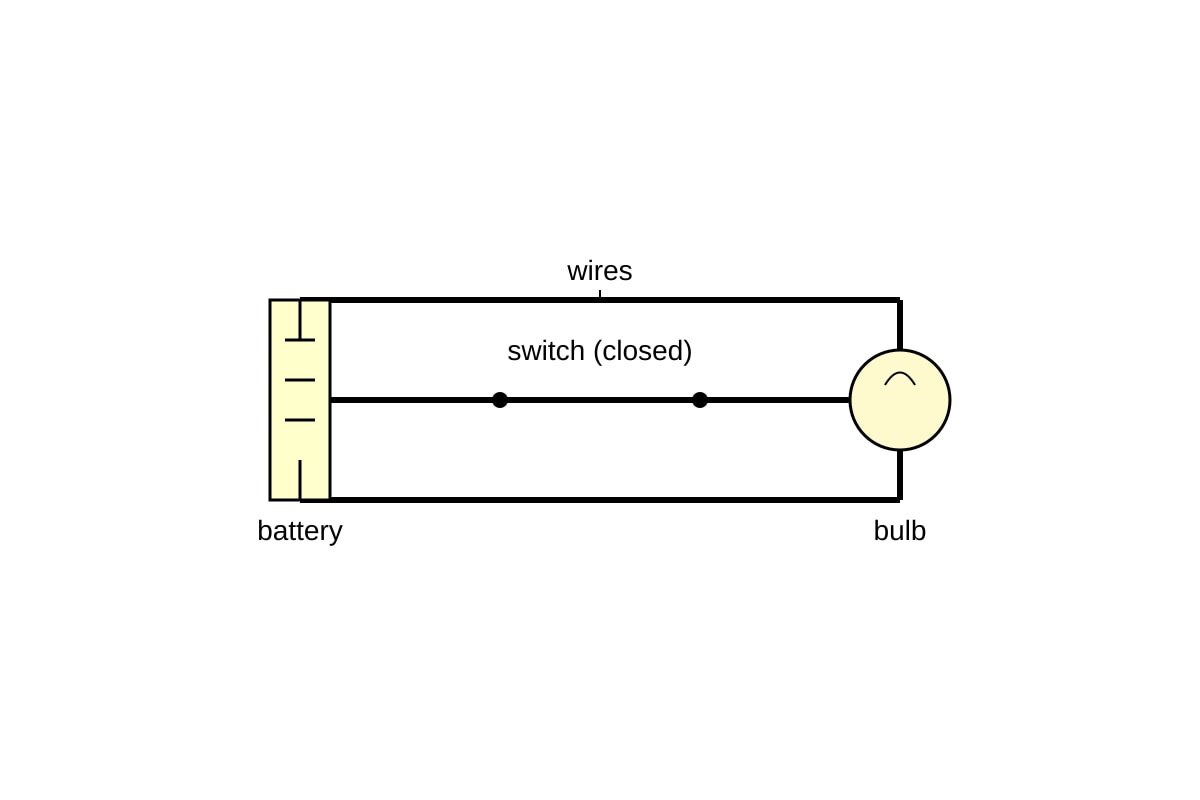
Generated diagram for Q17.
(a) Will the bulb light up? Why? (2 marks)
__________
(b) Draw a change to make the bulb go off without removing the battery. (1 mark)
__________
18. Study the plant transport system below.
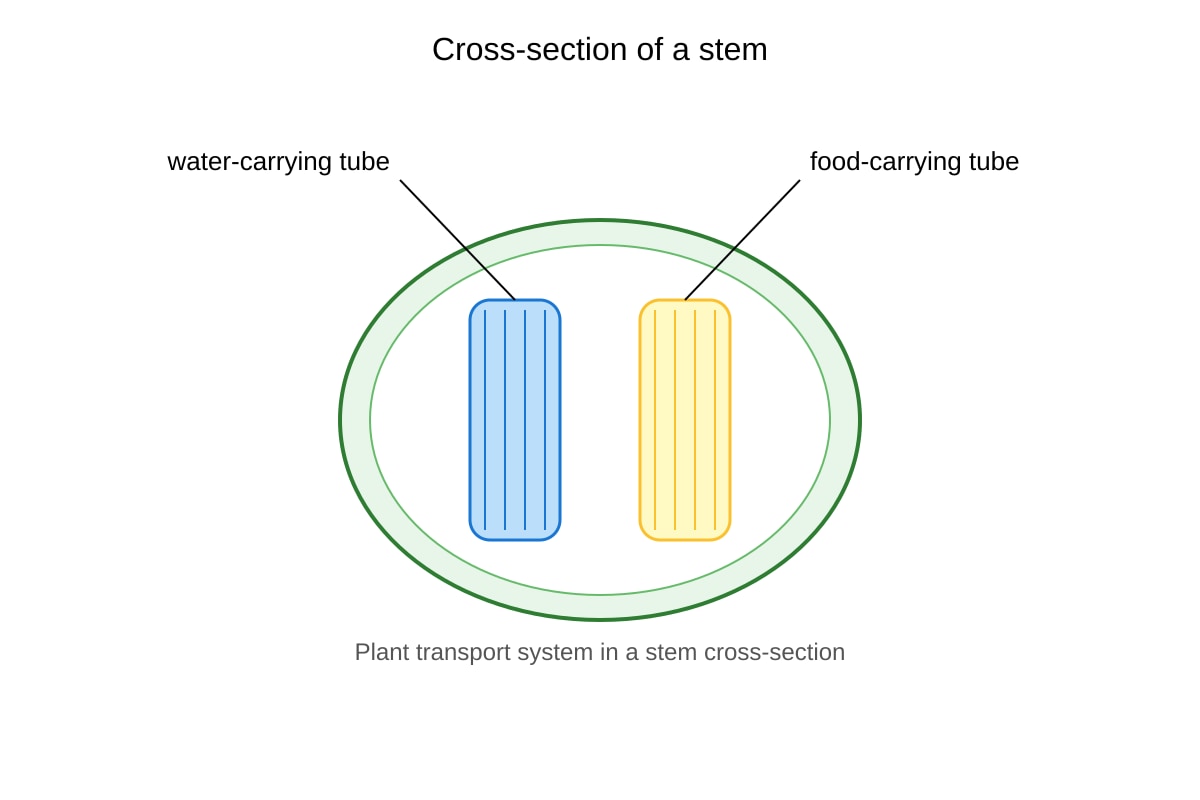
Generated diagram for Q18.
(a) Which tube carries water? (1 mark)
__________
(b) Which tube carries food made in leaves? (1 mark)
__________
(c) Why do plants need to transport water and food? (1 mark)
__________
19. A student says: "Fish, plants, and humans all take in oxygen and give out carbon dioxide."
(a) Is this statement correct? Give one similarity and one difference. (3 marks)
Similarity: __________
Difference: __________
- The human body uses the digestive, respiratory, and circulatory systems together.
(a) Name one way the respiratory and circulatory systems work together. (2 marks)
(b) Why is it important that these systems are integrated? (1 mark)
</stage3_quiz_answers_md>
<stage3_quiz_answers_md>
Primary 5 Science Quiz - Systems (Answer Key)
Total Marks: 30
Topic: Systems (Plant Transport, Human Respiratory & Circulatory, Electrical System)
Section A Answers (1 mark each)
-
B) Water-carrying tube
Teaching note: Plants have tubes inside the stem. The water-carrying tube moves water from roots to leaves. Food-carrying tube moves food, not water.
-
C) Oxygen
Teaching note: Humans breathe in air. The body uses oxygen to release energy from food. Carbon dioxide is breathed out.
-
C) Iron
Teaching note: Conductors let current pass. Metals like iron conduct; rubber, wood, plastic are insulators.
-
B) Pumps blood
Teaching note: The heart is a muscle that pumps blood through blood vessels to all body parts.
-
B) closed
Teaching note: Current flows only in a closed loop. Open switch = broken loop = no current.
-
C) Nose
Teaching note: Air normally enters through the nose, then goes to windpipe, then lungs.
-
B) food-carrying tube
Teaching note: Leaves make food. The food-carrying tube sends it to other parts.
-
D) Magnet
Teaching note: A simple circuit needs energy source (battery), wires, and a load (bulb). Magnet is not needed.
-
D) sunlight
Teaching note: Blood vessels carry digested food, oxygen, carbon dioxide. Sunlight is not transported by blood.
-
B) Oxygen
Teaching note: Oxygen is the gas used in respiration to release energy.
Section B Answers
-
Part: Lungs (1 mark) Function: Allow oxygen to enter and carbon dioxide to leave the body (1 mark)
Other acceptable: Nose (traps dust, warms air), Windpipe (passes air to lungs).
Teaching note: Identify one respiratory part and a real function from syllabus.
-
Plants use tubes to transport water and food; humans use blood vessels to transport substances. (1 mark)
Teaching note: Key difference is plant tubes vs human blood vessels.
-
Any two: rubber, wood, plastic, glass (2 marks, 1 each)
Teaching note: Insulators do not allow current to flow easily.
-
Carries water from roots to leaves / other parts of plant. (1 mark)
-
In an open circuit, the loop is broken so current cannot flow, so the bulb receives no electricity and does not light. (2 marks: 1 for open = broken loop, 1 for no current = no light)
Common mistake: saying "no battery" when battery is present but switch open.
-
(a) Heart (1) (b) Blood (1) (c) Blood vessels (1)
Teaching note: Circulatory system = heart (pump), blood (transports), blood vessels (paths).
Section C Answers
-
(a) Yes, the bulb will light up. (1) Because the switch is closed, the circuit is closed and current flows from battery through wires and bulb. (1)
(b) Open the switch / break a wire / remove bulb. (1 mark) Any change that breaks loop.
Image note: Q17-fig1 must show continuous wire from battery through closed switch to bulb.
-
(a) Water-carrying tube (1)
(b) Food-carrying tube (1)
(c) To supply leaves/parts with water and send food to where it is needed for survival. (1)
Image note: Q18-fig1 shows two tubes; water tube carries water up, food tube carries food from leaves.
-
Similarity: All take in oxygen and give out carbon dioxide during respiration. (1)
Difference: Fish take in oxygen from water using gills, humans from air using lungs, plants take in through leaves but also make food using sunlight. (2 for clear difference; accept any correct single difference = 2)
Teaching note: Do not say plants do not respire; they respire too.
-
(a) Lungs take in oxygen; blood in circulatory system carries oxygen to body cells. (2 marks: 1 each system role)
(b) So that oxygen and digested food can reach cells and waste can be removed to keep body working. (1 mark)
</stage3_quiz_answers_md>
<stage3_quiz_md>
Primary 5 Science Quiz - Systems
Name: ______________________
Class: ______________________
Date: ______________________
Score: ______________________
Duration: 40 minutes
Total Marks: 30
Instructions:
- This quiz has 20 questions on the topic of Systems (Plant Transport, Human Respiratory & Circulatory, Electrical System).
- Section A: 10 multiple-choice questions (1 mark each).
- Section B: 6 short-answer questions (1–2 marks each).
- Section C: 4 structured questions with subparts (2–3 marks each).
- Write your answers clearly in the spaces provided.
Section A (Questions 1–10, 1 mark each)
-
Which part of a plant carries water from the roots to the leaves?
A) Food-carrying tube
B) Water-carrying tube
C) Leaf stalk
D) Flower
-
Which gas do humans take in from the air during breathing?
A) Carbon dioxide
B) Nitrogen
C) Oxygen
D) Water vapour
-
Which of the following is an electrical conductor?
A) Rubber
B) Wood
C) Iron
D) Plastic
-
In the human circulatory system, what does the heart do?
A) Absorbs oxygen
B) Pumps blood
C) Carries food
D) Filters waste
-
A bulb lights up only when the switch is closed. This shows that a __________ circuit allows current to flow.
A) broken
B) closed
C) open
D) parallel
-
Which part of the respiratory system is where air enters the body first?
A) Windpipe
B) Lungs
C) Nose
D) Heart
-
Plants transport food made in the leaves through the __________.
A) water-carrying tube
B) food-carrying tube
C) roots
D) stem skin
-
Which of these is NOT a component of a simple electric circuit?
A) Battery
B) Wire
C) Bulb
D) Magnet
-
Blood vessels in humans transport all the following EXCEPT __________.
A) digested food
B) oxygen
C) carbon dioxide
D) sunlight
-
Air is made up of several gases. Which gas is used by the body for release of energy?
A) Nitrogen
B) Oxygen
C) Carbon dioxide
D) Helium
Section B (Questions 11–16)
-
Name one part of the human respiratory system and state its function. (2 marks)
Part: __________
Function: __________
-
State one difference between how a plant and a human transport substances. (1 mark)
-
List two electrical insulators. (2 marks)
(a) __________
(b) __________
-
What is the function of the water-carrying tube in a plant? (1 mark)
-
Explain why a bulb does not light up when the circuit is open. (2 marks)
-
Name the three main parts of the human circulatory system. (3 marks)
(a) __________
(b) __________
(c) __________
Section C (Questions 17–20)
- The diagram shows a simple electric circuit with one battery, one closed switch, and one bulb connected by wires.
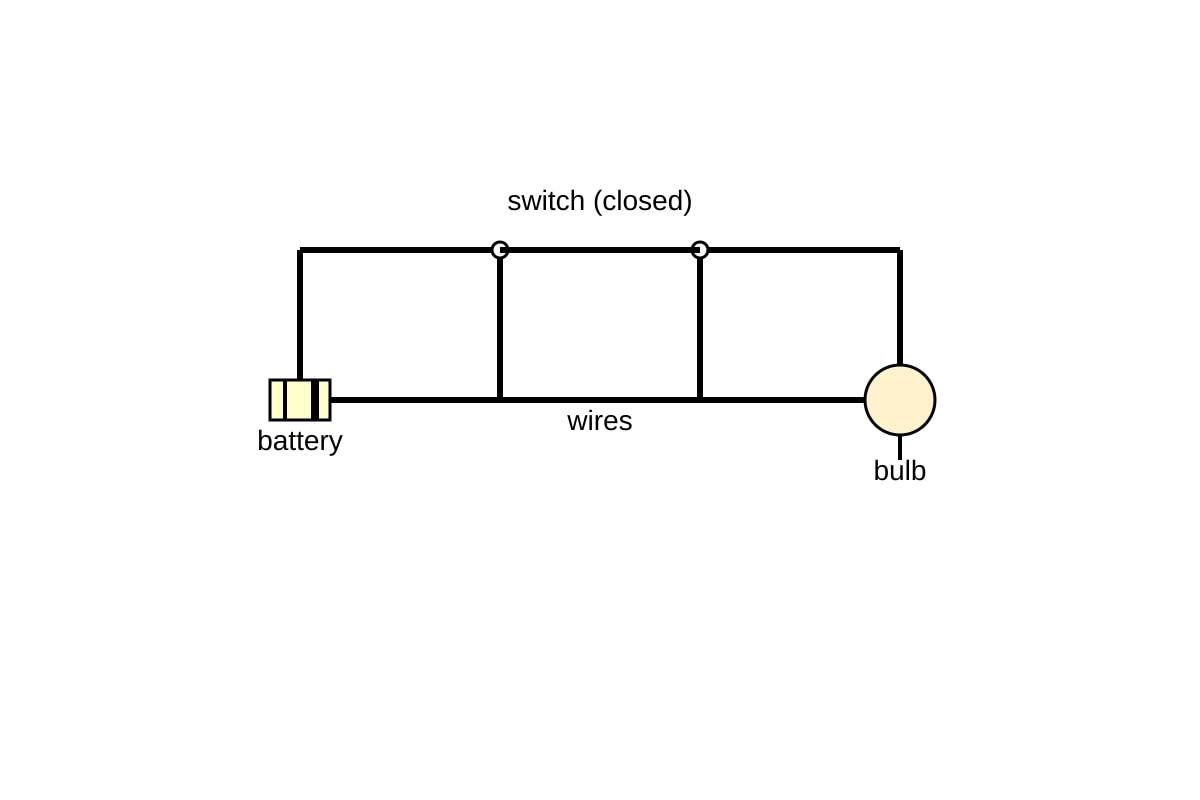
Generated diagram for Q17.
(a) Will the bulb light up? Why? (2 marks)
__________
(b) Draw a change to make the bulb go off without removing the battery. (1 mark)
__________
18. Study the plant transport system below.
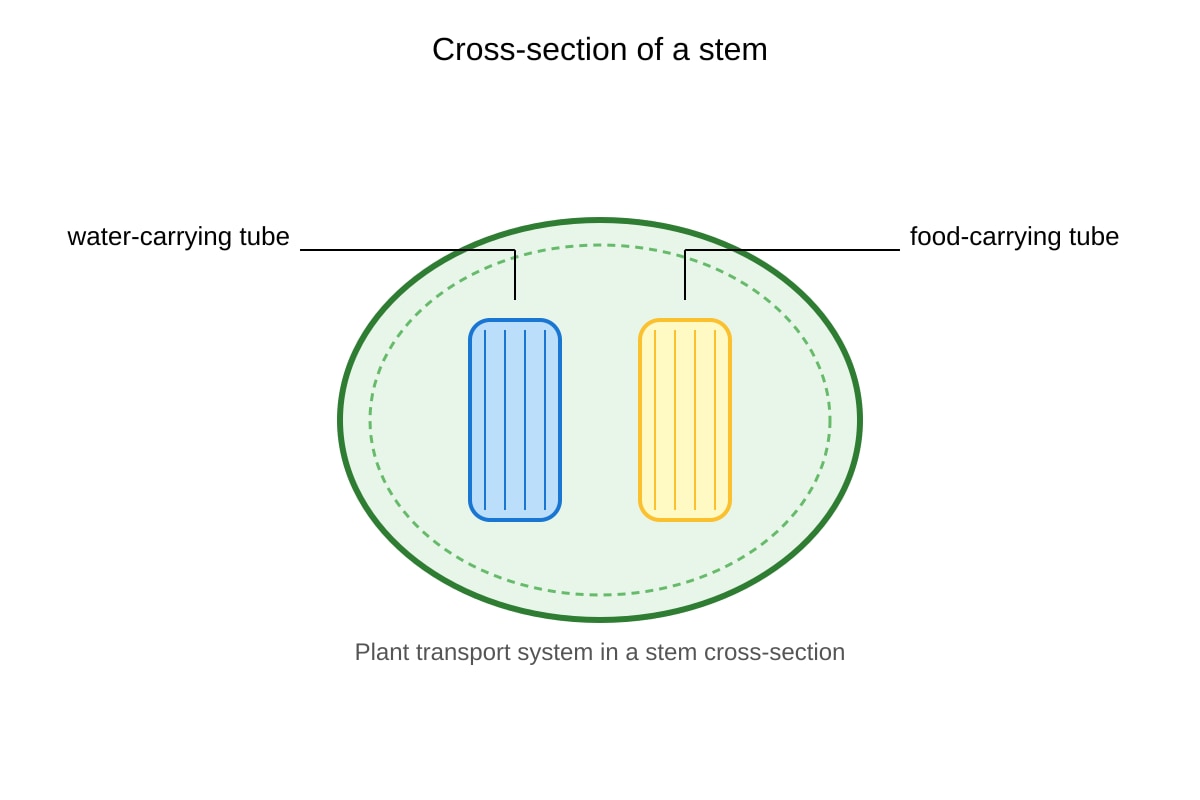
Generated diagram for Q18.
(a) Which tube carries water? (1 mark)
__________
(b) Which tube carries food made in leaves? (1 mark)
__________
(c) Why do plants need to transport water and food? (1 mark)
__________
19. A student says: "Fish, plants, and humans all take in oxygen and give out carbon dioxide."
(a) Is this statement correct? Give one similarity and one difference. (3 marks)
Similarity: __________
Difference: __________
- The human body uses the digestive, respiratory, and circulatory systems together.
(a) Name one way the respiratory and circulatory systems work together. (2 marks)
(b) Why is it important that these systems are integrated? (1 mark)