From Real Exams Quiz
Primary 5 Science Life Cycles Quiz
Free P5 Science Life Cycles quiz, Nemo3 Exam version, with questions, answers, and syllabus-aligned practice for Singapore students.
These static practice materials are generated from the site's syllabus and paper-generation workflow, with source and model context shown so students and parents can evaluate the material before use.
Questions

Free quiz and exam paper access
Enter your details to view this paper
Your access is remembered on this device.
Answers
Primary 5 Science Quiz - Life Cycles (Answer Key)
Total Marks: 40
Section A: Multiple-Choice Questions (10 × 1 mark = 10 marks)
1. A
Explanation: The life cycle of a flowering plant follows: Seed → Seedling → Adult plant → Flower → Fruit → Seed. The plant must grow into an adult before it can produce flowers, which then develop into fruits containing seeds.
2. C
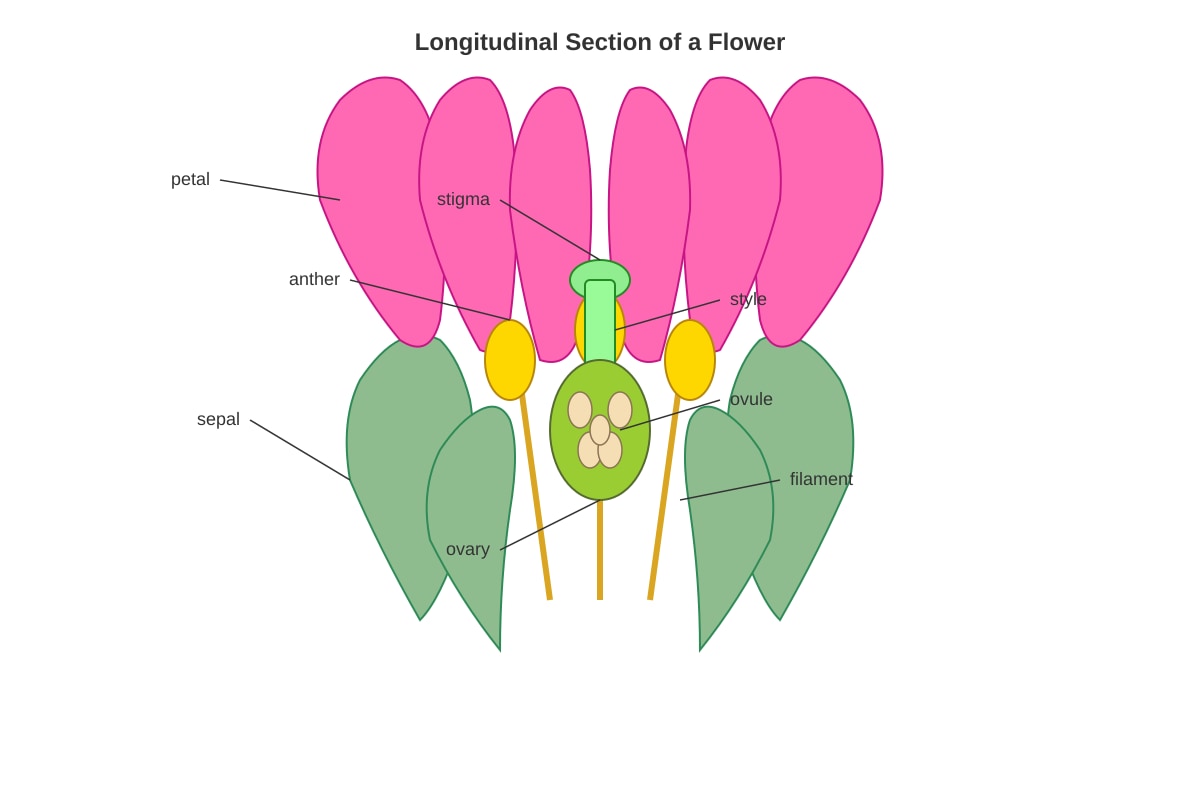
Explanation: The anther is the part of the stamen (male reproductive organ) that produces pollen grains, which contain the male reproductive cells. The stigma (A) receives pollen, the ovary (B) contains ovules (female cells), and the style (D) connects the stigma to the ovary.
3. A
Explanation: Pollination is defined as the transfer of pollen grains from the anther (male part) to the stigma (female part) of a flower. This can occur within the same flower (self-pollination) or between different flowers (cross-pollination).
4. B
Explanation: Fertilisation in flowering plants is the fusion of the male reproductive cell (from the pollen grain) with the female reproductive cell (in the ovule). It occurs after pollination, takes place in the ovule (inside the ovary), and results in the formation of a zygote, not pollen grains.
5. B
Explanation: In humans, fertilisation typically occurs in the fallopian tube (also called the oviduct). The egg is released from the ovary into the fallopian tube, where it may meet sperm. The fertilised egg then travels to the uterus for implantation and development.
6. C
Explanation: After fertilisation in the fallopian tube, the fertilised egg (zygote) moves to the uterus (womb), where it implants into the uterine lining and develops into an embryo and then a foetus.
7. C
Explanation: Mosquitoes lay their eggs in water (aquatic environment), while butterflies lay their eggs on leaves (terrestrial). Both have four-stage life cycles (complete metamorphosis): egg, larva, pupa, adult. Mosquito larvae and pupae live in water; butterfly larvae (caterpillars) and pupae (chrysalises) are on land.
8. B
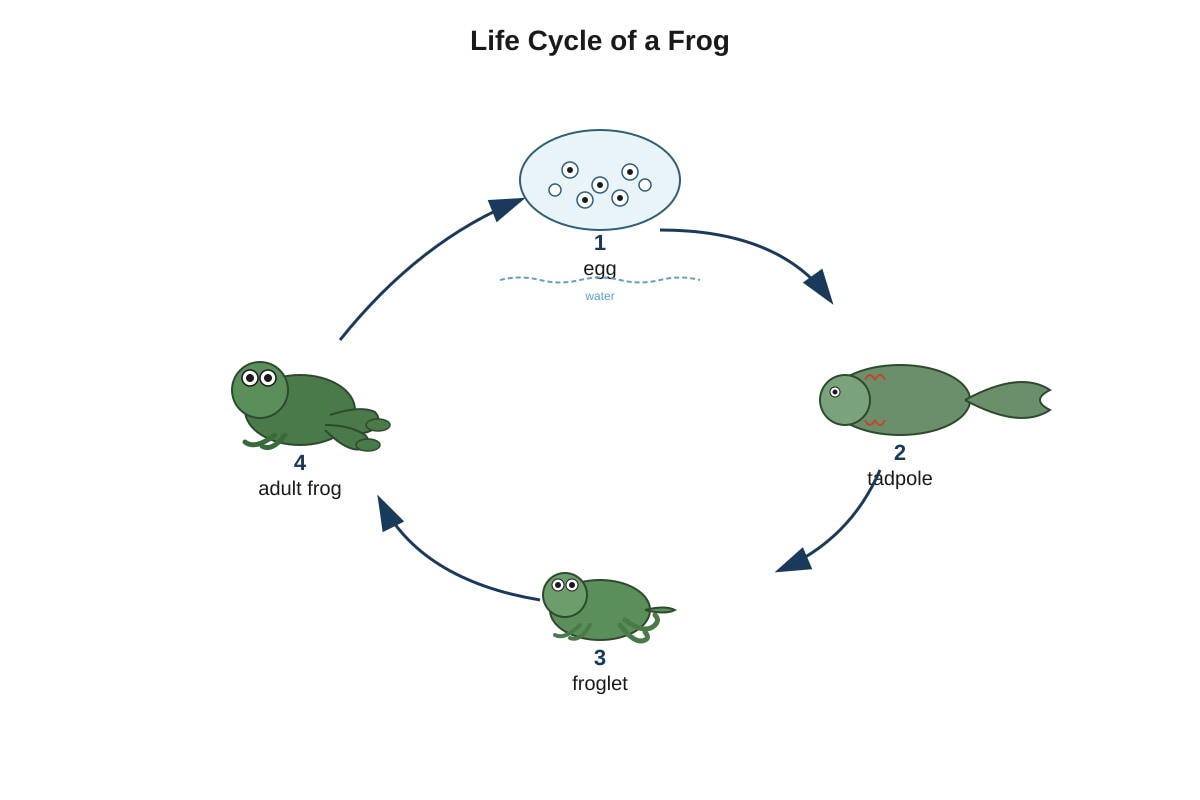
Explanation: The tadpole stage of a frog lives in water and breathes through gills. As it develops into a froglet and then an adult frog, it develops lungs for breathing air. Eggs do not breathe actively, and adult frogs breathe through lungs and skin.
9. B
Explanation: Seed dispersal spreads seeds away from the parent plant, reducing overcrowding and competition for light, water, nutrients, and space. This increases the chances of survival for the offspring.
10. C
Explanation: Wind-dispersed seeds are typically light and have structures like wings, parachutes, or feathery hairs (e.g., dandelion, angsana) that allow them to be carried by air currents. Heavy seeds (A) fall straight down, fleshy fruits (B) attract animals, and hooks (D) attach to animal fur.
Section B: Short-Answer Questions (5 × 2 marks = 10 marks)
11.
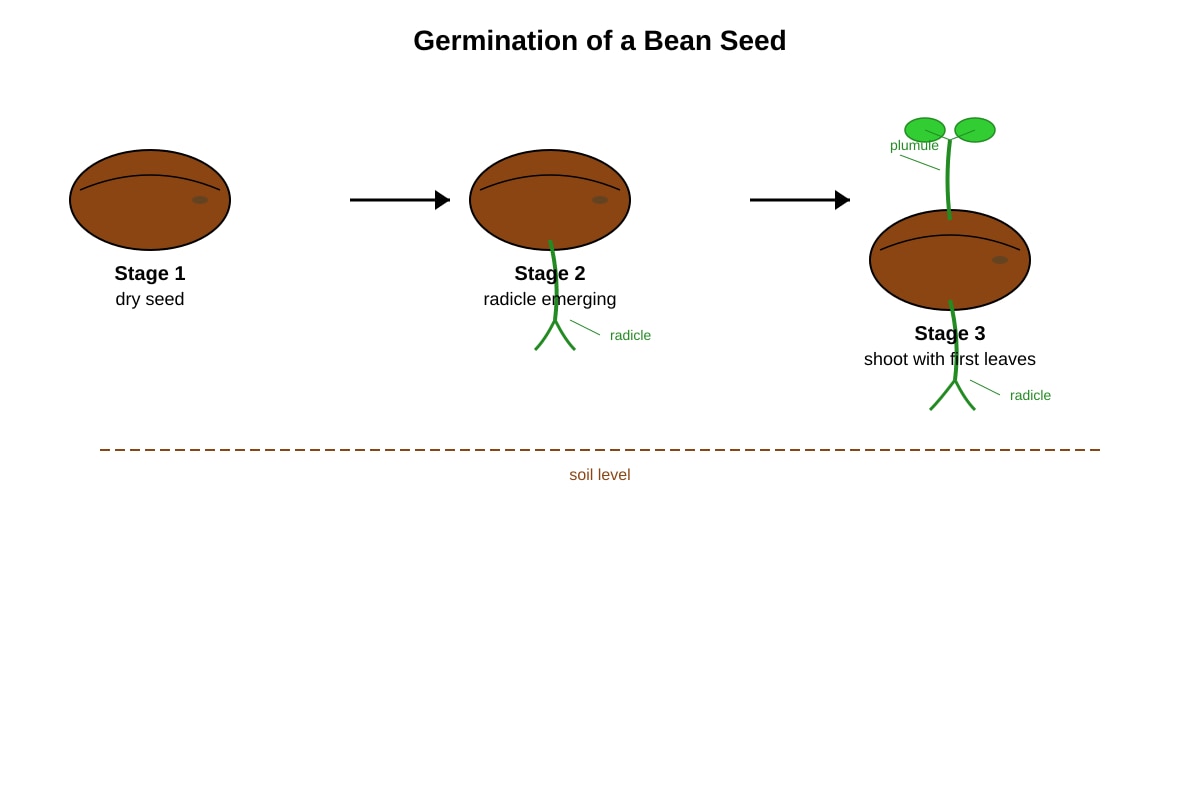
(a) Radicle (embryonic root) [1]
Explanation: The radicle is the first part to emerge during germination. It grows downward to anchor the seedling and absorb water and minerals from the soil.
(b) Water / moisture / oxygen / suitable temperature (any one) [1]
Explanation: Germination requires water (to activate enzymes and swell the seed), oxygen (for respiration to release energy), and a suitable temperature (for enzyme activity). Light is not needed for most seeds to germinate.
12.
| Flower Part | Function | Human Reproductive Part (Male/Female) | Function |
|---|---|---|---|
| Anther | Produces pollen grains (male reproductive cells) | Testis (Male) | Produces sperm |
| Stigma | Receives pollen grains | Stigma (Female) | Receives sperm / site of fertilisation |
| Ovary | Contains ovules (female reproductive cells) | Ovary (Female) | Contains eggs |
Marking: ½ mark per correct cell (4 cells = 2 marks).
Explanation: The anther is analogous to the testis (both produce male gametes). The stigma receives pollen just as the female reproductive tract receives sperm. The ovary in both plants and animals contains the female gametes (ovules/eggs).
13.
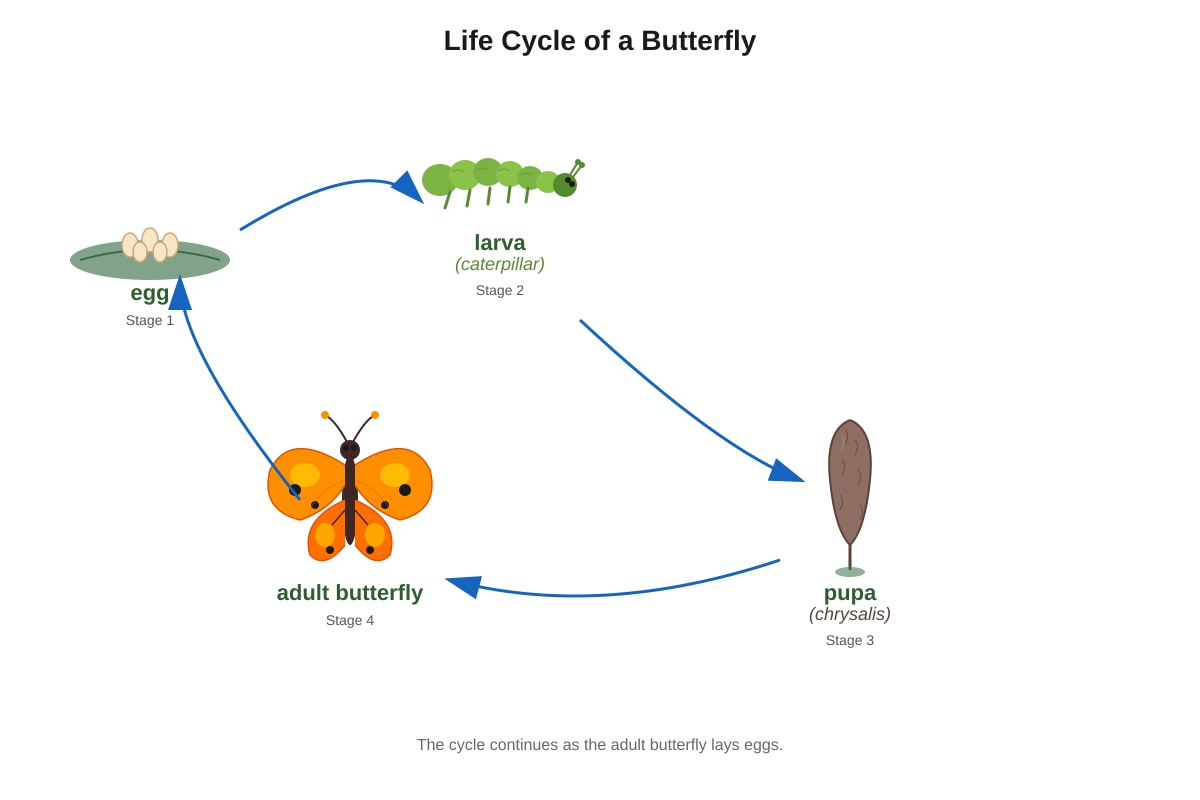
(a) Pupa (chrysalis) [1]
Explanation: The butterfly life cycle (complete metamorphosis) has four stages: egg → larva (caterpillar) → pupa (chrysalis) → adult butterfly.
(b) The larva (caterpillar) chews and eats leaves, while the adult butterfly uses a proboscis to suck nectar from flowers. [1]
Explanation: Caterpillars have mandibles for chewing solid plant material. Adult butterflies have a long, coiled proboscis for sipping liquid nectar. This difference reduces competition for food between stages.
14.
The water cycle provides water essential for life processes in both plants and animals. For plants, water is needed for photosynthesis, seed germination, and as a medium for pollination in some species. For animals, water is needed for drinking, as a habitat (e.g., for mosquito larvae), and for reproductive processes (e.g., fertilisation in frogs and fish occurs in water). [2]
Marking: 1 mark for linking water cycle to water availability; 1 mark for specific examples in plants and animals.
Explanation: The water cycle (evaporation, condensation, precipitation) ensures a continuous supply of fresh water. Without it, plants cannot germinate or photosynthesise, and many animals cannot reproduce or survive.
15.
(a) By insects (insect-pollinated) [1]
(b) Large, brightly coloured petals and sweet scent attract insects; anthers inside the flower ensure insects brush against them while collecting nectar. [1]
Explanation: Insect-pollinated flowers have adaptations to attract pollinators: colourful petals, scent, nectar. Wind-pollinated flowers have small, dull petals, no scent, exposed anthers, and feathery stigmas. The description matches insect-pollinated features.
Section C: Open-Ended Questions (5 × 4 marks = 20 marks)
16.
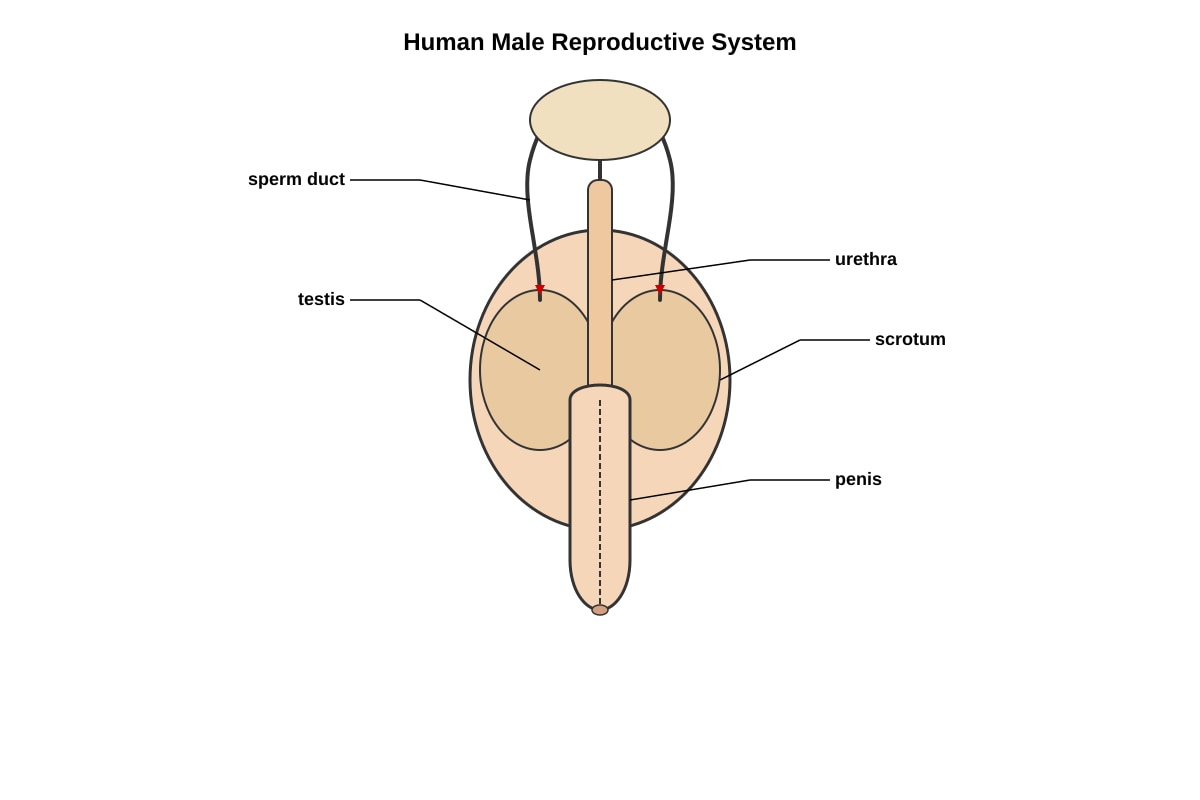
(a) Testis – produces sperm (male reproductive cells) and male sex hormones (e.g., testosterone). [2]
Marking: 1 mark for naming; 1 mark for function.
Explanation: The testes are the primary male reproductive organs. They produce sperm continuously from puberty onwards and secrete testosterone, which controls male secondary sexual characteristics.
(b) Testis → sperm duct (vas deferens) → urethra → penis → outside the body. [2]
Marking: 1 mark for correct sequence; 1 mark for naming at least two structures correctly.
Explanation: Sperm produced in the testis mature in the epididymis (not shown), then travel through the sperm duct during ejaculation. The sperm duct joins the urethra, which runs through the penis to the outside. Fluids from glands (seminal vesicles, prostate) mix with sperm to form semen.
17.
(a) Pollen tube [1]
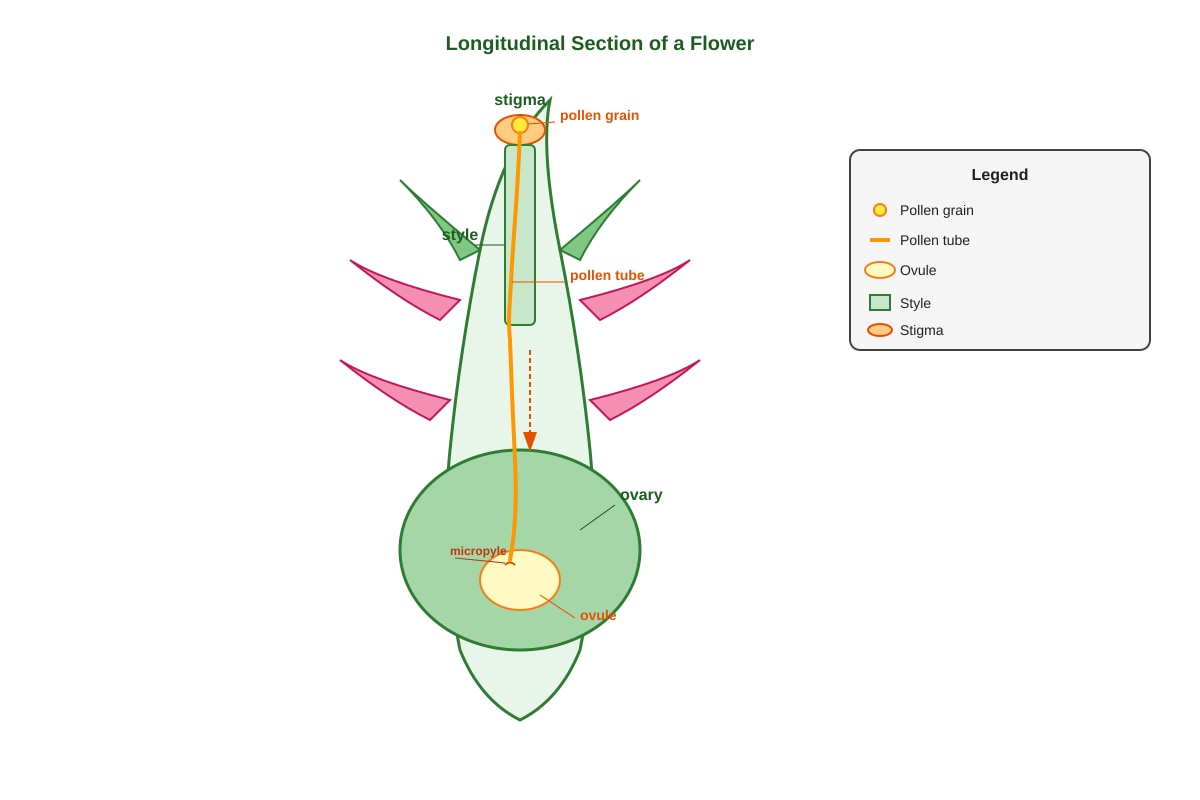
Explanation: After a pollen grain lands on the stigma, it germinates and grows a pollen tube down the style toward the ovary.
(b) The pollen tube enters the ovule through the micropyle and releases the male reproductive cell, which fuses with the female reproductive cell in the ovule (fertilisation). [2]
Marking: 1 mark for pollen tube entering ovule; 1 mark for fusion of male and female cells.
Explanation: The pollen tube grows down the style, guided by chemical signals, enters the ovule through a tiny opening called the micropyle, and releases two male nuclei. One fuses with the egg cell (fertilisation); the other fuses with the polar nuclei to form the endosperm (double fertilisation, though only the first part is required at P5 level).
(c) Seed [1]
Explanation: After fertilisation, the ovule develops into a seed (containing the embryo and food store), and the ovary develops into a fruit.
18.
(a) Seed X. It is light (0.02 g) and has a wing-like structure, which allows it to be carried by wind. [2]
Marking: 1 mark for identifying X; 1 mark for explaining using mass and wing feature.
Explanation: Wind-dispersed seeds are lightweight and have structural adaptations (wings, parachutes) to increase air resistance and stay airborne longer.
(b) Seed Z. It has a fleshy, edible fruit that attracts animals to eat it. The seeds pass through the animal's digestive system unharmed and are dispersed in the droppings. [2]
Marking: 1 mark for identifying Z; 1 mark for explaining the animal dispersal mechanism.
Explanation: Animal-dispersed seeds are often enclosed in fleshy, nutritious fruits. Animals eat the fruit, seeds survive digestion, and are deposited elsewhere with fertiliser. Seed Y (heavy, hard coat) may be dispersed by gravity or water (e.g., coconut).
19.
(a) Both have an egg stage and undergo metamorphosis (change in form during development). [1]
Alternative: Both lay eggs; both have young that look different from adults.
Explanation: Both insects hatch from eggs and go through distinct developmental stages before becoming adults.
(b) Any two of:
- Mosquito has four stages (complete metamorphosis: egg, larva, pupa, adult); grasshopper has three stages (incomplete metamorphosis: egg, nymph, adult).
- Mosquito larva and pupa live in water; grasshopper nymph lives on land.
- Mosquito larva looks very different from adult; grasshopper nymph resembles a small wingless adult.
- Mosquito has a pupa stage; grasshopper does not. [2]
Marking: 1 mark per valid difference.
Explanation: Mosquitoes undergo complete metamorphosis with a pupal stage; grasshoppers undergo incomplete metamorphosis where nymphs moult several times, gradually developing wings.
(c) Mosquito larvae and pupae are aquatic and breathe through siphons/tubes at the water surface. They need water to survive and develop. [1]
Explanation: Mosquito eggs hatch into larvae (wrigglers) that live in water, feeding on microorganisms. They must come to the surface to breathe air through a siphon. Without water, they cannot complete their life cycle.
20.
(a) Any two of:
- The seeds were not viable (dead/old/damaged).
- The soil was too dry (lack of water).
- The soil was too wet / waterlogged (lack of oxygen).
- The temperature was too low or too high.
- The seeds were planted too deep (used up food reserves before reaching surface).
- The seeds were dormant and needed a period of rest/cold/stratification. [2]
Marking: 1 mark per valid reason.
Explanation: Germination requires viable seeds, water, oxygen, and suitable temperature. Common reasons for failure include poor seed quality, incorrect moisture, wrong temperature, or planting depth.
(b) Soaking the seeds provided water, which was absorbed by the seed (imbibition). This activated enzymes that broke down stored food in the cotyledons, providing energy for the embryo to grow. It also softened the seed coat, allowing the radicle to emerge more easily. [2]
Marking: 1 mark for water absorption/imbibition; 1 mark for enzyme activation/food breakdown or seed coat softening.
Explanation: Dry seeds are dormant with low water content. Soaking initiates germination by rehydrating cells, activating metabolic enzymes (e.g., amylase to break down starch), and making the seed coat permeable to gases and easier for the radicle to penetrate.
End of Answer Key