AI Generated Exam Paper
Primary 5 Science Practice Paper 5
Free P5 Science Practice Paper 5, HY3 AI version, with questions, answers, and syllabus-aligned practice for Singapore students.
These static practice materials are generated from the site's syllabus and paper-generation workflow, with source and model context shown so students and parents can evaluate the material before use.
Questions
TuitionGoWhere Practice Paper - Science Primary 5
TuitionGoWhere Practice Paper (AI)
Version: 5 of 5
Subject: Science
Level: Primary 5
Paper: Practice Paper (Topic: Diversity)
Duration: 45 minutes
Total Marks: 40
Name: ___________________________
Class: ________
Date: ____________
Instructions:
- This practice paper has 20 questions on the topic of Diversity.
- Section A: 10 multiple-choice questions (1 mark each).
- Section B: 6 short-answer questions (2 marks each).
- Section C: 4 structured questions (total 8 marks).
- Answer all questions in the spaces provided.
- No past-year paper evidence was used; this is syllabus-first AI-generated practice.
Section A (10 marks)
Choose the correct answer for each question.
-
Which of the following is a way that living things show diversity?
A. They all have the same size
B. They have different body features and habitats
C. They all eat the same food
D. They all live in water -
A cactus and a water lily are different because they live in different ________.
A. colours
B. habitats
C. names
D. sounds -
Which group contains only living things?
A. Dog, rock, cloud
B. Fish, tree, insect
C. Book, chair, table
D. Sun, moon, star -
Birds and mammals are both animals but differ in their ________.
A. ability to move
B. body covering (feathers vs fur)
C. need for air
D. need for water -
Which of these is a non-living thing?
A. Mushroom
B. Grass
C. Plastic bottle
D. Earthworm -
Diversity among plants can be seen in their different ________.
A. heights and leaf shapes
B. voices
C. thoughts
D. schools -
Which sense helps us observe diversity in the smell of flowers?
A. Sight
B. Hearing
C. Smell
D. Taste -
A place where a living thing lives is called its ________.
A. food
B. habitat
C. toy
D. friend -
Which of the following shows diversity in how animals move?
A. All animals walk
B. Some fly, some swim, some crawl
C. All animals hop
D. All animals run -
Why is it important to study diversity?
A. To know that all things are the same
B. To understand and care for different living things
C. To ignore plants
D. To count only animals
Section B (12 marks)
Answer each question in complete sentences.
-
Name two different habitats and one living thing found in each. (2 marks)
-
Give two ways in which insects are different from birds. (2 marks)
-
State one difference between a living thing and a non-living thing. (2 marks)
-
List two features that show diversity among fish. (2 marks)
-
Explain why a polar bear and a camel look different. (2 marks)
-
Name one plant and one animal that live in the same habitat. State the habitat. (2 marks)
Section C (8 marks)
Answer the questions below.
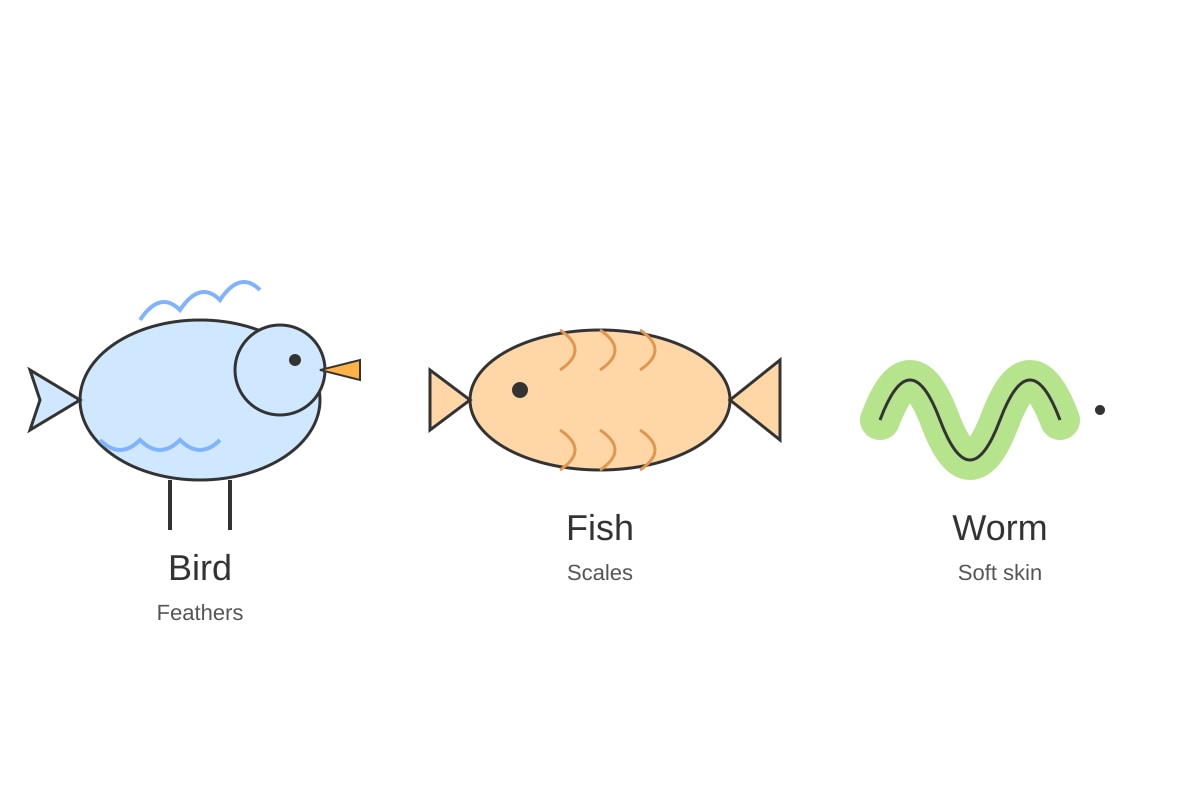
- Look at the picture of three animals.
Image pending generation: figure for Q17.
(a) What is one difference in their body coverings? (1 mark)
(b) Why do they have different body coverings? (1 mark)
-
A student said, "All plants are green and grow on land."
(a) Is this statement true? (1 mark)
(b) Give one example to show diversity in plants that proves the statement wrong. (1 mark) -
Complete the table on diversity of living things. (2 marks)
| Group | Example | Different feature |
|---|---|---|
| Plant | _________ | _________ |
| Animal | _________ | _________ |
- Explain how diversity helps living things survive in different places. Use one example. (2 marks)
Answers
TuitionGoWhere Practice Paper - Science Primary 5 (Answer Key)
Version: 5 of 5
Topic: Diversity
Total Marks: 40
Section A Answers (1 mark each)
- B – Living things show diversity by having different body features and living in different habitats. (Teaching note: Diversity means variety; same size/food is false.)
- B – Habitat is the natural home; cactus in desert, water lily in pond. (Common mistake: choosing colours which is not the cause of difference.)
- B – Fish, tree, insect are living. Rock, cloud, book, chair, sun are non-living.
- B – Birds have feathers, mammals have fur; both move, need air and water.
- C – Plastic bottle is made by humans, non-living. Others are living.
- A – Plants differ in height and leaf shape showing diversity.
- C – Smell senses odour diversity in flowers.
- B – Habitat definition.
- B – Movement methods vary: fly, swim, crawl.
- B – Studying diversity helps us care for different life forms.
Section B Answers (2 marks each)
- Habitat 1: Forest – monkey. Habitat 2: Ocean – fish. (1 mark per correct pair; accept any valid e.g., desert – cactus, pond – frog.)
Marking: 1 mark each habitat+organism. - Two differences: (a) Insects have 6 legs, birds have 2 legs. (b) Insects have antennae, birds have beaks. (1 mark each; other valid: body covering, wings type.)
- Living things can grow/reproduce; non-living cannot. (2 marks for clear difference; 1 mark if partial.)
- Two features: body shape, fin size, colour, scale pattern. (1 mark each.)
- Polar bear has thick white fur for cold snow; camel has hump and thin fur for hot desert. (2 marks: 1 for each adaptation linked to habitat.)
- Example: Frog and lily pad in pond. (1 mark organism + 1 mark habitat.)
Section C Answers (8 marks total)
- (a) Bird has feathers, fish has scales, worm has soft skin. (1 mark for stating one difference e.g., bird has feathers, fish has scales.)
(b) Different coverings suit their habitat: feathers for flight, scales for water protection, soft skin for burrowing. (1 mark reasoning.)
Image note: figure must show three animals with labelled coverings. - (a) No, false. (1 mark)
(b) Example: Water lily grows in water (not land) or mushroom not green. (1 mark with example.) - Table: Plant – cactus, feature: spiky desert plant; Animal – eagle, feature: wings. (1 mark per row correctly completed.)
- Diversity means different traits help species fit their environment. Example: Desert plants store water, rain forest plants need lots of water. (2 marks: 1 for explanation, 1 for example.)
Free quiz and exam paper access
Enter your details to view this paper
Your access is remembered on this device.