AI Generated Exam Paper
Primary 5 Science Practice Paper 3
Free P5 Science Practice Paper 3, Kimi2.6 AI version, with questions, answers, and syllabus-aligned practice for Singapore students.
These static practice materials are generated from the site's syllabus and paper-generation workflow, with source and model context shown so students and parents can evaluate the material before use.
Questions
Free quiz and exam paper access
Enter your details to view this paper
Your access is remembered on this device.
Answers
TuitionGoWhere Practice Paper - Science Primary 5 (Version 3)
Answer Key and Marking Scheme
Total Marks: 60
SECTION A: Multiple Choice (20 marks)
Question 1
Answer: B — Kingdom → Phylum → Class → Order → Family → Genus → Species
Explanation: The hierarchical classification system goes from largest (most inclusive) to smallest (most specific). Kingdom is the broadest category containing all living things with shared fundamental characteristics. As we move down the levels, organisms share more specific features. Species is the most specific level where organisms can interbreed. Option A has Species before Phylum and jumbled middle levels. Option C is in reverse order (smallest to largest). Option D swaps Class and Phylum positions.
Question 2
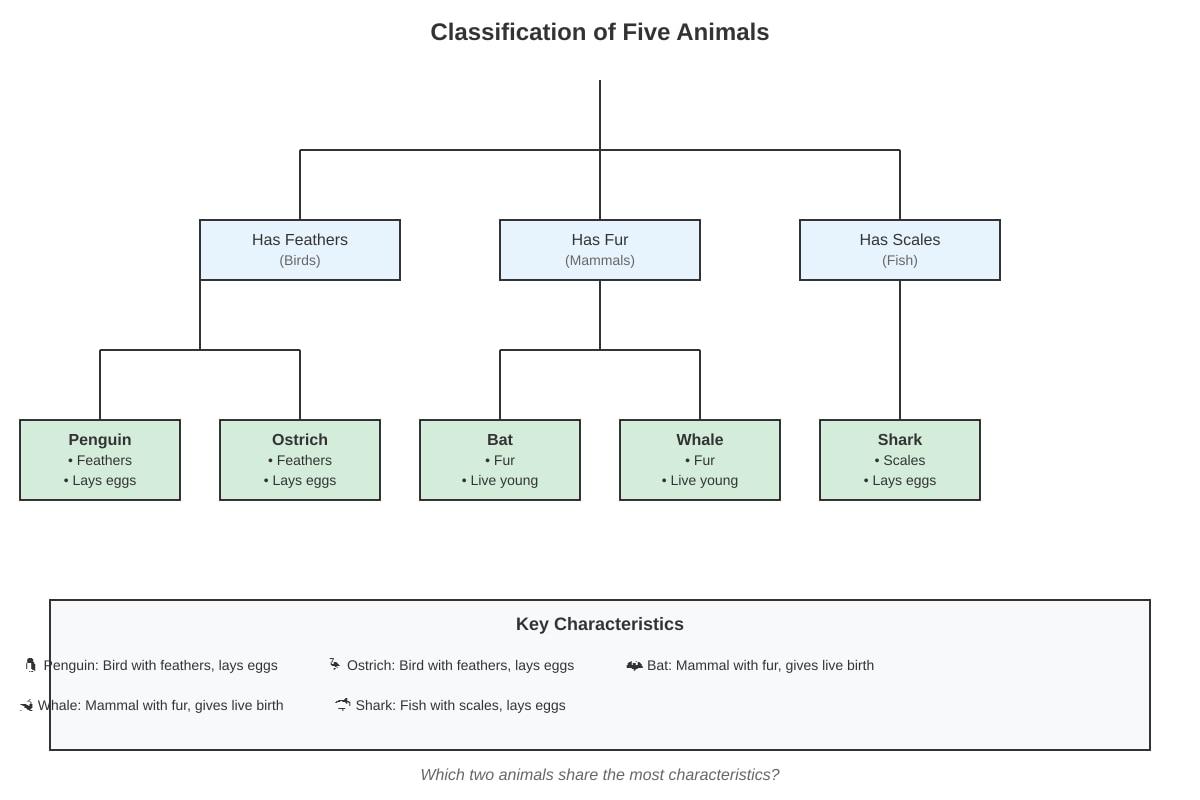
Answer: A — Penguin and ostrich
Explanation: In a branching diagram (cladogram), organisms that share the most recent common branching point are most closely related. Both penguin and ostrich share the features "feathers" and "lays eggs," placing them together under Aves (birds). They branch together before other groups diverge. Bat and whale are both mammals (fur, live young) but are in a separate branch from birds. Whale and shark look similar in body shape due to convergent evolution (similar environments), but whale is a mammal while shark is a fish with scales— they are not closely related. Penguin and bat are in completely different classes.
Question 3
Answer: C — They lay eggs with hard shells
Explanation: Most mammals give birth to live young. Only monotremes (platypus and echidna) lay eggs, and even their eggs are leathery, not hard-shelled like bird eggs. All mammals have hair/fur at some life stage, breathe through lungs, and females produce milk (mammary glands). This is the defining characteristic of Class Mammalia from which the group gets its name.
Question 4
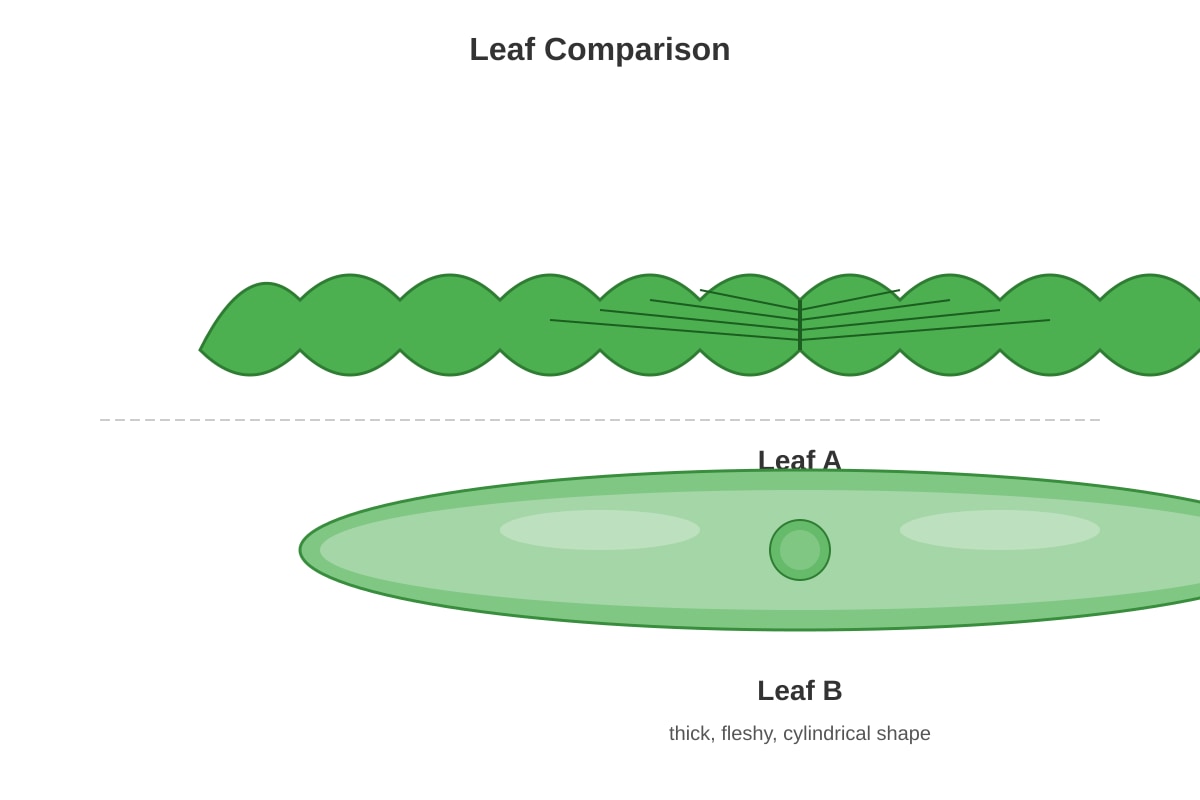
Answer: B — Desert with little rainfall and high temperatures
Explanation: Leaf B shows xerophytic (dry habitat) adaptations. The thick, fleshy structure stores water; the cylindrical shape reduces surface area to volume ratio, minimizing water loss; the waxy coating prevents evaporation. These are classic adaptations to arid conditions. Tropical rainforest leaves (A) are broad to capture light in dense shade. Pond plants have thin leaves for submerged photosynthesis or floating structures. Temperate grassland leaves are typically moderate with seasonal shedding.
Question 5
Answer: B — It is not useful because it does not show evolutionary relationships
Explanation: Useful biological classification shows how closely related organisms are through common ancestry and shared characteristics. Grouping by ability to fly puts bats (mammals), birds, and insects together despite vast evolutionary differences. Similarly, grouping by aquatic life puts fish, whales (mammals), and jellyfish together. This artificial grouping doesn't reflect true relationships. While the classification does show how animals move (C), this is not the purpose of scientific classification. Bees can fly (D is factually incorrect).
Question 6
Answer: C — Presence of seeds enclosed in fruits
Explanation: Flowering plants (angiosperms) are defined by having flowers that develop into fruits containing seeds. Non-flowering plants include gymnosperms (conifers with naked seeds in cones), ferns (spores), and mosses (spores). Presence of roots (A), ability to make food (B), and green leaves (D) are features of nearly all plants, not distinguishing characteristics.
Question 7
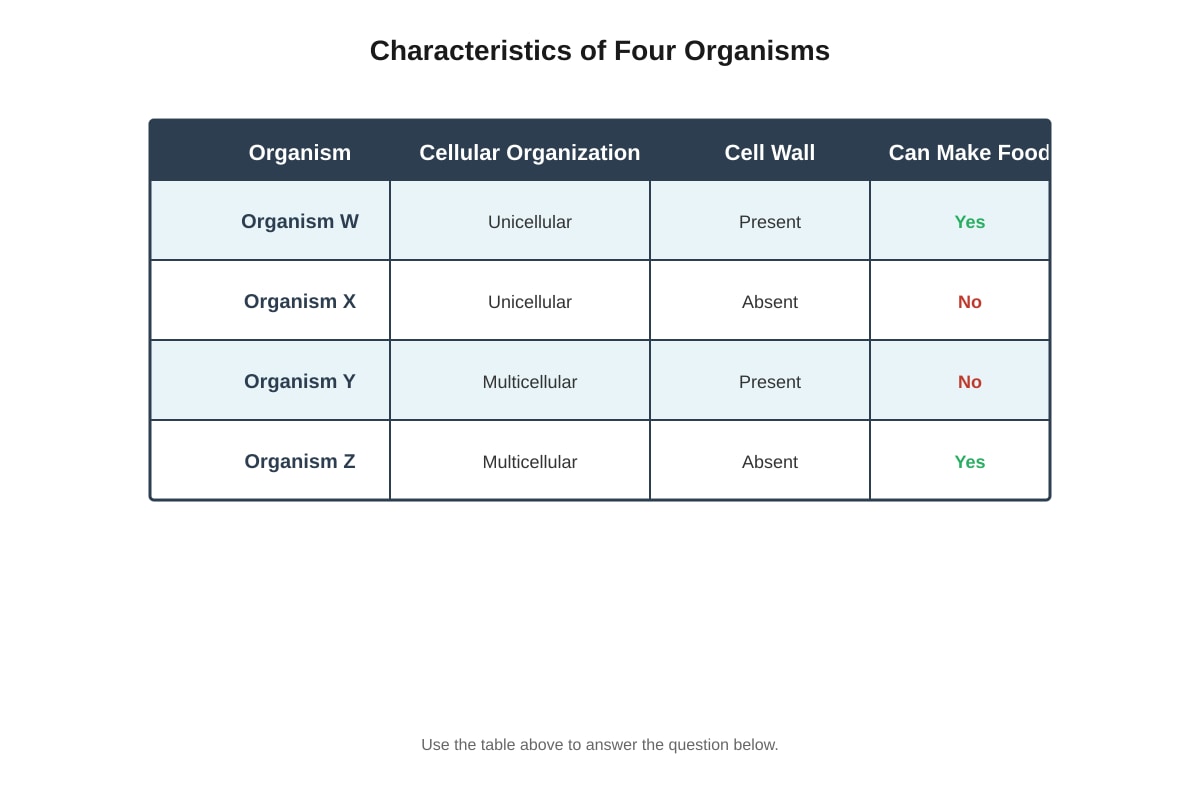
Answer: C — Organism Y
Explanation: Fungi are multicellular eukaryotes with cell walls (made of chitin, not cellulose like plants), and they cannot make their own food—they are heterotrophs that absorb nutrients. Organism W could be a plant (cell wall + makes food). Organism X could be a protozoan like Paramecium (unicellular, no cell wall, heterotrophic). Organism Z could be an animal like a human (multicellular, no cell wall, heterotrophic— but no cell wall excludes fungi). Organism Y matches all key fungal characteristics: multicellular, has cell wall, cannot make food.
Question 8
Answer: B — Are unicellular and have no true nucleus
Explanation: Kingdom Monera (now often split into Bacteria and Archaea) contains prokaryotes. The defining features are: unicellular organization, lack of membrane-bound nucleus (DNA in nucleoid region), and lack of membrane-bound organelles. While some bacteria cause diseases (A) and some live in extreme environments (Archaea, C), and all reproduce quickly (D), these are not defining taxonomic characteristics. Many other kingdoms have disease-causing or fast-reproducing members.
Question 9
Answer: C — Human and mushroom
Explanation: Diversity in classification refers to how distantly related organisms are. Humans (Kingdom Animalia) and mushrooms (Kingdom Fungi) are in completely different kingdoms, representing a vast evolutionary divergence. They differ in mode of nutrition (heterotrophy by ingestion vs. absorption), cell walls (none vs. chitin), and many fundamental cellular processes. Dog and wolf (A) are in the same genus (Canis). Rose and hibiscus (B) are both flowering plants in the same family (Malvaceae actually for hibiscus, Rosaceae for rose— but same kingdom and closer than cross-kingdom). Eagle and sparrow (D) are both birds in Class Aves.
Question 10
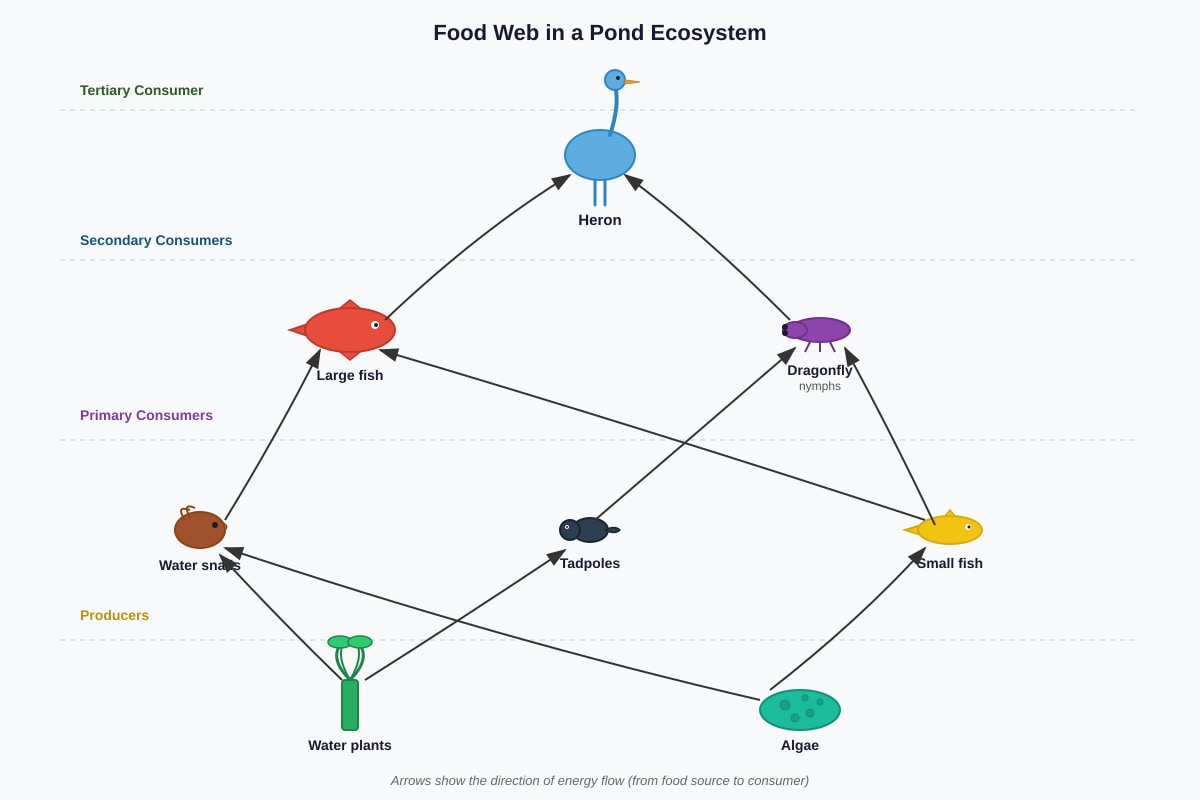
Answer: B — Small fish and tadpoles
Explanation: Trophic levels are determined by what an organism eats. Water snails eat producers (algae/water plants), making them primary consumers. Small fish and tadpoles also eat producers (algae or plant matter), placing them at the same trophic level. Large fish eat other animals (secondary consumers or higher). Heron is a tertiary consumer (top predator). Algae are producers, not consumers. Dragonfly nymphs are secondary consumers that eat tadpoles and other small animals.
Question 11
Answer: A — Are in the same genus as tigers (Panthera tigris)
Explanation: Binomial nomenclature uses two parts: genus (capitalized, italicized) + species epithet (lowercase, italicized). Panthera leo (lion) and Panthera tigris (tiger) share the genus Panthera, indicating they are closely related big cats capable of producing hybrid offspring (ligers/tigons, though infertile). They are different species (B incorrect), same kingdom (C incorrect). Some Panthera species can interbreed in captivity, though naturally they are geographically isolated (D is oversimplified).
Question 12
Answer: B — Vertebrates have a backbone; invertebrates do not
Explanation: This is the defining anatomical distinction. Vertebrata is a subphylum of Chordata characterized by a vertebral column. Size (A) varies enormously— giant squid are invertebrates larger than many vertebrates. Habitat (C) is not determining— many invertebrates are terrestrial (insects). Complexity (D) is misleading; some invertebrates like cephalopods have complex behaviors and large brains, while cell number doesn't correlate with backbone presence.
Question 13
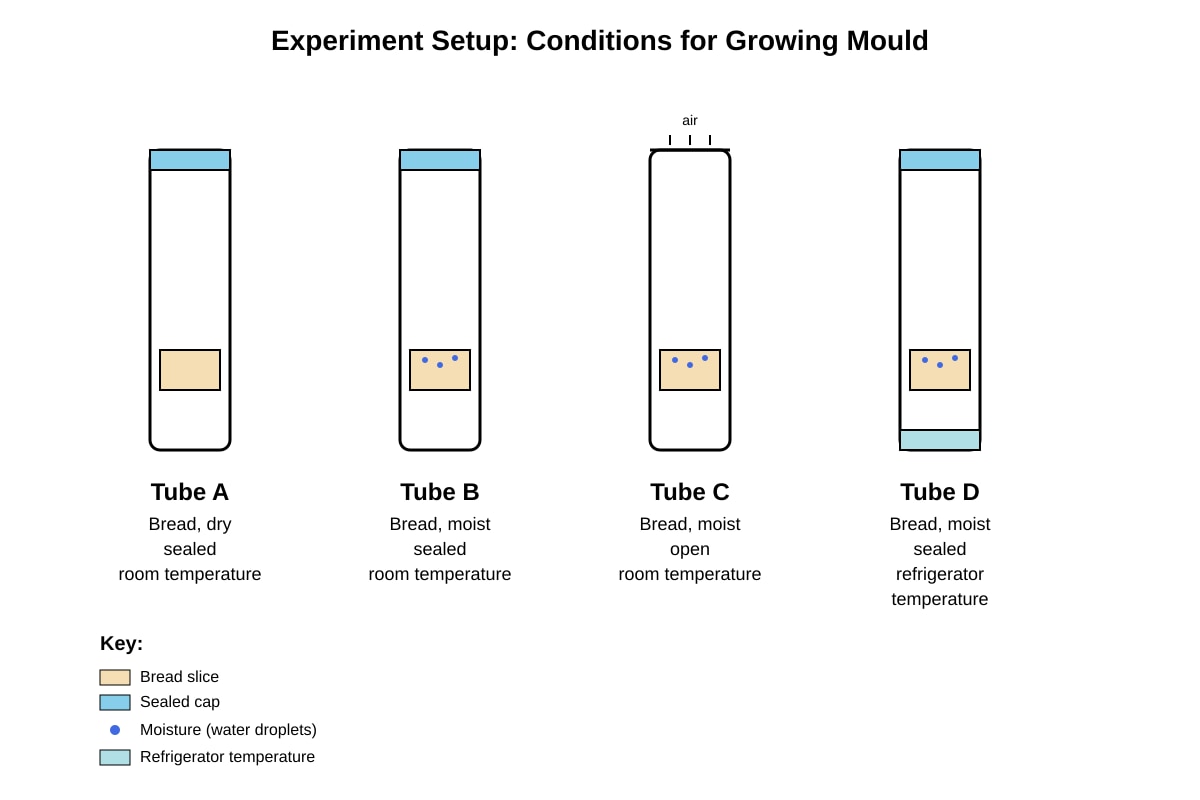
Answer: C — Tube C
Explanation: Mould (fungi) requires: moisture, suitable temperature (room temperature optimal), and organic food source. Tube C has all three: moist bread (food + water), room temperature (ideal for fungal enzymes), and open access to air/oxygen and spores. Tube A lacks moisture. Tube B is moist but sealed— limited air exchange may slow growth. Tube D is too cold; fungal enzymes work slowly at refrigerator temperatures. The "open" feature of C also allows access to airborne spores.
Question 14
Answer: B — Different species need different environments to survive
Explanation: Biodiversity encompasses the variety of life at genetic, species, and ecosystem levels. Different species have evolved specific adaptations to particular habitats (niche specialization). Losing diverse habitats eliminates species that cannot survive elsewhere. While green areas may be aesthetically pleasing (C) and some habitats produce oxygen (D), these are not the primary conservation rationale. More land for humans (A) contradicts conservation goals.
Question 15
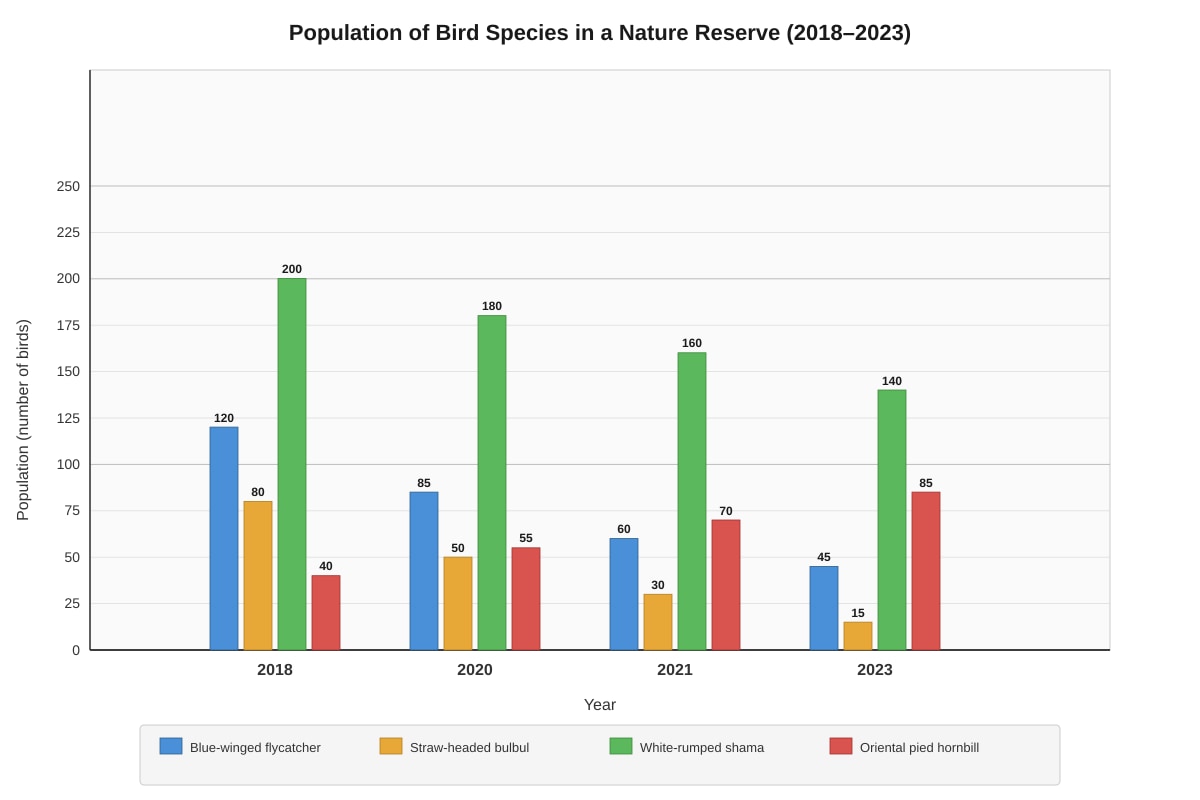
Answer: B — The straw-headed bulbul is most at risk of extinction
Explanation: From the data: Straw-headed bulbul declined from 80 to 15 individuals (81% decrease), the steepest decline and lowest absolute number. This small population is vulnerable to stochastic events. Blue-winged flycatcher also declined but from higher numbers. Oriental pied hornbill increased, contradicting A and unsupported by C. The graph shows population changes but doesn't specify causes, so D is unsupported speculation.
Question 16
Answer: B — A strawberry plant growing new plants from runners
Explanation: Runners (stolons) are horizontal stems that produce new plantlets— this is vegetative propagation, a form of asexual reproduction where offspring are genetically identical to the parent. All other options involve gametes (eggs and sperm) and fertilization, which are sexual reproduction. The fertilized egg/chicken egg (A), butterfly eggs (C), and external fertilization in fish (D) all require fusion of male and female gametes.
Question 17
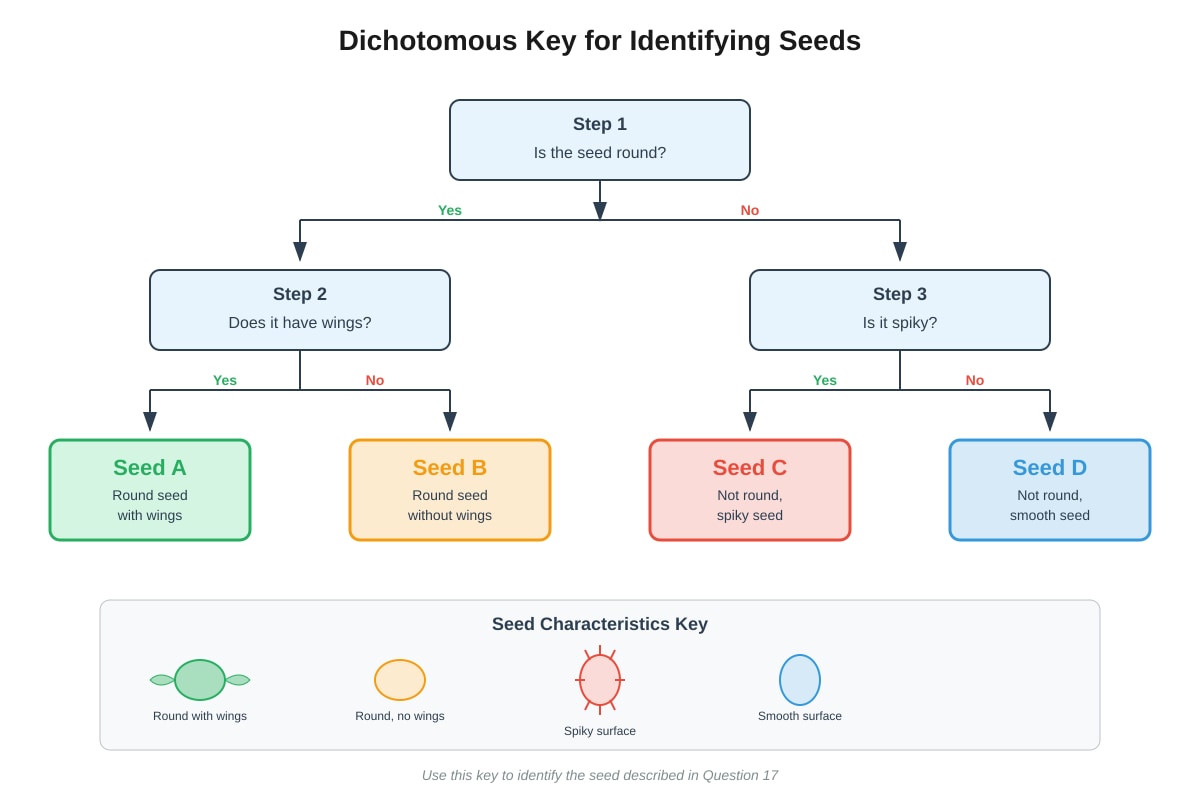
Answer: C — Seed C
Explanation: Working through the dichotomous key: Step 1 — "Is the seed round?" The seed is "not round" → follow "No" to Step 3. Step 3 — "Is it spiky?" The seed "has spines all over its surface" (spiky) → follow "Yes" to Seed C. The key's structure forces sequential decisions; at each step, one option is eliminated based on observable characteristics.
Question 18
Answer: B — Having a streamlined body shape
Explanation: Streamlining reduces drag (water resistance), essential for efficient swimming but unnecessary and even disadvantageous on land where gravity dominates and legs provide locomotion. Eyes on both sides (A) helps with panoramic vision in water but is also useful on land (many land animals have this). Scales (C) protect against infection in both environments. Mouth (D) is essential for feeding in all environments.
Question 19
Answer: B — Are unicellular eukaryotes
Explanation: Kingdom Protoctista (Protista) is a diverse group unified primarily by being eukaryotes that don't fit into other kingdoms. They are mostly unicellular (though some like algae can be colonial or multicellular). The key distinction from Monera is having a true nucleus and membrane-bound organelles (eukaryotic). Being microscopic (A), mode of locomotion (C), and habitat (D) are common features but not defining— many protists are large (kelp), some don't move, and some live in marine or soil environments.
Question 20
Answer: B — They allow identification based on observable features with yes/no choices
Explanation: Dichotomous means "dividing into two parts." Each step presents two mutually exclusive choices based on observable characteristics, progressively narrowing possibilities until one species remains. They don't require prior knowledge of names (A can be learned after identification). They don't show evolutionary history (C— that's cladograms/phylogenetic trees). They don't need photographs (D— though these may accompany keys, the key itself works from descriptions).
SECTION A TOTAL: 20 marks
SECTION B: Structured Questions (24 marks)
Question 21 (8 marks)
(a)
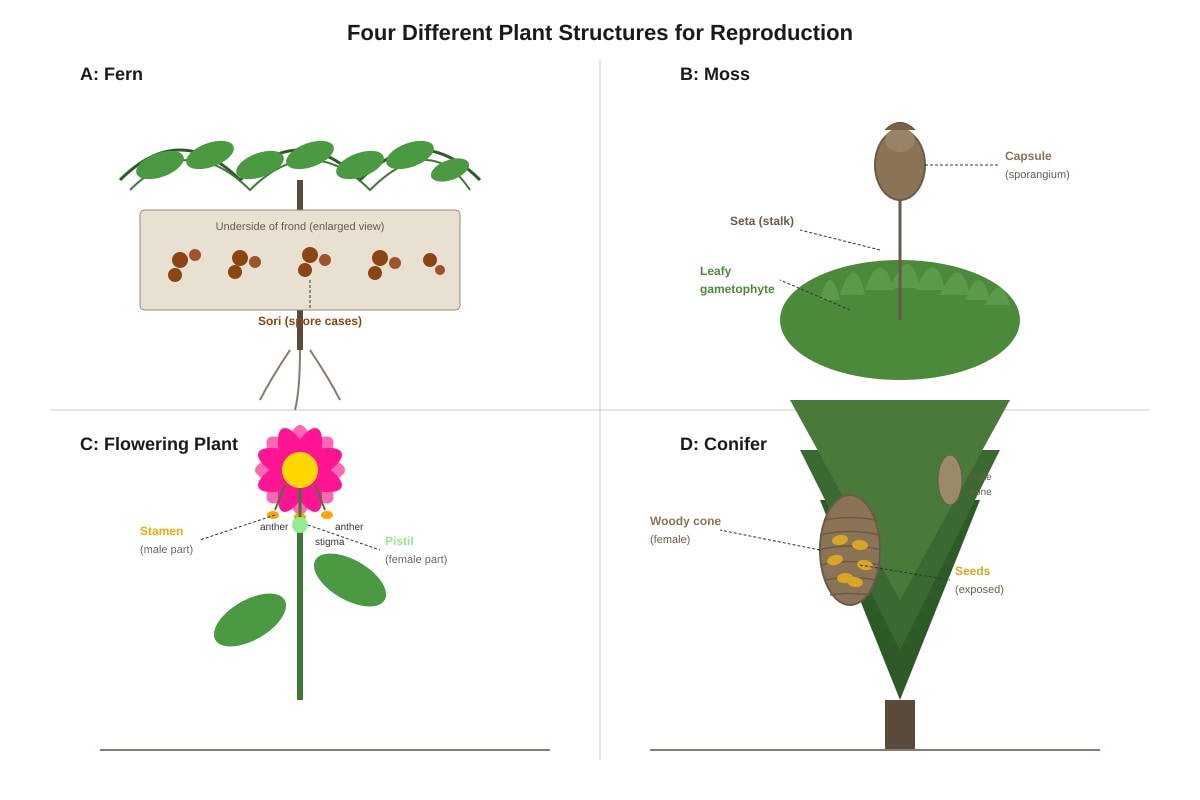
- Plant A (Fern): Spore reproduction / Spores (1 mark)
- Plant B (Moss): Spore reproduction / Spores (1 mark)
- Plant C (Flowering plant): Sexual reproduction / Seeds (1 mark)
- Plant D (Conifer): Seed reproduction / Cones with naked seeds (1 mark)
Teaching note: Ferns and mosses are non-flowering plants that reproduce using spores— tiny single cells that can grow into new plants without fertilization under moist conditions. Flowering plants use sexual reproduction involving pollination and fertilization to produce seeds enclosed in fruits. Conifers are gymnosperms with seeds not enclosed in fruits, borne on cone scales.
(b)
- Advantage: Spores are produced in large numbers; can be dispersed widely by wind; do not need pollinators; faster to produce than seeds; parent plant does not need to invest energy in fruit production (any valid point, 1 mark)
- Disadvantage: Spores need moist conditions to germinate; do not contain stored food for the embryo; less protected than seeds; new plant is genetically identical so less variation for adaptation to changing environments (any valid point, 1 mark)
Teaching note: Spores are single cells with thin walls, vulnerable to drying out. Seeds contain an embryo, stored food (endosperm), and protective seed coat, allowing survival in harsh conditions. However, sexual reproduction in seed plants requires more complex processes (pollination, fertilization, fruit development).
(c)
- Bright colours attract pollinators like bees and butterflies (1 mark)
- Sweet scent attracts pollinators from a distance, helping ensure pollen transfer between flowers for fertilization and seed production (1 mark)
Teaching note: This is co-evolution between plants and pollinators. Colour vision in insects detects UV patterns invisible to humans. Scent signals supplement visual cues. Without successful pollination, fertilization fails and no seeds form.
Question 22 (8 marks)
(a)
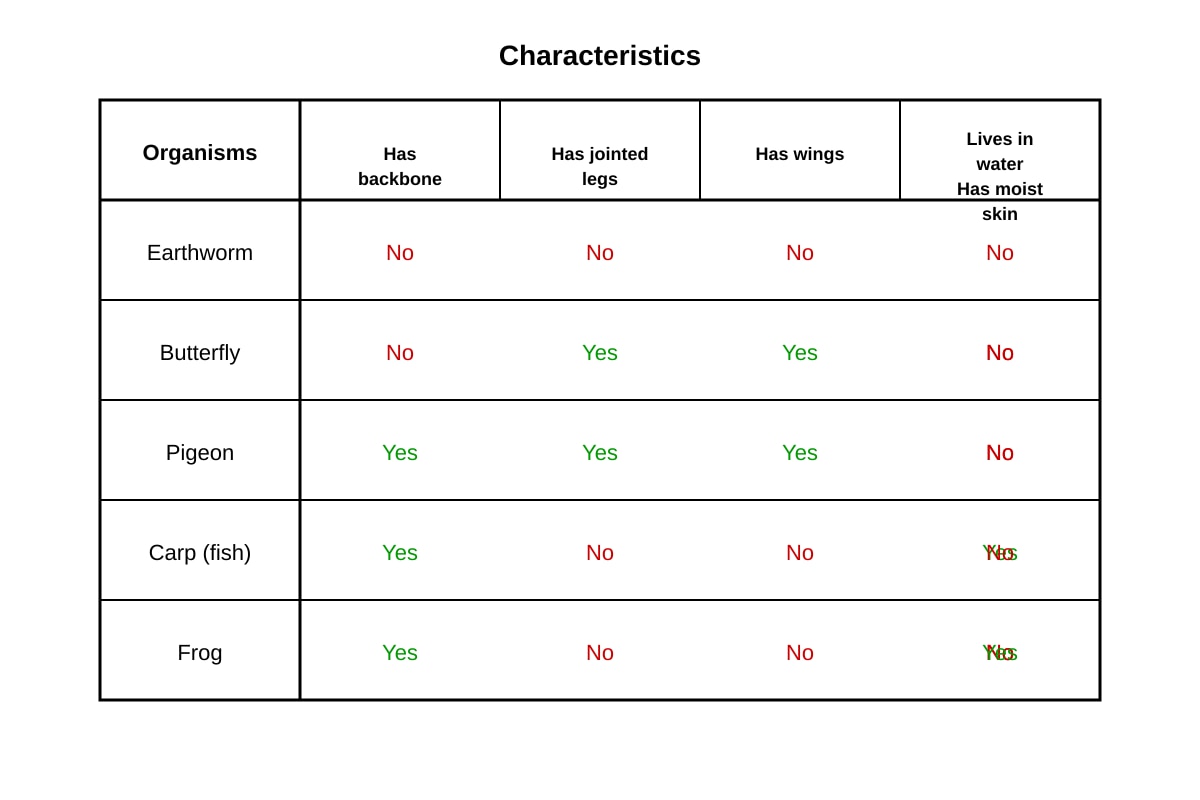
- Both earthworm and butterfly do not have a backbone / vertebral column (1 mark)
- They belong to the group called invertebrates, which lack the internal bony skeleton that characterizes fish, amphibians, reptiles, birds, and mammals (1 mark)
Teaching note: "Invertebrate" is not a formal taxonomic group but describes animals without backbones. It includes diverse phyla: Annelida (earthworms), Arthropoda (butterflies), Mollusca, Cnidaria, etc. The absence of a backbone is the unifying feature.
(b)
- Pigeon and butterfly share the most characteristics (1 mark)
- Both have jointed legs AND both have wings (2 shared features), while other pairs share fewer or no additional features beyond broad categories (1 mark)
Marking note: Accept: Butterfly and pigeon share "has jointed legs" and "has wings" — two matching "Yes" responses. Earthworm has only "moist skin." Carp has only "has backbone" and "lives in water." Frog has only "has backbone" and "moist skin."
(c)
- Classification by habitat is not useful because it groups unrelated organisms together based on where they live, not shared characteristics or evolutionary relationships (1 mark)
- Fish and frogs have different body structures: fish have scales and breathe with gills throughout life; frogs have moist skin, lungs, and undergo metamorphosis from tadpole to adult. These fundamental differences make them belong to different classes (Pisces vs. Amphibia) (1 mark)
Teaching note: This is analogous to why "fish" as a category has been revised— whales (mammals) and fish were once grouped as "fish" by habitat. Natural classification reflects genealogy (common ancestry), not ecology.
(d)
- Any valid distinguishing characteristic: Pigeon has feathers / is warm-blooded (endothermic) / breathes with lungs and has air sacs / has a beak without teeth / produces milk (crop milk, though different from mammalian milk) / has a four-chambered heart (1 mark)
- Butterfly has an exoskeleton / is cold-blooded (ectothermic) / breathes with tracheae / has antennae / undergoes complete metamorphosis (larva, pupa, adult stages) / has compound eyes (1 mark)
Teaching note: Accept any one contrasting pair. The key is that these features reflect different classes: Aves (birds) versus Insecta (arthropods). Feathers evolved from reptilian scales and are unique to birds; exoskeletons made of chitin are unique to arthropods.
Question 23 (8 marks)
(a)
- Biodiversity refers to the variety of living organisms / different species of plants, animals, and microorganisms / the range of life in a particular habitat or on Earth (1 mark)
Teaching note: The passage emphasizes this through specific numbers of species mentioned. Biological diversity includes three levels: genetic diversity (within species), species diversity (between species), and ecosystem diversity (between habitats).
(b)
-
Threat 1: Habitat loss due to urban development (1 mark)
- Explanation: When natural habitats are cleared for buildings and roads, native species lose their food sources, shelter, and breeding sites; populations cannot survive without these essential resources (1 mark)
-
Threat 2: Introduced species / invasive species (1 mark)
- Explanation: Non-native species compete with native species for food and space, or may prey on them, causing native populations to decline; introduced species often lack natural predators in the new environment (1 mark)
Alternative Threat 2: Climate change — changing temperatures and weather patterns alter habitat suitability; species adapted to specific conditions cannot survive or reproduce successfully.
(c)
- Green corridors connect fragmented habitats / isolated nature areas (1 mark)
- This allows wildlife to move safely between areas to find food, mates, and breeding sites, maintaining gene flow between populations and preventing inbreeding in small isolated groups (1 mark)
Teaching note: Singapore's Park Connector Network and ecological corridors like the Central Catchment Nature Reserve connectors serve this function. Isolated populations face genetic bottlenecks; connected populations have better long-term survival prospects.
(d)
- Any valid strategy with explanation: Enforce laws against poaching / illegal wildlife trade; educate public about native species; support captive breeding programs for endangered species; create more green roofs and vertical gardens in urban areas; control introduced species populations; involve schools in biodiversity surveys (1 mark)
Example: "Educate the public through school programs and signage in parks. When people understand why native species matter, they are more likely to protect habitats and report threats." OR "Create green roofs on buildings to provide additional habitat space for birds and insects in urban areas, extending available habitat beyond ground level."
SECTION B TOTAL: 24 marks
SECTION C: Application and Process Skills (16 marks)
Question 24 (8 marks)
(a)
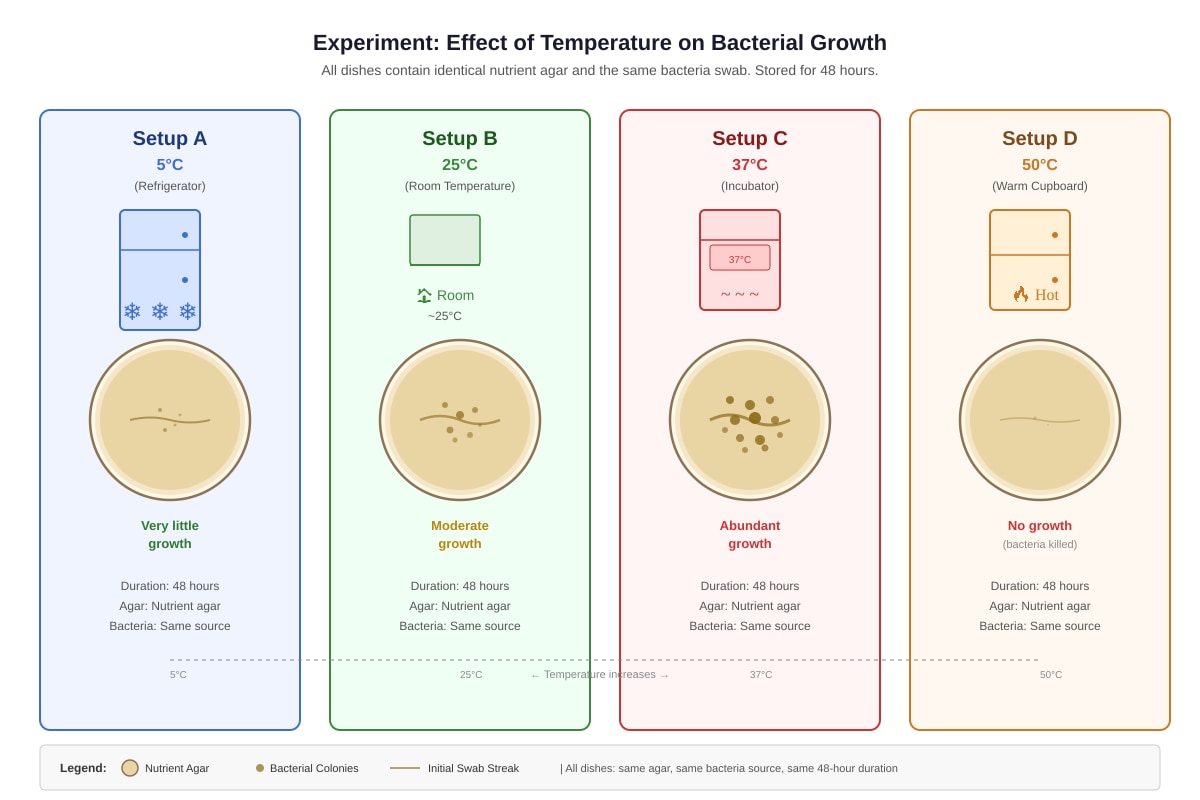
- To investigate / find out how temperature affects the growth of bacteria / which temperature is best for bacterial growth (1 mark)
Teaching note: The aim must include both the independent variable (temperature) and dependent variable (bacterial growth). "Effect of temperature on bacterial growth" captures this relationship.
(b) Any two from:
- Same type/amount of nutrient agar in each dish
- Same amount/type of bacteria spread on each dish
- Same size/type of petri dish
- Same duration (48 hours for all)
- Same method of spreading bacteria (1 mark each, max 2 marks)
Teaching note: These are controlled variables (fair test requirements). Identifying the bacteria source/swab and agar preparation as identical ensures comparison is valid. Time must be constant so "more growth" reflects temperature effect, not longer growth period.
(c)
Setup A (5°C):
- Prediction: Little or no bacterial growth / very few bacterial colonies (1 mark)
- Explanation: Bacteria grow best at moderate temperatures (around 20-40°C for most common types). At 5°C, bacterial enzymes work very slowly; metabolic reactions are slowed; cell division is greatly reduced or stops; this is refrigeration temperature used specifically to slow bacterial growth on food (1 mark)
Setup D (50°C):
- Prediction: Little or no bacterial growth / very few bacterial colonies (1 mark)
- Explanation: 50°C is too hot for most bacteria; enzymes are denatured / destroyed by high temperatures; proteins lose their structure and cannot function; cells cannot carry out metabolism or reproduce; some heat-tolerant bacteria may survive but most common species are killed or inhibited (1 mark)
Teaching note: Connect to real life: refrigeration preserves food; pasteurization uses heat (typically 72°C for 15 seconds) to kill pathogens; autoclaves use 121°C for sterilization. Bacteria have optimum, minimum, and maximum growth temperatures.
(d)
- To prevent bacteria from escaping into the environment / to protect people from inhaling or touching harmful bacteria / to maintain sterile conditions inside / for safety and to prevent contamination (1 mark)
*Teaching note:*This is biosafety procedure. Sealing prevents: (1) contamination of culture by airborne microbes, and (2) release of potentially pathogenic bacteria. In school labs, non-pathogenic strains are typically used, but good practice requires treating all cultures as potentially harmful.
Question 25 (8 marks)
(a)
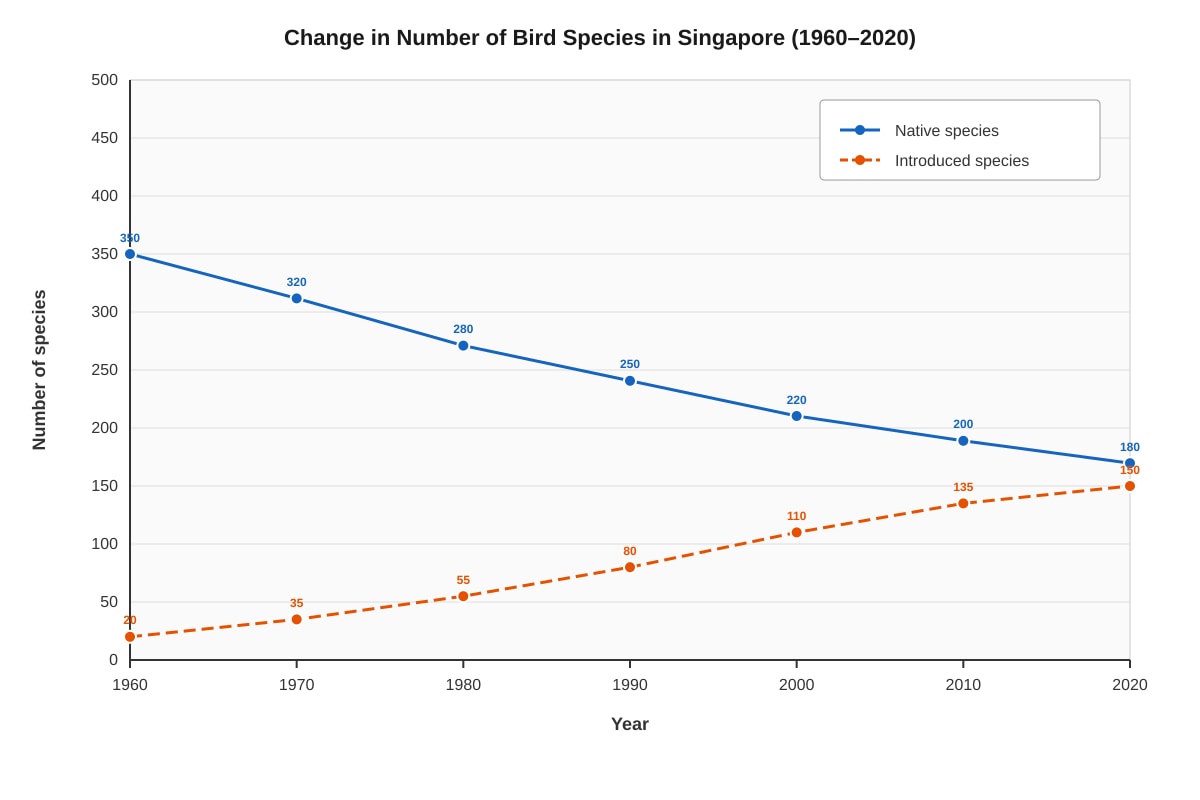
- The number of native bird species shows a continuous / steady / consistent decline / decrease over the 60-year period (1 mark)
- From about 350 species in 1960 to about 180 species in 2020 (accept approximate values: 320-350 in 1960, 160-200 in 2020), a decrease of approximately 170 species or roughly half (1 mark)
Teaching note: "Describe the trend" requires identifying direction (decreasing) and quantifying with data points. Both elements needed for full marks. Students should read values carefully from the graph.
(b) Working:
- Introduced species in 1960 = 20
- Introduced species in 2020 = 150
- Change = 150 − 20 = 130 species (1 mark for correct values identified, 1 mark for correct calculation)
Teaching note: Show clear subtraction. Accept answer range 130-135 if reading graph approximately. The key is demonstrating the method: final value minus initial value. This is a 650% increase— can mention but not required.
(c)
- Any valid reason: Pet trade / cage bird trade releasing exotic species; accidental escape from aviaries; deliberate introduction for pest control or aesthetic purposes; ships and planes bringing species from other countries; habitat changes favoring adaptable introduced species over specialist native species (1 mark)
Singapore context: Common introduced birds include Javan myna, house crow, rock pigeon— many arrived through trade and transport links. The yellow-crested cockatoo is endangered globally but has feral populations in Singapore from escaped pets.
(d)
Strategy 1: Protect and restore native habitats / enlarge nature reserves / create more suitable habitats for native species (1 mark)
- Explanation: Native birds need specific food plants, nesting sites, and shelter; by preserving forests and wetlands and planting native vegetation, we provide what specialist native species need to breed and survive; this reduces competition pressure from generalist introduced species (0.5 mark for clear link to population increase)
Strategy 2: Control or reduce introduced species populations / enforce laws against releasing pets / remove invasive species (1 mark)
- Explanation: Some introduced birds outcompete natives for nesting holes and food; reducing their numbers or preventing further releases allows native populations to recover; must be humane and targeted to avoid affecting other wildlife (0.5 mark for clear mechanism)
Alternative Strategy 2: Citizen science and monitoring — "Train volunteers to identify and report native and introduced birds; this data helps track population trends and target conservation action where most needed."
Teaching note: "City in Nature" is Singapore's vision to integrate nature into urban environments. Both strategies must be explained in terms of mechanism (HOW they help) not just stated. One mark for strategy, 0.5 for explanation, per strategy. Total 3 marks as allocated.
SECTION C TOTAL: 16 marks
GRAND TOTAL: 60 marks
END OF ANSWER KEY