From Real Exams Exam Paper

Primary 5 Science Weighted Assessment 3 (Term 3) Paper 5

Free Exam-Derived Qwen3.7 Plus Primary 5 Science Weighted Assessment 3 (Term 3) Paper 5 practice paper with questions and answers for Singapore students. This page is rendered as a direct URL so the questions and answers can be discovered without pressing in-page buttons.

These static practice materials are generated from the site's syllabus and paper-generation workflow, with source and model context shown so students and parents can evaluate the material before use.

Primary 5 Science From Real Exams Generated by Qwen3.7 Plus Updated 2026-06-04

Questions

<!-- TuitionGoWhere generation metadata: stage=3-1; model=qwen/qwen3.7-plus; model_label=Qwen3.7 Plus; generated=2026-06-04; Sources: Stage 2-1 real exam-derived templates and Stage 2-2 exam-enriched syllabus. -->

TuitionGoWhere Exam Practice (AI)

Subject: Science
Level: Primary 5
Paper: Weighted Assessment 3 (WA3) - Version 5
Duration: 1 hour 45 minutes
Total Marks: 100
Name: _________________________
Class: ___________
Date: _______________

Instructions to Candidates:

  1. This paper consists of two sections: Section A and Section B.
  2. Answer all questions.
  3. Write your answers in the spaces provided.
  4. For questions in Section B, you may need to draw diagrams or write explanations.
  5. The number of marks available for each question or part is given in brackets [ ] at the end of the question or part.

Section A (40 marks)

Questions 1 to 20 are multiple-choice questions. For each question, four options are given. One of them is the correct answer. Make your choice (1, 2, 3 or 4) and write your answer in the brackets provided.

1. Which of the following statements about cells is incorrect? (1) All living things are made up of cells. (2) Cells are the basic unit of life. (3) All cells have a cell wall to provide support. (4) Cells carry out life processes such as respiration. [ ]

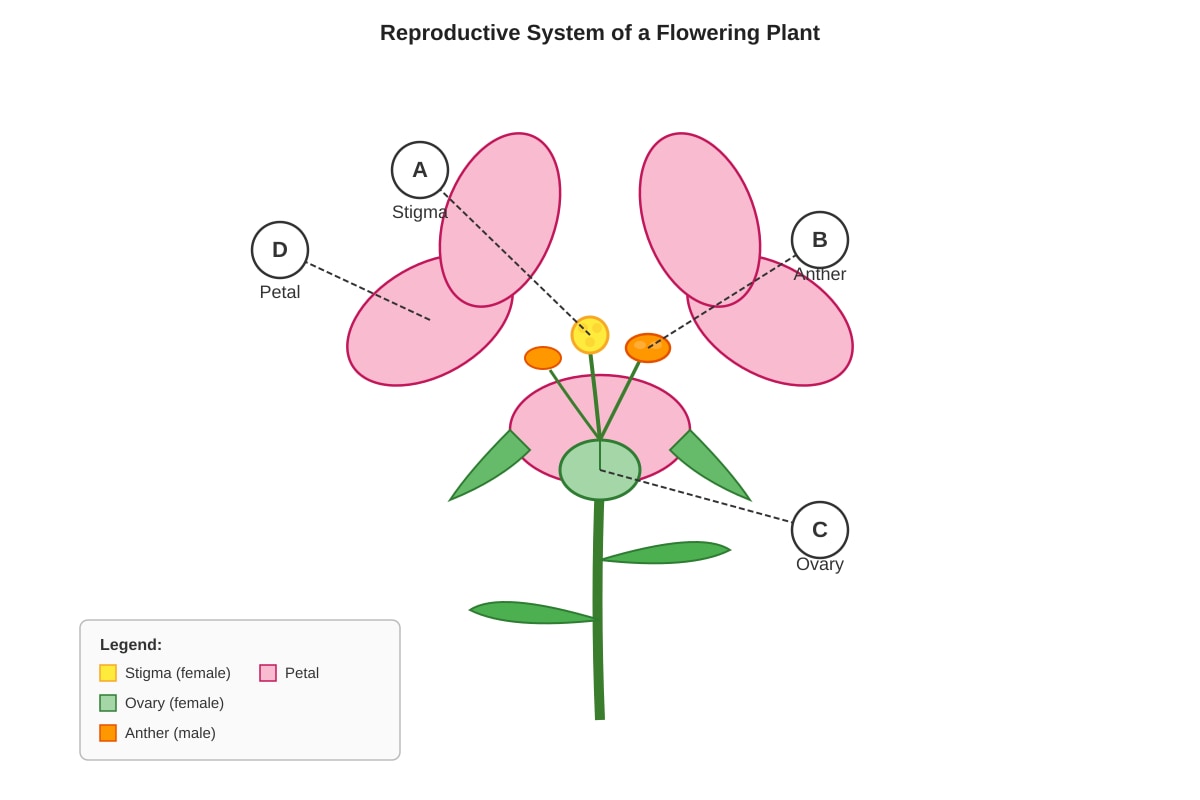
2. The diagram below shows the reproductive system of a flowering plant. <image_placeholder> id: Q2-fig1 type: diagram linked_question: Q2 description: A diagram of a flower with labels A, B, C, and D pointing to different parts. A points to the stigma, B points to the anther, C points to the ovary, and D points to the petal. labels: A: Stigma, B: Anther, C: Ovary, D: Petal must_show: Clear distinction between male parts (anther) and female parts (stigma/ovary). </image_placeholder> Which parts are involved in sexual reproduction? (1) A and B only (2) C and D only (3) A, B and C only (4) A, B, C and D [ ]

3. Which of the following sequences correctly shows the stages of reproduction in flowering plants? (1) Pollination → Fertilisation → Seed Dispersal → Germination (2) Fertilisation → Pollination → Germination → Seed Dispersal (3) Pollination → Germination → Fertilisation → Seed Dispersal (4) Seed Dispersal → Pollination → Fertilisation → Germination [ ]

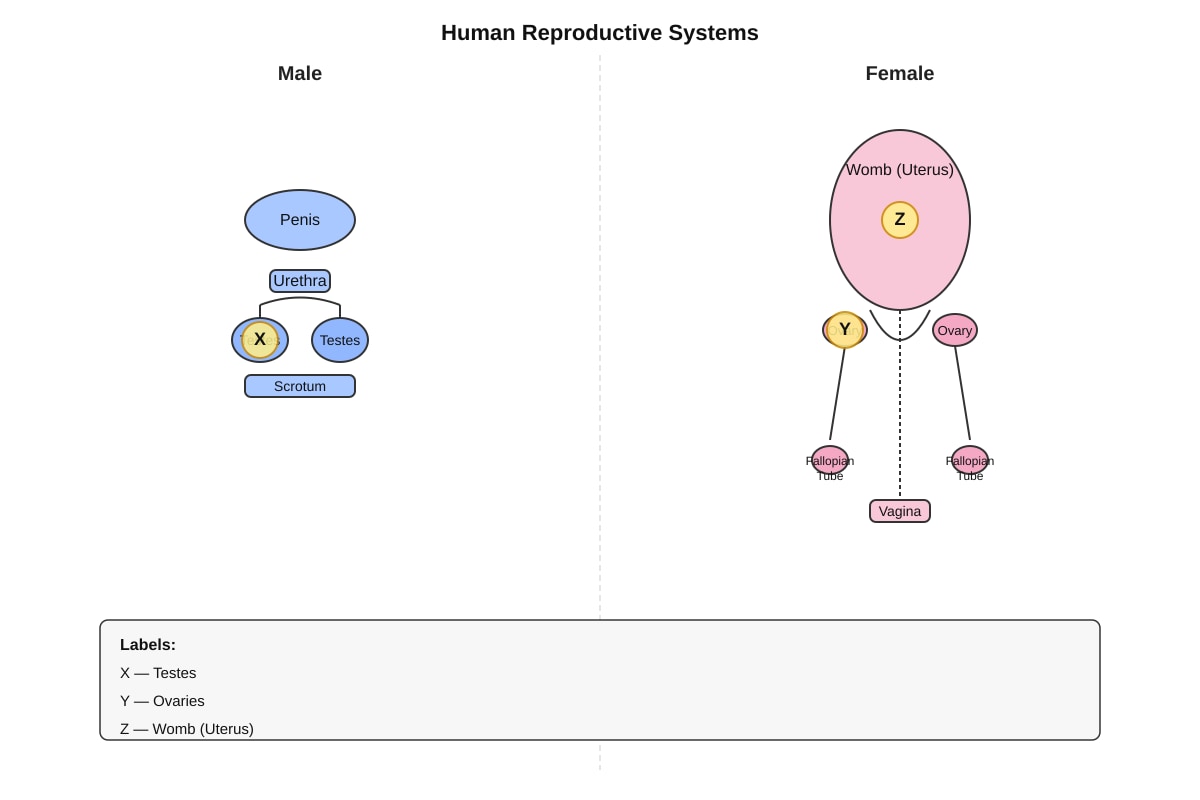
4. Study the diagram of the human reproductive system below. <image_placeholder> id: Q4-fig1 type: diagram linked_question: Q4 description: A simplified diagram of the male and female reproductive systems side-by-side. Label X points to the testes in the male system. Label Y points to the ovaries in the female system. Label Z points to the womb (uterus) in the female system. labels: X: Testes, Y: Ovaries, Z: Womb must_show: Anatomical position of testes, ovaries, and womb. </image_placeholder> Which of the following statements is true? (1) X produces sperm cells. (2) Y produces egg cells and hormones. (3) Z is where fertilisation takes place. (4) X and Y both produce reproductive cells. [ ]

5. Fertilisation in humans occurs when: (1) a sperm cell joins with an egg cell. (2) a baby is born from the mother’s womb. (3) an egg cell is released from the ovary. (4) a sperm cell enters the female reproductive system. [ ]

6. Which of the following characteristics is not passed from parents to offspring? (1) Eye colour (2) Hair texture (3) Language spoken (4) Skin colour [ ]

7. The table below shows the methods of seed dispersal for three plants.

PlantMethod of Dispersal
PWind
QWater
RAnimals

Which of the following features is most likely found in the seeds of Plant P? (1) Thick and fibrous outer layer (2) Light and has wing-like structures (3) Brightly coloured and sweet-smelling (4) Hard shell that can float [ ]

8. Why is seed dispersal important for plants? (1) To ensure seeds get enough sunlight. (2) To reduce competition between parent plant and offspring for resources. (3) To attract more animals to the plant. (4) To help the plant grow faster. [ ]

9. Which of the following animals reproduces by laying eggs? (1) Cat (2) Dog (3) Chicken (4) Human [ ]

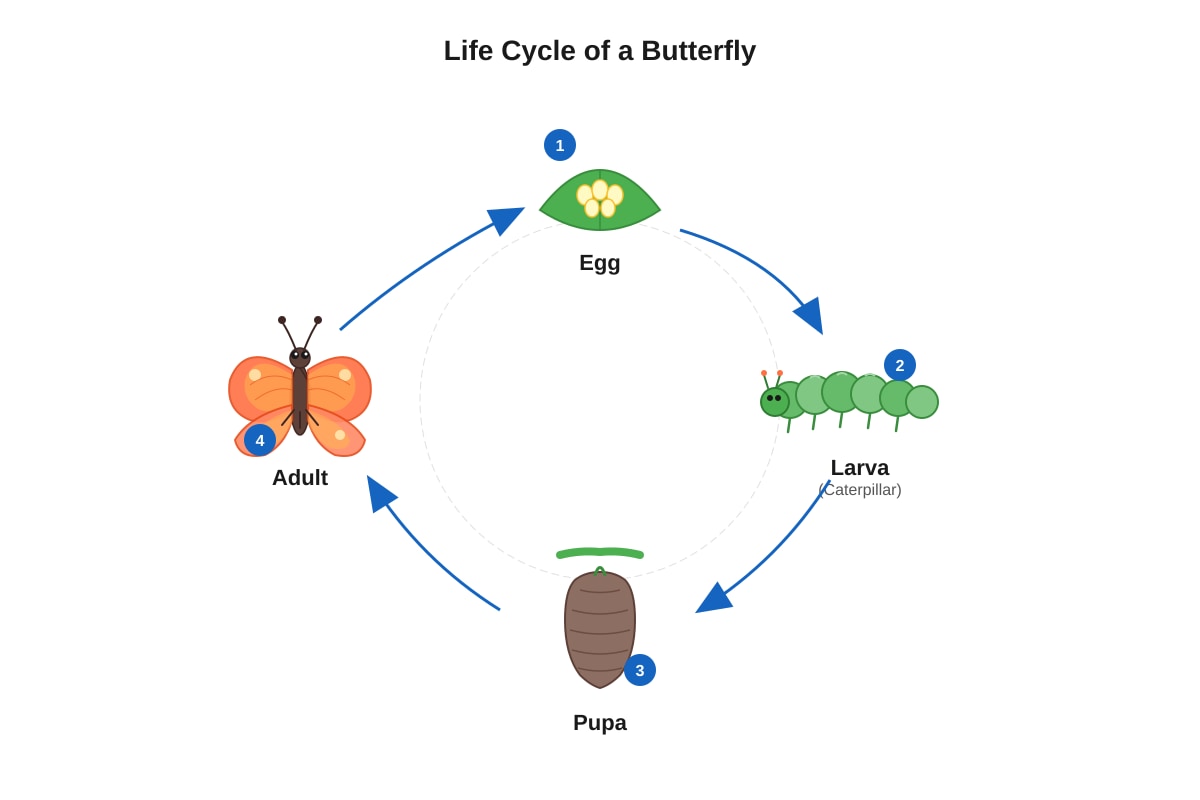
10. Study the life cycle of a butterfly below. <image_placeholder> id: Q10-fig1 type: diagram linked_question: Q10 description: A circular life cycle diagram showing four stages: Egg, Larva (Caterpillar), Pupa, and Adult Butterfly. Arrows connect them in order. labels: Egg, Larva, Pupa, Adult must_show: Distinct visual differences between the larva and adult stages. </image_placeholder> Which stage of the butterfly’s life cycle is responsible for reproduction? (1) Egg (2) Larva (3) Pupa (4) Adult [ ]

11. Which of the following is a characteristic of sexual reproduction? (1) Only one parent is involved. (2) Offspring are identical to the parent. (3) It involves the fusion of male and female reproductive cells. (4) It happens very quickly. [ ]

12. In flowering plants, where does fertilisation take place? (1) Stigma (2) Anther (3) Ovary (4) Petal [ ]

13. Which of the following is not a condition needed for seed germination? (1) Water (2) Air (Oxygen) (3) Suitable temperature (4) Sunlight [ ]

14. A farmer wants to grow new plants that are exactly like the parent plant. Which method should he use? (1) Sexual reproduction using seeds (2) Asexual reproduction using stem cuttings (3) Cross-pollination (4) Wind dispersal [ ]

15. Which of the following statements about the human reproductive system is true? (1) Males have ovaries. (2) Females have testes. (3) Sperm cells are larger than egg cells. (4) Egg cells are produced in the ovaries. [ ]

16. What is the function of the pollen tube? (1) To attract insects for pollination. (2) To protect the ovule. (3) To allow the male reproductive cell to travel to the ovule. (4) To produce nectar. [ ]

17. Which of the following animals gives birth to live young? (1) Frog (2) Turtle (3) Whale (4) Eagle [ ]

18. Why do some fruits have hooks or spines? (1) To be dispersed by wind. (2) To be dispersed by water. (3) To attach to animals’ fur for dispersal. (4) To explode and scatter seeds. [ ]

19. Which part of the flower develops into the fruit after fertilisation? (1) Stigma (2) Ovary (3) Anther (4) Filament [ ]

20. Which of the following is an example of asexual reproduction in plants? (1) A rose plant growing from a seed. (2) A potato plant growing from a tuber. (3) A sunflower plant growing from a seed. (4) A mango tree growing from a seed. [ ]


Section B (60 marks)

Answer all questions in the spaces provided.

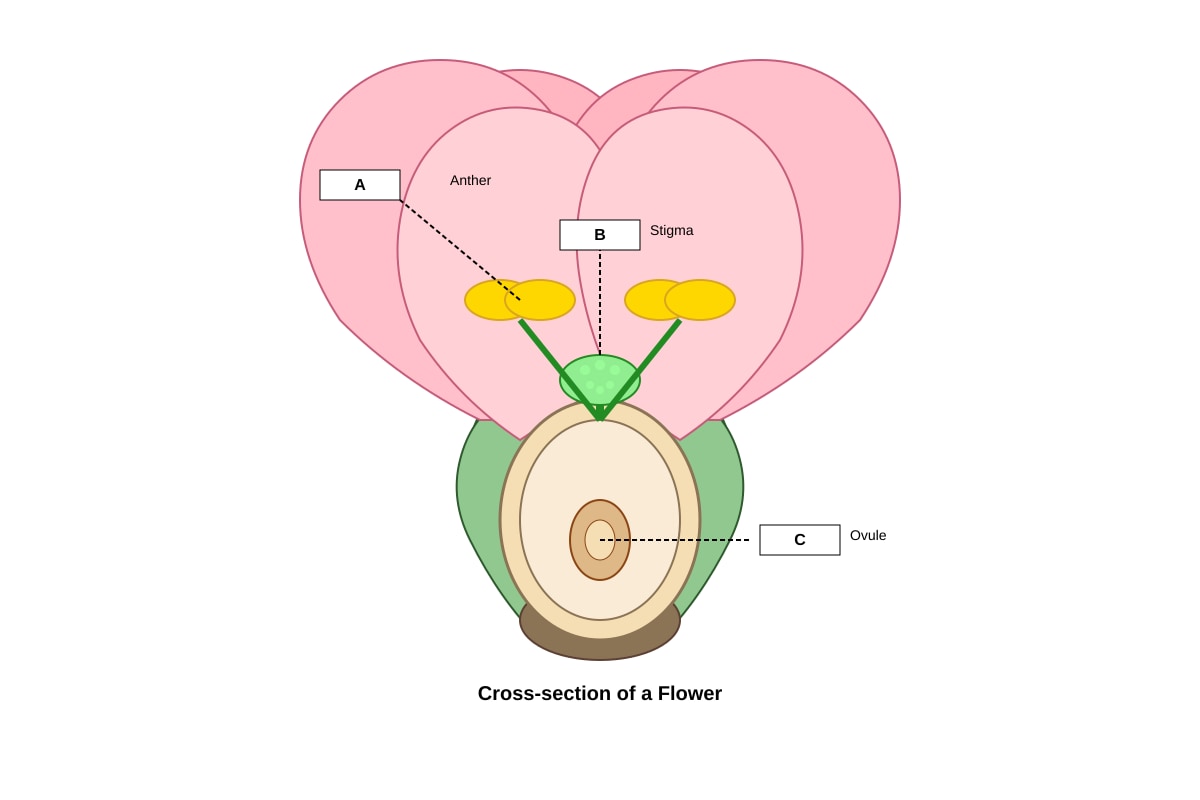
21. The diagram below shows the parts of a flower. <image_placeholder> id: Q21-fig1 type: diagram linked_question: Q21 description: A cross-section of a flower. Label A points to the anther. Label B points to the stigma. Label C points to the ovule inside the ovary. labels: A: Anther, B: Stigma, C: Ovule must_show: Clear internal structure showing the ovule within the ovary. </image_placeholder>

(a) Identify parts A and B. [2] Part A: _________________________ Part B: _________________________

(b) Explain the process of pollination. [2]


(c) After fertilisation, what will part C develop into? [1]


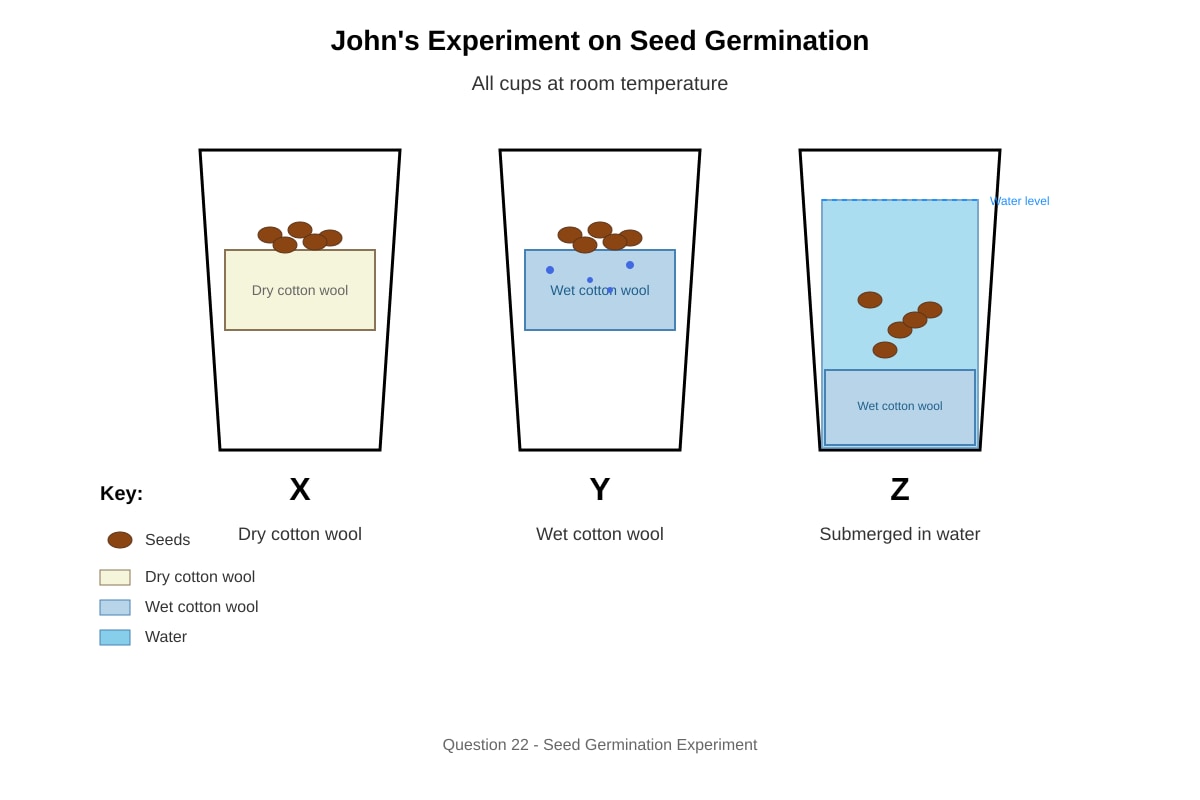
22. John conducted an experiment to find out the effect of water on seed germination. He set up three cups as shown below. <image_placeholder> id: Q22-fig1 type: diagram linked_question: Q22 description: Three cups labeled X, Y, and Z. Cup X has dry cotton wool and seeds. Cup Y has wet cotton wool and seeds. Cup Z has seeds submerged in water with wet cotton wool. All are at room temperature. labels: X: Dry cotton wool, Y: Wet cotton wool, Z: Submerged in water values: Room temperature for all. must_show: Difference in water availability in each cup. </image_placeholder>

(a) Which cup(s) will the seeds germinate in? [1]


(b) Give a reason for your answer in (a). [2]


(c) Why did John use the same type of seeds and keep them at the same temperature? [1]


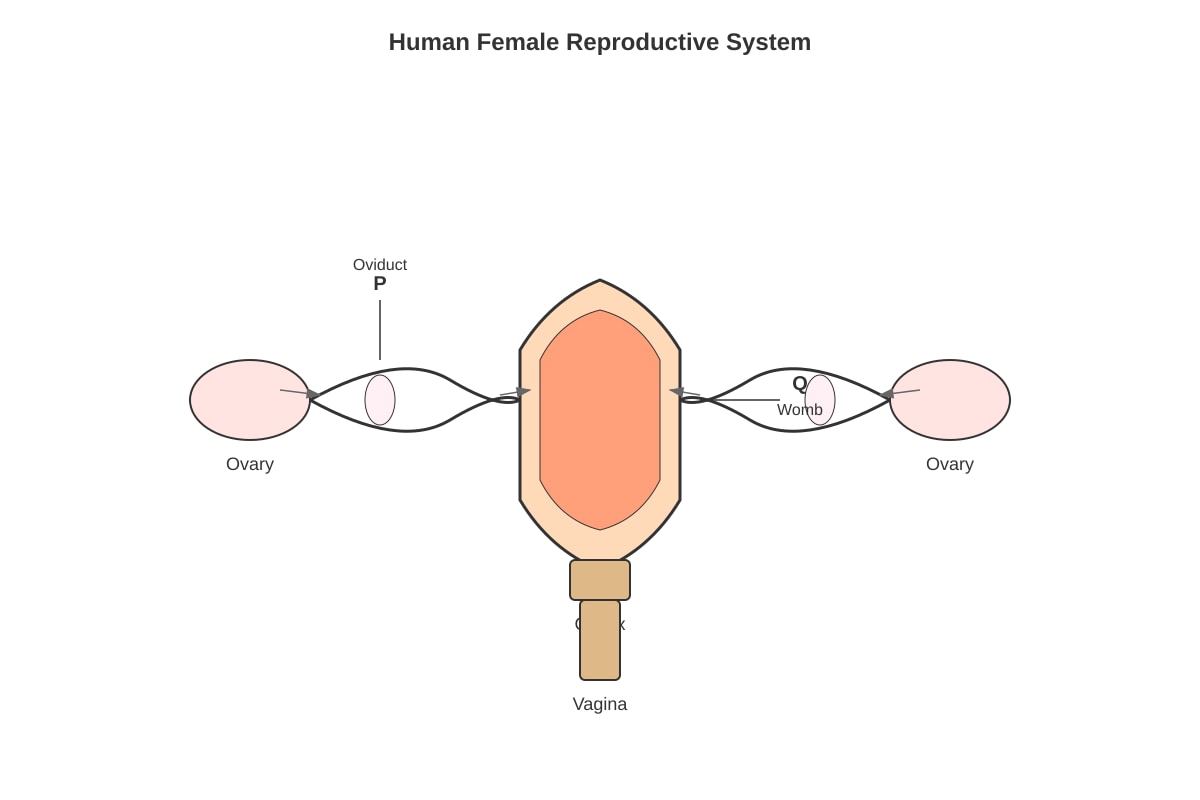
23. The diagram below shows the human female reproductive system. <image_placeholder> id: Q23-fig1 type: diagram linked_question: Q23 description: Diagram of female reproductive system. Label P points to the oviduct (fallopian tube). Label Q points to the womb (uterus). labels: P: Oviduct, Q: Womb must_show: Connection between ovary, oviduct, and womb. </image_placeholder>

(a) Where does fertilisation usually take place? [1]


(b) Explain why the lining of the womb becomes thick and spongy every month. [2]


(c) If fertilisation does not occur, what happens to the lining of the womb? [1]


24. Study the table below which shows the characteristics of three fruits.

FruitCharacteristics
ALight, dry, has wing-like structures
BBrightly coloured, sweet flesh, hard seeds
CFibrous, air-filled spaces, waterproof skin

(a) State the method of dispersal for Fruit A. [1]


(b) Explain how the characteristics of Fruit B help in its dispersal. [2]


(c) Which fruit is most likely to be found near the sea? Give a reason. [2] Fruit: _________ Reason: _________________________________________________________________

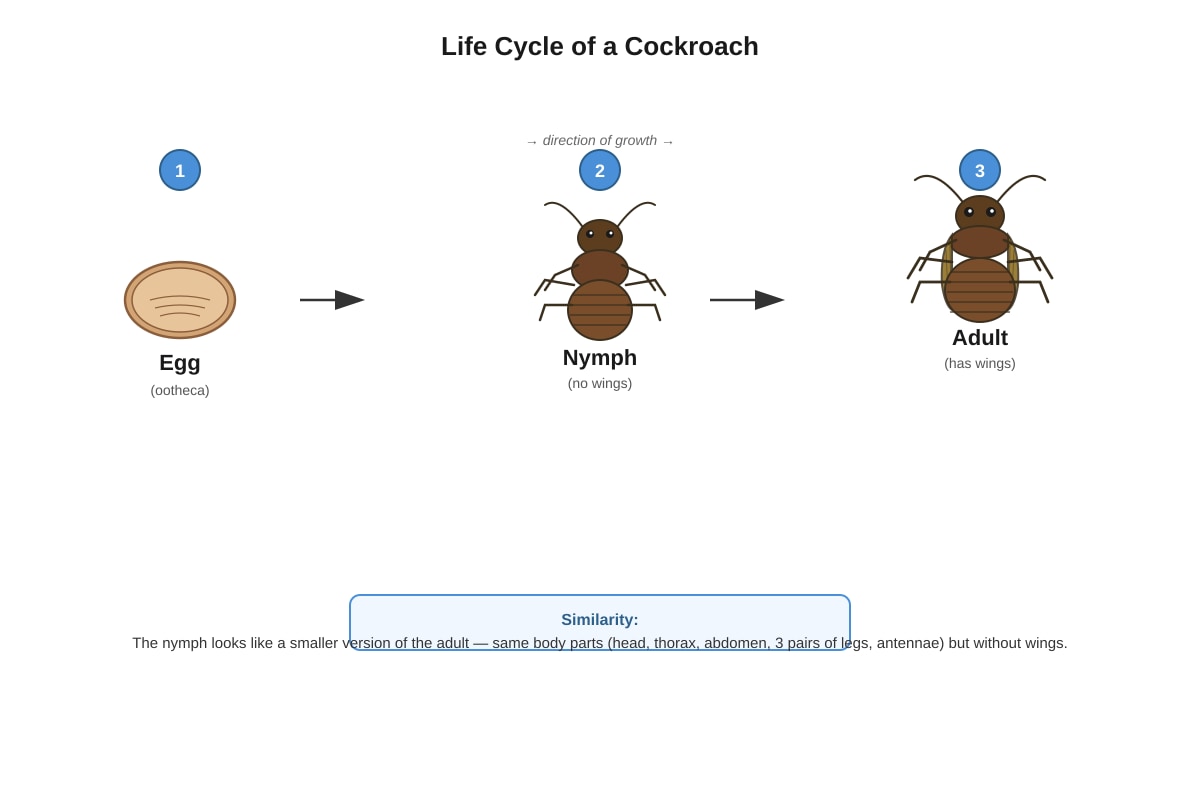
25. The diagram below shows the life cycle of a cockroach. <image_placeholder> id: Q25-fig1 type: diagram linked_question: Q25 description: A three-stage life cycle: Egg, Nymph, Adult. The nymph looks like a smaller version of the adult but without wings. labels: Egg, Nymph, Adult must_show: Similarity between nymph and adult. </image_placeholder>

(a) How many stages are there in the life cycle of a cockroach? [1]


(b) How is the life cycle of a cockroach different from that of a butterfly? [2]


(c) Why is the nymph stage different from the adult stage? [1]


26. Mary planted two identical plants in two different pots. Pot A was placed in a sunny spot, and Pot B was placed in a dark cupboard. Both plants were given the same amount of water daily.

(a) What was the aim of Mary’s experiment? [1]


(b) Predict what will happen to the plant in Pot B after one week. [1]


(c) Explain your prediction in (b). [2]


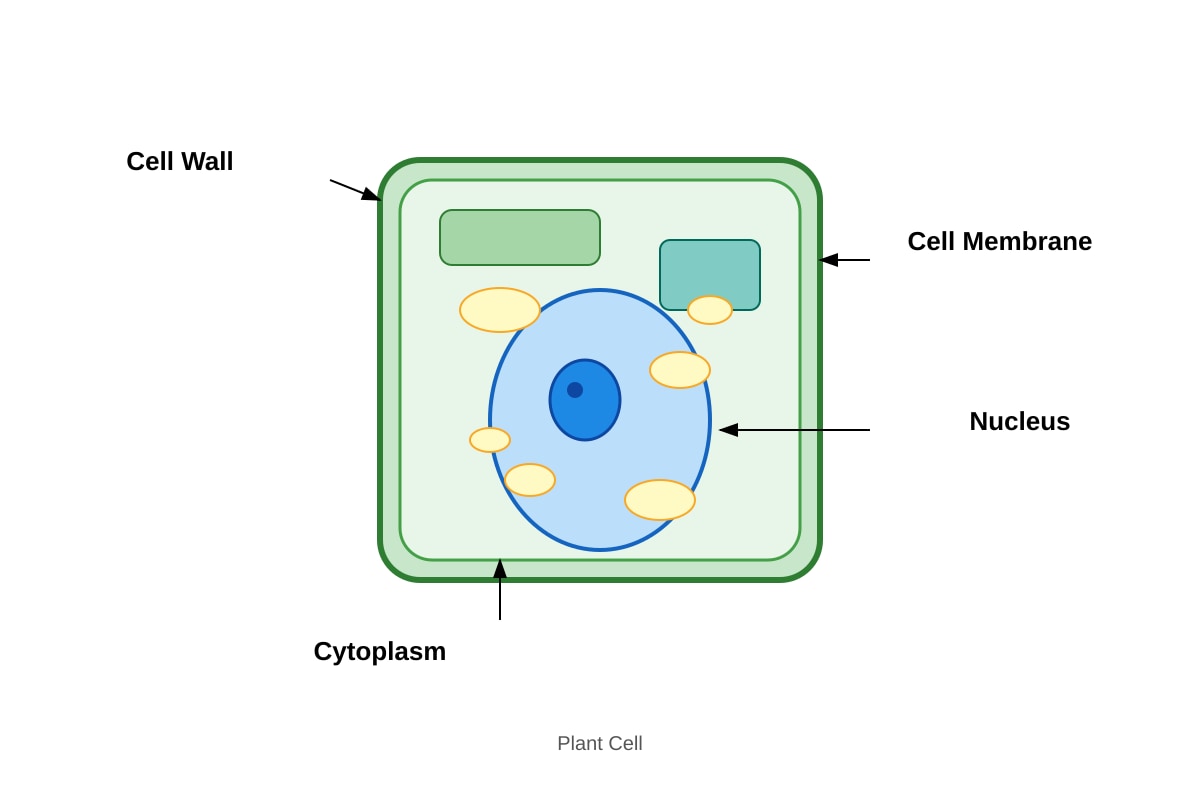
27. The diagram below shows a cell. <image_placeholder> id: Q27-fig1 type: diagram linked_question: Q27 description: A plant cell with a rigid outer layer. Labels point to the Cell Wall, Cell Membrane, Cytoplasm, and Nucleus. labels: Cell Wall, Cell Membrane, Cytoplasm, Nucleus must_show: Rectangular shape typical of plant cells. </image_placeholder>

(a) Is this a plant cell or an animal cell? Give a reason. [2] Type: _________________________ Reason: _________________________________________________________________

(b) What is the function of the nucleus? [1]


(c) Which part of the cell controls what enters and leaves the cell? [1]


28. Tom observed that his mother’s orchid plant had many new shoots growing from the base of the stem. He decided to separate one shoot and plant it in a new pot.

(a) What type of reproduction is this? [1]


(b) State one advantage of this method of reproduction. [1]


(c) Will the new plant be identical to the parent plant? Explain. [2]


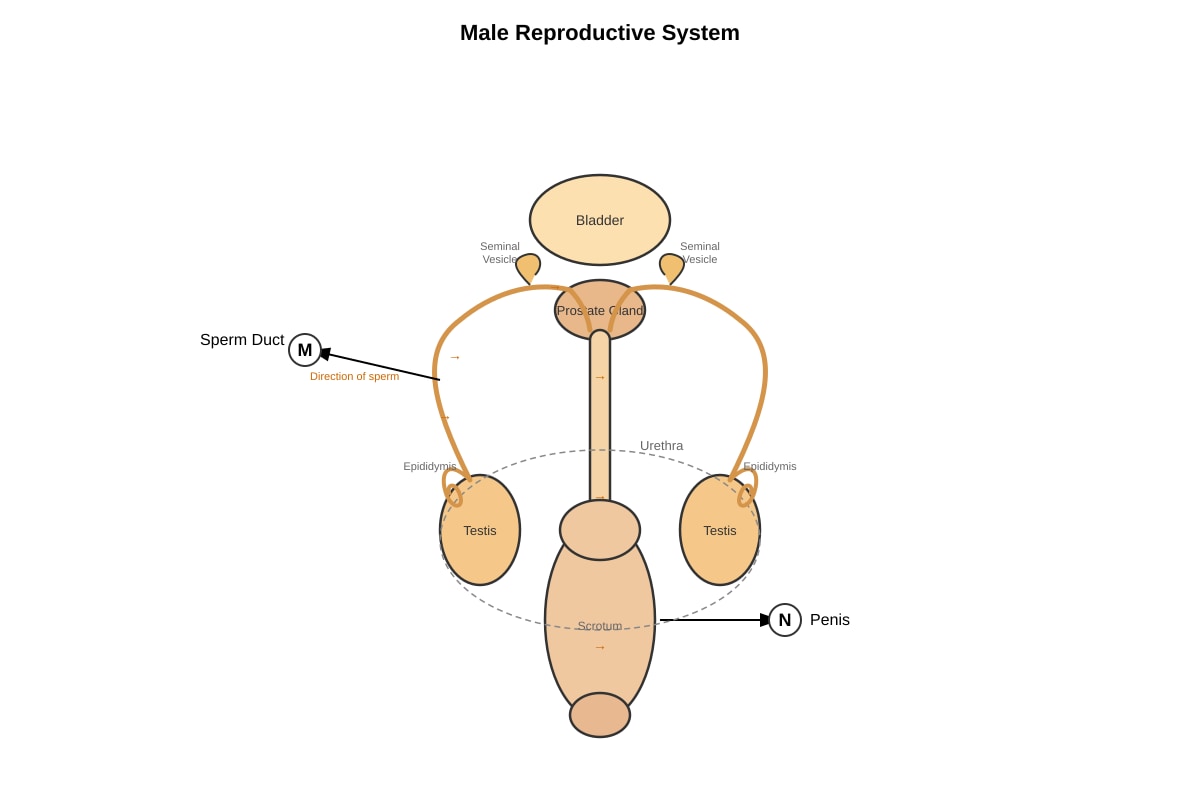
29. The diagram below shows the male reproductive system. <image_placeholder> id: Q29-fig1 type: diagram linked_question: Q29 description: Diagram of male reproductive system. Label M points to the sperm duct. Label N points to the penis. labels: M: Sperm duct, N: Penis must_show: Pathway from testes to penis. </image_placeholder>

(a) What is the function of part M? [1]


(b) Why are the testes located outside the body in the scrotum? [2]


30. Explain why diversity in offspring is important for the survival of a species. [3]


Answers

<!-- TuitionGoWhere generation metadata: stage=3-1; model=qwen/qwen3.7-plus; model_label=Qwen3.7 Plus; generated=2026-06-04; Sources: Stage 2-1 real exam-derived templates and Stage 2-2 exam-enriched syllabus. -->

TuitionGoWhere Exam Practice (AI) - Answer Key

Subject: Science
Level: Primary 5
Paper: Weighted Assessment 3 (WA3) - Version 5

Section A (40 marks)

1. (3)
Reasoning: Not all cells have a cell wall. Animal cells do not have cell walls; only plant cells, fungi, and some bacteria do. All living things are made of cells, cells are the basic unit of life, and all cells respire.

2. (3)
Reasoning: Sexual reproduction involves the male parts (Anther B produces pollen) and female parts (Stigma A receives pollen, Ovary C contains ovules). Petals (D) attract pollinators but are not directly involved in the fusion of gametes.

3. (1)
Reasoning: The correct sequence is Pollination (transfer of pollen) → Fertilisation (fusion of gametes) → Seed Dispersal (spreading seeds) → Germination (seed grows into new plant).

4. (4)
Reasoning: X (Testes) produces sperm. Y (Ovaries) produces eggs. Both are reproductive cells. Z (Womb) is where the baby develops, not where fertilisation occurs (fertilisation happens in the oviduct).

5. (1)
Reasoning: Fertilisation is defined as the fusion of a male reproductive cell (sperm) and a female reproductive cell (egg).

6. (3)
Reasoning: Language is a learned characteristic, not an inherited one. Eye colour, hair texture, and skin colour are genetic traits passed from parents.

7. (2)
Reasoning: Wind-dispersed seeds need to be light and often have wing-like or parachute-like structures to catch the wind. Thick layers are for water/animal dispersal.

8. (2)
Reasoning: Seed dispersal reduces overcrowding and competition for water, sunlight, and nutrients between the parent plant and its offspring.

9. (3)
Reasoning: Chickens are birds and lay eggs. Cats, dogs, and humans are mammals that give birth to live young.

10. (4)
Reasoning: Only the adult stage has fully developed reproductive organs and is capable of mating and laying eggs.

11. (3)
Reasoning: Sexual reproduction involves two parents and the fusion of male and female gametes. Asexual reproduction involves one parent and produces identical offspring.

12. (3)
Reasoning: Fertilisation occurs in the ovary, specifically when the pollen tube reaches the ovule.

13. (4)
Reasoning: Seeds do not need sunlight to germinate; they need water, air (oxygen), and suitable temperature. Sunlight is needed for photosynthesis after the seedling emerges.

14. (2)
Reasoning: Asexual reproduction (like stem cuttings) produces clones that are genetically identical to the parent. Sexual reproduction introduces variation.

15. (4)
Reasoning: Females have ovaries which produce egg cells. Males have testes. Egg cells are much larger than sperm cells.

16. (3)
Reasoning: The pollen tube grows down the style to allow the male reproductive cell to travel from the stigma to the ovule for fertilisation.

17. (3)
Reasoning: Whales are mammals and give birth to live young. Frogs, turtles, and eagles lay eggs.

18. (3)
Reasoning: Hooks and spines allow fruits/seeds to attach to the fur of passing animals, aiding in dispersal.

19. (2)
Reasoning: After fertilisation, the ovary develops into the fruit, and the ovule develops into the seed.

20. (2)
Reasoning: Growing from a tuber (potato) is a form of asexual reproduction. Growing from seeds is sexual reproduction.


Section B (60 marks)

21. (a) Part A: Anther [1]
Part B: Stigma [1]
(b) Pollination is the transfer of pollen grains from the anther to the stigma of a flower. [2]
(c) Seed [1]
Note: The ovule develops into the seed. The ovary develops into the fruit.

22. (a) Cup Y [1]
(b) Cup Y has both water and air (oxygen) which are necessary for germination. Cup X lacks water, and Cup Z lacks sufficient air because the seeds are submerged. [2]
(c) To ensure a fair test. Only the amount of water should be changed; other variables must be kept constant. [1]

23. (a) Oviduct (or Fallopian Tube) [1]
(b) To prepare for the implantation of a fertilised egg (embryo). It provides a nourishing environment for the baby to grow. [2]
(c) It breaks down and is released from the body as menstrual blood (menstruation). [1]

24. (a) Wind [1]
(b) The bright colour and sweet flesh attract animals. Animals eat the fruit and pass the hard seeds out in their droppings elsewhere, aiding dispersal. [2]
(c) Fruit C [1]
Reason: The fibrous, air-filled, and waterproof features allow it to float on water, which is common near seas/rivers. [1]

25. (a) 3 stages [1]
(b) A cockroach has a 3-stage life cycle (Egg, Nymph, Adult) while a butterfly has a 4-stage life cycle (Egg, Larva, Pupa, Adult). Also, the nymph looks like the adult, whereas the larva (caterpillar) looks very different from the adult butterfly. [2]
(c) The nymph does not have fully developed wings or reproductive organs yet. [1]

26. (a) To find out if sunlight is needed for plant growth (or photosynthesis). [1]
(b) The plant will turn yellow and become weak/spindly. [1]
(c) Without sunlight, the plant cannot carry out photosynthesis to make food. It also cannot produce chlorophyll, causing it to lose its green colour. [2]

27. (a) Plant cell [1]
Reason: It has a cell wall (and/or regular shape). Animal cells do not have cell walls. [1]
(b) The nucleus controls the activities of the cell and contains genetic material. [1]
(c) Cell Membrane [1]

28. (a) Asexual reproduction [1]
(b) It is faster / The new plant will have the same desirable traits as the parent / No need for pollination. [1]
(c) Yes [1]
Explanation: Asexual reproduction produces offspring that are genetically identical to the parent because there is no mixing of genetic material from two parents. [1]

29. (a) To transport sperm from the testes to the urethra/penis. [1]
(b) The temperature outside the body is lower than inside. Sperm production requires a temperature slightly lower than body temperature to be effective. [2]

30. Diversity ensures that some individuals in a species may have traits that allow them to survive changes in the environment (e.g., disease, climate change). [1]
If all individuals were identical, a single threat could wipe out the entire species. [1]
Therefore, diversity increases the chance of survival for the species as a whole. [1]