From Real Exams Exam Paper

Primary 5 Science Weighted Assessment 3 (Term 3) Paper 2

Free Exam-Derived Qwen3.7 Plus Primary 5 Science Weighted Assessment 3 (Term 3) Paper 2 practice paper with questions and answers for Singapore students. This page is rendered as a direct URL so the questions and answers can be discovered without pressing in-page buttons.

These static practice materials are generated from the site's syllabus and paper-generation workflow, with source and model context shown so students and parents can evaluate the material before use.

Primary 5 Science From Real Exams Generated by Qwen3.7 Plus Updated 2026-06-04

Questions

<!-- TuitionGoWhere generation metadata: stage=3-1; model=qwen/qwen3.7-plus; model_label=Qwen3.7 Plus; generated=2026-06-04; Sources: Stage 2-1 real exam-derived templates and Stage 2-2 exam-enriched syllabus. -->

TuitionGoWhere Practice Paper - Science Primary 5

TuitionGoWhere Exam Practice (AI)

Subject: Science
Level: Primary 5
Paper: WA3 (Version 2 of 5)
Topic Focus: Diversity (Adaptation, Classification, and Interactions)
Duration: 1 hour 45 minutes
Total Marks: 56

Name: _________________________
Class: _________________________
Date: _________________________


Instructions to Candidates

  1. This paper consists of two sections, Section A and Section B.
  2. Section A contains 20 multiple-choice questions. Answer all questions.
  3. Section B contains 16 structured questions. Answer all questions.
  4. Write your answers in the spaces provided.
  5. The number of marks available for each question or part is given in brackets [ ] at the end of the question or part.

Section A (20 marks)

For each question from 1 to 20, four options are given. One of them is the correct answer. Make your choice (1, 2, 3 or 4) and write it in the brackets provided.

1. Which of the following groups of animals are all mammals? (1) Bat, Whale, Dolphin (2) Penguin, Ostrich, Kiwi (3) Shark, Ray, Eel (4) Frog, Toad, Salamander [ ]

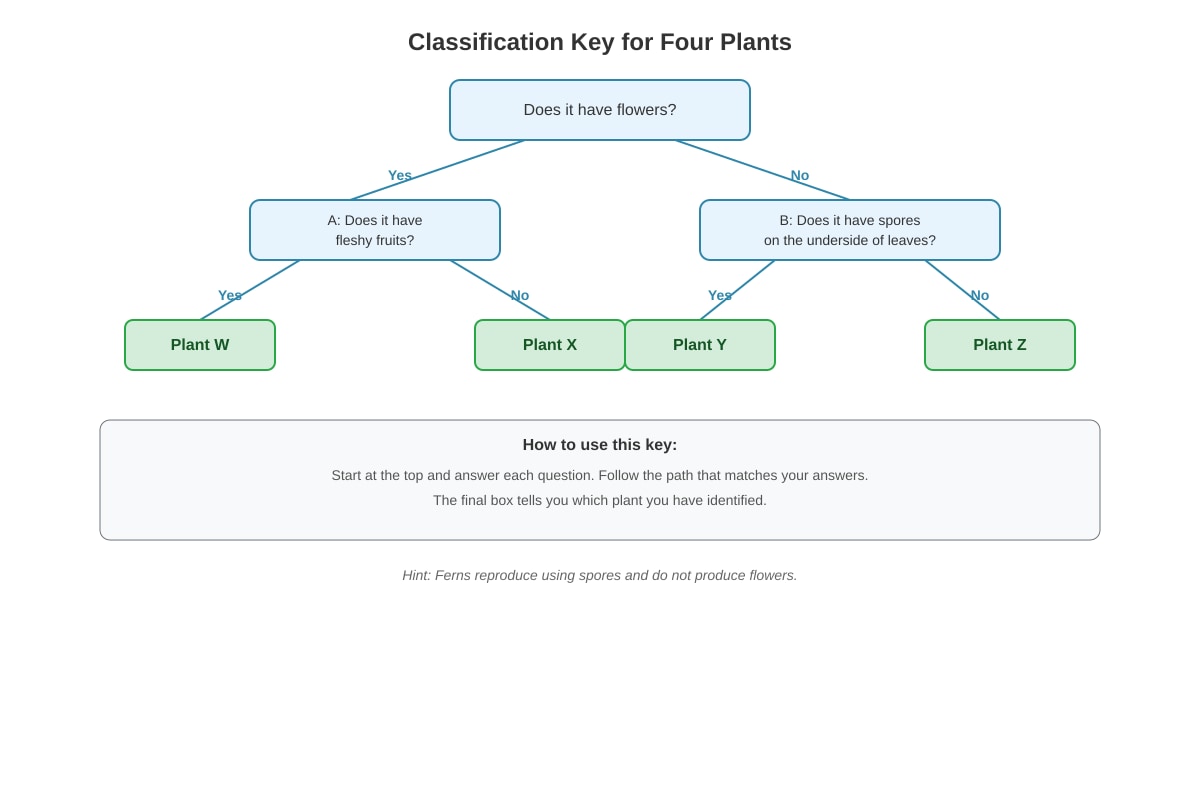
2. The diagram below shows the classification key for four different plants.

<image_placeholder> id: Q2-fig1 type: diagram linked_question: Q2 description: A dichotomous key flowchart. Start: Does it have flowers? Yes -> Go to A. No -> Go to B. A: Does it have fleshy fruits? Yes -> Plant W. No -> Plant X. B: Does it have spores on the underside of leaves? Yes -> Plant Y. No -> Plant Z. labels: Plant W, Plant X, Plant Y, Plant Z must_show: Clear branching logic based on the description. </image_placeholder>

Based on the key, which plant is most likely a fern? (1) Plant W (2) Plant X (3) Plant Y (4) Plant Z [ ]

3. Which of the following is a characteristic unique to birds? (1) They lay eggs. (2) They have feathers. (3) They have four limbs. (4) They breathe using lungs. [ ]

4. Study the food chain below: Grass \rightarrow Grasshopper \rightarrow Frog \rightarrow Snake

If the population of frogs decreases significantly due to disease, what is the most likely immediate effect? (1) The population of grass will decrease. (2) The population of grasshoppers will increase. (3) The population of snakes will increase. (4) The population of grasshoppers will decrease. [ ]

5. Which of the following adaptations helps a cactus survive in a hot and dry desert? (1) Broad leaves to capture more sunlight. (2) Thick, waxy skin to reduce water loss. (3) Shallow roots to absorb surface rain quickly. (4) Large flowers to attract pollinators. [ ]

6. The table below shows the characteristics of four organisms.

OrganismHas ChlorophyllReproduces by SporesHas Roots, Stems, Leaves
AYesNoYes
BNoYesNo
CYesYesNo
DYesYesYes

Which organism is most likely a moss? (1) A (2) B (3) C (4) D [ ]

7. Why do polar bears have a thick layer of fat under their skin? (1) To help them swim faster. (2) To store energy for hibernation. (3) To provide insulation against the cold. (4) To protect them from predators. [ ]

8. Which of the following statements about fungi is correct? (1) They make their own food using sunlight. (2) They are plants because they have roots. (3) They obtain nutrients from dead or decaying matter. (4) They reproduce using seeds. [ ]

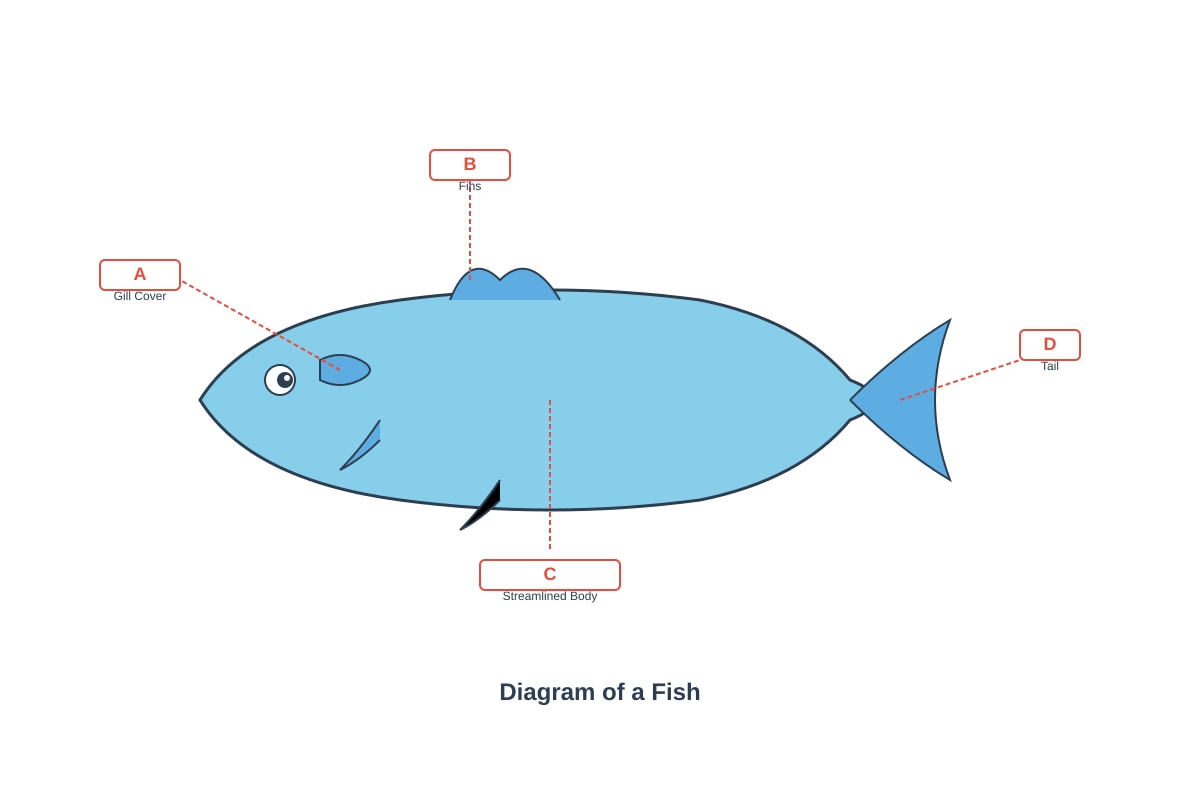
9. Look at the diagram of a fish below.

<image_placeholder> id: Q9-fig1 type: diagram linked_question: Q9 description: A side view of a fish. Label A points to the gill cover. Label B points to the fins. Label C points to the streamlined body shape. Label D points to the tail. labels: A, B, C, D must_show: Clear anatomical labels. </image_placeholder>

Which feature helps the fish reduce water resistance as it moves? (1) A (2) B (3) C (4) D [ ]

10. Which of the following is an example of a structural adaptation? (1) A bear hibernating in winter. (2) A chameleon changing its color. (3) A duck having webbed feet. (4) A bird migrating to a warmer place. [ ]

11. In a forest ecosystem, trees provide shelter for birds. The birds eat insects that harm the trees. This relationship is best described as: (1) Parasitism (2) Mutualism (3) Competition (4) Predation [ ]

12. Which of the following groups contains only invertebrates? (1) Spider, Snail, Earthworm (2) Crab, Frog, Snake (3) Butterfly, Fish, Bird (4) Octopus, Turtle, Lizard [ ]

13. Why do desert plants often have long roots? (1) To anchor the plant against strong winds. (2) To reach deep underground water sources. (3) To absorb more sunlight. (4) To store excess water. [ ]

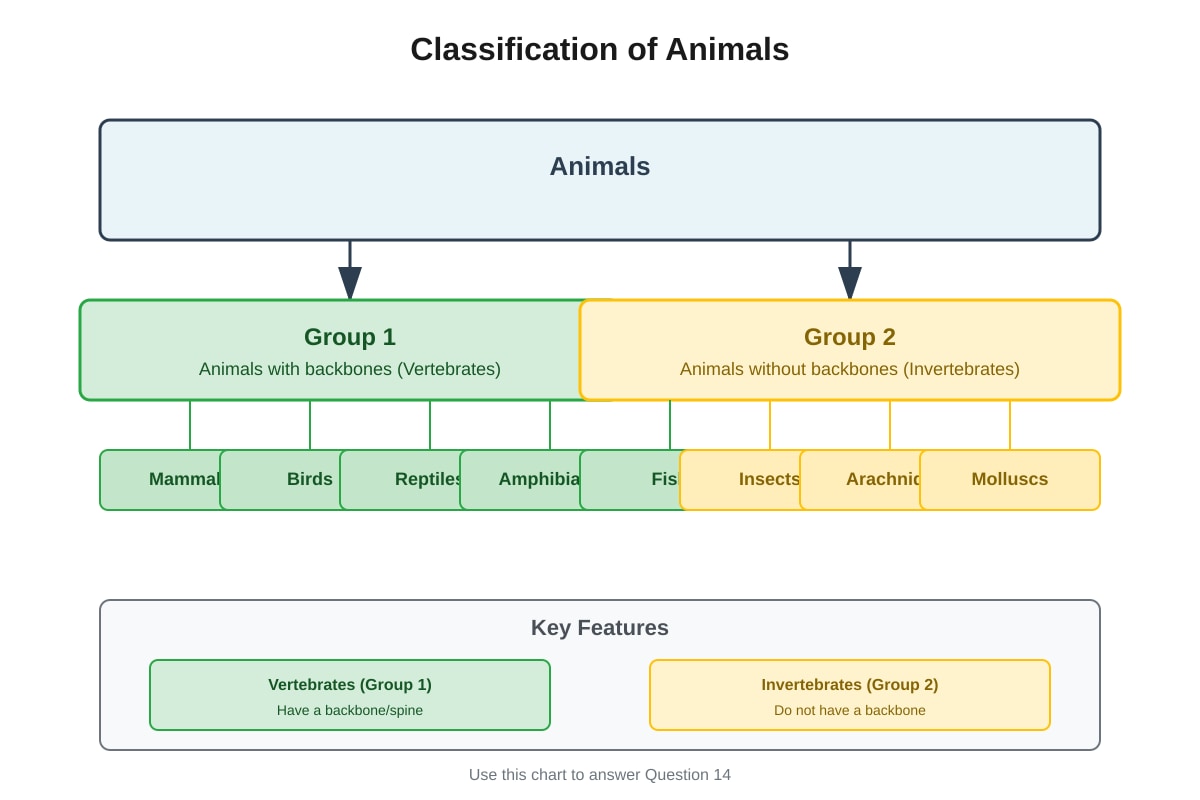
14. Study the classification chart below.

<image_placeholder> id: Q14-fig1 type: diagram linked_question: Q14 description: A chart showing two groups. Group 1: Animals with backbones. Group 2: Animals without backbones. Under Group 1: Mammals, Birds, Reptiles, Amphibians, Fish. Under Group 2: Insects, Arachnids, Molluscs. labels: Group 1, Group 2 must_show: Clear distinction between vertebrates and invertebrates. </image_placeholder>

Which animal belongs in Group 2? (1) Goldfish (2) Housefly (3) Penguin (4) Toad [ ]

15. What is the main function of the thorns on a rose plant? (1) To reduce water loss. (2) To attract pollinators. (3) To protect against herbivores. (4) To support the stem. [ ]

16. Which of the following is NOT a characteristic of all living things? (1) Growth (2) Reproduction (3) Movement from place to place (4) Response to changes [ ]

17. A student observed an animal with the following features:

  • Cold-blooded
  • Lays eggs with soft shells
  • Lives in water and on land
  • Breathes through lungs and skin

This animal is most likely a: (1) Fish (2) Reptile (3) Amphibian (4) Mammal [ ]

18. How does the mimic octopus survive in the ocean? (1) It swims very fast to escape predators. (2) It changes its shape and color to resemble dangerous animals. (3) It has a hard shell for protection. (4) It produces poison to kill predators. [ ]

19. Which of the following pairs shows a producer and a consumer? (1) Mushroom and Tree (2) Grass and Rabbit (3) Lion and Zebra (4) Algae and Bacteria [ ]

20. Why are decomposers important in an ecosystem? (1) They produce oxygen for animals. (2) They break down dead matter and return nutrients to the soil. (3) They provide food for predators. (4) They control the population of herbivores. [ ]


Section B (36 marks)

Answer all questions in the spaces provided.

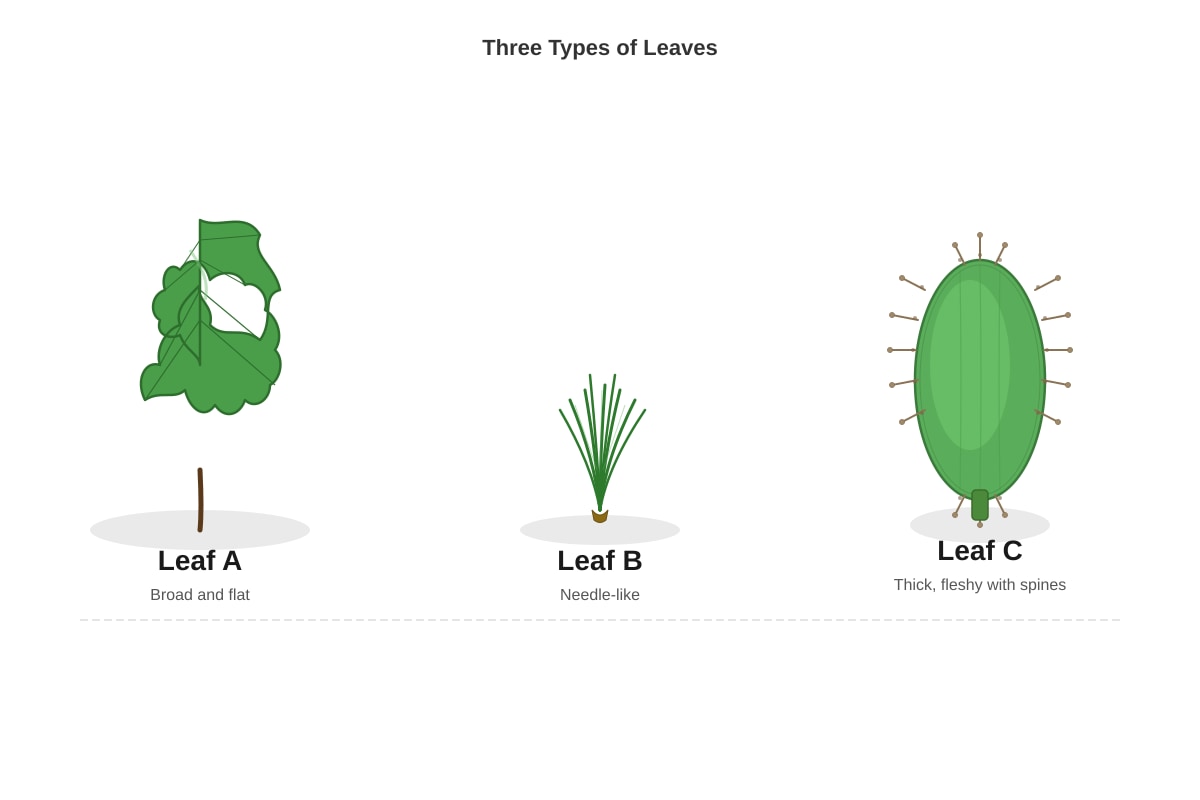
21. The diagram below shows three different types of leaves: Leaf A, Leaf B, and Leaf C.

<image_placeholder> id: Q21-fig1 type: diagram linked_question: Q21 description: Leaf A is broad and flat (like a maple leaf). Leaf B is needle-like (like a pine needle). Leaf C is thick and fleshy with spines (like a cactus pad). labels: Leaf A, Leaf B, Leaf C must_show: Distinct shapes and textures. </image_placeholder>

(a) Which leaf is best adapted for a cold and snowy environment? Explain your answer. [2]


(b) Leaf C is found on a cactus. State one feature of Leaf C that helps reduce water loss. [1]


(c) Why do plants need leaves? [1]


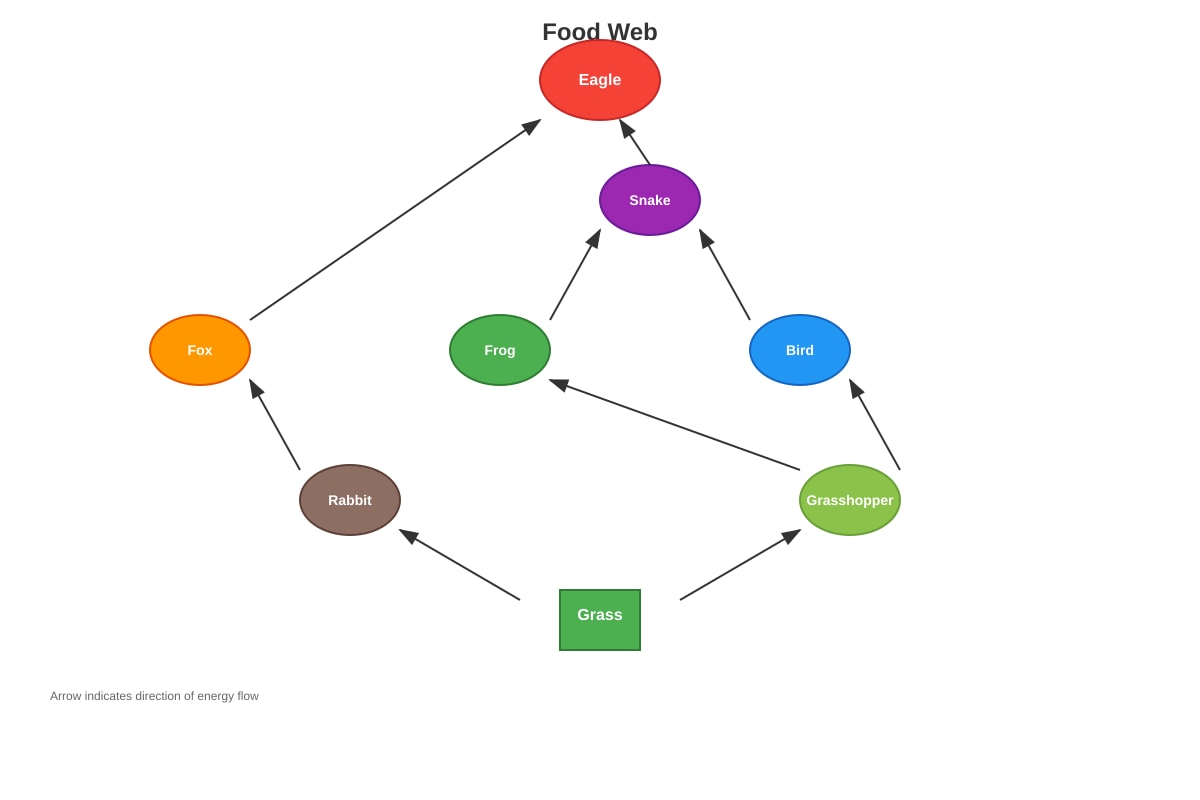
22. Study the food web below.

<image_placeholder> id: Q22-fig1 type: diagram linked_question: Q22 description: A food web. Grass is eaten by Rabbit and Grasshopper. Rabbit is eaten by Fox. Grasshopper is eaten by Frog and Bird. Frog is eaten by Snake. Bird is eaten by Snake. Snake is eaten by Eagle. Fox is eaten by Eagle. labels: Grass, Rabbit, Grasshopper, Fox, Frog, Bird, Snake, Eagle must_show: Arrows indicating energy flow. </image_placeholder>

(a) Name one organism in the food web that is both a predator and prey. [1]


(b) If all the frogs die due to pollution, explain what will happen to the population of grasshoppers. [2]


(c) Identify the producer in this food web. [1]


23. The table below shows the characteristics of five animals: P, Q, R, S, and T.

AnimalBody CoveringReproductionBreathing Organ
PScalesLays eggsLungs
QFurGives birthLungs
RFeathersLays eggsLungs
SMoist SkinLays eggsLungs and Skin
TScalesLays eggsGills

(a) Classify animals P, Q, R, S, and T into their correct animal groups. [3] P: _________________________ Q: _________________________ R: _________________________ S: _________________________ T: _________________________

(b) Which animal is an amphibian? Give a reason for your answer. [2] Animal: _________________________ Reason: _________________________________________________________________

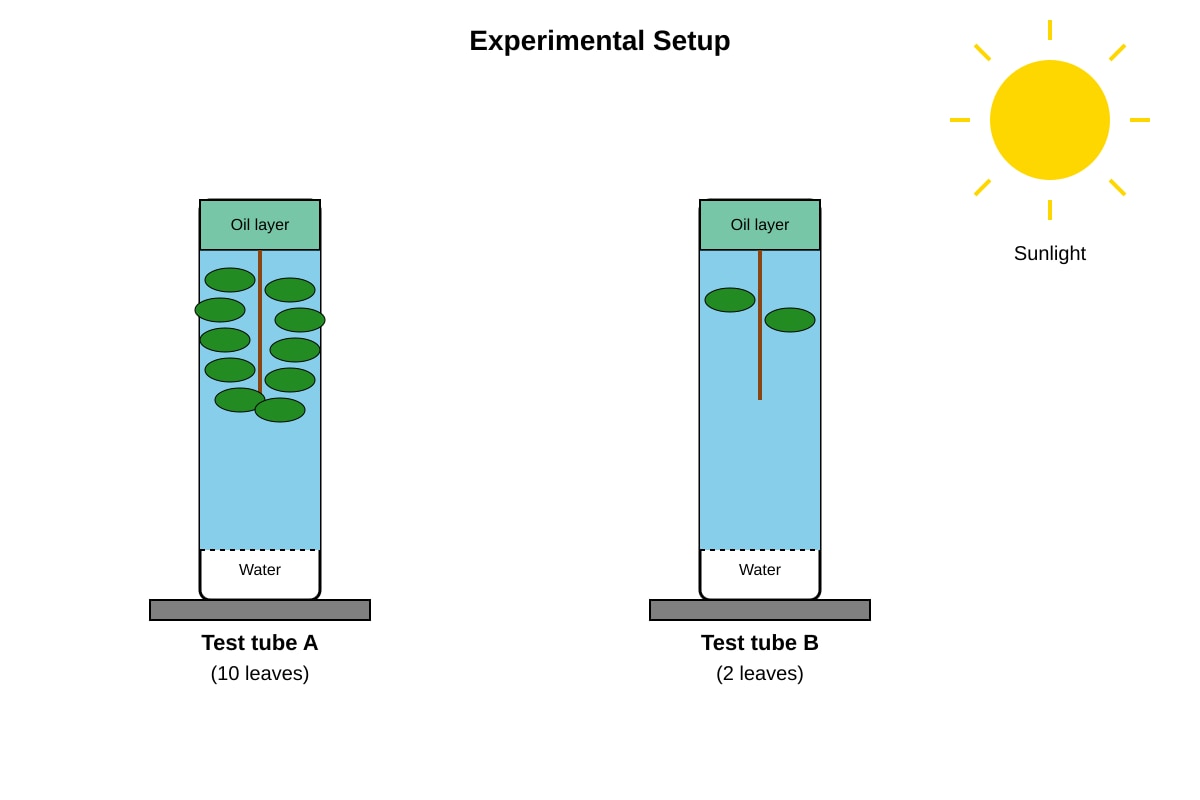
24. The diagram below shows an experimental setup to investigate how the surface area of leaves affects water loss.

<image_placeholder> id: Q24-fig1 type: experimental_setup linked_question: Q24 description: Two test tubes, A and B, filled with water and covered with oil. Test tube A has a twig with 10 leaves. Test tube B has a twig with 2 leaves. Both are placed in sunlight. labels: Test tube A (10 leaves), Test tube B (2 leaves), Oil layer must_show: Difference in leaf number. </image_placeholder>

(a) Why was a layer of oil added to the water in each test tube? [1]


(b) Predict which test tube will have a lower water level after 24 hours. Explain your answer. [2] Test Tube: _________________________ Explanation: _____________________________________________________________


(c) Name the process by which plants lose water vapor through their leaves. [1]


25. Read the passage below.

The Mangrove tree grows in coastal areas where the soil is salty and muddy. The roots of the Mangrove tree are exposed above the ground. These specialized roots help the tree to breathe in the oxygen-poor mud. The leaves of the Mangrove tree have special glands that remove excess salt.

(a) Why do Mangrove trees need specialized roots? [1]


(b) How do the leaves of the Mangrove tree help it survive in a salty environment? [1]


(c) Suggest one other adaptation that might help a plant survive in a coastal area with strong winds. [1]


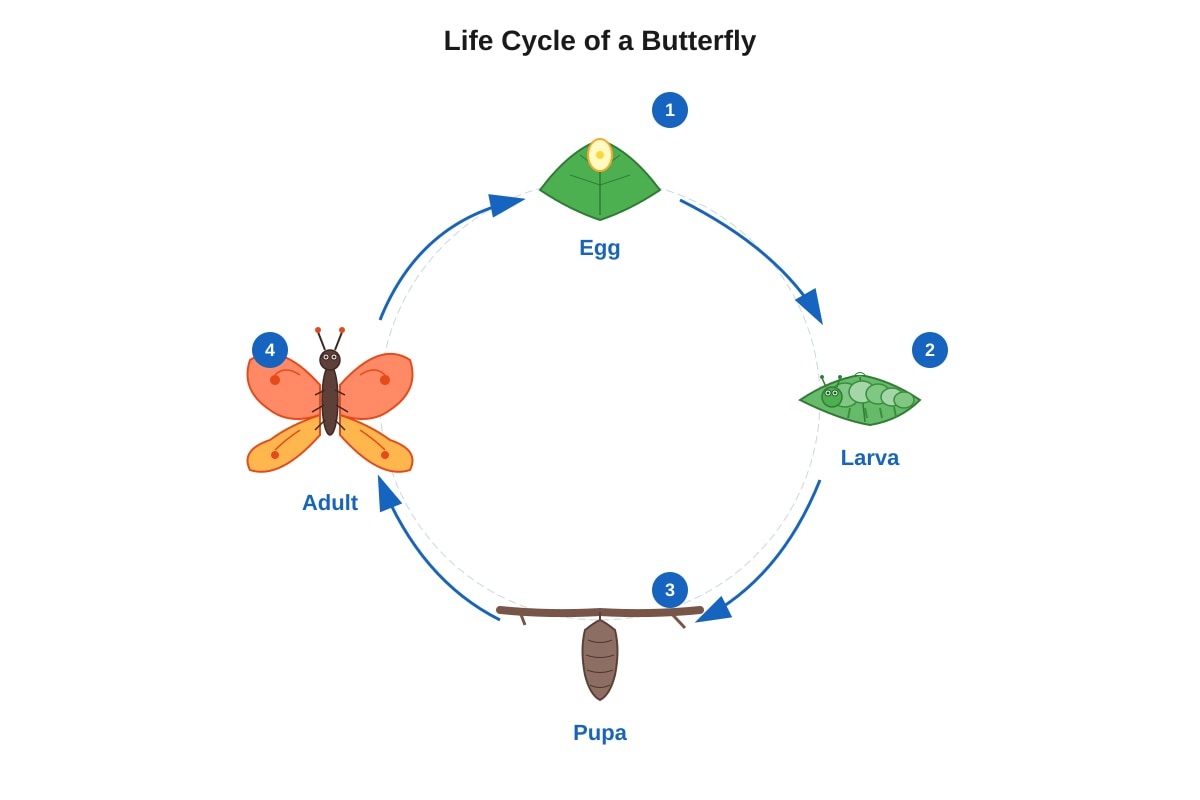
26. The diagram below shows the life cycle of a butterfly.

<image_placeholder> id: Q26-fig1 type: diagram linked_question: Q26 description: A circular life cycle diagram. Stage 1: Egg on a leaf. Stage 2: Larva (Caterpillar) eating a leaf. Stage 3: Pupa (Chrysalis) hanging from a branch. Stage 4: Adult Butterfly. Arrows connect them in order. labels: Egg, Larva, Pupa, Adult must_show: Four distinct stages. </image_placeholder>

(a) What type of reproduction does the butterfly undergo? [1]


(b) During which stage does the butterfly feed the most? [1]


(c) Why is the pupal stage important in the life cycle of a butterfly? [2]


27. Study the classification key below.

1a. Has wings ........................................ Go to 2 1b. Does not have wings ......................... Go to 3

2a. Has two pairs of wings ...................... Housefly 2b. Has one pair of wings ....................... Mosquito

3a. Has six legs ...................................... Ant 3b. Has eight legs ................................... Spider

(a) An insect has wings and six legs. Can it be identified using this key? Explain. [2]


(b) Draw a simple flowchart to classify a Bee and a Scorpion based on the features: Has wings, Number of legs (6 or 8). [2]


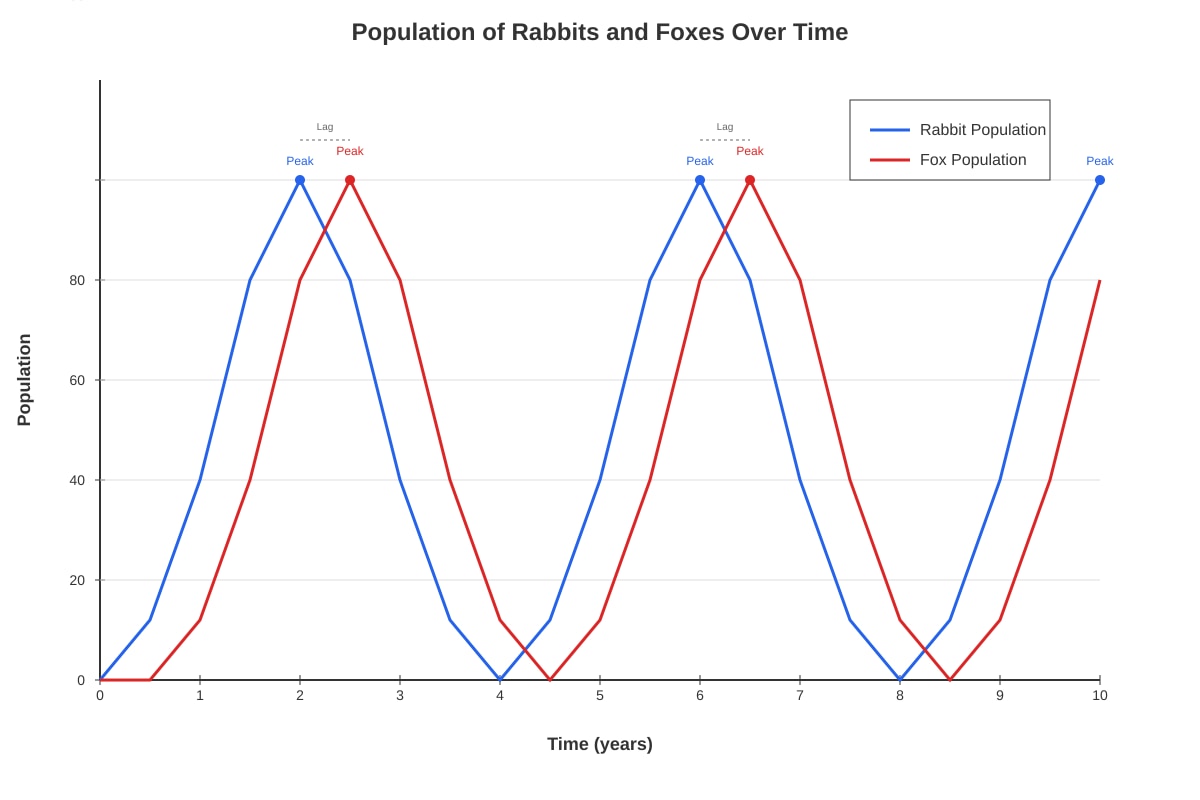
28. The graph below shows the population of rabbits and foxes in a forest over 10 years.

<image_placeholder> id: Q28-fig1 type: graph linked_question: Q28 description: A line graph with Time (years) on x-axis and Population on y-axis. Two lines: Rabbit population peaks first, then Fox population peaks shortly after. When Rabbit population drops, Fox population drops later. labels: Rabbit Population, Fox Population, Time (years) must_show: Cyclical pattern with lag. </image_placeholder>

(a) Describe the relationship between the rabbit and fox populations. [2]


(b) Why does the fox population decrease after the rabbit population decreases? [2]


29. A student wants to classify the following items: Gold ring, Wooden chair, Plastic bottle, Cotton shirt.

(a) Suggest a criterion to classify these items into two groups. [1] Criterion: _______________________________________________________________

(b) Group the items based on your criterion. [2] Group 1: _________________________________________________________________ Group 2: _________________________________________________________________

30. The diagram below shows a plant cell and an animal cell.

<image_placeholder> id: Q30-fig1 type: diagram linked_question: Q30 description: Side-by-side diagrams. Left: Plant cell with cell wall, chloroplasts, large vacuole. Right: Animal cell with no cell wall, no chloroplasts, small vacuoles. Both have nucleus and cytoplasm. labels: Cell Wall, Chloroplast, Vacuole, Nucleus, Cytoplasm must_show: Key differences highlighted. </image_placeholder>

(a) State two differences between the plant cell and the animal cell. [2]


(b) Which part of the plant cell is responsible for photosynthesis? [1]


(c) Why do animal cells not have chloroplasts? [1]


31. The table below shows the boiling points of four liquids.

LiquidBoiling Point (^\circC)
A78
B100
C56
D120

(a) Which liquid will boil first if all are heated at the same rate? [1]


(b) If Liquid B is water, what is its state at 8080^\circC? [1]


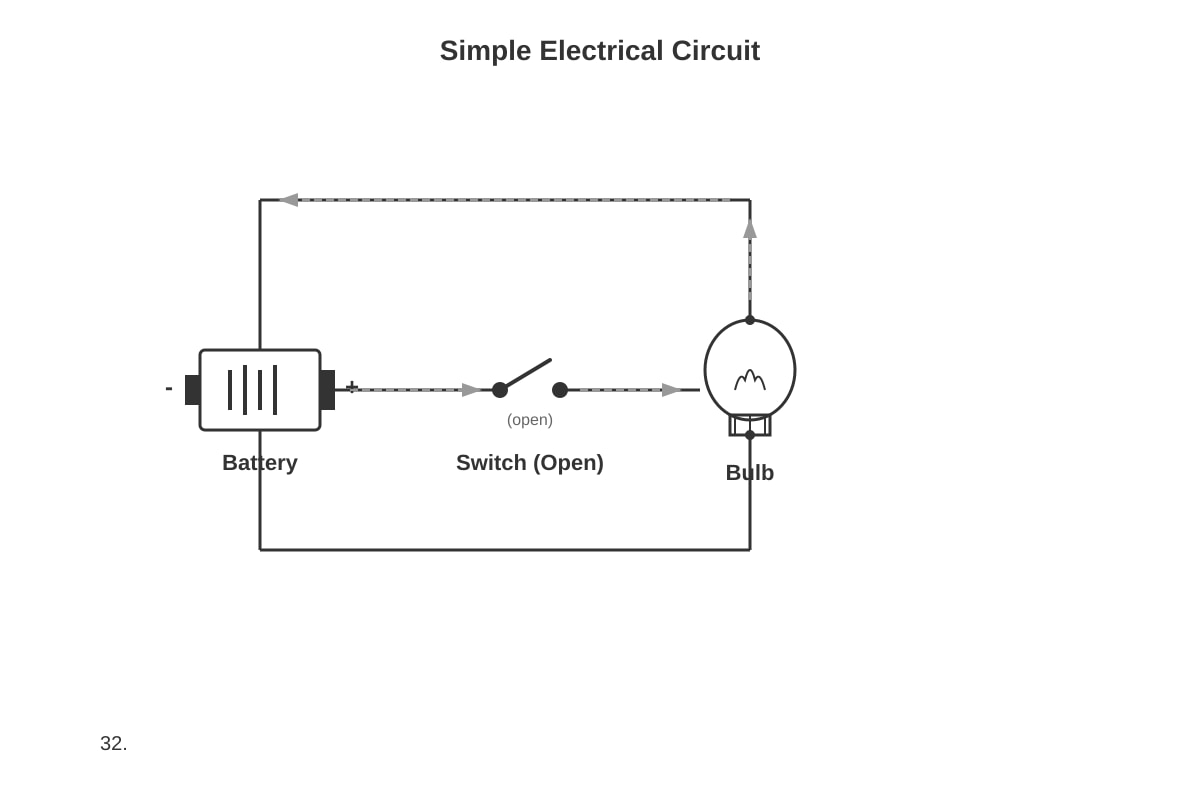
32. The diagram below shows a simple electrical circuit with a battery, a switch, and a bulb.

<image_placeholder> id: Q32-fig1 type: diagram linked_question: Q32 description: A series circuit. Battery connected to a switch (open), then to a bulb, then back to battery. labels: Battery, Switch (Open), Bulb must_show: Open switch. </image_placeholder>

(a) Will the bulb light up? Why? [2]


(b) What happens to the brightness of the bulb if another identical bulb is added in series? [1]


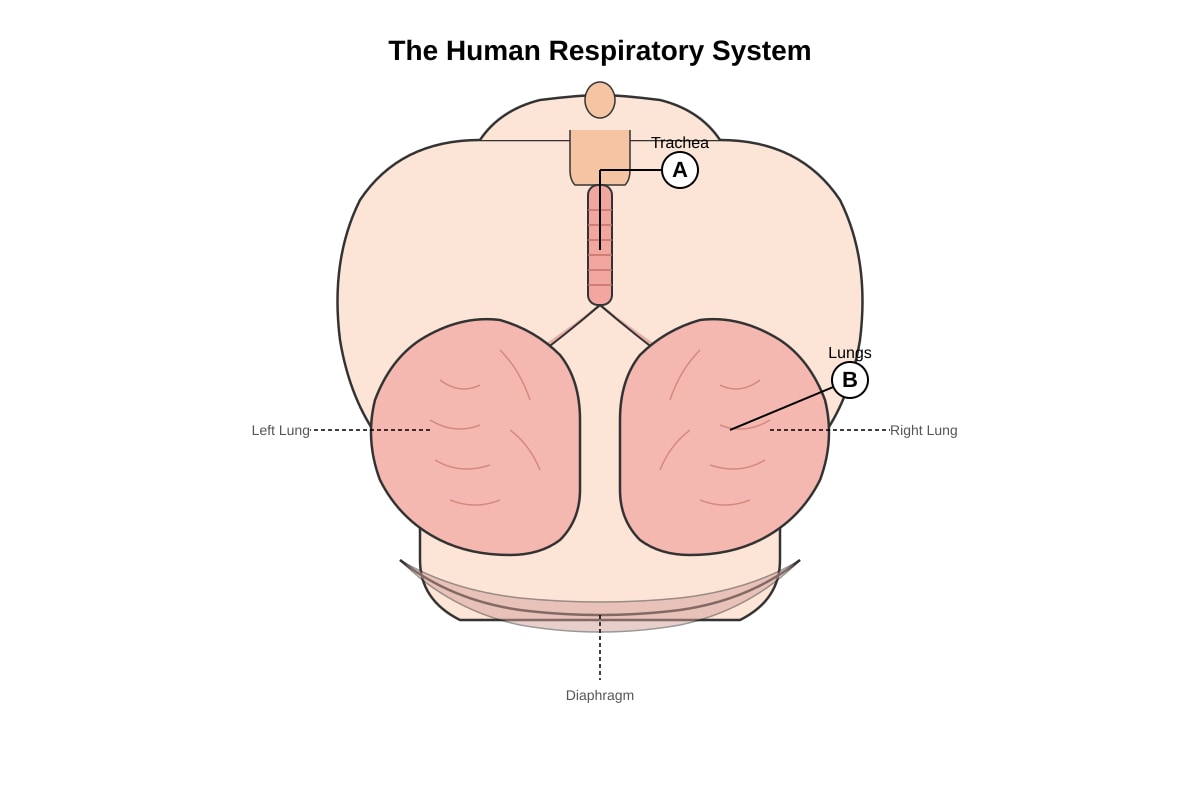
33. The diagram below shows the human respiratory system.

<image_placeholder> id: Q33-fig1 type: diagram linked_question: Q33 description: Diagram of lungs, trachea, and bronchi. Label A points to the trachea. Label B points to the lungs. labels: A, B must_show: Clear anatomy. </image_placeholder>

(a) Name parts A and B. [2] A: _________________________ B: _________________________

(b) What happens to the diaphragm when we breathe in? [1]


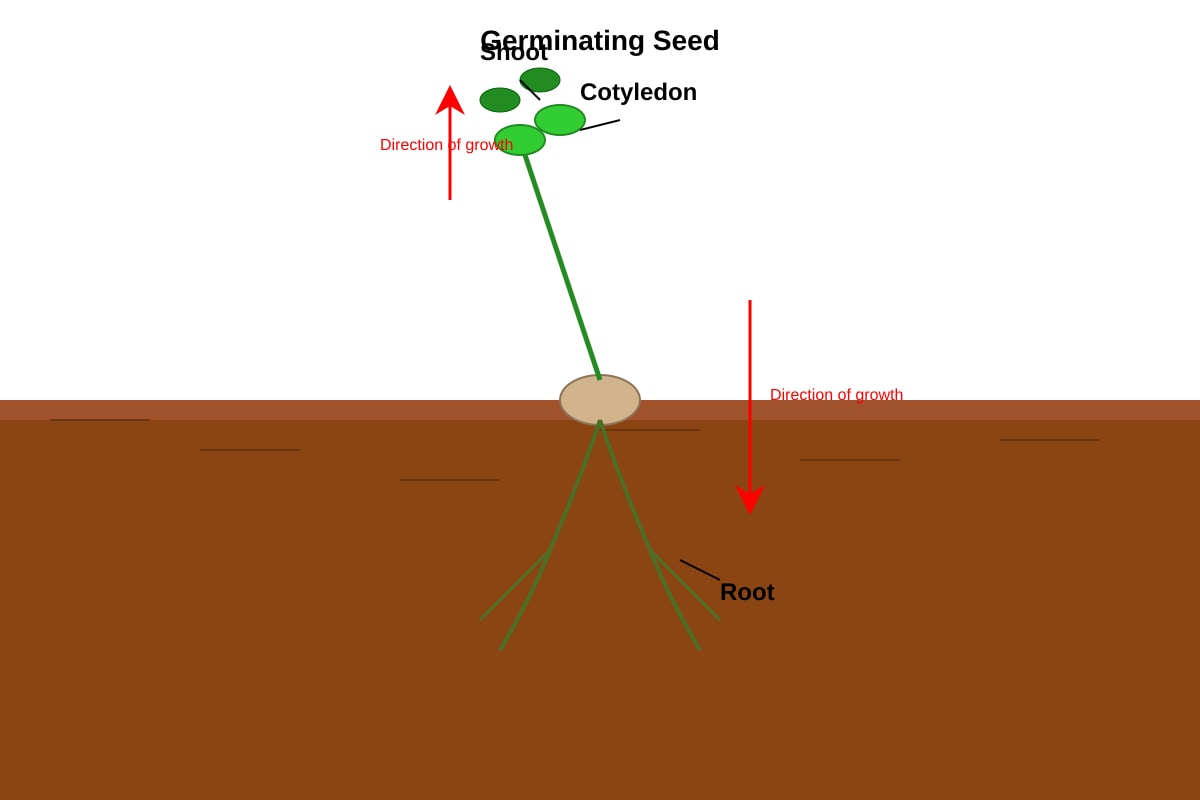
34. The diagram below shows a seed germinating.

<image_placeholder> id: Q34-fig1 type: diagram linked_question: Q34 description: A seed in soil. Roots growing down. Shoot growing up. Cotyledons visible. labels: Root, Shoot, Cotyledon must_show: Direction of growth. </image_placeholder>

(a) Which part of the seed develops into the root? [1]


(b) Why do seeds need water to germinate? [1]


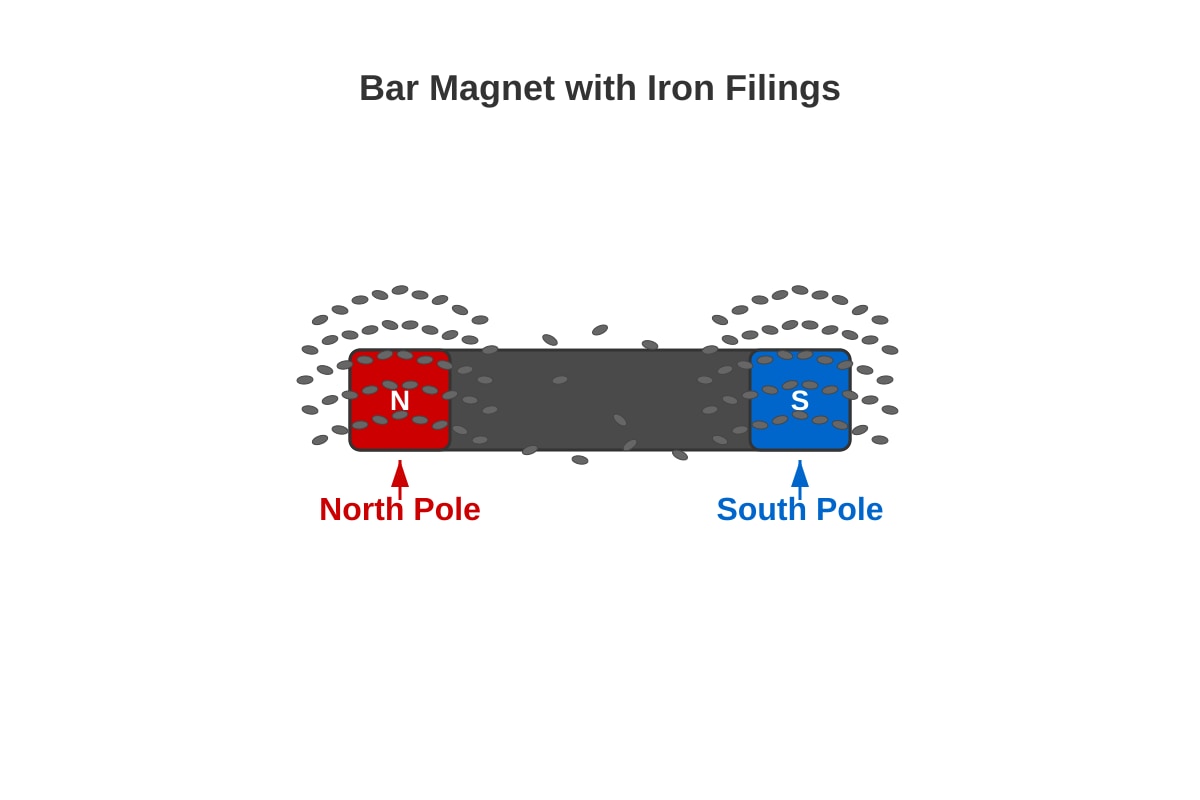
35. The diagram below shows a magnet attracting iron filings.

<image_placeholder> id: Q35-fig1 type: diagram linked_question: Q35 description: A bar magnet with iron filings clustered at the poles (ends) and sparse in the middle. labels: North Pole, South Pole must_show: Concentration of filings at poles. </image_placeholder>

(a) Where is the magnetic force strongest? [1]


(b) Why do the iron filings cluster at the ends of the magnet? [1]


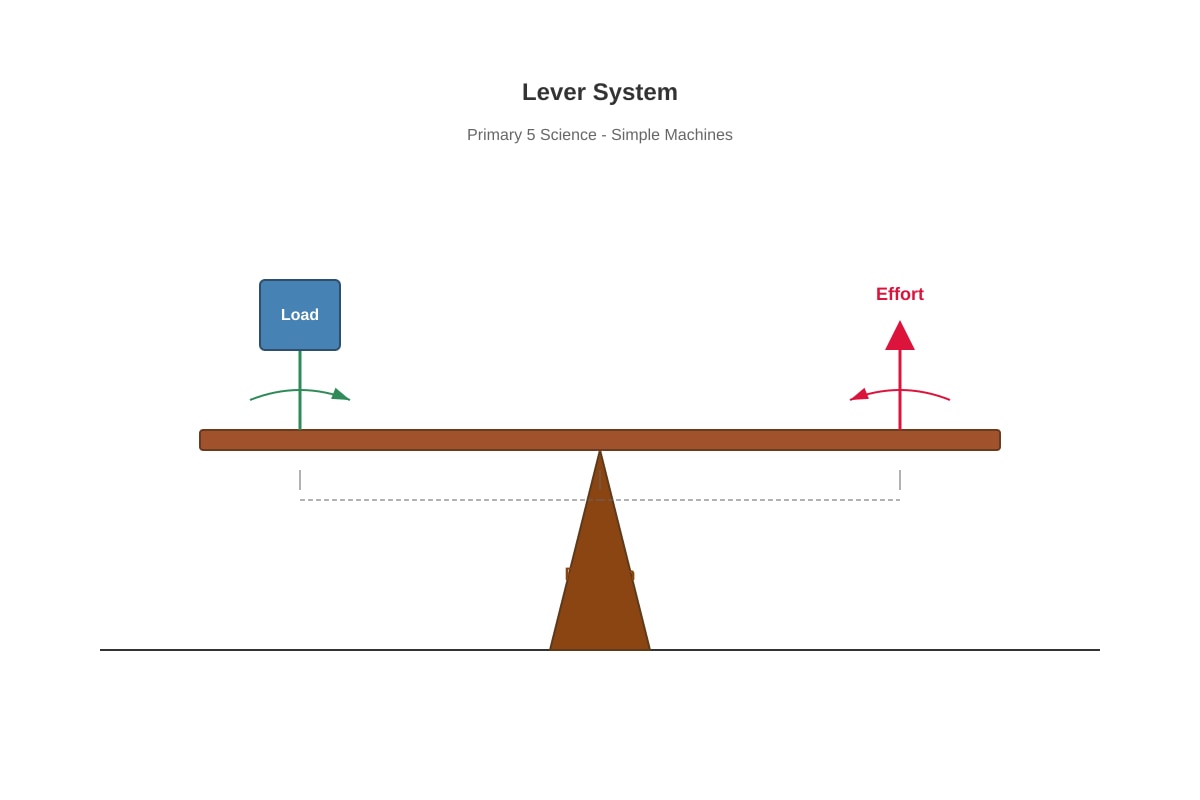
36. The diagram below shows a lever.

<image_placeholder> id: Q36-fig1 type: diagram linked_question: Q36 description: A seesaw-like lever. Fulcrum in the middle. Load on one side. Effort applied on the other side. labels: Fulcrum, Load, Effort must_show: Basic lever components. </image_placeholder>

(a) What is the function of the fulcrum? [1]


(b) If the load is moved closer to the fulcrum, does it become easier or harder to lift? Explain. [2]


--- End of Paper ---

Answers

<!-- TuitionGoWhere generation metadata: stage=3-1; model=qwen/qwen3.7-plus; model_label=Qwen3.7 Plus; generated=2026-06-04; Sources: Stage 2-1 real exam-derived templates and Stage 2-2 exam-enriched syllabus. -->

TuitionGoWhere Practice Paper - Science Primary 5 (WA3 Version 2)

Answer Key and Marking Scheme

Section A (20 marks)

  1. (1) Bat, Whale, and Dolphin are all mammals. They give birth to live young and feed them with milk. Penguins are birds; Sharks are fish; Frogs are amphibians.
  2. (3) Plant Y. Ferns do not have flowers (Go to B) and have spores on the underside of leaves (Yes).
  3. (2) Feathers are unique to birds. Other animals lay eggs (reptiles, amphibians), have four limbs (mammals, reptiles), or use lungs (mammals, reptiles).
  4. (2) If frogs decrease, there are fewer predators for grasshoppers, so the grasshopper population will increase.
  5. (2) Thick, waxy skin reduces water loss through transpiration, which is crucial in a dry desert.
  6. (3) Plant C. Mosses have chlorophyll (Yes), reproduce by spores (Yes), but do not have true roots, stems, or leaves (No). Plant D is likely a fern.
  7. (3) Fat acts as an insulator to keep the bear warm in freezing temperatures.
  8. (3) Fungi are decomposers or saprophytes; they do not photosynthesize.
  9. (3) C (Streamlined body). This shape reduces drag (water resistance).
  10. (3) Webbed feet are a physical (structural) feature. Hibernation and migration are behavioral; color change can be physiological/behavioral.
  11. (2) Mutualism. Both the tree (protected from insects) and the bird (gets food/shelter) benefit.
  12. (1) Spider (Arachnid), Snail (Mollusc), Earthworm (Annelid) are all invertebrates.
  13. (2) Long roots reach deep water tables in arid regions.
  14. (2) Housefly. It is an insect (invertebrate). Goldfish, Penguin, and Toad are vertebrates.
  15. (3) Thorns deter animals from eating the plant.
  16. (3) Not all living things move from place to place (e.g., plants).
  17. (3) Amphibian. Cold-blooded, soft-shelled eggs, dual habitat, dual breathing.
  18. (2) Mimicry is a behavioral/structural adaptation to avoid predation.
  19. (2) Grass (Producer) and Rabbit (Consumer).
  20. (2) Decomposers recycle nutrients by breaking down dead organic matter.

Section B (36 marks)

21. (a) Leaf B (Needle-like). [1] Reason: Needle-like leaves have a smaller surface area, which reduces water loss through transpiration. This is important in cold environments where water may be frozen and unavailable. [1] (b) Thick/Fleshy skin OR Spines instead of leaves. [1] (Accept: Reduced surface area). (c) To make food for the plant through photosynthesis. [1]

22. (a) Snake OR Bird OR Fox. [1] (Any animal that eats another and is eaten by another). (b) The population of grasshoppers will increase. [1] Reason: Frogs are predators of grasshoppers. With fewer frogs, fewer grasshoppers are eaten, allowing their numbers to grow. [1] (c) Grass. [1]

23. (a) [3 marks, 0.5 each] P: Reptile Q: Mammal R: Bird S: Amphibian T: Fish (b) Animal: S [1] Reason: It has moist skin and breathes through lungs and skin, which are characteristic of amphibians. It also lays eggs. [1]

24. (a) To prevent evaporation of water directly from the surface of the water in the test tube. [1] This ensures that any water loss is due to the plant, not the environment. (b) Test Tube: A [1] Explanation: Test tube A has more leaves (10 leaves) than Test tube B (2 leaves). More leaves mean a larger total surface area for stomata, leading to a higher rate of transpiration (water loss). [1] (c) Transpiration. [1]

25. (a) To obtain oxygen for respiration because the muddy soil lacks sufficient oxygen. [1] (b) The glands remove excess salt from the plant, preventing salt toxicity. [1] (c) Flexible stems to bend with the wind without breaking OR Strong roots to anchor the plant. [1]

26. (a) Sexual reproduction. [1] (Involves fusion of male and female gametes/eggs). (b) Larva (or Caterpillar). [1] (c) It is the stage where the body undergoes metamorphosis (major changes) to transform from a larva into an adult. [1] The pupa is protected while these changes occur. [1]

27. (a) No. [1] Explanation: The key distinguishes between Housefly (2 pairs of wings) and Mosquito (1 pair of wings). A bee has 2 pairs of wings, so it would be identified as a Housefly, which is incorrect. The key does not have a specific branch for bees. [1] (b) [2 marks for correct logic] Start -> Has wings? Yes -> Has 6 legs? Yes -> Bee No (Has 8 legs) -> Scorpion (Note: Accept any logical flowchart that correctly separates them based on legs/wings).

28. (a) The populations show a cyclical pattern. [1] When the rabbit population increases, the fox population increases later. When the rabbit population decreases, the fox population decreases later. [1] (b) Foxes feed on rabbits. [1] When the rabbit population decreases, there is less food available for the foxes, causing some foxes to starve or leave, leading to a decrease in their population. [1]

29. (a) Criterion: Natural vs. Man-made OR Conductor vs. Insulator OR Biodegradable vs. Non-biodegradable. [1] (b) Example using Natural vs. Man-made: [2] Group 1 (Natural): Wooden chair, Cotton shirt Group 2 (Man-made/Synthetic): Gold ring (processed), Plastic bottle (Note: Marks depend on consistency with the chosen criterion).

30. (a) [2 marks]

  1. Plant cells have a cell wall; animal cells do not.
  2. Plant cells have chloroplasts; animal cells do not. (Alternative: Plant cells have a large central vacuole; animal cells have small/temporary vacuoles). (b) Chloroplast. [1] (c) Animal cells do not perform photosynthesis because animals are consumers and obtain food by eating other organisms. [1]

31. (a) Liquid C (56^\circC). [1] It has the lowest boiling point. (b) Liquid (or Gas/Vapor if strictly at boiling, but at 80 it is liquid). [1] Water boils at 100^\circC, so at 80^\circC it is still a liquid.

32. (a) No. [1] Reason: The switch is open, so the circuit is incomplete. Electricity cannot flow. [1] (b) The brightness will decrease (dimmer). [1] Adding bulbs in series increases resistance, reducing current.

33. (a) A: Trachea (Windpipe) [1] B: Lungs [1] (b) The diaphragm moves down (contracts/flattens). [1] This increases the volume of the chest cavity, drawing air in.

34. (a) Radicle (or Root embryo). [1] (b) Water softens the seed coat and activates enzymes that break down stored food for the growing embryo. [1]

35. (a) At the poles (North and South poles). [1] (b) The magnetic field is strongest at the poles. [1]

36. (a) The fulcrum is the pivot point around which the lever turns. [1] (b) It becomes easier. [1] Explanation: Moving the load closer to the fulcrum decreases the load distance. According to the principle of moments, less effort is required to lift the load when the load arm is shorter. [1]

--- End of Answer Key ---