From Real Exams Exam Paper
Primary 5 Science Weighted Assessment 2 (Term 3) Paper 3
Free Exam-Derived Qwen3.7 Plus Primary 5 Science Weighted Assessment 2 (Term 3) Paper 3 practice paper with questions and answers for Singapore students. This page is rendered as a direct URL so the questions and answers can be discovered without pressing in-page buttons.
These static practice materials are generated from the site's syllabus and paper-generation workflow, with source and model context shown so students and parents can evaluate the material before use.
Questions
TuitionGoWhere Practice Paper - Science Primary 5
TuitionGoWhere Exam Practice (AI)
Subject: Science
Level: Primary 5
Paper: WA2 (Version 3 of 5)
Duration: 1 hour 45 minutes
Total Marks: 60
Name: __________________________
Class: __________
Date: __________________________
Instructions to Candidates:
- This paper consists of two sections: Section A and Section B.
- Answer all questions.
- Write your answers in the spaces provided.
- For questions in Section A, write the number of the correct option in the brackets provided.
- The number of marks available for each question or part question is shown in brackets [ ] at the end of the question or part question.
Section A (20 marks)
For each question from 1 to 20, four options are given. One of them is the correct answer. Make your choice and write its number (1, 2, 3 or 4) in the brackets provided. Each question carries 1 mark.
1. Which of the following statements about cells is correct? (1) All cells have a cell wall. (2) The nucleus controls the activities of the cell. (3) Chloroplasts are found in all plant and animal cells. (4) Cells are the smallest unit of life, but they cannot reproduce.
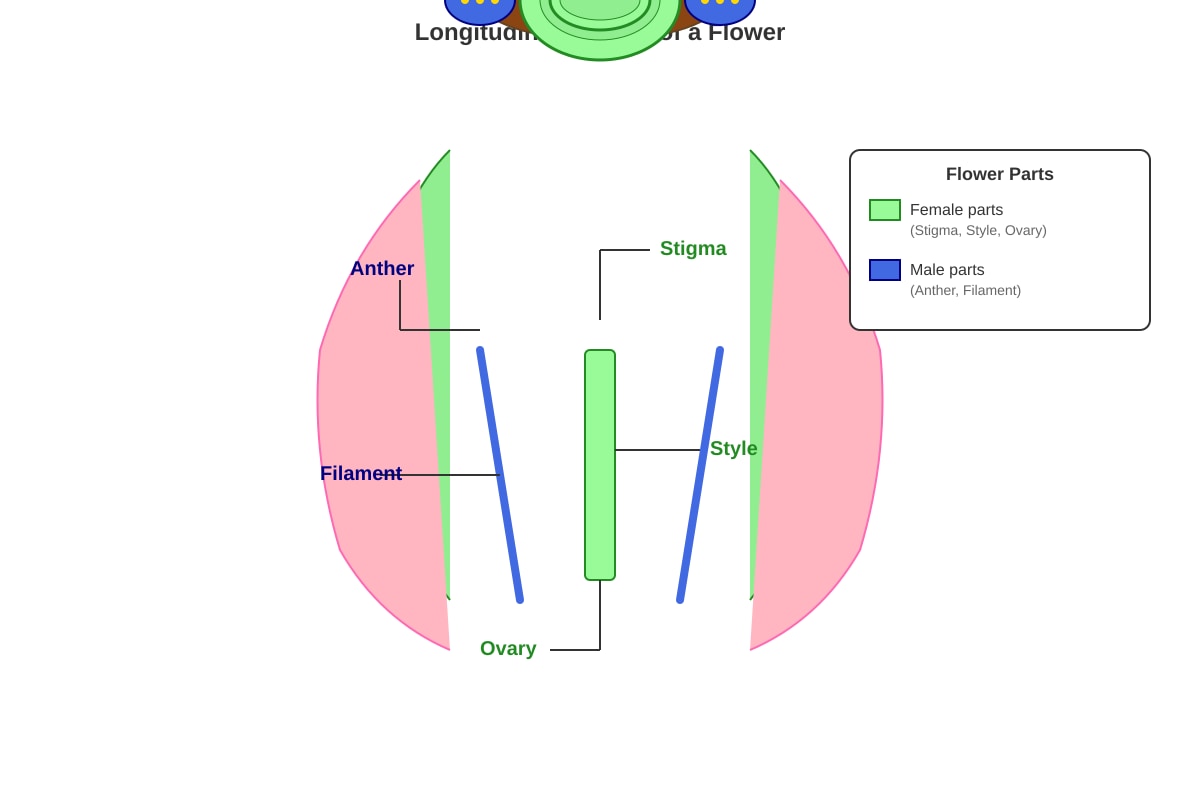
2. The diagram below shows the reproductive parts of a flower. <image_placeholder> id: Q2-fig1 type: diagram linked_question: Q2 description: A longitudinal section of a typical flower showing the stigma, style, ovary, anther, and filament. labels: Stigma, Style, Ovary, Anther, Filament must_show: Clear distinction between male parts (anther/filament) and female parts (stigma/style/ovary). </image_placeholder> Which parts are involved in the transfer of pollen during pollination? (1) Anther and Stigma (2) Filament and Style (3) Ovary and Anther (4) Stigma and Ovary
3. Which of the following is a characteristic of wind-dispersed seeds? (1) They are heavy and hard. (2) They have juicy and sweet flesh. (3) They have wing-like structures or light, hairy tufts. (4) They have hooks or spines to attach to animal fur.
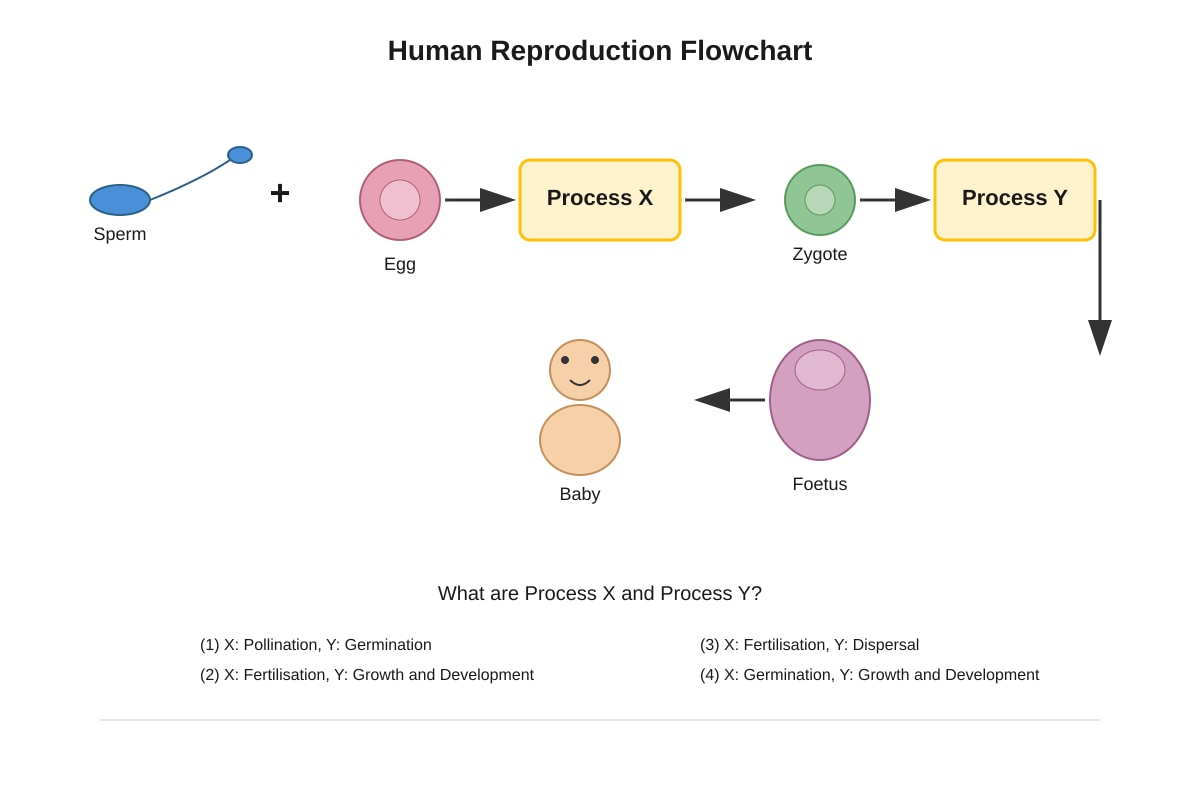
4. Study the flowchart below regarding human reproduction. <image_placeholder> id: Q4-fig1 type: figure linked_question: Q4 description: A simple flowchart: Sperm + Egg -> Process X -> Zygote -> Process Y -> Foetus -> Baby. labels: Process X, Process Y must_show: Arrows indicating the sequence of events. </image_placeholder> What are Process X and Process Y? (1) X: Pollination, Y: Germination (2) X: Fertilisation, Y: Growth and Development (3) X: Fertilisation, Y: Dispersal (4) X: Germination, Y: Growth and Development
5. Which of the following animals reproduces by laying eggs? (1) Bat (2) Dolphin (3) Penguin (4) Whale
6. A farmer wants to grow new plants that are exactly identical to the parent plant. Which method of reproduction should he use? (1) Sexual reproduction using seeds (2) Asexual reproduction using stem cuttings (3) Sexual reproduction using spores (4) Cross-pollination between two different plants
7. Which of the following is not a condition required for seed germination? (1) Water (2) Oxygen (3) Suitable temperature (4) Sunlight
8. The table below shows the characteristics of four fruits, P, Q, R, and S. <image_placeholder> id: Q8-fig1 type: table linked_question: Q8 description: A table with columns: Fruit, Characteristics. Rows: P (Light, dry, winged), Q (Heavy, hard shell), R (Juicy, sweet flesh), S (Dry, with hooks). labels: Fruit P, Fruit Q, Fruit R, Fruit S must_show: Clear text description of characteristics. </image_placeholder> Which fruit is most likely dispersed by animals? (1) P (2) Q (3) R (4) S
9. In flowering plants, where does fertilisation take place? (1) Stigma (2) Style (3) Ovary (4) Anther
10. Which of the following statements about sexual reproduction is true? (1) It involves only one parent. (2) The offspring are identical to the parent. (3) It involves the fusion of male and female reproductive cells. (4) It is faster than asexual reproduction.
11. Why is seed dispersal important for plants? (1) To ensure seeds get enough sunlight. (2) To reduce overcrowding and competition for resources. (3) To help seeds absorb more water. (4) To allow seeds to germinate immediately.
12. Which part of the human female reproductive system produces eggs? (1) Uterus (2) Ovary (3) Oviduct (4) Vagina
13. A student observed a mould growing on a piece of bread. How does the mould reproduce? (1) By laying eggs (2) By giving birth to young (3) By releasing spores (4) By producing seeds
14. Which of the following is a difference between reproduction in humans and flowering plants? (1) Humans produce seeds; plants produce babies. (2) Humans undergo internal fertilisation; plants undergo external fertilisation. (3) Human fertilisation occurs inside the body; plant fertilisation occurs inside the ovary. (4) Humans do not need water for reproduction; plants need wind for fertilisation.
15. What is the function of the pollen tube? (1) To attract insects for pollination. (2) To protect the ovule from drying out. (3) To transport the male reproductive cell to the ovule. (4) To turn into the seed coat after fertilisation.
16. Which of the following animals has a life cycle that involves metamorphosis? (1) Cat (2) Butterfly (3) Chicken (4) Dog
17. Why do some plants reproduce asexually? (1) To produce genetically diverse offspring. (2) To survive in changing environments. (3) To produce offspring quickly without needing a partner. (4) To ensure seeds are dispersed over long distances.
18. In the human reproductive system, where does the fertilised egg implant and develop? (1) Ovary (2) Oviduct (3) Uterus (4) Cervix
19. Which of the following is not a method of asexual reproduction in plants? (1) Using runners (2) Using tubers (3) Using bulbs (4) Using pollen
20. A fruit has a thick, fibrous outer layer that traps air. How is this fruit most likely dispersed? (1) By wind (2) By water (3) By animals (4) By explosive action
Section B (40 marks)
Answer all questions in the spaces provided. The number of marks available for each question or part question is shown in brackets [ ].
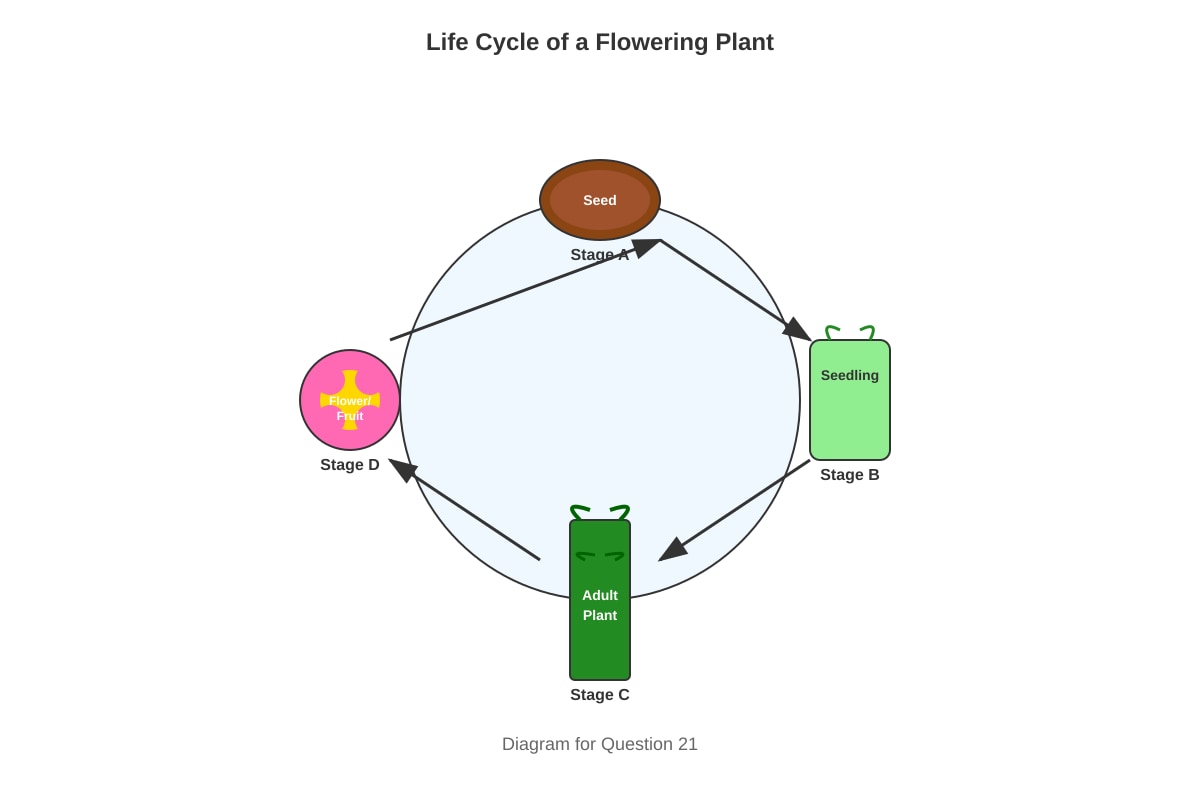
21. The diagram below shows the life cycle of a flowering plant. <image_placeholder> id: Q21-fig1 type: diagram linked_question: Q21 description: A circular life cycle diagram with four stages: Seed, Seedling, Adult Plant, Flower/Fruit. Arrows connect them in order. labels: Stage A (Seed), Stage B (Seedling), Stage C (Adult Plant), Stage D (Flower/Fruit) must_show: Clear arrows indicating the cycle. </image_placeholder>
(a) Name the process that occurs at Stage D which leads to the formation of seeds. [1]
(b) State two conditions necessary for the seed at Stage A to germinate. [2]
(c) Explain why seeds are dispersed away from the parent plant. [2]
22. Study the diagram of a flower below. <image_placeholder> id: Q22-fig1 type: diagram linked_question: Q22 description: A flower with labels A (Stigma), B (Style), C (Ovary), D (Anther), E (Filament). labels: A, B, C, D, E must_show: Standard flower structure. </image_placeholder>
(a) Identify the parts labelled A and D. [2] A: __________________________ D: __________________________
(b) Part D produces a fine powder. What is this powder called? [1]
(c) If part A is removed from the flower, can the flower still produce fruits? Explain your answer. [2]
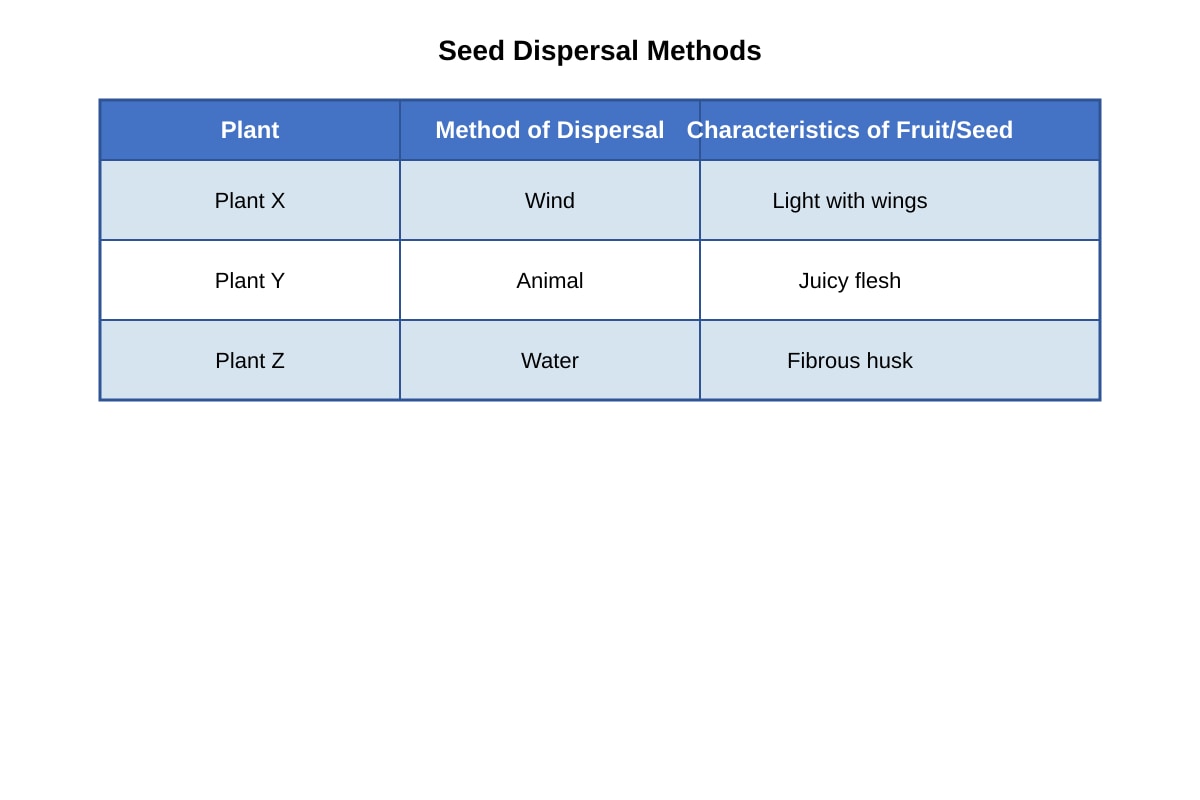
23. The table below shows the methods of seed dispersal for three different plants. <image_placeholder> id: Q23-fig1 type: table linked_question: Q23 description: Table with columns: Plant, Method of Dispersal, Characteristics of Fruit/Seed. Rows: Plant X (Wind, Light with wings), Plant Y (Animal, Juicy flesh), Plant Z (Water, Fibrous husk). labels: Plant X, Plant Y, Plant Z must_show: Clear text. </image_placeholder>
(a) Why does Plant Y have juicy and sweet flesh? [1]
(b) Plant Z grows near the sea. Explain how its fibrous husk helps in seed dispersal. [2]
(c) If Plant X and Plant Z were swapped in their environments (Plant X near sea, Plant Z in open field), which plant would likely fail to disperse its seeds effectively? Explain why. [2]
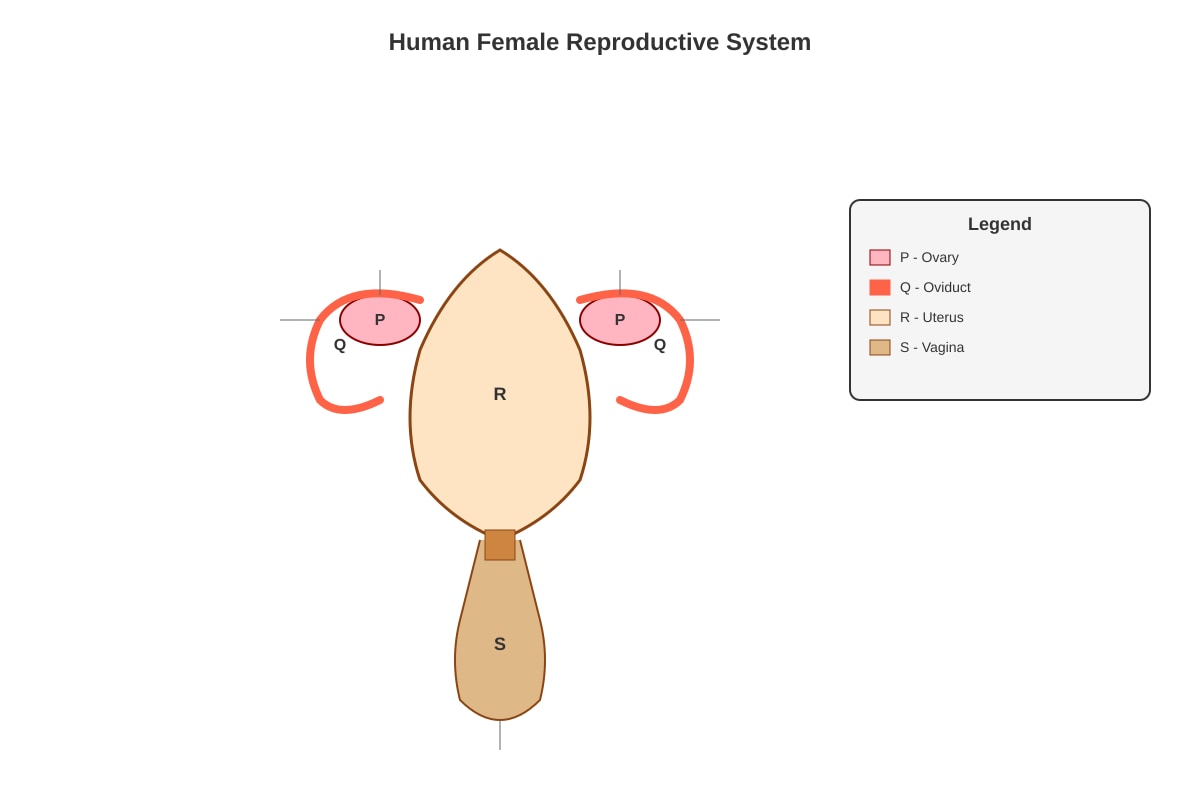
24. The diagram below shows the human female reproductive system. <image_placeholder> id: Q24-fig1 type: diagram linked_question: Q24 description: Diagram of female reproductive system with labels P (Ovary), Q (Oviduct), R (Uterus), S (Vagina). labels: P, Q, R, S must_show: Clear anatomical positions. </image_placeholder>
(a) Where does fertilisation usually take place? Write the letter. [1]
(b) What is the function of part P? [1]
(c) If part Q is blocked, can a woman still get pregnant? Explain your answer. [2]
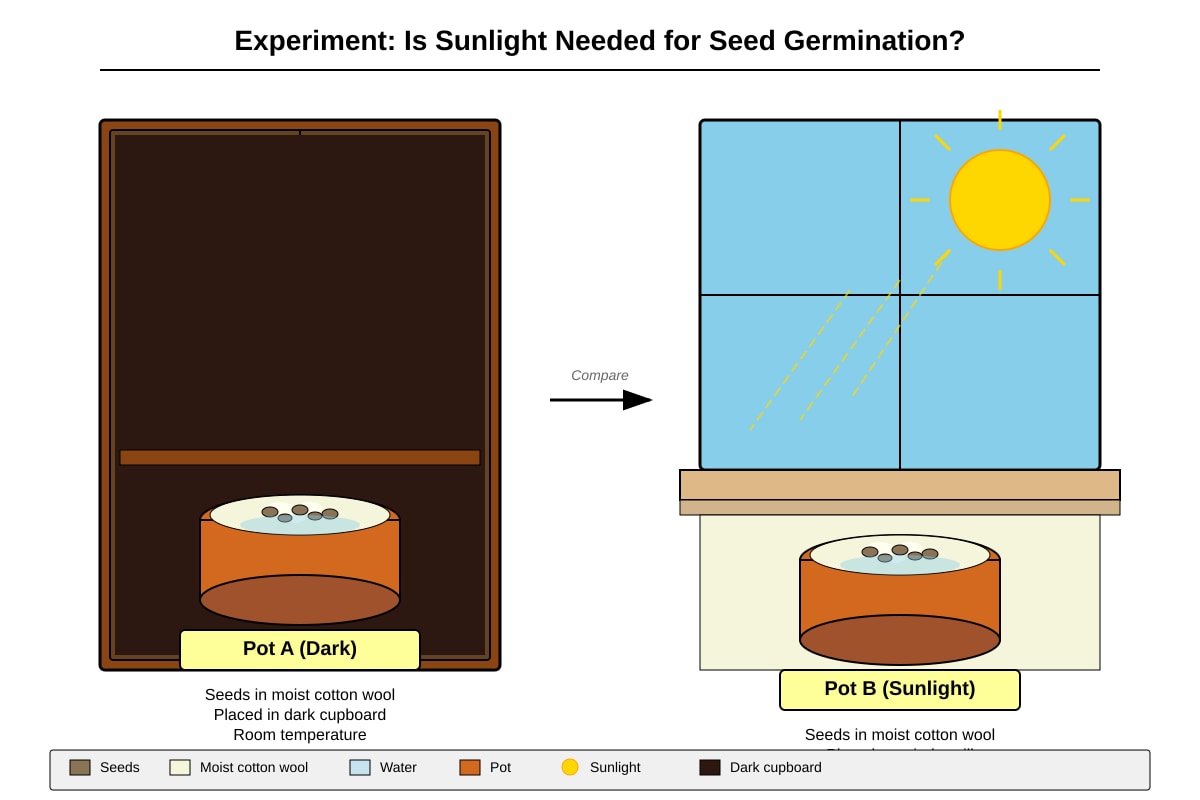
25. A student conducted an experiment to find out if sunlight is needed for seed germination. He set up two pots as shown below. <image_placeholder> id: Q25-fig1 type: experimental_setup linked_question: Q25 description: Two pots. Pot A: Seeds in moist cotton wool, placed in a dark cupboard. Pot B: Seeds in moist cotton wool, placed on a windowsill with sunlight. Both at room temperature. labels: Pot A (Dark), Pot B (Sunlight) must_show: Identical setup except for light condition. </image_placeholder>
(a) What is the aim of this experiment? [1]
(b) State one variable that must be kept constant in this experiment. [1]
(c) After 5 days, seeds in both Pot A and Pot B germinated. What conclusion can be drawn from this result? [1]
(d) Why did the student use moist cotton wool instead of dry cotton wool? [1]
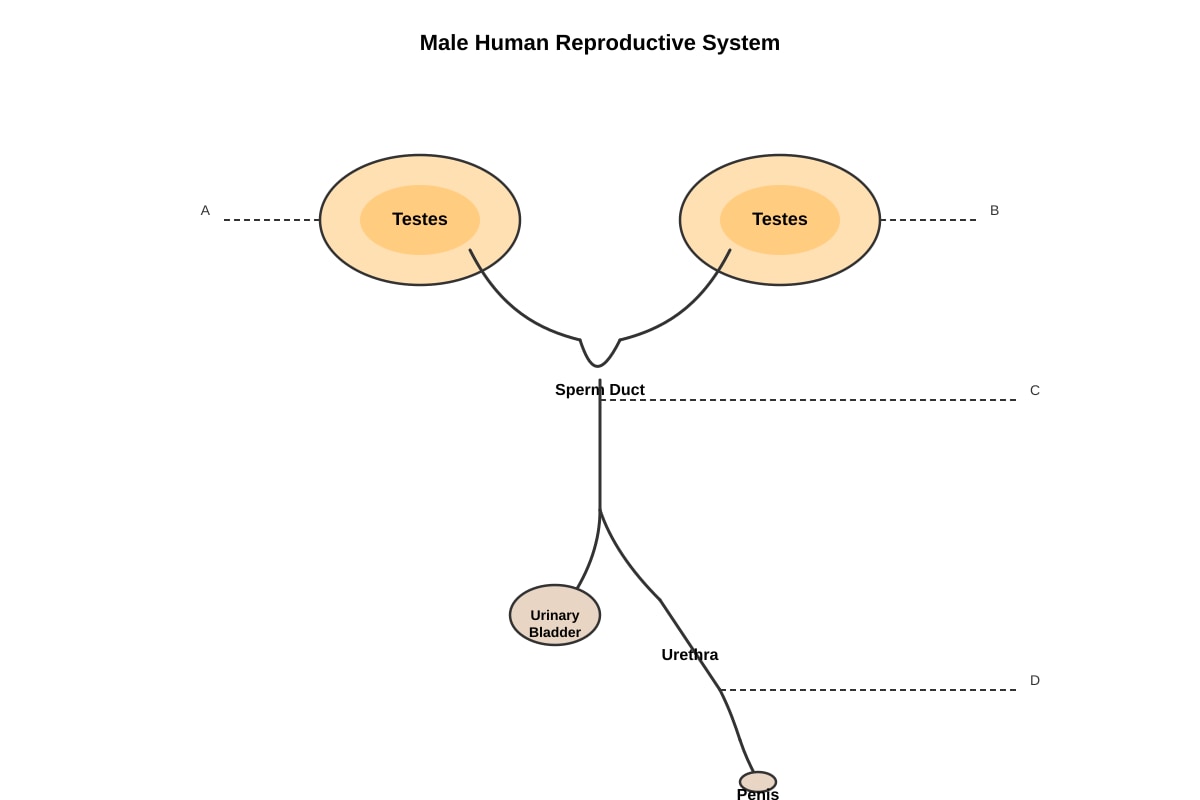
26. The diagram below shows the reproductive system of a male human. <image_placeholder> id: Q26-fig1 type: diagram linked_question: Q26 description: Diagram showing Testes, Sperm Duct, Urethra, Penis. labels: Testes, Sperm Duct must_show: Basic male reproductive anatomy. </image_placeholder>
(a) Which part produces sperm? [1]
(b) Describe the path taken by sperm from where it is produced to where it leaves the body. [2]
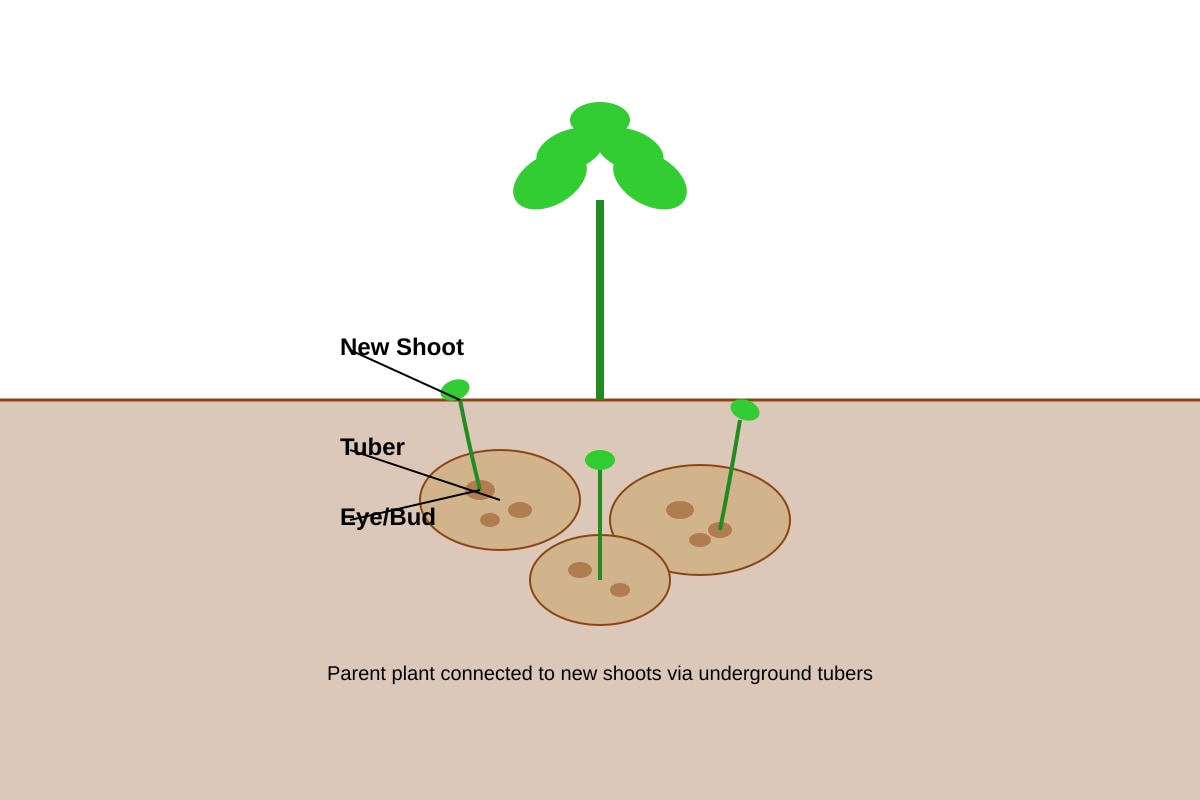
27. Some plants reproduce asexually. The diagram below shows a potato plant with tubers. <image_placeholder> id: Q27-fig1 type: diagram linked_question: Q27 description: A potato plant with underground tubers (potatoes) having "eyes" or buds. New shoots growing from eyes. labels: Tuber, Eye/Bud, New Shoot must_show: Connection between parent plant and new shoots via tuber. </image_placeholder>
(a) What type of asexual reproduction is shown here? [1]
(b) State one advantage of this method of reproduction for the farmer. [1]
(c) State one disadvantage of this method of reproduction for the plant species if the environment changes drastically. [1]
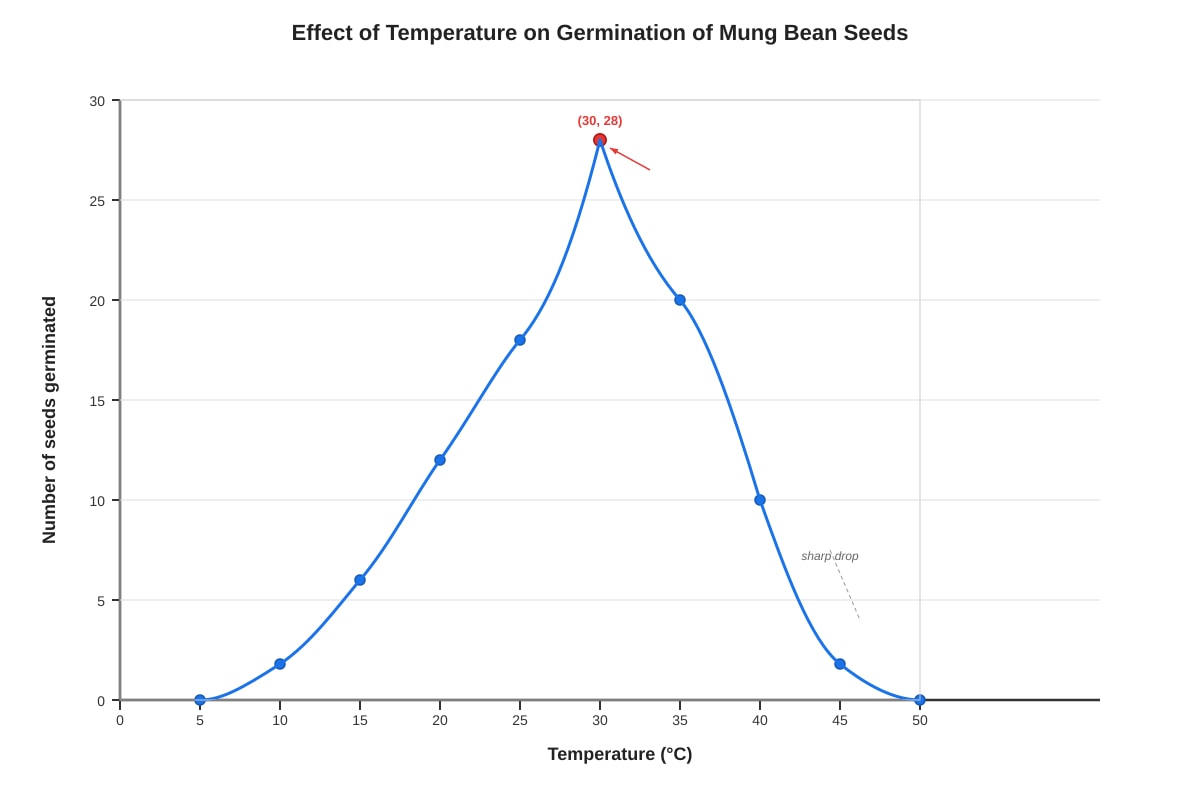
28. The graph below shows the effect of temperature on the germination rate of mung bean seeds. <image_placeholder> id: Q28-fig1 type: graph linked_question: Q28 description: Line graph. X-axis: Temperature (°C) from 0 to 50. Y-axis: Number of seeds germinated. Curve rises from 10°C, peaks at 30°C, and drops sharply after 40°C to 0 at 50°C. labels: X-axis: Temperature (°C), Y-axis: Number of seeds germinated values: Peak at 30°C, 0 germination at 5°C and 50°C. must_show: Clear peak and drop-off. </image_placeholder>
(a) At what temperature was the germination rate the highest? [1] __________ °C
(b) Explain why no seeds germinated at 50°C. [2]
(c) Predict the number of seeds that would germinate at 10°C compared to 30°C. [1]
29. Read the passage below.
"The Rafflesia is a rare flower found in the rainforests of Southeast Asia. It has no leaves, stems, or roots. It produces the largest flower in the world, which smells like rotting meat. This smell attracts flies, which help in pollination. After pollination, the flower develops into a fruit containing thousands of tiny seeds."
(a) Why does the Rafflesia flower smell like rotting meat? [1]
(b) How are the seeds of the Rafflesia likely dispersed? Give a reason for your answer. [2] Method: __________________________ Reason: _________________________________________________________________________
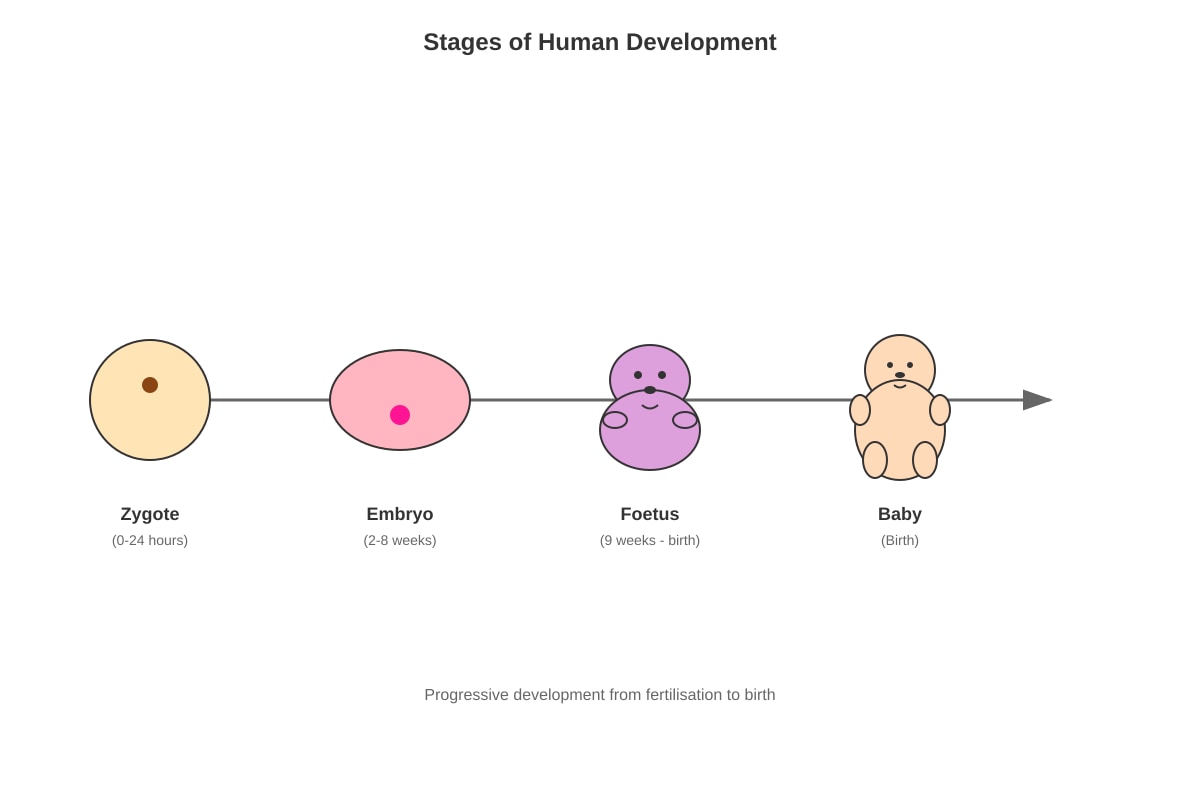
30. The diagram below shows the stages of human development from fertilisation to birth. <image_placeholder> id: Q30-fig1 type: figure linked_question: Q30 description: Sequence: Zygote -> Embryo -> Foetus -> Baby. labels: Zygote, Embryo, Foetus, Baby must_show: Progressive development. </image_placeholder>
(a) What is formed immediately after fertilisation? [1]
(b) How does the foetus obtain food and oxygen from the mother? [1]
(c) Why is it important for the mother to avoid smoking and drinking alcohol during pregnancy? [2]
Answers
TuitionGoWhere Practice Paper - Science Primary 5 (WA2 Version 3)
Answer Key and Marking Scheme
Section A (20 marks)
| Question | Answer | Marks |
|---|---|---|
| 1 | 2 | 1 |
| 2 | 1 | 1 |
| 3 | 3 | 1 |
| 4 | 2 | 1 |
| 5 | 3 | 1 |
| 6 | 2 | 1 |
| 7 | 4 | 1 |
| 8 | 3 | 1 |
| 9 | 3 | 1 |
| 10 | 3 | 1 |
| 11 | 2 | 1 |
| 12 | 2 | 1 |
| 13 | 3 | 1 |
| 14 | 3 | 1 |
| 15 | 3 | 1 |
| 16 | 2 | 1 |
| 17 | 3 | 1 |
| 18 | 3 | 1 |
| 19 | 4 | 1 |
| 20 | 2 | 1 |
Section B (40 marks)
21. (a) Pollination and Fertilisation (Accept "Fertilisation" as the key process leading to seed formation, but pollination is the precursor). [1] Teaching Note: Pollination transfers pollen; fertilisation fuses cells. Both are needed for seeds.
(b) Any two of the following: [2]
- Water
- Oxygen (Air)
- Suitable temperature Note: Sunlight is NOT required for germination.
(c) To reduce overcrowding / To reduce competition for water, nutrients, sunlight, and space between the parent plant and the offspring. [2] Marking: 1 mark for "reduce overcrowding/competition", 1 mark for specifying resources (water/nutrients/light).
22. (a) A: Stigma [1] D: Anther [1]
(b) Pollen [1]
(c) No. [1] Explanation: The stigma (Part A) receives pollen. Without it, pollination cannot occur, so fertilisation cannot take place, and no fruit/seeds will form. [1] Teaching Note: Students must link the removal of the stigma to the failure of pollination/fertilisation.
23. (a) To attract animals to eat the fruit. The seeds are then dispersed when the animals excrete them elsewhere. [1]
(b) The fibrous husk traps air, making the fruit buoyant (able to float). This allows it to be carried by water currents to new locations. [2] Marking: 1 mark for "traps air/floats", 1 mark for "carried by water".
(c) Plant X would fail to disperse effectively. [1] Explanation: Plant X relies on wind (light/winged). Near the sea, it may fall into water and sink or rot, or wind dispersal is less effective if it lands in water. (Alternatively, Plant Z relies on water; in an open field, it cannot float away). Accept logical reasoning based on mismatched method and environment. [1]
24. (a) Q [1] Teaching Note: Fertilisation occurs in the oviduct (fallopian tube).
(b) To produce eggs (female reproductive cells). [1]
(c) No. [1] Explanation: The oviduct (Part Q) is where fertilisation takes place and where the egg travels. If blocked, sperm cannot meet the egg, so fertilisation cannot occur. [1]
25. (a) To find out if sunlight is needed for seed germination. [1]
(b) Amount of water / Type of seeds / Temperature / Amount of cotton wool. (Any one) [1]
(c) Sunlight is not needed for seed germination. [1]
(d) To provide water/moisture, which is a necessary condition for germination. [1]
26. (a) Testes [1]
(b) Testes -> Sperm Duct -> Urethra -> Penis (out of body). [2] Marking: 1 mark for correct sequence of at least two parts, 1 mark for complete correct path.
27. (a) Vegetative propagation (or Asexual reproduction using tubers). [1]
(b) Offspring are genetically identical to the parent (desirable traits are preserved) / Faster growth / No need for pollination. (Any one) [1]
(c) Lack of genetic variation. If a disease affects the parent, it will likely affect all offspring, potentially wiping out the whole crop. [1]
28. (a) 30 [1]
(b) The high temperature (50°C) may have killed the seeds / damaged the enzymes needed for germination. [2] Teaching Note: Extreme heat denatures enzymes or kills the living embryo.
(c) Fewer seeds would germinate at 10°C than at 30°C. [1] Teaching Note: 10°C is below the optimal temperature, so metabolic processes are slower.
29. (a) To attract flies (pollinators) for pollination. [1]
(b) Method: By animals (or Wind/Water if justified, but Animal is best given the context of flies/fruit). [1] Correction: The question asks about seeds. The passage says "fruit containing thousands of tiny seeds". Usually, small seeds in a fruit are eaten by animals or dispersed by wind if light. Given the "rotting meat" smell attracts flies, but flies don't eat fruit flesh usually. However, standard P5 logic: Juicy/sweet = Animal. Rafflesia fruit is often eaten by pigs/porcupines. Accept "Animals" with reason "eaten by animals". Reason: The seeds are likely small and may be eaten by animals along with the fruit, or the fruit rots and releases seeds. Best Answer: Animals, because the fruit is likely fleshy/attractive to scavengers. [1]
30. (a) Zygote [1]
(b) Through the placenta and umbilical cord. [1]
(c) Harmful substances in smoke/alcohol can pass through the placenta to the foetus. This can cause birth defects, low birth weight, or harm the baby's development. [2] Marking: 1 mark for "substances pass to foetus", 1 mark for "harmful effect/defects".